-
1.
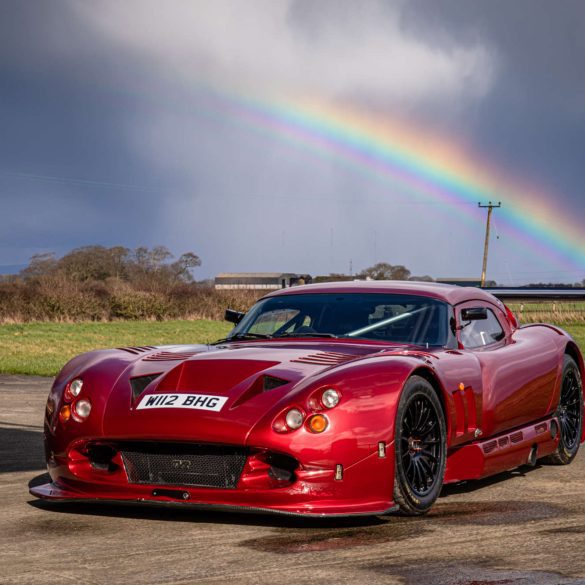
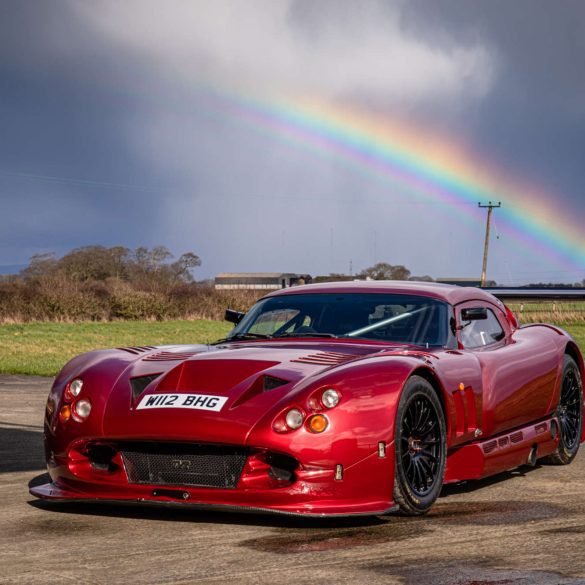
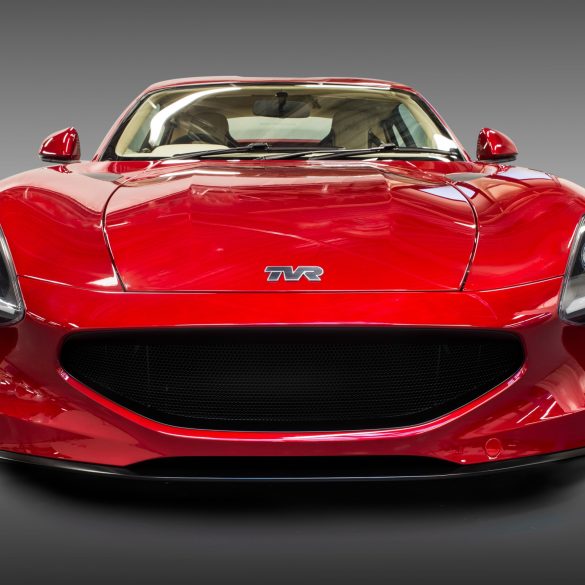
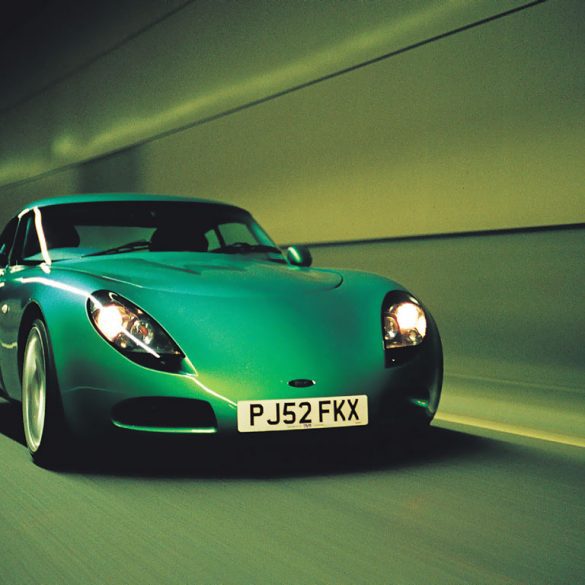
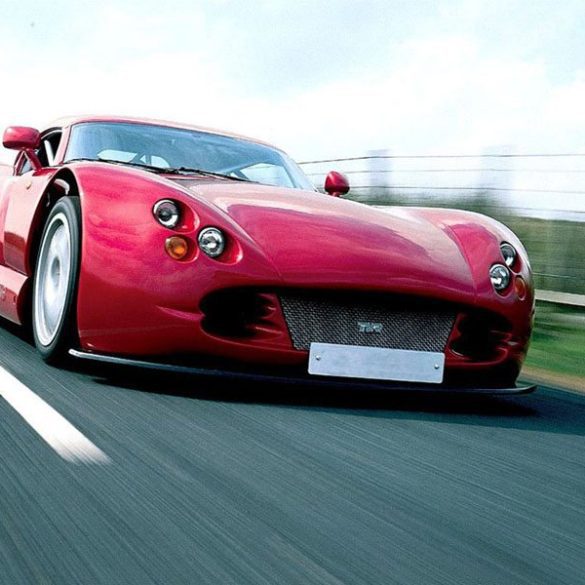
TVRs have always been fast, as spectacular to drive as they are to look at. With the Typhon series of cars, those traditional strengths have been taken to an altogether higher level. Its stunning bodywork is all carbonfibre, its massively strong chassis uses aluminium honeycomb to greatly improve its stiffness, and its hugely powerful engine, which is now capable of putting out 580 bhp, is connect...
-
2.
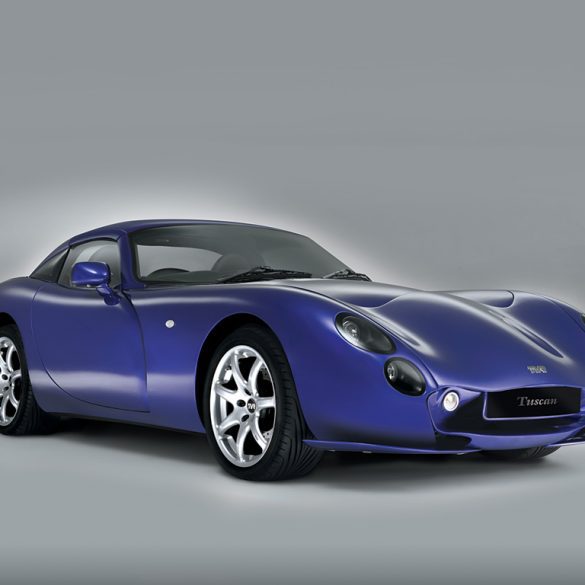
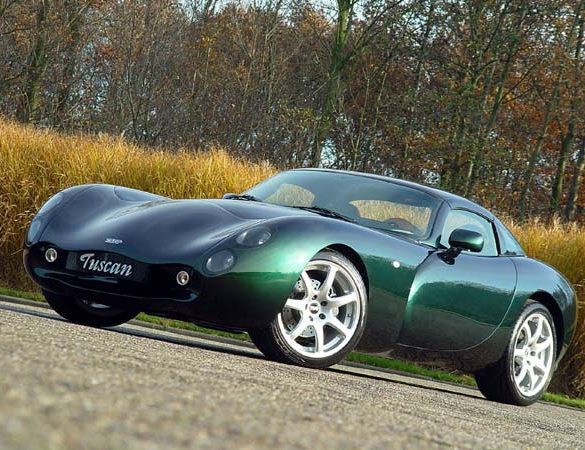
May 22nd, 2004, Birmingham Motor Show-The Tuscan S is a development of the old red rose Tuscan but with a number of significant developments. At the forefront of these is a revision of the chassis geometry with different kingpin inclination and less bump steer to specifically set the car up for the 18 wheels which come as standard on this car. Spring and damper rates are also now stiffer than they...
-
3.
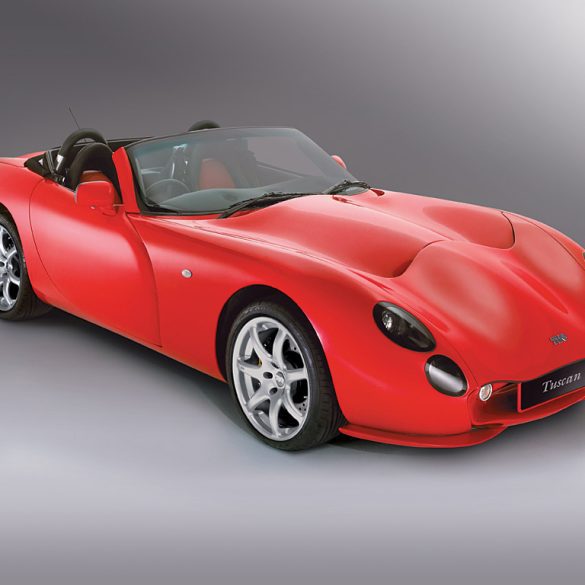
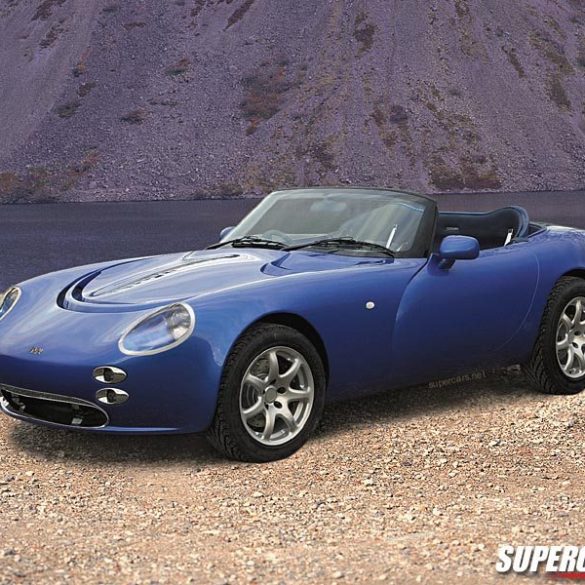
May 22nd, 2004, Birmingham Motor Show-While the roof and rear screen have always been removable on the Tuscan, many customers have expressed a desire for a full convertible. The new Tuscan convertible is launched with the 350 bhp Speed Six engine and is priced at 39,750 GBP, which is identical to that of the targa. It features twin rollover hoops that are bolted through to the chassis and slightly...
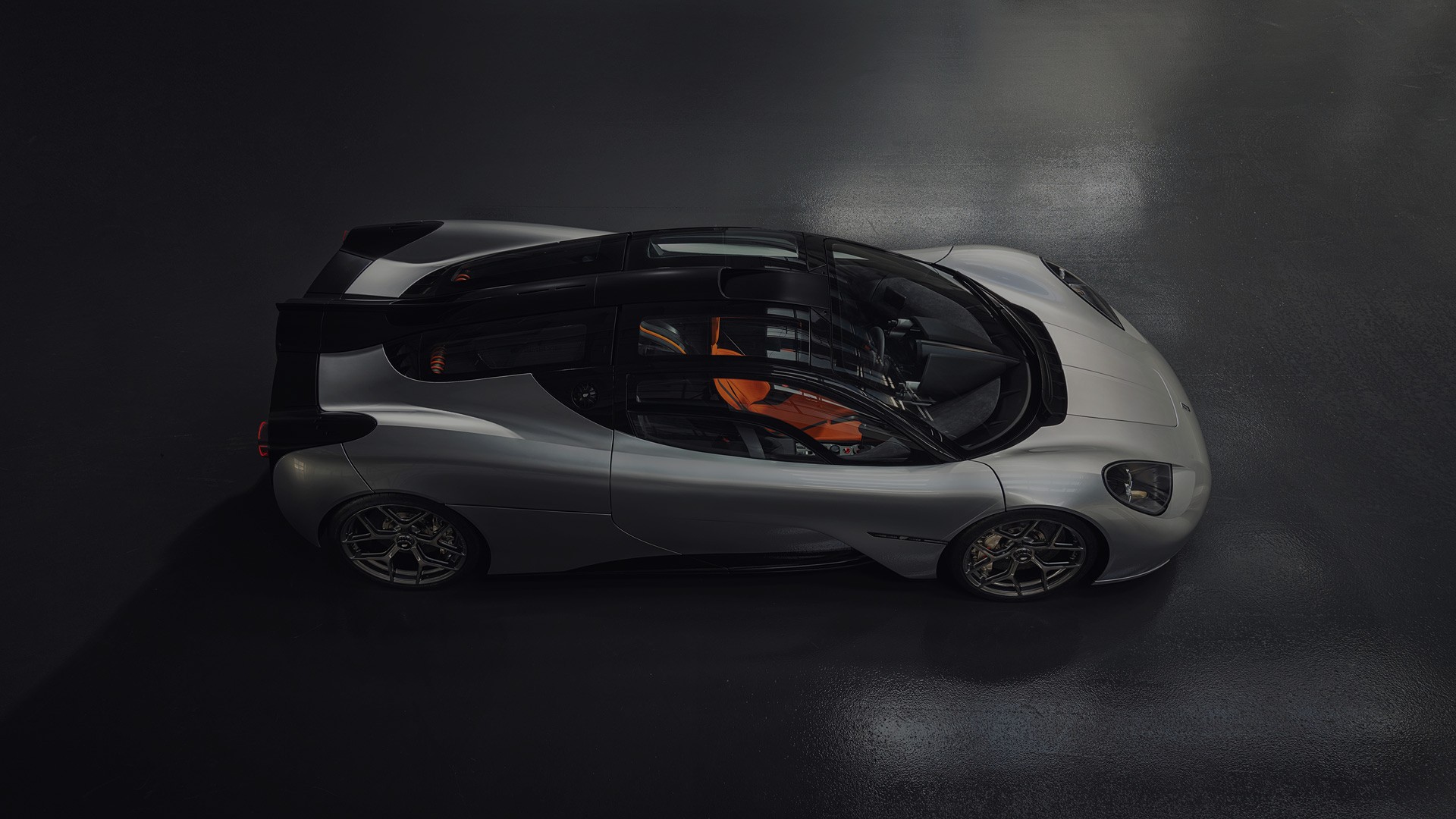
-
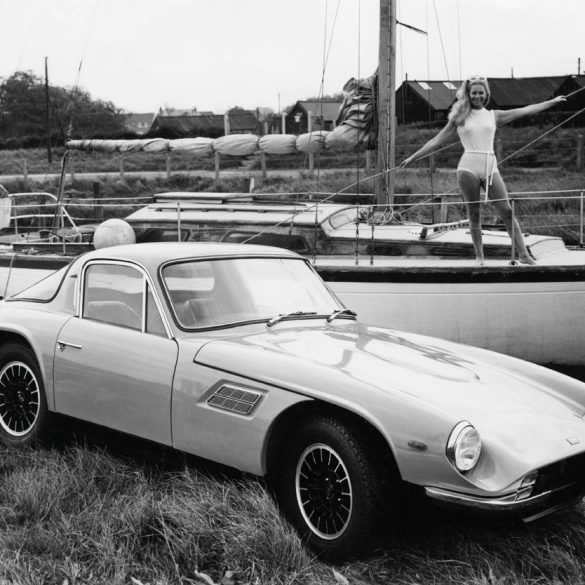
4.
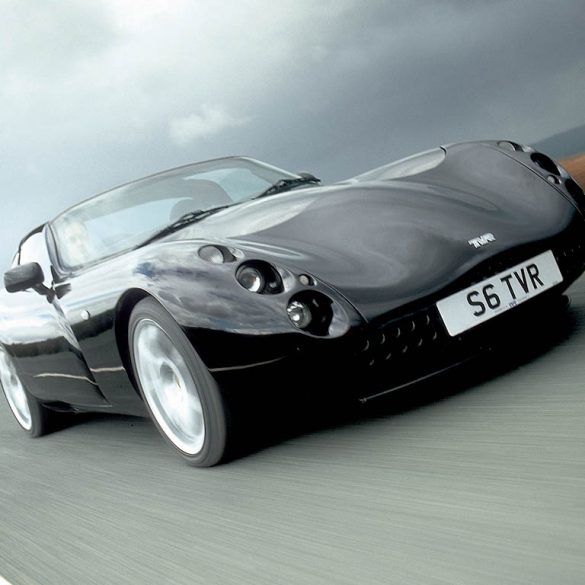
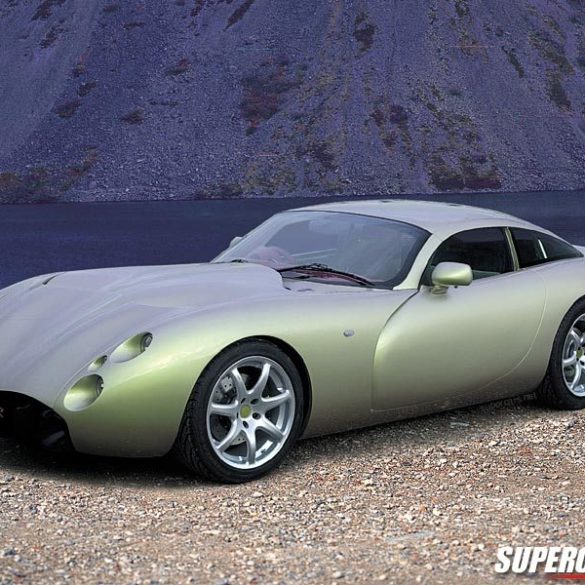
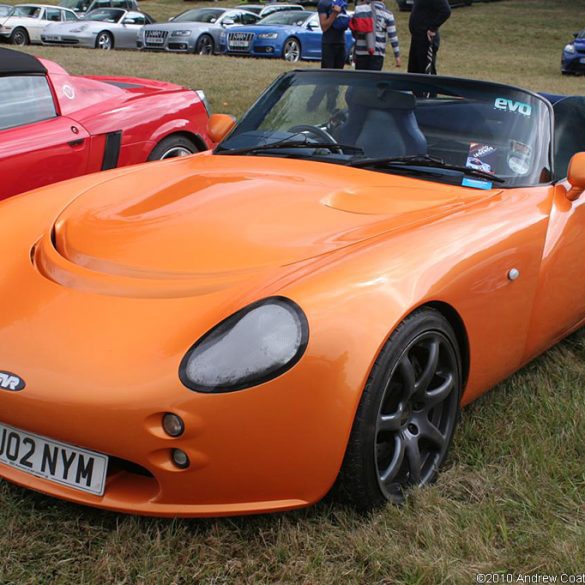
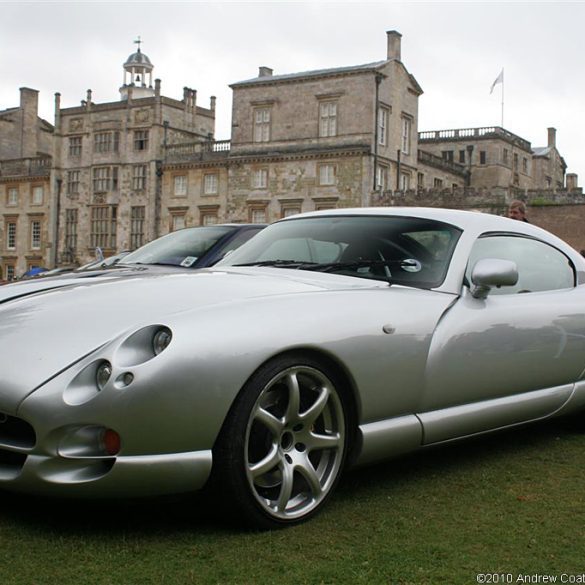
May 22nd, 2004, Birmingham Motor Show-The most important debut of all for TVR at the 2004 Birmingham Show is that of the Tuscan 2. The TVR Tuscan Speed Six originally went into production early in 2000 and since then TVR have built more than 2,500 of them. The changes to the car are significant:
-
5.
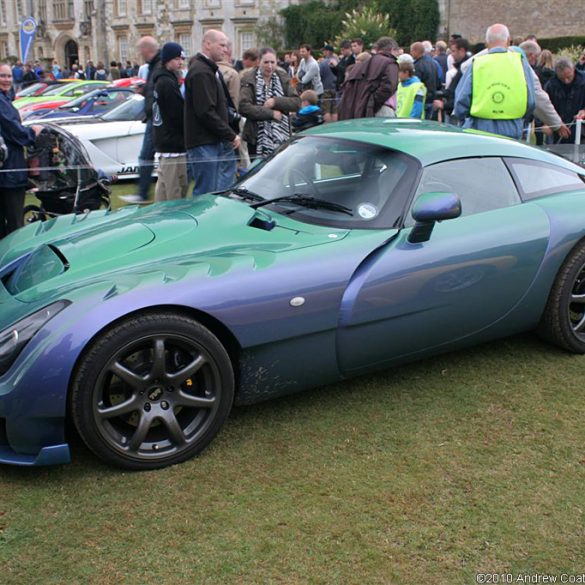
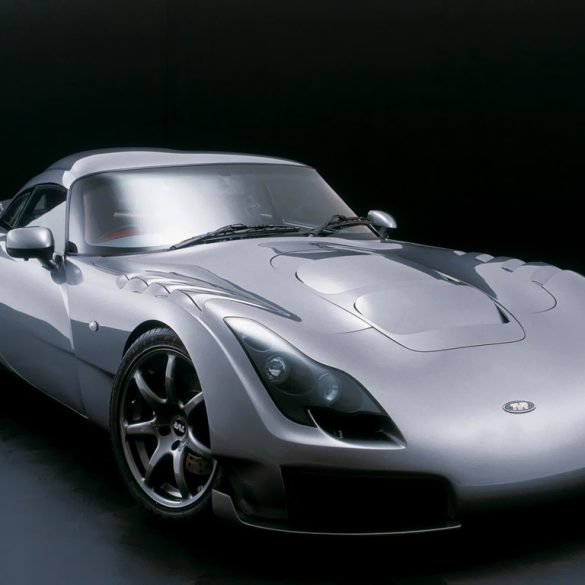
At the British Motor Show last December, TVR released Sagaris, a modified T350 which looked more a prototype than a production car. About 25% of people immediately called it over the top, but the majority of people seem appreciate it. Described with a potpourri: xtreme, shark attack, dreadful, chainsaw, Le Mans, wacky, poison, hardnosed, anabolic, Quick Robin to the batmobile, daring, Max Power, M...
-
6.
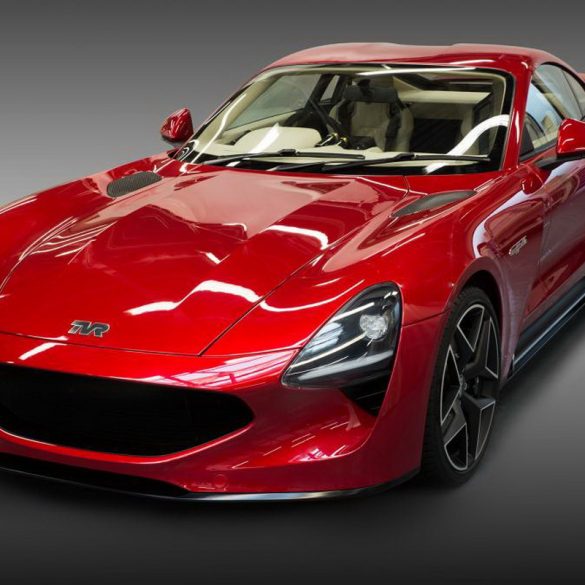
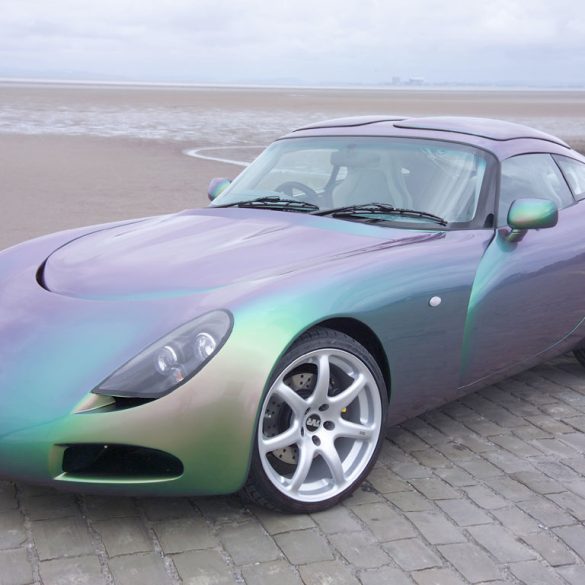
The T350T is a brand new targa based on the running gear of the universally acclaimed Tamora. The concept is to apply TVR's expertise gained in Motorsport to a road car, and both shape and engineering owe much to TVR's racing programme.
-
7.
The T350C is a coupe based on the running gear of the universally acclaimed Tamora. The concept is to apply TVRs expertise gained in Motorsport to a road car, and both shape and engineering owe much to TVR's racing programme. It is intended to form the basis of a racing car for the new GT Cup class of the British GT Championship as well as for a number of overseas one-make race series.
-
8.
The TVR Tamora followed the Tuscan in the new generation of TVRs. In the same way that the Chimaera was engineered to be a more accessible sister to the Griffith, so the Tamora is based on the Tuscan Speed Six, whose platform it shares.

-
9.
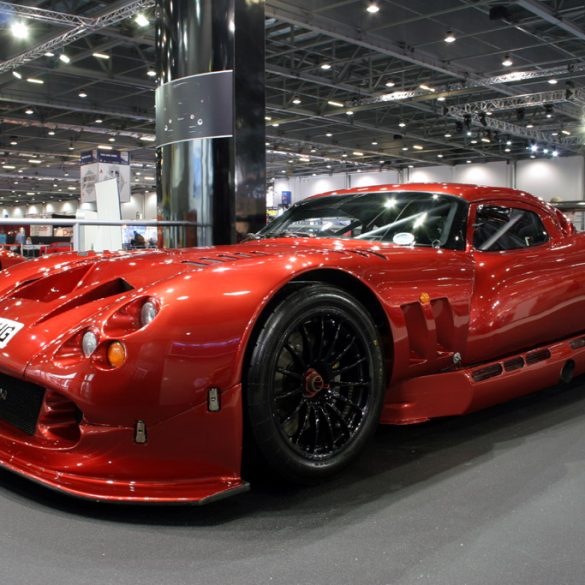
With the T440R, traditional strengths have been taken to an altogether higher level. Its stunning bodywork is all carbonfibre, its massively strong chassis uses aluminium honeycomb to greatly improve its stiffness, and its hugely powerful engine is connected to TVR's own six speed sequential gearbox. It is TVR's technological tour de force, a 215 mph showcase for TVR's abilities.
-
10.
In 1966 management of TVR was stabilised in the hands of the Lilleys and over the next few years the company gradually grew with the Grantura being replaced by the Vixen and the Griffith by the Tuscan V8. In 1970 TVR moved to its current factory in Bristol Avenue from where it has never moved, although the premises have been expanded enormously over the last 30 years.
-
11.
The TVR Tuscan Speed Six went into production early in 2000 and since then TVR have been making inroads into the initial order bank of 1600 deposits in order to bring the waiting list down to manageable proportions. While many of those orders were from TVR's existing customers, a far larger proportion than ever before were from people who decided to transfer their allegiance away from mass manufac...
-
12.
The Tuscan S is a development of the old red rose Tuscan but with a number of significant developments. At the forefront of these is a revision of the chassis geometry with different kingpin inclination and less bump steer to specifically set the car up for the 18 wheels which come as standard on this car. Spring and damper rates are also now stiffer than they were originally to complement the car...
-
13.
The TVR Tuscan R is a TVR with less compromise. Its engineers have been able to focus on outright performance without being unduly restricted by NVH. Every Tuscan R is manufactured to order by the TVR Motorsport Division and is designed to be available in many different permutations from very fast roadgoing 2+2 through to full race GT car.
-
14.
-
15.
asdasd
-
16.
The Tamora is based on the Tuscan Speed 6, whose platform it shares.
-
17.
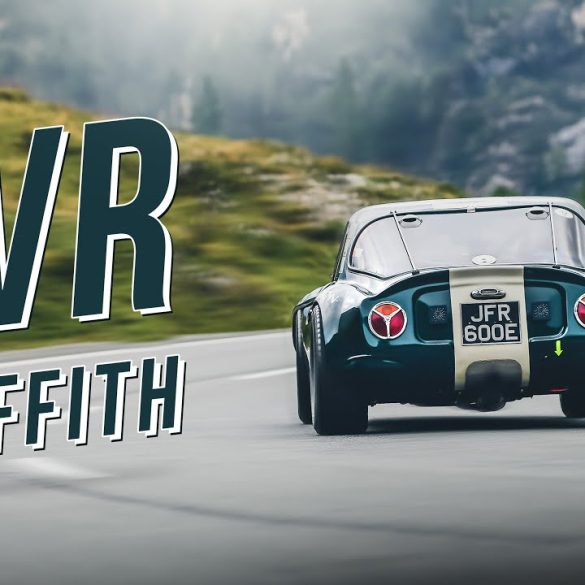
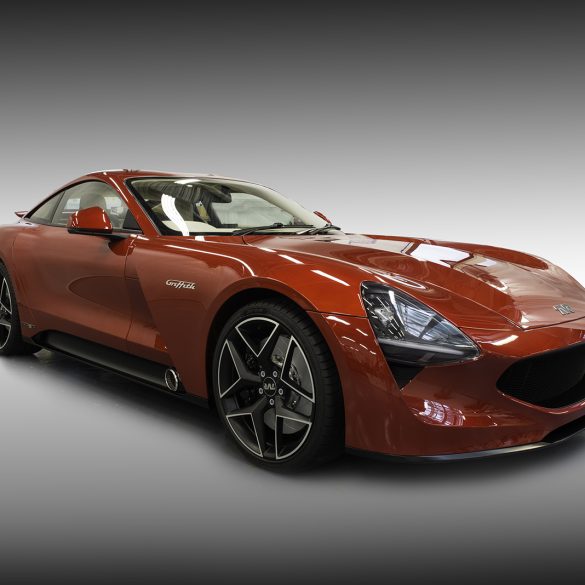
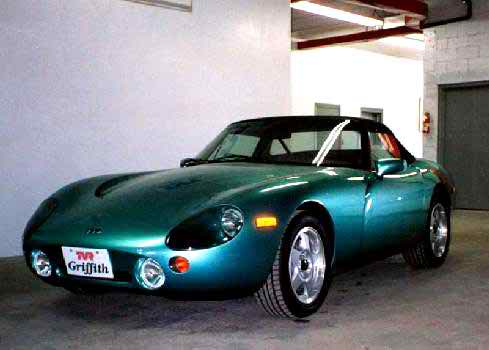
The last one hundred TVR Griffiths are being built to a new specification. The new version features a new-look front and rear as well as new mirrors. The interior has been updated and brought into line with the other models with dials, switchgear and vents being of the latest generation aluminium type. At the time of writing, only twenty of the last one hundred remain to be built.
-
18.
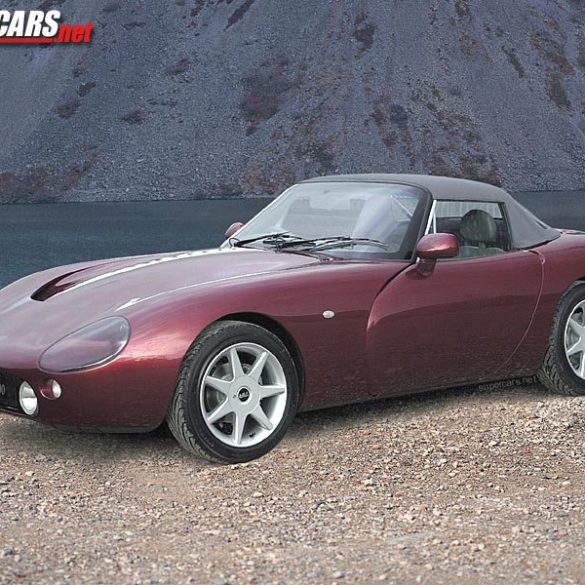
The Griffith that was really responsible for TVR"s renaissance. The first cars were delivered to customers at the beginning of 1992 and the car was overwhelmingly successful. An order was taken on average every eight minutes at its first Motor Show and, with the introduction of the Griffith 500 in 1993, it reached the first rank of the instant classics. Although an era came to an end in 2002 ...
-
19.
-
20.
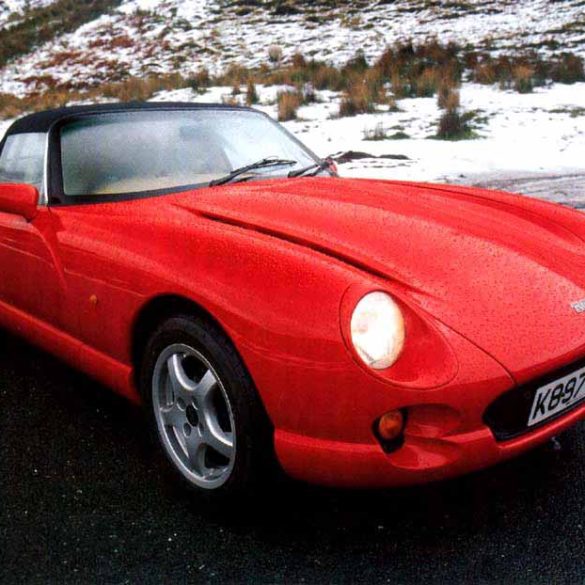
The TVR Chimaera was introduced at the 1992 Birmingham Motor Show and was instantly hailed a success. Based on the award-winning Griffith, the Chimaera went into production in February 1993, then fitting into TVR's model line-up between the V8S and the Griffith.
-
21.
Here is the Devil's car. There's only one of these and it's too powerful for almost any road or track.
-
22.
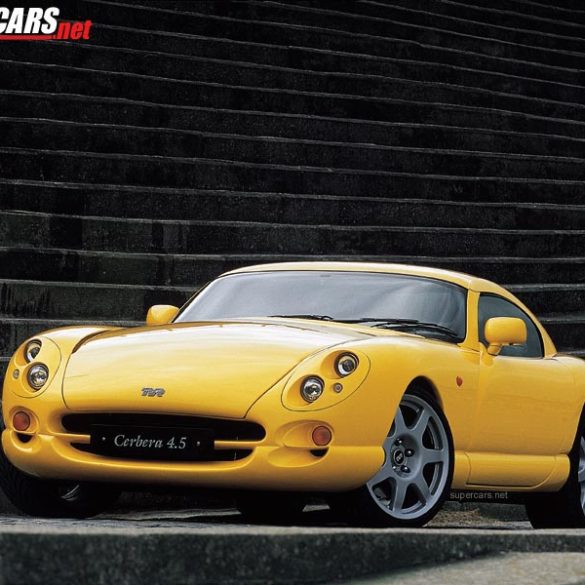
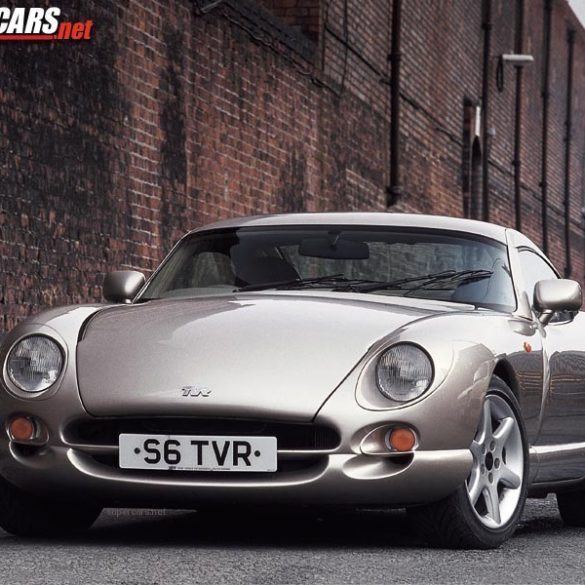
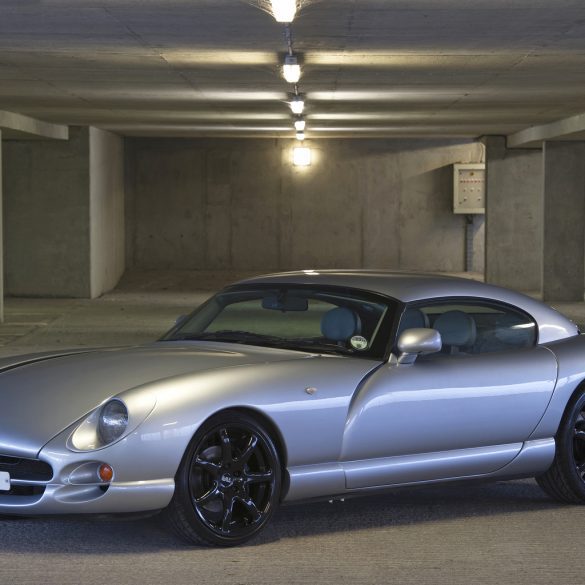
The TVR Cerbera began life in the early summer of 1993 as a styling exercise by TVR's team of designers, who were very quickly given the go-ahead to start building full scale models. They sculpted the car out of full-size blocks of foam rather than being constrained by the two dimensions of a paper sketch or the dehumanising aspects of design by computer.
-
23.
The TVR Cerbera began life in the early summer of 1993 as a styling exercise by TVR's team of designers, who were very quickly given the go-ahead to start building full scale models. They sculpted the car out of full-size blocks of foam rather than being constrained by the two dimensions of a paper sketch or the dehumanising aspects of design by computer.
-
24.