
1955 MG A 1500
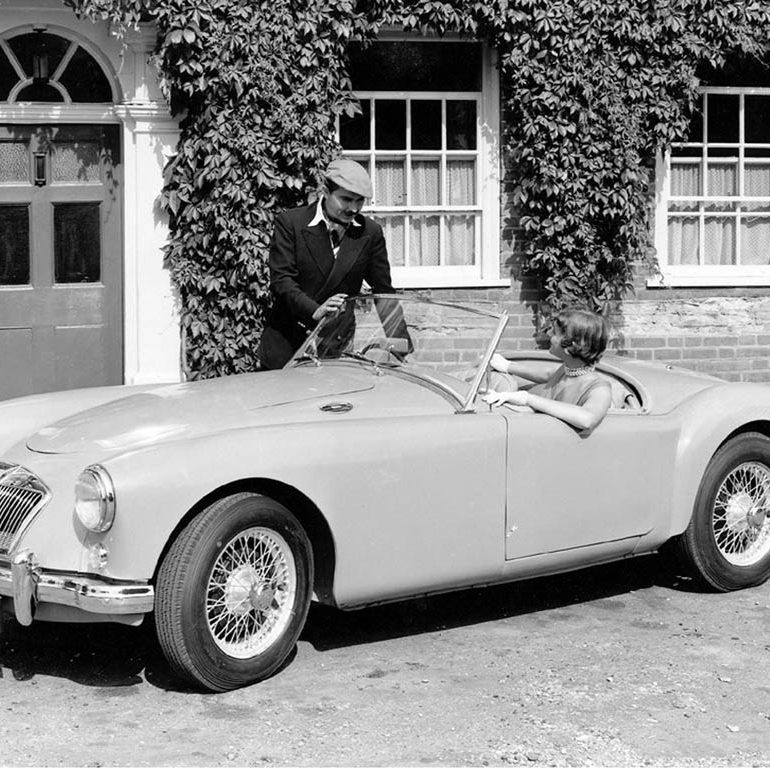
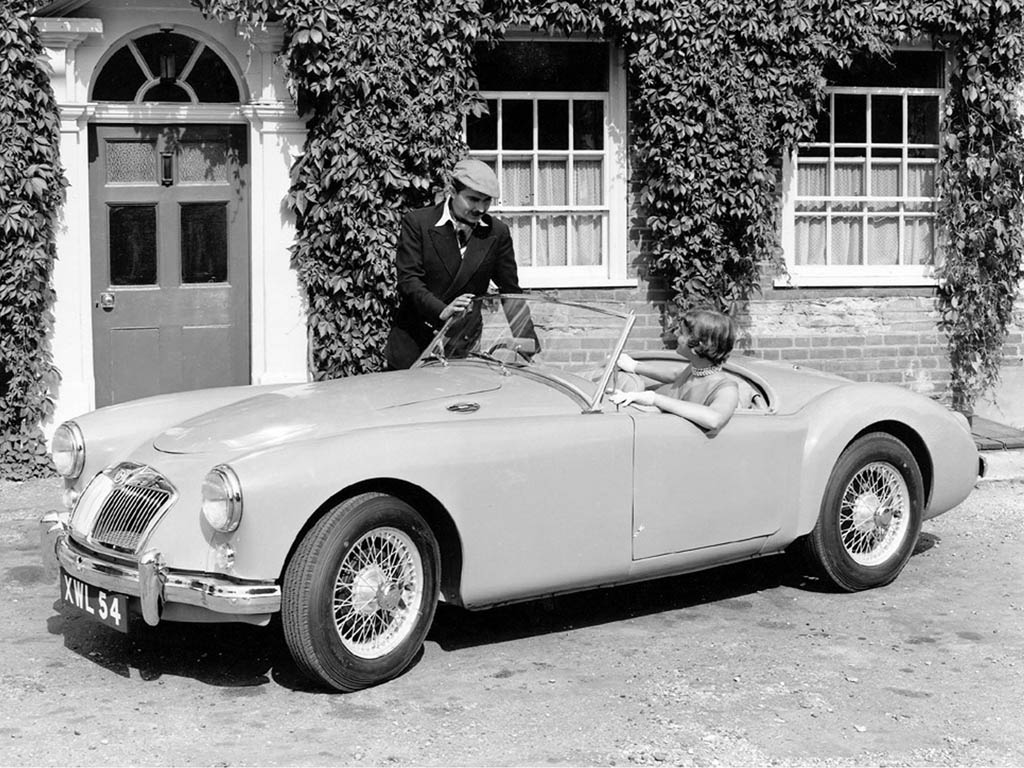
By 1955, the British Motor Corporation (BMC) had swallowed up Austin, bringing Austin, Morris, MG, Riley and Wolseley under common ownership. This meant that new cars had to apply to a more broad corporate policy, thus common components were established between the marques. So when the TF replacement was drawn up, it was powered by the BMC 1498cc B-series engine housed in a new modern chassis and structurally rigid body.
BMC gave the green light for the new MGA in 1955. With a new chassis, and all enveloping bodywork it contrasted with MG’s traditional style. As introduced, the A reunited MG back to motor sport. Its first public appearance was witnessed as a team of three aluminum body prototypes at the 1955 Le Mans 24 Hour event. Marked by tragedy, the 1955 Le Mans is remembered for the appalling accident which sent a Mercedes SLR into the stands, and not the fifth and sixth place achieved by the MGAs at their first race.
Fortunately, the production MGA became BMC’s biggest success story, as more than 100,000 MGAs were made until 1962. These included just over 2,000 of the advanced Twin Cam models, having twin overhead camshafts and four wheel disc brakes. Most of the MGAs ended up in America and, along with the TC that came before, provided a backbone for the American entry level sports market.
A host of MGA record cars and race efforts publicized the car. At the 1956 12-hour race at Sebring, MGAs made their production racing debut, finishing 19th, 20th and 22nd overall. A new MG record car, the EX179 of 1954 built for George Eyston had been based on a prototype MGA chassis. The last and most impressive MG record car was EX181 of 1957, with a supercharged Twin Cam engine behind the driver in a teardrop shaped body. This was driven by Stirling Moss and later Phil Hill, and set 1500cc and 2000cc class records at speeds over 250mph.
By 1956 a coupe version was offered, and in 1959 the MGA got a complete overhaul. This included a larger 1588cc engine and Lockheed 11-inch front disc brakes. However, the definitive version remained the Twin Cam, which used the B-Series bottom end and features a valve train and cylinder head modified for twin camshafts. Combined with a new exhaust manifold, and dual 1.75 in. SU carburetors, the Twin Cam produced 108 bhp @ 6,700 rpm.
The MGA was replaced in 1962 by the less shapely MGB that would become the longest-running and best-selling MG.
In Detail
| tags | mga |
| submitted by | Richard Owen |
| type | Series Production Car |
| released at | 1955 Frankfurt Motor Show |
| built at | Abingdon, England |
| price $ | $ 2,195 |
| engine | Inline-4 |
| position | Front, Longtudinal |
| aspiration | Natural |
| ignition | Lucas Distributor |
| block material | Cast Iron |
| valvetrain | Pushrod OHV, 2 Valves per Cyl |
| fuel feed | Twin SU Carburetors |
| displacement | 1488 cc / 90.8 in³ |
| bore | 73.15 mm / 2.88 in |
| stroke | 88.9 mm / 3.5 in |
| compression | 8.30:1 |
| power | 50.7 kw / 68.0 bhp @ 5500 rpm |
| specific output | 45.7 bhp per litre |
| bhp/weight | 74.24 bhp per tonne |
| torque | 104.9 nm / 77.4 ft lbs @ 3500 rpm |
| body / frame | Steel body over Steel Frame |
| driven wheels | RWD |
| front tires | 5.60-15 |
| rear tires | 5.60-15 |
| f suspension | Wishbones w/Hydraulic Shock Absorbers |
| r suspension | Solid Axle w/Hydraulic Shock Absorbers, Leaf Springs |
| curb weight | 916 kg / 2020 lbs |
| wheelbase | 2388 mm / 94.0 in |
| front track | 1204 mm / 47.4 in |
| rear track | 1240 mm / 48.8 in |
| transmission | 4-Speed Manual |
| final drive | 4.3:1 |
| top speed | ~153.5 kph / 95.4 mph |
| 0 – 60 mph | ~14.5 seconds |
| 0 – 1/4 mile | ~19.6 seconds |
Auction Sales History
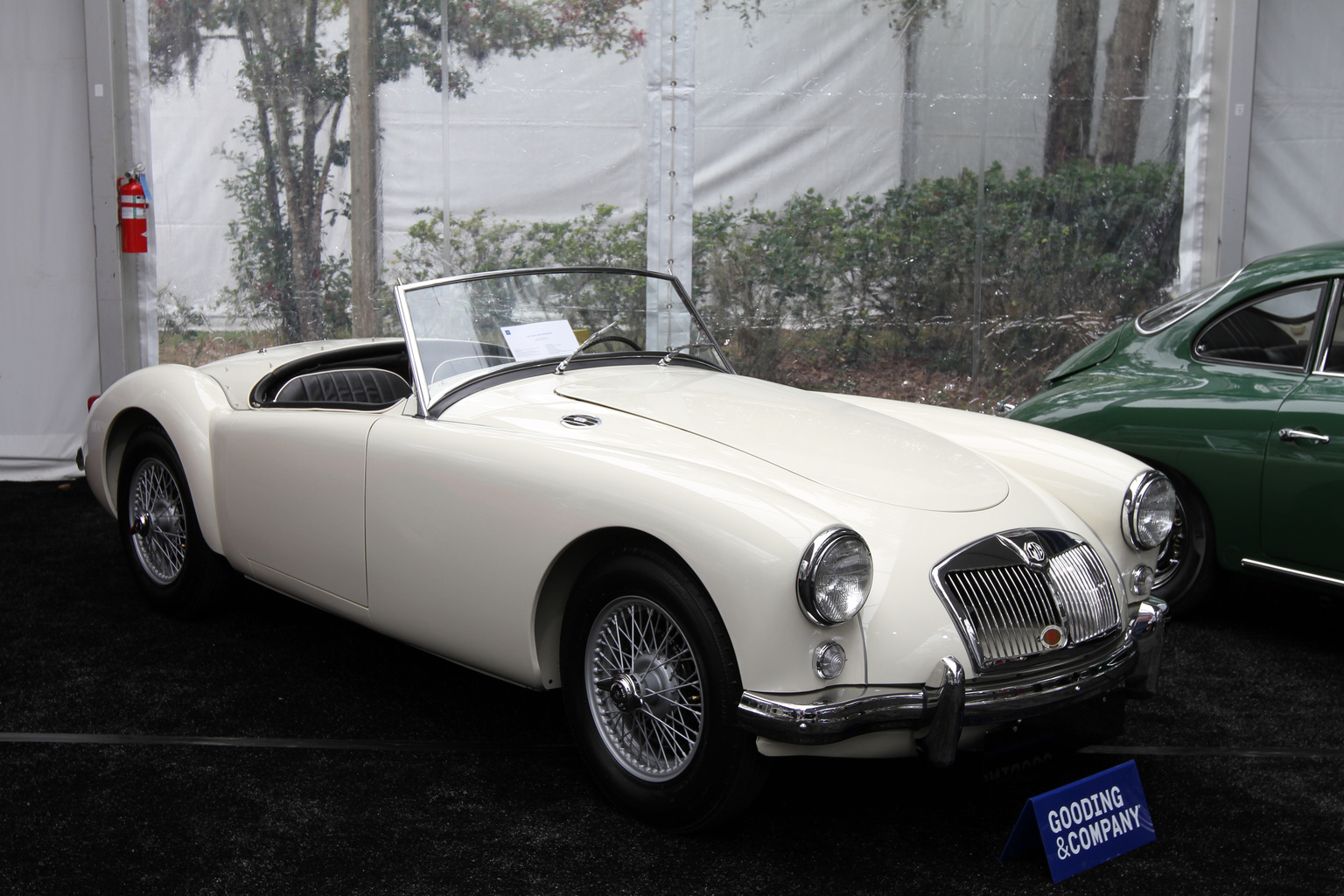
1957 MGA 1500 Roadster HDR4324225 – sold for $33,000 Antique Automobile Club of America Junior and Senior National First Place Winner. Quality Restoration by Classic Cars of Williamsburg. Has Covered Minimal Miles Since Restoration was Completed. Supplied with Original Tools and Handbook. Beautiful, Beloved British Sports Car in Handsome Original Color.
Auction Source: The 2015 Amelia Island Auction by Gooding & Company
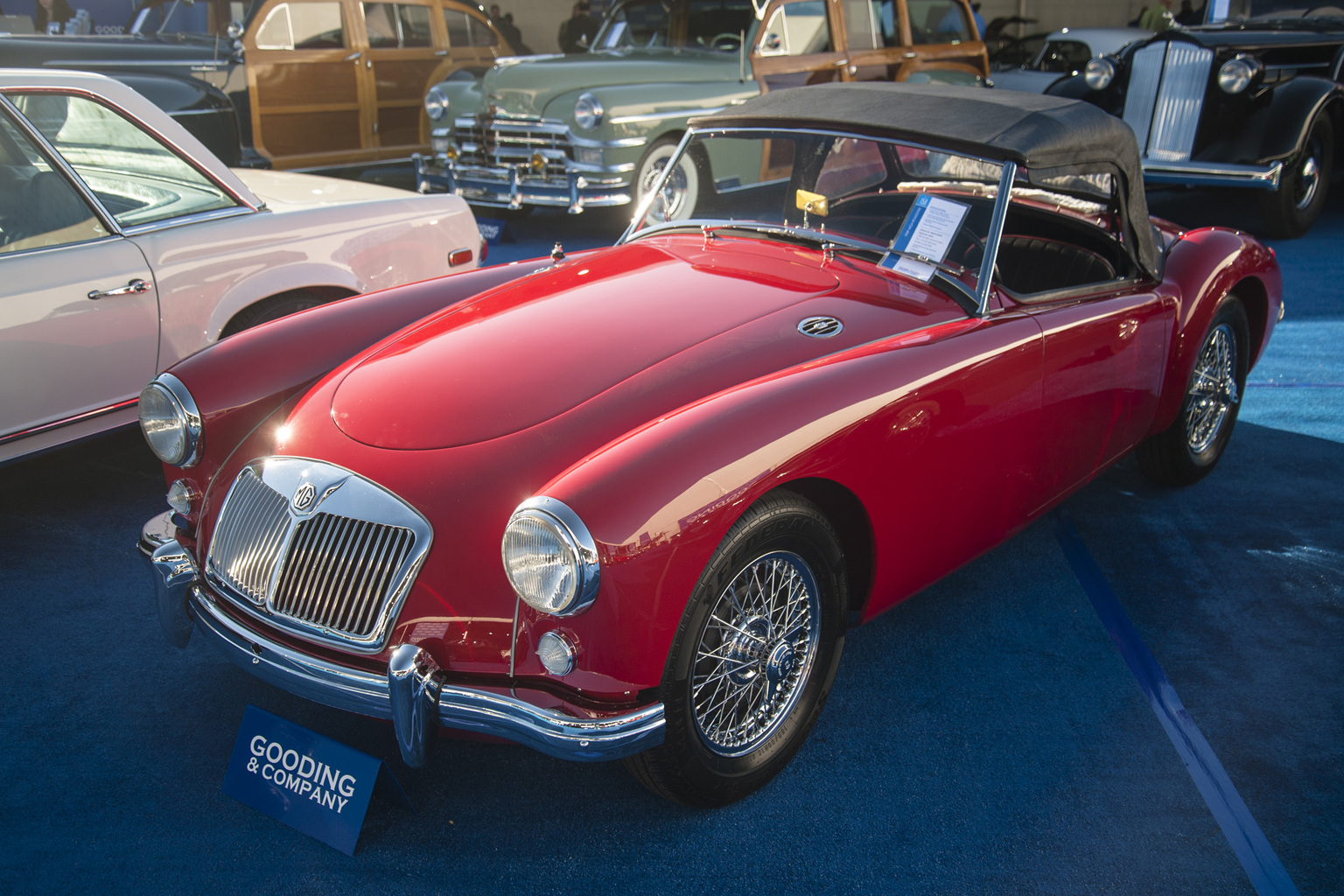
1959 MGA Roadster HDK43/58555 – sold for $44,000 Long-Term, West Coast Single-Family Ownership. Less than 20 Miles Since Recent Frame-Off Restoration. Original Color Scheme with New Top. Rebuilt MGB Drivetrain.
Auction Source: The Scottsdale Auctions by Gooding & Company
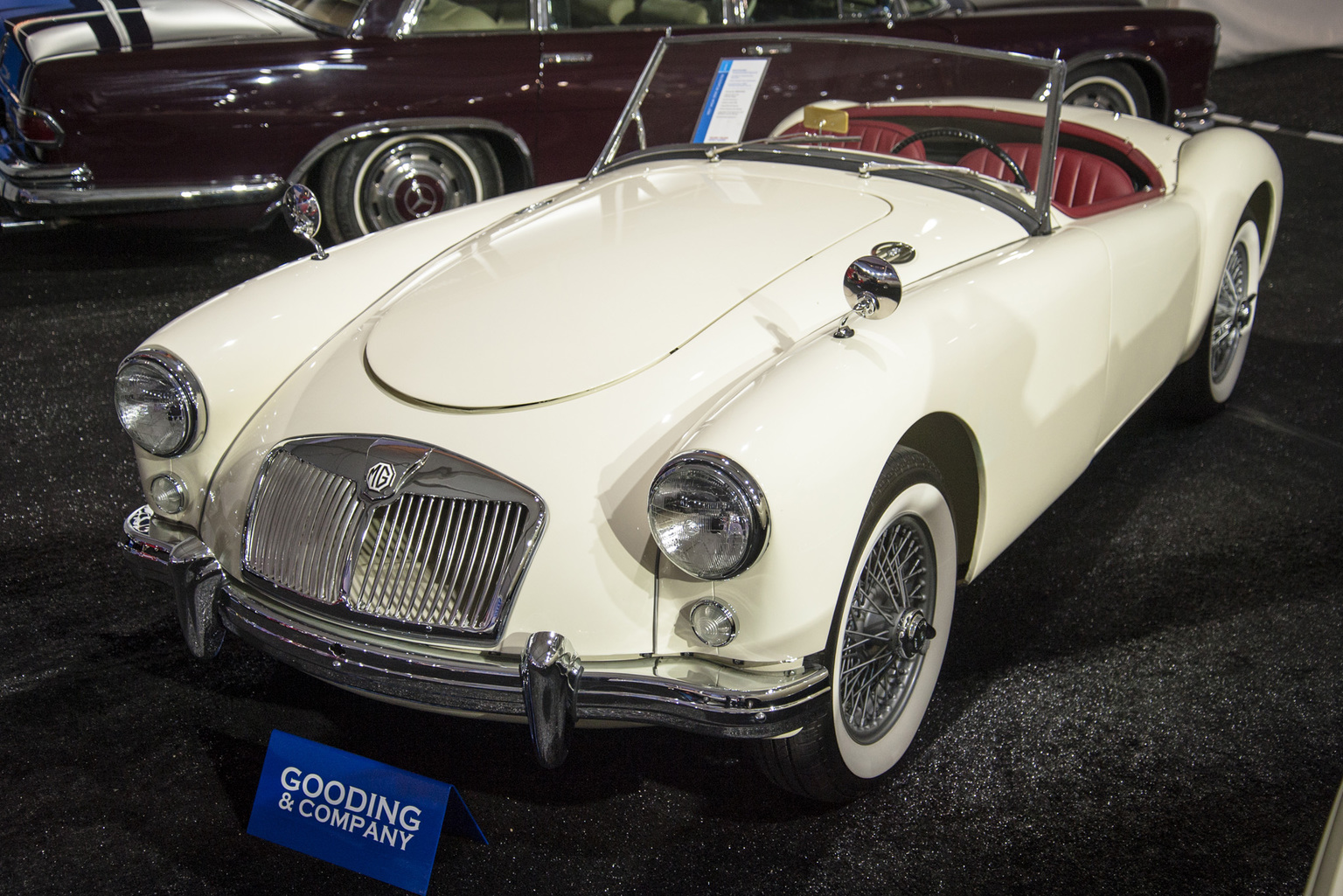
1957 MGA 1500 Roadster HDR43/28612 – sold for $41,800 Quintessential British Sports Car. 400 Miles on Comprehensive Restoration. Classic Original Color Combination. Accompanied by a BMHT Certificate and Correct Tool Kit.
Auction Source: The Scottsdale Auctions by Gooding & Company
1957 MGA 1500 Roadster HDR43/29793 – sold for $39,600 A Splendid Example of Classic English Motoring. Beautifully Presented in Period-Correct Livery. Recent Mechanical Attention. Ideal Event Entry or Weekend Sports Car.
Auction Source: The 2013 Scottsdale Auctions by Gooding & Company
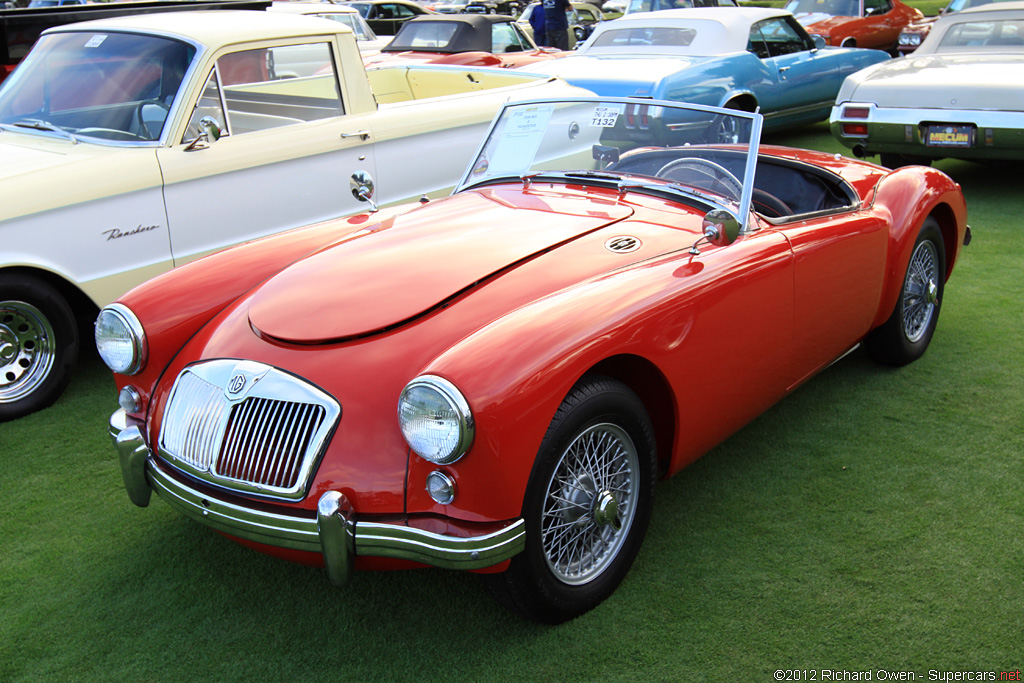
1958 MG A Roadster HDK4342181 – sold for $24,000 Restored. Orient Red with new Black leather interior
Auction Source: 2012 Daytime Auction by Mecum
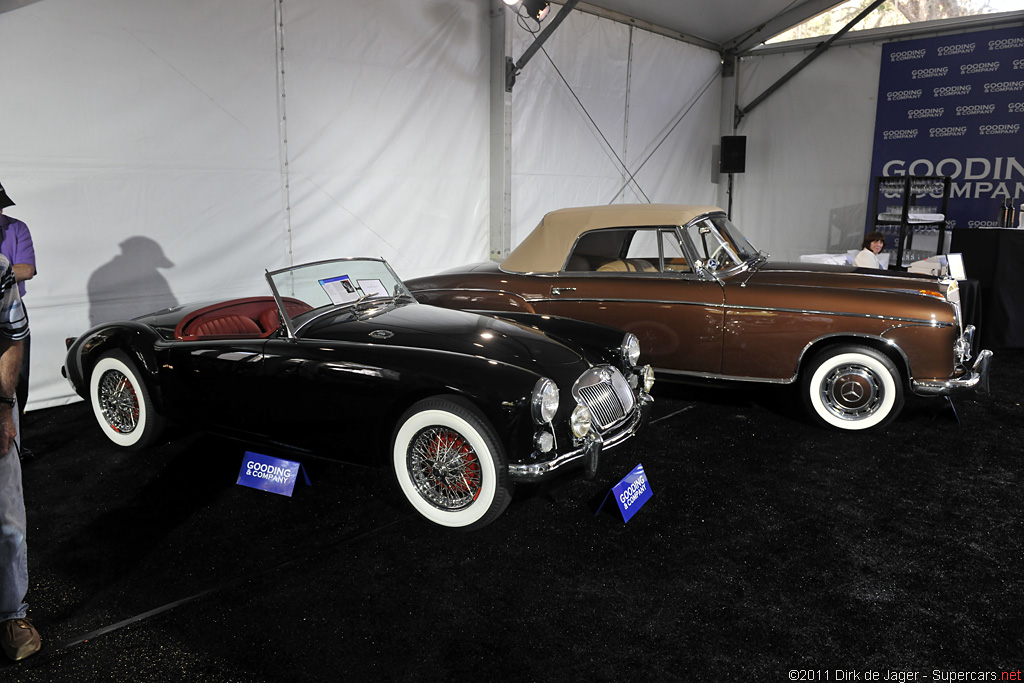
1959 MGA 1500 Roadster HDA43/61765 – sold for $44,000
The MGA offered here carries the classic US-delivery appearance that many MGAs displayed when new, with chrome wire wheels and whitewall tires. Built at the Abingdon works in January 1959, it is among the last of the 1500- series cars. It was finished in black cellulose paint from the factory and destined for US shores with a left-hand-drive arrangement.
Although the early history of the car remains unknown, it is believed to have resided in the Ohio area from 1965 until the 1990s, when it relocated to Sarasota, Florida. Between 2009 and 2011, the sporty MGA was treated to a cosmetic restoration that included a bare-metal respray, a carefully fitted new interior and refurbishing of the brightwork. Today, this MGA presents very well in gleaming black over the inviting red leather interior. It is fitted with period Lucas fog lights, a black roadster top, and is accompanied by its certificate from the British Heritage Trust. The MGA has long been recognized as an icon and the first real “modern” affordable British sports car. With spare parts readily available and very affordable, a well-sorted MGA is bound to offer great enjoyment on Sunday drives or in vintage rallies such as the California Mille.
Auction Source: The Amelia Island Auction 2012 by Gooding & Company
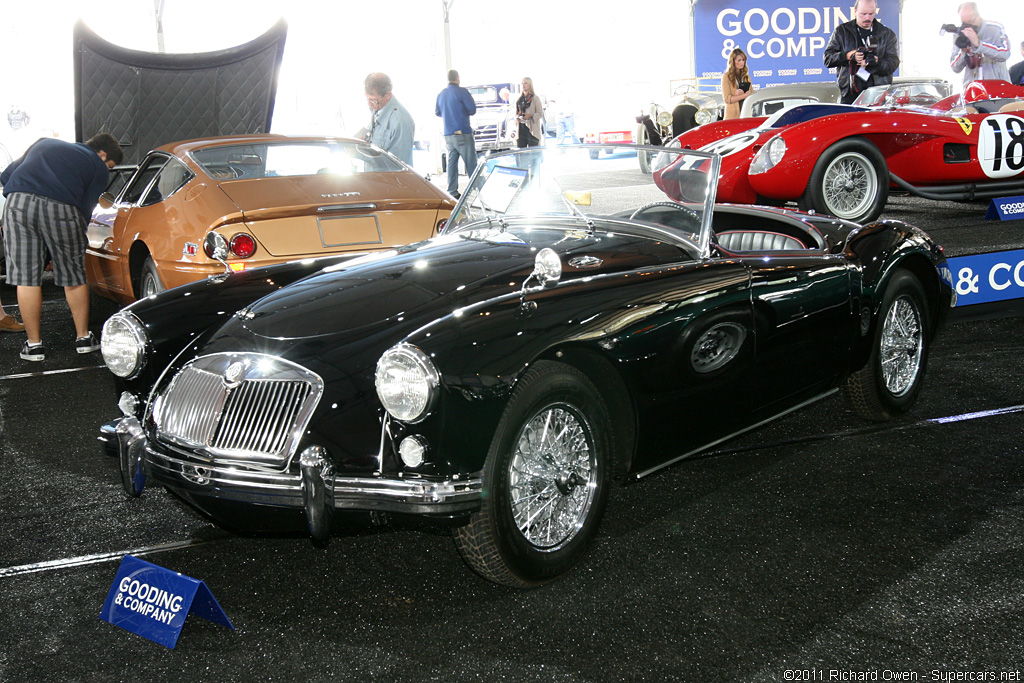
1957 MGA 1500 Roadster – sold for $56,100 Beautifully Restored Example. 2003 Frame-Off Restoration. Handsome Livery. Recent Mechanical Servicing. Timeless Sports Car Design. Iconic Post-War British Roadster.
Auction Source: 2011 Pebble Beach Auctions by Gooding & Company
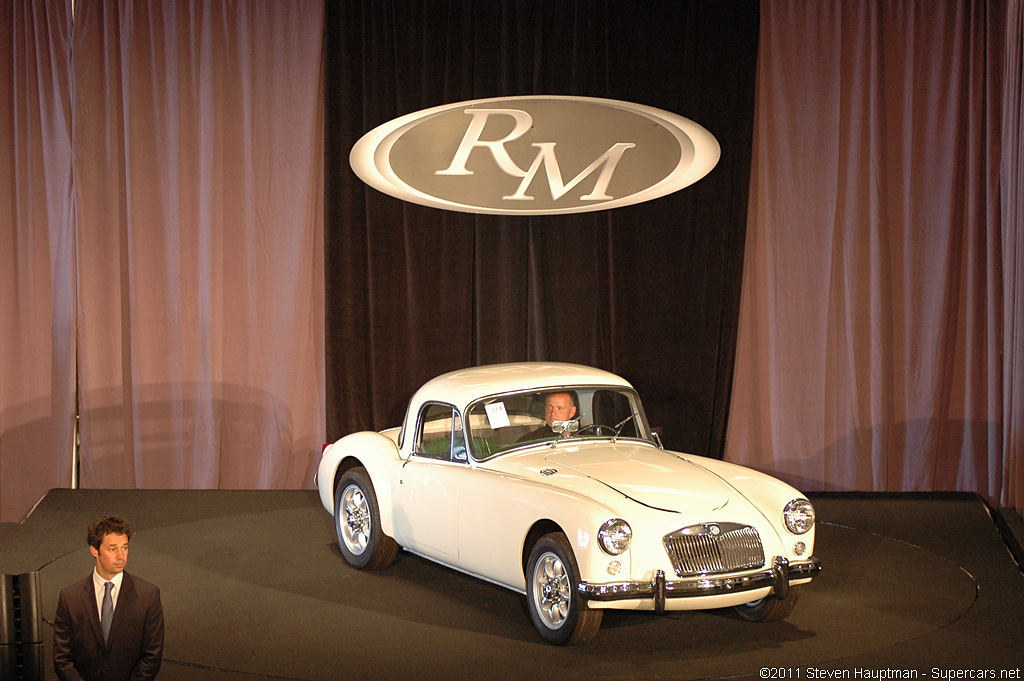
1957 MGA Coupe – sold for $22,000
A high quality, complete restoration that was completed approximately six years ago, this very fine example is finished in white with a green interior and complemented by a period-style set of Minilite “knock-off” wheels. The discerning current owner acquired it shortly after the restoration was completed, and it continues to benefit from the attentive care it has received within his private collection, including regular changes of the battery and wheel cylinders, ensuring ease of operation and readiness for use. Described by the current owner as being virtually flawless throughout, requiring nothing to be driven, shown and enjoyed with pleasure, this MGA Coupe is a wonderful example of a timeless sports car that has remained a North American favorite since its initial importation.
Auction Source: 2011 St. John’s Auction by RM