
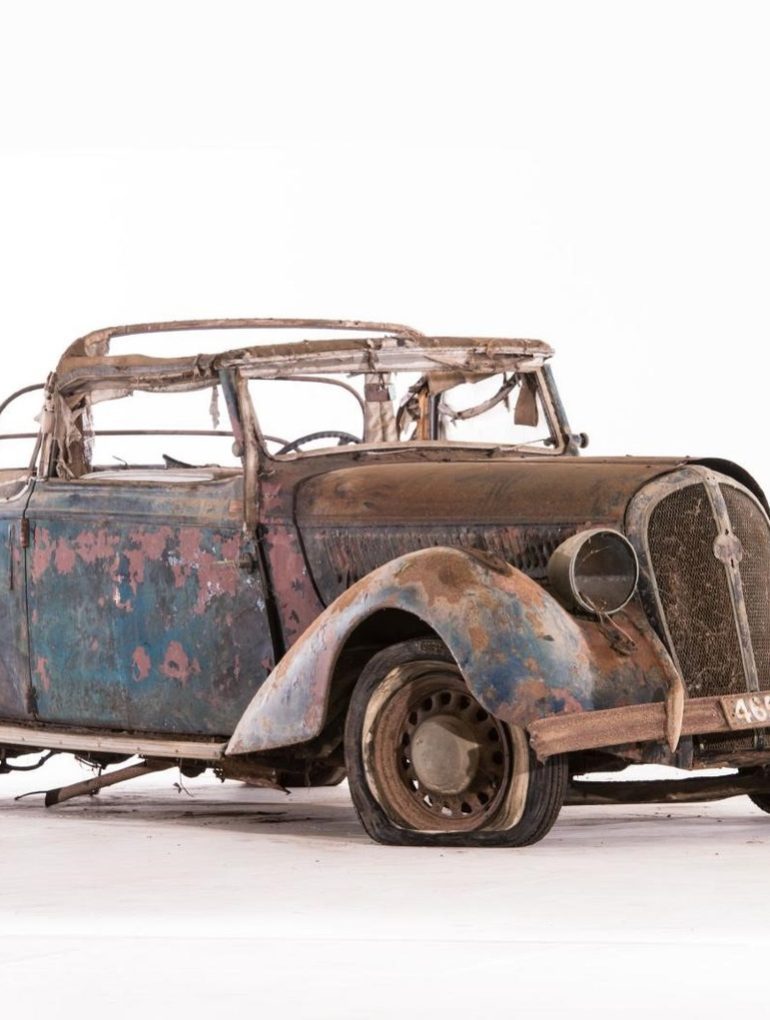
1936→1952 Hotchkiss 686
Produced from 1936 to 1952, the model 686 was a long-lived model by Hotchkiss et Cie from Saint-Denis, Paris.
Hotchkiss offered the 686 with an optional Grand Sport (GS) performance upgrade and in 1937 a twin carburetter model known as the Paris-Nice (PN) was also offered.
686s did quite well at the Rallye Monte Carlo winning 1939, 1949 and 1950 editions.
1936 Hotchkiss 686 Gallery
See full 1936 Hotchkiss 686 Gallery here
In Detail
| submitted by | Richard Owen |
| type | Series Production Car |
| production years | 1936 – 1952 |
| built at | France |
| engine | Inline-6 |
| fuel feed | 2 Zenith Stromberg |
| power | 78.3 kw / 105 bhp @ 4000 rpm |
| bhp/weight | 66.67 bhp per tonne |
| driven wheels | RWD |
| curb weight | 1575 kg / -1.0 lbs |
| wheelbase | 3120 mm / 122.8 in |
| length | 4900 mm / 192.9 in |
| width | 1670 mm / 65.7 in |
| height | 1670 mm / 65.7 in |
| transmission | 4-Speed Manual |
Auction Sales History
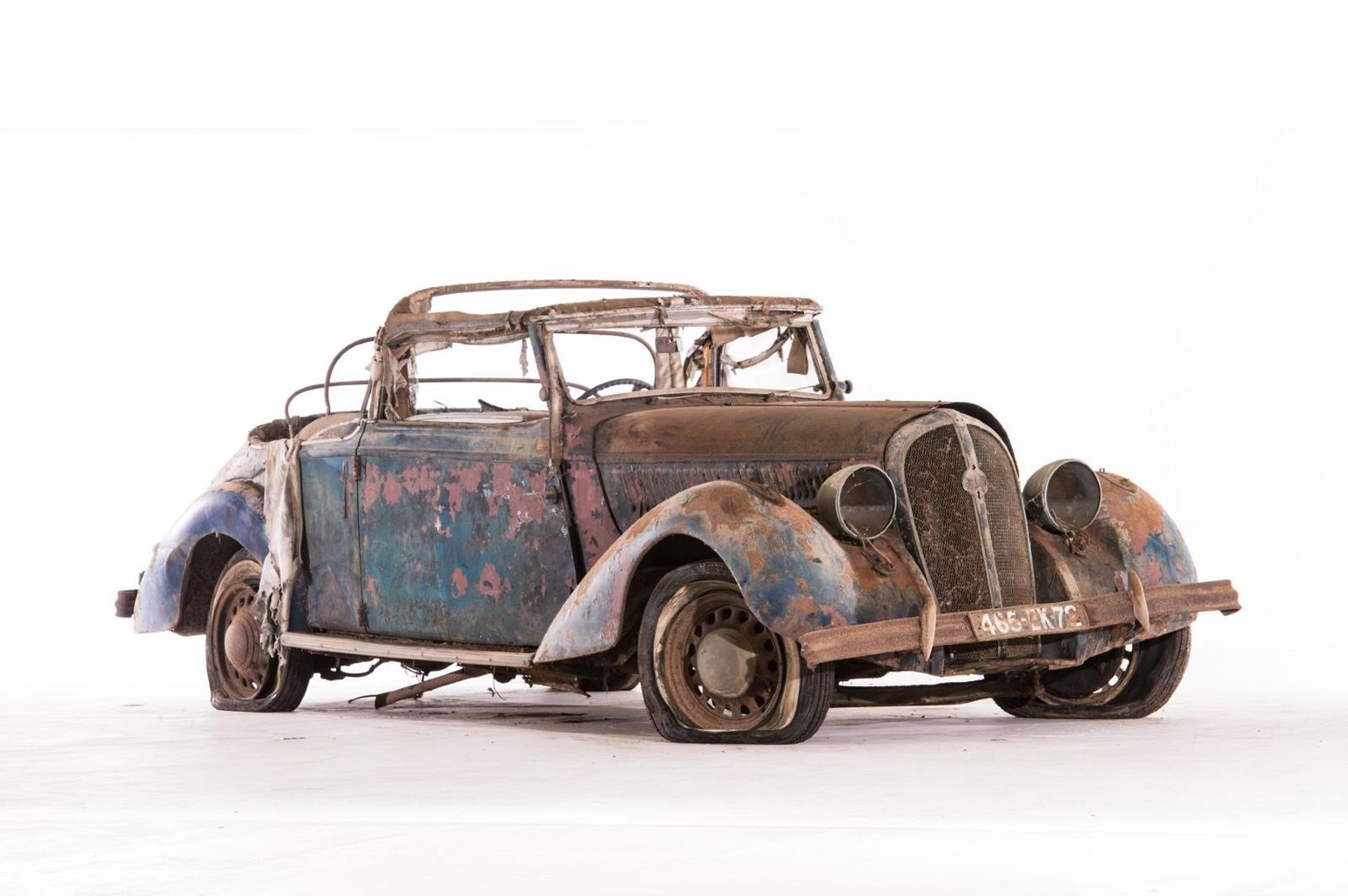
1939 Hotchkiss 686 Paris-Nice Cabriolet 81689 – sold for €30,992
This model that we are offering, in a rare cabriolet coachwork called Biarritz. The car seems complete and the dashboard includes all instruments, including a water thermometer located on the steering column. The midnight blue upholstery is damaged but partially recoverable, and the hood system is complete too. The windshield folds down and under the hood, it does not seem to lack any accessories, with the big six-cylinder in-line engine, the air filter was put on the side. On the trunk appears a small sticker “Auto Hall”, a dealer selling used Hotchkisses. With its beautiful coachwork, this car is sure to attract the attention of enthusiasts.
Auction Source: The Baillon Collection at Rétromobile