
1958 Ferrari 250 TR58
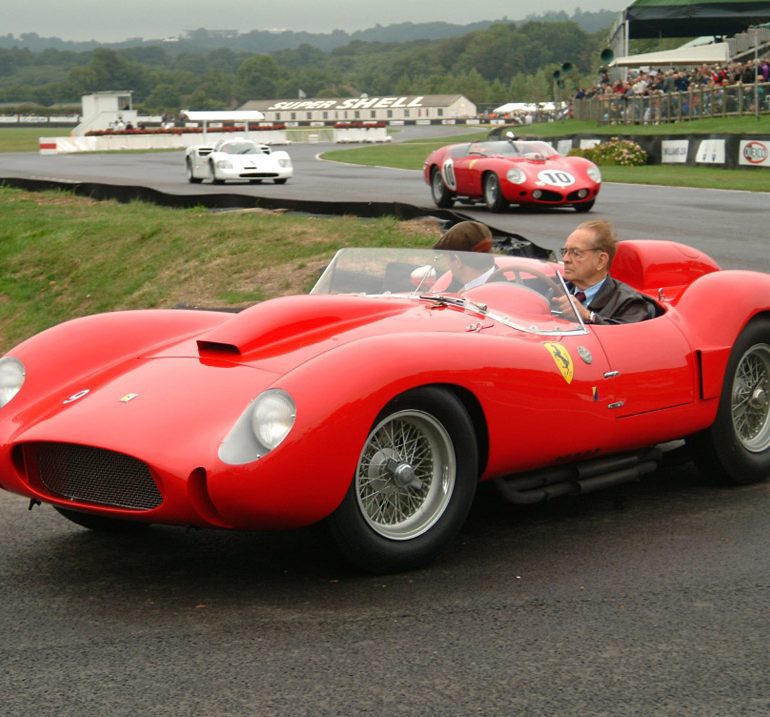
To keep the ahead of the competition in 1958, Ferrari developed their 250 Testa Rossa into the more potent TR58. Only two were specifically made for the factory team and they received constant upgrades throughout the season.
When first released, the 250 Testa Rossa had seemly modest engineering with its solid rear axle, drum brakes, a simple chassis and SOHC valve train. While the body looked space-age, and was thought to help brake cooling, it was an aerodynamic mess that needed revision if the factory team was going to stay ahead.
After the first few races with the 250 Testa Rossa, it was apparent that Ferrari that needed to address the TR’s high speed stability, so they modified the body to fully enclosed design. But Ferrari didn’t stop there and by chief engineer Carlo Chiti added a De Dion rear axle while continuing development on the 3.0 liter V12.
During the 1958 season, Ferrari entered these cars in the most important races to rack up championship points in the CSI’s World Sportscar Championship. Four cars, including prototypes 0666TR and 0704TR, were used by Ferrari which were modified in several ways throughout the season. The two other cars were chassis 0726TR and 0728TR and, like the prototypes, had a De-Dion type rear suspension.
Most of the Testa Rossa’s success in 1958 can be attributed to the factory works effort which won the Buenos Aires 1000k, Sebring 12-Hour, the Targa Florio and Le Mans by Olivier Gendebien and Phil Hill in 0728TR. Factory drivers Luigi Musso, Mike Hawthorn, Peter Collins, Wolfgang Von Trips, Phil Hill, Oliver Gendebien and Wolfgang Seidel usually ran alongside several privateers which meant that Ferrari outnumbered the competition at every major race.
Primary competition to the TR58 came from Aston Martin DBR1 which was a much faster car. When the Aston managed to keep together, it provided wicked competition. So much so, drivers Stirling Moss and Jack Brabham beat the factory works Ferraris at the Nurburgring 1000k, but reliability plagued the DBR1 elsewhere.
After winning Le Mans, Ferrari had secured the Manufacturers Championship and eased off sportscar racing to focus on F1. Ferrari ceased delivery of the customer Testa Rossas in 1958, leaving a limited production of 19 cars. However, they continued development of the factory-backed works cars which achieved so much success. Ferrari knew they needed to improve the Testa Rossa if it was to keep pace with the increasing Aston Martin DBR1 threat and by 1959 released the refined TR59. But was it good enough?
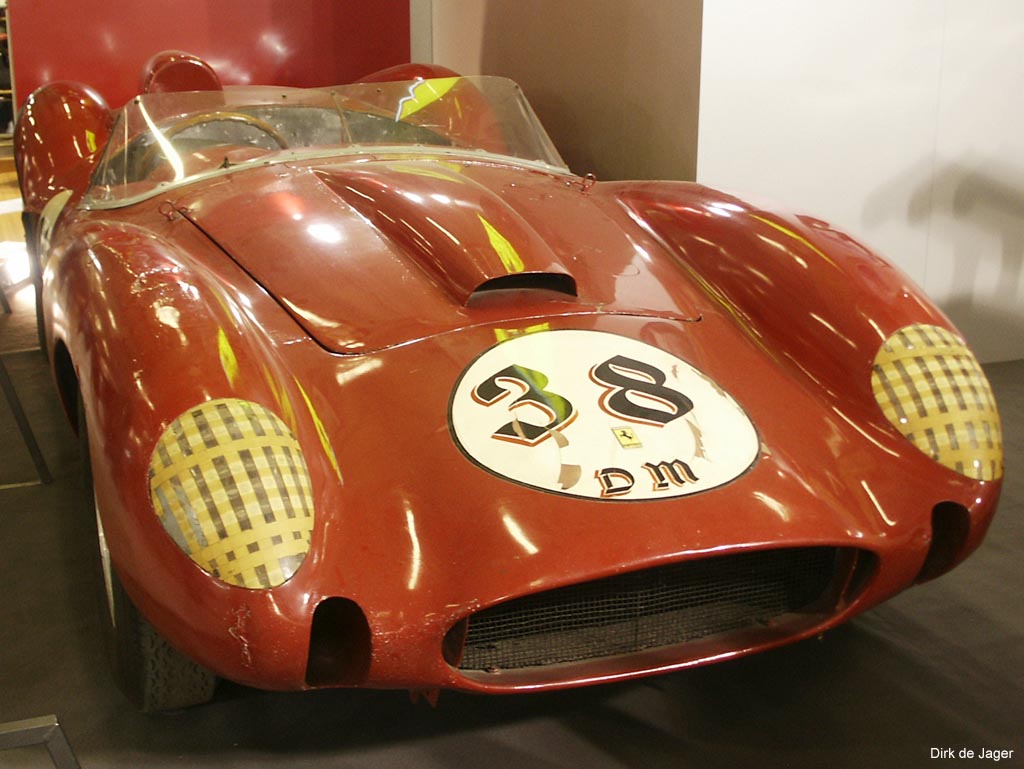
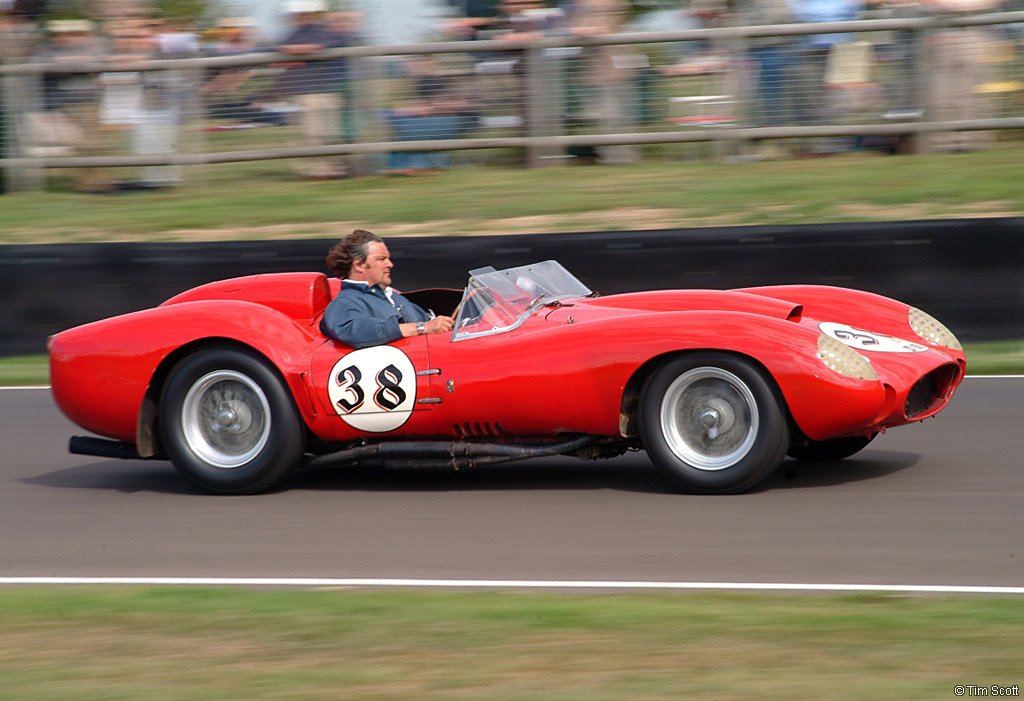
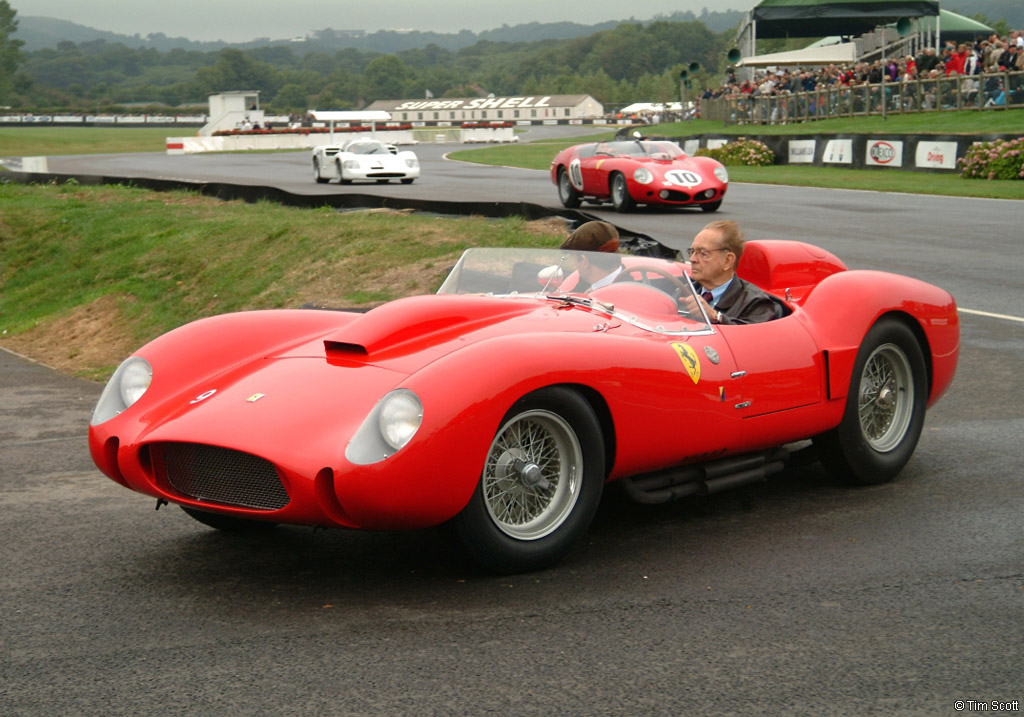
Ferrari 250 TR58 Gallery & Images
See full 1958 Ferrari 250 TR58 Gallery here
Ferrari 250 TR58 Specs & Performance
| type | Racing Car |
| production | 3 |
| engine | Alunimum, 60 Degree, Tipo 128LM V12 |
| position | Front Longitudinal |
| aspiration | Natural |
| valvetrain | Chain Driven SOHC, 2 Valves per Cyl |
| fuel feed | 6 Twin-Throat 38 DCN Weber Carburettors |
| displacement | 2953 cc / 180.2 in³ |
| bore | 73 mm / 2.87 in |
| stroke | 58.8 mm / 2.31 in |
| compression | 9.8:1 |
| power | 223.7 kw / 300.0 bhp @ 7200 rpm |
| specific output | 101.59 bhp per litre |
| bhp/weight | 377.83 bhp per tonne |
| torque | 380.98 nm / 281 ft lbs @ 5500 rpm |
| body / frame | Aluminum over Tipo 526B Steel Tube Frame |
| driven wheels | RWD |
| front tires | 5.5×16 Englebert |
| rear tires | 6.5×16 Englebert |
| front brakes | Aluminum Drums |
| rear brakes | Aluminum Drums |
| front wheels | F 40.6 x 14.0 cm / 16.0 x 5.5 in |
| rear wheels | R 40.6 x 14.0 cm / 16 x 5.5 in |
| steering | ZF Steering Box |
| f suspension | Unequal A-Arms w/Coil Springs, Houdaille Shock Absorbers, Anti-Roll Bar |
| r suspension | De Dion Type w/Coil Springs over Shock Absorbers, Anti-Roll Bar |
| curb weight | 794 kg / 1750 lbs |
| wheelbase | 2350 mm / 92.5 in |
| front track | 1307 mm / 51.5 in |
| rear track | 1294 mm / 50.9 in |
| length | 3959 mm / 155.9 in |
| width | 1523 mm / 60.0 in |
| height | 964 mm / 38.0 in |
| transmission | 4-Speed Transaxle |
Sources & Further Reading
Finn, Joel E. Testa Rossa V12, Newport Press: 1979.
Mallepelle, Paolo. ‘The Ferrari Sports Racer.’ Cavallino 42, Dec 1987.
Mangiamele, Guy. ‘250 Testa Rossa’. Cavallino 67, Feb 1992.
Pomeroy, Larence. ‘Succeeding a Champion.’ Motor, Apr 1958.
Prunet, Antione. Ferrari Sports Racing and Prototype Competition Cars, Haynes: 1983.