
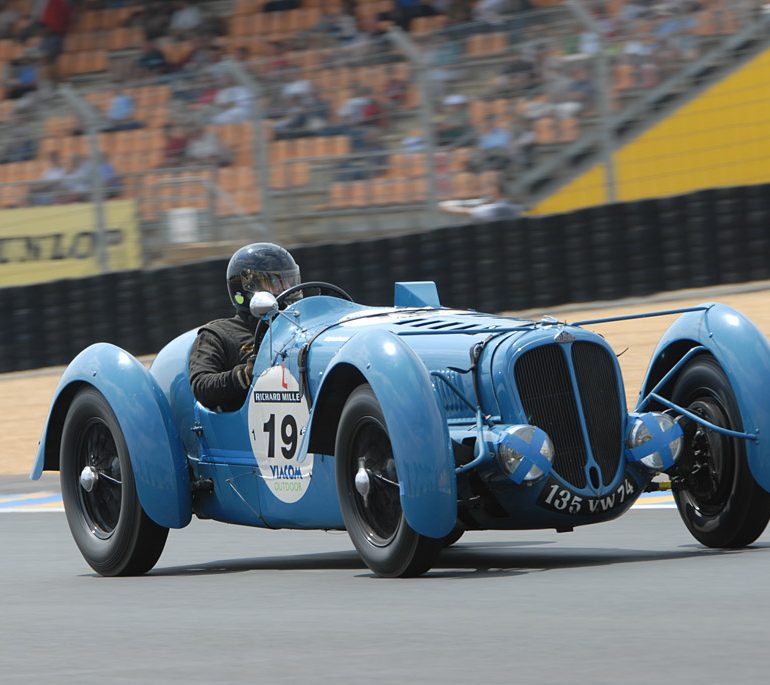
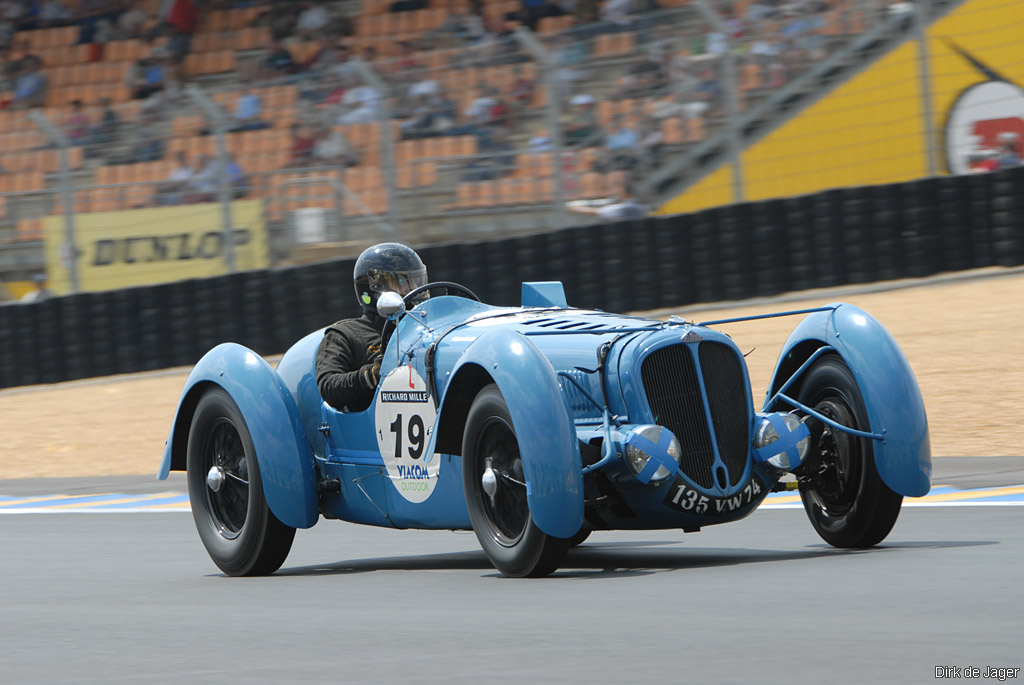
1935 Delahaye 135 Spécial
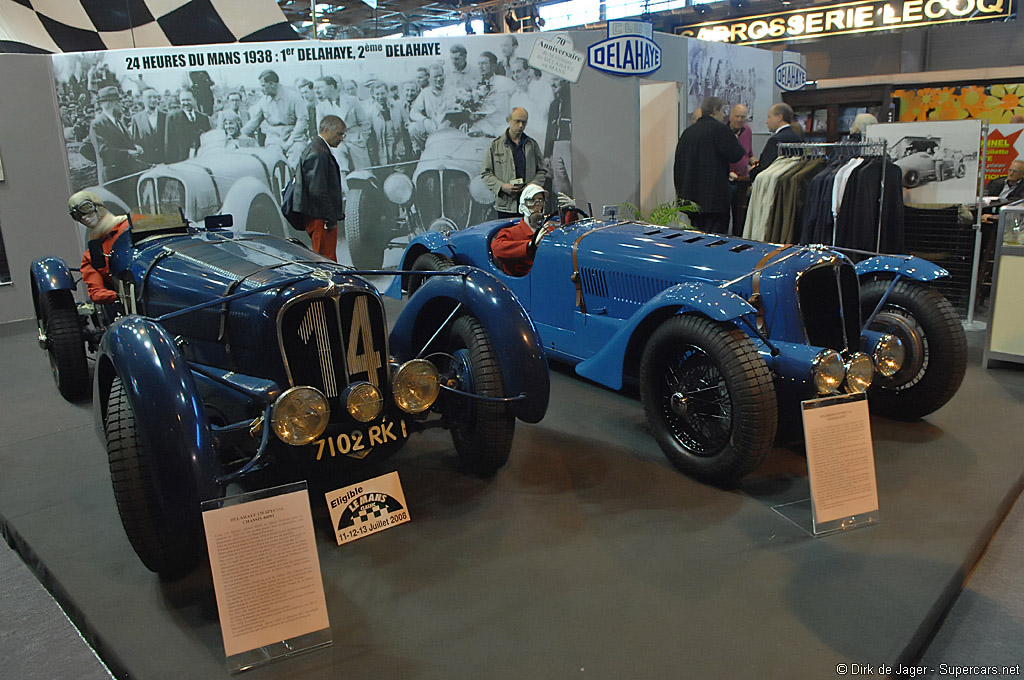
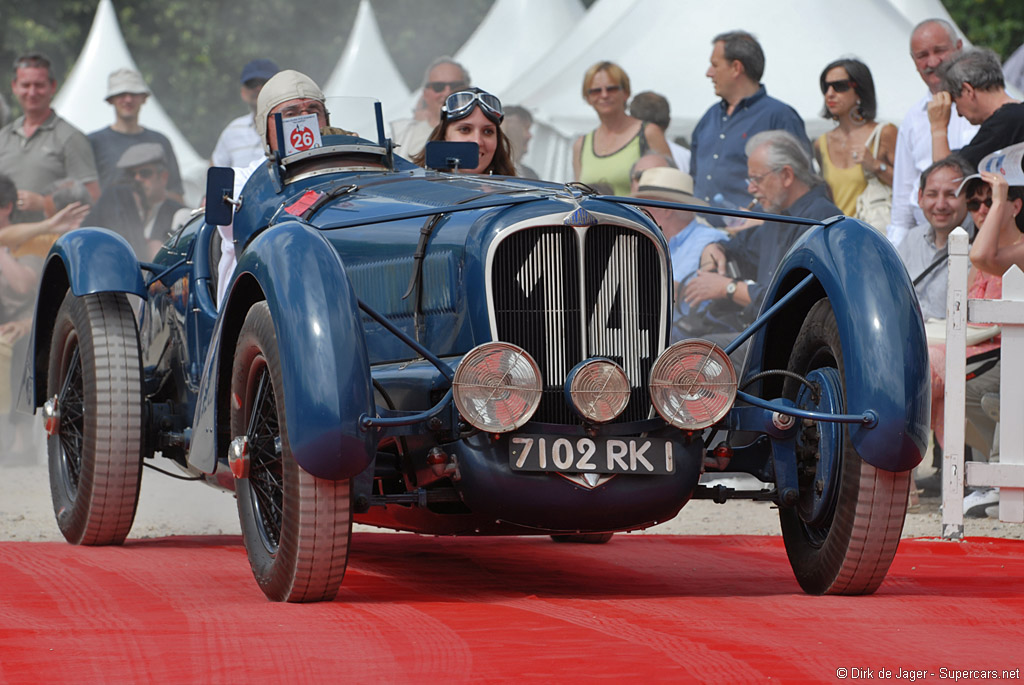
In 1936 the ideal French sports car was the 135 Special. It used the most developed version of Delahaye’s inline-6 with simple competition bodywork. Many of these cars raced both in the Grand Prix and sports cars races during the pre-war era.
At the center of the 135 chassis was a robust six-cylinder engine. It’s simple pushrod design ensured reliability while the modest capacity gave good fuel economy. For almost fifteen years Delahaye used this engine for their most celebrated chassis. For competition, Delahaye engineer Jean François cast a new block and cylinder head that offered significantly more power. This also had an added water passage in between cylinders two and three.
The Special’s engine offered 160 bhp, up nearly 50 bhp from the standard model. This was mainly due to the new cylinder head which offered a higher 9.5:1 compression ratio, larger vales, a high-lift cam and individual exhaust ports. Known as the 135J, some of these engines were machined on the exterior to reduce weight.
Like the production version, the Special used a chassis with twin rails that were joined at the center and reinforced by a welded-in floor. Most competition car were fitted with a larger 102 liter fuel tank.
Many 135 Specials were bodied by Pourtout as dual-purpose road/racing cars. The sweeping fenders were removable allowing admittance into both GP and sports car racing.
Racing
Delahaye 135s experienced great success in motor sport, especially at the Automobile Club de France-organized events that excluded the dominant German cars by only allowing sport-competition cars. This included the ACF’s 24 Hours of Le Mans, where Delahaye would do particularly well.
For the 1936 season Delahaye built its own factory team using drivers Albert Divo and Albert Perrot. The cars first real sucess came at the Three Hours of Marseilles where 135 Specials took the top six postitions. A month later was the prestigious French Grand Prix at Montlhèry where Delahayes finished second, third, fourth and fifth. Two weeks later Schell and Carrière finished third overall at the 24 Hours of Spa.
Many of the cars were modified with doors for the 1937 season. These were frequently raced at all the major sports car races including Monte Carlo, the Mille Miglia and the 24 Hours of Le Mans. This year Delahayes finished second and third at Le Mans. The highlight of the 135’s career came at the 1938 LeMans a year later. During the event Eugene Chaboud and Jean Tremoul took first overall with their 135 Special.
1935 Delahaye 135 Spécial Gallery
See full 1935 Delahaye 135 Spécial Gallery
In Detail
| type | Series Production Car |
| engineers | Jean François |
| engine | Type 135J Inline-6 |
| position | Front Longitudinal |
| aspiration | Natural |
| valvetrain | Pushrod OHV, 2 Valves per Cyl |
| fuel feed | 3 Horizontal Solex Carburetors |
| displacement | 3557 cc / 217.1 in³ |
| bore | 80 mm / 3.15 in |
| stroke | 107 mm / 4.21 in |
| compression | 9.5:1 |
| power | 119.3 kw / 160.0 bhp @ 4200 rpm |
| specific output | 44.98 bhp per litre |
| bhp/weight | 125.98 bhp per tonne |
| body / frame | Aluminum over Steel Frame |
| driven wheels | RWD |
| wheel type | Wire |
| front tires | 6.00×17 |
| rear tires | 6.00×17 |
| front brakes | Drums w/Servo Assist |
| rear brakes | Drums w/Servo Assist |
| front wheels | F 43.2 x 14.0 cm / 17 x 5.5 in |
| rear wheels | R 43.2 x 14.0 cm / 17 x 5.5 in |
| steering | Worm & Nut |
| f suspension | Transverse Semi Ellipic Springs w/Friction Dampers, Radius Rods, |
| r suspension | Non Independant Live Axle w/Leaf Springs & Friction Dampers |
| curb weight | 1270 kg / 2800 lbs |
| wheelbase | 2946 mm / 116.0 in |
| front track | 1397 mm / 55.0 in |
| rear track | 1473 mm / 58.0 in |
| length | 4050 mm / 159.4 in |
| width | 1700 mm / 66.9 in |
| transmission | 4-Speed Cotal Preselector |
| gear ratios | 3.456:1, 2.22:1, 1.64:1, 1.00:1 |
| final drive | 3.42:1 |
| top speed | ~201.2 kph / 125.0 mph |
| 0 – 60 mph | ~8.5 seconds |
Auction Sales History
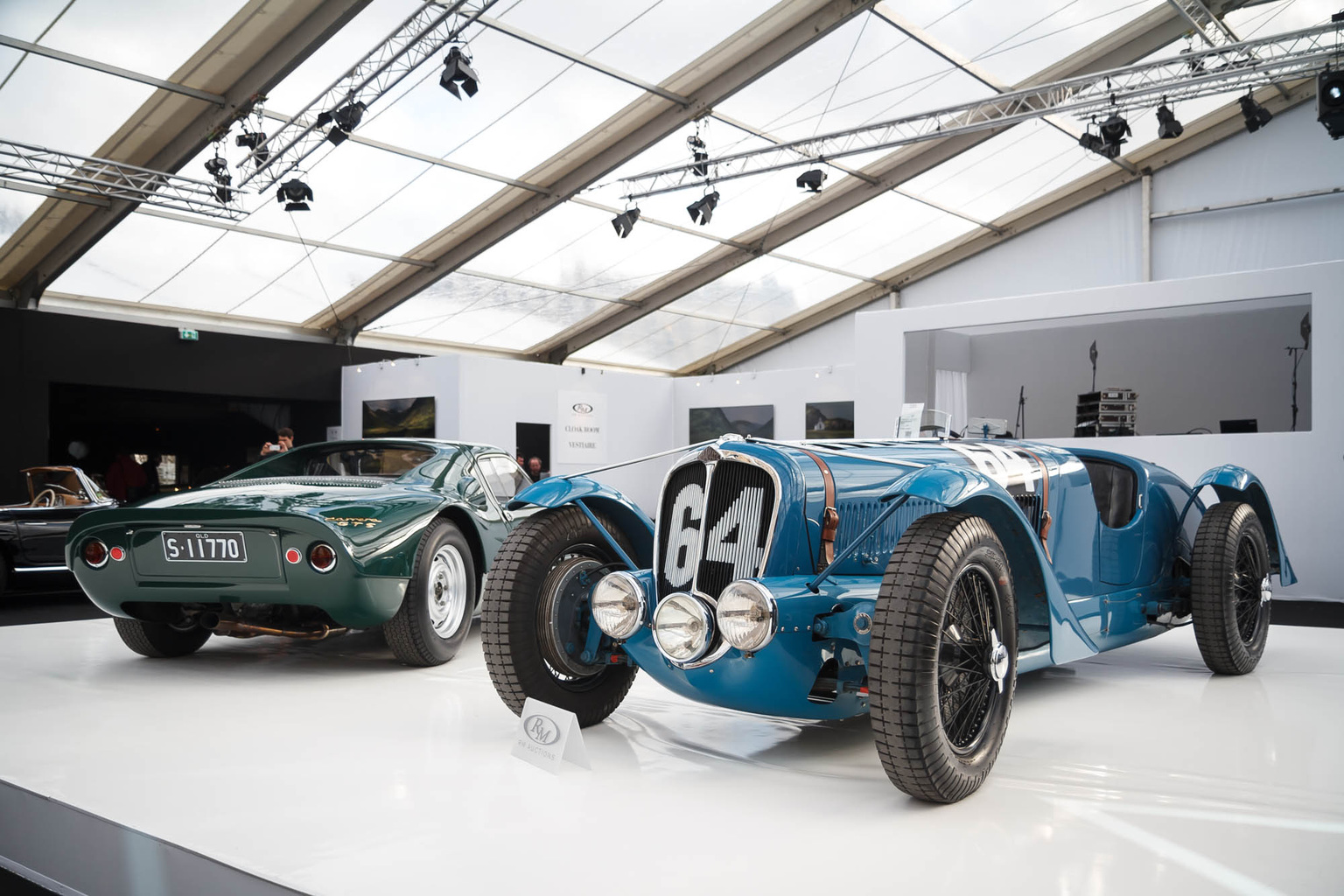
1936 Delahaye 135 S 47187 – sold for €1,008,000 Unbroken ownership since new. Painstakingly accurate restoration by marque experts in France. One of only 16 examples constructed. Extensively raced in period, including First Place at the 1936 24 Hours of Spa. Perfectly sorted mechanically and delivered with valid FIA HTP.
Auction Source: 2014 Paris by RM Auctions