
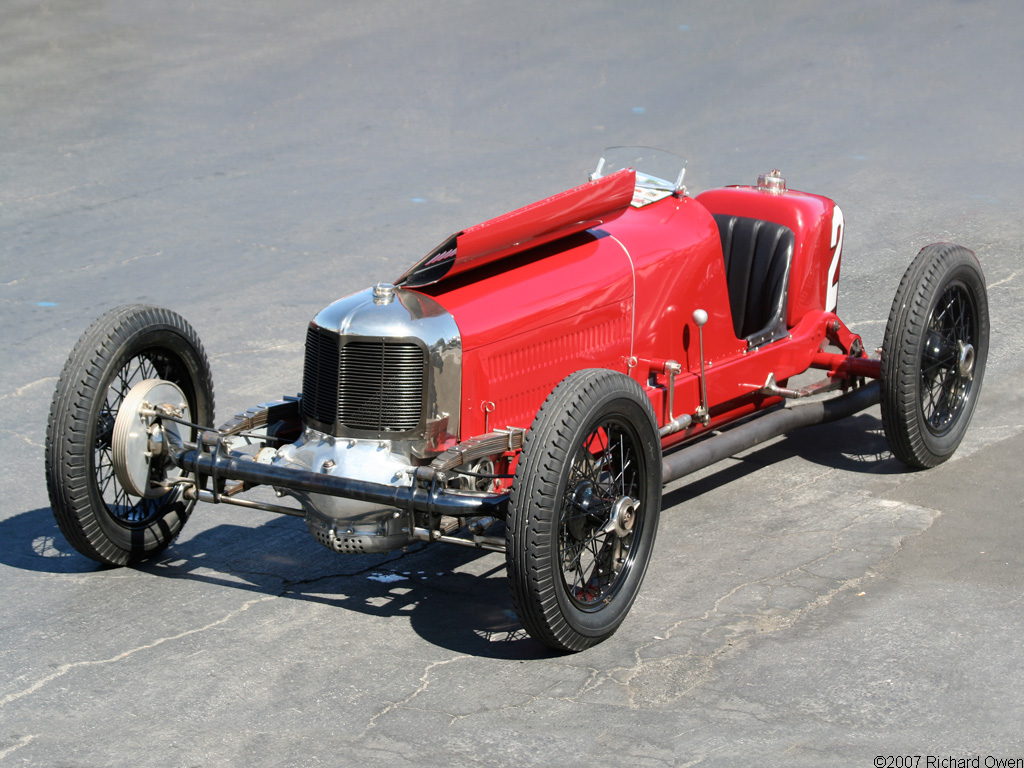
1923 Miller 122
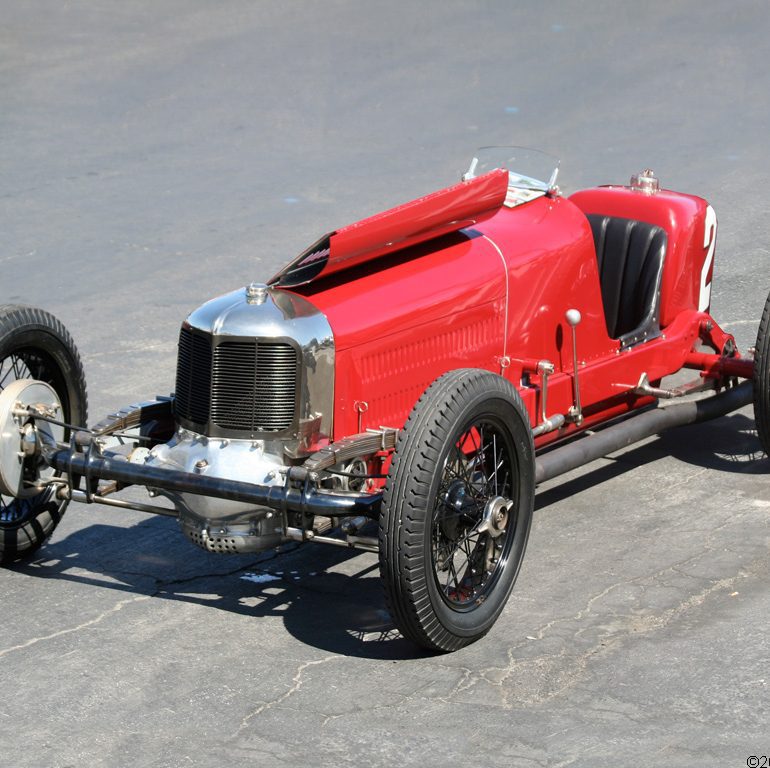
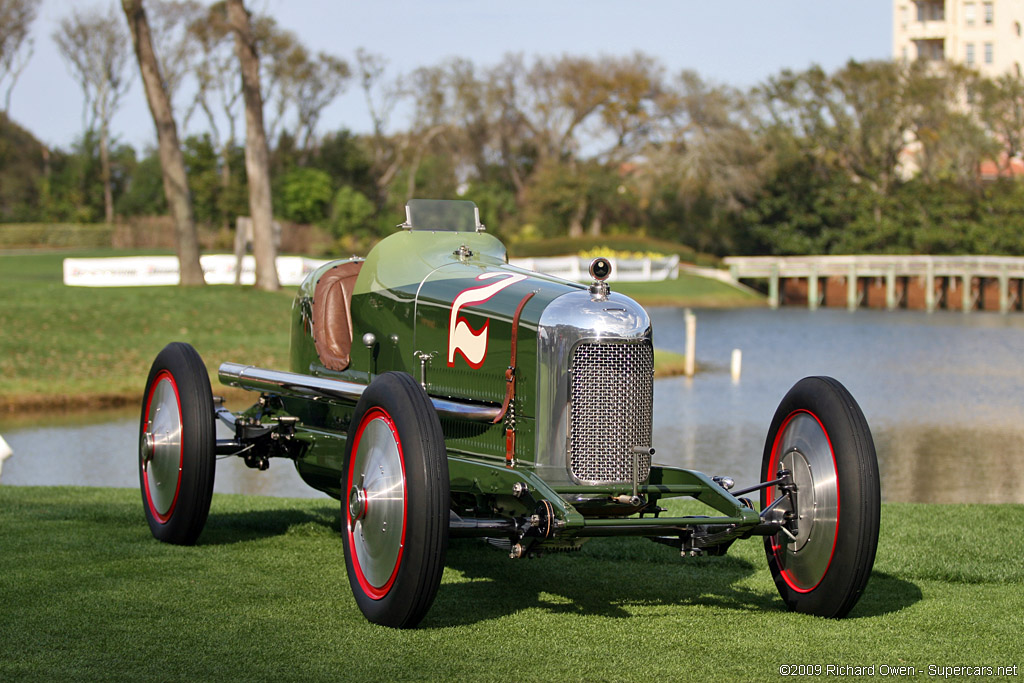
Following the two-liter restriction on engine displacement, Miller fitted a new engine into his successful Indianapolis design. Like the 183 it replaced, the 122 featured a four-cylinder engine the was beautifully executed. Almost the entire car used castings and designs from Miller which were created at the highest level but came at a very high cost.
The entire car was sketched by Leo Goossen and Harry A. Miller which were translated into aluminum, bronze and steel at his foundry run by Fred Offenhauser. As a result the car was almost 100% unique, only relying on outsourcing the wheels, tires, gauges and ignition system.
For the 1923 season a new two-liter engine was created with a bore and stroke of 2.334 by 3.5 inches. The cylinder heads were cast integrally with the cast iron cylinder block and sat a on a common aluminum crankcase. Like most Millers the 122 used a double overhead camshaft setup which was first copied from the 1913 Peugeot Grand Prix car. This allowed for hemispherical combustion chambers. With 5-main bearings and two valves per cylinder around 150 bhp was available. This increased to 235 bhp at 5800 with a supercharger first fitted in 1925.
A very thin chassis was built up for the 122 that had an equally narrow bodywork. The bodywork was only 18 inches wide and the entire car weighed only 1350 lbs. This resulted in a top speed of 141.17 mph (227.14 kph).
On the track Millers dominated Indianapolis and the 122 won on its first attempt in 1923. A total of seven 122s were prepared for the 1923 Indianapolis 500, five of which were owned by William Crapo Durant. Tommy Milton went on to win the Indy driving for the H.C.S. Motor Co.
Around 15 model 122s were made. Three model 122s were sent to Europe to race in the Grand Prix. Two very special cars were fabricated with front-wheel drive (FWD) in 1924 that would motivate many more FWD and 4WD Millers. These are distinguished by their front-mounted differential and much lower bodywork.
By 1926, the Miller 122 was rendered obsolete by the 91 in³ (1.5 liter). Some 122 cars were converted into type 91s.
In Detail
| tags | indianapolis |
| submitted by | admin |
| type | Racing Car |
| built at | Los Angeles, California, USA |
| engineers | Harry A. Miller |
| production | 13 |
| engine | Inline-4 |
| position | Front Longitudinal |
| aspiration | Natural |
| block material | Cast Iron w/Aluminum Barrel Crankcase |
| displacement | 1980 cc / 120.8 in³ |
| bore | 59.3 mm / 2.334 in |
| stroke | 88.9 mm / 3.5 in |
| power | 89.5 kw / 120 bhp @ 5000 rpm |
| specific output | 60.61 bhp per litre |
| body / frame | Aluminum Body over Steel Frame |
| driven wheels | RWD |
| front brakes | Drums |
| rear brakes | Drums |
| f suspension | Rigid Axle w/Semi-Elliptic Leaf Springs |
| wheelbase | 2540 mm / 100 in |
| transmission | 3-Speed Manual |
| top speed | ~227.14 kph / 141.17 mph |
Auction Sales History
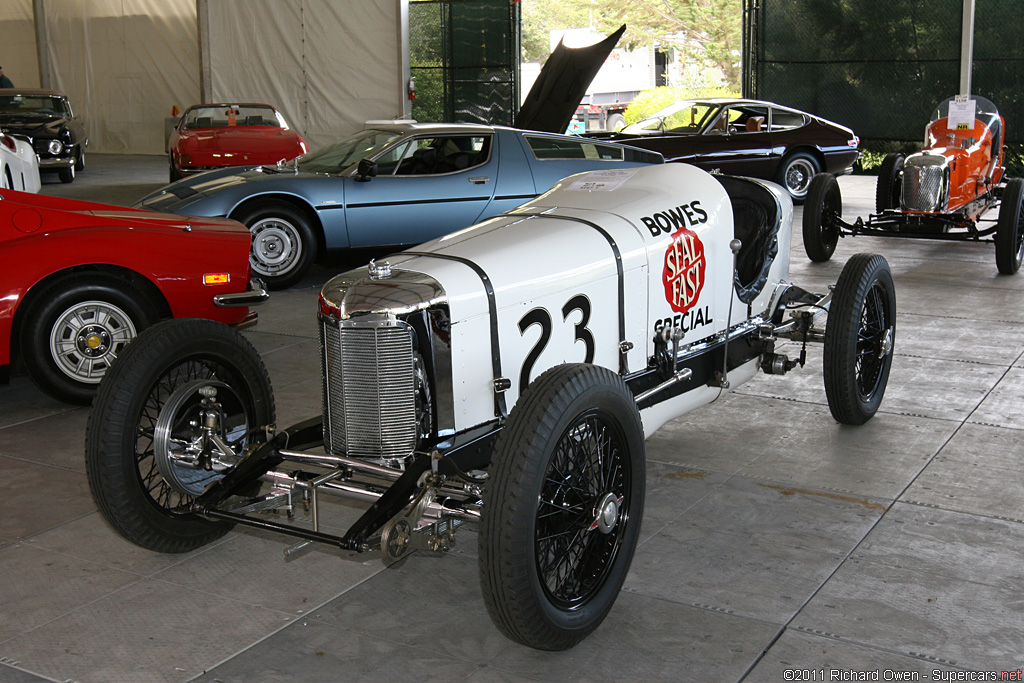
1931 Miller Bowes Seal Fast Special – sold for $2,000,000
The Bowes Seal Fast Special was first piloted at Indy by Louis Schneider in 1930 with Clyde Terry as riding mechanic. The car qualified 4th at a speed of 106 mph and finished 3rd on the lead lap (finished 200 laps). It ran with a Miller 8-122 CI engine.
The car is restored to its most famous livery as car no. 23 and winner of the 1931 Indianapolis 500. Again driven by Louis Schneider, this time with riding mechanic “Jigger” Johnson. The Miller 122 engine was bored out to 151 CI and is the engine configuration that the car carries today. Qualifying 13th @ 107mph, she came home to win the race with an average speed of 96.629 mph. The Bowes Seal Fast Special was a prolific performer throughout the 1930’s, competing at Indy in 8 of the 10 years. Ownership lineage for the car is traceable back to its original race debut.
Auction Source: 2011 Monterey Daytime Auction by Mecum
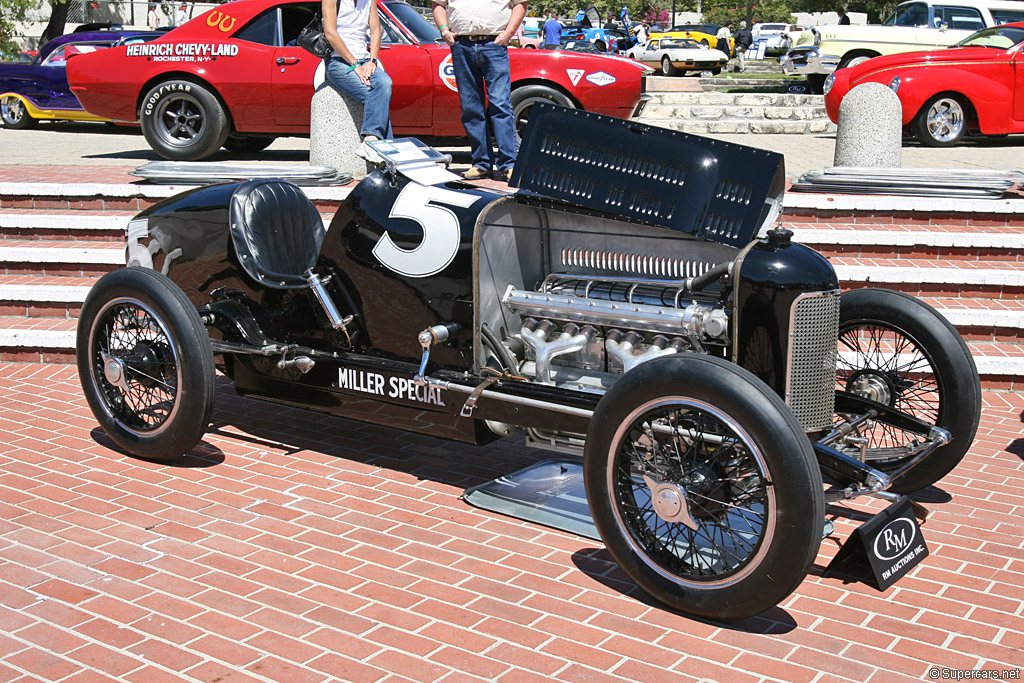
1924 Miller 122/183 Convertible Speed Record Car – sold for $495,000
The availability of a car like this will never be repeated. Nearly every other single seat rear drive Miller is gone, wrecked, parted out, modified and reconfigured into oblivion or worse. This occasion represents a rare chance to own a true survivor, built during Harry Miller’s Golden Age and every bit reflective of its magnificence.
Whether one would choose to leave the Miller as presented or submit it for a restoration utilizing the now available wealth of information that has been rediscovered during the last decades is your decision. Either way one can be assured that ownership of the 183 Convertible will deem you the custodian of a matchless American racing icon.
Auction Source: 2007 Monterey Preview