
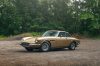

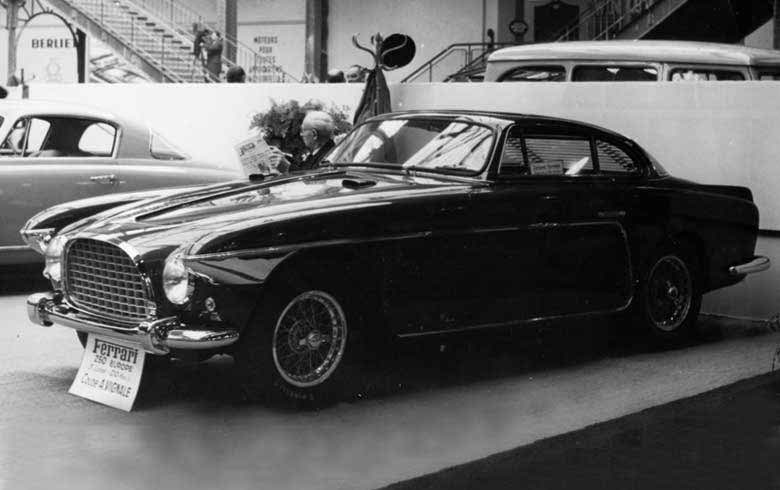
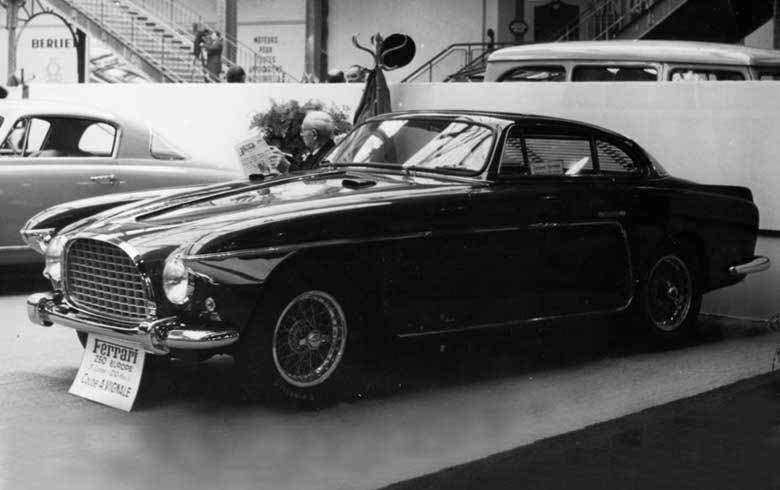
Ferrari 250 Europa
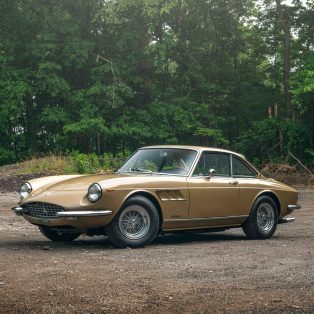
In many ways, the Europa was Ferrari’s first grand touring car. It was the first built with no racing intentions and, due to a new relationship between Pinin Farina and Ferrari, its style was more uniform than any previous series. The success of the Europa model contributed to all of Ferrari’s road cars right up to present day and it helped Pinin Farina mature their ever-important relationship.
Compared to the 212 Inter it replaced, the Europa was a much larger car, with a chassis like the 375 America and a much larger long block engine designed by Aurelio Lampredi. Only a handful of cars were built before a much more successful second series of cars were produced.
When Mercedes-Benz entered the high-end sports car with their space-frame 300SL, Ferrari responded with a second series Europa. In 1954, the Europa GT was launched with Colombo’s lighter and more compact short-stroke engine. It also had a shorter in the wheelbase than that of the first Europa, independent front suspension having coil springs instead of the previous transverse leaf type and a four-speed, Porsche-type, all-synchromesh gearbox.
The GT designation on the new car was an important one, as Ferrari’s 250 GTs would go on to rule sports car racing from 1956 to 1964.
Pinin Farina was responsible for all the second series Europas minus one exceptional Vignale Coupe built for Princess Liliane de Rethy of Belgium on chassis #0359. Pininfarina also made few special cars, but most of the 28 cars shared the same design language.
Just eighteen months into production, the Europa was replaced by the new 1956 Boano/Ellena body style which was penned by Pininfarina.
Pictures
See full 1953 Ferrari 250 Europa Gallery here
Specs & Performance
| submitted by | Richard Owen |
| type | Limited Production Car |
| built at | Maranello, Italy |
| engine | V12 |
| position | Front, Longitudinal |
| valvetrain | SOHC 2 Valves / Cyl |
| displacement | 2963 cc / 180.8 in³ |
| bore | 68 mm / 2.68 in |
| stroke | 68 mm / 2.68 in |
| compression | 8.5:1 |
| power | 149.1 kw / 199.9 bhp @ 6300 rpm |
| specific output | 67.47 bhp per litre |
| bhp/weight | 173.83 bhp per tonne |
| body / frame | Body over Steel Chassis |
| driven wheels | RWD |
| front brakes | Hydraulic Drums |
| rear brakes | Hydraulic Drums |
| steering | Worm & Wheel |
| curb weight | 1150 kg / 2535 lbs |
| wheelbase | 2800 mm / 110.2 in |
| front track | 1325 mm / 52.2 in |
| rear track | 1320 mm / 52.0 in |
| length | 2800 mm / -1.0 in |
| width | 1325 mm / -1.0 in |
| height | 1320 mm / 52.0 in |
| transmission | 4-Speed Manual |
| top speed | ~218 kph / 135.5 mph |
| 0 – 60 mph | ~5.9 seconds |
| 0 – 100 mph | ~15.5 seconds |
Auction Sales History
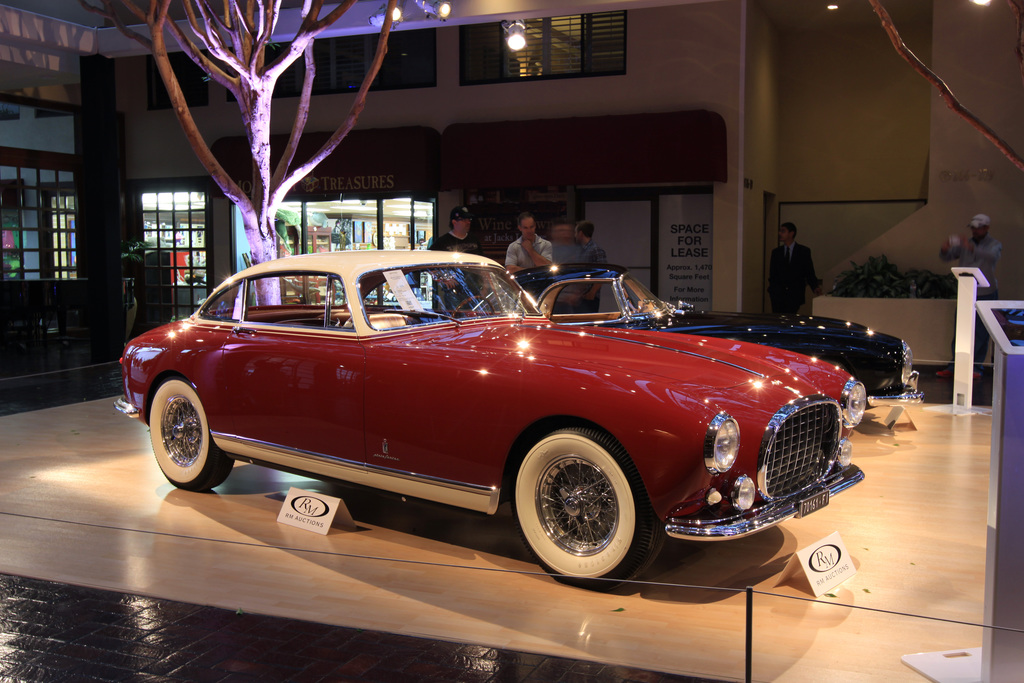
1953 Ferrari 250 Europa Coupé Pinin Farina 0305 EU – sold for $2,750,000 The fourth of twenty-one 250 Europas constructed. Interesting early history, including period Italian concours events. Recently completed five-year, concours-level restoration by Ferrari specialists. Featured on the cover of Cavallino issue 198. First in Class at the 2014 Concorso d’Eleganza Villa d’Este. Unquestionably one of the finest 250 Europas in existence. Auction Source: 2014 Monterey by RM Auctions
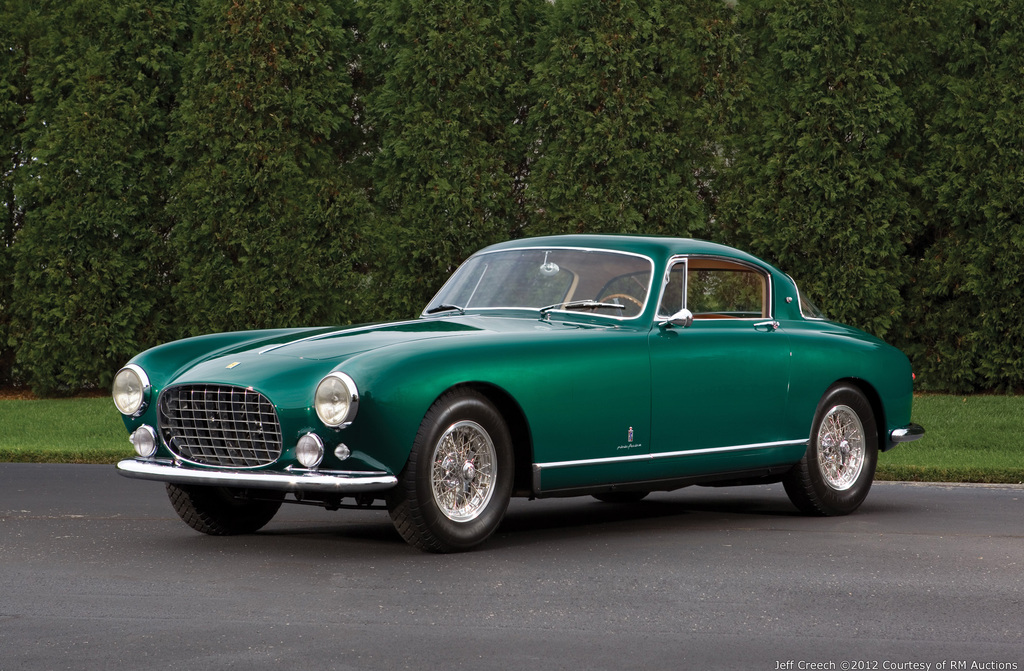
1954 Ferrari 250 Europa Coupe 0343EU – sold for $1,017,500 One of only 16 examples produced. Legendary Lampredi V-12 power. Extraordinarily high quality of restoration and subsequent care. Auction Source: 2013 Arizona Auction by RM
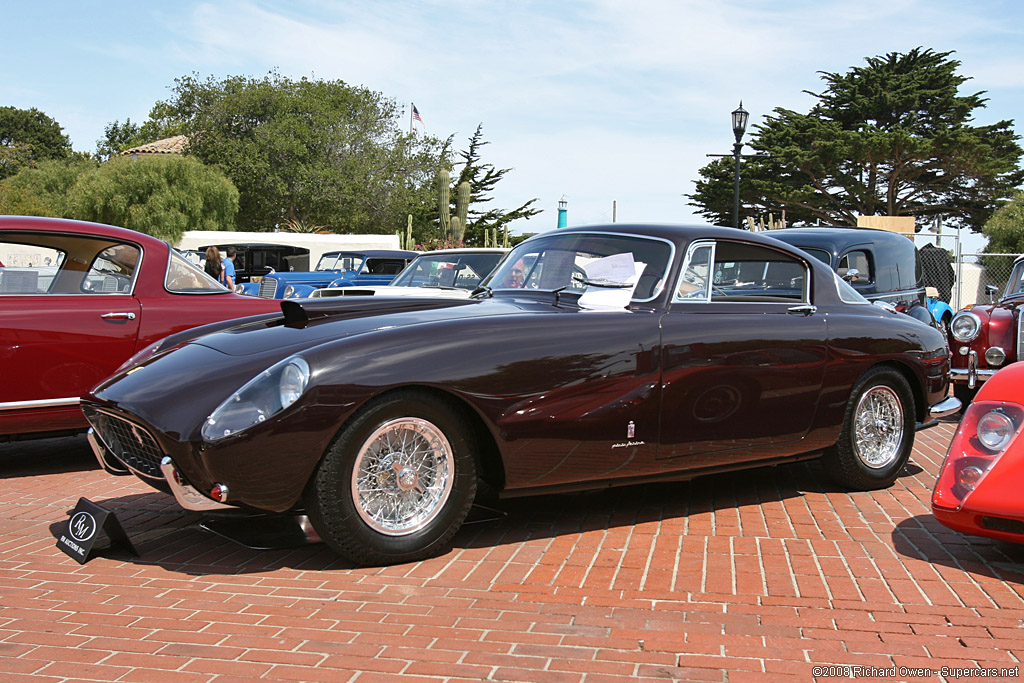 1953 Ferrari 375/250 Europa Chassis 0315AL – did not sell for $500,000 ccording to information provided by the previous owner, Dr. Balestra, who lived in Ascoli Piceno, Italy, purchased 0315 on November 13, 1954 as a three-liter. Thereafter, the factory carried out the engine swap, simultaneously installing a 9.33 (3.66) rear-end gear that permitted a relaxed 100 miles per hour touring speed with the new engine. The engine and rear end update was completed in 1955 according to Ferrari factory correspondence. Auction Source: 2008 Monterey Preview