

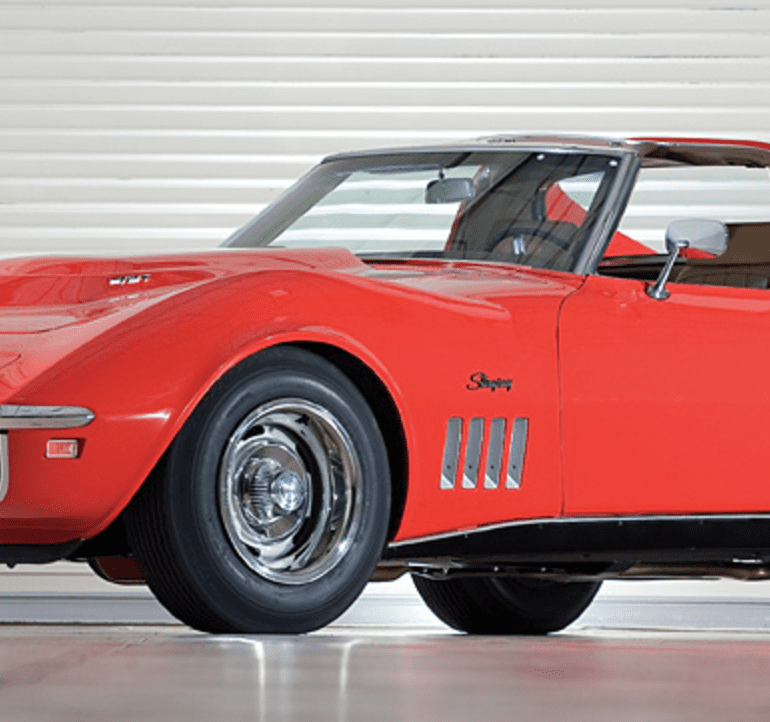
1968→1969 Chevrolet Corvette Stingray L88 Coupe
The biggest and baddest Corvette of them all was the L88 built from 1967 to 1969. What set this car apart was a comprehensive racing package that included the big block V8 with solid-lifters and Can-Am-spec cylinder heads. This was the same unit that powered the red, white and blue Sunray DX racer to a class victory at the 1967 12 Hours of Sebring and was later offered in a factory road car straight from the St. Louis, Missouri assembly line.
The story of the L88 beings with the introduction of Zora Arkus-Duntov to Chevrolet. Duntov was the first to motivate Chevrolet to install a manual transmission and larger engine into the Corvette, turning the 1956 version into a genuine sports car. Duntov would later convince GM to race and upgrade the Corvette into the L88 with motivation from Don Yenko and the Sunray DX Motorsports team. To make the car eligible for SCCA A-Production and FIA GT events, the L88 had to be a standard factory option so GM quietly offered it to the public.
As an option code on the 1967 to 1969 models, L88 was an almost secret offering. Chevrolet actively discouraged L88 orders from dealerships and the public. Just what was all the fuss about? The L88 was capable of 171 mph at Le Mans and sported more than 500 horsepower. It was developed for the track and never intended as a boulevard cruiser.
See full image gallery for the Corvette Stingray L88 and watch Stingray L88 Coupe Videos
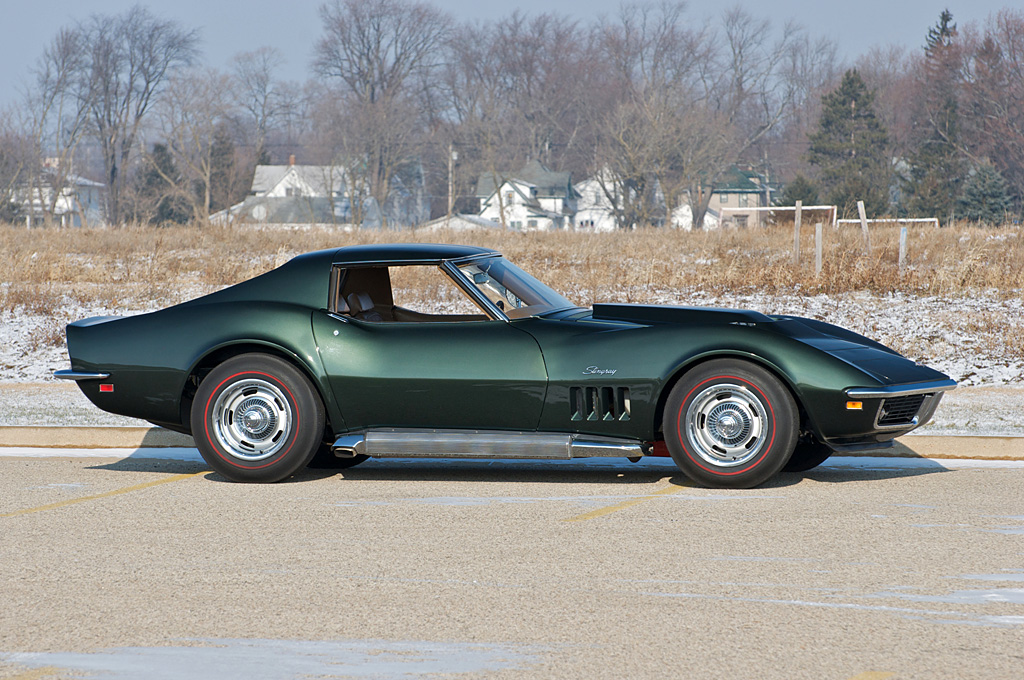
The L88 was first offered to teams such as Sunray DX Motorsports who contested Corvettes in events such as the Sebring and Daytona. Packed with factory competition hardware, the L88 package was an ordering option that made the Corvette a pure race car. Only 20 cars were made in 1967, largely for racing, but nearly 200 L88s were ordered on the C3 platform.
At the heart of the L88 package was a 427 similar only in block casting to the big-block engine first offered in 1966. After two years of development, almost every other component was reconsidered for power and racing endurance. The engines were all built at the Tonawanda, New York plant and featured the CanAm-spec aluminum heads with 2.19-inch intake and 1.84-inch exhaust valves.
At almost half the price of the L88 engine, the L71 officially appeared to offer the same performance at a marked discount. However, GM was fudging the numbers to keep the L88s off the road, making the L88 essentially the hidden, more potent, option. The L88 even donned a warning sticker on the center console that emphasized only racing fuel was adequate for the large valves and radical timing. While the L71 and L88 shared the same displacement, L88’s took the big-block theme a step further by adding a strengthened crankshaft, 12.5:1 pistons, solid lifter, cold air induction and a 850 CFM dual feed Holley carburetor.
As with any racing car, the L88 left out the fan shroud, choke and often, the heating system. With its exhaust removed, and running on racing fuel, the L88 was capable of 600 horsepower which was more than enough to take class victory at the 1967 Sebring 12 Hours. On the road, and far above GM’s 435 bhp figure, the L88 can claim anywhere from 550 to 570 horsepower in production trim.
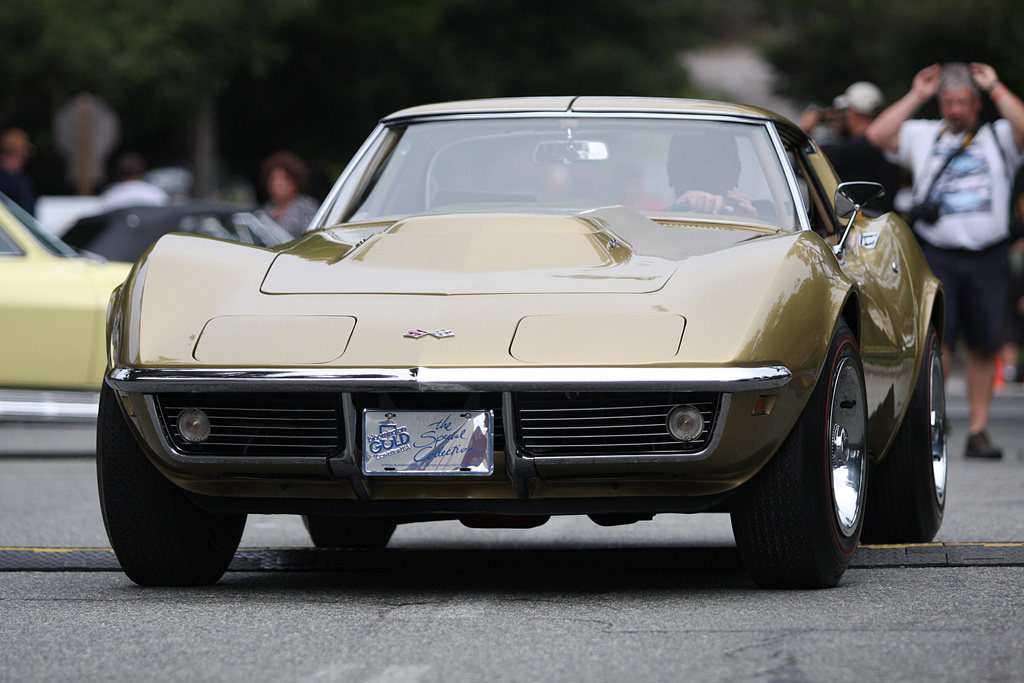
The L88 included much more than just an engine upgrade. Mandatory factory upgrades included a Muncie M22 Rock Crusher or M20 Hydramatic Transmission, power-assisted heavy duty brakes, an F41 heavy duty suspension with new coil springs and dampers, G81 positraction differential and a special cowl induction hood. Furthermore, interior options such as air conditioning, a heater/defroster system and a radio were were not available. After all was said and done the the L88 doubled the price of a standard Corvette.
L88s were produced from 1967 to 1969 and during the transition from the C2 Stingray to the C3 body style. As a limited series of around 200 cars, the L88 was sold in both coupe and convertible form. The rarest cars are 20 1967 L88 Corvettes. Due to stringent emissions standards, the L88 was forced to be canceled in 1969.
Stingray L88 Coupe Image Gallery
See full image gallery for the Corvette Stingray L88 and watch Stingray L88 Coupe Videos
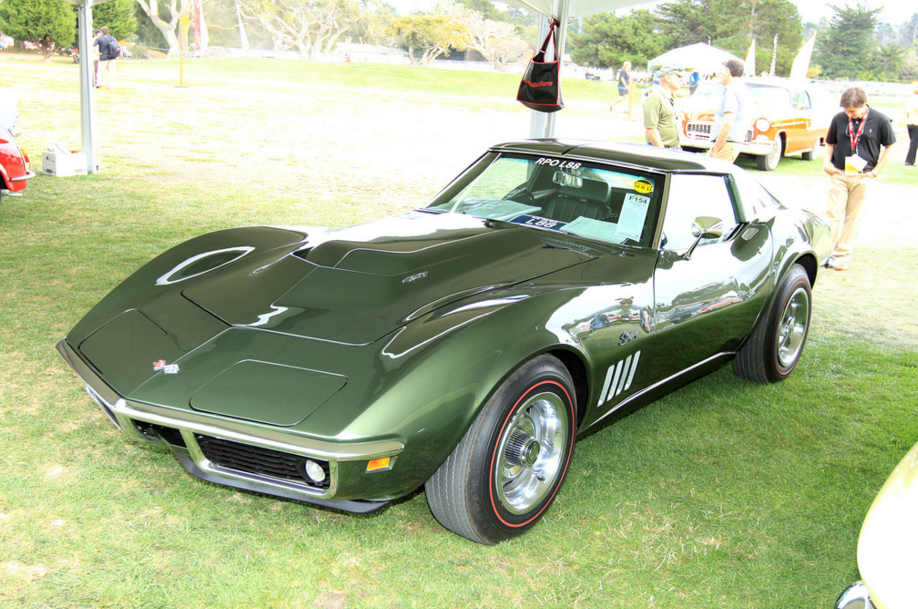
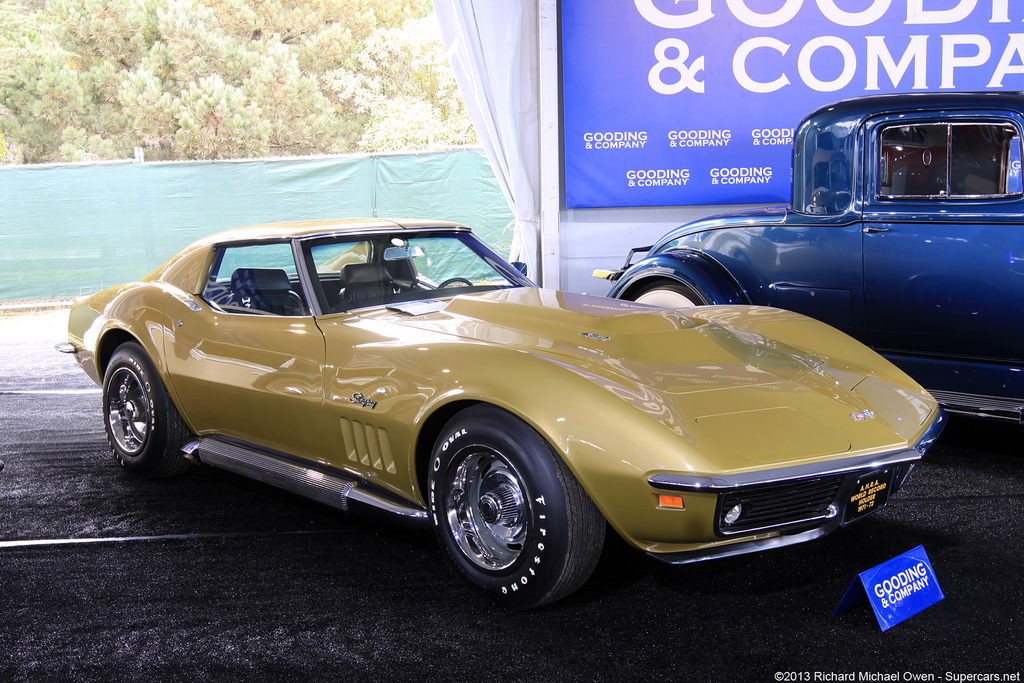
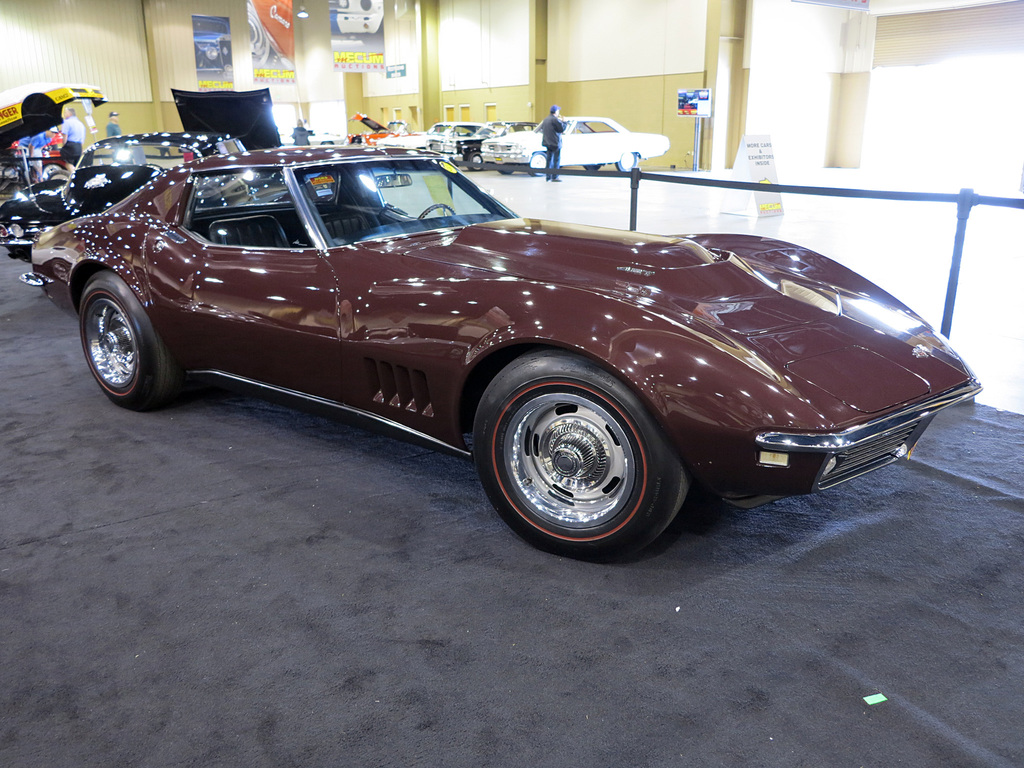
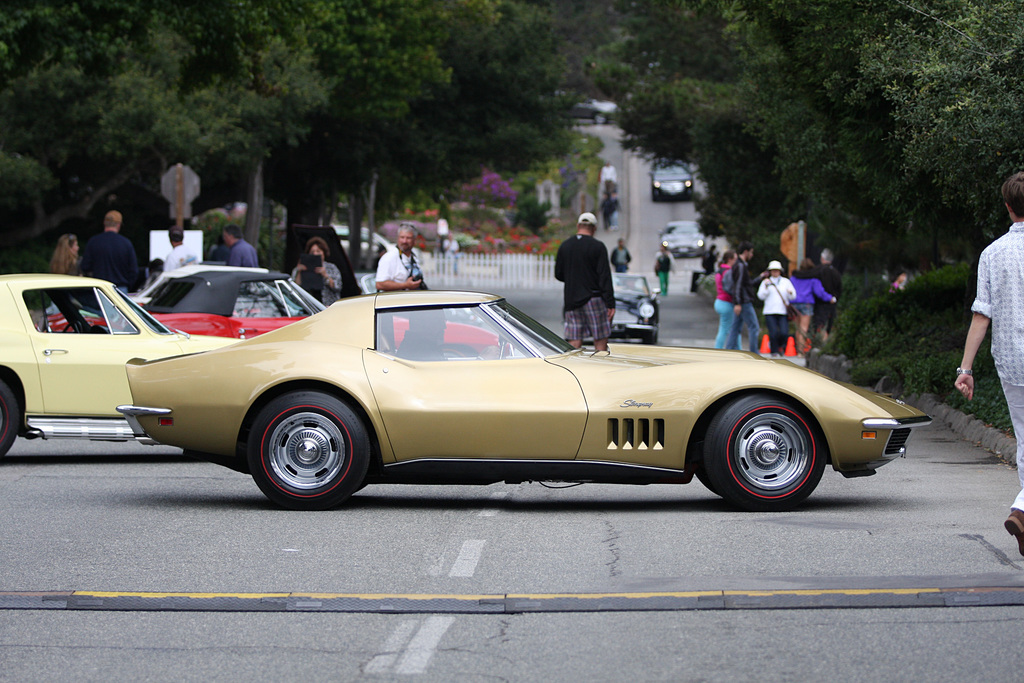
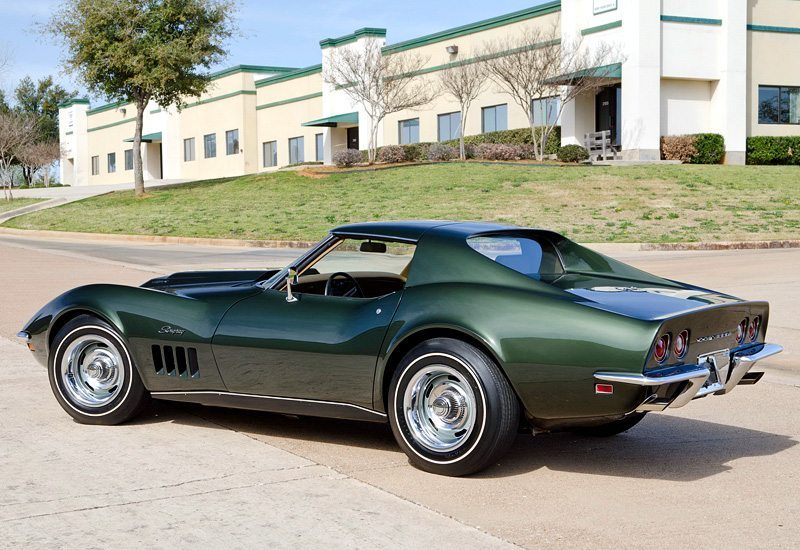
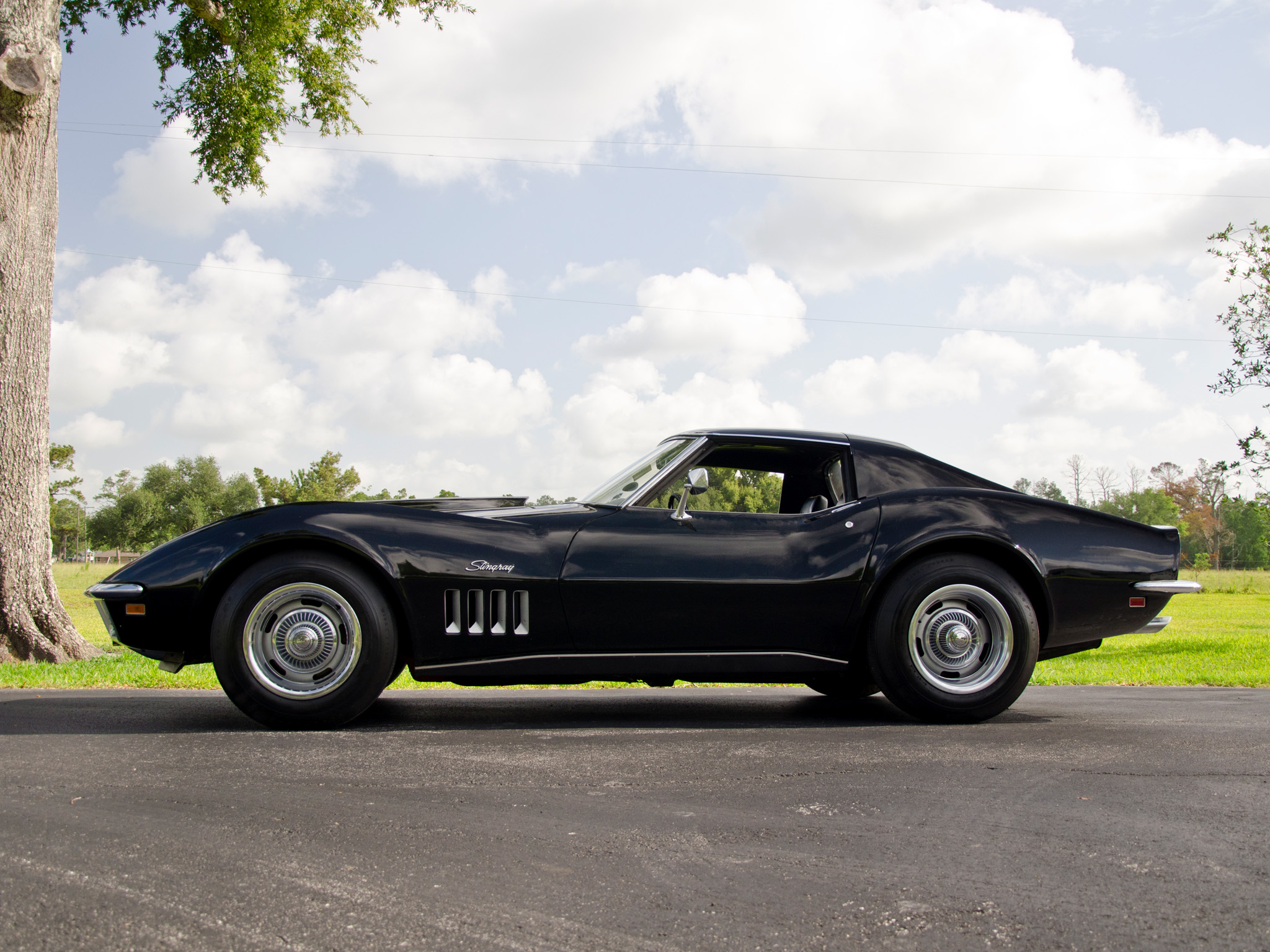
Stingray L88 Coupe Videos
See full image gallery for the Corvette Stingray L88 and watch Stingray L88 Coupe Videos
In Detail
| type | Limited Production Car |
| production years | 1968 – 1969 |
| built at | St. Louis, Missouri, USA |
| price $ | $ 6,500 |
| engine | V8 |
| position | Front Longitudinal |
| aspiration | Natural |
| valvetrain | OHV, 2 Valves per Cyl |
| fuel feed | 850 CFM Holley 1 x 4 bbl. D.D. |
| displacement | 6997 cc / 427.0 in³ |
| bore | 108 mm / 4.25 in |
| stroke | 95.2 mm / 3.75 in |
| compression | 12.5:1 |
| power | 410.1 kw / 550 bhp @ 6200 rpm |
| specific output | 78.61 bhp per litre |
| bhp/weight | 354.61 bhp per tonne |
| torque | 637.23 nm / 470 ft lbs @ 5200 rpm |
| redline | 6500 |
| body / frame | Fibreglass over Steel Network Frame |
| driven wheels | RWD |
| front tires | Firestone 9.20×15 |
| rear tires | Firestone 9.20×15 |
| front brakes | J50/J56Upgraded Discs w/Special Proportioning Valve |
| rear brakes | J50/J56 Upgraded Discs w/Special Proportioning Valve |
| front wheels | F 38.1 x 17.8 cm / 15.0 x 7.0 in |
| rear wheels | R 38.1 x 17.8 cm / 15.0 x 7.0 in |
| steering | Unassisted Recirculating Ball |
| f suspension | Short Arms w/Heavy Duty Coil Springs, Heavy Duty Shocks |
| r suspension | Independant Triple Link Arms w/Heavy Duty Transverse Leaf Spring & Lateral Link |
| curb weight | 1551 kg / 3419 lbs |
| wheelbase | 2489 mm / 98.0 in |
| front track | 1491 mm / 58.7 in |
| rear track | 1509 mm / 59.4 in |
| length | 4636 mm / 182.5 in |
| width | 1753 mm / 69.0 in |
| height | 1217 mm / 47.9 in |
| transmission | Muncie M-22 4-Speed Manual |
| gear ratios | 2.20:1, 1.64:1, 1.27:1, 1.00:1 |
| final drive | 3.36:1 |
| top speed | ~273.6 kph / 170.0 mph |
| 0 – 1/4 mile | ~13.56 seconds |
Chassis & Sales
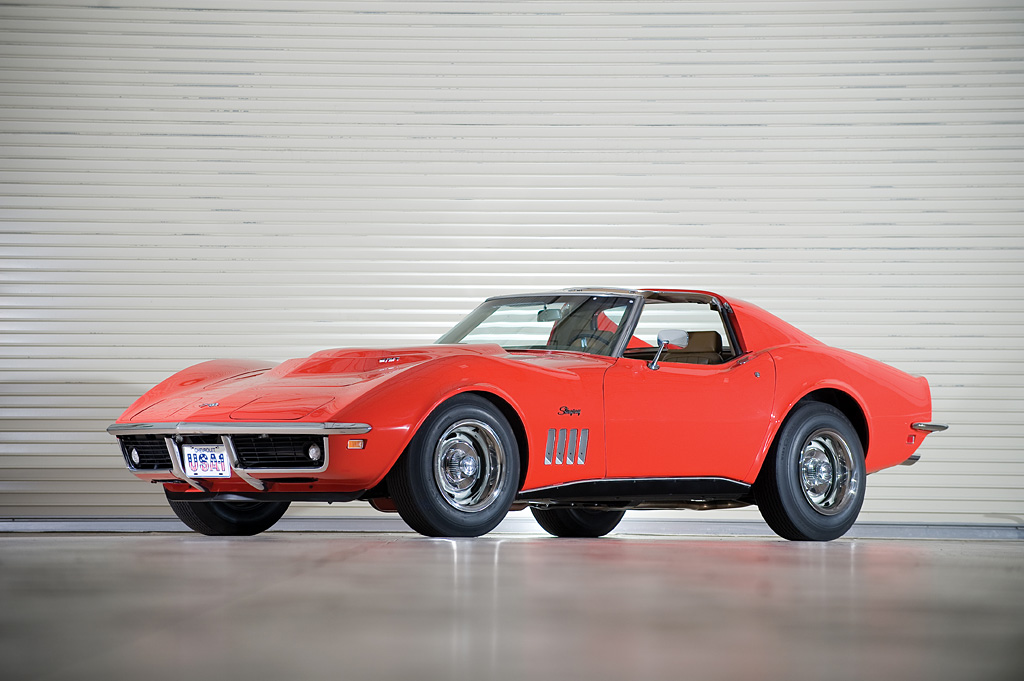
1969 Coupe in Monza Red with Saddle Leather upholstery. Bought new by Dennis Ahrens and drag raced for five years achieving a ¼ mile time of 10.82 seconds at 156.65 mph. By 1976 the car was retired and restored with just with very low mileage. With only 2,257 miles it was offered at RM Auctions’ 2010 Classic Muscle & Modern Performance sale where it sold for $401,500 USD.
Auction Sales History
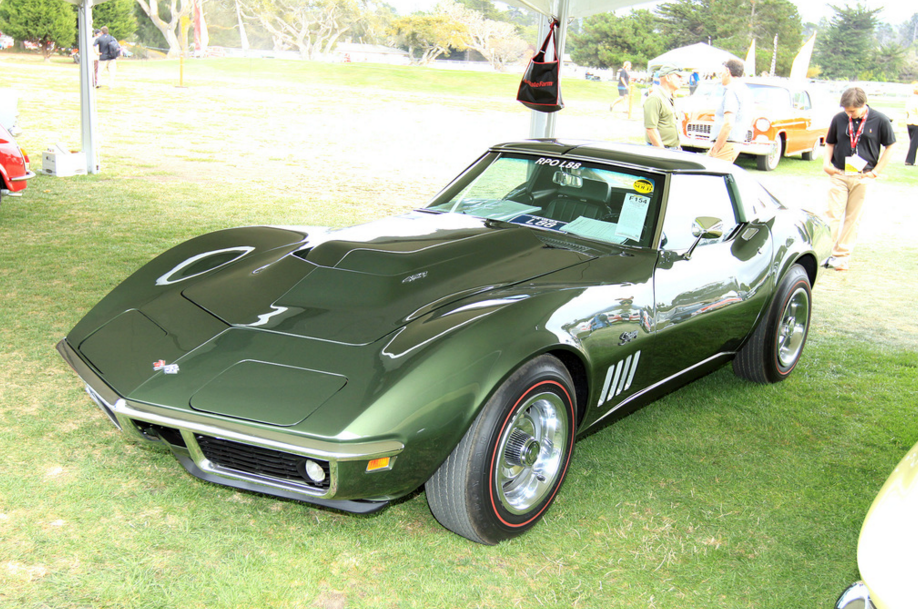
1969 Chevrolet Corvette L88 Coupe 194379S710179 – sold for $450,000 Numbers matching 1969 L88. Believed to be 15,480 original miles. Documented with the tank sticker. In show condition after the rotisserie restoration in 2004-2005. Appraisal letter from Roy Sinor, NCRS Judging Chairman from October of 2005. The letter states “Original Documented L88 that has the numbers matching correct engine, with an exceptional repaint, new interior and the original tank sheet, Corvette order copy, this vehicle has just completed a total restoration. Rated in the following categories on a scale of 1-10. Paint 9, chrome 9, paint type 9, chassis 9 and engine compartment 9. Interior 9, interior type 9, brakes 9, original engine 7 and body panels 9. This vehicle is exceptional in all areas. 1 of 116 L88 Corvettes produced in 1969. Auction Source: Monterey 2014 by Mecum Auctions
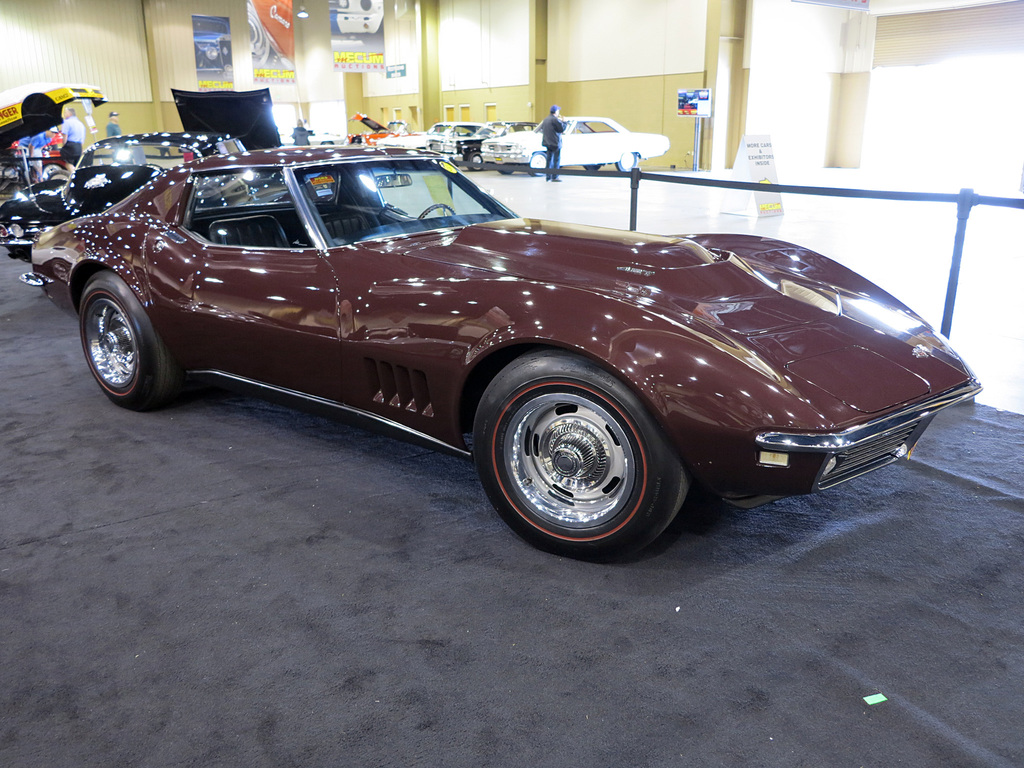
Chevrolet Corvette L88 Coupe – sold for $530,000 Factory documentation includes original window sticker on the car, Protect-O-Plate, shippers copy of build sheet and many original pictures and drag slips from 1968. Bloomington Gold Certified in 1995 & 2000. Bloomington Gold Survivor Certified in 1995. BG Special Collection in 1998 & 2008. NCRS Duntov & National Top Flight in 2007. Letter from the original owner to current owner describing history until early 1990s, then collector owned since early 1990s. Auction Source: Kissimmee 2014, #WhereTheCarsAre by Mecum
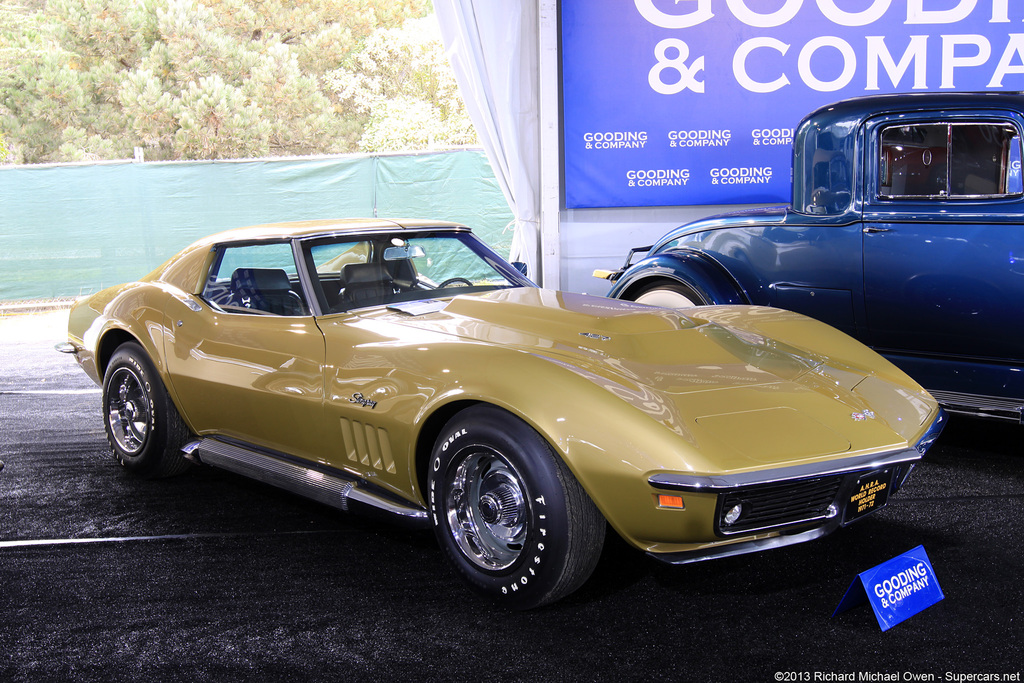
1969 Chevrolet Corvette L88 Coupe 194379S736254 – sold for $726,000 One of 116 Examples Produced. Factory-Built Race-Specification Street Car. Matching-Numbers Original Engine. Rare Legendary L88 Engine Option. 1971 AHRA 1/4-Mile World Record Holder. Three Owners Since New. Single Ownership for 25 Years. Selected for XXI Bloomington Gold Special Collection. 2010 Freshening by Corvette Specialist Kevin MacKay. Auction Source: Gooding & Company’s 10th Anniversary 2013 Pebble Beach Auction
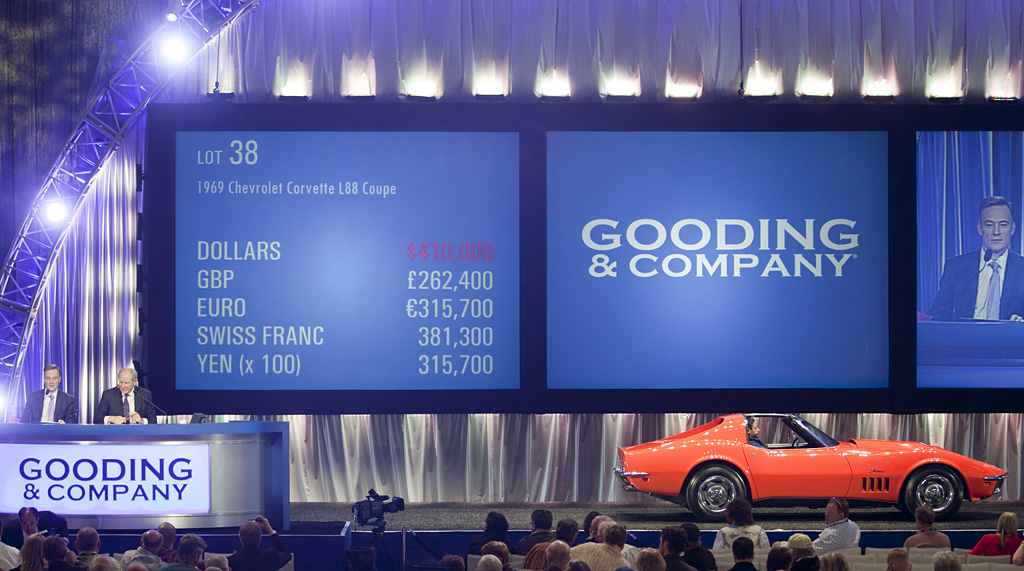
1969 Chevrolet Corvette L88 Coupe – sold for $451,000 A Wonderfully Preserved, Open-Chamber L88. The Only Unrestored Monaco Orange Example Known to Exist. Less than 18,000 Miles from New. Factory-Delivered, Matching-Numbers Engine. Optioned with Heavy-Duty Suspension, Brakes and Four-Speed Gearbox. Bloomington Gold SURVIVOR®, BENCHMARK® and Hall of Fame Recipient. NCRS Top Flight Award Winner. Documented by Tank Sheet, Protect-O-Plate and Original Bill of Sale. Auction Source: 2012 Scottsdale Auction by Gooding & Company
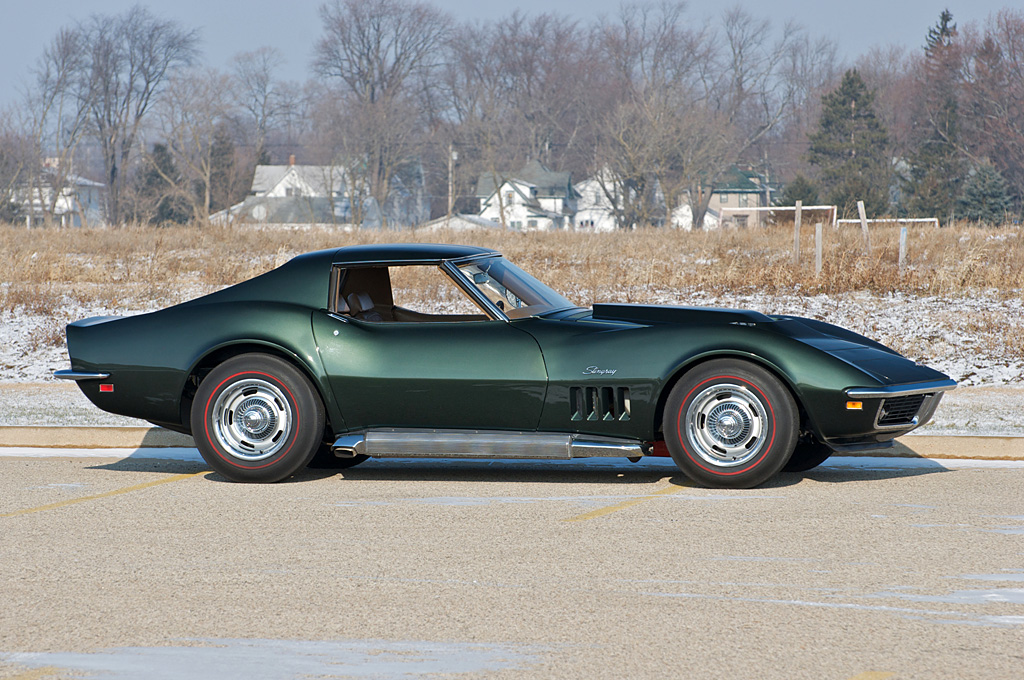
1969 Chevrolet Corvette L88 Coupe 427/430 HP – sold for $210,000 Documented by the all-important Protect-O-Plate, this 1969 Chevrolet Corvette L88 coupe embodies everything that Paul Dehnert loved about the model. Paul purchased the car at auction in 1999 after its restoration by the Nabers Brothers, who are renowned for the quality of their work. The original L88 427/430 HP long block was replaced with a factory built over-the-counter replacement unit, including the correct “LO” open-chamber cylinder heads, that has been stamped with the car’s VIN in addition to the original factory stamp. Fathom Green paint and a sparkling Beige cockpit are a brilliant combination, made all the better by factory sidepipes, Red stripe tires, Rally wheels and that bulging L88 hood. Auction Source: 2011 Mecum Indy Spring Classic