
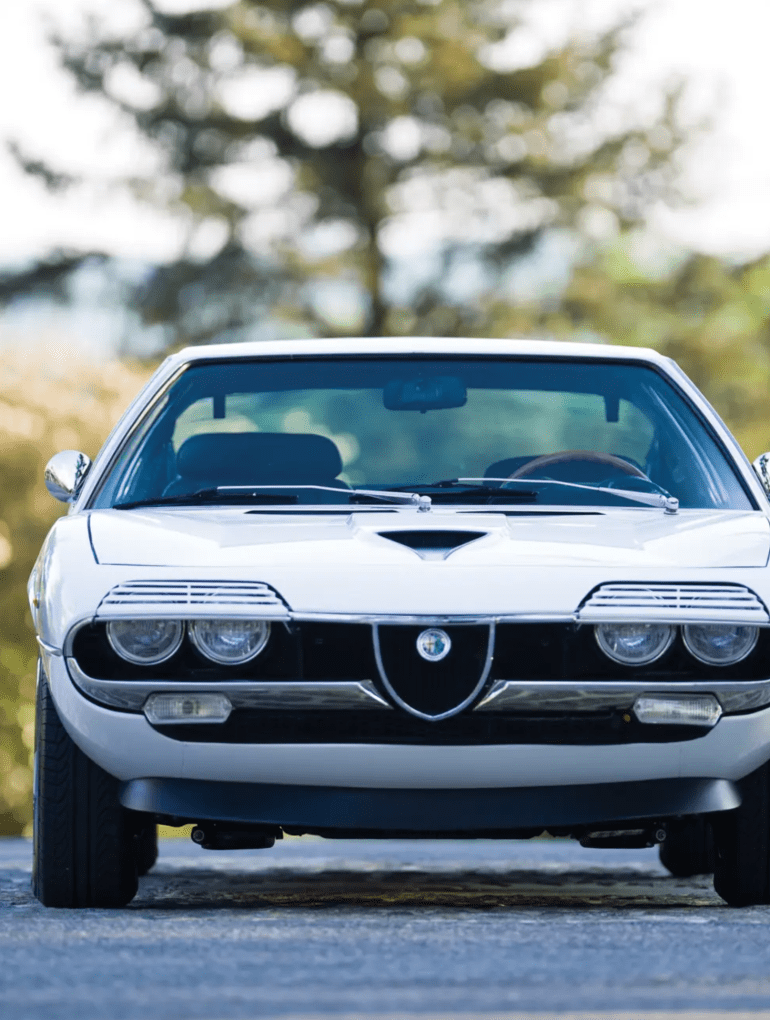

Geneva, March 1970. Alfa Romeo unveiled the production Montreal, a dramatic two-seat coupe based on the show car that had caused a sensation at Montreal’s Expo 67 three years earlier. Bertone’s Marcello Gandini styled the body, creating one of the most distinctive Alfa Romeos ever built. The signature features were unusual slatted headlight covers and NACA ducts on the hood feeding a mid-mounted air cleaner. Power came from a detuned version of the Tipo 33 race car’s 2.6-liter V8, producing 200 horsepower through mechanical fuel injection. This was Alfa Romeo’s flagship GT car, a sophisticated grand tourer combining race-bred engineering with Italian style. Production continued until 1977, with 3,925 examples built at Alfa’s Arese factory.
Background and Origins
Alfa Romeo arrived at Montreal’s Expo 67 with two striking concept cars, both designed by Bertone’s Marcello Gandini. One was a four-door sedan previewing the future Alfetta. The other was a dramatic two-seat coupe simply called “Montreal” after the host city. The response was overwhelming. Visitors mobbed the Alfa stand, demanding to know when they could buy the beautiful coupe.
Alfa Romeo hadn’t planned to build it. The Montreal was pure show car, a styling exercise with no confirmed production intent. However, public reaction convinced management to approve a production version. Development began in 1968, with the brief to maintain Gandini’s styling while packaging a suitable powertrain and meeting safety regulations.
The engine choice was significant. Rather than use Alfa’s familiar twin-cam inline four, engineers adapted the V8 from the Tipo 33 sports racing car. This all-aluminum, DOHC V8 was exotic and technically sophisticated, though it required extensive modification for road car use. Displacement was increased from 2.0 to 2.6 liters, while power output was reduced from over 270 horsepower to a more tractable 200 horsepower.
The production Montreal debuted at Geneva in March 1970, three years after the concept car. Sales began immediately, with deliveries starting in late 1970. Production continued until 1977, ending without a direct replacement as Alfa Romeo focused on volume sedans and the new Alfetta GT coupe.
Design and Engineering
The Montreal was based on the Alfetta GT’s shortened platform with a 2,350mm wheelbase. The structure was conventional pressed steel monocoque with reinforcements in critical areas. Independent suspension at all four corners provided the sporting dynamics expected from Alfa Romeo.
Front suspension used double wishbones with coil springs, telescopic dampers, and an anti-roll bar. The rear employed a sophisticated de Dion axle with Watt’s linkage, trailing arms, coil springs, and dampers. This setup delivered excellent traction while maintaining precise wheel control. The ride was firm but not harsh, balancing comfort with sporting capability.
Braking was by Girling disc brakes all around, vented at the front measuring 268mm and solid rears at 266mm. Servo assistance was standard. The steering was unassisted worm-and-roller, requiring effort at low speeds but providing excellent feedback once moving.
The engine was Alfa Romeo’s legendary Tipo 33 V8, adapted for road use. Displacing 2,593cc with a 80mm bore and 64.5mm stroke, it featured an all-aluminum construction with dry-sump lubrication. Each bank had dual overhead camshafts operating two valves per cylinder through shim-adjusted bucket tappets. The 90-degree vee angle and cross-plane crankshaft created the distinctive V8 burble.
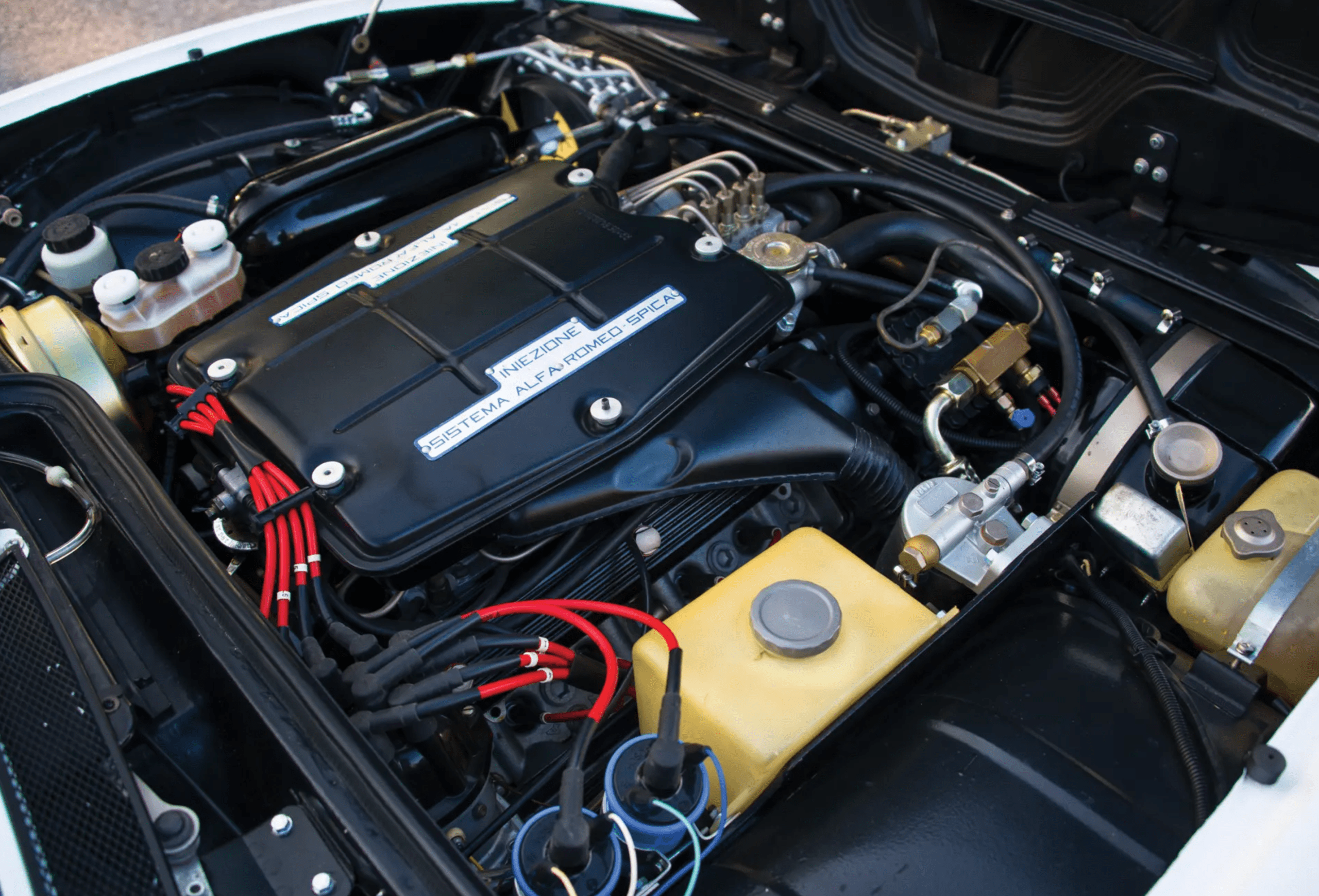
SPICA mechanical fuel injection replaced the race engine’s Weber carburetors, improving drivability and emissions compliance. Compression ratio was 9.0:1, down from the race engine’s 10.5:1. Twin distributors handled ignition duties. Output was 200 horsepower at 6,500 rpm and 173 lb-ft at 4,750 rpm. The redline sat at 7,000 rpm, with a safe maximum of 7,500 rpm for brief periods.
Transmission was a ZF five-speed manual with a traditional H-pattern shifter. Final drive was 4.1:1 through a limited-slip differential. The gear ratios were well-spaced, with fifth gear serving as a genuine overdrive for relaxed cruising.
Styling
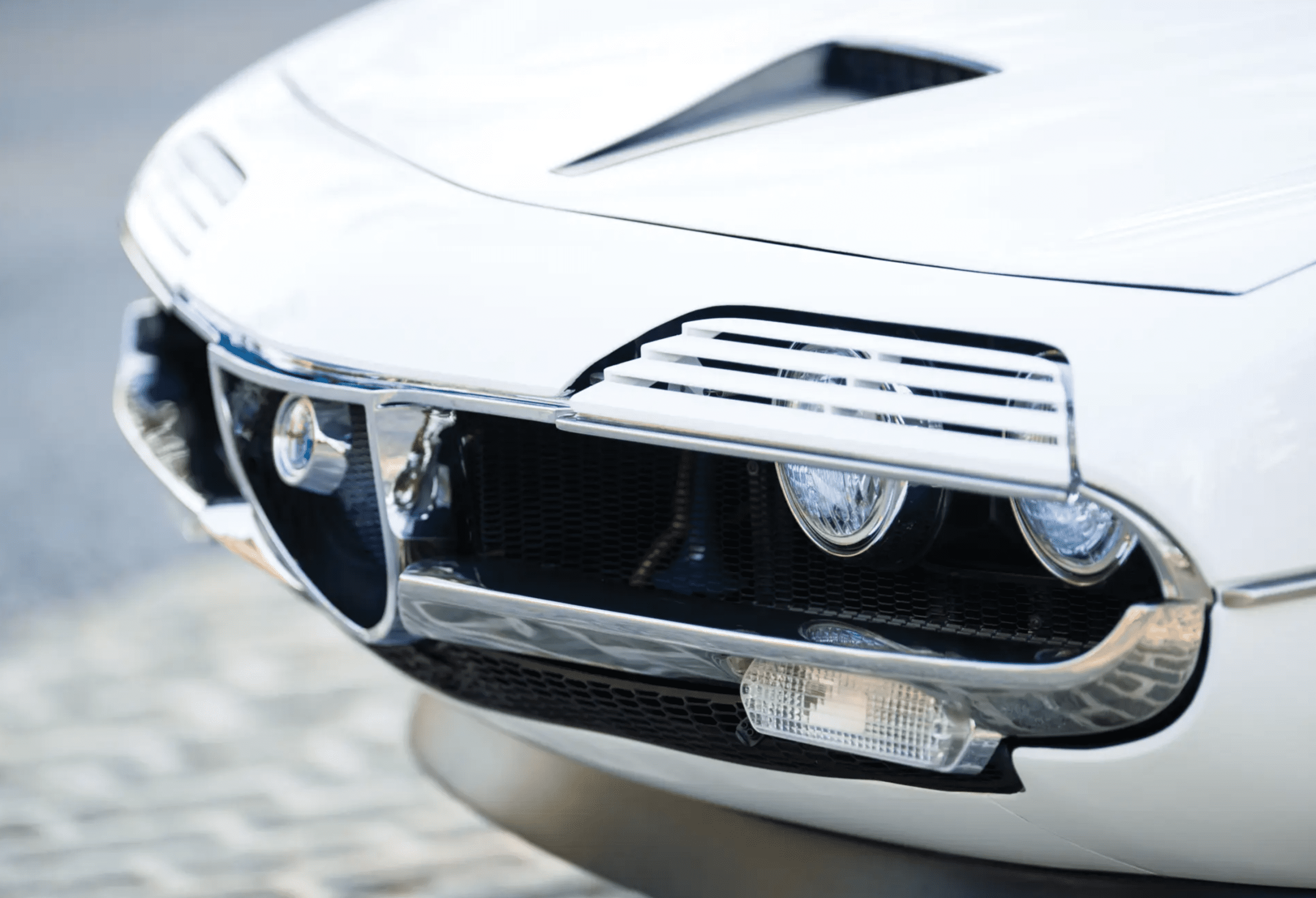
Gandini’s design was Bertone at its most theatrical. The Montreal’s proportions were classic GT: long hood, short deck, and a cabin pushed rearward. The signature features were immediately recognizable. Unusual slatted covers concealed the headlights, creating a distinctive face unlike any other car. When the lights were on, the slats retracted, revealing quad headlights in a dramatic mechanical ballet.
The hood featured prominent NACA ducts feeding cool air to the centrally-mounted air cleaner. These ducts were functional, not decorative, though they dominated the frontal appearance. The grille was Alfa Romeo’s traditional shield shape, though smaller than on contemporary sedans.
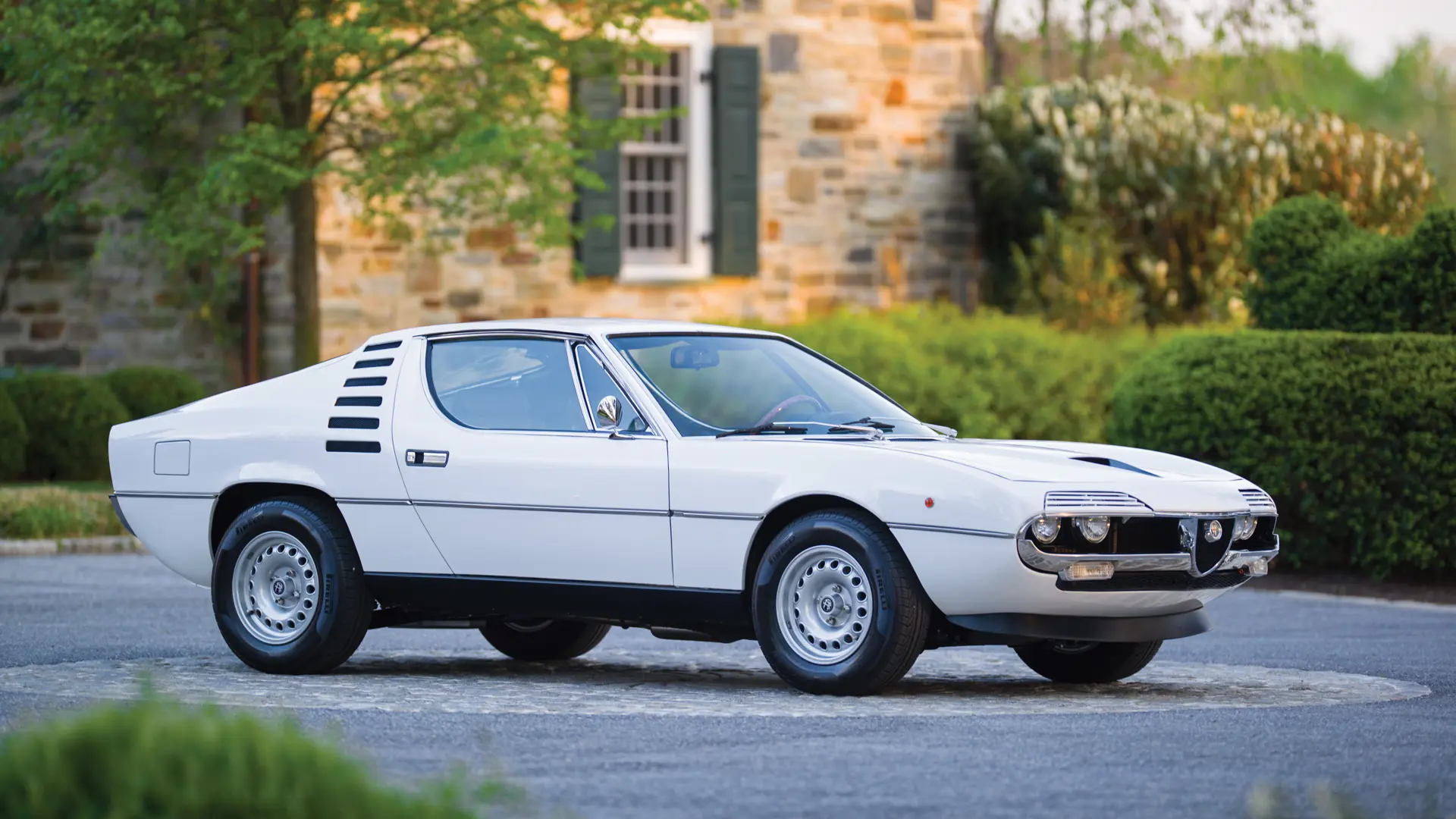
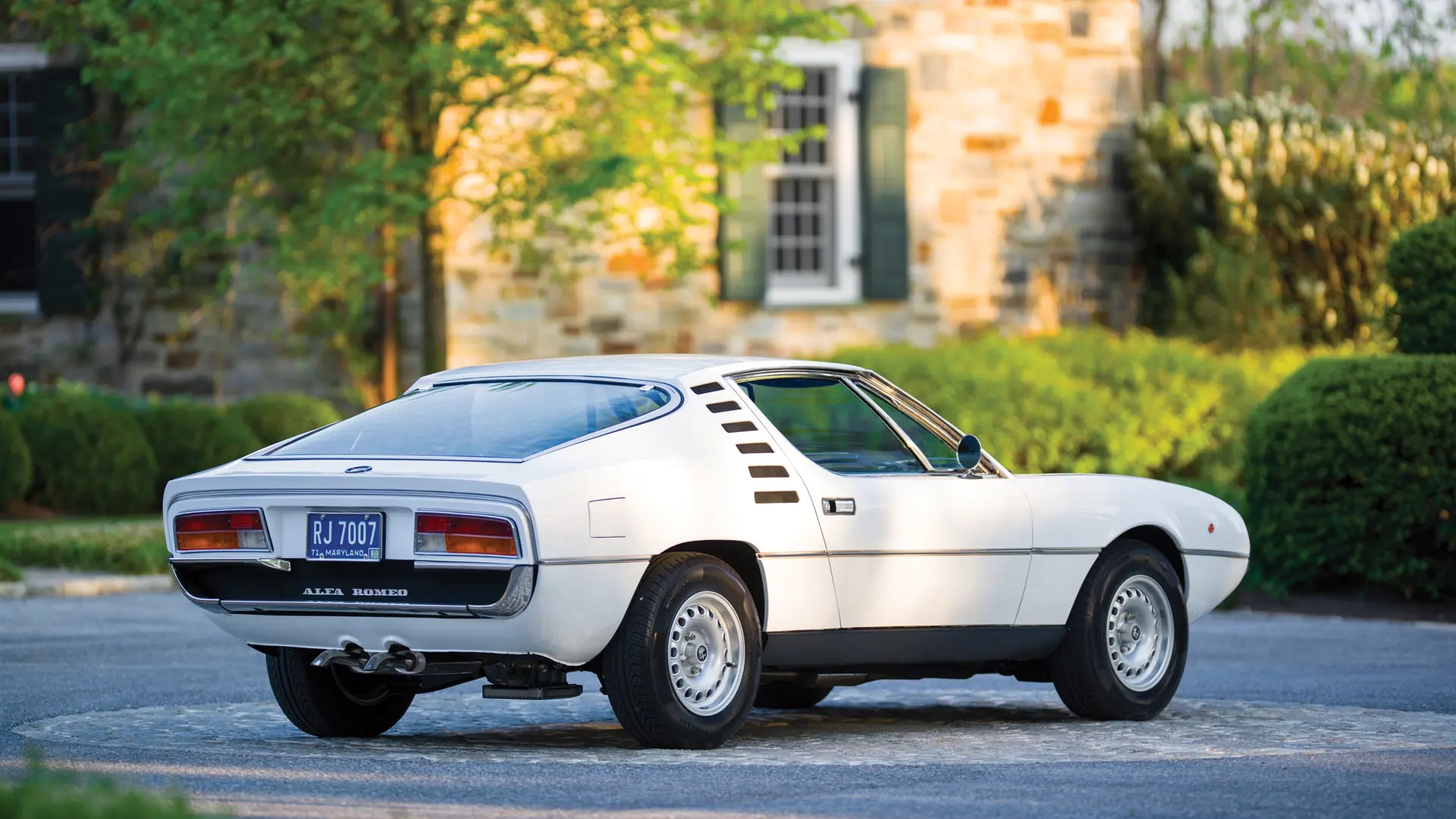
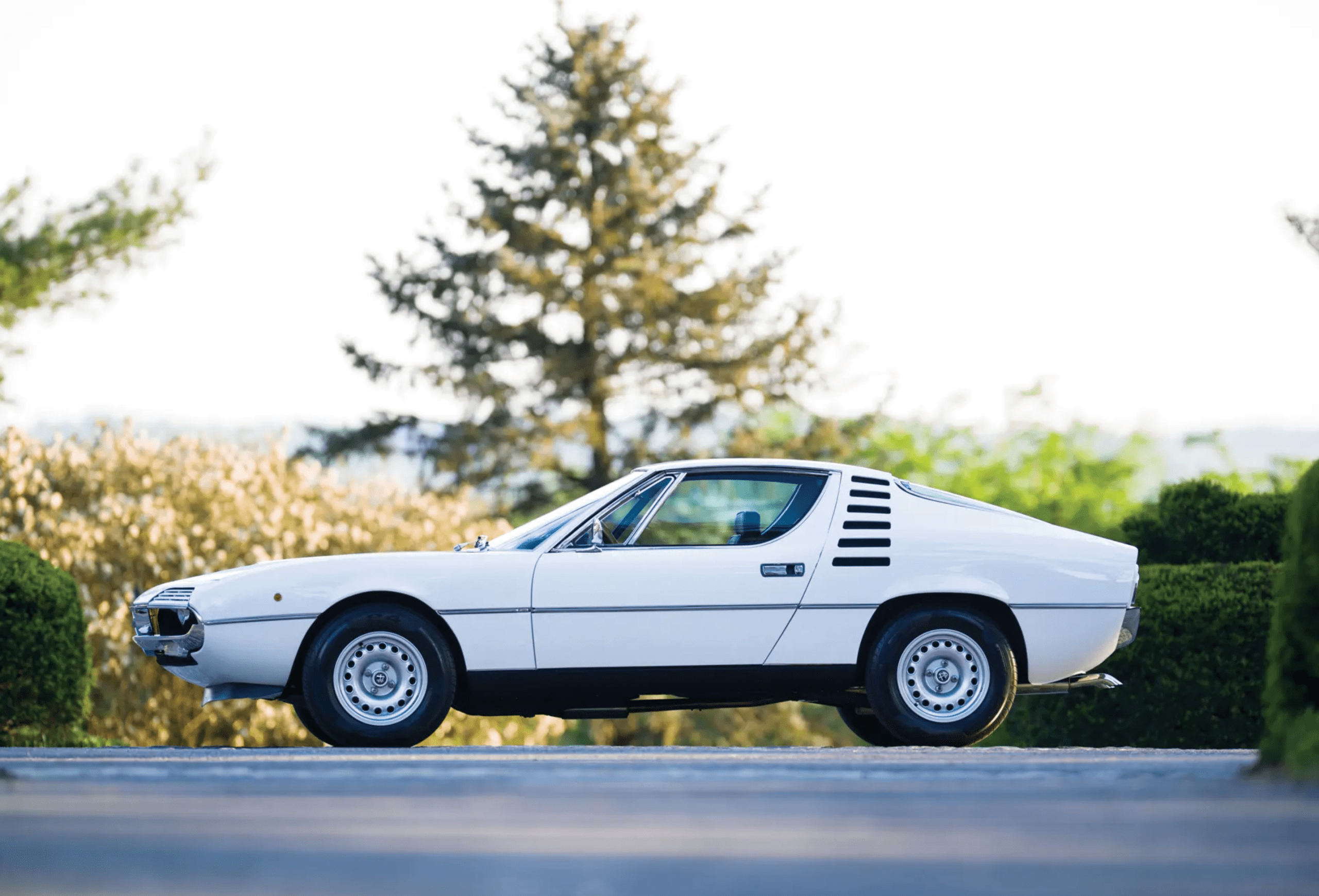
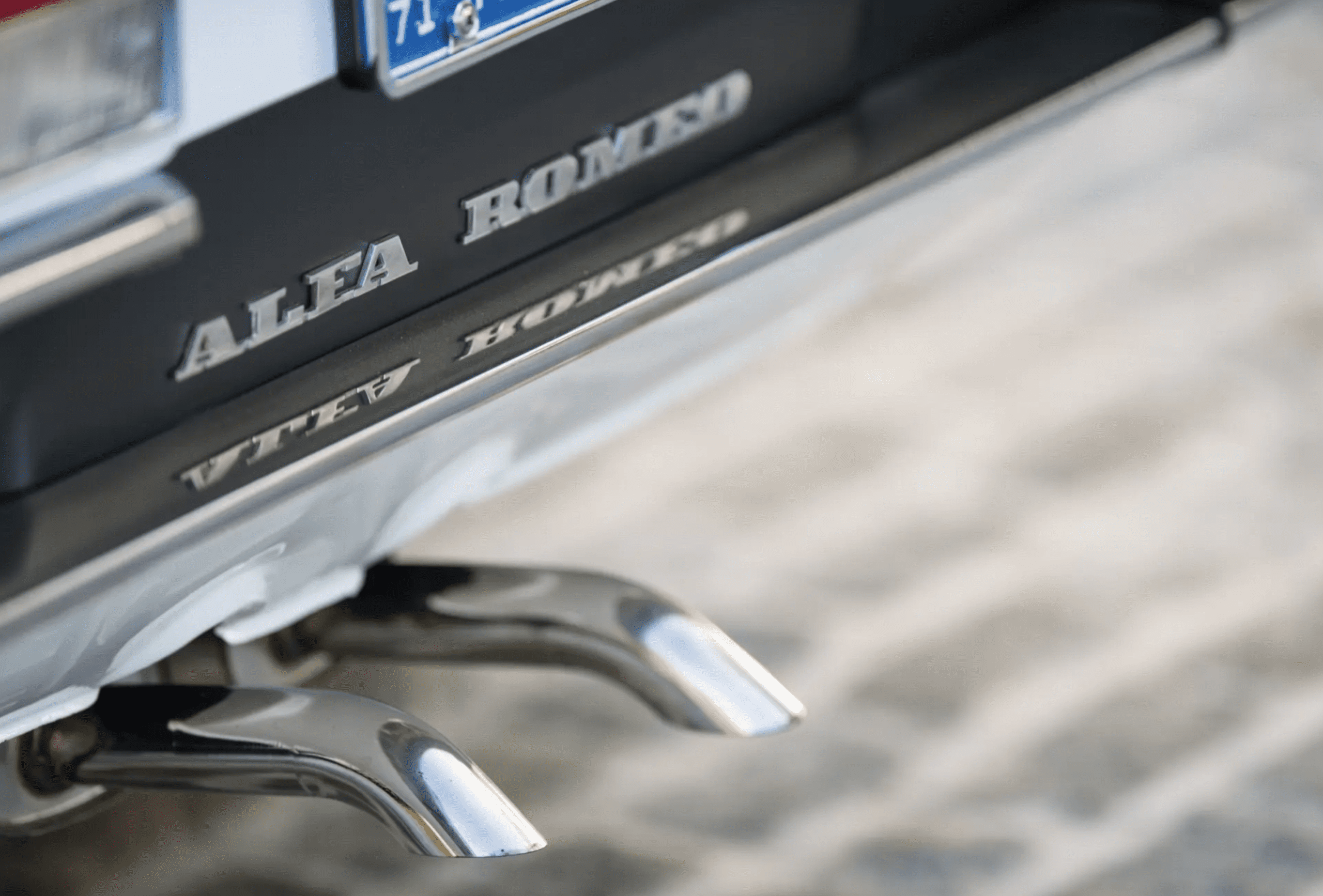
Side profile was clean and flowing, with minimal ornamentation. A subtle crease ran from headlight to tail just below the beltline. The roofline was low, creating an intimate cabin with limited headroom. Small rear quarter windows provided additional light while maintaining the coupe’s sporting proportions. At the rear, six circular taillights were set into a black panel, creating a distinctive nighttime signature. The rear deck was short, with a subtle integrated spoiler.
Body panels were steel, hand-finished to achieve tight panel gaps. The Montreal was built to higher quality standards than Alfa’s volume models, reflecting its flagship status. Chrome bumpers were delicate, though later US-spec cars received larger impact-absorbing units that compromised the design.
Standard wheels were 14-inch Campagnolo magnesium units measuring 6.5 inches wide, wearing 195/70 VR14 Michelin XWX tires. The silver finish complemented the Montreal’s typical color palette: red, silver, white, and various metallics.
Interior
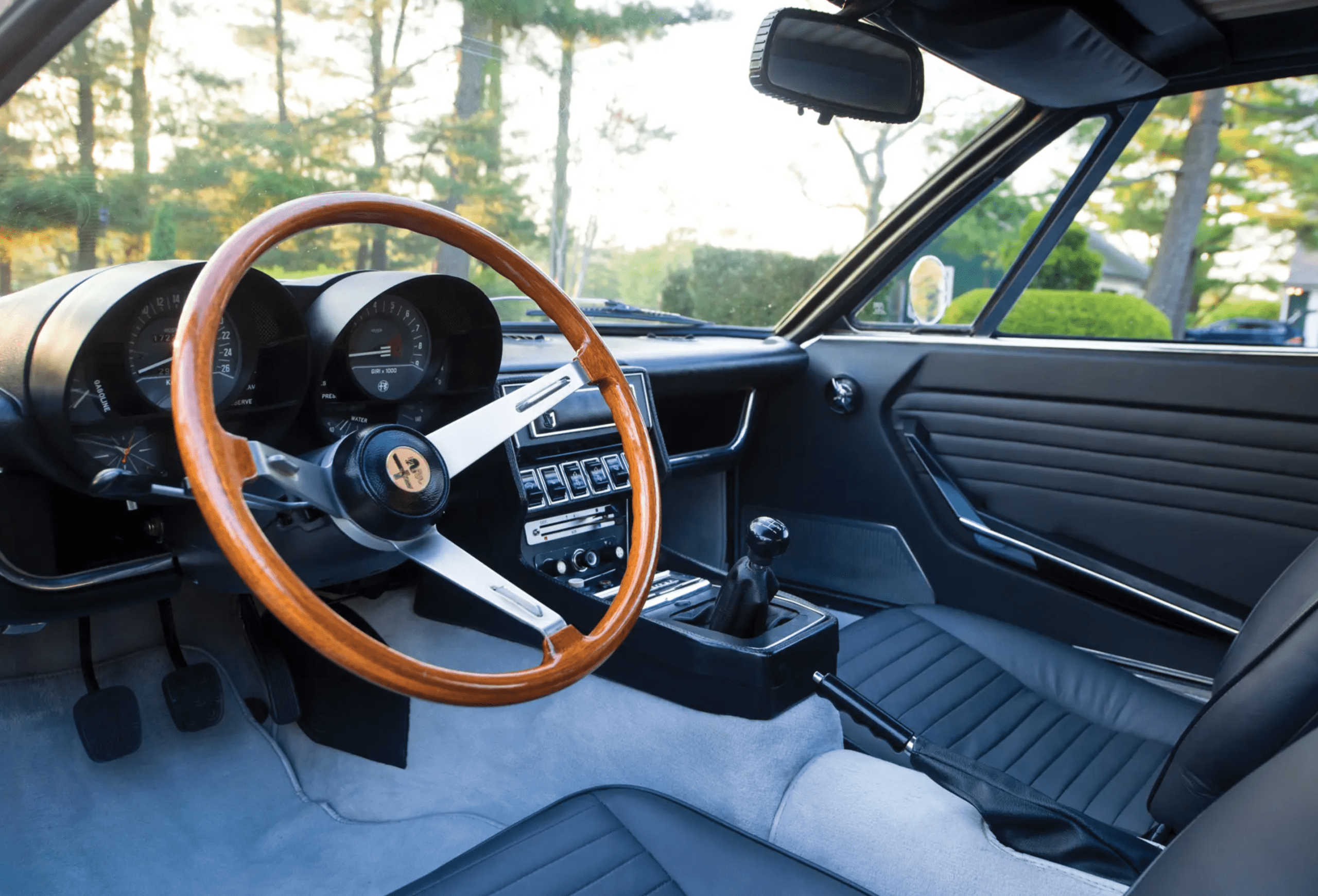
The cabin was trimmed in leather throughout with matching carpeting. Front seats were deeply bolstered buckets providing excellent support for spirited driving. The driving position was low, with the steering wheel angled toward the driver. Rear seats were vestigial at best, suitable only for small children or luggage. The Montreal was effectively a two-seater despite the 2+2 configuration.
The dashboard was a masterpiece of 1970s design. A comprehensive instrument cluster sat ahead of the driver with large Veglia gauges including a 7,500 rpm tachometer, speedometer, oil pressure, water temperature, fuel, and clock. The instruments were clearly legible with white faces and black numerals.
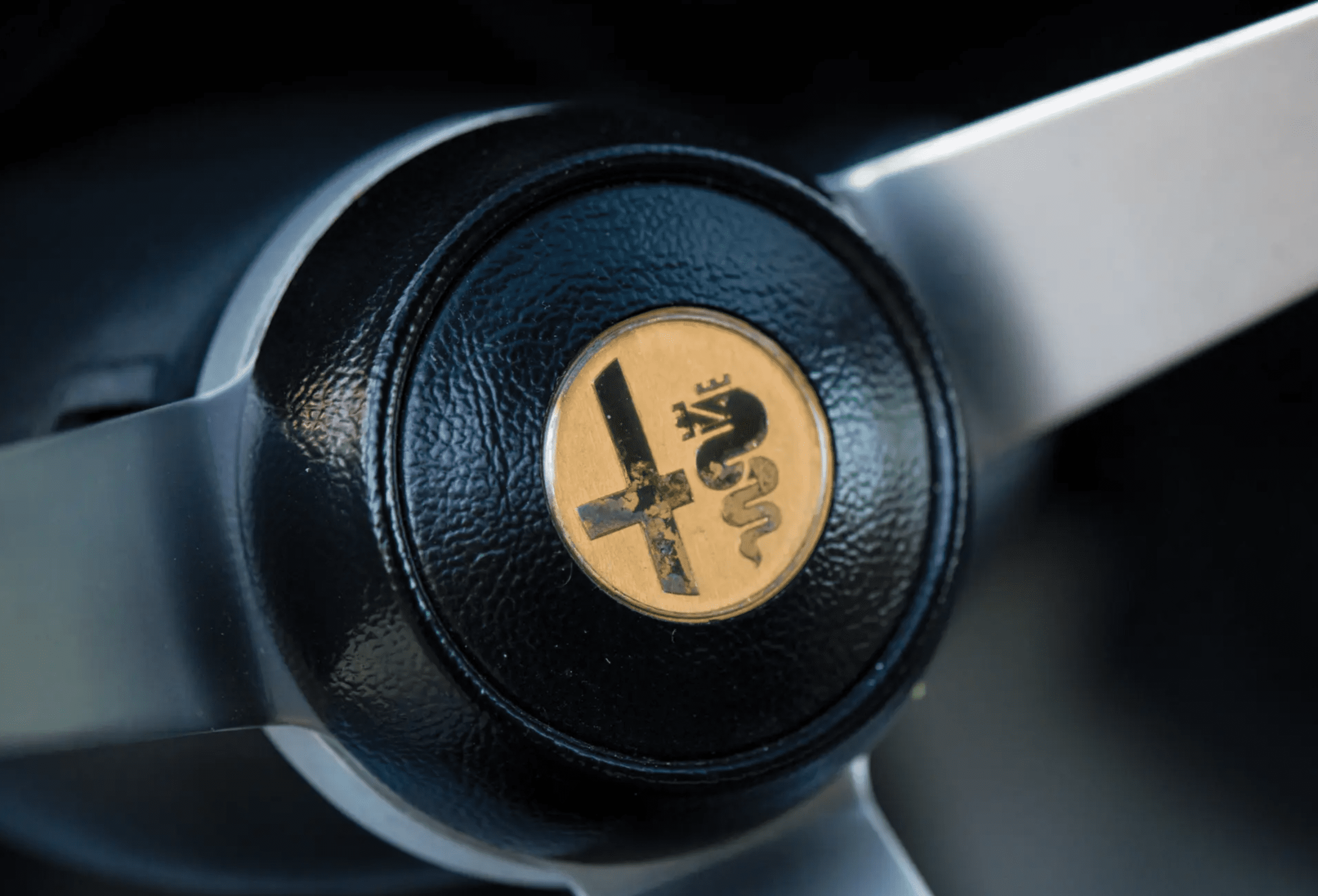
A wood-rimmed steering wheel faced the driver with Alfa Romeo’s badge at its center. The ZF gear lever sprouted from the transmission tunnel with a leather boot and chrome surround. Switchgear controlled lights, wipers, and climate functions, though the layout was more artistic than ergonomic.
Air conditioning was optional, as was a radio. Most Montreals left the factory with both, though purists deleted the air conditioning to save weight. Sound insulation was adequate, allowing the V8’s mechanical symphony to penetrate the cabin without overwhelming conversation.
Specifications
- Engine: Tipo 33 V8, 2,593cc (80mm x 64.5mm), DOHC per bank, two valves per cylinder, SPICA fuel injection
- Power: 200 bhp at 6,500 rpm
- Torque: 173 lb-ft at 4,750 rpm
- Transmission: ZF five-speed manual, 4.1:1 final drive
- Chassis: Steel monocoque, 2,350mm wheelbase
- Suspension: Double wishbones (front), de Dion axle with Watt’s linkage (rear)
- Brakes: Girling vented discs 268mm (front), solid discs 266mm (rear)
- Wheels: Campagnolo 6.5×14 magnesium, Michelin XWX 195/70 VR14
- Weight: 1,270 kg
- Performance: 137 mph top speed, 0-60 mph in 7.6 seconds
Competition History
The Montreal was designed as a grand tourer and saw minimal official competition use. However, several privateer entries appeared in European GT racing during the early 1970s. The combination of light weight, compact dimensions, and race-bred V8 made the Montreal competitive in its class, though reliability issues with the SPICA fuel injection proved problematic during endurance events.
A handful of Montreals competed in historic racing during later decades, where the distinctive styling and V8 soundtrack made them popular paddock attractions. The sophisticated chassis and powerful engine allowed skilled drivers to extract impressive lap times on technical circuits.
Production and Legacy
Alfa Romeo built 3,925 Montreals between 1970 and 1977 at the Arese factory near Milan. Each car was hand-assembled with meticulous attention to detail, though build quality varied as Alfa struggled with industrial unrest during the turbulent 1970s. The Montreal was expensive, costing more than contemporary Porsche 911s in many markets.
Sales were steady but never spectacular. The Montreal occupied an awkward market position, too exotic and expensive to compete with volume sports cars, yet not exclusive enough to challenge Ferrari or Maserati. The complex V8 engine intimidated buyers accustomed to Alfa’s robust inline fours. SPICA fuel injection required specialist knowledge for proper maintenance, limiting the car’s appeal in markets without strong Alfa dealer networks.
However, the Montreal achieved something remarkable. It proved Alfa Romeo could build a sophisticated grand tourer combining race-bred engineering with everyday usability. The V8 delivered thrilling performance and an intoxicating soundtrack, while the sophisticated chassis provided excellent handling balance. Those distinctive slatted headlight covers became automotive icons, instantly recognizable decades later.
Today, the Montreal is recognized as one of the most beautiful Alfa Romeos ever built and among Gandini’s finest designs. Values have climbed steadily as enthusiasts appreciate the combination of exotic V8 power, distinctive styling, and relative rarity. The SPICA fuel injection that once intimidated buyers now fascinates restorers, its mechanical precision representing a lost art.
The Montreal represented Alfa Romeo at its most ambitious, when the company still possessed the confidence and resources to build low-volume exotic cars. It was the last Alfa Romeo with a V8 engine until modern times, closing a brief but glorious chapter in the company’s history. The Montreal proved that Milan could compete with Modena and Maranello when creativity and engineering excellence aligned, creating machines that celebrated the pure joy of driving.