
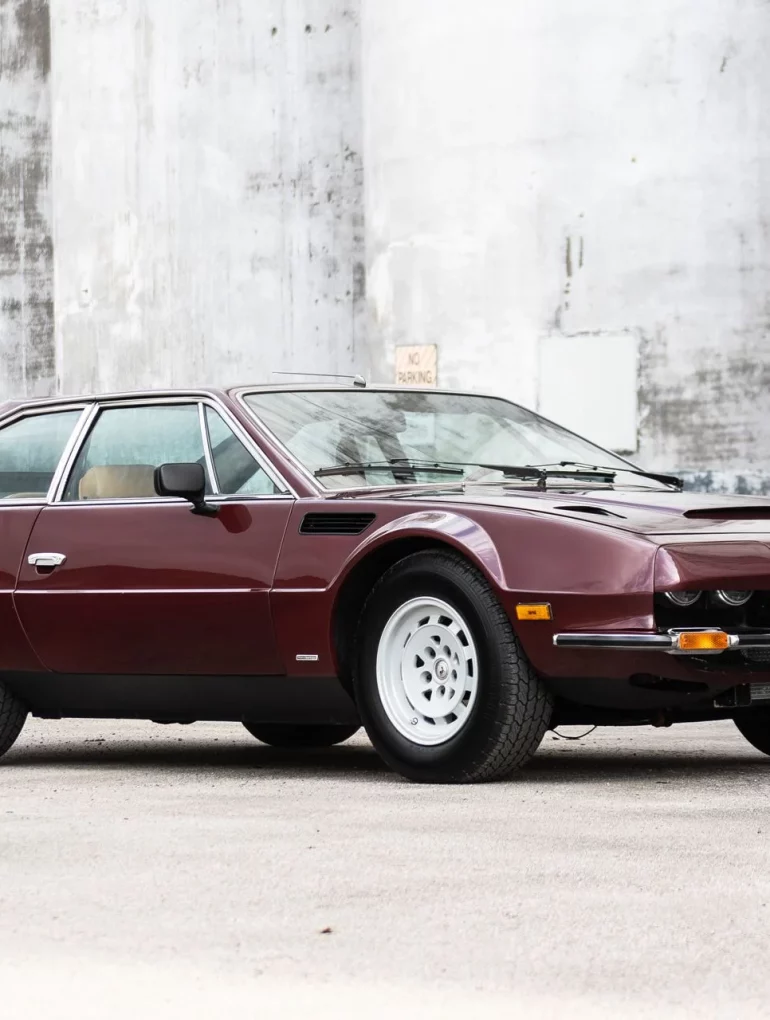

Geneva, March 1972. Lamborghini unveiled the Jarama S, an updated version of the controversial 2+2 coupe introduced two years earlier. The name honored a famous Spanish bull-fighting region, continuing Lamborghini’s tradition of bovine nomenclature. The S model addressed criticisms of the original Jarama with increased power, revised suspension, and improved interior trim. The 3.9-liter V12 now produced 365 horsepower, up from 350. Wider wheels and tires improved handling. The cabin received better seats and upgraded materials. This was Lamborghini’s answer to Ferrari’s 365 GT4 2+2, a luxurious four-seater combining V12 performance with genuine practicality. Production continued until 1976, with 152 Jarama S examples built alongside 177 original Jaramas.
Background and Origins
Lamborghini’s 2+2 lineage began with the 400 GT 2+2 in 1966, followed by the Islero and Espada. By 1970, the company needed a smaller, more sporting 2+2 to slot between the two-seat Miura and the large Espada. The result was the Jarama, introduced at Geneva in March 1970 on a shortened Espada platform.
Bertone designer Marcello Gandini styled the Jarama, creating a controversial wedge-shaped coupe that polarized opinion. Some praised its aggressive stance and modern proportions. Others criticized the awkward rear treatment and heavy appearance. Sales were modest, with customers preferring either the exotic Miura or the practical Espada over the compromise Jarama.
By 1971, Lamborghini recognized improvements were necessary. Chief engineer Paolo Stanzani led development of the Jarama S, focusing on increased performance and refinement. The V12 received modifications increasing output to 365 horsepower. Suspension geometry was revised with wider wheels and tires. The interior was upgraded with better materials and improved ergonomics.
The Jarama S debuted at Geneva in March 1972, immediately replacing the original model in production. It remained in the lineup until 1976, when Lamborghini discontinued the model without a direct replacement. The Silhouette arrived in 1976 as a mid-engined 2+2, but it was smaller and less practical than the Jarama.
Design and Engineering
The Jarama S was based on a shortened Espada platform with a 2,450mm wheelbase, some 300mm shorter than the larger car. The structure was a conventional steel monocoque with reinforcements in critical areas. The front-engine, rear-drive layout was traditional Lamborghini, contrasting with the mid-engined Miura and Countach.
Front suspension used unequal-length double wishbones with coil springs and telescopic dampers. The rear employed a similar arrangement with anti-squat geometry to maintain composure during acceleration. Anti-roll bars front and rear controlled body roll. The S model received revised spring rates and damper settings, improving handling over the original Jarama.
Braking was by Girling ventilated discs all around, measuring 280mm front and rear with dual-circuit hydraulics. Power assistance was standard. The steering was unassisted recirculating ball, requiring effort at parking speeds but providing adequate feedback at speed.
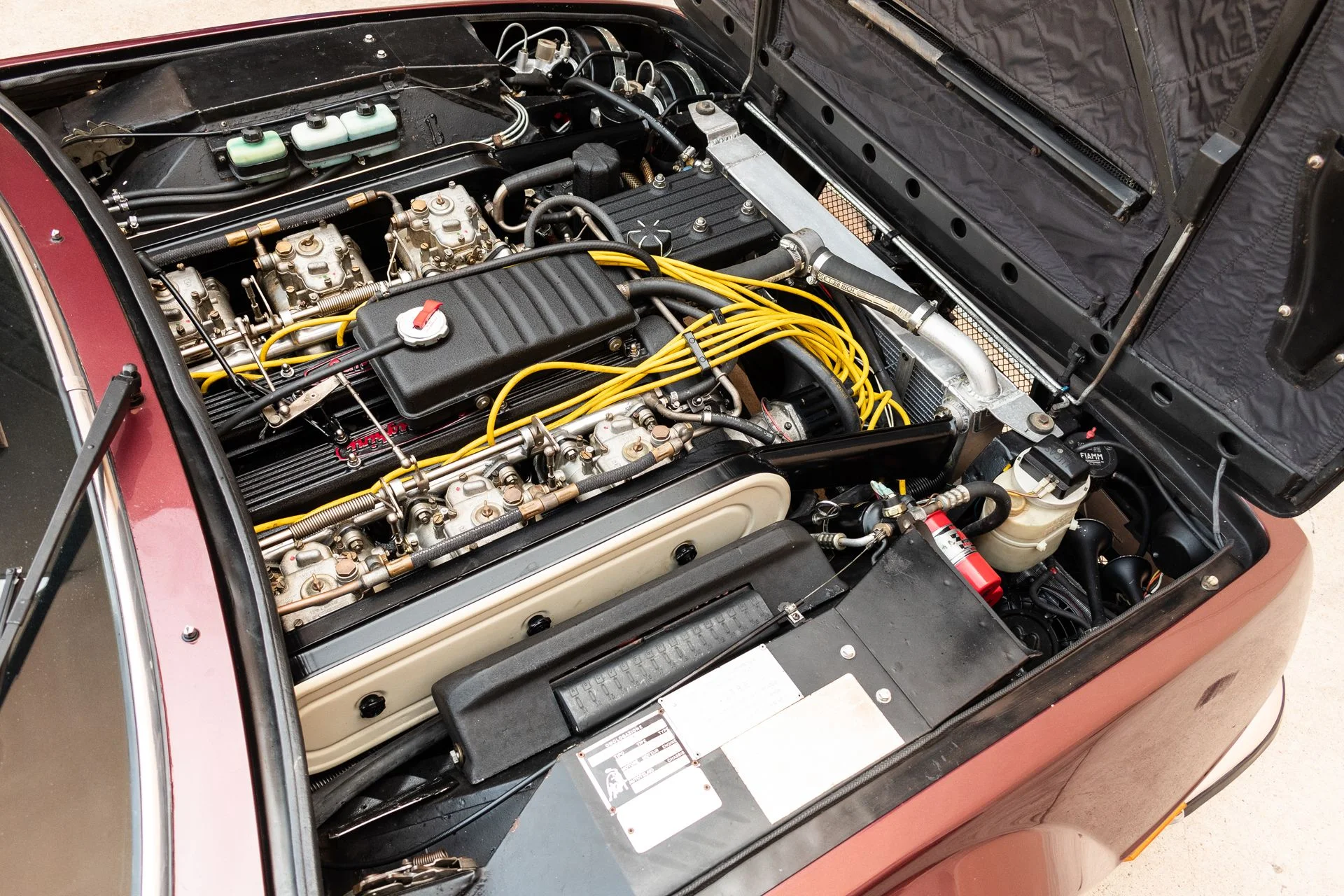
The engine was Lamborghini’s legendary Bizzarrini-designed V12, displacing 3,929cc with an 82mm bore and 62mm stroke. The all-aluminum construction featured a single overhead camshaft per bank, two valves per cylinder, and dry-sump lubrication. Six Weber 40 DCOE twin-choke carburetors fed the induction system through a complex manifold arrangement.
For the S model, compression ratio increased to 10.5:1 from 10.0:1. Camshaft profiles were more aggressive, while exhaust headers were redesigned for improved flow. These modifications increased output from 350 to 365 horsepower at 7,500 rpm, with torque rising to 282 lb-ft at 5,500 rpm.
Transmission was a ZF five-speed manual driving the rear wheels through a limited-slip differential. The gear ratios were closely spaced, with final drive at 4.09:1. The shift action was mechanical and precise, though heavy by modern standards.
Styling
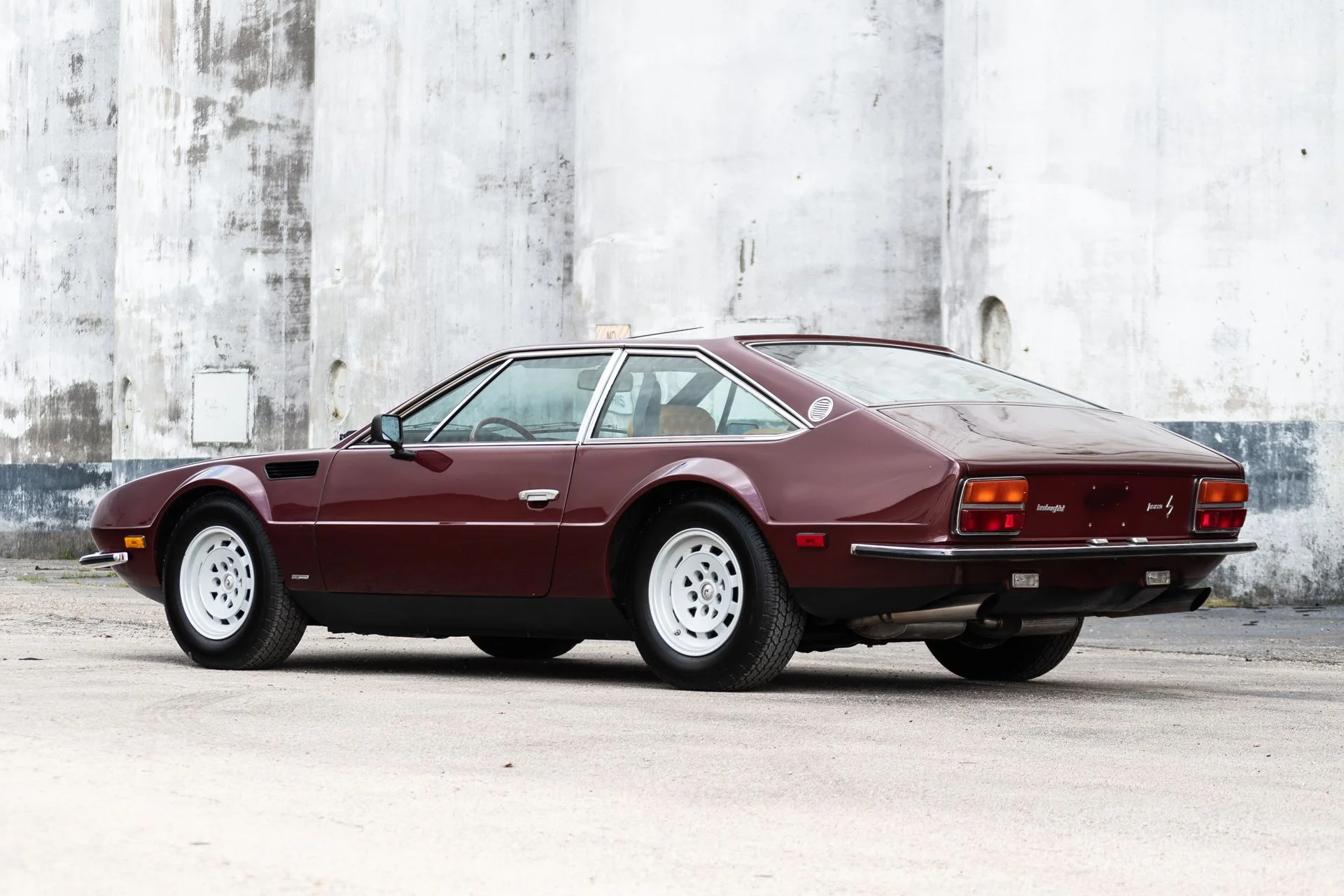
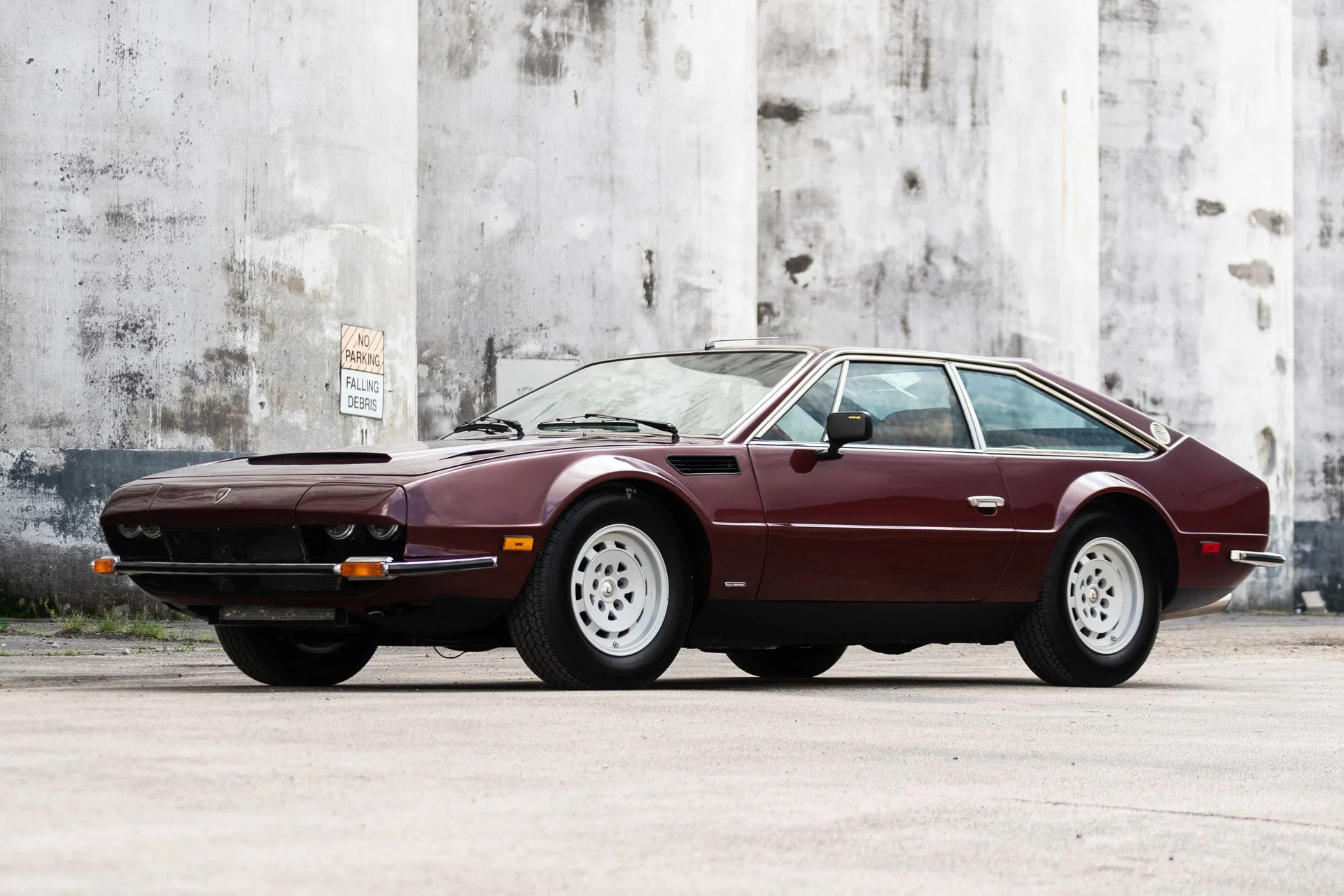
Bertone’s design was angular and aggressive, dominated by sharp creases and flat surfaces. The front featured four exposed headlights flanking a wide grille with horizontal slats. The hood was flat with prominent ridges running its length. Pop-up headlights would have been more fashionable in 1972, but Gandini chose fixed lights for visual impact.
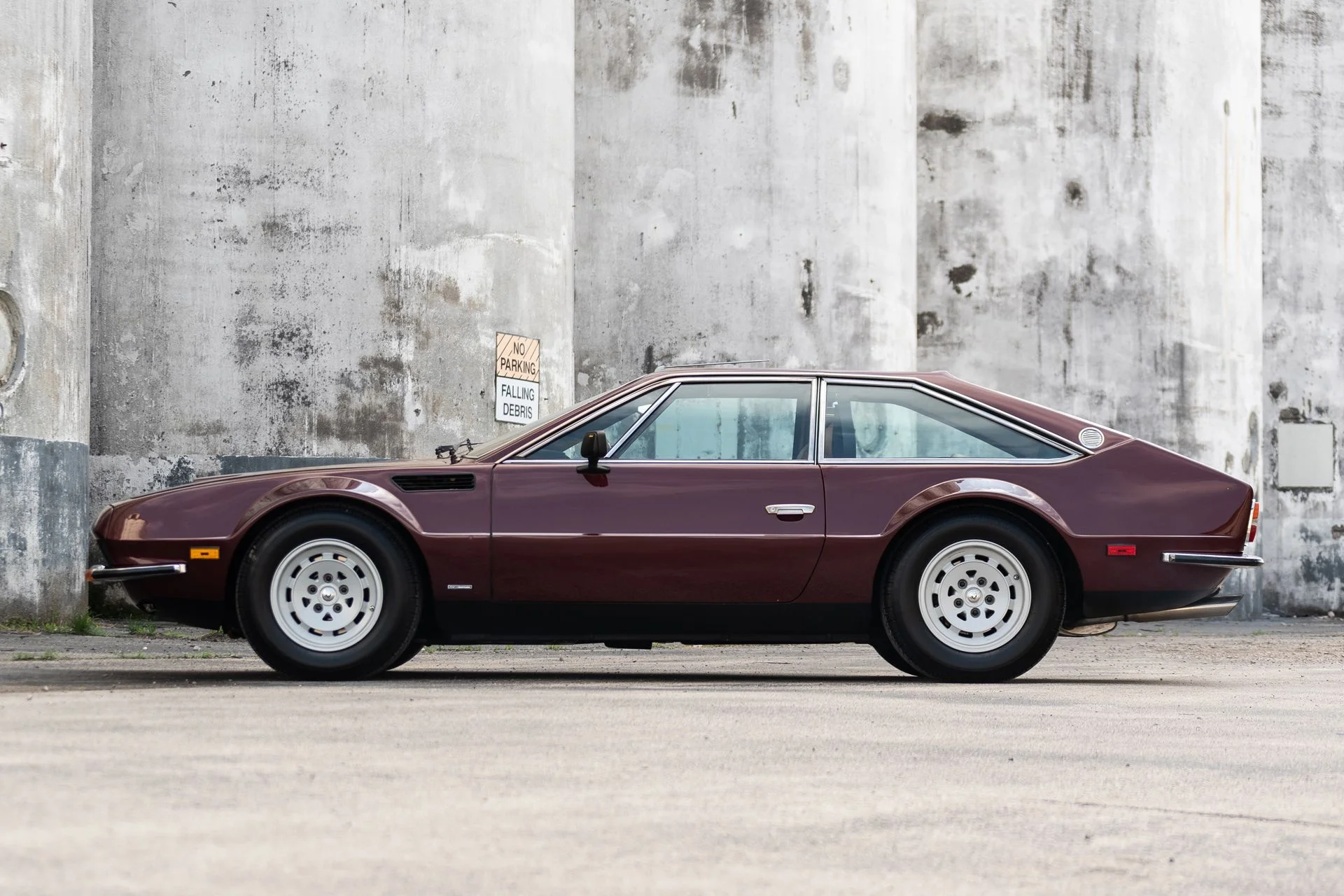
Side profile was characterized by a long hood, abbreviated deck, and steeply raked windscreen. A distinctive crease ran from headlight to tail just above the door handles. The roofline was low, creating a squat, aggressive stance. Small quarter windows behind the doors admitted light while maintaining privacy for rear passengers.
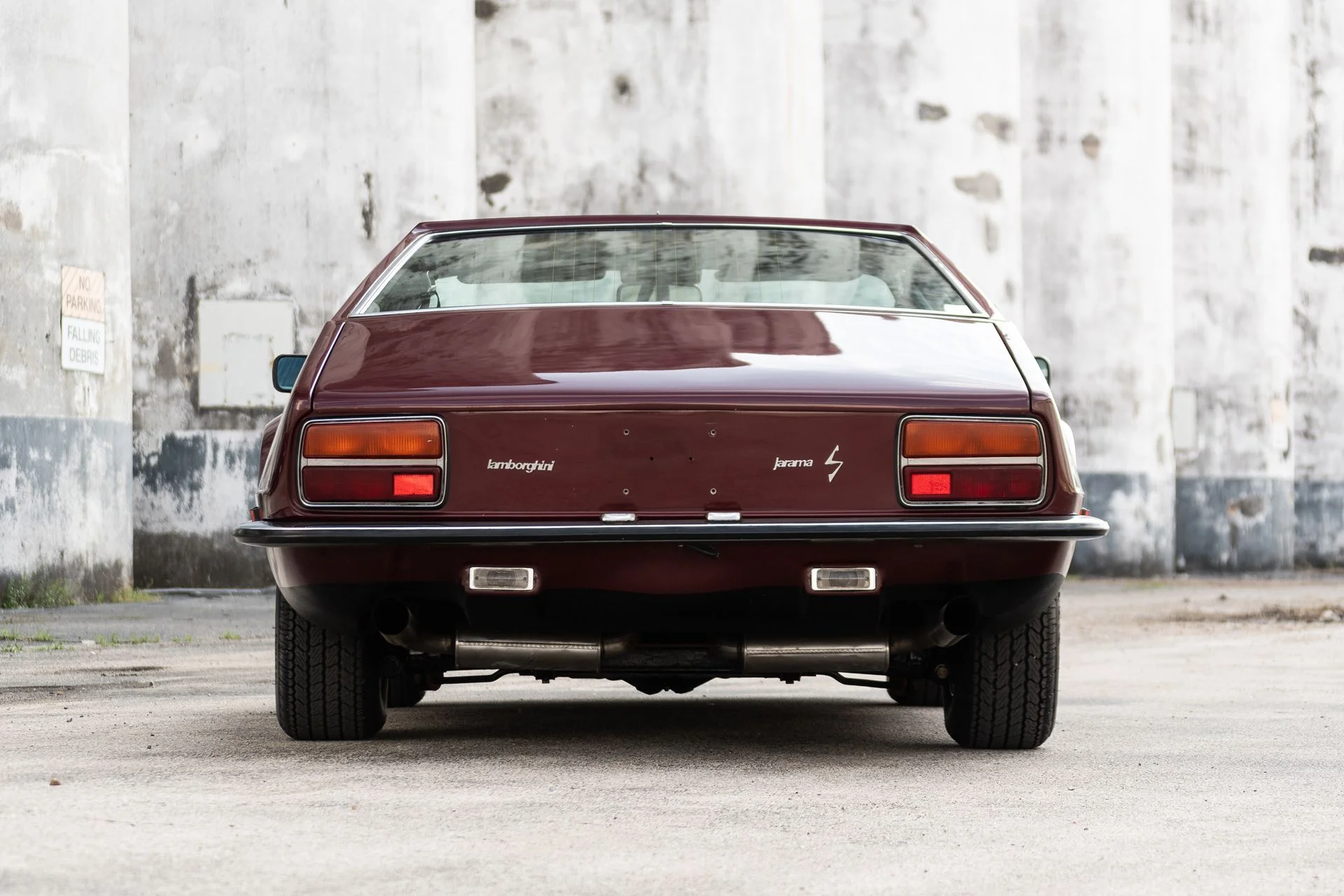
At the rear, the design became controversial. A near-vertical rear window sat above a flat deck with four circular taillights. The treatment looked truncated, as if the car ended abruptly rather than flowing to a natural conclusion. Chrome bumpers front and rear were substantial, meeting contemporary safety regulations.
The Jarama S received wider Campagnolo magnesium wheels measuring 7.5×15 inches front and 9×15 inches rear, wearing Michelin XWX tires sized 215/70 VR15 and 225/70 VR15 respectively. Color choices included traditional Lamborghini shades: orange, yellow, green, red, and various metallics.
Interior
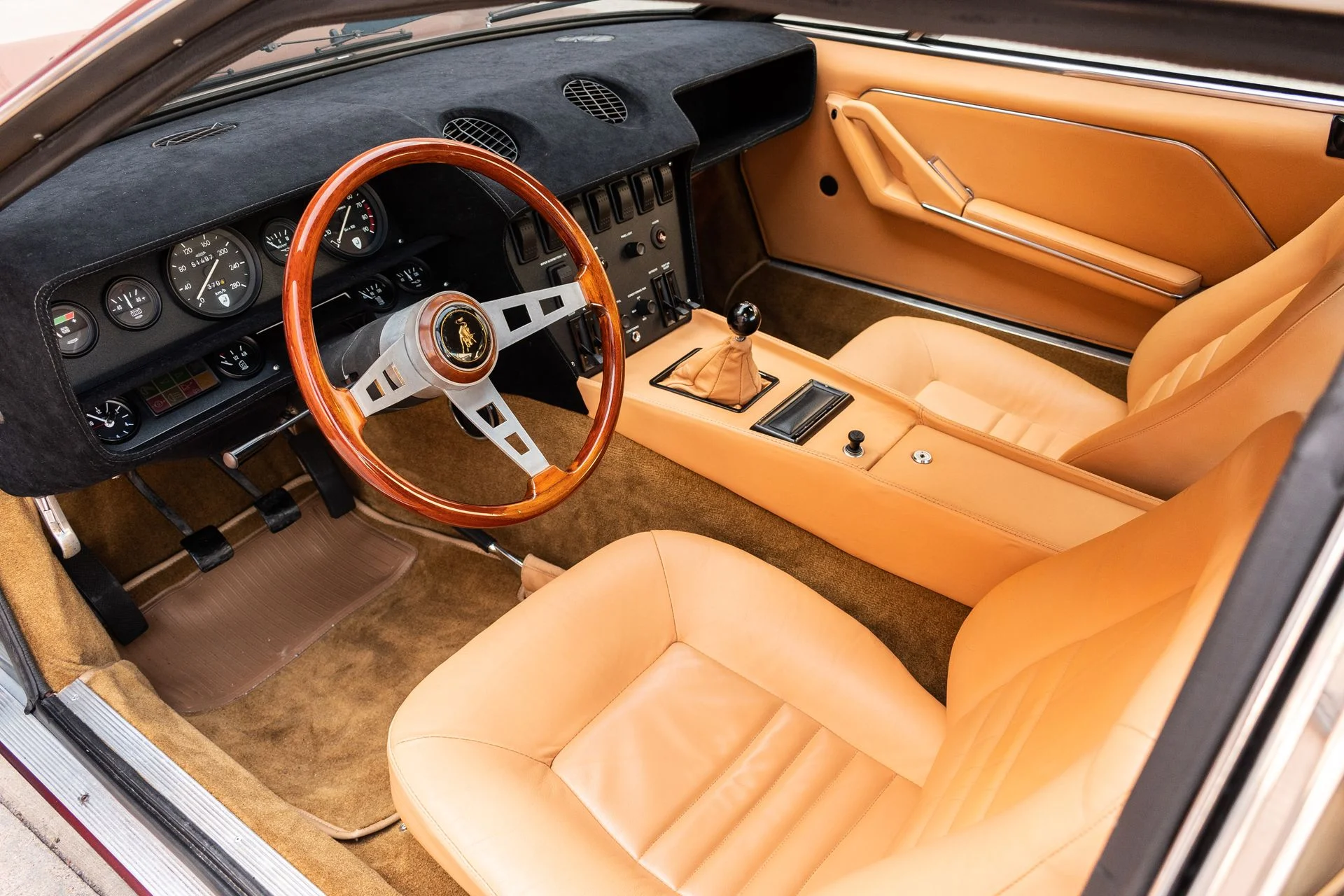
The cabin was trimmed in leather throughout with matching carpeting. Front seats were deeply bolstered buckets providing excellent support. The rear bench accommodated two adults, though legroom was tight. Children fit better, making the Jarama genuinely practical for family use despite its exotic character.
The dashboard featured a comprehensive instrument cluster with large Veglia gauges including tachometer, speedometer, oil pressure, water temperature, fuel, and voltmeter. The tachometer was redlined at 8,000 rpm with a prominent 7,500 rpm power peak marking. Switchgear controlled lights, wipers, and climate functions.
A leather-wrapped steering wheel faced the driver with the Lamborghini bull badge at its center. The ZF gear lever sprouted from a chrome-ringed gate, its mechanical precision reflecting the drivetrain’s direct character. Air conditioning was standard on the S model, along with electric windows and upgraded sound insulation compared to the original Jarama.
The overall atmosphere was more luxurious than sporting, with thick carpeting, comprehensive trim, and attention to detail throughout. This was a grand tourer rather than a track car, prioritizing comfort for long-distance driving over raw performance focus.
Specifications
- Engine: Bizzarrini V12, 3,929cc (82mm x 62mm), SOHC per bank, two valves per cylinder
- Power: 365 bhp at 7,500 rpm
- Torque: 282 lb-ft at 5,500 rpm
- Carburation: Six Weber 40 DCOE twin-choke carburetors
- Transmission: ZF five-speed manual, 4.09:1 final drive
- Chassis: Steel monocoque, 2,450mm wheelbase
- Suspension: Double wishbones (front and rear)
- Brakes: Girling vented discs 280mm (front and rear)
- Wheels: Campagnolo 7.5×15 front, 9×15 rear, Michelin XWX 215/70 VR15 (front), 225/70 VR15 (rear)
- Weight: 1,540 kg
- Performance: 161 mph top speed, 0-60 mph in 6.4 seconds
Competition History
The Jarama S was designed as a luxury grand tourer and saw minimal competition use. Its front-engine layout, substantial weight, and comfort-focused mission made it unsuitable for serious racing. However, a handful of privateer entries appeared in European GT events during the mid-1970s, where the combination of V12 power and relatively compact dimensions proved entertaining if not particularly competitive.
The Jarama’s real competition was in the showroom, where it struggled against Ferrari’s 365 GT4 2+2 and later 400. Ferrari’s car was larger, more practical, and better regarded by the market. The Jarama remained a niche choice for customers wanting something different from the obvious Ferrari alternative.
Production and Legacy
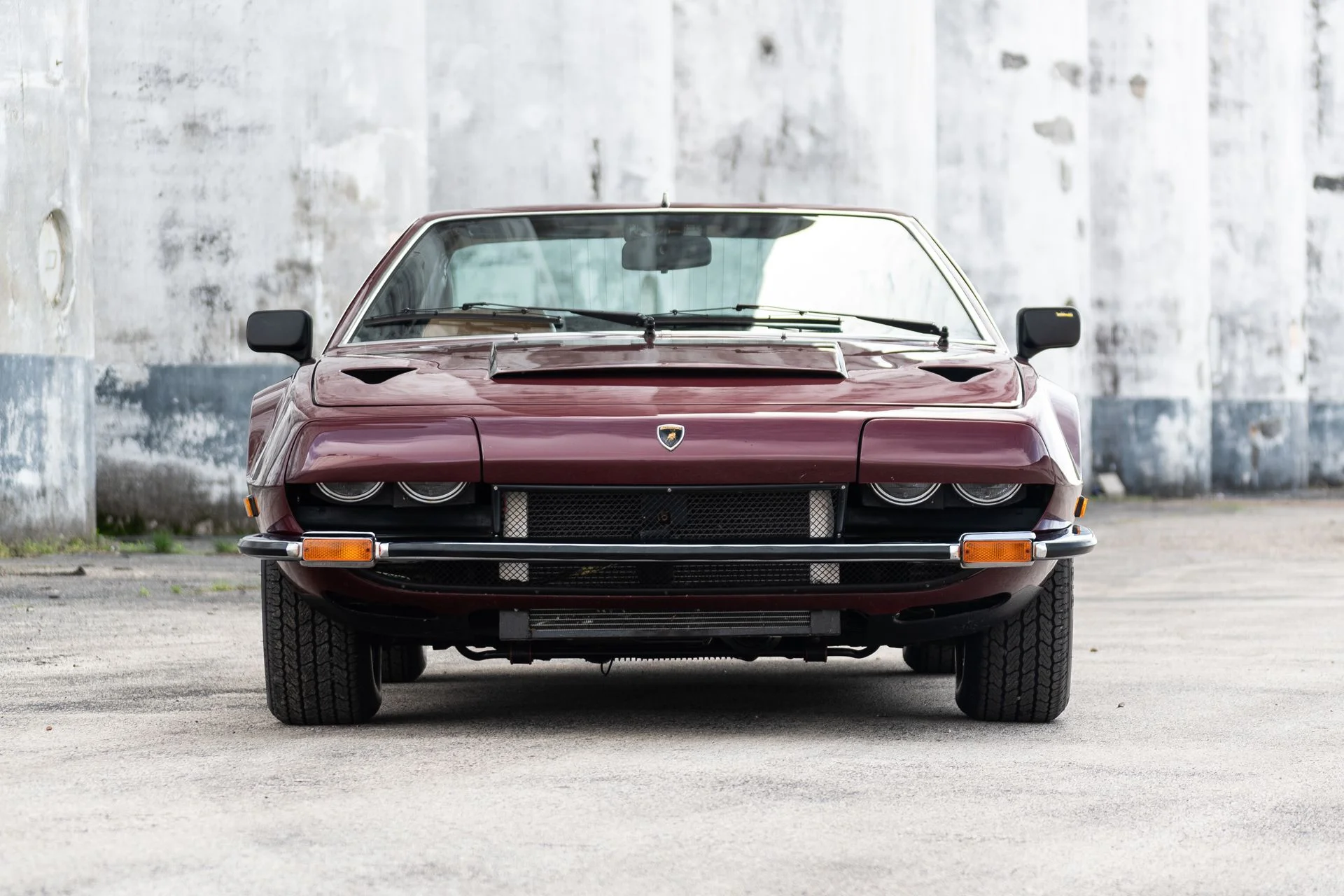
Lamborghini built 152 examples of the Jarama S between 1972 and 1976 at Sant’Agata Bolognese. Combined with 177 original Jaramas produced from 1970 to 1972, total production reached 329 units over six years. This made the Jarama one of Lamborghini’s slower-selling models, though production numbers were respectable by early 1970s exotic car standards.
The Jarama S struggled in the marketplace for several reasons. The styling was controversial, particularly the truncated rear treatment. The front-engine layout seemed conservative compared to Lamborghini’s mid-engined exotics. The 2+2 configuration compromised both practicality and performance, appealing to neither families nor enthusiasts completely.
However, the Jarama S offered something unique: genuine V12 Lamborghini performance in a package that could accommodate four people and handle daily driving duties. The 365-horsepower V12 delivered thrilling acceleration, while the improved suspension provided competent handling. The cabin was spacious and well-trimmed, making long-distance touring genuinely comfortable.
Today, the Jarama S remains undervalued compared to other classic Lamborghinis. Clean examples can be acquired for fractions of Miura or Countach prices, making them accessible entry points into V12 Lamborghini ownership. The combination of rarity, V12 soundtrack, and practical 2+2 configuration has created a small but devoted following.
The Jarama represented Lamborghini’s last front-engined V12 coupe until the modern era. After 1976, the company focused exclusively on mid-engined designs until the Diablo-based 2+2 concepts of the 1990s. The Jarama S closed a chapter in Lamborghini’s history, the final expression of traditional front-engine grand touring before the company committed entirely to mid-engined exotica. It was flawed, controversial, and commercially unsuccessful, yet it remains one of the most characterful Lamborghinis ever built.