

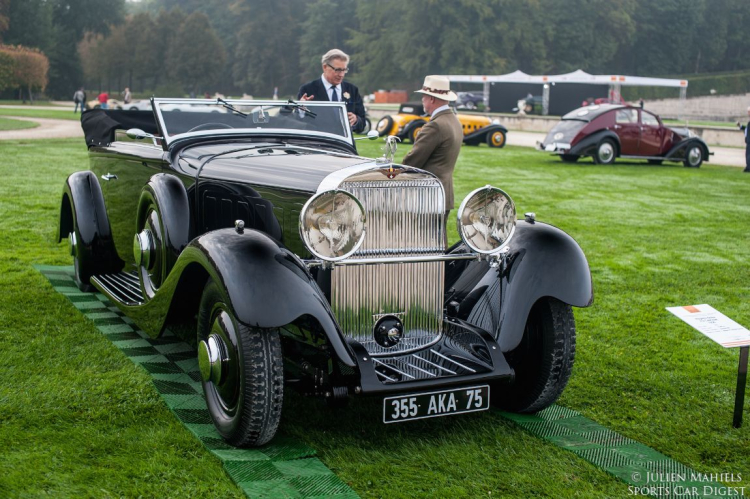
A special class of rare, exotic, and important Hispano-Suizas is planned to be the classic centerpiece of the 2021 Amelia Island Concours d’Elegance scheduled for May 23, 2021.
“The Hispano-Suiza class for the 2021 Amelia Island Concours is an extraordinary group of famous, and in some case practically priceless, cars. Cost was never an object with Hispanos and it shows. While fewer than 300 survive, it’s still a grand tale. Many of the players in the Hispano-Suiza saga are royalty; there are war heroes, movie stars, all sorts of international celebrities and a few sports heroes. It all helps make Hispano-Suiza one of the most legendary, elegant, desirable and exotic cars in history.”
Founder and Chairman of the Amelia Island Concours d’Elegance, Bill Warner
La Fabrica de Automoviles la Hispano-Suiza was incorporated in 1904 in Barcelona from the amalgamation of two firms that were both suffering financial distress.
Swiss engineer, Marc Birkigt, who was only 26-year-old at the time, was an executive in both of the companies. Birkigt, who had engine and chassis patents, was named factory manager of the new firm named Hispano-Suiza (Spanish-Swiss).
Birkigt would drive from the Hispano works in Paris to the Barcelona factory. The drive achieved two things: he enjoyed the commute in his car, and it provided a real-world test session for the cars.
The long drives allow him to confirm or negate his assumptions and prejudices giving him the experience firsthand of the quality of his creations.
Achieving Hispano quality was a high target indeed. He rewrote the rules for premium car engineering when he added four-wheel servo-assisted brakes on the H6.
Although the Hispano-Suiza is known to be “the queen of the road”, it was actually a car for a King. King Alfonso XIII of Spain owned as many as 30 units. In 1909, the factory was granted permission to name the T15, the “Alfonso XIII.” In 1911, Queen Victoria Eugenia, his consort, gave him a white T15 that had gold-plated fittings and golden wire wheels as a birthday gift.
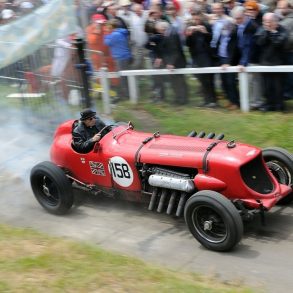
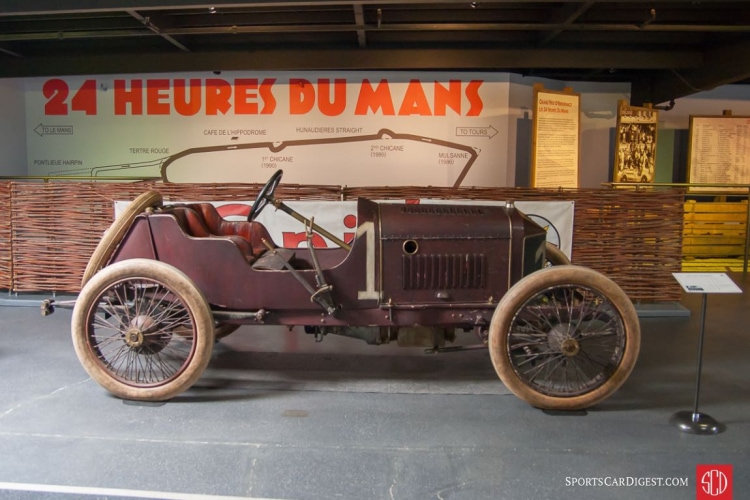
The Hispano-Suiza racing team had three cars enter the Coupe de l’Auto race in 1910 where they finished with an impressive first, third, and sixth places.
In 1911, equipped with the 3620 cc four-cylinder, the new race-centered T30 had the capability of going 80mph making the Alfonso XIIIi one of the initial real sports cars.
Birkigt returned to Barcelona when World War I commenced. There, he created a water-cooled V-8 aircraft engine that became the soul and spirit of the marque.
In 1916, the new, simple, and brilliant aluminum block Hispano-Suiza V-8 he designed was exactly what France’s war ministry needed.
His powerful “monoblock” Y12 engine, an 11.76-liter, water-cooled SOHC V-8 was used for the French S.P.A.D. VII which was the pillar of the French fighter squadrons and helped them claim air superiority against the Central Powers. France awarded Birkigt the Legion of Honor in appreciation for his creation.
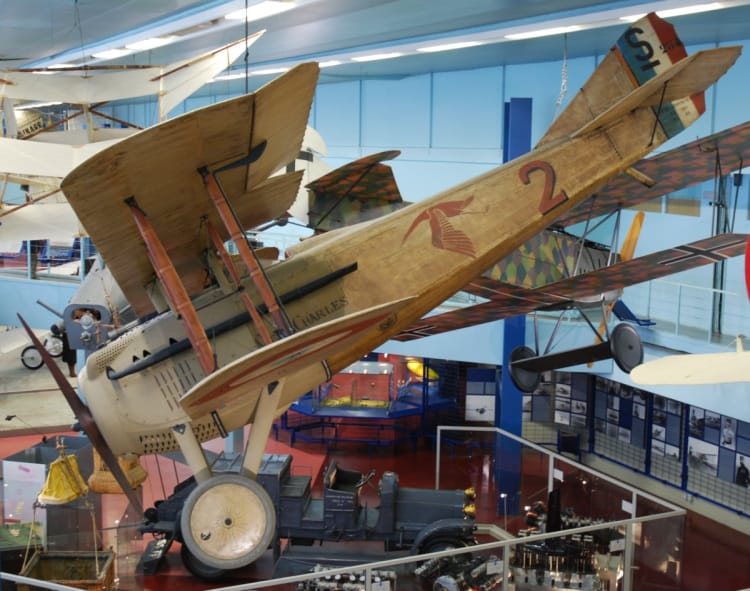
A famous French Aviation Unit during World War 1 was the Escadrille 3 Les Cigognes (‘The Storks’). Pilots from Groupe de Combat 12 assumed the name and put pictures of storks in various stages of flying on their aircraft.
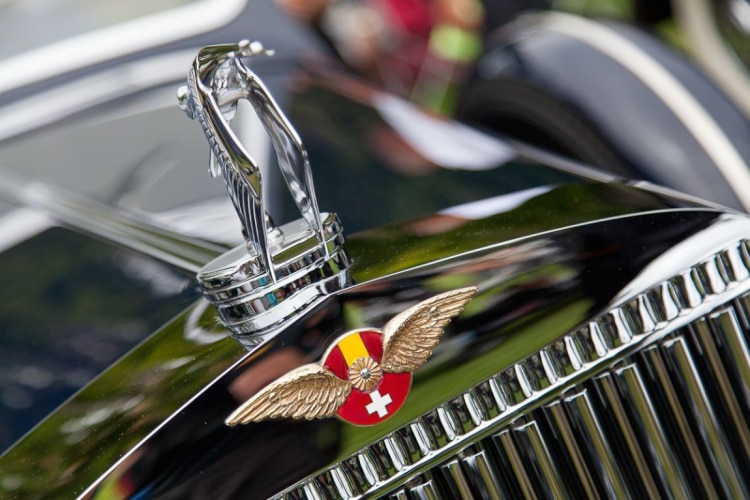
The insignia found its way into the Hispano-Suiza machines. The initial car to sport the La Cicogne Volant mascot (designed by Sculptor Francois Bazin) was the six-cylinder 6.6-liter OHC H6. The car shared its engineering DNA with the WWI aircraft and it was also given the powerful servo-assisted four-wheel brakes designed by Birkigt.
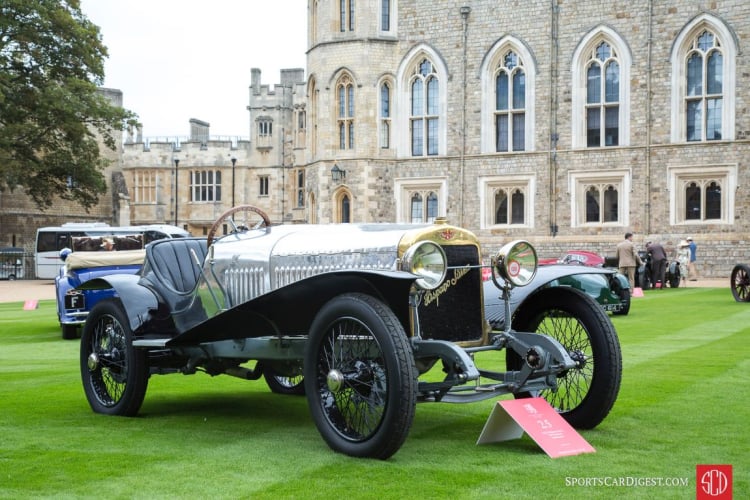
1921 marked the return of the H6 Hispano to the winner’s lists. Andre Dubonnet, a former fighter pilot, and Duesenberg Grand Prix racer (also an Escadrille No. 3 veteran), drove an H6 at the Boillot Cup of the Boulogne race, claiming victory. They were also able to claim a win at the Autumn Cup at Monza using a bored-out 6.9-liter H6 that could run more than 107mph.
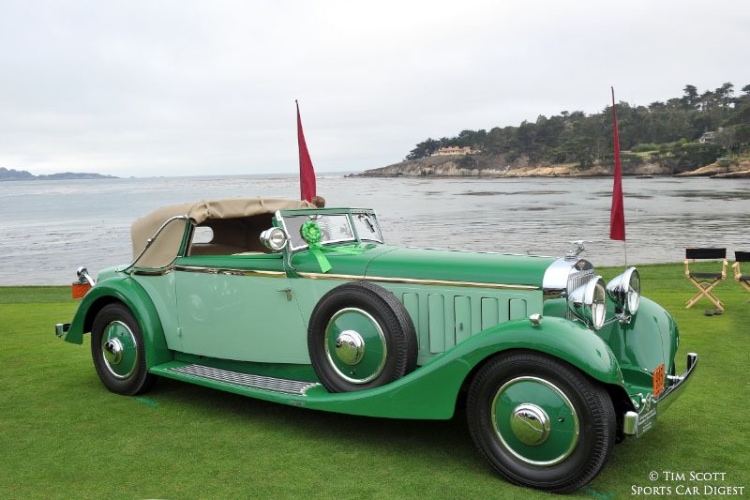
The huge J12 was Birkigt’s final automotive masterpiece. Created in 1931, being the same year as France was struck with the Depression and Alfonso XIII was exiled, it defied the reality of the Depression.
The J12 was an elegant, new 9.425-liter 60-degree V-12 and was capable of producing 190 hp. It was so beautifully presented that a proud J12 owner requested his carrossier to install glass tops in the hood to display the beauty of the V-12 for all to see. By 1934, it became an 11.3-liter V-12 engine that could produce 250 hp.
Despite the “Alfonso XIII” giving Hispano its sporting spirit and the stork becoming its immortal mascot, it would be one of the final Hispanos that sealed the grand marque’s iconic status.
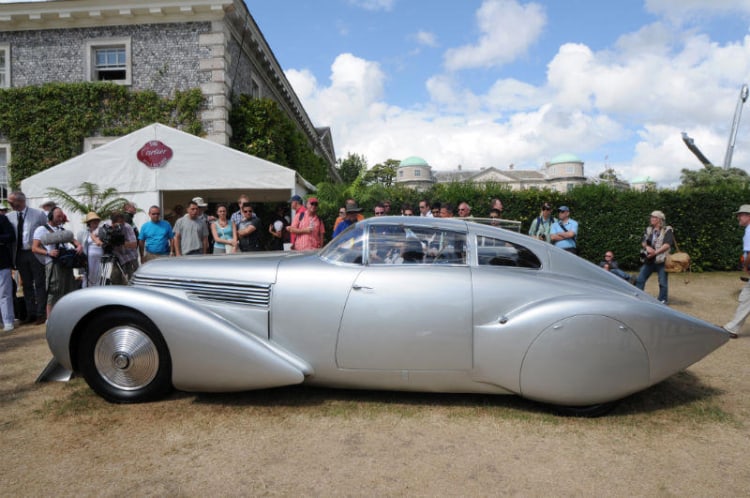
The 1938 Xenia Hispano-Suiza Dubonnet equipped with an H6B 6.5-liter straight-six is considered by many to be the most glamourous Hispano-Suiza. It displayed an exquisite Jean Andreu-designed coachwork that was produced by Carrosserie Saoutchik.
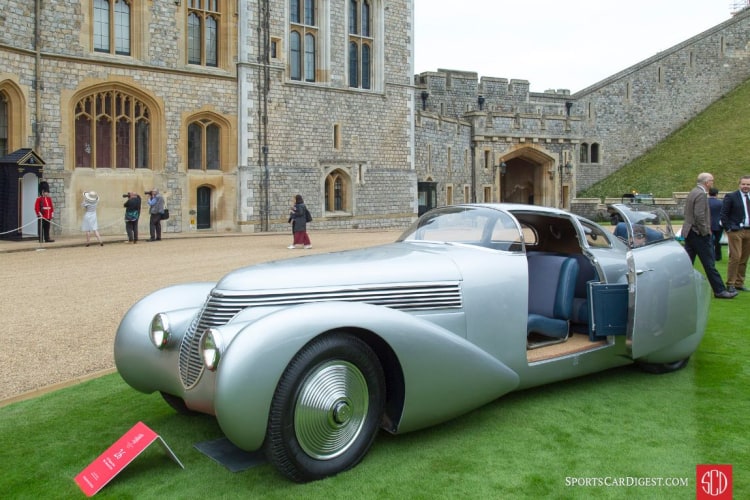
Andre Dubonnet named the Xenia after his late wife Xenia Johnson who passed in 1936. His current wife, not fond of the name or the memory it evoked, exiled the futuristic coupe.
The Xenia was hidden during World War II, only to make an appearance again a year after VE Day as it led a parade that opened the new St. Cloud tunnel near Paris.
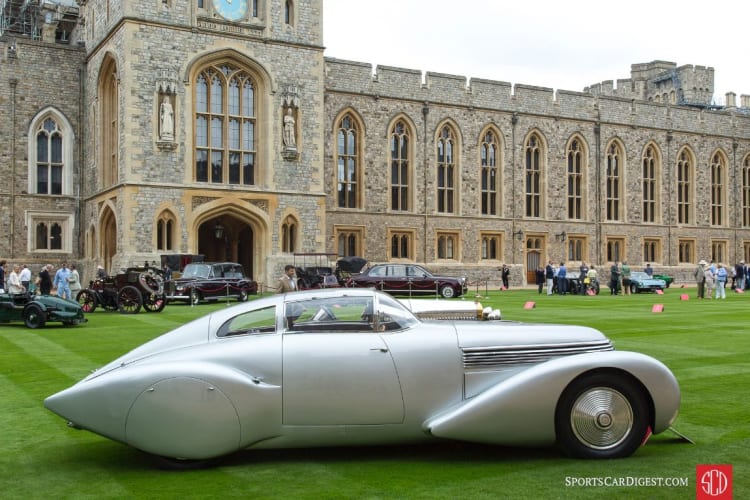
It had its first restoration in the sixties, and in 2001, it won Best of Show in the 16th annual Amelia Island Concours d’Elegance. In the summer of the same year, it won Meadowbrook’s Engineering Excellence Award.
Despite Hispano-Suiza developing its lustrous character from World War I, the harsh realities of post World War II saw the end of the dignified marque.
On August 15, 1947, even after all the flair during the debut of the new Hispano-Suiza V-8 engine at the 1946 Geneva Motor Show, Autocar published in English an announcement stating:
“The famous Hispano-Suiza works in Barcelona, Spain have become semi-national and will be known as Empress National de Automobiles.”
Birkigt moved on to using his talents to create artillery, railway engines, and the landing gear for an early French jetliner.
On March 17, 1953, The Times printed a report announcing that the 75-year-old engineer and auto executive Marc Birkigt who was “decorated for his achievements and contributions in both World Wars” passed on March 15 in his lakeside home in Versoix.
[Source: Amelia Island Concours d’Elegance]