
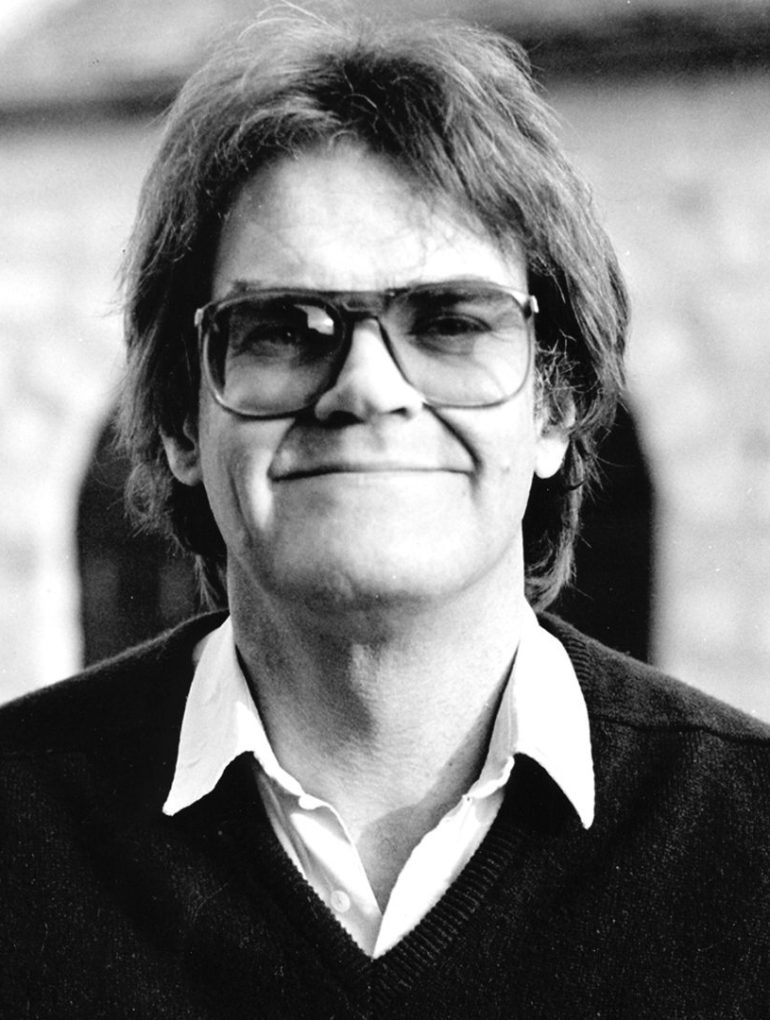
Canadian-born racing car designer, engineer, and innovative wheel manufacturer, Max Boxstrom died on March 15th in Birmingham’s Heartland Hospital of cardio-respiratory arrest.
A much-respected “behind the scenes” man, Max was born in Sweden and moved to Canada in 1951 when his family emigrated. While still in high school, he wrote technical articles for automobile magazines and studied engineering drafting. In 1965, Max persuaded his parents to send him to England “for a full racecar immersion course,” as he said at the time.
Vehicle aerodynamic studies with Frank Costin at Manchester and McLaren Can-Am car building at Trojan soon followed. By 1969, Boxstrom had designed his first F3 car, the MRE, which was suitable for three different monoposto classes. The Nemo F3 was next and was subsequently followed by the successful Martini Formula 2 car. In 1973, struggling team-owner Frank Williams, even then a talent spotter, put Max to work redesigning the suspension of his underfinanced Formula One team cars.
In 1975, Boxstrom, unimpressed by what then passed for racing wheels, decided he could do better, and so Dymag Wheels was formed with partner Mike Knight. By 1983, Dymag had become the world’s leading manufacturer of magnesium wheels for Formula One, IndyCar, Sports Prototype, and even Superbike motorcycles. Soon bored with endless versions of “round things,” Max got back into racing car design and team supervision as he masterminded the Ecurie Ecosse C2 car project in the mid-’80s. The team went on to win the world championship in 1986.
“When Victor Gauntlett and Peter Livanos of Aston’s approached me in late 1987 to design and build a new C1 car, I said yes with all of a nanosecond’s hesitation,” Max recalled later. From the beginning, he decided, “It had to effectively be an F1 car with a roof.” The result, the stunning AMR-1, made its debut at Aston Martin’s Newport Pagnell headquarters in November 1988. These cars quickly proved themselves during the 1989 season with a 5th and 6th at Donington and a 3rd and 4th at Brands Hatch. For 1990, plans were to introduce aero improvements and more horsepower, but Ford’s purchase of controlling interest in Aston Martin did not include prototype racing and so the AMR-1 program was sadly scrapped.
A new road car for Anthony Crook’s Bristol cars, as well as team management of the Callaway Corvette Le Mans effort, came next. More recently, Max, always an avid sailor, had designed an oceangoing sailboat for Nova Marine Limited. For the past few years, in fact up to the time of his recent passing, Boxstrom had consulted on various projects for both Rover and Jaguar cars.
In this age of overspecialization, Max Boxstrom will be remembered as perhaps the last of his breed—a creative, three-dimensional thinker who could conceive, draw, and build every individual component of a racing car—or as with the case of the AMR-1, all of them!
A celebration of the life of Max Boxstrom, undoubtedly involving a pub and some sailing, is to take place this summer on the south coast of England. If you knew Max and wish to participate please contact his friend, Paul Hornby at [email protected].