
In 1957, the folks in Coventry were making plans for the replacement of the XK150. A small 2/3-scale aluminum prototype was tested. This was E1A. Norman Dewis was the test driver, putting this early design through its paces. The eventual look of the E-Type was already evident in this early car, taking some of its styling cues from the D-Type.
The next step was the prototype E2A, where one of its major improvements was the independent rear suspension that would be a big part of the XKE. E2A was given a trial by fire in the 1960 24 Hours of Le Mans. Driven by Walt Hansgen and Dan Gurney as part of Briggs Cunningham’s team, they experienced some rough luck and were a DNF.
Still, Sir William Lyons felt it was time to take what they had learned from the two prototypes and give the world a new sports car. On March 15, 1961, the world was introduced to the XKE.
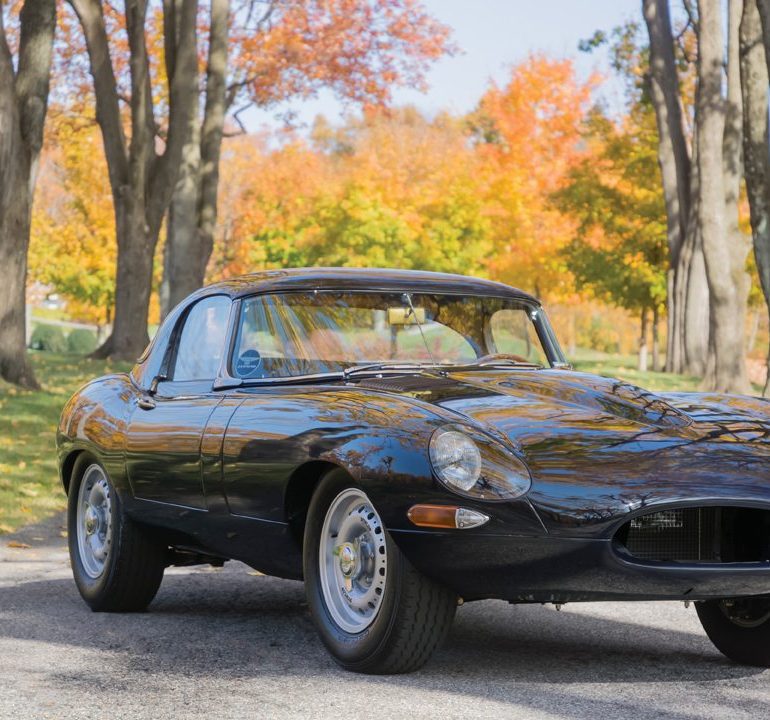
It may have seemed like a quantum leap from the XK150 to the XKE, but all you had to do was look at Jaguar motorsport to see the connection. The E was a kick-off to the swinging ’60s. Its sexy long bonnet and tight clean lines were the answer to many road-going dreams, and the price wasn’t over the top, but many from the land where the Jaguar was born had to wait as most of the first cars were bound for export.
 The early cars were powered by a 3.8-liter, straight-six engine with triple SU carburetors from the XK150S, mated to a Moss box with a non-syncro first. They were also supplied with disc brakes, the rears being inboard, as standard equipment. Jaguar was one of the first manufactures to do this. The earliest of cars had flat floors and external bonnet latches, requiring a special tool to open. Later cars had latches on either side of the cockpit.
By 1964, engine size had been brought up to 4.2-liters and the floors were dished to allow for more legroom. The power and top speed were the same for the 4.2 as the 3.8, but increased torque helped maximum power to be reached sooner, and gave better throttle response. Other improvements were more comfortable seats, better brakes and electrics and an all-syncro 4-speed box.
Legend has it that no less a personage then Enzo Ferrari exclaimed on his first sighting of the new Jaguar at the Geneva motor show, “It’s the most beautiful car ever made!”
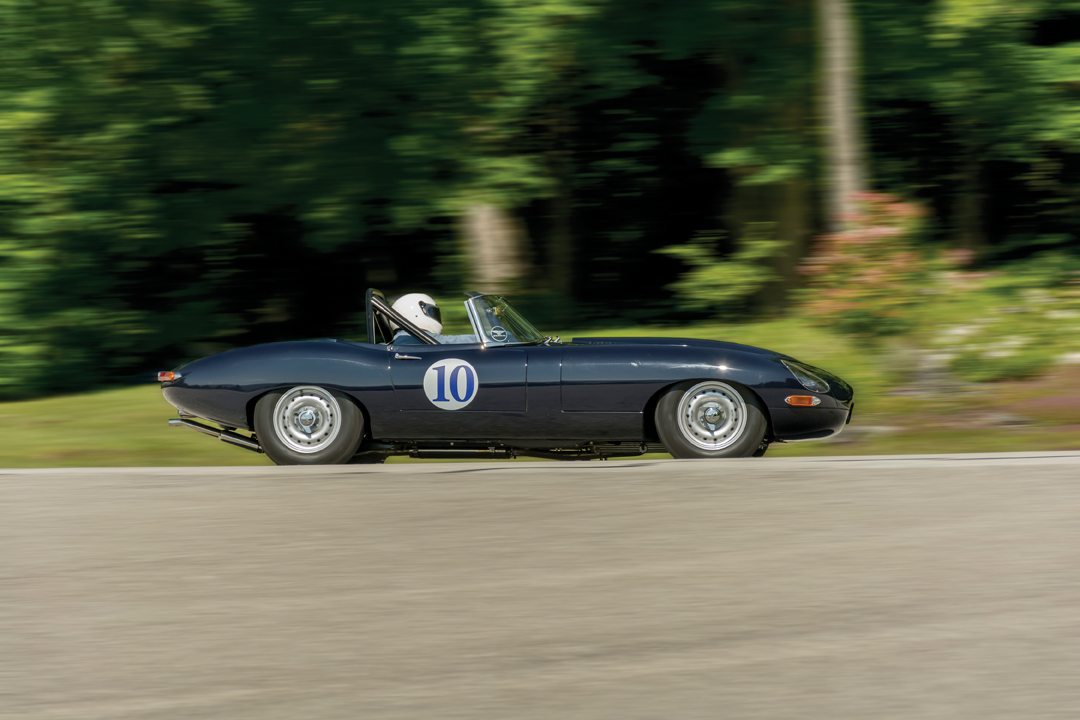
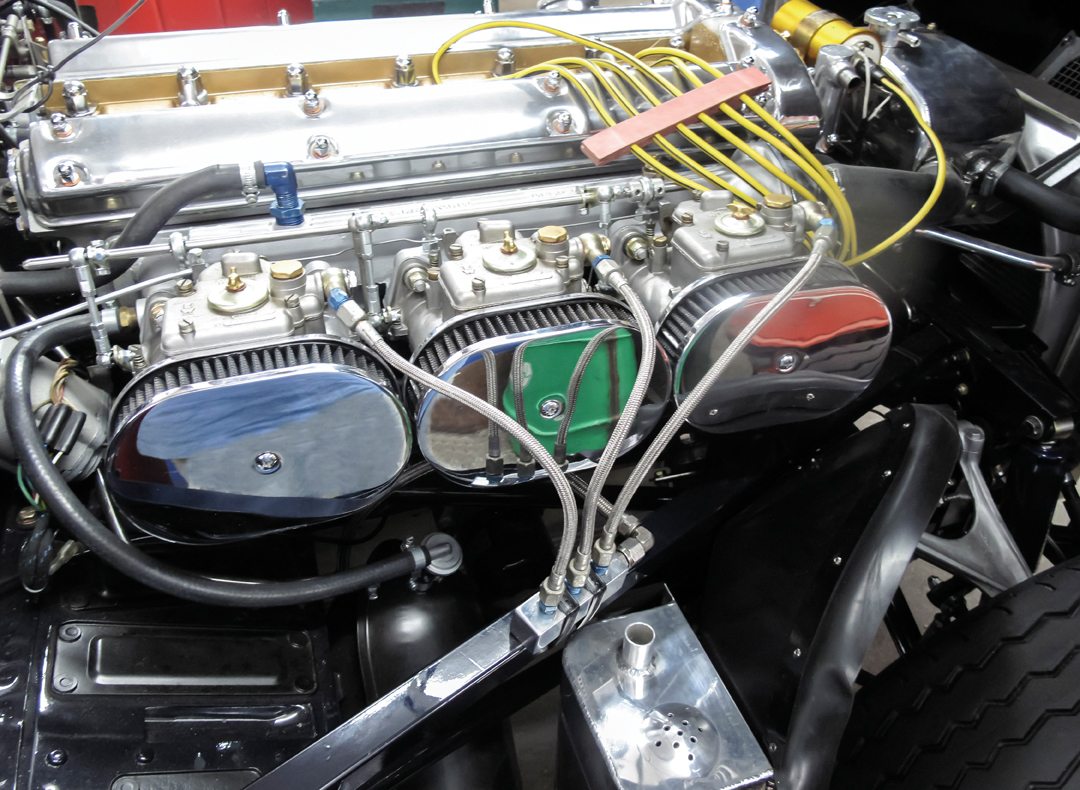
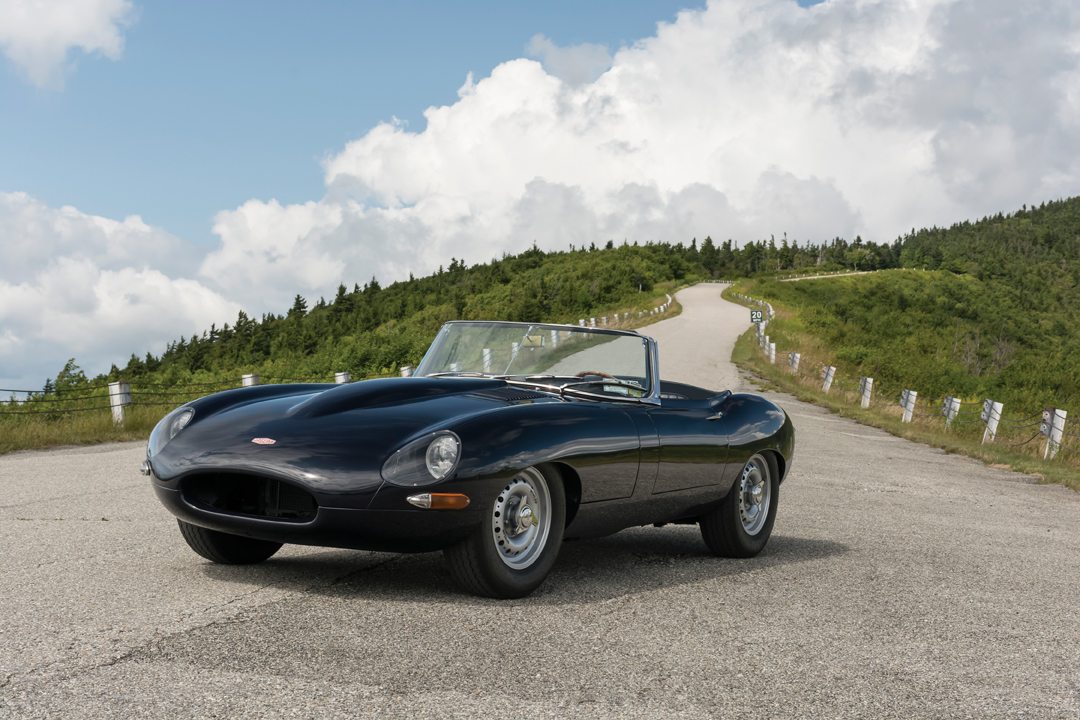 Mt.Equinox in Manchester, Vermont, is not a bad place to be in mid-August. It’s made even better if you have the keys to a fire-breathing E-Type. Just out of a multi-year restoration, it’s again taking on the mountain 40 years after its owner first brought it here. During the restoration it was decided to give the car a cleaner look. In keeping with the style of the lightweight E-Types of the time, the Jag was put on a bit of a diet. The bumpers were removed, as well as the chrome on the door tops, front fenders and headlight cover surrounds. The covers themselves were replaced with plexiglass. For a more period motorsports look, Dunlop wheels were added along with a D-Type steering wheel and shift knob. For more grunt, Isky Cams and 45 DCOE Webers were part of the engine rebuild. These were attached to a (Gasp!) more modern 5-speed, an aluminum radiator to keep things cool, a big bore stainless exhaust to keep things flowing and uprated Series 2 brakes to bring it all back to a halt.
You never mistake an E-Type for another car, it has a certain feel and look that is distinctly British. You have two large Smiths gauges right in front of you that can be a bit vague, but keep you informed. To the right, in the center of the dash, you find everything else. Water, oil, fuel, amps and, under them all, the various switches. Give the key a turn, and listen to the fuel pump tick away, then hit the starter and VROOM! You are ready to be off.
You look out over a bonnet that seems to go on forever, and all you want to do is follow it. The return spring is fairly heavy on the gas pedal so you really have to tell the Jag you want to go fast, but it is always in total agreement. The steering is light and responsive and the chassis feels very neutral, so whether carving turns or blasting up a straight the E feels wonderfully planted. Even though the seats are not competition style, they do a reasonably good job of keeping you in place—you are in a cocoon of period British style that is hard to get out of figuratively and literally. But who cares? This is a Jaguar E-Type! “Hey Enzo. Sono completamente d’accordo.”
My thanks to Bob Millstein for giving me the keys to this cool cat.
Specifications
Engine Straight 6, triple carburetors
Horsepower 265
Torque 283 lbs-ft
F suspension Independent torsion bars
R suspension Independent coil springs
Steering Rack & pinion
Body frame Steel monocoque
Transmission Four speed manual
Length 174 inches
Wheelbase 96 inches
Width 65 inches
Height 47 inches
Weight 2854 pounds
Performance
Top Speed 149 mph
0-60 mph 6.6 seconds
Fuel Consumption 14.9 mpg
Valuation
Price When New £1,896
Excellent: $314,000
Good: $230,000
Average: $121,000
Poor: $91,000