
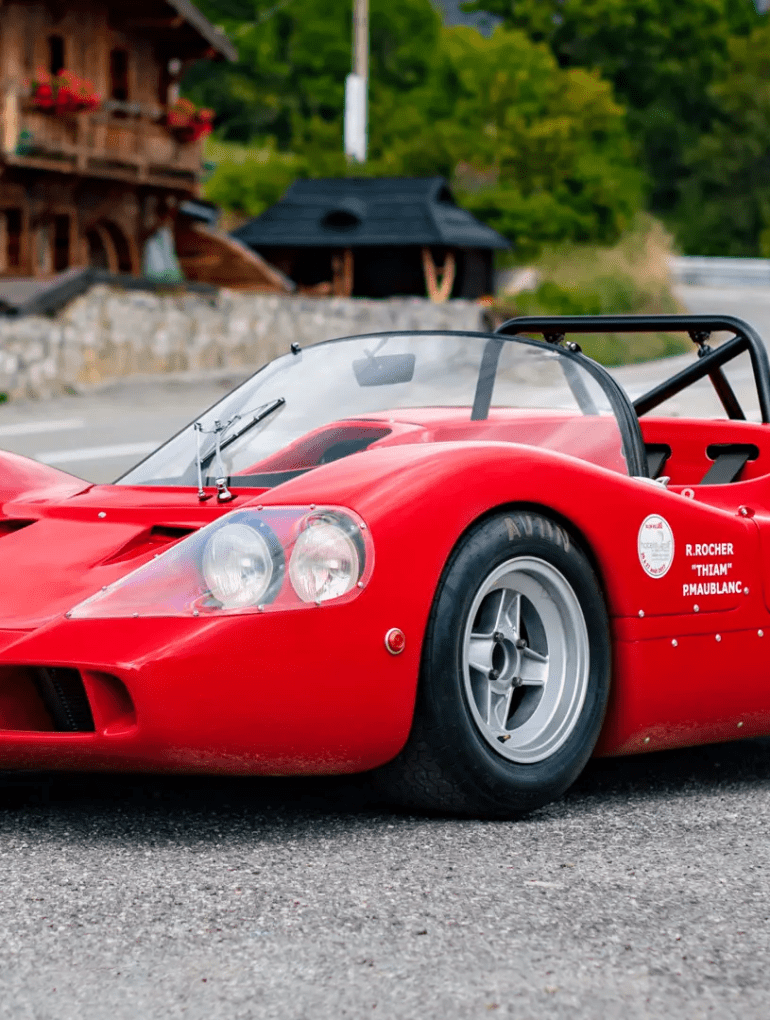

When you think of legendary Italian racing machines from the 1960s, your mind likely drifts to Ferrari’s Prototypes or Porsche’s dominance at Le Mans. The Abarth SE 010 probably isn’t the first car that crosses your mind. Sure, it isn’t the most recognized sports prototype from that golden era, but it represents a crucial chapter in Carlo Abarth’s evolution from tuner to serious manufacturer of competition machinery.
By digging into its origins and remarkable competition record, we’re here to see what makes this rear-engined, tubular-framed racer so special and why it earned its place among the most successful hillclimb cars of its era—often leaving far more powerful rivals in its wake.
Background and Origins
By the mid-1960s, major manufacturers had begun developing their own small performance cars, directly competing with Abarth’s modified Fiat derivatives. In response, Carlo Abarth’s Turin operation made a strategic pivot toward serious competition machinery, targeting racing categories where big manufacturers showed less interest.
The 1966 Appendix J regulations reorganized motorsport into seven categories. Group 6 emerged as the premier prototype class with no minimum production requirements, creating the perfect opportunity for Abarth to showcase its engineering prowess. After success with the diminutive SE 04 prototype, including Johannes Ortner’s stunning October 1966 victory at Montlhéry, where he defeated much larger Ferraris and Fords, Abarth gathered valuable data throughout 1967 for a dedicated model.
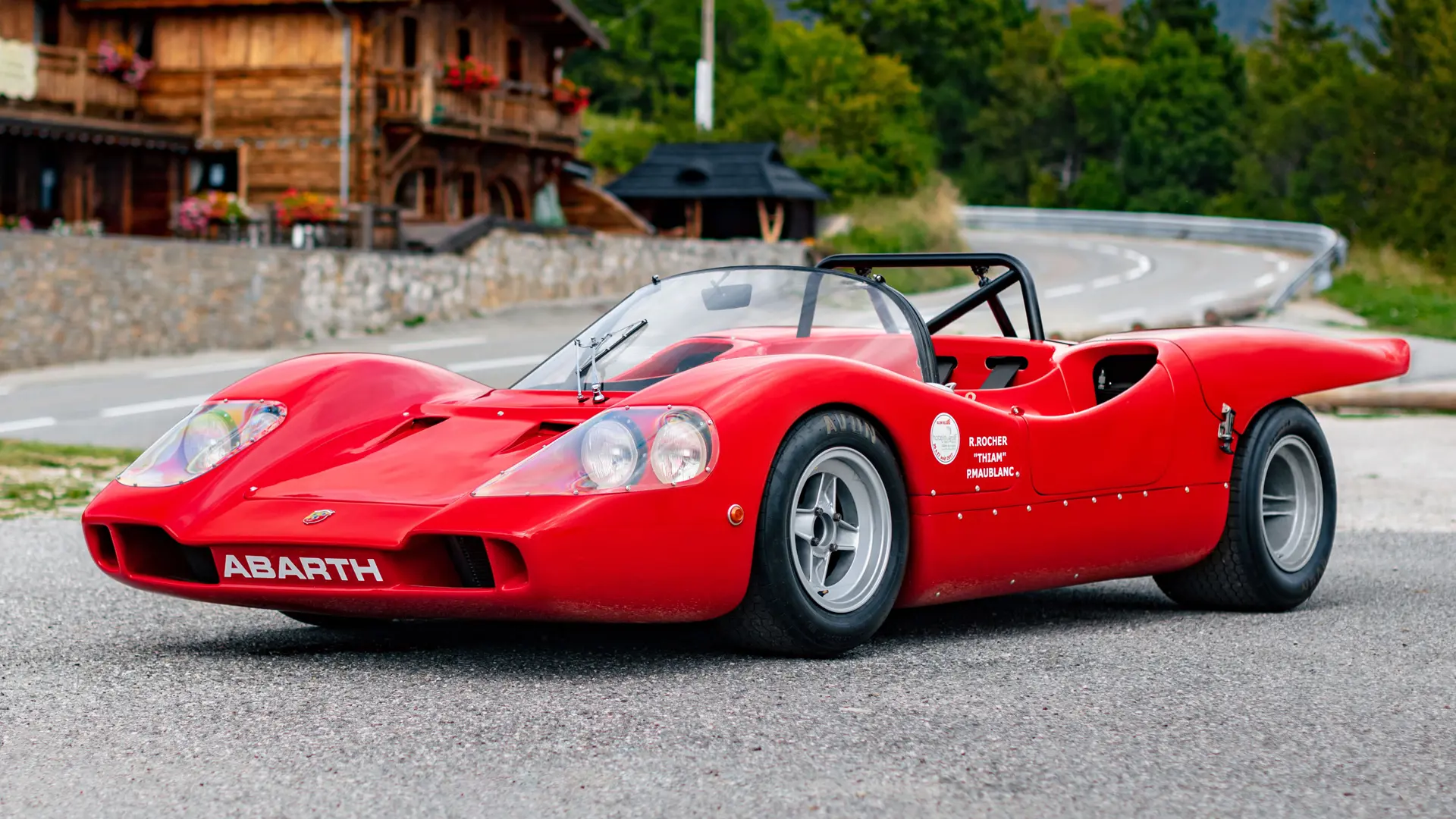
That culmination arrived with the SE 010, also known as the 2000 Sport Spider. Making its competitive debut at the Ampus hillclimb in April 1968 with Peter Schetty at the wheel, the SE 010 immediately set a new course record, finishing 14 seconds faster than the previous benchmark.
Design and Engineering
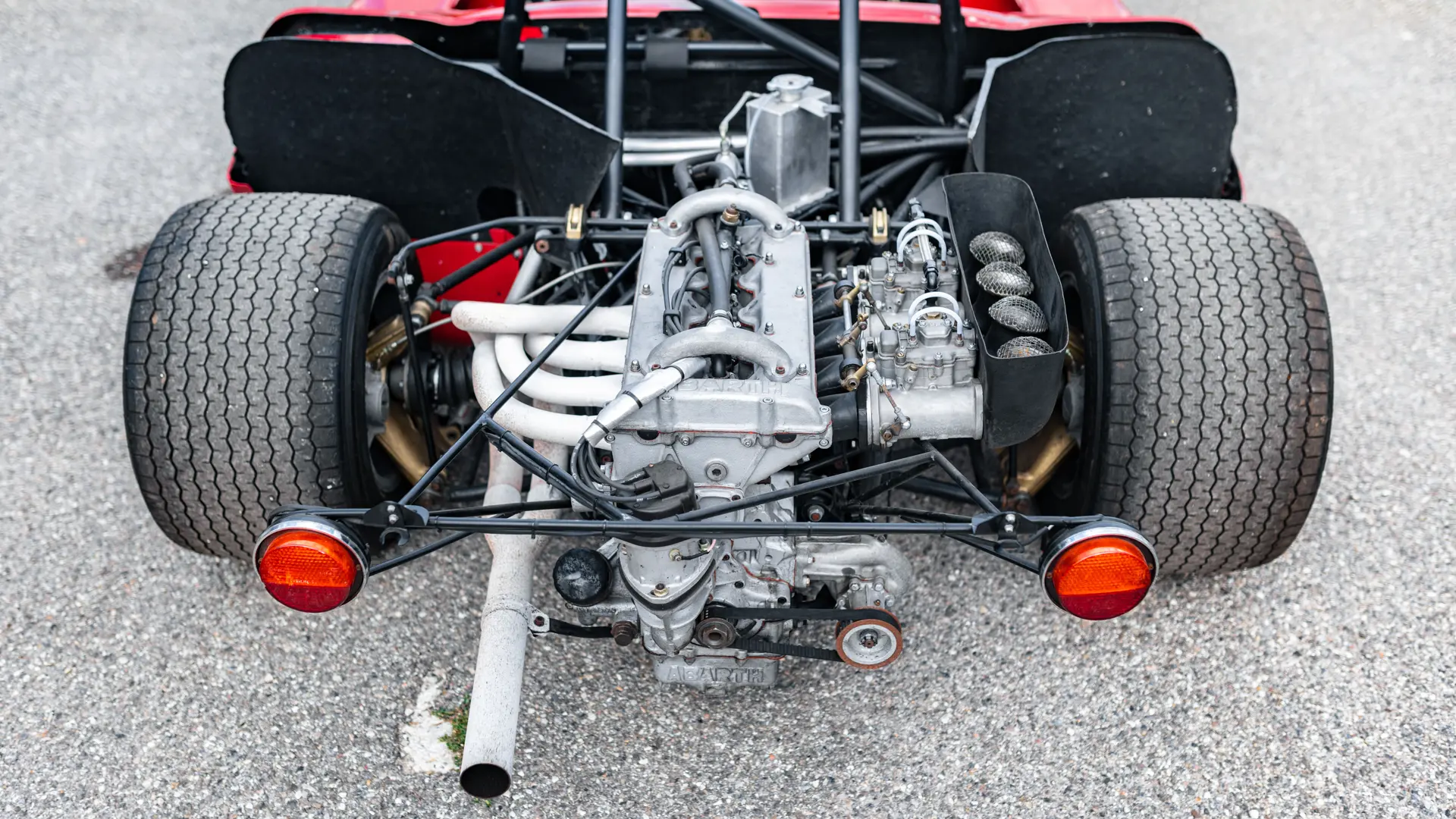
Chief engineer Mario Colucci designed a tubular steel space frame weighing just 39 kilograms, reinforced with double-laminated fiberglass panels riveted in place to create a semi-monocoque structure. This innovative approach added only 8 kilograms while significantly enhancing rigidity, bringing the complete chassis to an astonishing 47 kilograms.
True to Carlo Abarth’s preferences, the SE 010 employed a rear-engined layout with the inline four-cylinder motor mounted longitudinally over the rear axle, yielding a 38:62 weight distribution. Twin 50-liter fuel cells in the side sills provided a 100-liter total capacity for endurance racing. The suspension featured independent components all around with double wishbones at the front and reversed lower wishbones with top links and trailing arms at the rear. Girling disc brakes and Campagnolo 13-inch magnesium wheels completed the package.
The powerplant was Abarth’s latest Tipo 236 motor, featuring a Fiat cast-iron block with lightweight aluminum DOHC head, four valves per cylinder, and dry-sump lubrication. Displacing 1,946cc with an 88mm bore and 80mm stroke, most drivers preferred twin Weber 58 DCO3 carburetors over experimental Lucas fuel injection. With an 11.5:1 compression ratio, the engine delivered 250 horsepower at 8,000 rpm—remarkable for a naturally aspirated two-liter in 1968. Power is transferred through Abarth’s five-speed manual gearbox with a limited-slip differential.
Styling
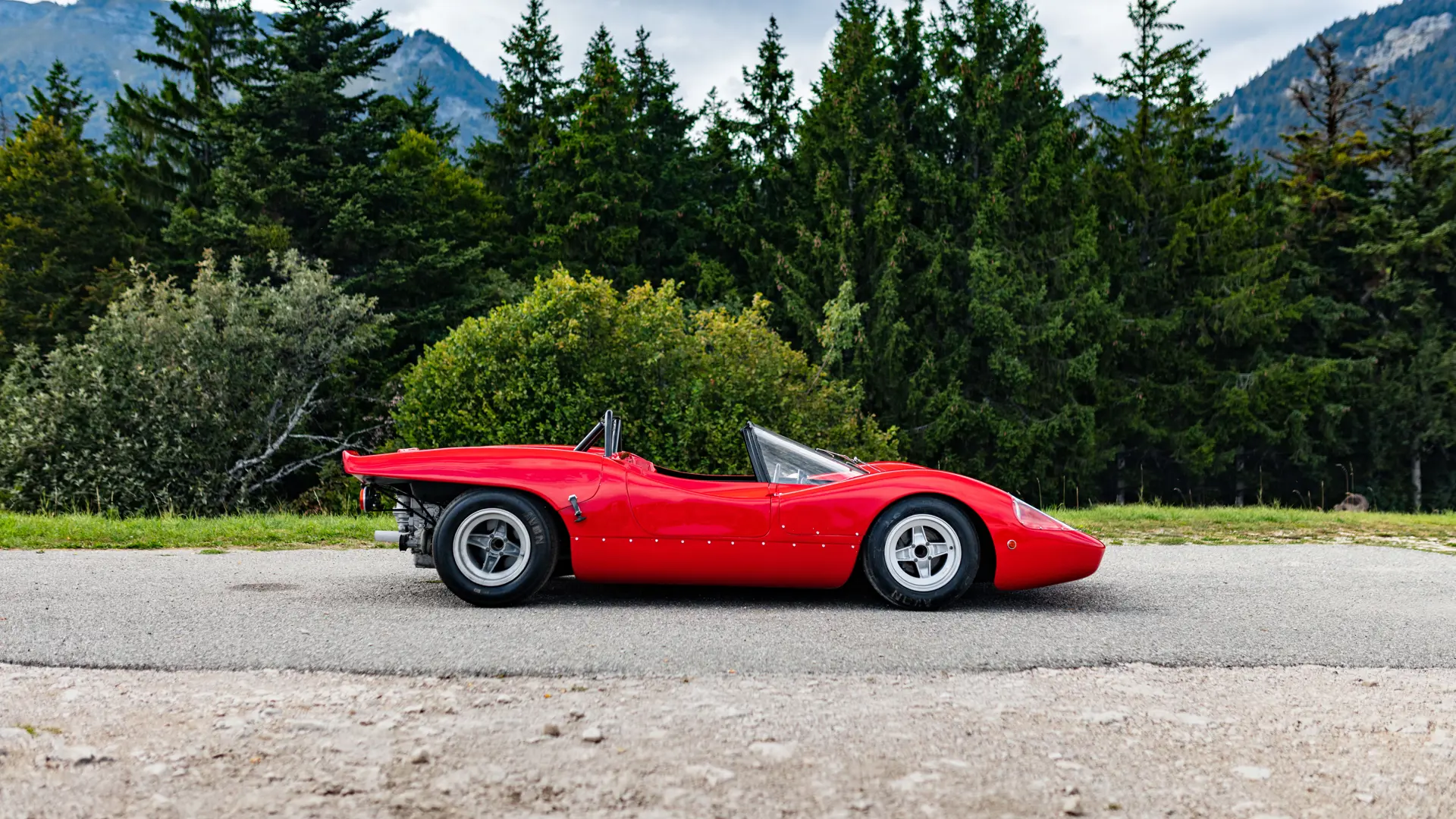
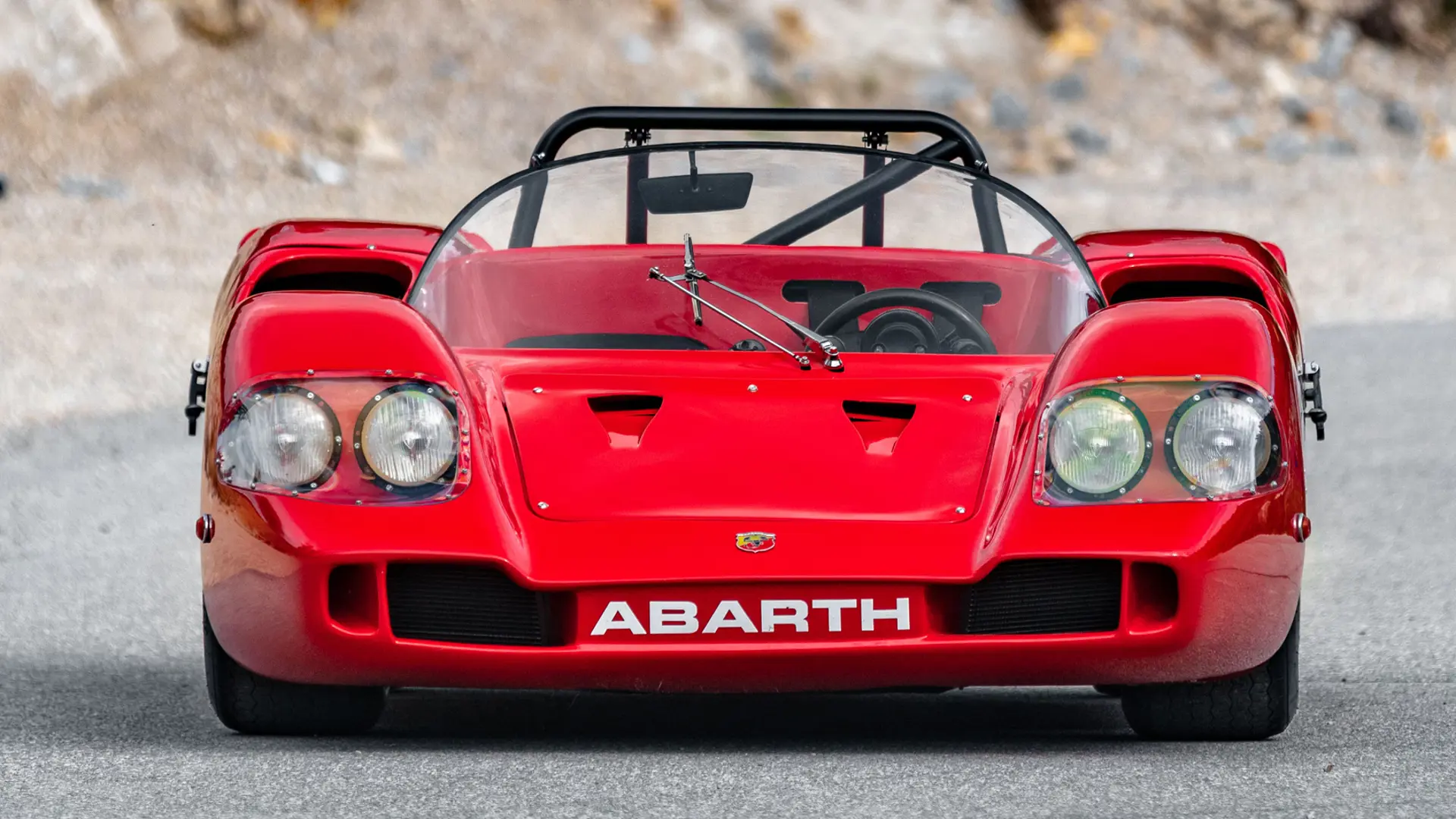
Mario Colucci’s 50-kilogram fiberglass bodywork was both functional and striking. The air-piercing nose featured intakes for oil and water radiators, while four headlights under clear Plexiglas covers earned the car its “Quattro Fari” nickname. A dramatic panoramic windscreen wrapped around to the butterfly doors, topped by enormous cooling scoops feeding secondary radiators.
The single-piece tail section showcased bulbous fender tops with massive winglets and a large inverted U-shaped cutaway exposing the engine and megaphone exhaust. Inside, minimalism reigned with bucket seats, an open-gate shifter, and an exposed tubular chassis. A 10,000 rpm tachometer dominated the dashboard, flanked by oil pressure and water temperature gauges.
Competition History
Following Schetty’s April 1968 Ampus victory, the SE 010 dominated European hillclimbs. The season’s highlight came at the 12th Bologna-Raticosa Pass with a stunning 1-2-3 finish: Johannes Ortner, Peter Schetty, and Arturo Merzario. Schetty would claim victories at Colle della Maddalena, Alpe del Nevegal, and Aosta-Pila, among others.
Circuit racing success came at the September 4, 1968, Nürburgring 500 Kilometers. Three works SE 010s fitted with 1.6-liter engines achieved another historic 1-2-3: Schetty covered 502.370 kilometers at 143.8 km/h average speed, followed by Ortner and Merzario. This triumph demonstrated the car’s reliability and versatility beyond hillclimbing.
Group 4 homologation arrived on April 27, 1969, after the FIA reduced production requirements to 25 cars. Gentleman driver Domenico Scola immediately won the Pieve Santo Stefano-Passo dello Spino hillclimb. Private entries flourished through 1970, with French driver Alain Finkelstein finishing third overall in the 1969 Championnat de France de la Montagne.
Interior
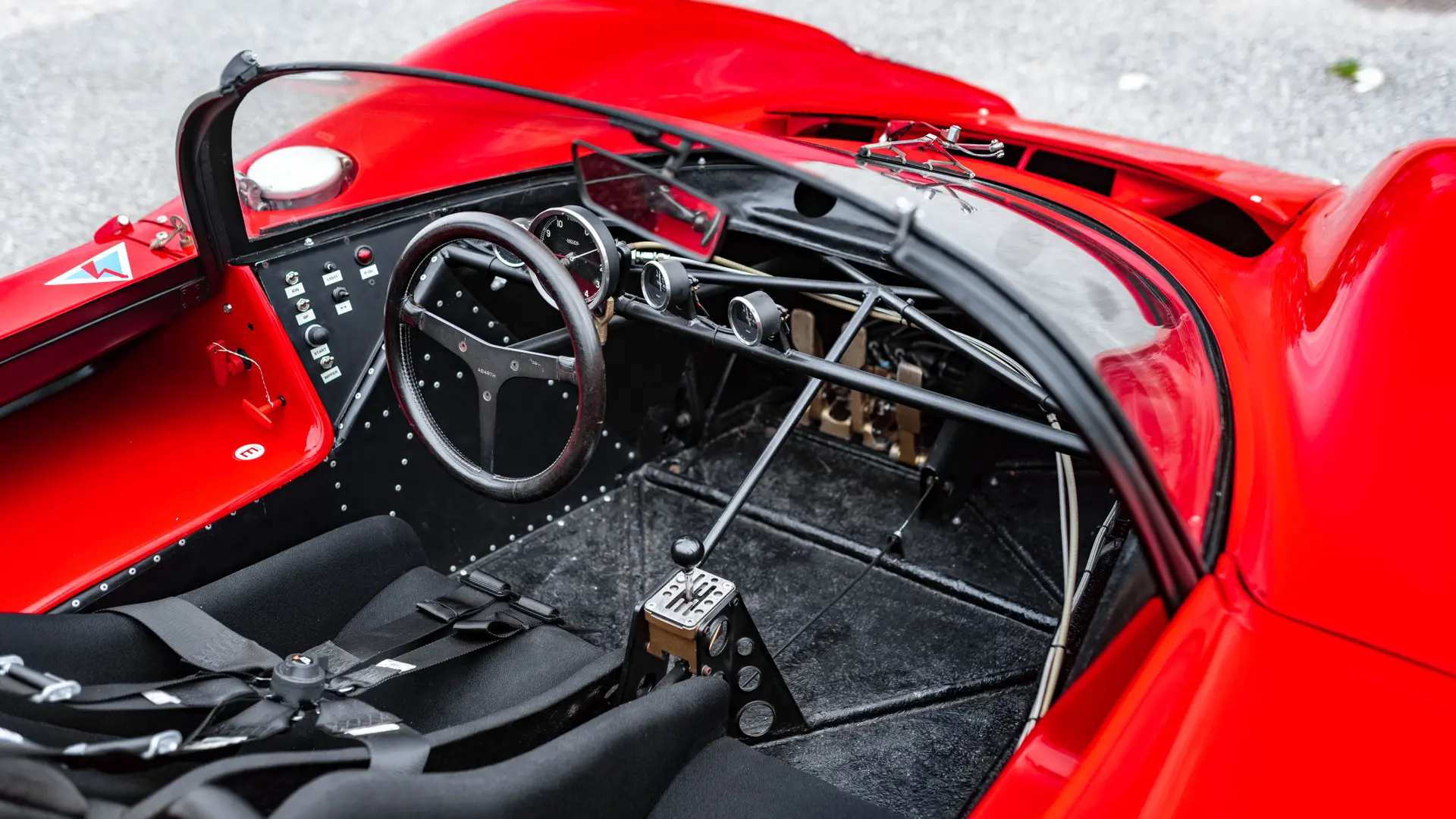
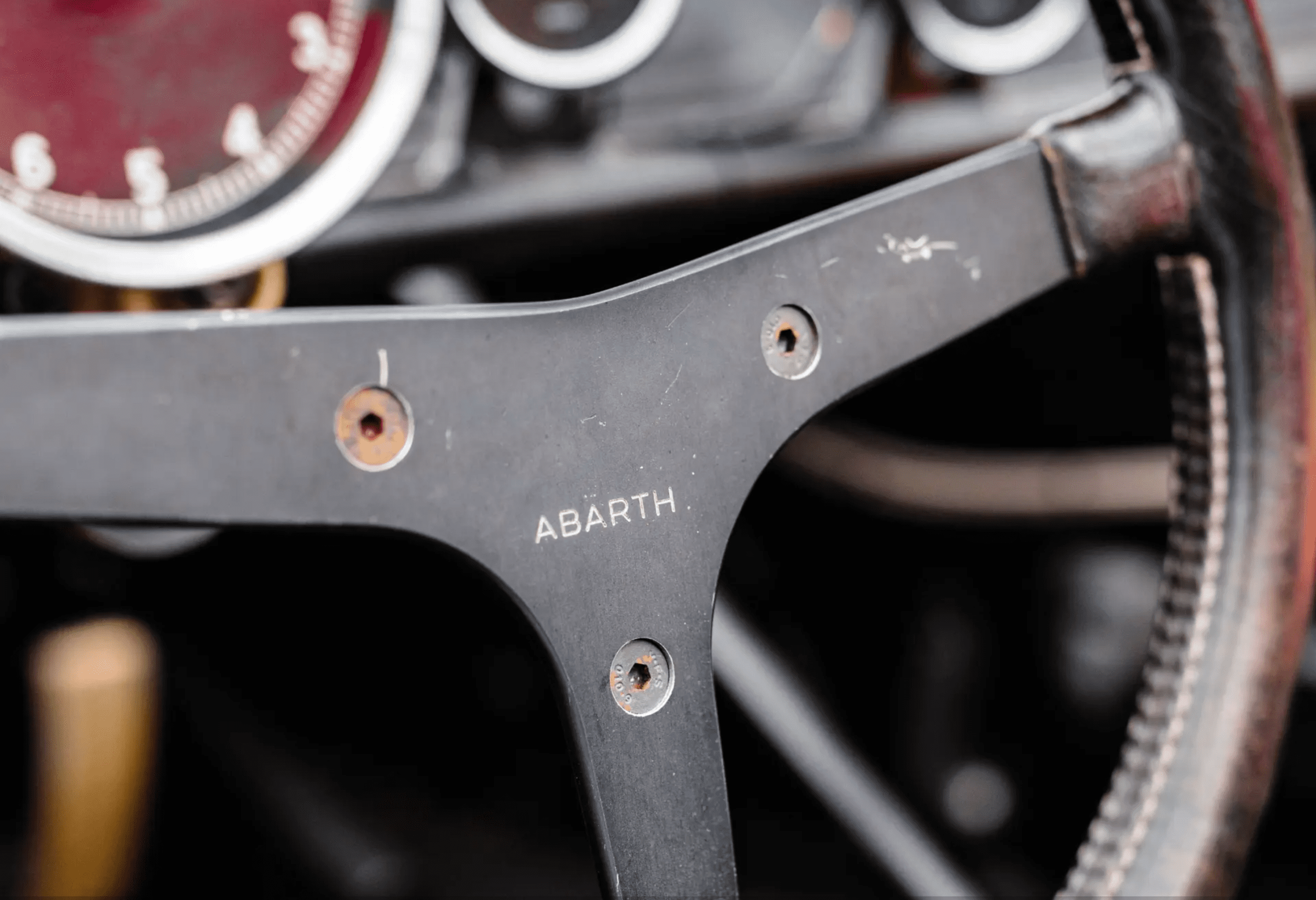
The interior was stripped to essentials. Bucket seats in black leatherette or fabric provided minimal comfort, with an open-gate five-speed shifter between them. Much of the tubular steel chassis remained exposed, with satin black fiberglass panels riveted in place only where needed for rigidity. A large 10,000 rpm tachometer dominated the view behind the leather-rimmed three-spoke Abarth steering wheel, flanked by smaller gauges for oil pressure and water temperature. Sound deadening was minimal. Most SE 010s were left-hand drive.
Specifications
- Engine: Abarth Tipo 236 inline four-cylinder, 1,946cc (88mm x 80mm), aluminum DOHC, four valves per cylinder, dry-sump lubrication
- Power: 250 bhp at 8,000 rpm (11.5:1 compression)
- Fuel delivery: Twin Weber 58 DCO3 carburetors
- Transmission: Abarth five-speed manual, limited-slip differential
- Chassis: Tubular steel with fiberglass reinforcement (47 kg), fiberglass body (50 kg)
- Suspension: Independent, double wishbones front, reversed lower wishbones with top links and trailing arms rear
- Brakes: Girling discs
- Wheels: 13-inch Campagnolo magnesium (10-inch front, 12-inch rear)
- Weight: 575 kg | Wheelbase: 2,085 mm | Fuel: 100 liters
- Performance: 270 km/h top speed, approximately 4.5 seconds 0-100 km/h
Production and Legacy
Production ran from early 1968 through late 1969, with approximately 40 to 50 examples completed. The reduced Group 4 homologation requirement made the SE 010 accessible to privateers, and demand exceeded initial plans. In January 1969, Pininfarina presented a radical wedge-shaped variant dubbed the Scorpio at the Brussels Motor Show, showcasing contemporary design while retaining the SE 010’s mechanical foundation.
The SE 010 represented a pivotal moment in Abarth’s evolution from tuner to manufacturer of serious competition machinery. Its hillclimbing success established a template that influenced subsequent prototypes, demonstrating that meticulous weight reduction and clever packaging could triumph over more exotic competition.
Today, surviving SE 010s are highly sought by collectors and vintage racers. Their combination of racing pedigree, stunning Colucci styling, and proven success has cemented their status as icons of 1960s sports prototype racing. The SE 010’s legacy validated Abarth’s engineering philosophy, proving that small-displacement, lightweight cars could compete with—and often defeat—larger-engined rivals in the twisting mountain roads where power-to-weight ratios and driver skill mattered most.