


Released in 1993, the McLaren F1 redefined the supercar, establishing itself as one of the most extraordinary road cars ever built. Even today, it evokes a level of emotion that is difficult to capture in words. Two decades later, in 2013, McLaren Automotive revisited this legacy, not with a successor, but with a revolution: the world’s first hybrid hypercar. At the heart of the P1 lies a 3.8-liter twin-turbocharged V8 paired with an electric motor, producing a combined 903 horsepower. This advanced powertrain is housed within a carbon fiber MonoCage structure, which serves as the passenger cell and primary chassis component. Remarkably, the MonoCage, including the roof and integrated battery housing, weighs just 90 kg.

The bodywork is tightly sculpted around the car’s mechanical architecture, while the centrally positioned cockpit enhances balance and driver engagement. Advanced aerodynamics play a crucial role, with active systems that continuously optimize drag and downforce. Chief among them is the Race Active Chassis Control (RCC) system, which uses hydro-pneumatic suspension to independently manage spring rate and damping at each wheel. In Race mode, the P1’s active front and rear wings generate up to 600 kg of downforce. The result is staggering performance: 0–60 mph in 2.7 seconds, 0–100 mph in 5.1 seconds, and a top speed of 217 mph.

Braking performance is equally exceptional. Carbon-ceramic discs, paired with six-piston front and four-piston rear calipers, absorb significantly more energy than conventional systems. The P1 also features Brake Steer, a system derived from Formula One that enhances cornering precision by subtly applying braking force to individual wheels.
Hand-built in Woking, England, the P1 reflects McLaren’s deep-rooted expertise in motorsport and engineering excellence. Named after founder Bruce McLaren and developed during the leadership of Ron Dennis, it represents a synthesis of cutting-edge technology and uncompromising performance.
A true modern masterpiece, the P1 delivers breathtaking acceleration, razor-sharp handling, and surprising usability, equally at home on road or track, and with only 375 ever made, the McLaren P1 is a true collector’s dream these days, but it can get even more interesting, take a look at this specific example, chassis number 209 of just 375, and more importantly, one of approximately just 150 cars originally delivered to the U.S.
Supplied new via McLaren Philadelphia, it was commissioned by its first owner in a distinctive “Professor 2 Blue” finish, complemented by bespoke carbon fiber seats trimmed in red Daytona-style leather. Nearly $140,000 in McLaren Special Operations options were specified.

After changing hands twice, this already exceptional P1 underwent a transformation that elevated it into an entirely different category of collectability.

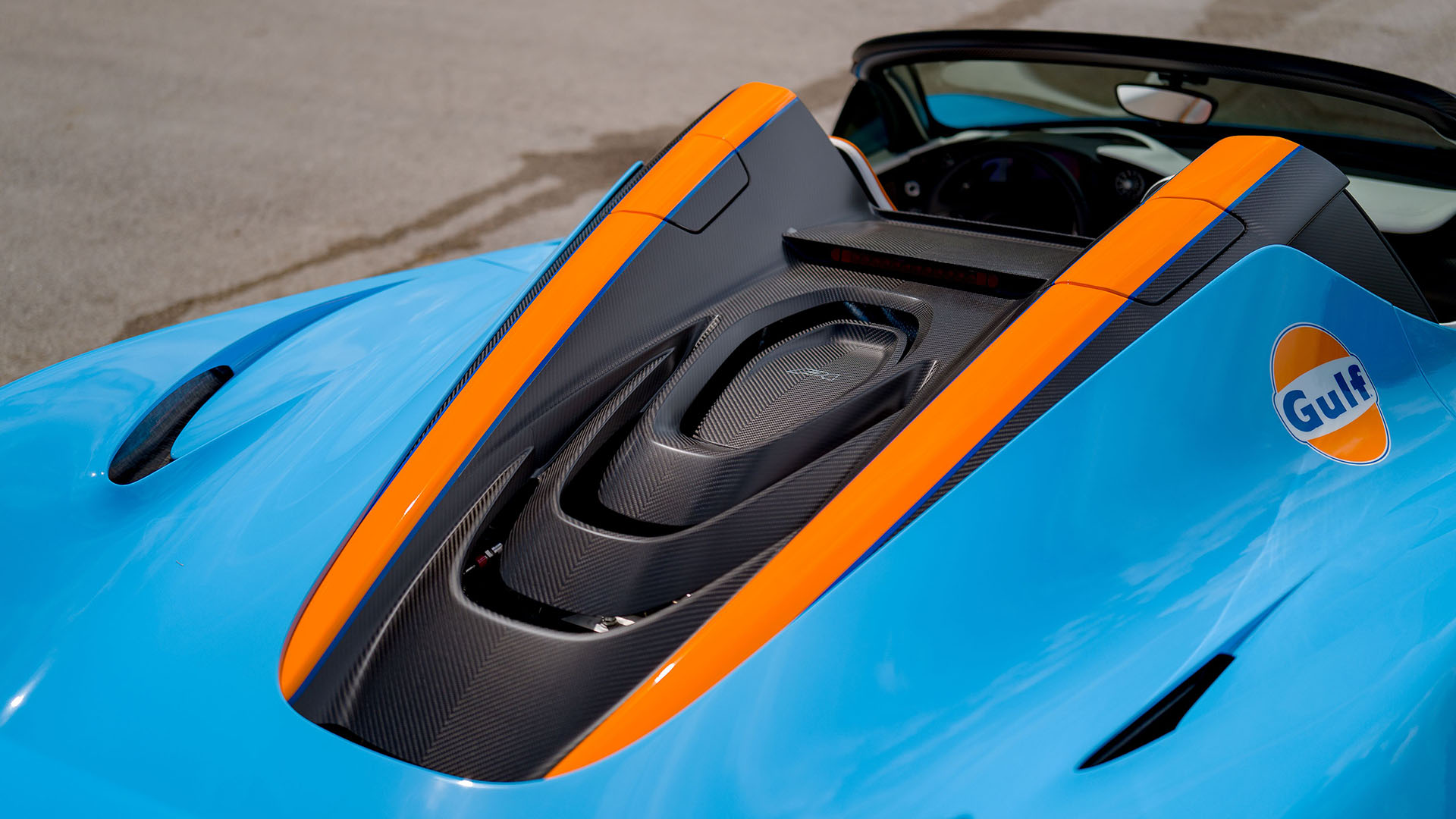
Originally offered only as a coupé, this car was converted into a Spider by renowned specialists Lanzante, in collaboration with P1 designer Paul Howse. The result preserves the car’s original design language while introducing elegant carbon fiber buttresses and revised air intakes to maintain cooling efficiency.
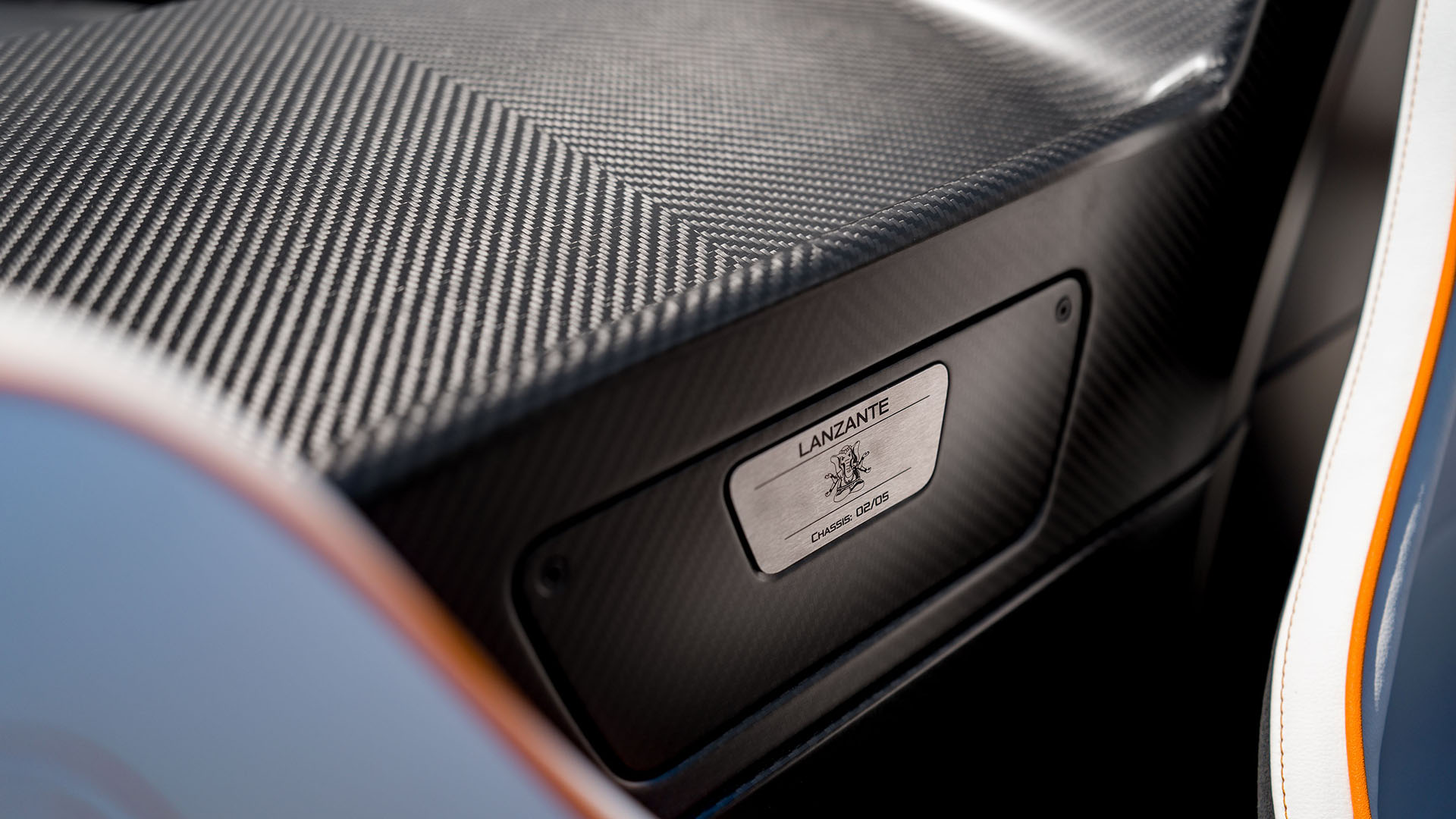
Despite the removal of the roof, structural rigidity remains uncompromised thanks to extensive chassis reinforcement. The execution is so seamless that the finished car appears as though it could have been produced by McLaren itself. Just five such conversions were completed.
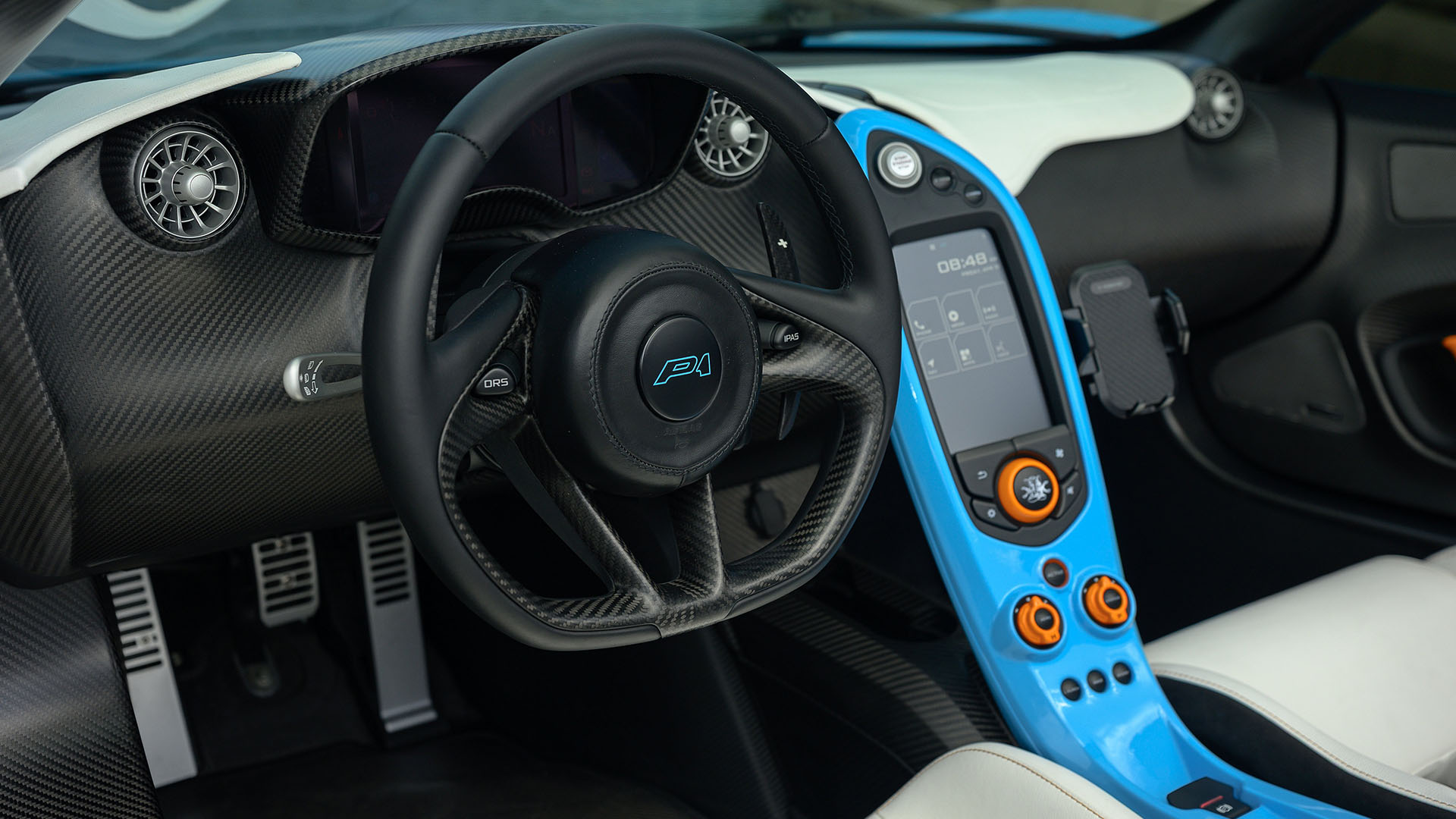
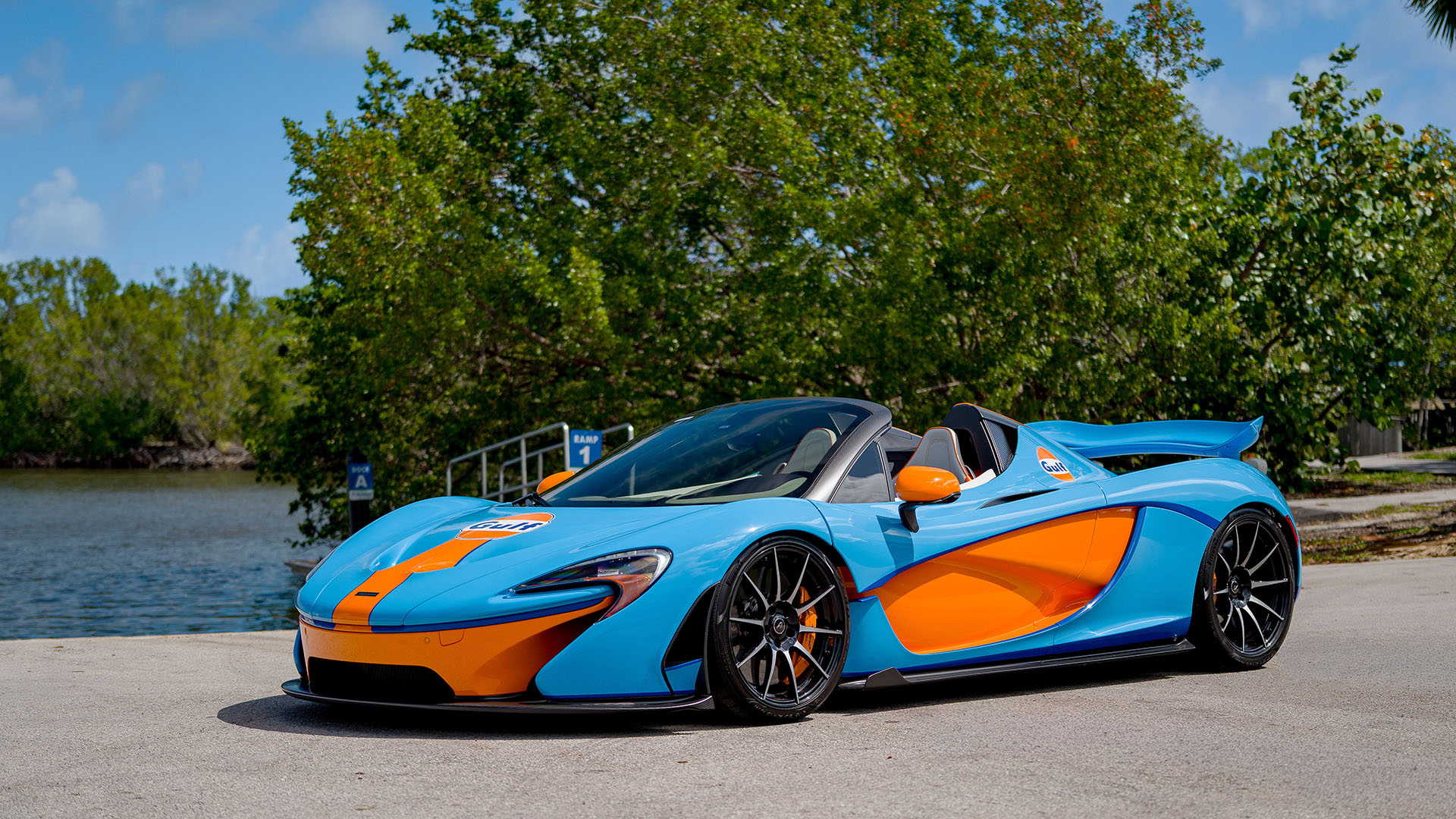
This particular example, the second of the five, has since been refinished in iconic Gulf Oil racing colors. The interior has been retrimmed in white, UV-resistant SuperFabric leather with matching Gulf accents. Since its conversion, it has been driven fewer than 200 miles and shows under 3,000 miles from new.
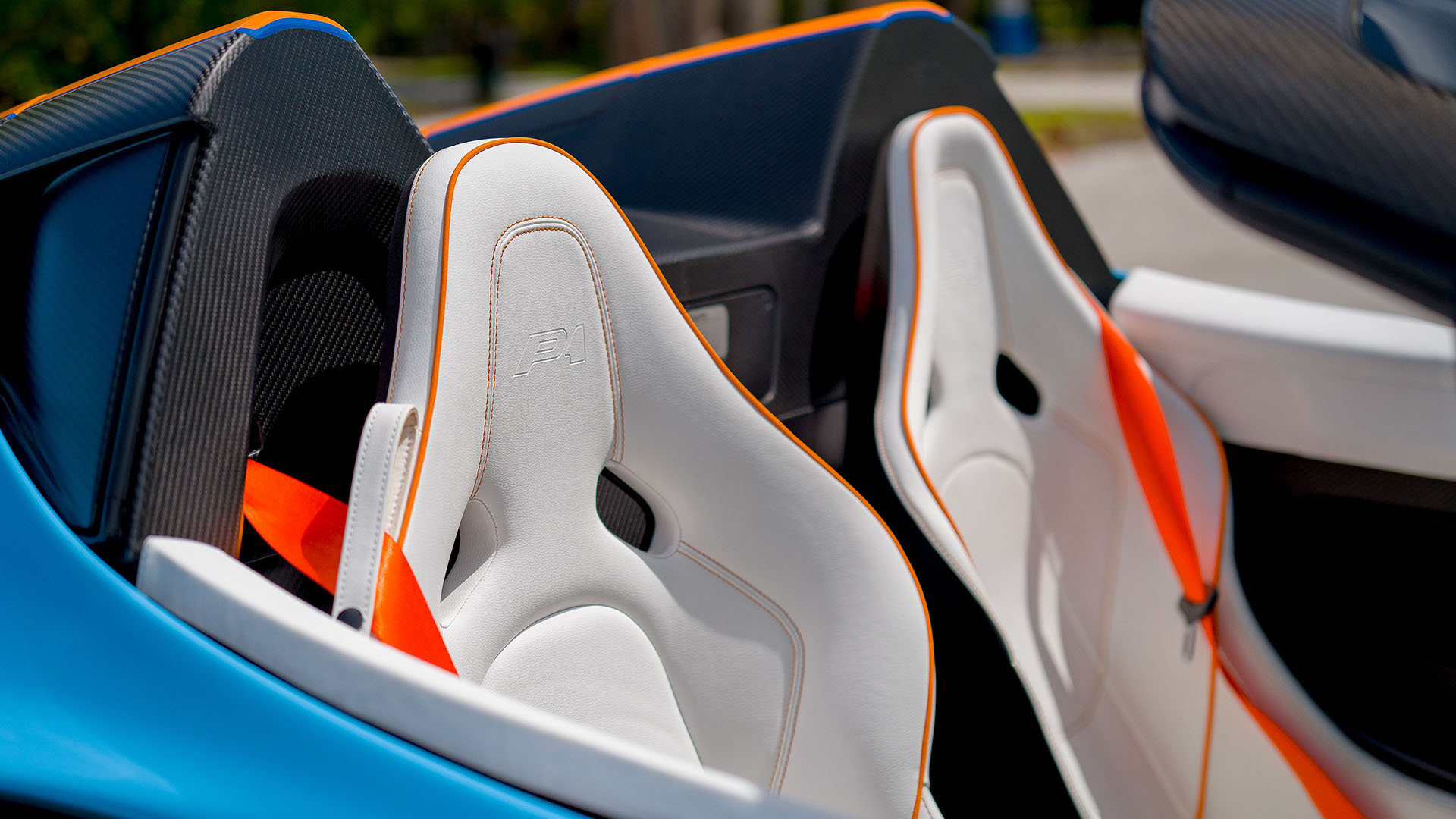
Accompanied by Gulf-themed keys, a Lanzante build book, and its original charging equipment, this P1 Spider stands as an extraordinary collector’s piece. Already one of the most sought-after hypercars of its era, the P1 becomes something far rarer and more significant in this form, a one-of-five open-top reinterpretation of a modern icon.

Check out the listing for this car at the Bonhams site, where it will be auctioned on May 3, 2026, during their Miami Auction