

There’s a black coupe somewhere in Volkswagen’s archives that most people have never heard of. It has gull-wing doors, a transparent bonnet, a Formula One-style steering wheel and a 6.0-liter engine sitting just behind the driver’s head. In February 2002, that car lapped a circular test track in southern Italy for 24 straight hours at an average speed of 200 mph.
It broke seven world records and twelve international class records. Then Volkswagen put it away and never sold it to anyone. That car is the W12 Nardò. And the story of why it exists, and why it doesn’t, says more about the car industry than almost any vehicle that actually made it to a dealership.
Ferdinand Piëch Had a Point to Prove
To understand the Nardò, you have to understand the man behind it. Ferdinand Piëch was the grandson of Ferdinand Porsche, the engineer who created the original Volkswagen Beetle. By the mid-1990s he had risen to lead the entire Volkswagen Group, and he was not a cautious man. He had already pushed Audi to dominate rallying with the quattro. He was in the process of engineering a hostile takeover of Porsche’s parent company. When he decided Volkswagen needed a supercar, nobody in the building was going to talk him out of it.
The brief Piëch handed to Giorgetto Giugiaro of Italdesign was simple in ambition if not in execution: build a two-seat supercar around a new W-configuration 12-cylinder engine. The W12 was itself a piece of engineering audacity, essentially two 2.8-liter VR6 engines joined at a common crankshaft, producing a 12-cylinder unit more compact than a conventional V12.
The result debuted at the 1997 Tokyo Motor Show in a paint shade that can only be described as screaming yellow. VW called it the W12 Syncro. The automotive press called it a shock.
Three Cars, Five Years
What followed was an unusually methodical development cycle for what was officially just a concept car. A roadster version arrived at the 1998 Geneva Motor Show, this time in red and stripped of the roof but otherwise unchanged. Piëch continued to tease the possibility of production. When asked that year by Australian journalist Peter Robinson whether Italdesign would build the planned 300 units, Piëch replied: “They will make a bid, but we will only make a decision after we have seen all the offers.” That’s not a denial. For a few years, this car had a real shot.
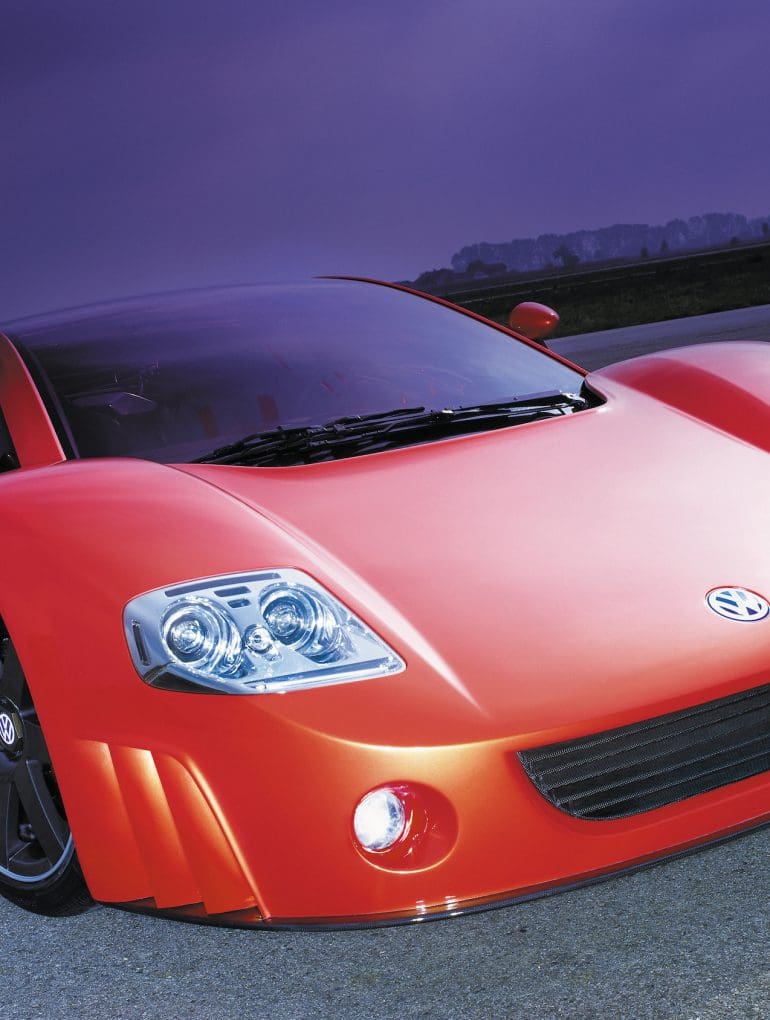
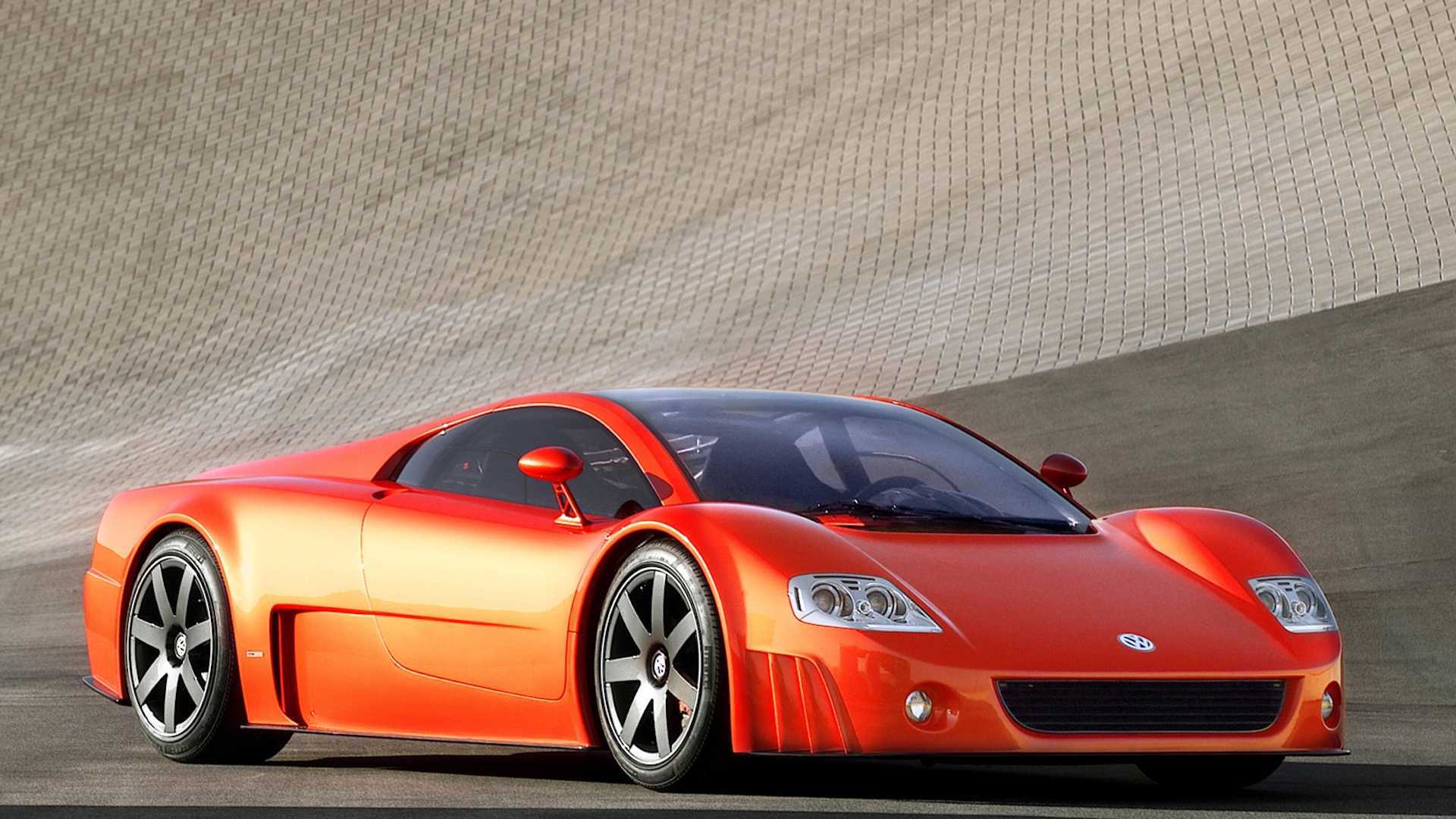
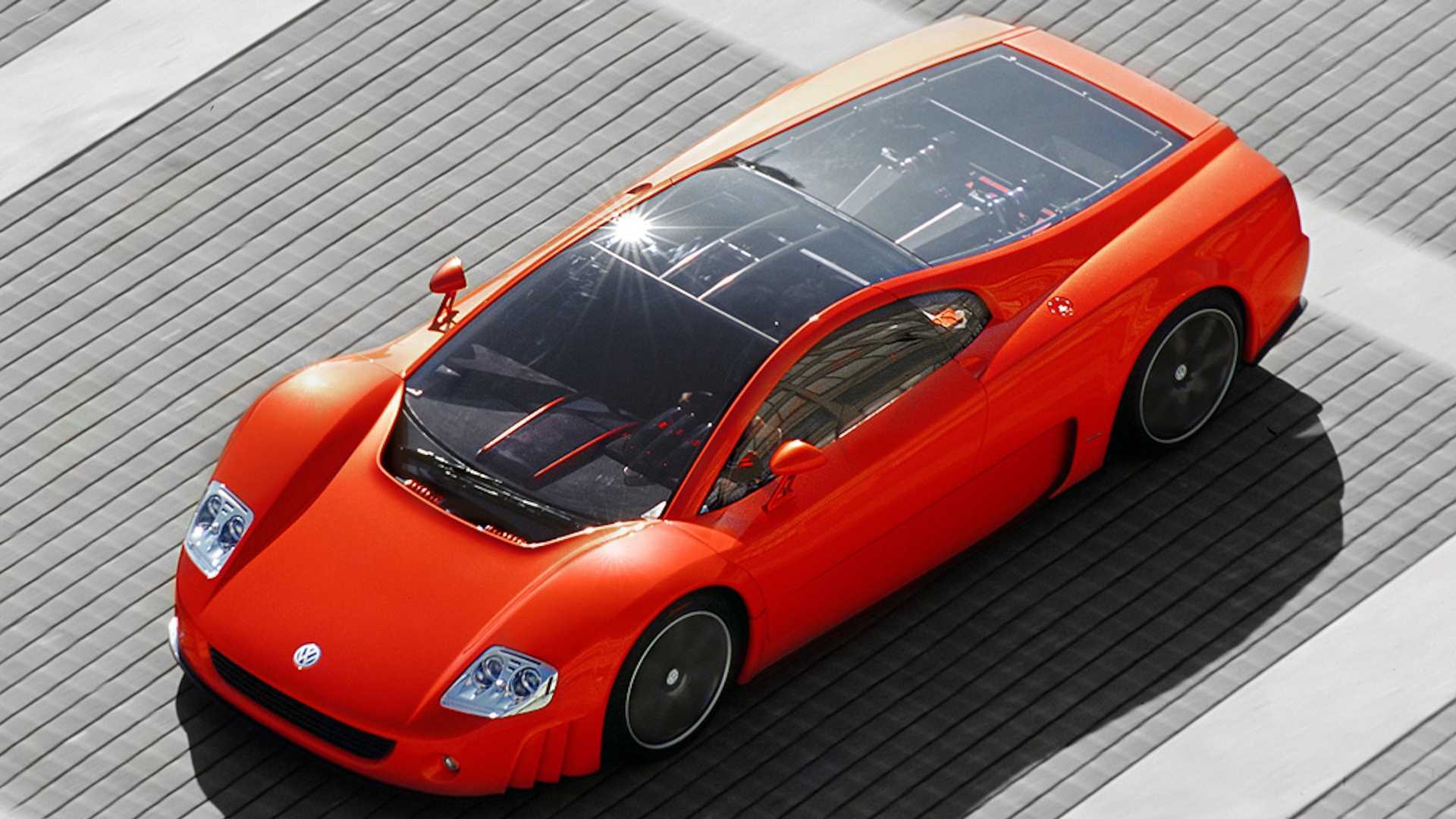
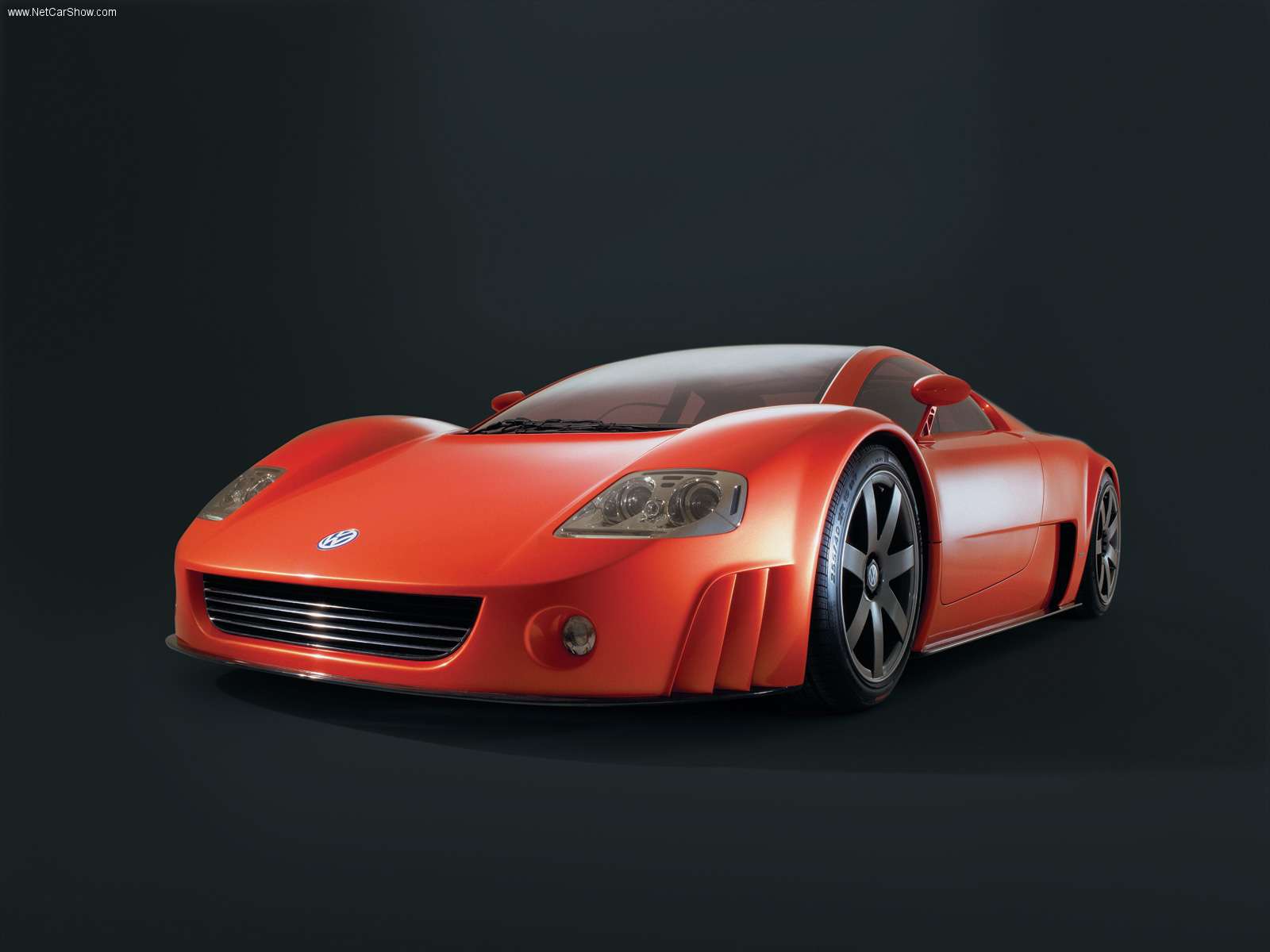
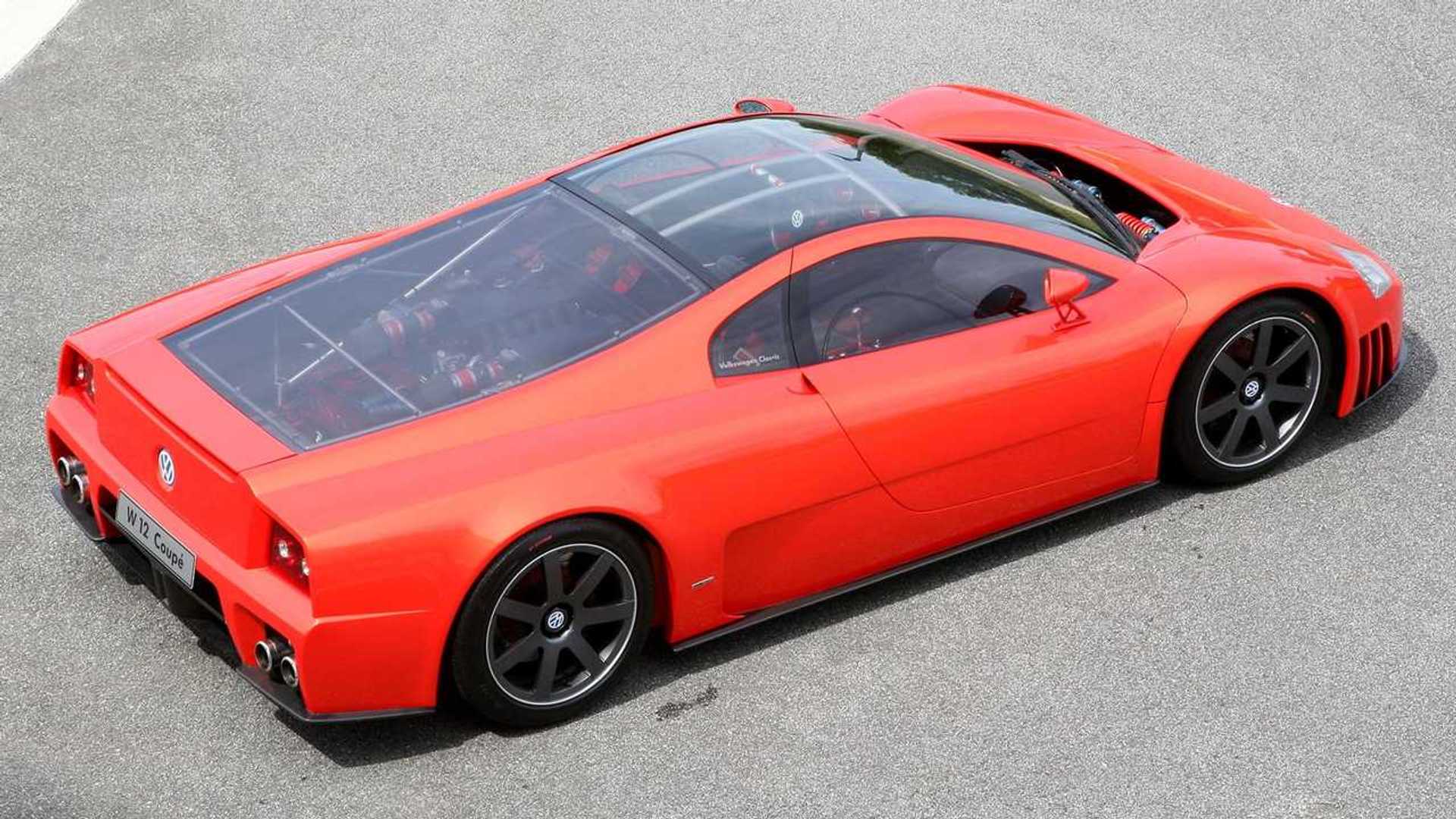
The third and final version arrived at the 2001 Tokyo Motor Show. Orange this time, a deep pearl orange that caught the light differently depending on where you stood. The body had been revised, the chassis lightened and the engine enlarged to 6.0 liters producing 591 horsepower. VW named it after the place it planned to take it: the Nardò Ring, a 7.8-mile circular test track on the heel of Italy’s boot, in the province of Lecce.
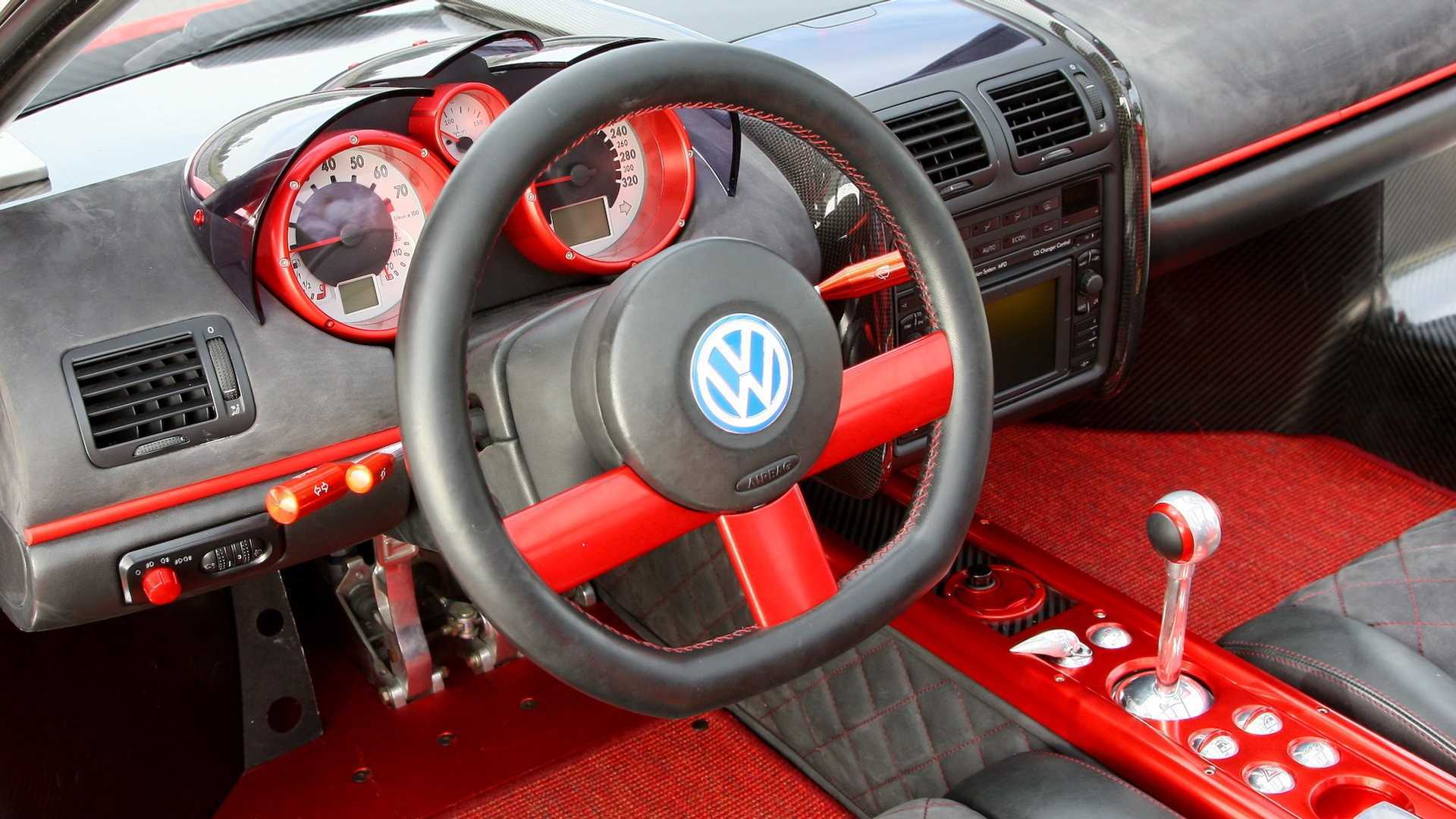
The car’s design details were extraordinary for a concept. Wing doors opening forward rather than up. A glass panel running the length of the roof center. A transparent bonnet through which you could see the engine’s double-V configuration directly. Inside, leather, aluminum and carbon fiber with a steering wheel that wouldn’t look out of place in a racing car. All of it fully functional.
What Happened at Nardò
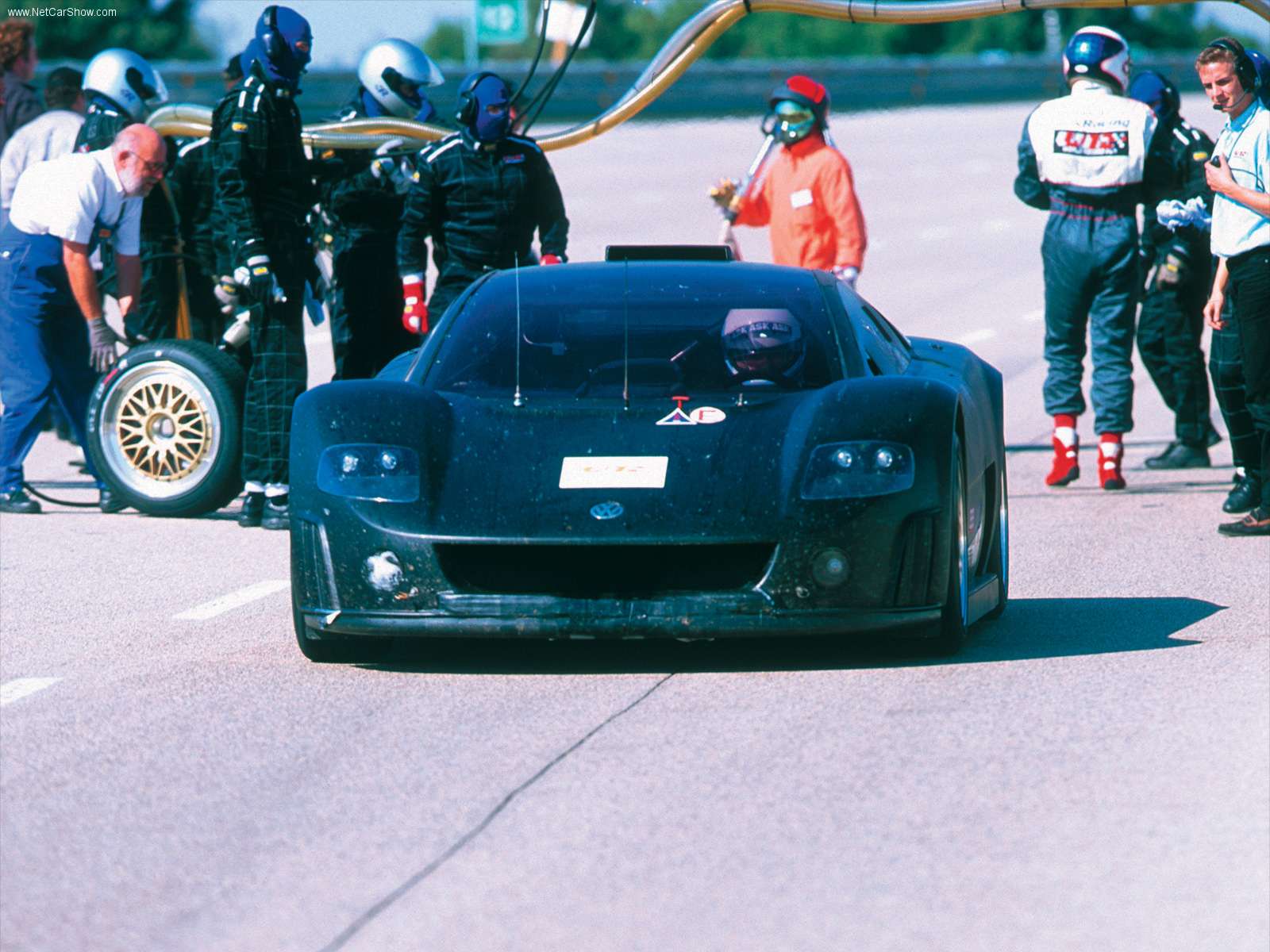
The first record attempt came in late 2001. A matte black, carbon-bodied version of the W12 went to the ring and covered 4,402 miles in 24 hours at an average speed of 183.5 mph. A world record, though perhaps not VW’s best work. Piëch wanted more.
On February 23, 2002, this specialized W12 Record returned to the same track. Stripped of the luxuries found in the orange show car and running its lightweight carbon fiber bodywork unpainted, it pushed even harder. Over the next 24 hours it covered 4,809 miles at an average speed of 200.6 mph. The FIA recognised seven new world records and twelve international class records. For a car that was “just a concept,” this was an extraordinary result.
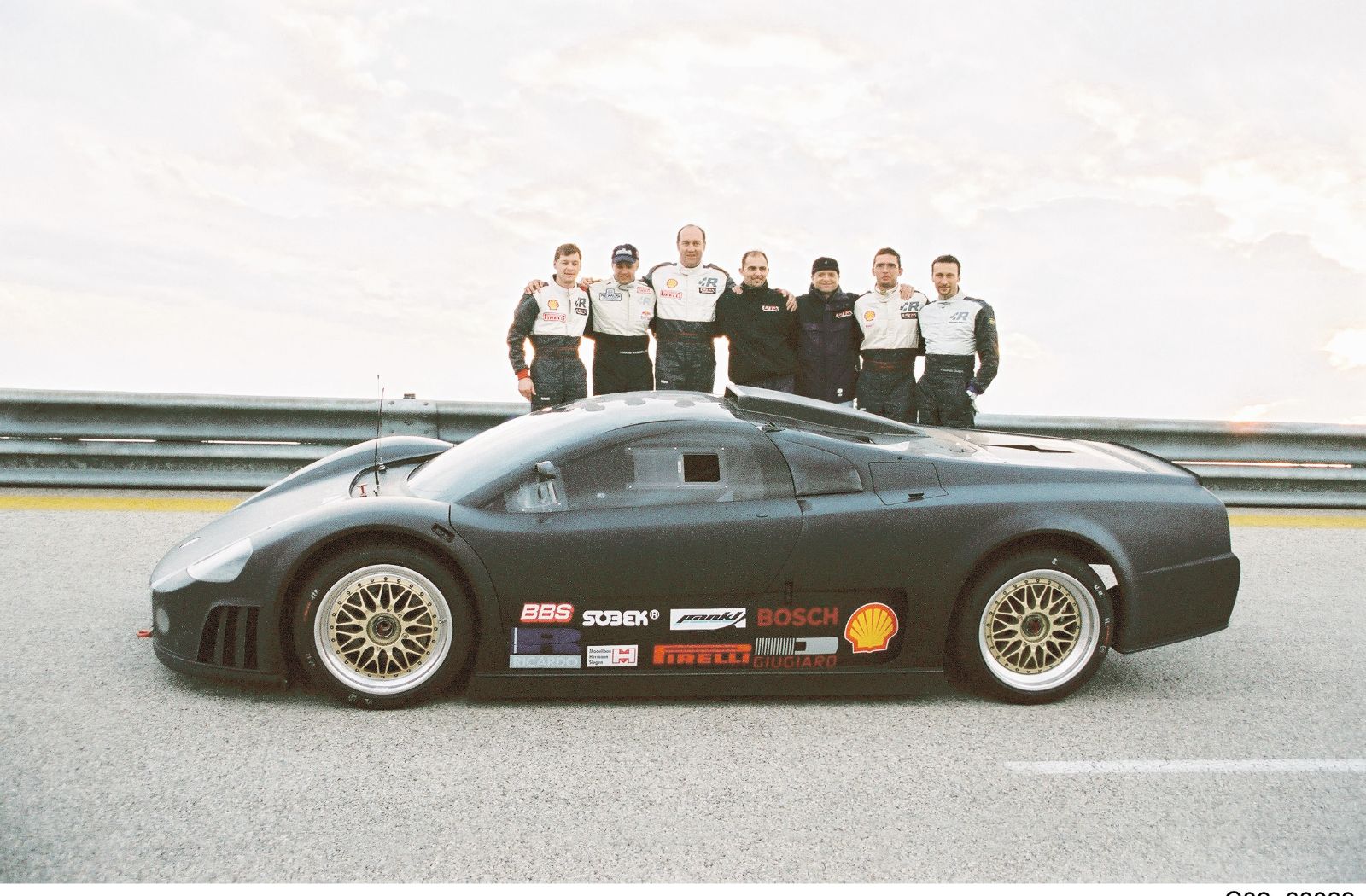
The engineering significance went beyond the numbers. The W12 engine ran continuously for 24 hours at near-maximum stress without failure. That was the point. Piëch was running a durability test disguised as a publicity stunt, or perhaps the other way around.
The Decision Nobody Made
By 2002, production was technically feasible. The car worked. The engine worked. Italdesign had the capacity. A limited run of units was reportedly being studied. Then a few things happened in quick succession that together killed the project.
Volkswagen had been on a buying spree. In 1998 alone the group acquired Lamborghini, Bentley and Bugatti. Suddenly the question of whether VW needed its own supercar looked very different. You don’t need a VW-badged 591-horsepower supercar when you own the company that makes the Murciélago. The W12’s role quietly shifted from potential production car to engine testbed, which, it turns out, is what it became in practice.
The second factor was the market reality Piëch kept running into elsewhere. The Phaeton, VW’s flagship luxury sedan, launched the same year the Nardò set its records. It was a genuinely impressive machine. Piëch famously demanded it maintain 150 mph indefinitely with the air conditioning on full. It sold poorly. Buyers who could afford a Phaeton bought a BMW 7 Series or a Mercedes S-Class instead. The VW badge, beloved on Golfs and Polos, carried no weight in the segment where the W12 would have competed.
The third factor was personal. Piëch left the chairmanship in 2002. His successor, Bernd Pischetsrieder, had different priorities. The W12 Nardò had been one man’s project, and when that man left, the project left with him.
What the Nardò Actually Built
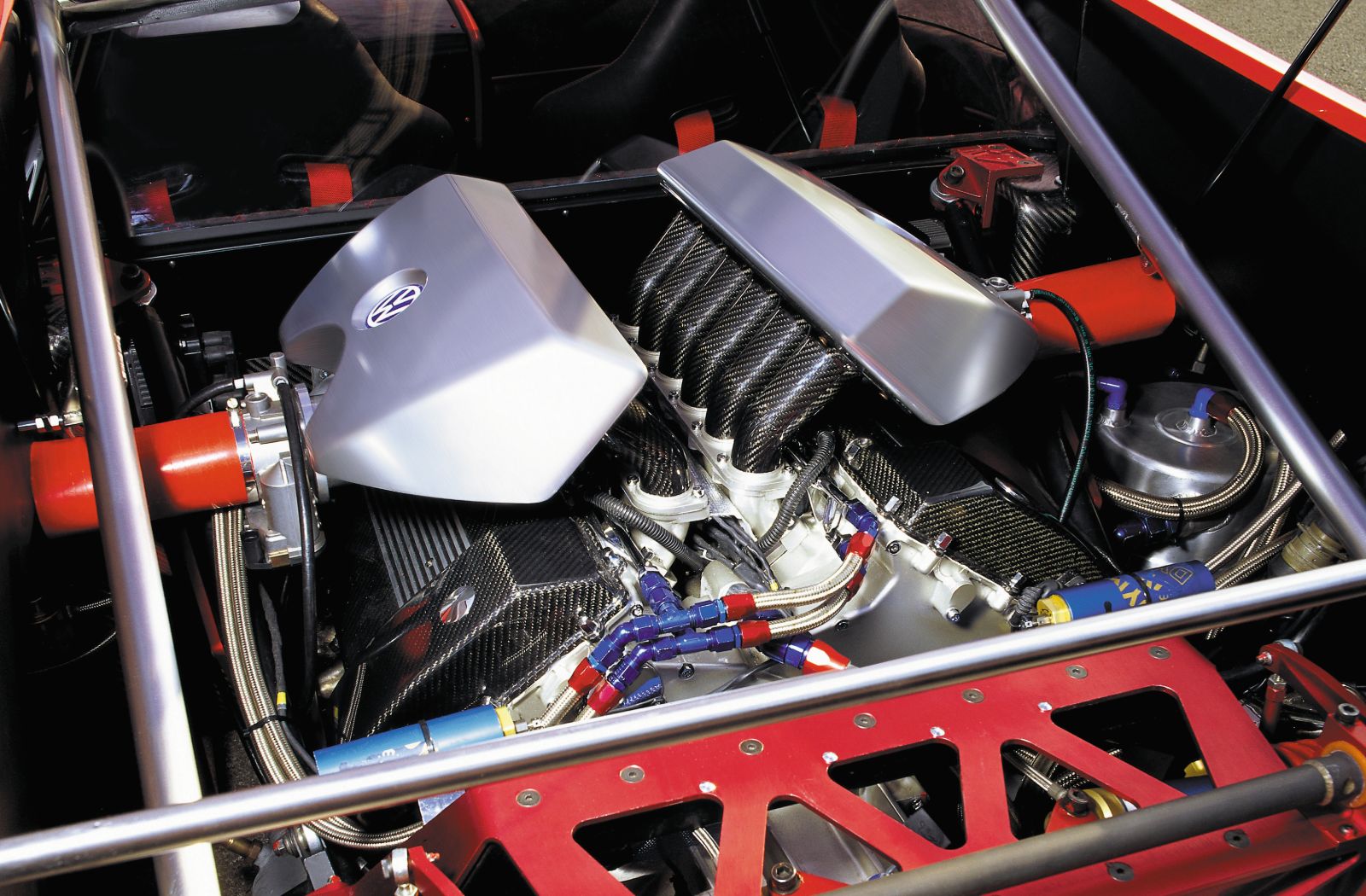
The car never reached a showroom. But dismissing it as a dead end would miss most of the story. The W12 engine, the same basic architecture developed for the Nardò, found its way into the Volkswagen Phaeton and the Audi A8. More significantly, a twin-turbocharged version of the same engine became the heart of the first-generation Bentley Continental GT, which launched in 2003 and became one of the most commercially successful grand tourers of the decade. The Continental GT’s platform was itself borrowed heavily from the Phaeton. The Nardò’s engine was running in Bentleys before the decade was out.
And then there is the W16. The logical extension of the W12’s architecture, with two more cylinders and forced induction, became the 1,001-horsepower unit at the center of the Bugatti Veyron, the car that arguably defined automotive ambition in the 2000s the way the Nardò had tried to do in the 1990s. The Veyron was everything the Nardò could have been, built under a brand name that buyers were willing to pay for.
The Nardò appeared in Gran Turismo and stayed in the game series for years, introducing the car to a generation of players who would never encounter it any other way. Whether that counts as a legacy is a matter of taste.
The Car That Was Right and Wrong Simultaneously
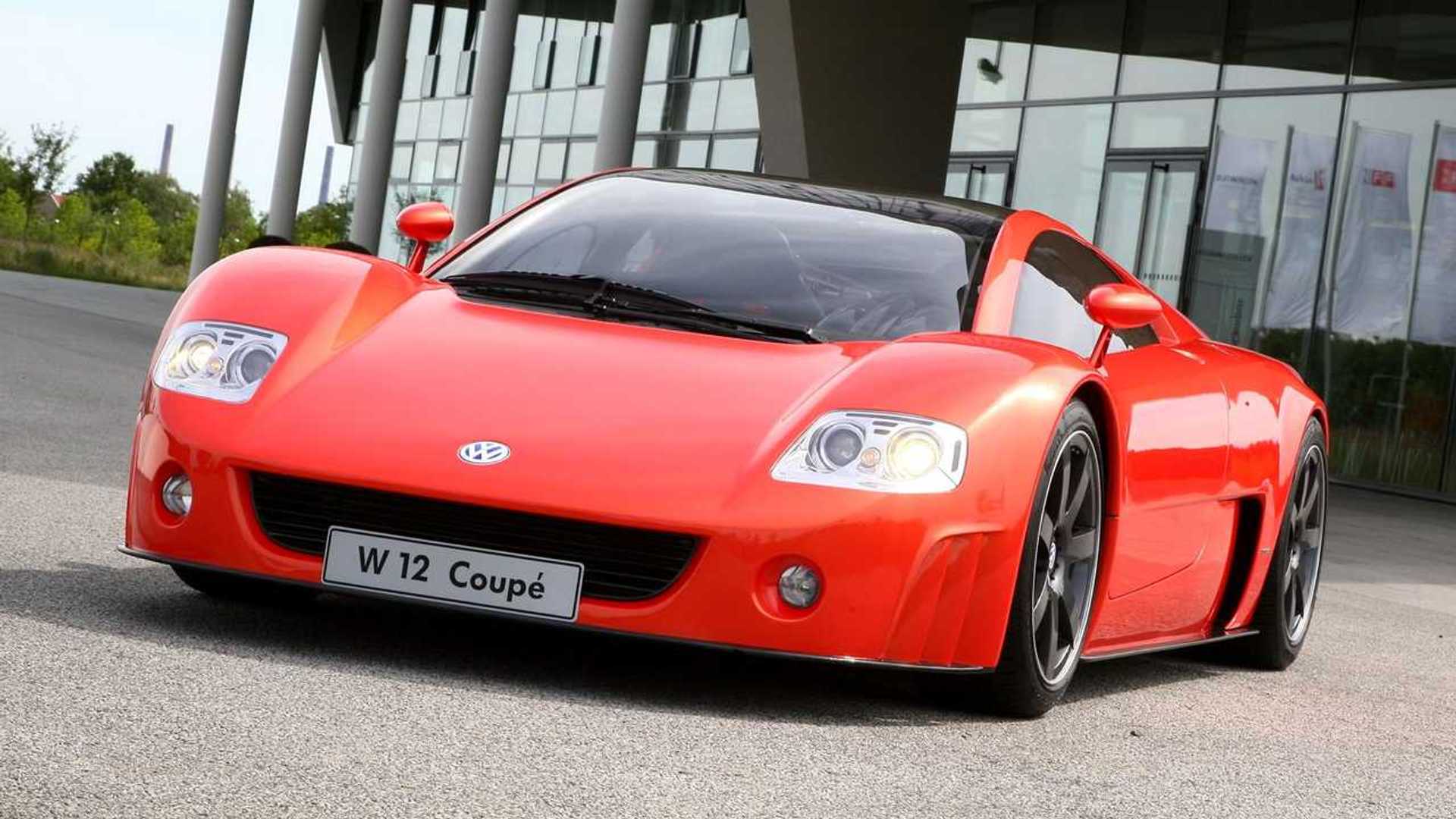
There is a version of history where the W12 Nardò reaches production, sells 150 units to wealthy buyers in Europe and Japan, and becomes a footnote in VW’s catalog alongside the Corrado. That version probably exists somewhere. What actually happened is more interesting. The car proved that Volkswagen’s engineers could build a world-class performance machine from scratch.
It validated an entirely new engine configuration that is still in production today. Bentley announced the retirement of the W12 engine only in 2024, more than two decades after the Nardò first turned a wheel. It pushed the Group’s technical standards in ways that trickled down through Audi, Bentley and Bugatti for years.
Piëch’s instinct was right. The platform was sound. The engine was exceptional. The timing was wrong and the badge was wrong and the man with the vision left before the decision could be forced. The supercar VW built for everyone else ended up powering cars that cost ten times as much, sold to people who would have never considered a Volkswagen.
Whether that was the plan all along, or just the way it worked out, is probably a question only Piëch could have answered. He died in 2019. The Nardò still holds its records.