
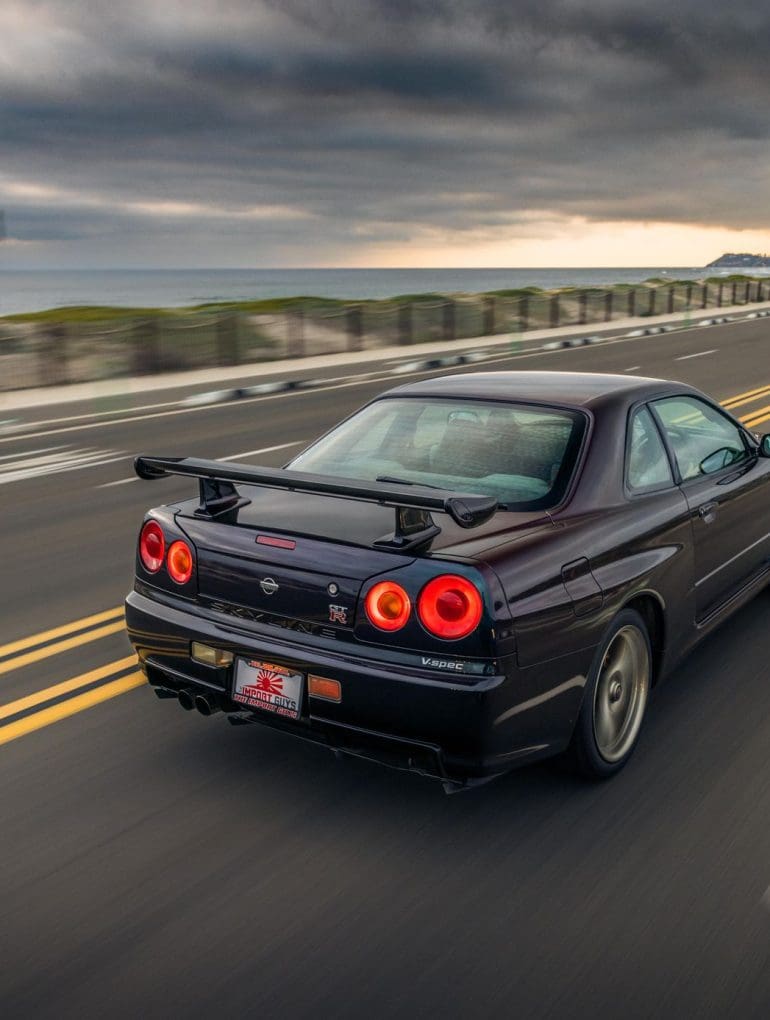

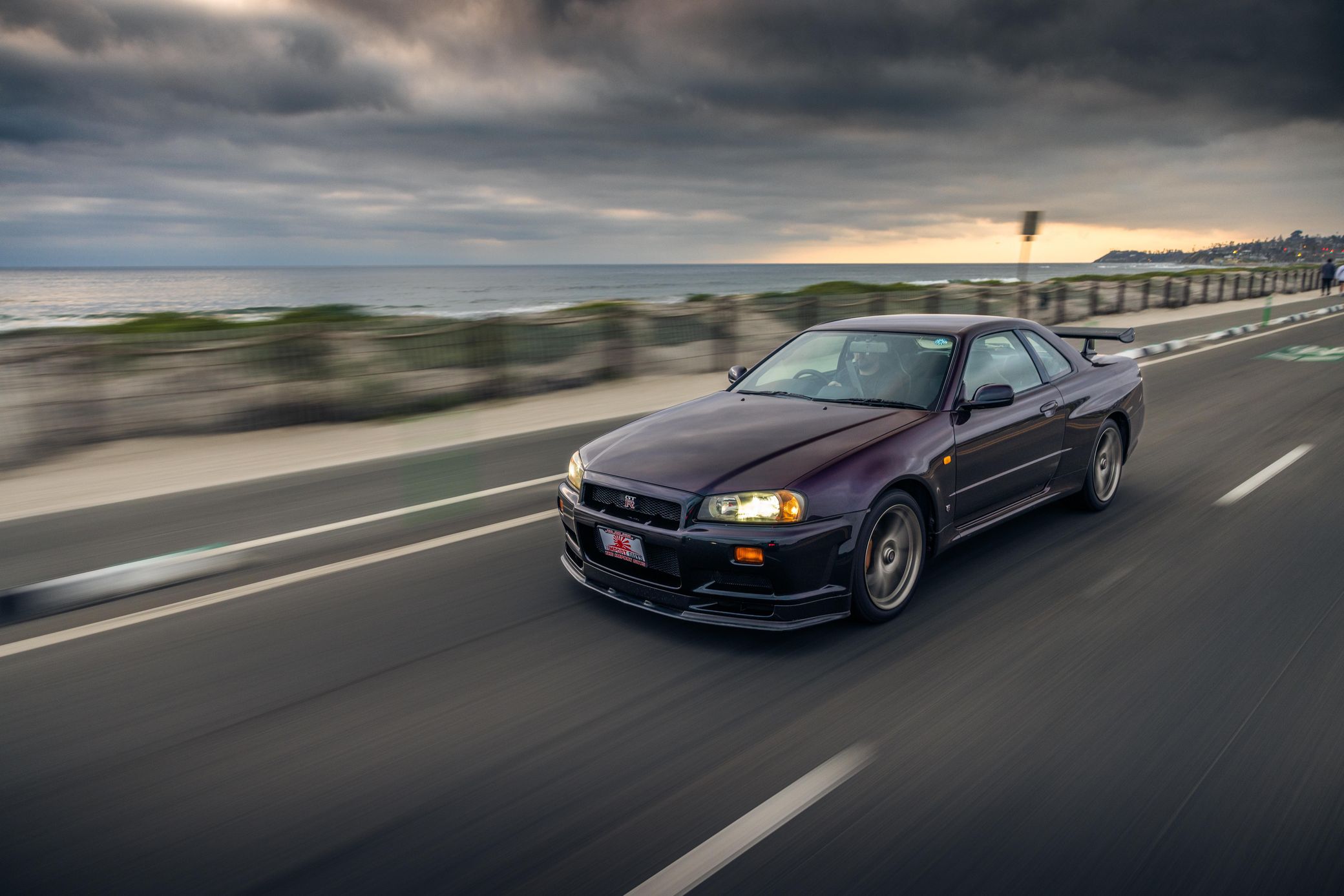
Tokyo Auto Salon, January 1999. Nissan unveiled the R34 Skyline GT-R, the fifth generation of Japan’s most legendary performance car, establishing itself as the definitive expression of turbocharged all-wheel-drive technology. The 2.6-liter twin-turbocharged RB26DETT inline-six produced 276 horsepower at 6,800 rpm according to Japan’s “Gentleman’s Agreement,” though actual output approached 300-320 horsepower depending on calibration. This was Nissan’s statement that Japanese engineering had achieved parity with European supercars, that sophisticated electronic systems and mechanical excellence could create something genuinely transcendent.
The R34 accelerated from 0 to 60 mph in approximately 4.7 seconds while achieving 155 mph, establishing credentials matching contemporary Ferrari and Porsche supercars through technological innovation rather than brute displacement. Production ran from 1999 through 2002, with approximately 11,578 GT-R examples built at Musashimurayama, comprising numerous variants including the standard model, performance-focused V-Spec and N1 variants, and exclusive Nismo versions, establishing the R34 as perhaps Japan’s most technologically sophisticated performance machine.
Background and Origins
Development of the R34 began with recognition that the R33 generation, despite genuine capability, required comprehensive refinement across all systems. Nissan’s engineering team, led by chief vehicle engineer Kozo Watanabe, prioritized optimizing proven technology rather than revolutionary change. The ATTESA E-TS all-wheel-drive system remained the foundation, but with revised power-distribution logic enabling more responsive rear-wheel-drive character during normal driving while seamlessly engaging front-wheel assistance during aggressive acceleration or compromised grip.
The engine received comprehensive internal revision despite maintaining the established 2.6-liter displacement. Improved twin ceramic-turbocharger efficiency, revised intercooler design, and updated fuel injection calibration contributed to measurable output increases without compromising the reliability essential for practical ownership. The Getrag six-speed manual transmission represented a significant enhancement over the R33’s five-speed, providing improved acceleration while enabling genuinely relaxed highway cruising.
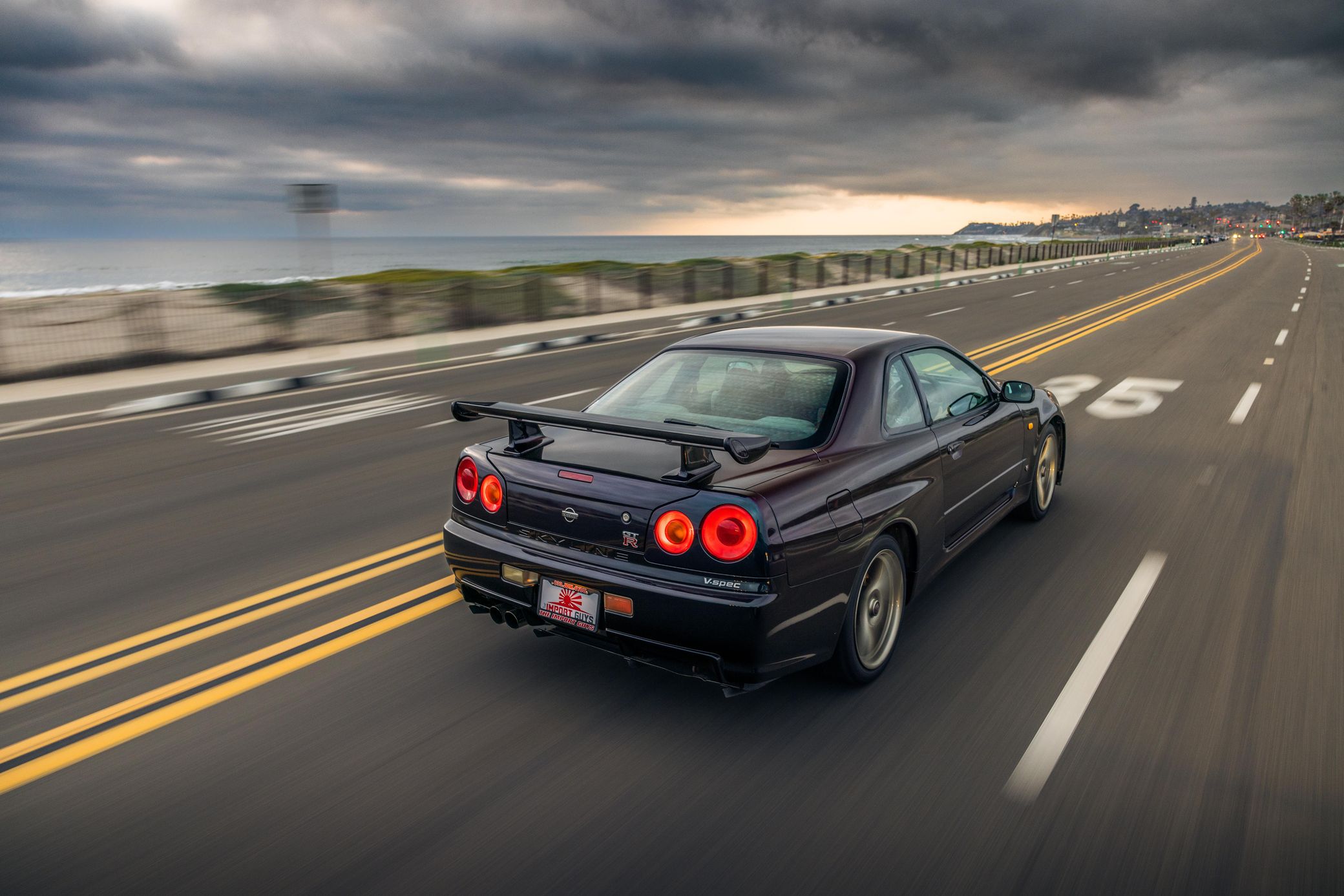
Kozo Watanabe’s design emphasized aggressive contemporary styling while maintaining the proportions that defined Skyline GT-R identity. The distinctive quad round taillights—a Skyline GT-R signature—were retained while the overall silhouette received comprehensive updating with a shortened wheelbase and overhangs. The result was unmistakably modern yet clearly connected to GT-R heritage through refined proportions and functional design elements.
Design and Engineering
The R34 utilized a rigid steel unibody chassis with aluminum exterior panels, minimizing weight while maintaining exceptional rigidity. The shortened wheelbase of 2,665 millimeters provided balanced proportions optimized for responsive handling while maintaining stability at extreme speeds. The suspension featured sophisticated independent multi-link geometry front and rear with coil springs and passive dampers, enabling precise wheel control without excessive harshness. The most significant engineering achievement was the comprehensively revised ATTESA E-TS Pro all-wheel-drive system.
G-sensors mounted in the vehicle continuously monitored lateral and longitudinal forces, feeding real-time data to the control unit. This information determined ideal front-to-rear torque distribution, electronically routing power dynamically (from 0:100 up to 50:50) to maximize traction while maintaining controllable handling balance. Coupled with an Active Rear LSD on V-Spec models, the system managed power across the rear axle to mitigate wheelspin during aggressive acceleration while enabling four-wheel-drive stability during cornering. Braking was by ventilated discs with four-piston Brembo calipers front and two-piston rear, complemented by ABS preventing wheel lockup during emergency braking.
The system incorporated sophisticated electronic controls optimizing pressure distribution across all four wheels based on driving conditions. The RB26DETT twin-turbocharged inline-six represented the culmination of forced-induction six-cylinder development. Displacing 2,568cc with dual overhead camshafts controlling four valves per cylinder (24 valves total), the engine achieved an 8.5:1 compression ratio accommodating premium fuel and high boost. Two Garrett turbochargers provided intercooled boost pressure with remarkable efficiency, delivering 276 PS officially at 6,800 rpm and 289 lb-ft of torque across a broad 4,400 rpm plateau.
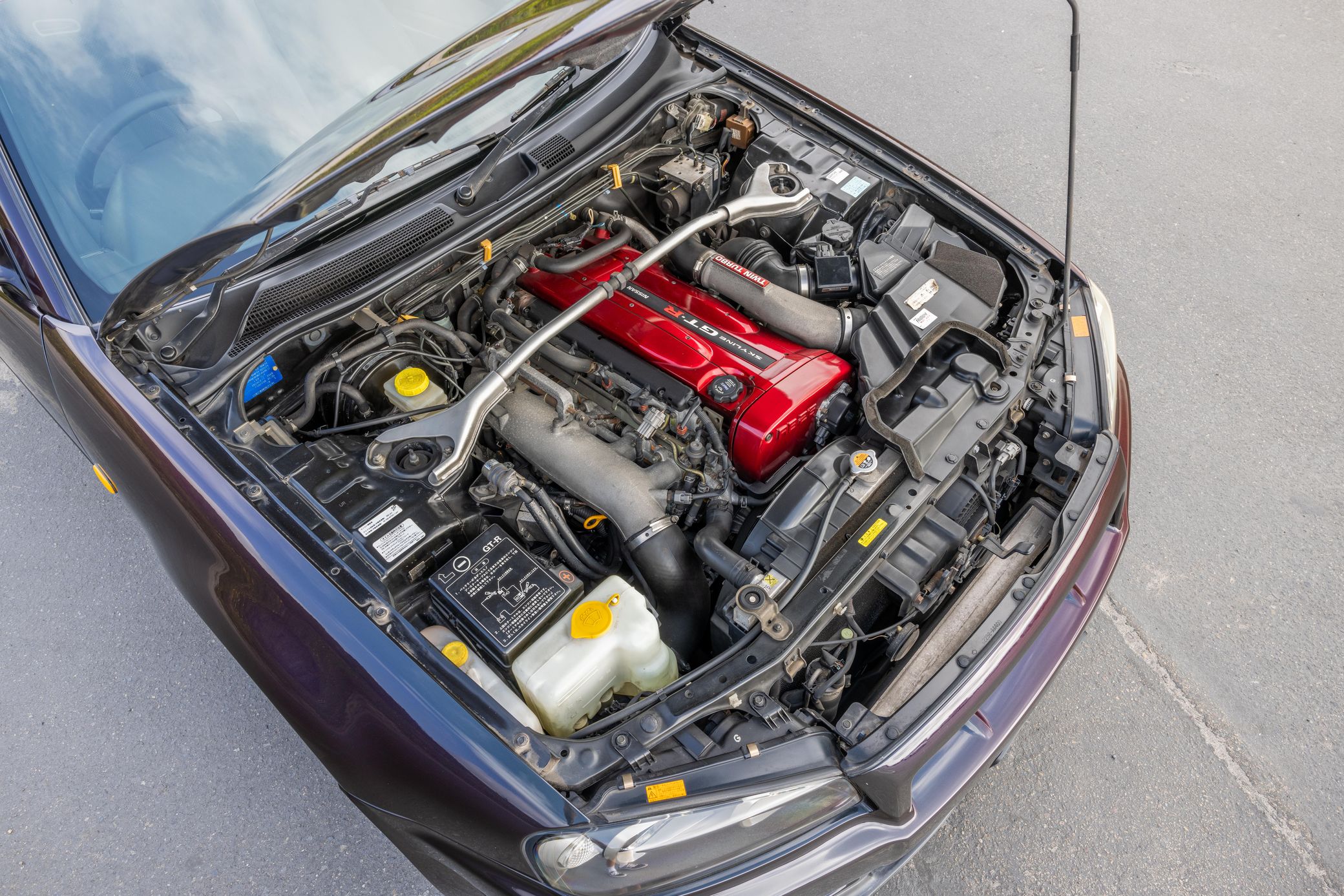
The power delivery was distinctly turbocharged, with perceptible spooling character encouraging disciplined throttle management and precise gear selection. The Getrag six-speed manual transmission featured close-ratio spacing optimized for performance driving. The limited-slip differential maintained appropriate bias, distributing power effectively to rear wheels while the ATTESA system managed all-wheel-drive engagement.
Variants
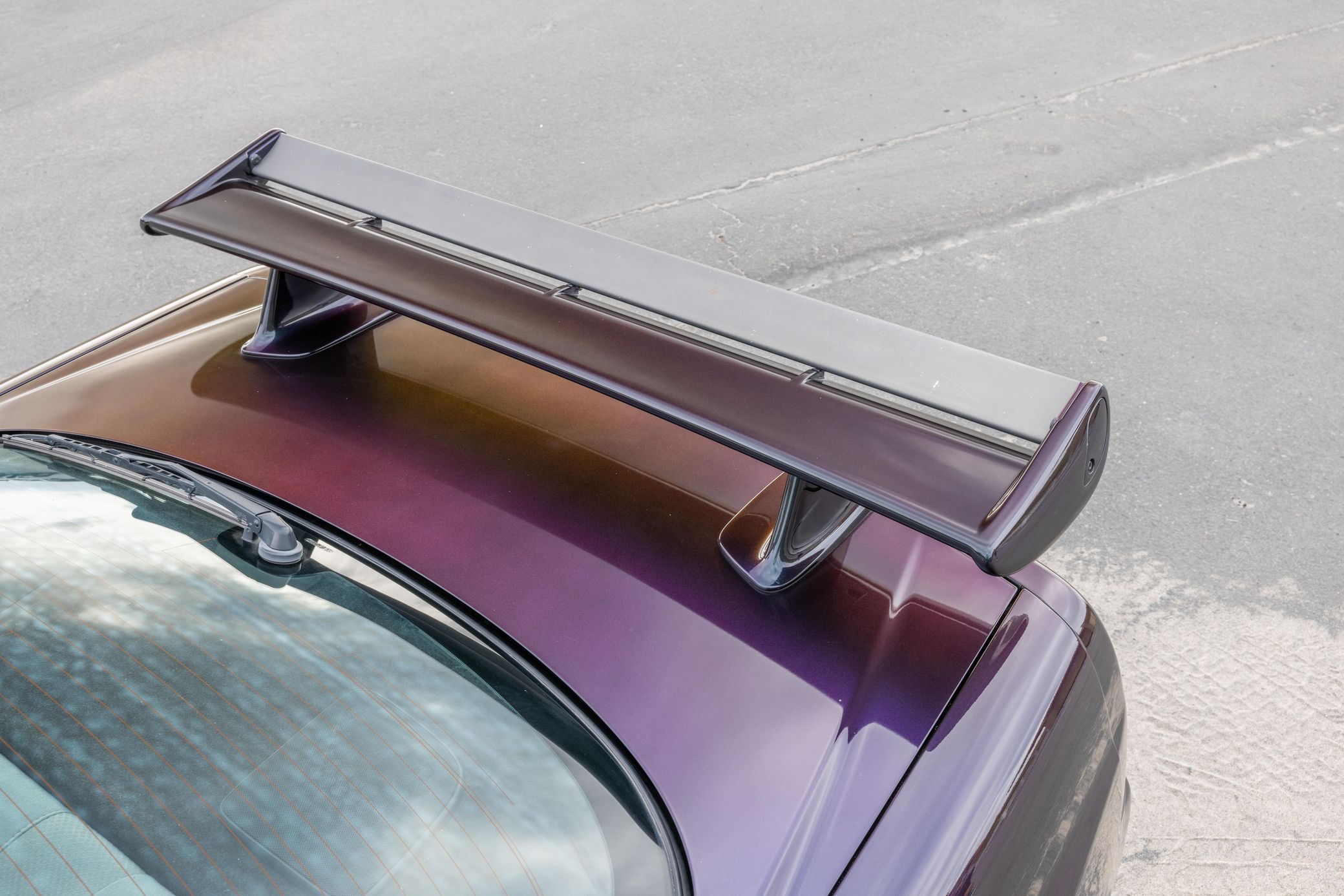
The R34 GT-R offered multiple specifications addressing different customer priorities. The standard model provided the foundation with impressive capabilities but without specialized performance modifications. The V-Spec variant featured carbon-fiber aerodynamic components including an adjustable rear wing and rear underbody diffuser, additional cooling system air intakes, and revised suspension calibration emphasizing circuit performance along with the upgraded ATTESA E-TS Pro system. V-Spec examples weighed approximately 1,560 kilograms, slightly more than standard models due to additional aerodynamic and chassis reinforcements.
The N1 variant represented the track-focused extreme, featuring weight reduction through deletion of air conditioning, audio equipment, and unnecessary trim, a reinforced engine block with steel-turbine turbochargers, and competition-oriented suspension settings optimized exclusively for circuit use. N1 examples approached 1,500 kilograms, creating exceptional power-to-weight ratios. The M-Spec variant pursued the opposite philosophy, offering leather interior appointments and specialized “Ripple Control” dampers for customers prioritizing daily-driving refinement.
Later V-Spec II examples received further turbocharger enhancements and a carbon-fiber hood, while Nismo S and R-tune variants provided increasingly aggressive specifications. The ultimate expression was the exclusive Nismo Z-tune, featuring a bored 2.8-liter displacement engine producing 493 horsepower—a transformation requiring comprehensive internal rebuilding and establishing credentials rivaling contemporary Ferrari and Porsche supercars.
Styling
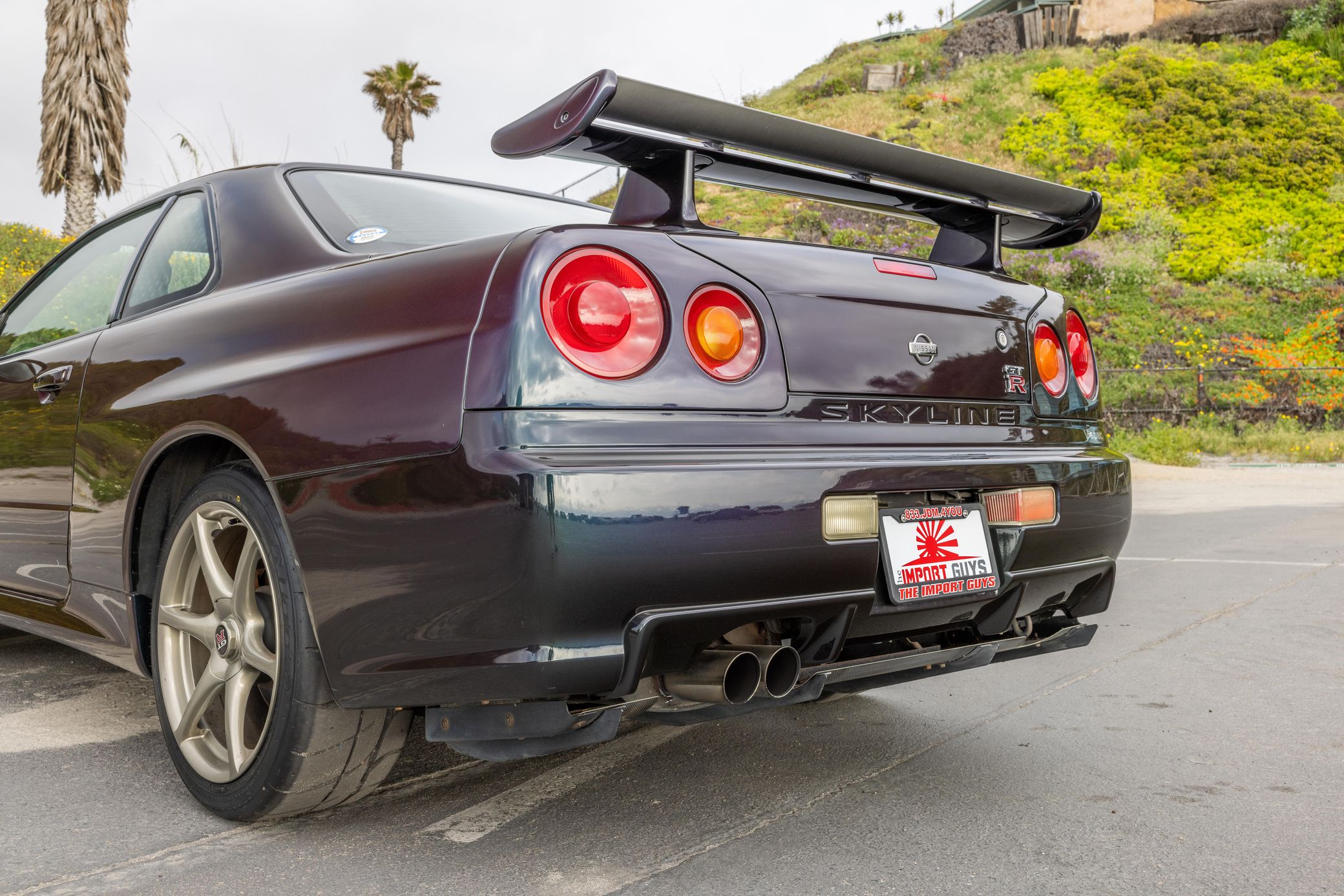
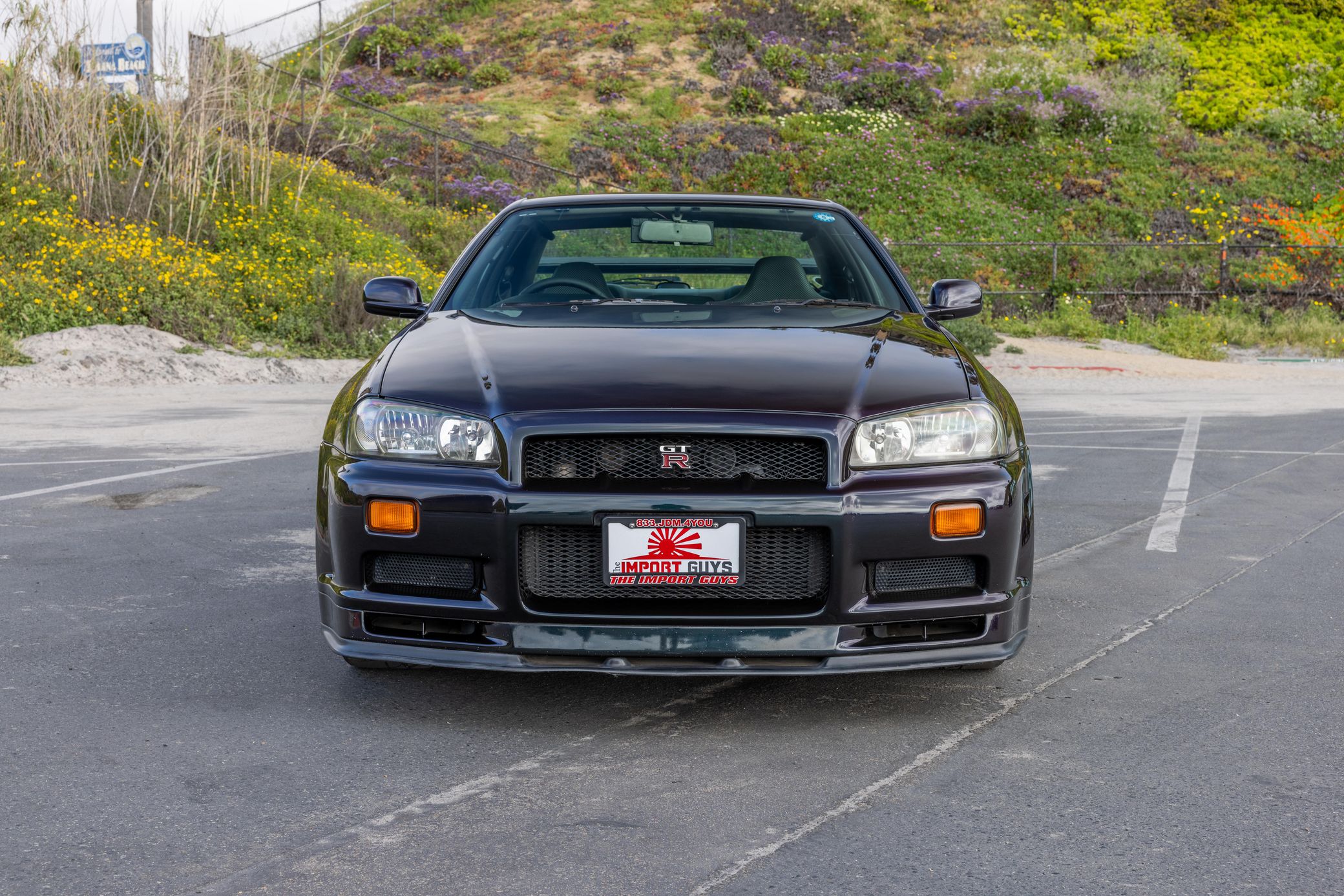
Kozo Watanabe’s design created modern proportions emphasizing functional aerodynamic efficiency. The distinctive front bumper incorporated air intakes providing cooling system airflow while defining the aggressive character. The profile featured sculpted surfaces and pronounced wheel arches emphasizing the performance mission. At the rear, quad round taillights referenced Skyline GT-R heritage while the integrated diffuser and adjustable wing (on V-Spec and higher variants) provided genuine aerodynamic benefit.
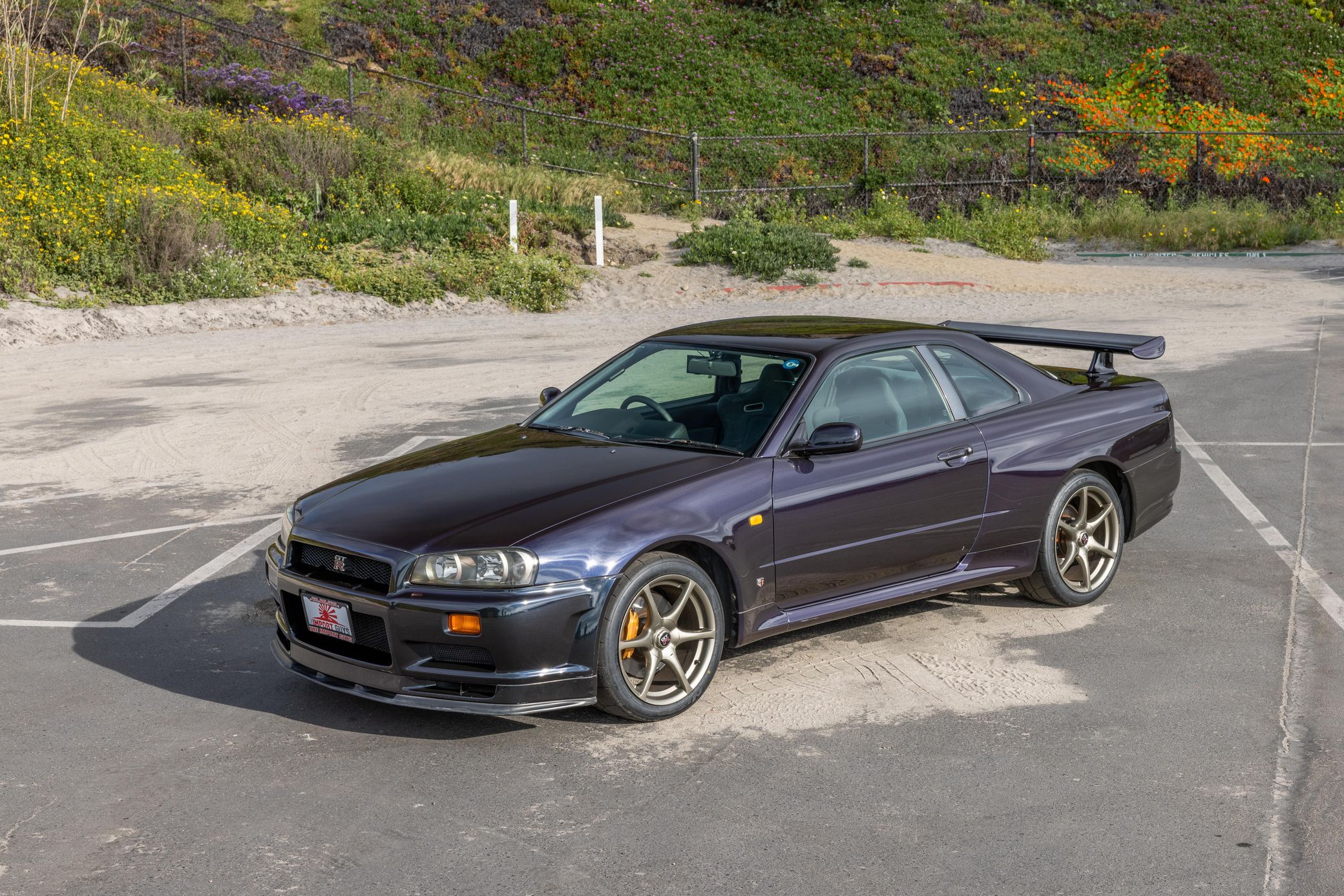
The overall appearance was unmistakably purposeful, suggesting that genuine performance didn’t require excessive visual drama—refined proportions and meticulous engineering defined the R34’s character. Most examples were finished in iconic Japanese colors: Pearl White, Midnight Purple II, or Gun Metallic Grey, celebrating the brand’s performance heritage through classic finishes.
Interior
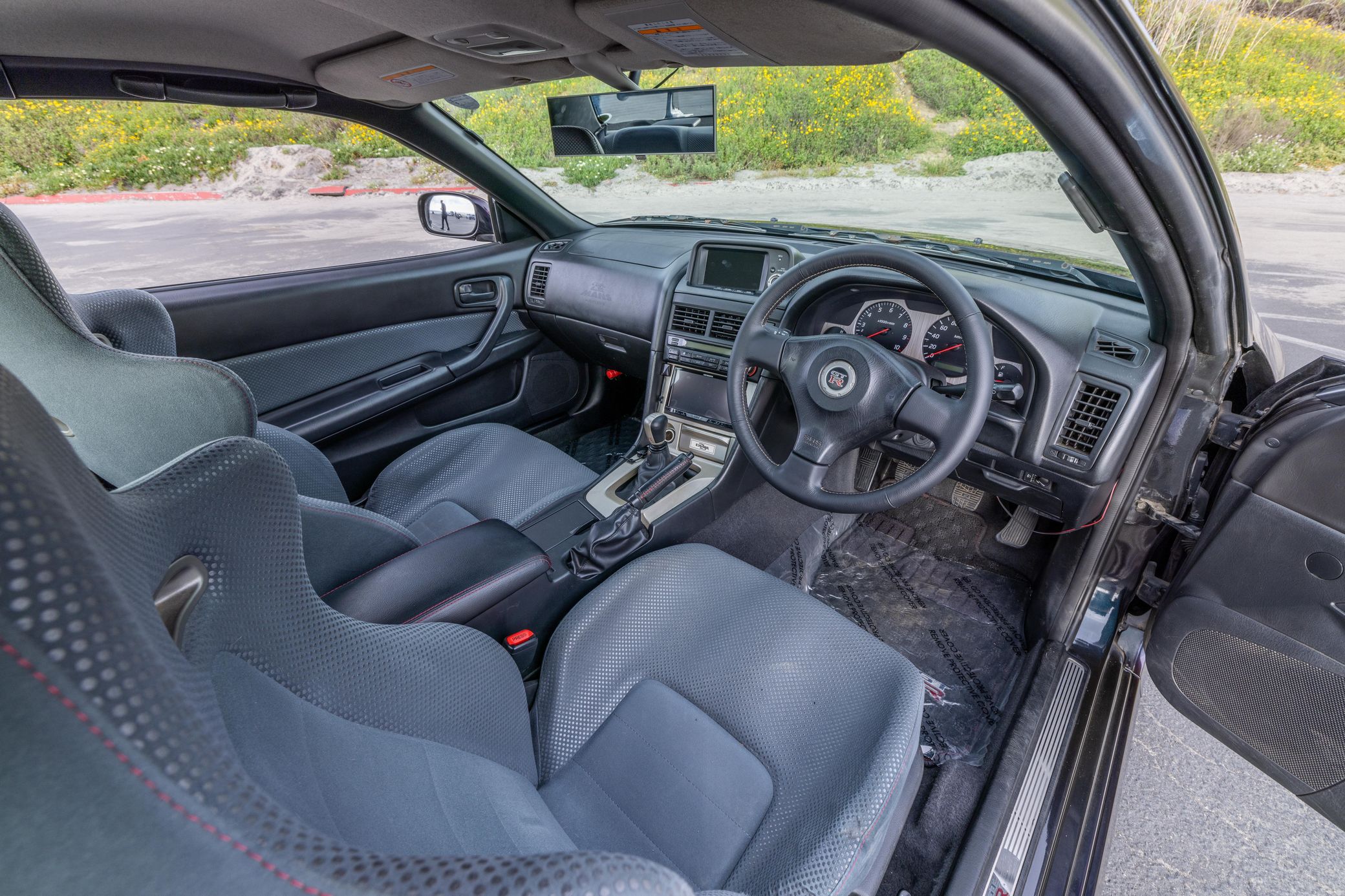
The cabin emphasized driver engagement combined with practical comfort. High-bolstered sport seats covered in textured fabric provided excellent lateral support during aggressive driving while maintaining comfort for extended road use. The driving position was commanding yet comfortable, with all controls falling naturally to hand.
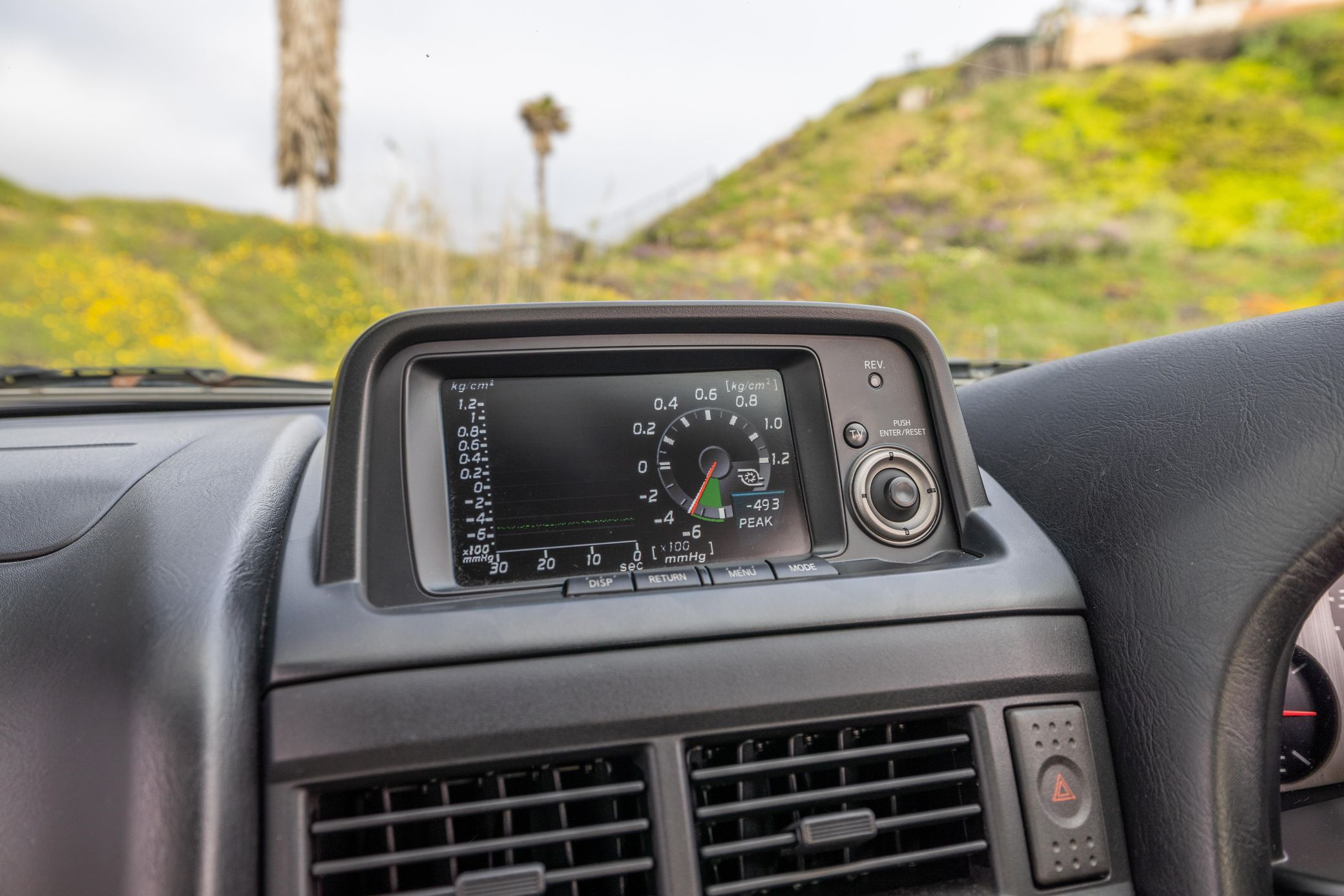
The centerpiece was a 5.8-inch Multi-Function Display (MFD) displaying essential real-time parameters including turbocharger boost pressure, temperatures, and G-forces. Standard equipment included automatic climate control and premium audio systems, reflecting contemporary sports coupe standards. The overall atmosphere balanced racing-derived functionality with genuine comfort appropriate for practical performance-oriented ownership.
Specifications
-
Engine: RB26DETT 2.6-liter (2,568 cc) twin-turbocharged inline-6, DOHC 24-valve
-
Compression Ratio: 8.5:1
-
Official Output: 276 PS / 272 hp at 6,800 rpm (actual output ~320 hp)
-
Official Torque: 289 lb-ft (392 N·m) at 4,400 rpm
-
Transmission: Getrag 6-speed manual
-
Drivetrain: ATTESA E-TS / E-TS Pro all-wheel drive (0:100 to 50:50 variable torque split) with optional Active Rear LSD
-
Chassis & Body: Steel monocoque unibody with aluminum panels (hood/front fenders), 2-door coupe
-
Wheelbase: 2,665 mm
-
Suspension: Independent multi-link (front and rear), coil springs, passive dampers
-
Brakes: Ventilated discs with Brembo 4-piston calipers (front) and 2-piston calipers (rear), ABS
-
Wheels & Tires: 18-inch forged alloy wheels with high-performance tires
-
Curb Weight: 1,500 kg – 1,560 kg (varies by variant/trim)
-
Performance: 0–60 mph in ~4.7 seconds; electronically limited top speed of 155 mph (250 km/h)
Production and Legacy
Nissan assembled approximately 11,578 R34 GT-R examples at Musashimurayama between 1999 and 2002. The production run reflected sustained customer demand despite the car’s premium pricing and genuine performance requirements. Multiple special editions emerged throughout production, including the Nismo variants representing increasingly aggressive engineering specifications. The R34 proved that Japanese engineering excellence could match European supercars through technological sophistication rather than displacement.
The combination of all-wheel-drive traction advantage, turbocharged power delivery, and advanced suspension geometry established unparalleled practical performance. Today, R34 GT-R examples command substantial collector prices reflecting their legendary status. The combination of turbocharged twin-six heritage, all-wheel-drive innovation, and genuine performance credentials has established immortal appeal among serious enthusiasts.
The Nissan Skyline GT-R R34 represented Yokohama at its most accomplished, proving that Japanese technology and engineering excellence could create something genuinely transcendent. It remains one of the greatest performance coupes ever built, a turbocharged masterpiece celebrating engineering innovation and performance through mechanical sophistication.