
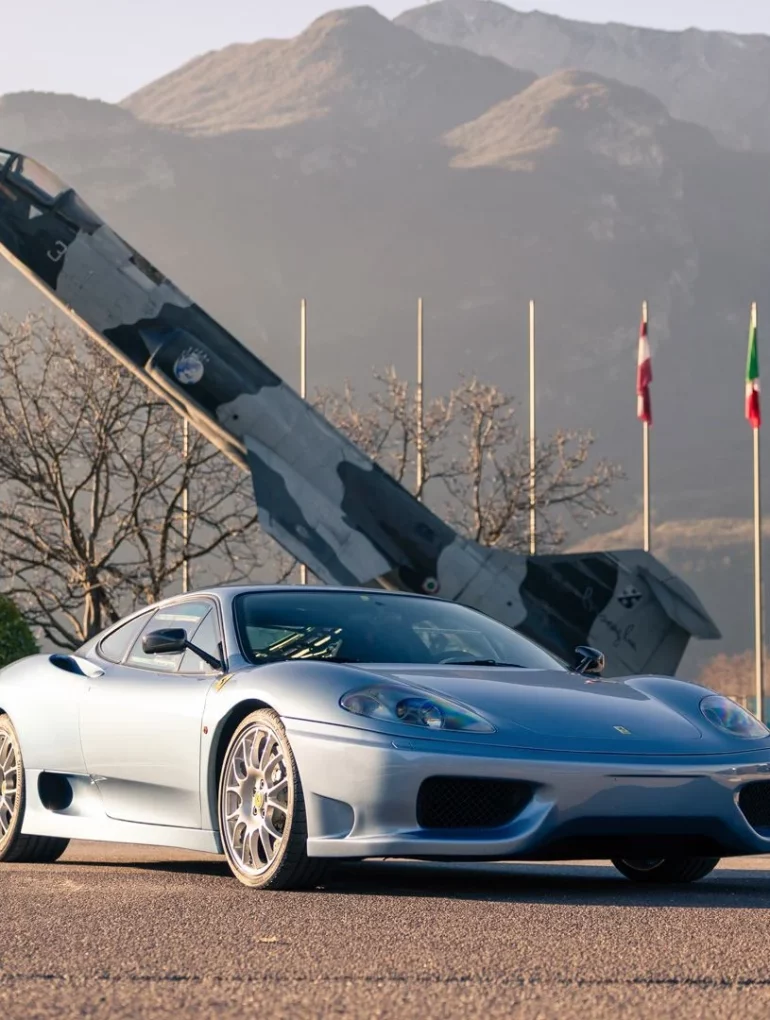

Geneva, March 2003. Ferrari unveiled the 360 Challenge Stradale, a road car built on the idea that lessons from the racetrack could be transferred to the street without losing their edge. The 3.6-liter naturally aspirated V8 produced 425 hp (425 PS) at 8,500 rpm, and the car weighed 1,180 kilograms dry, roughly 110 kilograms less than the 360 Modena it was based on. This was Maranello taking what it had learned from several seasons of one-make Challenge racing and international GT competition and putting it into a car with license plates. The Challenge Stradale reached 62 mph in 4.1 seconds and had a top speed of 186 mph. At Fiorano, it lapped in 1:26.5, 4.5 seconds quicker than the standard Modena. Production ran from 2003 to 2004, with an estimated 1,288 to 1,300 cars built.
Background and Origins
The 360 Modena arrived in 1999 to replace the F355 and quickly became the foundation of Ferrari’s customer racing program. The 360 Challenge joined the Ferrari Challenge one-make series in 2000, and the same year JMB Racing, founded by Jean-Michel Bourresche, began developing an N-GT version of the 360 for the FIA GT Championship. By 2003, the 360 had accumulated a substantial body of race-proven development in suspension, aerodynamics, braking and engine calibration.
The Challenge Stradale was Ferrari’s way of bringing that knowledge to its road customers. Rather than create a new model, the engineers took the existing 360 and applied changes inspired by the Challenge and GT race cars, removing weight wherever possible and sharpening the car’s responses throughout. The result was a pivotal early example of the modern V8 special-series formula that Ferrari would refine with the 430 Scuderia, 458 Speciale and 488 Pista.
Design and Engineering
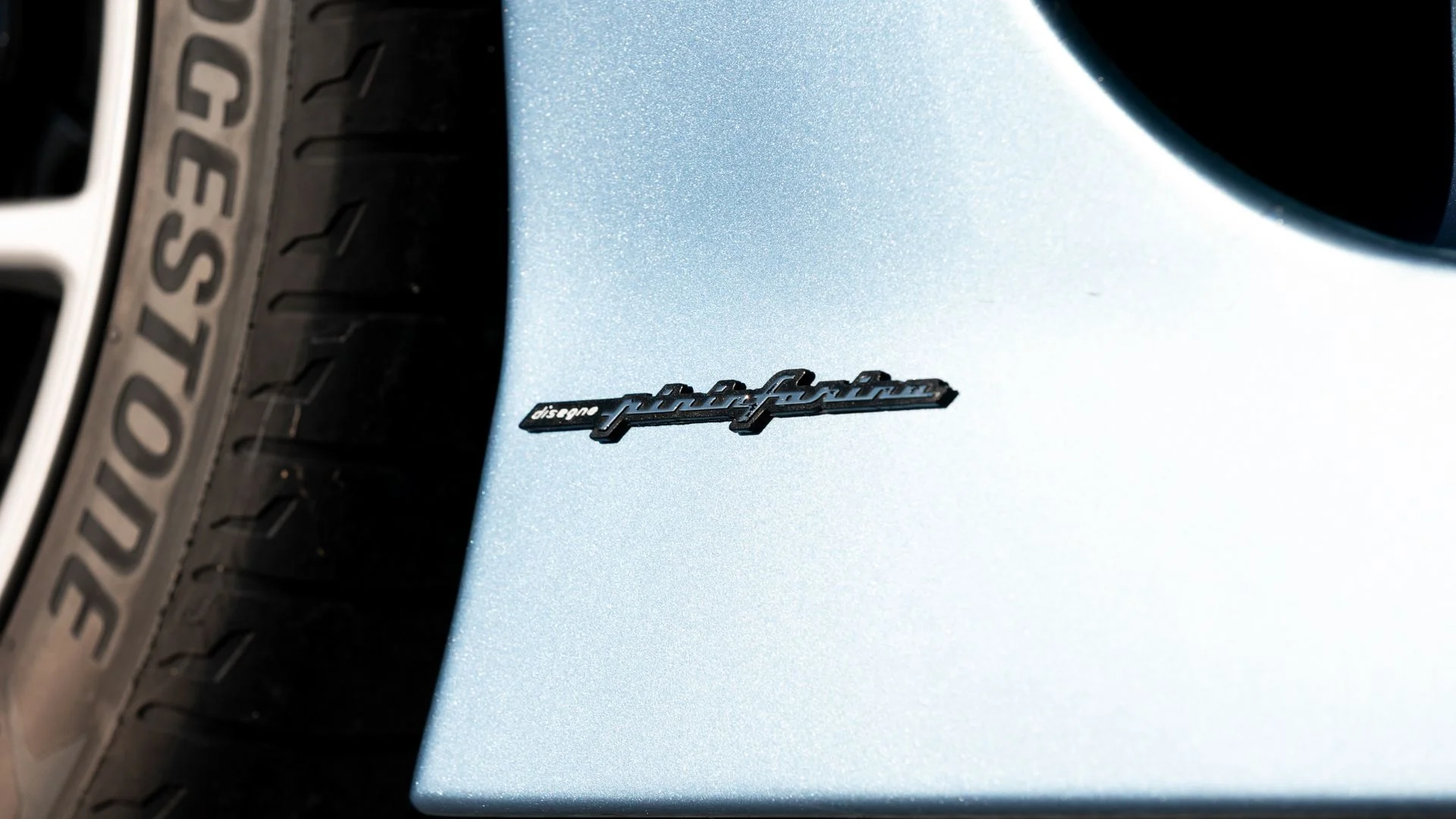
The Challenge Stradale kept the aluminum spaceframe and Pininfarina body of the 360 Modena, but most of its major systems were revised. Weight reduction was the top priority. Carbon-fiber door panels replaced the standard trim, the glass was thinner, the rear screen was made of Lexan, and much of the sound insulation was removed. Carbon-fiber seats replaced the standard units. These measures reduced dry weight to 1,180 kilograms, while curb weight with fluids was 1,280 kilograms.
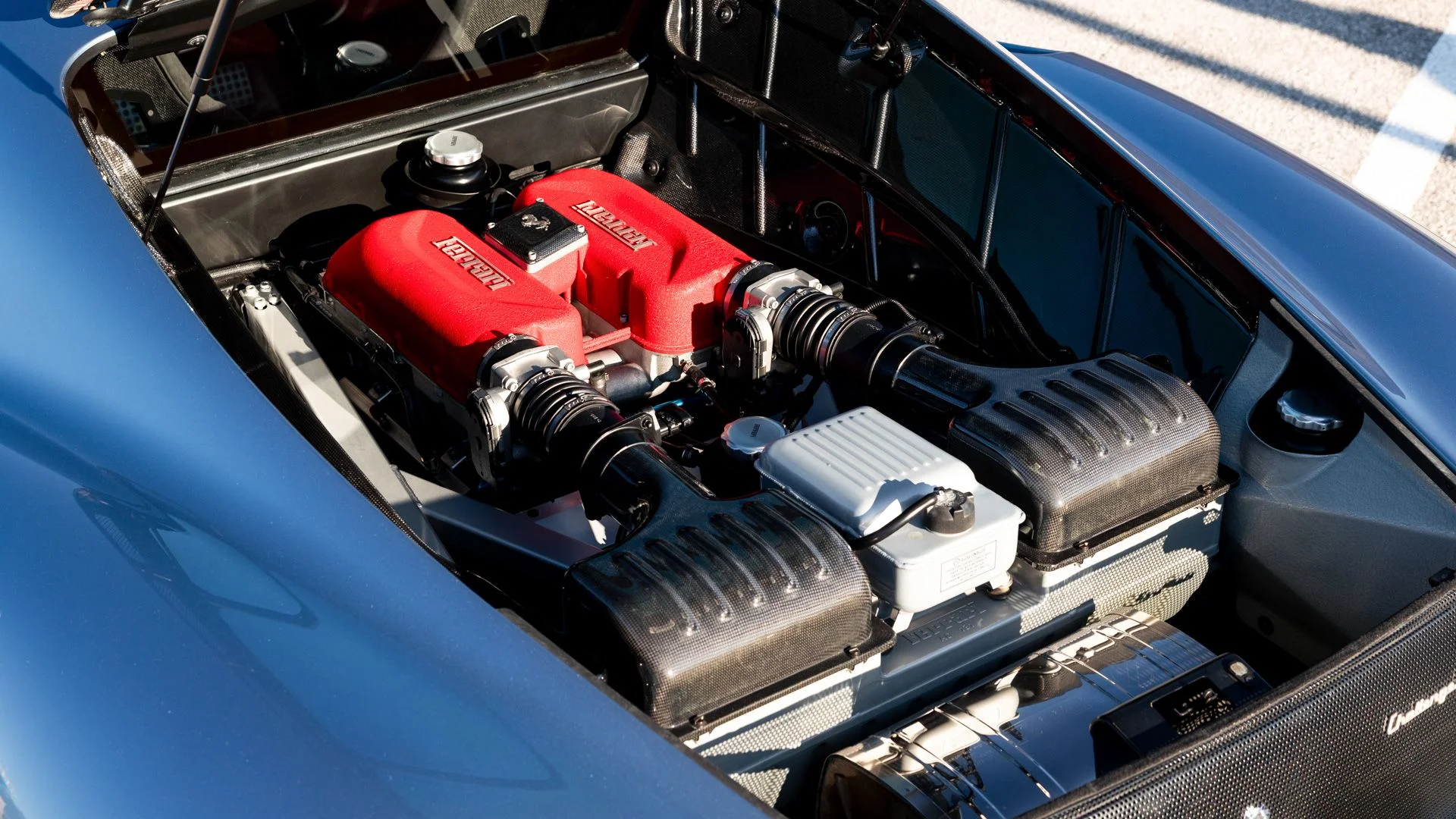
The F131 V8 displaced 3,586 cubic centimeters and used five valves per cylinder in a 90-degree, flat-plane crank configuration. Ferrari raised the compression ratio from 11.0:1 to 11.2:1 and revised the intake and exhaust, increasing output by 25 hp to 425 hp at 8,500 rpm. Torque was 275 lb-ft at 4,750 rpm. The engine was eager to rev, and its sound near the redline became one of the most celebrated V8 soundtracks Ferrari has produced.
Every Challenge Stradale used the electro-hydraulic F1 automated manual gearbox, recalibrated for 150-millisecond shifts, considerably faster than in the Modena. The suspension received stiffer springs, revised bushings and anti-roll bars, and a lower ride height for sharper turn-in and tighter body control. Braking was handled by carbon-ceramic Brembo discs derived from the Enzo, making the Challenge Stradale the first V8 Ferrari with carbon-ceramic brakes as standard equipment. The brakes improved fade resistance and reduced unsprung weight.
Styling
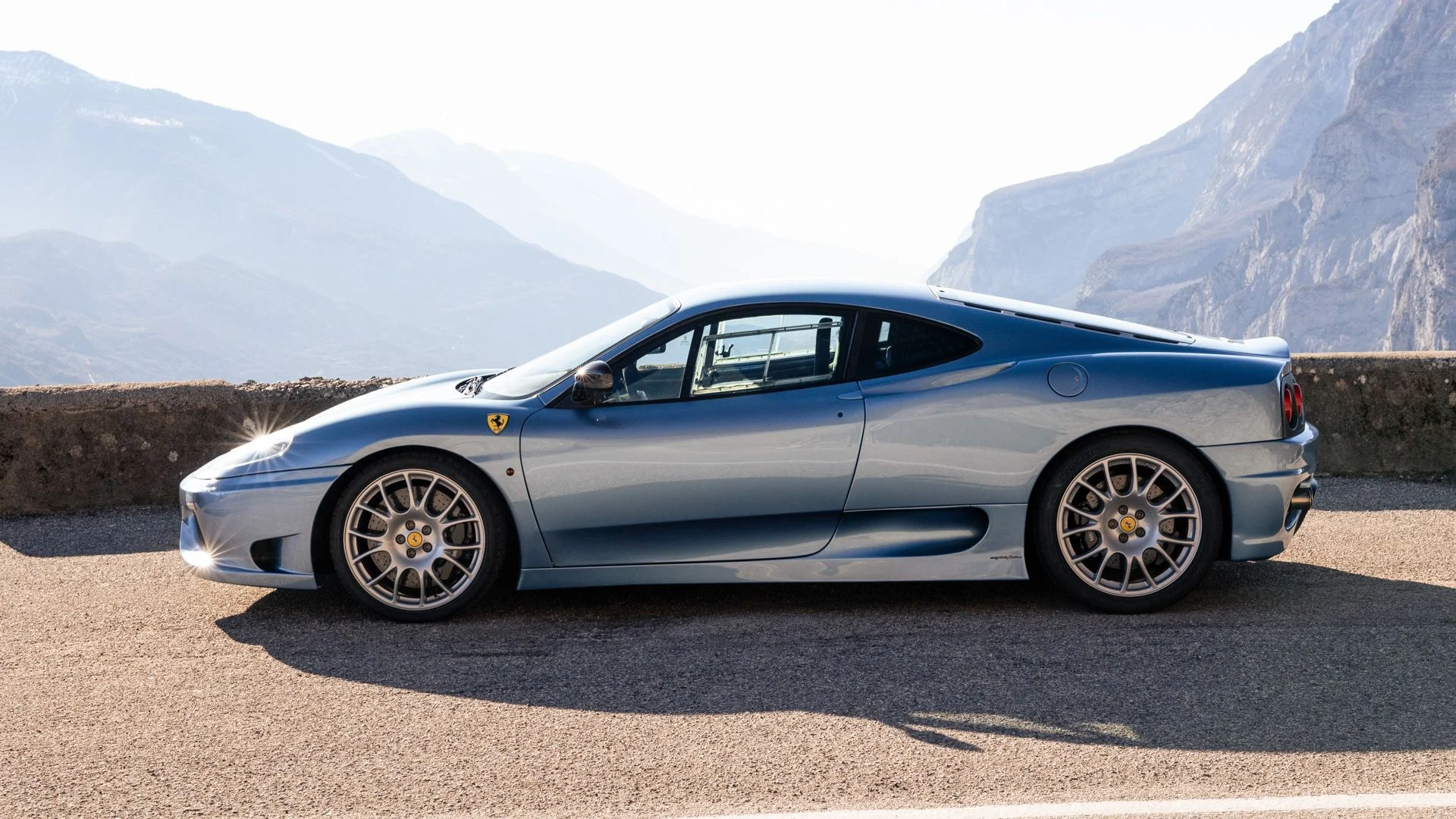
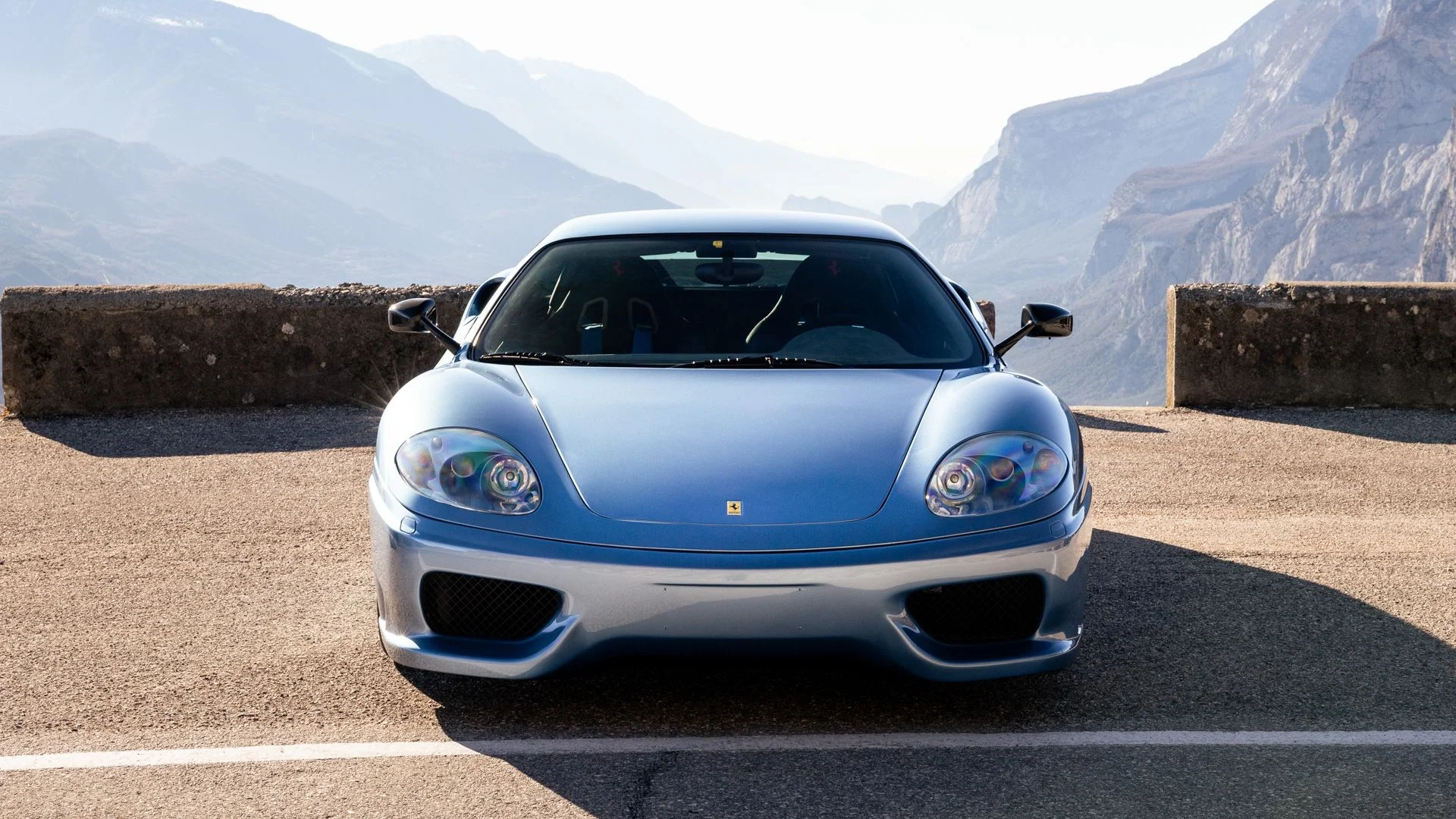
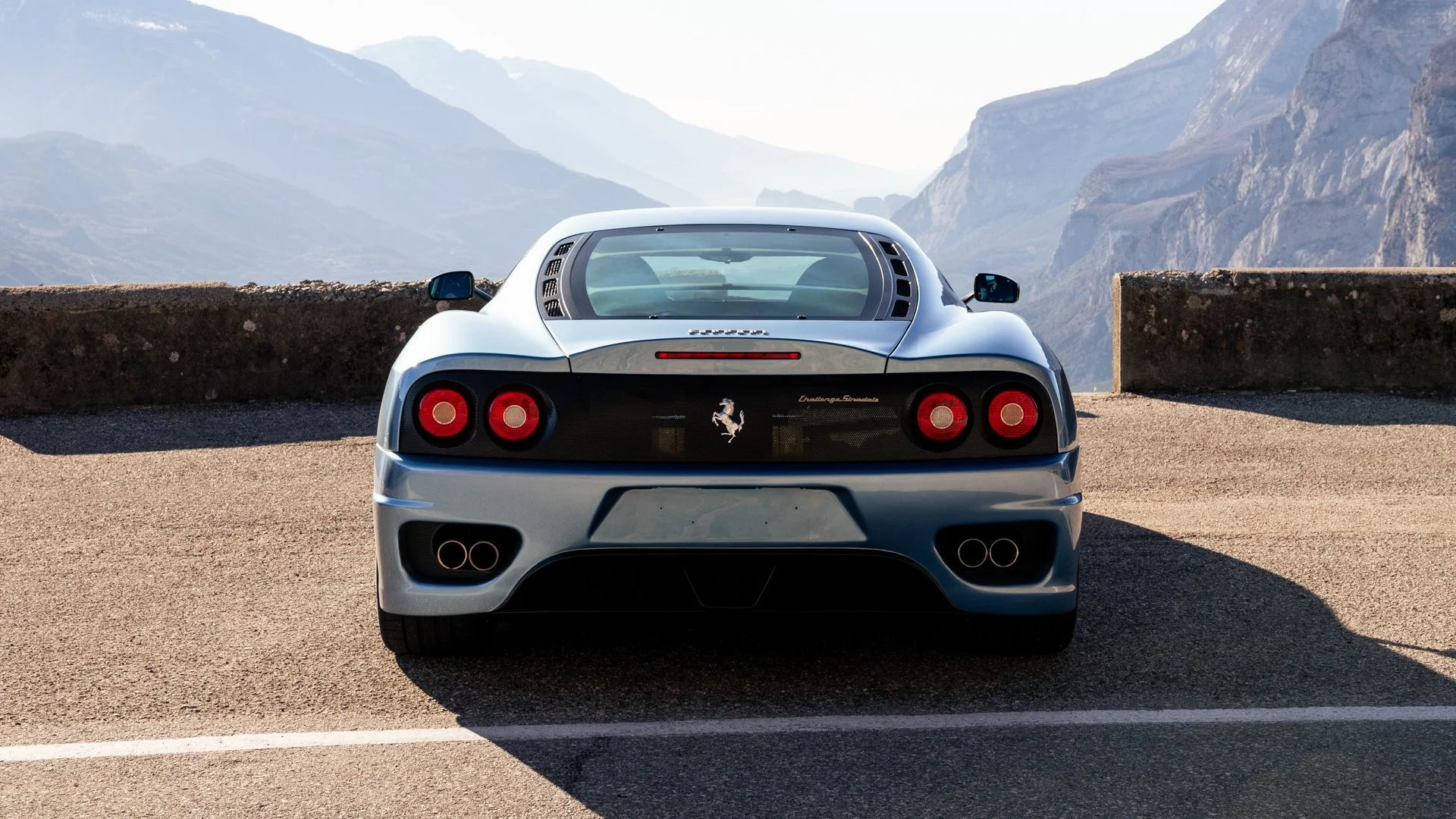
From a distance, the Challenge Stradale looked very similar to a 360 Modena, but the details distinguished it. The front bumper was reshaped with more aggressive openings, the side skirts were revised, and the rear received a redesigned diffuser and a Challenge-style mesh grille over the engine bay. These changes improved aerodynamic loading at speed without requiring a wing or disrupting the clean lines of the Pininfarina design. Lightweight Challenge-style wheels completed the look, and many owners chose the optional Italian tricolor stripe running over the roof and along the center of the car. Red was a popular choice, while colors such as Giallo Modena and Bianco Avus are encountered much less often today.
Interior
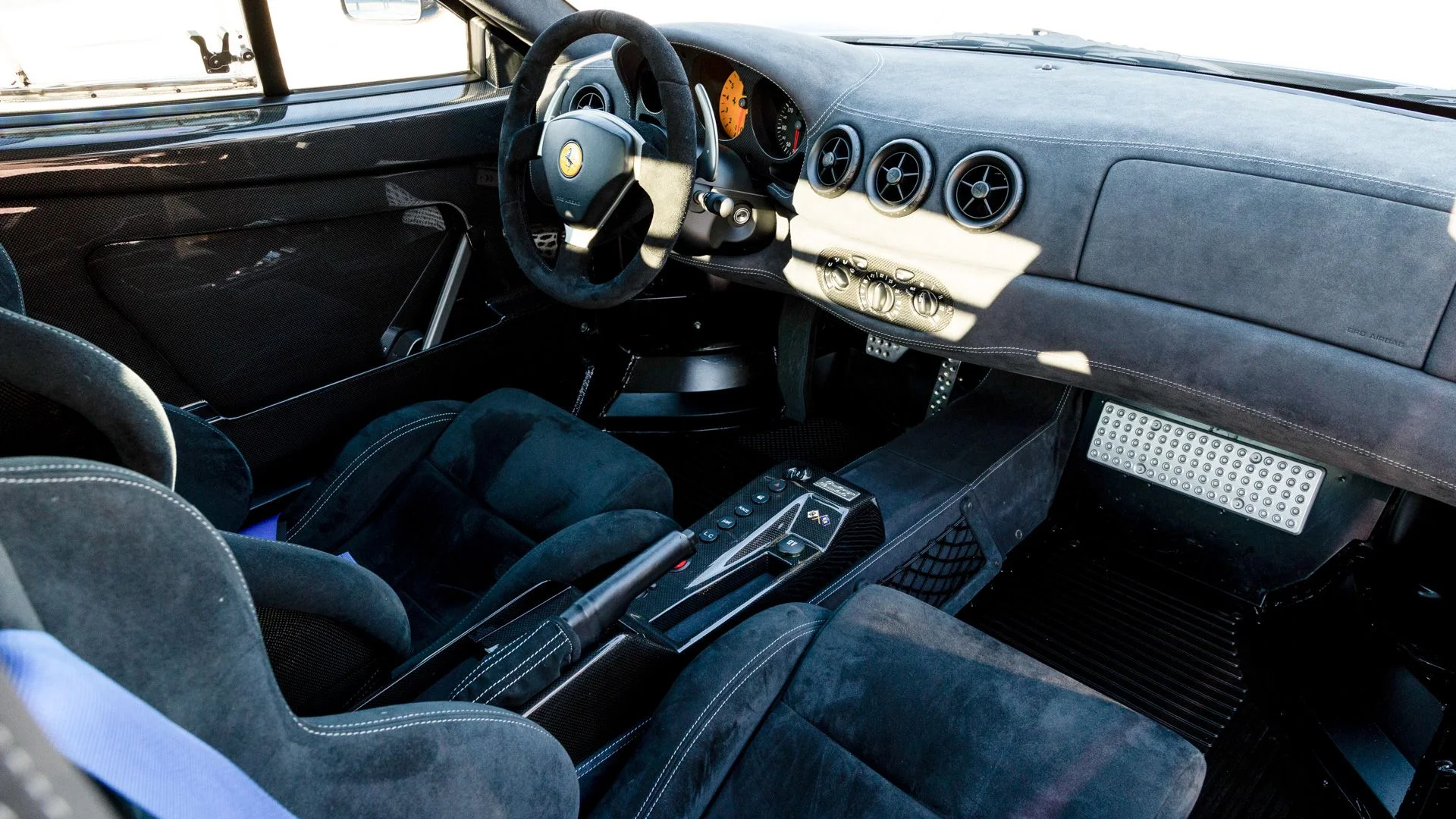
The cabin clearly reflected the car’s purpose. Carpeting was removed in favor of rubber mats and exposed aluminum, and the door panels were bare carbon fiber with simple pull straps. The carbon-fiber seats were available in leather or technical fabric, and the overall approach emphasized saving weight over luxury. A plaque in the cabin commemorated Ferrari’s four consecutive Formula 1 Constructors’ Championships from 1999 to 2002.
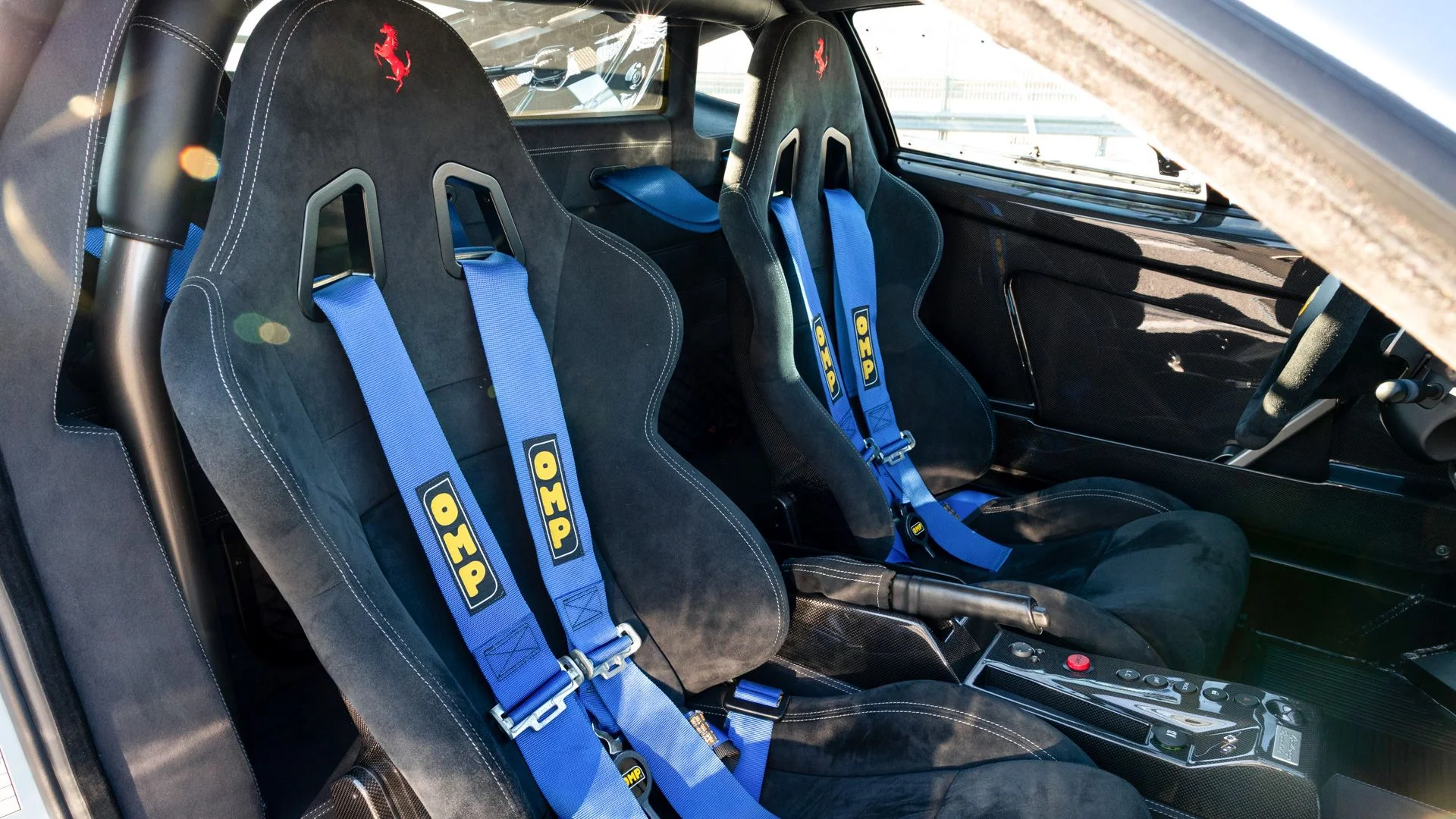
The paddle shifters, the driving position and the amount of mechanical noise reaching the cabin all reinforced the impression of a race car adapted for the road rather than a luxury coupe with additional power.
Racing History
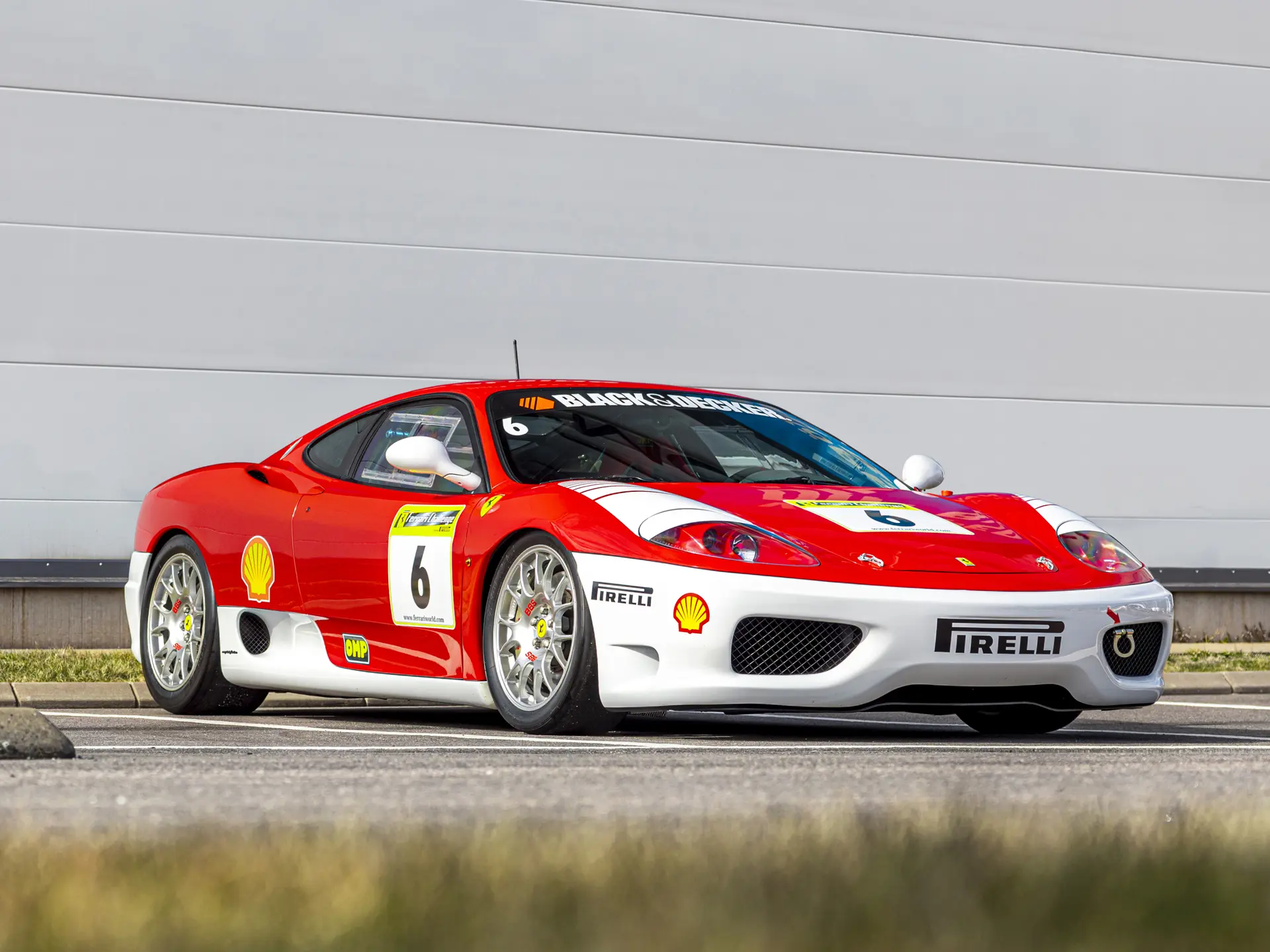
The Challenge Stradale was a road car, but it was closely connected to Ferrari’s customer racing program. That program had its roots in the Ferrari Challenge, launched in 1993, and the 360 Challenge joined the series in 2000. That same year, JMB Racing converted a 360 Challenge for the N-GT class of the FIA GT Championship. With factory support, JMB defeated strong Porsche competition to win the 2001 N-GT title with Christian Pescatori and David Terrien. After that success, Ferrari offered the 360 GT to privateer teams in FIA and ACO competition. In 2003, Andrea Bertolini and Fabrizio De Simone won several N-GT races in JMB’s 360, including Estoril, where JMB won both classes. De Simone finished second in the drivers’ standings behind Stéphane Ortelli and Marc Lieb, who won the title for Freisinger Motorsport in a Porsche 911 GT3-RS.
The Challenge Stradale’s clearest link to racing came at the end of that season. Ferrari presented the 360 GTC at the Bologna Motor Show in December 2003 for the 2004 season. Developed with Michelotto, the GTC was a separate competition model rather than a racing version of the road car, but it directly incorporated the aero and body developments introduced on the Challenge Stradale, including its front bumper, side skirts, engine cover and rear-end design. The FIA granted the Challenge Stradale N-GT homologation on March 2, 2004, formalizing the link between the road car and Ferrari’s customer GT racer. The same bodywork also formed the basis of the 2004 Ferrari Challenge cars, which received a GT-style rear wing for the first time.
Specifications
- Engine: Ferrari F131 naturally aspirated 90-degree flat-plane V8, 3,586cc, DOHC, 40 valves
- Power: 425 hp (425 PS / 313 kW) at 8,500 rpm
- Torque: 275 lb-ft (373 Nm) at 4,750 rpm
- Transmission: Six-speed electro-hydraulic F1 automated manual, 150-millisecond shifts, rear-wheel drive
- Chassis: Aluminum spaceframe with aluminum body
- Suspension: Independent double wishbones front and rear, coil springs, revised springs, bushings and anti-roll bars
- Brakes: Brembo carbon-ceramic discs front and rear
- Weight: 1,180 kg / 2,601 lbs dry; 1,280 kg / 2,822 lbs curb
- Performance: 0-62 mph in 4.1 seconds, 186 mph / 300 km/h top speed, 1:26.5 Fiorano lap time
Production and Legacy
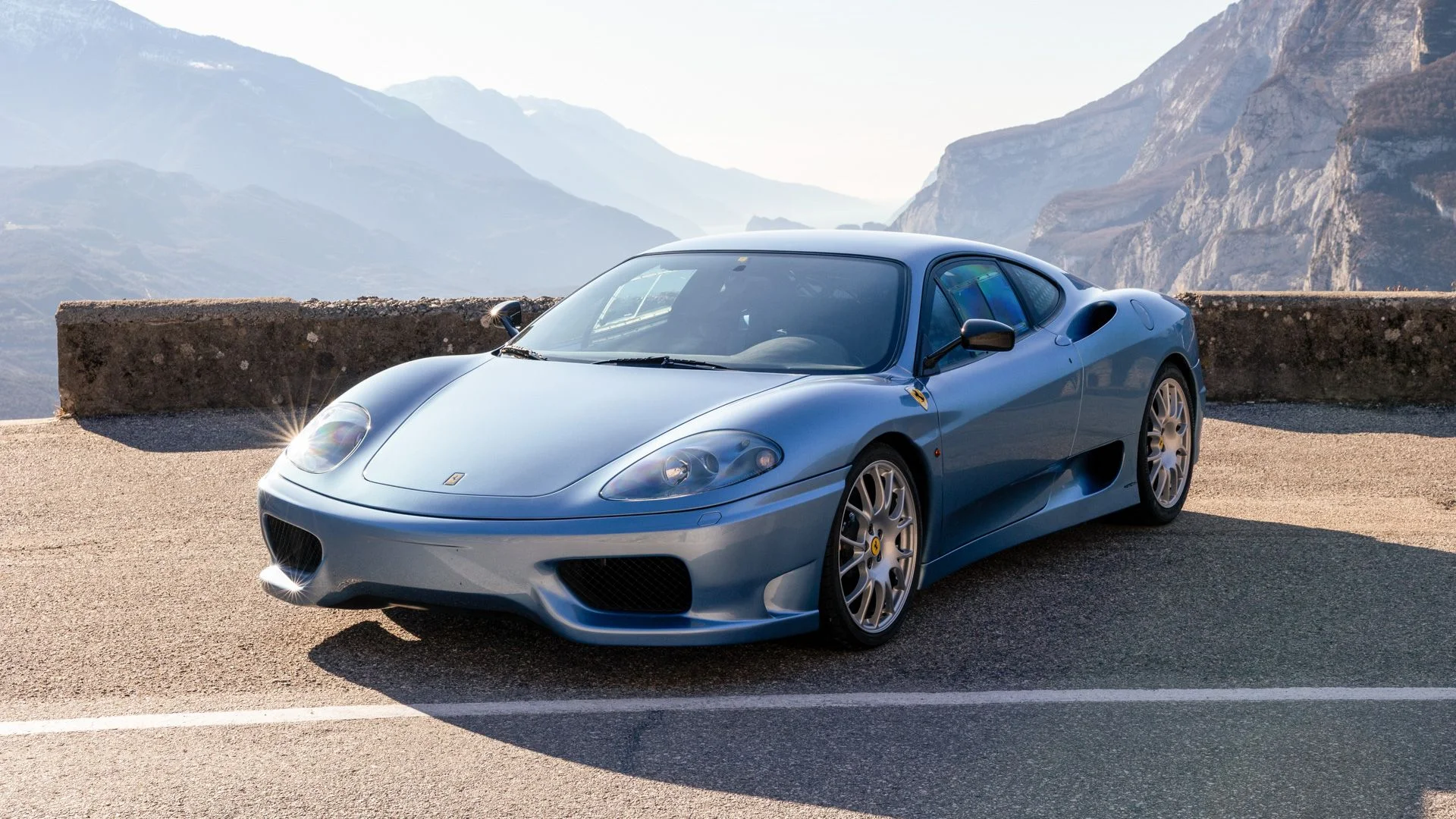
Ferrari built the Challenge Stradale in 2003 and 2004 alongside the regular 360 range. The company never published an official total, but production is estimated at between 1,288 and 1,300 cars. That figure includes approximately 378 North American-specification cars and 119 right-hand-drive cars for the UK market. The Challenge Stradale became one of the most desirable versions of the 360 almost immediately and was a favored choice among buyers late in the model’s production run.
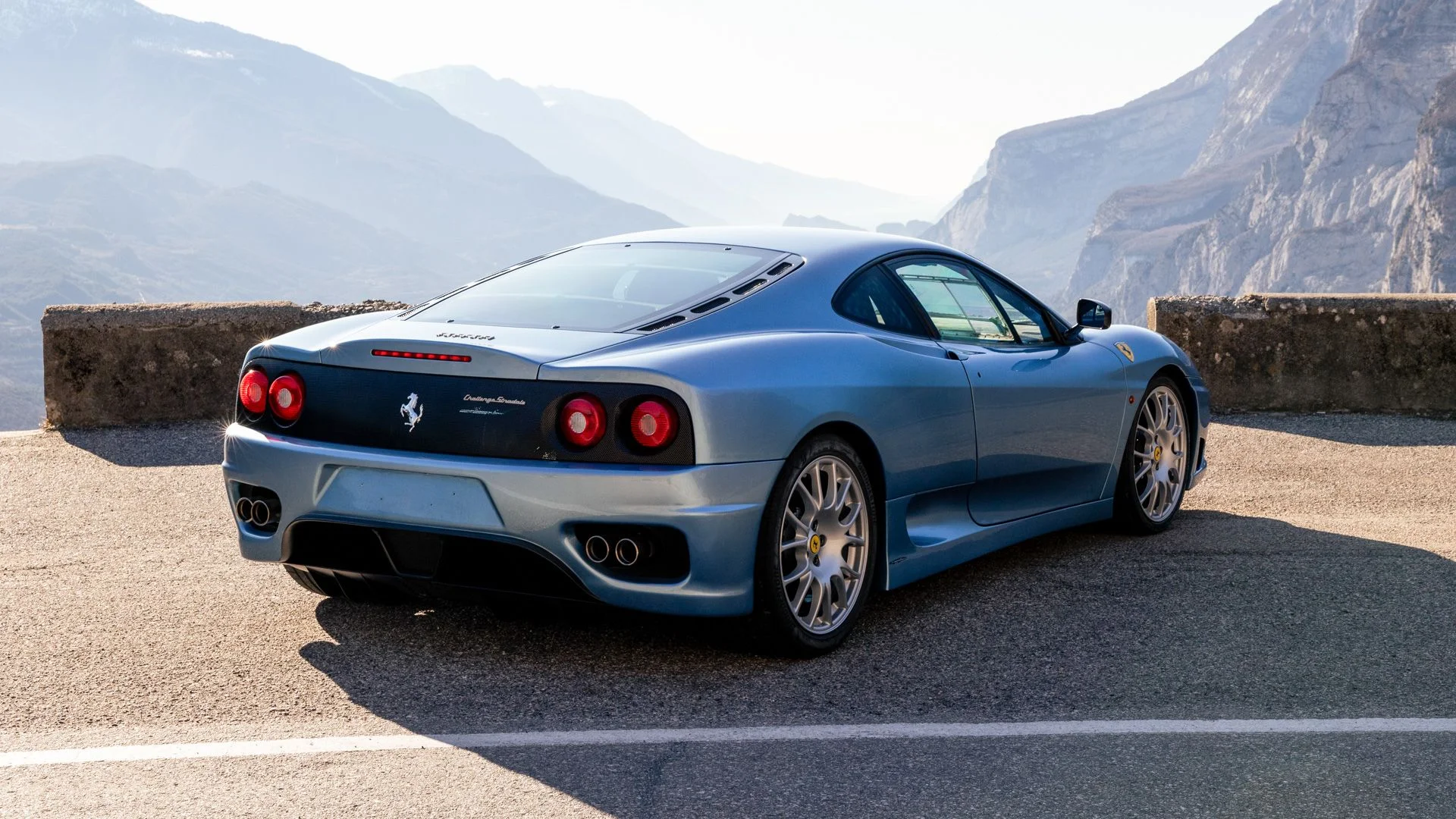
The car’s significance became even clearer over time. It established a formula Ferrari has followed ever since: take the V8 berlinetta, reduce weight, add power, sharpen the gearbox and chassis using lessons learned in racing, and offer it as a limited special series. The 430 Scuderia, 458 Speciale and 488 Pista all continued this approach. Today, the Challenge Stradale is a highly regarded collector car, valued for its naturally aspirated V8 sound, its close relationship with Ferrari’s GT racing program, and its role in creating Ferrari’s modern line of track-focused V8 specials.