
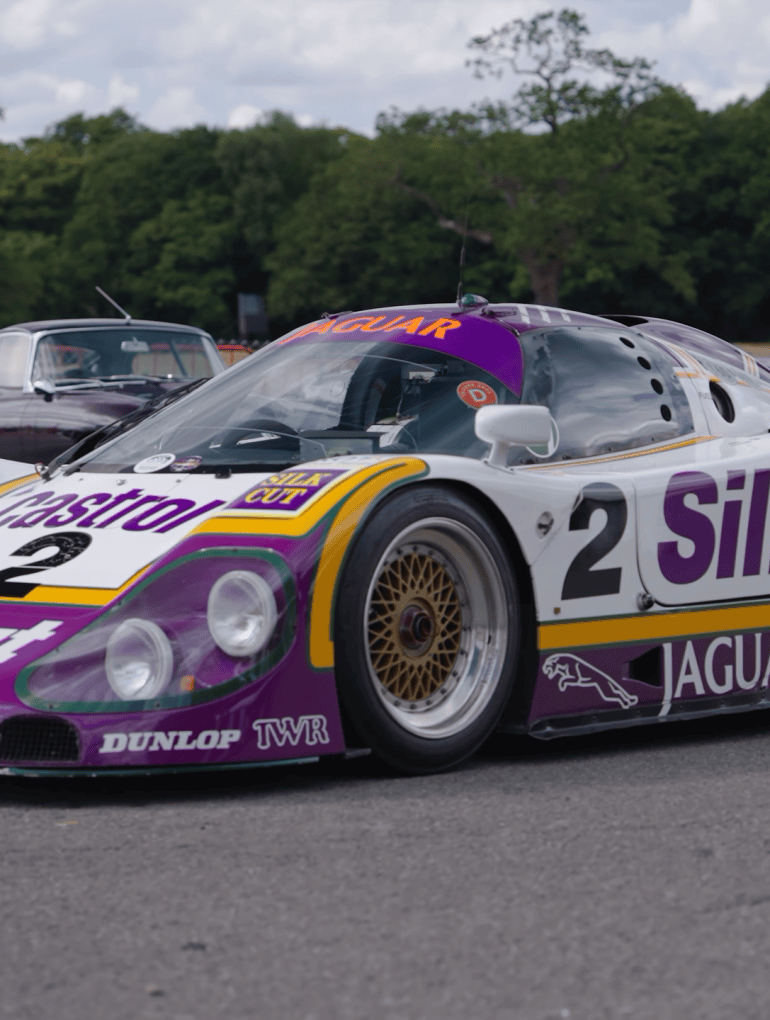
The Jaguar XJR-9 represents one of the most significant chapters in British endurance racing history. Built under the direction of Tom Walkinshaw Racing (TWR), the Group C prototype challenged Porsche’s dominance at the 24 Hours of Le Mans, ending the German manufacturer’s six-year winning streak in 1988. Now, the original race-winning example has emerged from museum preservation to return to the circuit, giving Ben Collins an opportunity to experience one of endurance racing’s most celebrated machines.
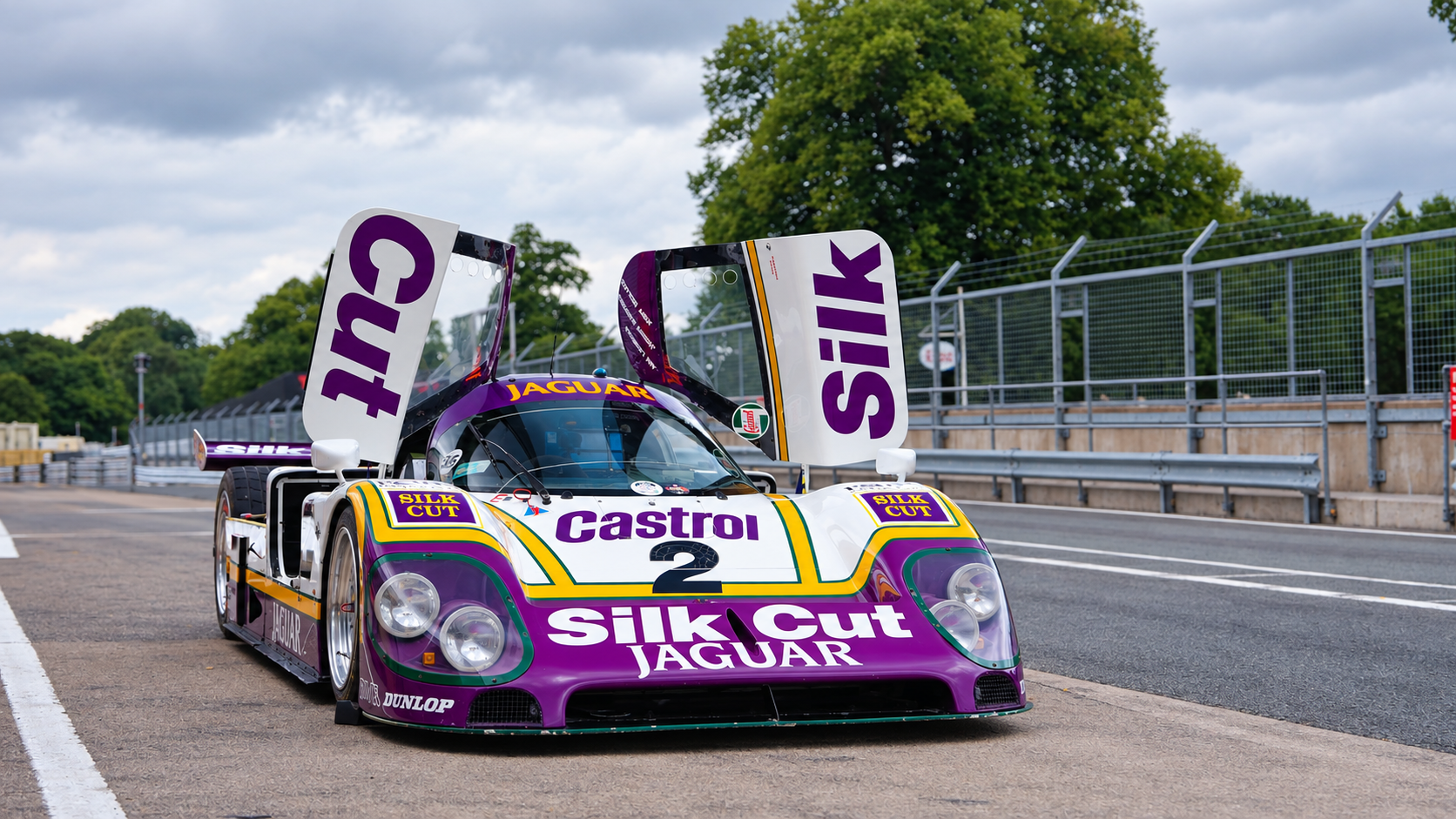
Driven to victory by Andy Wallace, Jan Lammers, and Johnny Dumfries, the XJR-9 was the product of an aggressive engineering approach led by designer Tony Southgate. Its arrival marked Jaguar’s serious return to international sports car competition after decades away from the top level.
Engineering Against Porsche
The XJR-9’s aerodynamic package departed from Porsche’s established long-tail philosophy, adopting a shorter-wheelbase configuration designed to reduce drag while maintaining substantial downforce. Southgate also incorporated advanced carbon-fiber construction into the monocoque, providing the structural rigidity necessary to withstand considerable aerodynamic loads.
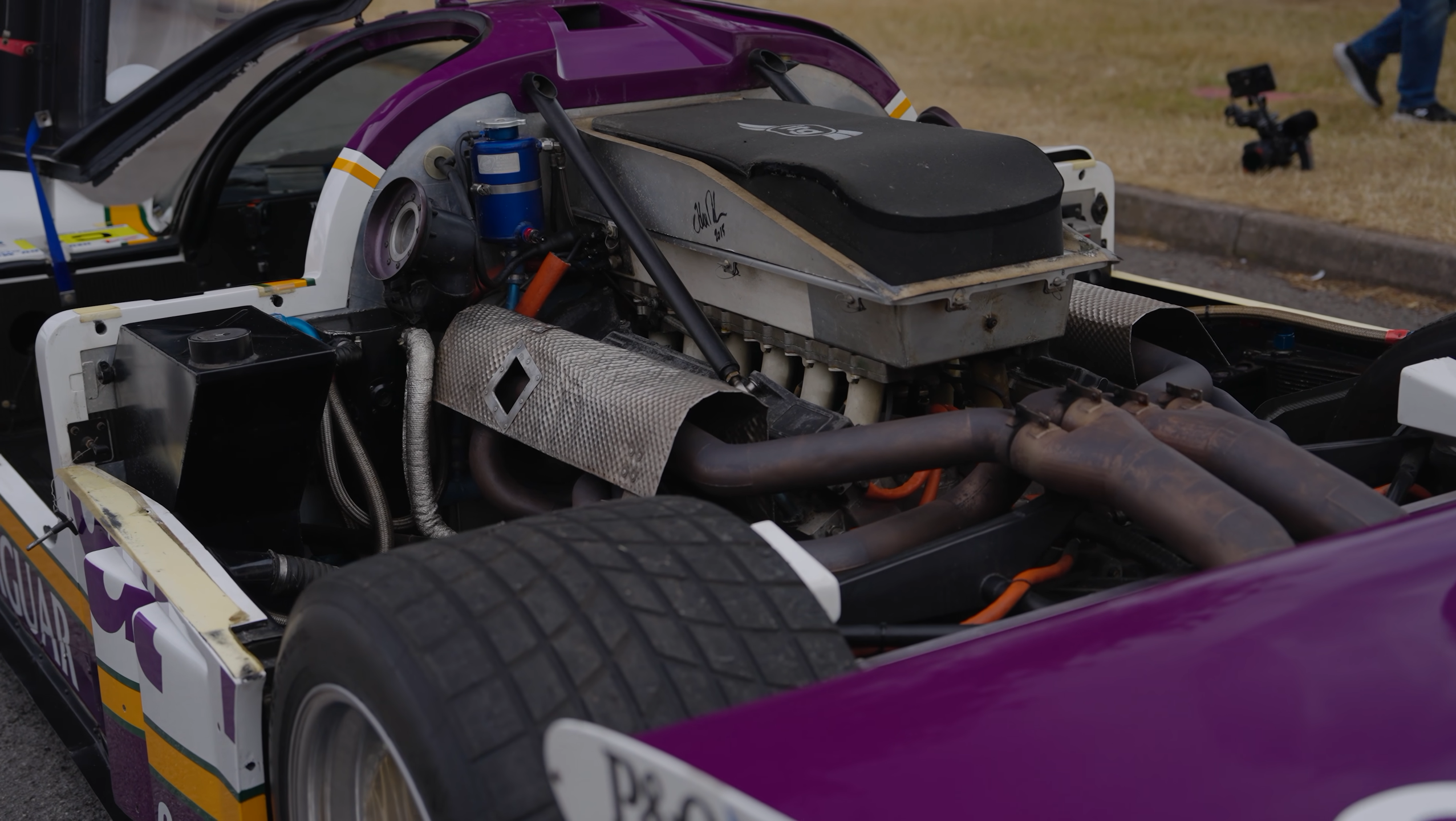
Power comes from a naturally aspirated 7.0-liter V12 producing approximately 700 horsepower. Developed from the engine used in Jaguar’s XJS touring car program, the powerplant evolved through several displacements before reaching its final endurance-racing specification. Its naturally aspirated configuration also offered a reliability advantage over the turbocharged competition, an important consideration during a 24-hour race.
Ground Effects and Group C Aerodynamics
The XJR-9’s engineering extends beyond its engine and chassis. Its ground-effect aerodynamic package uses a flat floor, side skirts, and rear venturi tunnels to generate substantial suction beneath the car. At speed, the system could produce approximately 900 kilograms of downforce, demanding an exceptionally stiff suspension platform.
Its steel braking system, extensive cooling ducts, and specialized lighting reflect the practical requirements of sustained nighttime competition. The aerodynamic configuration was optimized for Le Mans, prioritizing low drag and high-speed stability over the agility required on tighter circuits.
Behind the Wheel of a Le Mans Winner
Collins’ track experience reveals the physical demands of driving the original machine. Heavy steering, long gearing, a compact cockpit, and a demanding manual gearbox require considerable commitment. The naturally aspirated V12 delivers its power with a distinctive mechanical character, while the car’s considerable mass distribution and ground-effect characteristics demand respect from the driver.
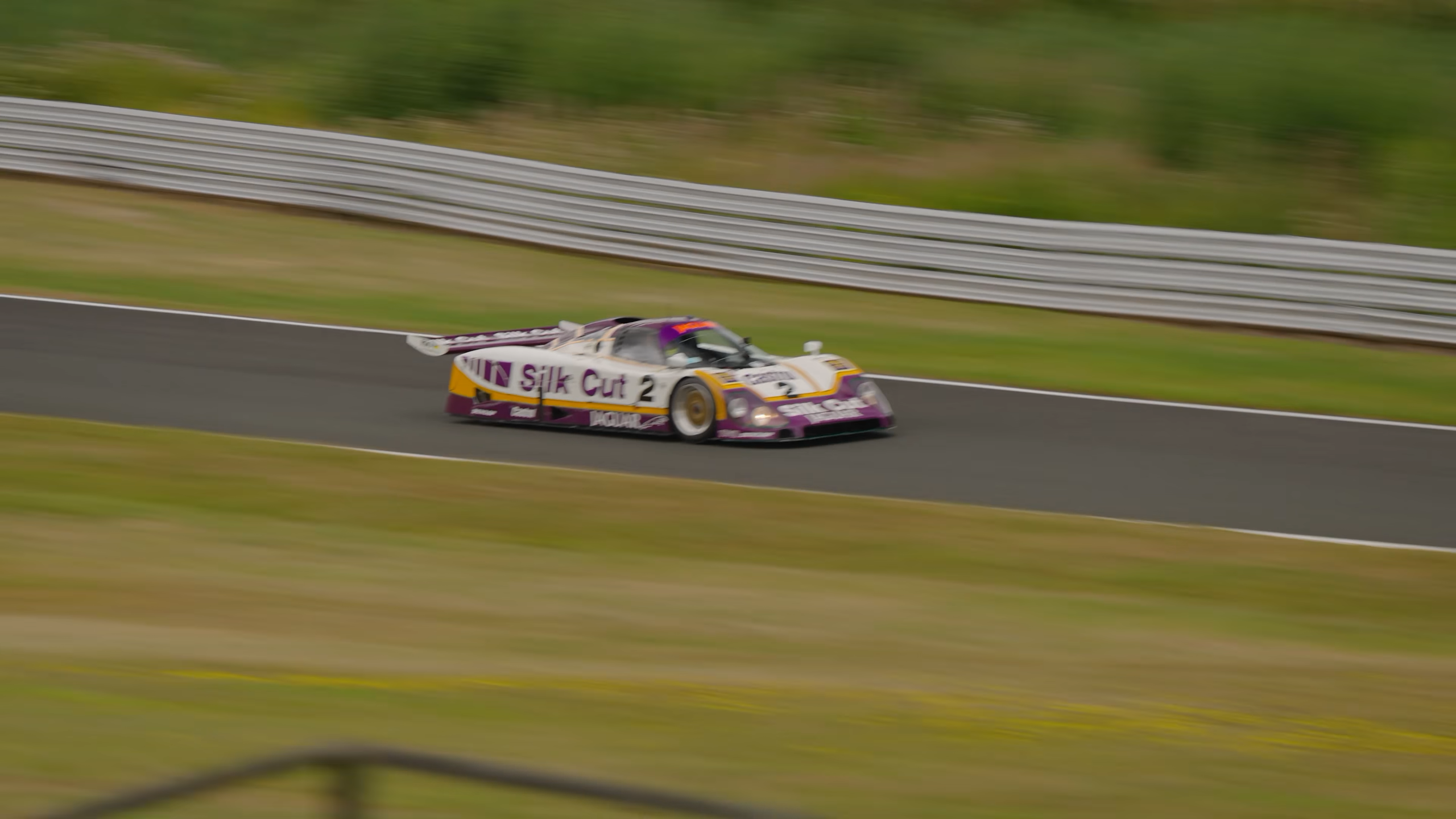
The Le Mans specification also makes the XJR-9 less suited to tighter circuits, where its long gearing and aerodynamic configuration cannot be fully exploited.
The 1988 Victory and Its Legacy
The car’s victory was equally remarkable for its mechanical resilience. During the 1988 race, Jan Lammers encountered a gearbox problem that left the Jaguar stuck in fourth gear. Rather than risk further damage, he nursed the car toward the finish, ultimately securing Jaguar’s historic victory.
Preserved with its original livery and components by the Jaguar Daimler Heritage Trust, this XJR-9 offers a rare opportunity to experience the engineering, ingenuity, and endurance that defined Group C’s golden era. Its return to the circuit provides a tangible connection to the period when Jaguar successfully challenged Porsche for supremacy at Le Mans.
Source: Ben Collins Drives