
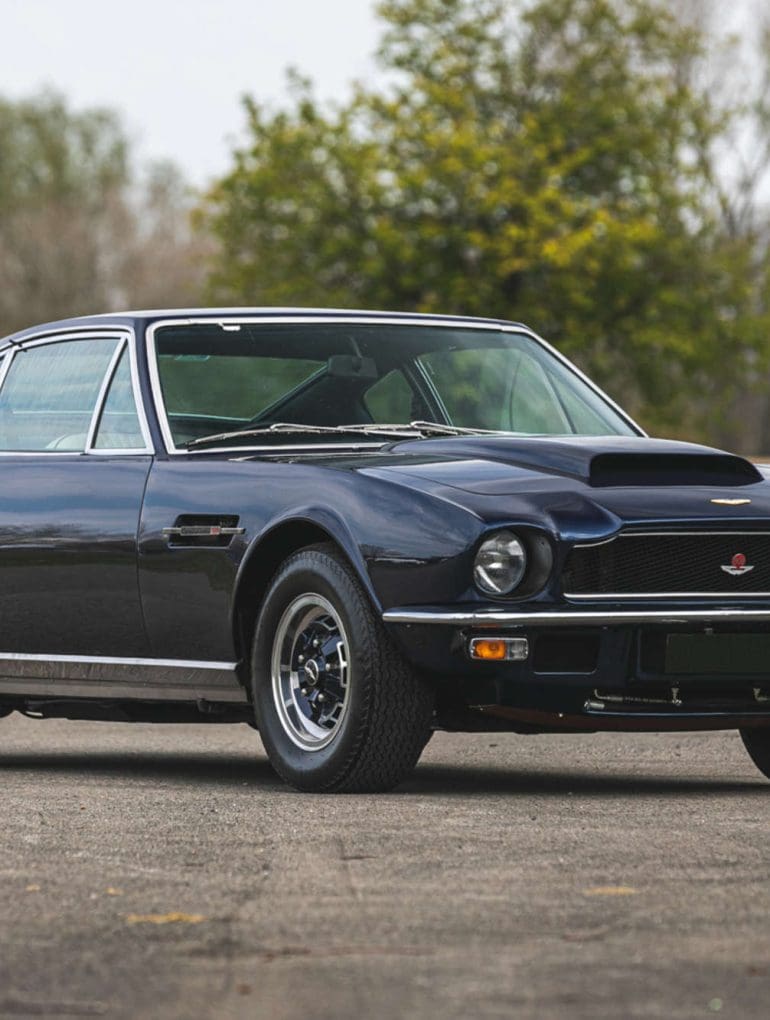

October 1973. The oil crisis hit like a hammer. Arab OPEC members announced an embargo, oil prices quadrupled overnight, and the bottom fell out of the luxury car market. Aston Martin, already struggling financially under new ownership, suddenly found themselves selling expensive, thirsty V8 grand tourers into an economic hurricane. Most manufacturers would have folded. Somehow, Newport Pagnell kept building cars.
The V540 engine designation covers this turbulent period from August 1973 to March 1980, when Aston Martin switched from troublesome fuel injection to Weber carburetors, weathered bankruptcy, changed owners, and emerged with not just survival but an expanded model range that would define the marque for the next decade.
Background and Origins
David Brown had saved Aston Martin from oblivion in the late 1940s, but by late 1971, years of losses convinced him to sell. Company Developments bought the storied marque in January 1972, bringing diverse business experience but zero knowledge of automotive manufacturing. Their first product, launched in April 1972, was the simply titled V8, a facelifted version of the outgoing DBS V8 with a cleaner front end featuring twin headlights instead of four.
Like the DBS V8, this new model used Bosch mechanical fuel injection, state-of-the-art technology that proved maddeningly unreliable in practice. Aston Martin sold a respectable 288 fuel-injected V8s between April 1972 and August 1973, but the Bosch system’s reputation for temperamental behavior was becoming problematic. Dealers lacked the expertise to service it properly, and customers were growing frustrated.
The solution arrived in August 1973 when Aston Martin switched to four Weber 42 DCNF downdraft carburetors. Ironically, this seemingly backwards step made the V8 more reliable and, crucially, easier to certify for increasingly stringent emissions regulations. The Weber-equipped cars would carry the V540 engine designation, marking the beginning of a new chapter.
Just two months after introducing the carbureted engine, the oil crisis struck, throwing Aston Martin and every other builder of large-engined cars into chaos.
Design and Engineering
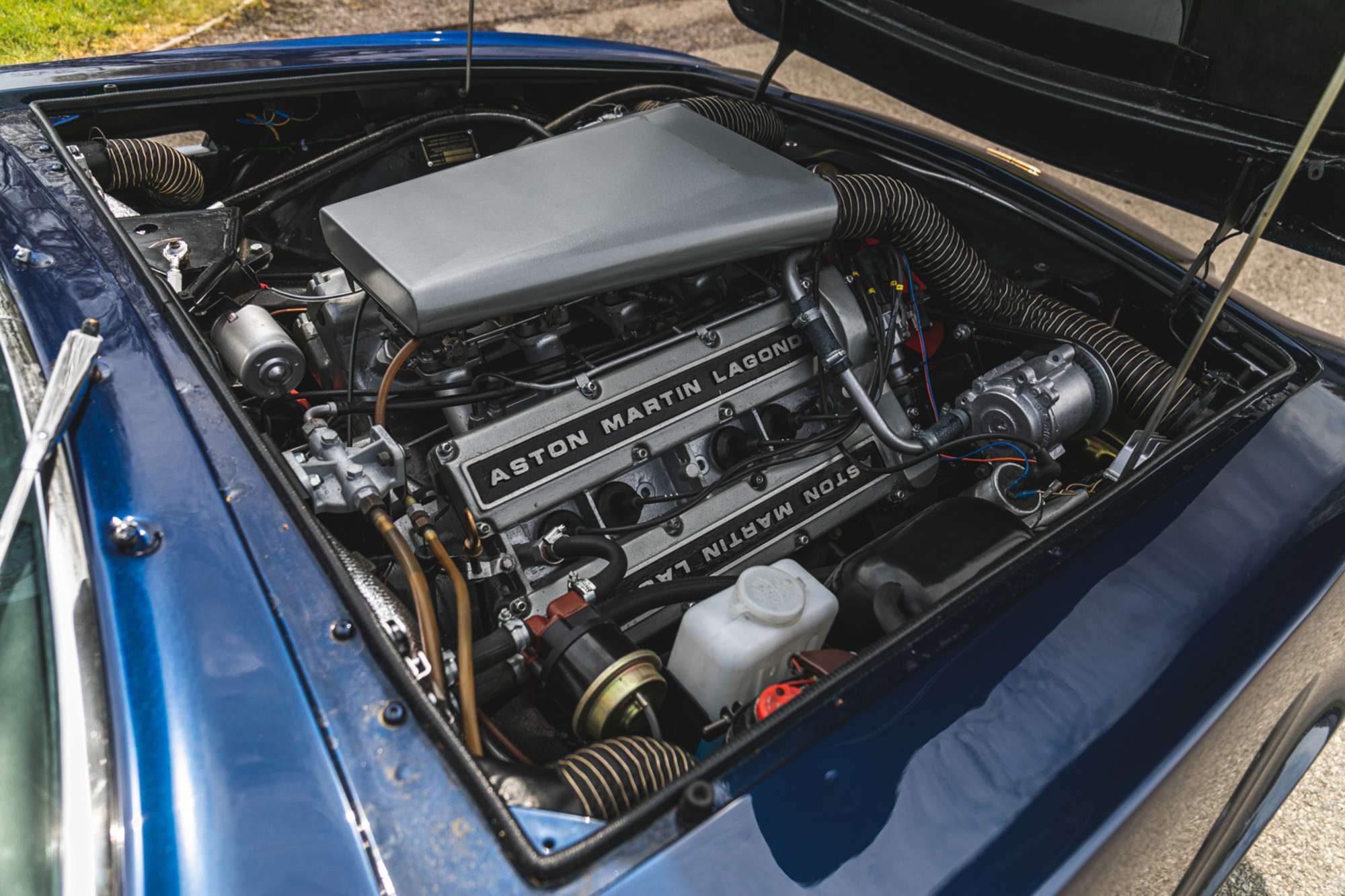
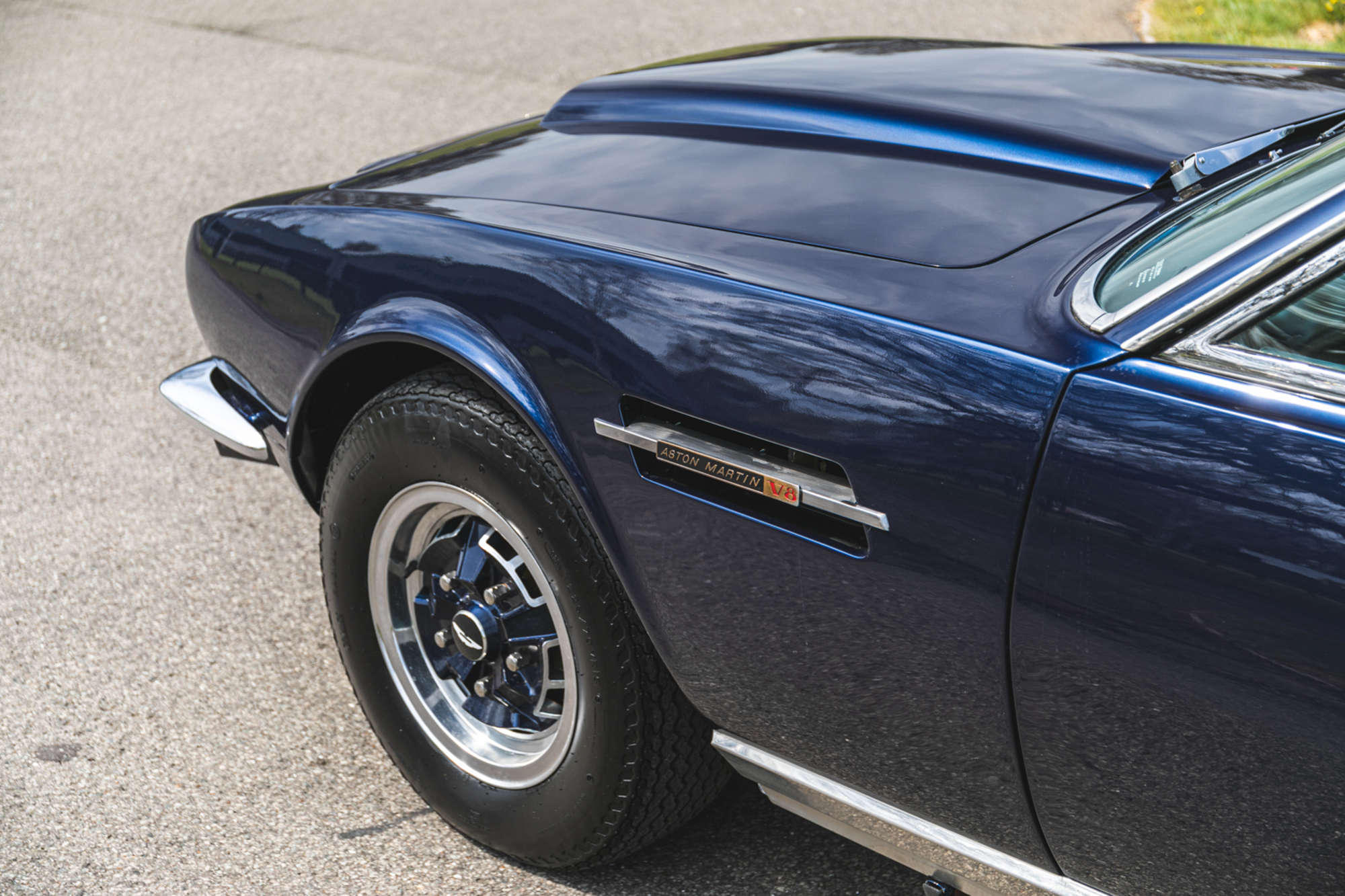
The switch from fuel injection to carburetors brought numerous changes beyond the induction system. The reconfigured engine ran notably smoother at low revs and could be identified by silver cam covers instead of black, plus a new airbox that required a larger hood scoop. Power dropped slightly from 320 horsepower at 5,800 rpm to 310 horsepower at 6,000 rpm, while torque fell from 360 lb-ft at 4,500 rpm to 320 lb-ft at 6,000 rpm. In practice, performance remained largely unchanged.
The all-aluminum 90-degree V8 still displaced 5,340 cc, with a 100mm bore and 85mm stroke. Dual overhead camshafts and two valves per cylinder remained, along with a 9.0:1 compression ratio and Lucas OPUS electronic ignition. Buyers could choose between a ZF five-speed manual or a Chrysler TorqueFlite three-speed automatic.
Beyond the engine, Aston Martin made several mechanical improvements. The water and oil cooling systems received upgrades, and automatic-transmission cars received enhanced transmission cooling. A redesigned fuel tank mounted above the rear axle created more trunk space, while the fuel surge tank was deleted. New front bulkhead and under-hood insulation reduced noise.
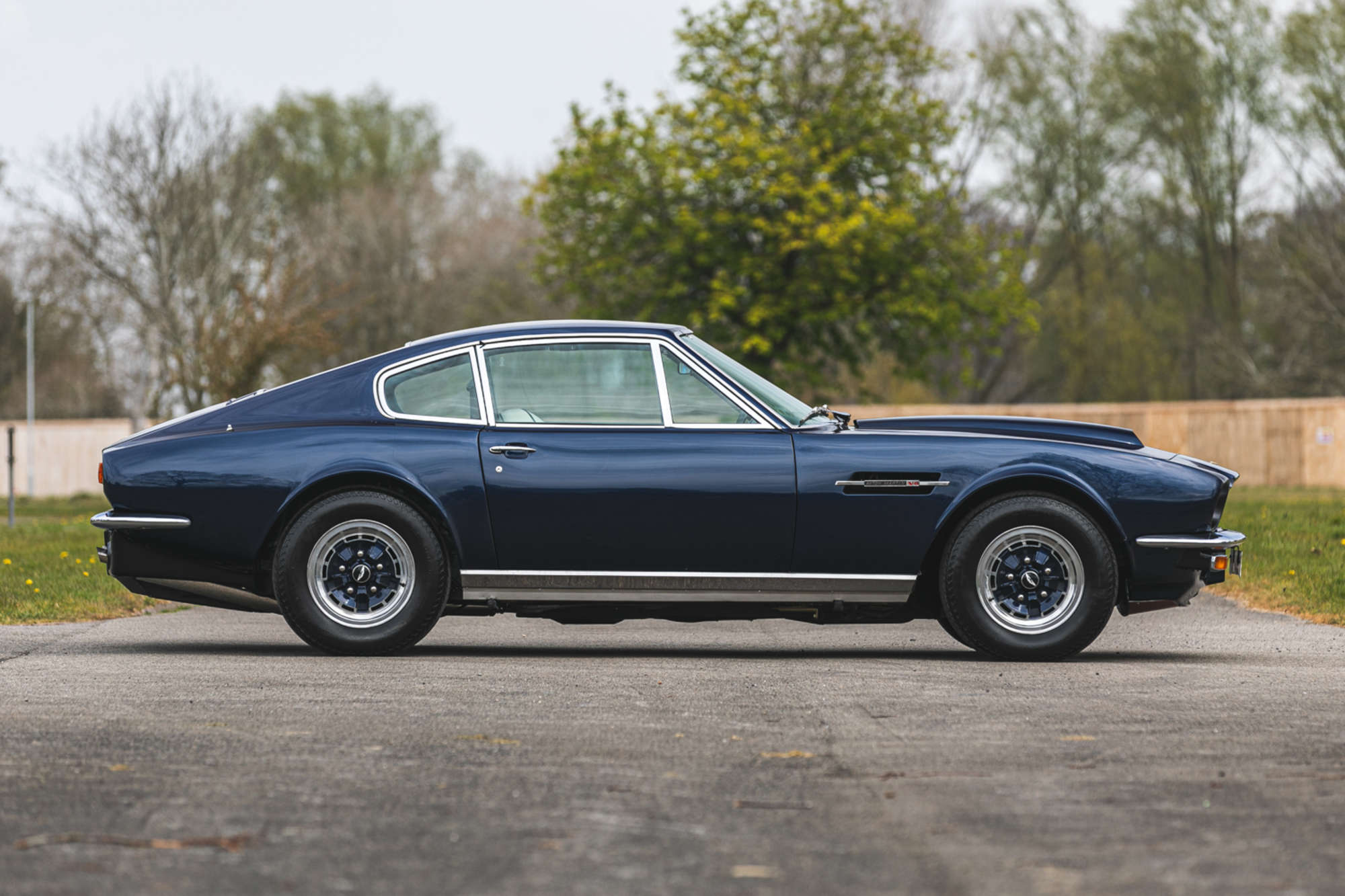
Subtly restyled GKN alloy wheels with smooth rims and no beading replaced the previous design, though the 15 x 7-inch sizing remained unchanged. The steel platform chassis retained its 2,610mm wheelbase with independent double wishbone front suspension, a De Dion rear axle located by parallel trailing arms and Watts linkage, coil-sprung Armstrong shocks all around, and a front anti-roll bar. Dual-circuit servo-assisted Girling ventilated disc brakes measured 10.75 inches up front and 10.38 inches at the inboard rears. Speed-sensitive power-assisted steering was standard.
Styling
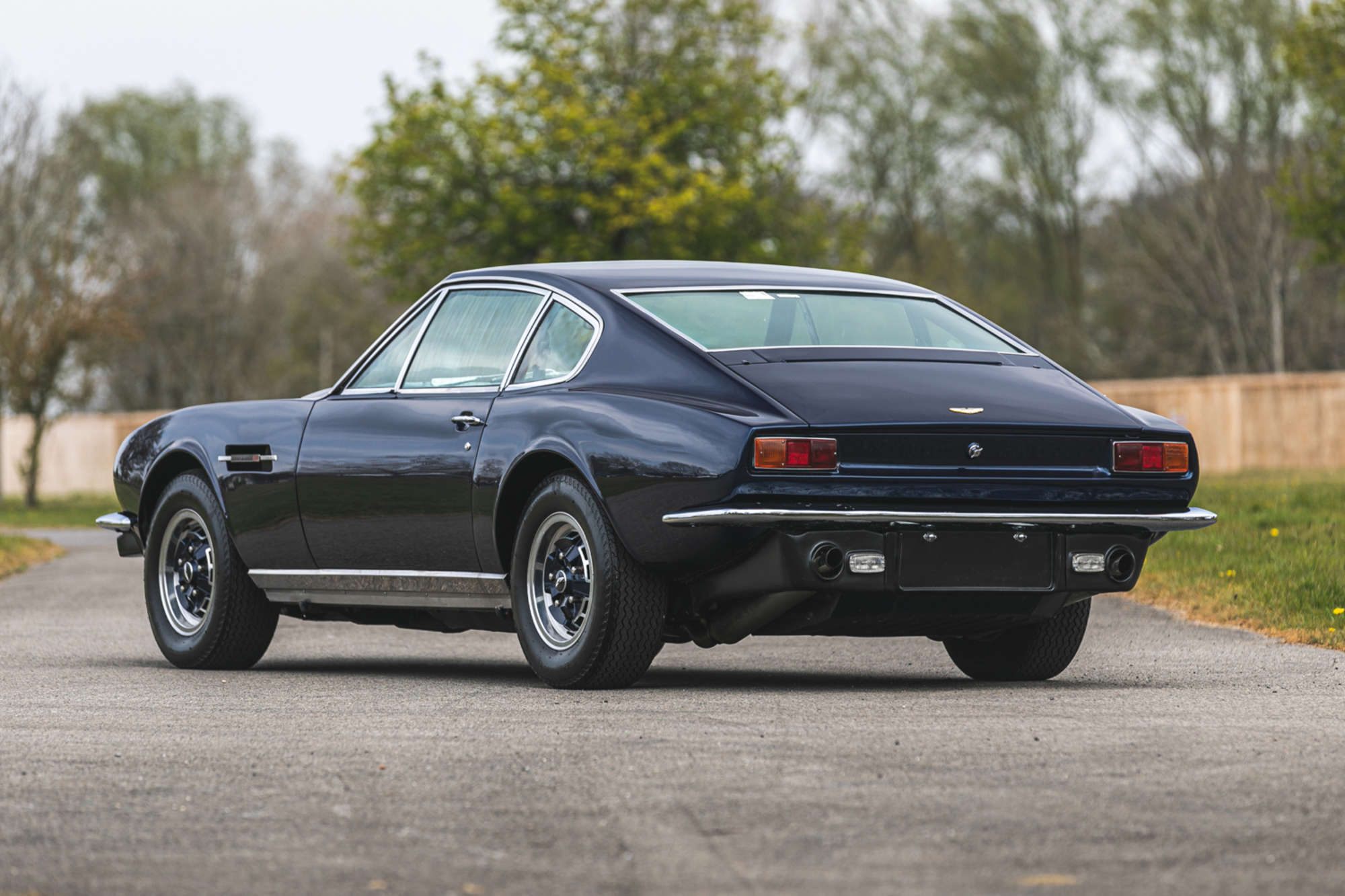
The larger hood scoop required for the Weber airbox became the most visible external change. Aston Martin also modified the cockpit ventilation system. Earlier cars had extractor louvres cut beneath the rear windscreen, while the V540 featured a shallow lip ahead of the bootlid’s leading edge for air extraction. Otherwise, the hand-formed aluminum body panels remained unmodified. At this stage, only the Coupe was offered.
Inside, the front seats and door panels received subtle redesigns. The center console was reconfigured with horizontal instead of vertical switchgear, a larger ashtray, and a new cigar lighter. A rotary dial on the dashboard’s outer side activated the lights, while the wiper control moved to a steering column stalk. For added practicality, the passenger door could now be locked and unlocked via a switch on the driver’s door.
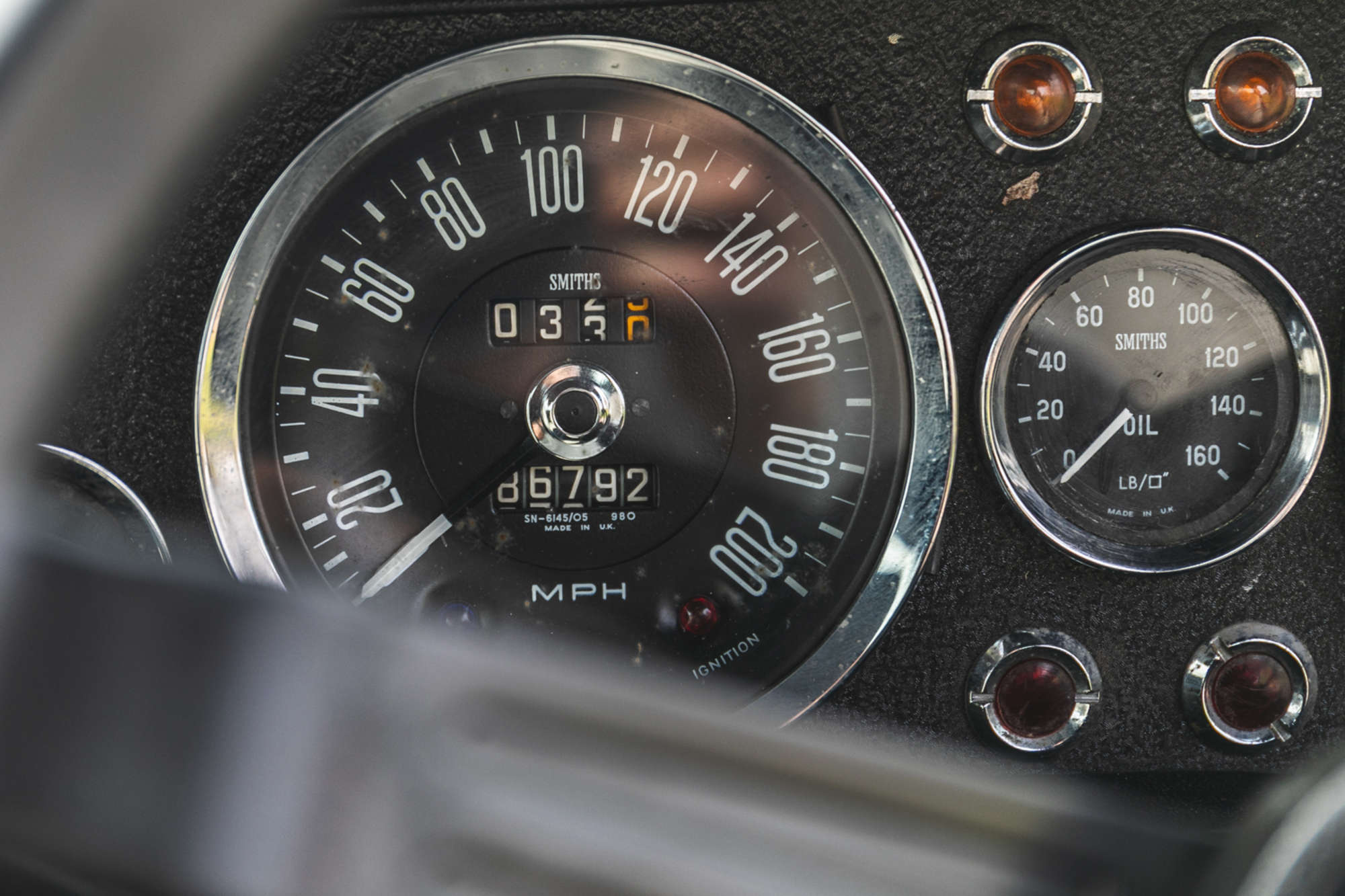
The rest of the cockpit remained largely unchanged. Large gauges for engine and road speed sat directly behind the leather-covered three-spoke wheel, with a small oil temperature dial between them. Smaller readouts for oil pressure, water temperature, fuel, and battery condition flanked either side. A clock occupied the central cowl between electric window switches, with ventilation controls and the audio system below. The dash fascia and center console were upholstered in black leather or occasionally fitted with burr walnut inserts. Air conditioning and full leather upholstery were standard.
Competition History
The V540 was a road car through and through, designed for fast cross-continental travel rather than competition. However, its survival through the darkest period of Aston Martin’s history would prove far more dramatic than any race.
Interior
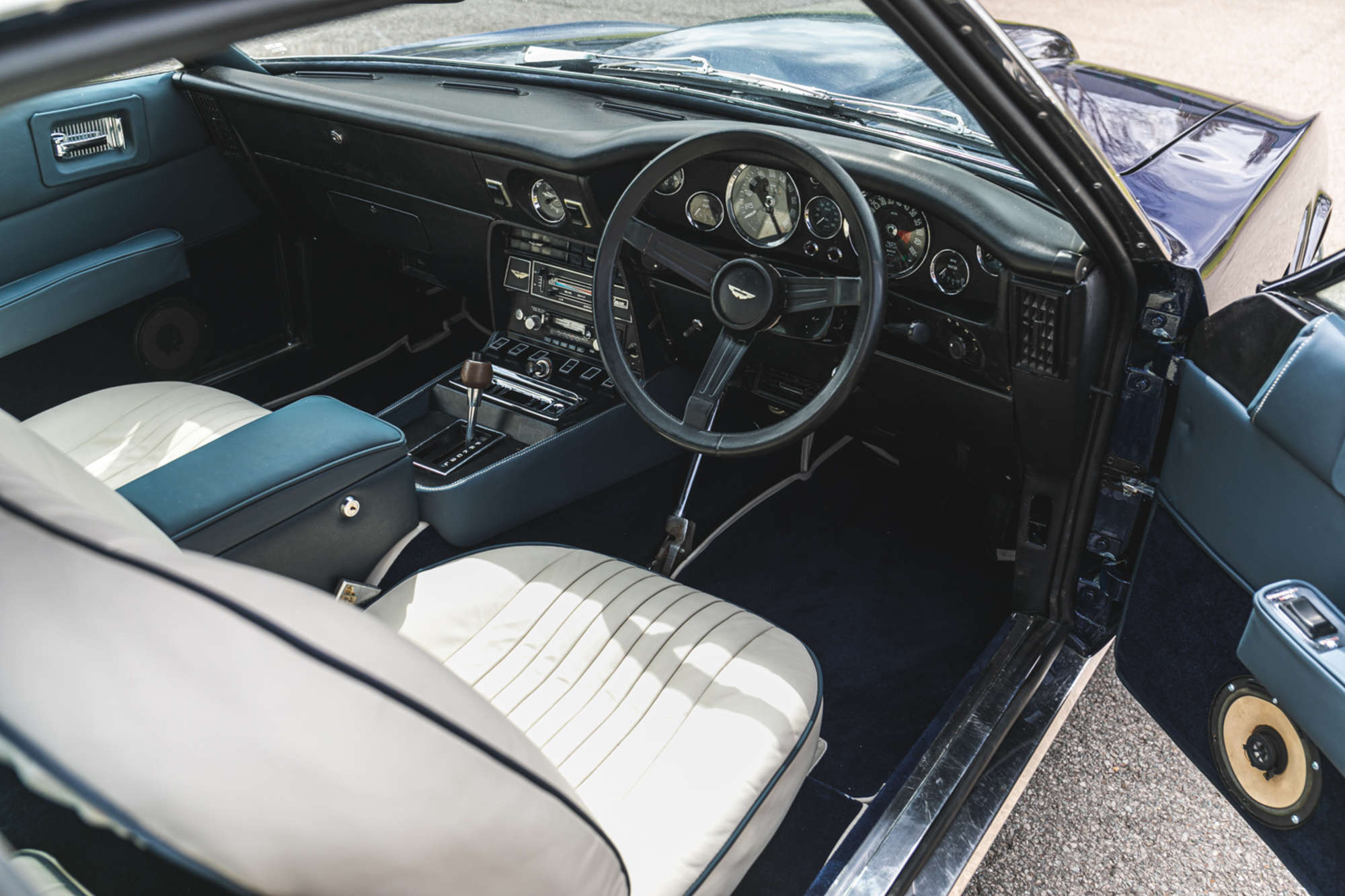
The interior blended traditional British luxury with practical updates. Full Connolly leather upholstery and Wilton carpets were standard. The reconfigured center console featured horizontal switchgear, a larger ashtray, and new cigar lighter. A rotary dial activated the lights, while wiper controls moved to a steering column stalk. Large gauges for engine and road speed sat behind the leather three-spoke wheel, with smaller readouts for oil pressure, water temperature, fuel, and battery flanking either side. The dash was upholstered in black leather or occasionally fitted with burr walnut inserts. Air conditioning was standard
Specifications
- Engine: All-aluminum 90-degree V8, 5,340cc (100mm x 85mm), DOHC, two valves per cylinder
- Power: 310 bhp at 6,000 rpm (9.0:1 compression), later reduced to 288 bhp (US spec with 8.3:1 compression)
- Torque: 320 lb-ft at 6,000 rpm
- Fuel delivery: Four Weber 42 DCNF downdraft carburetors
- Ignition: Lucas OPUS electronic
- Transmission: ZF five-speed manual or Chrysler TorqueFlite three-speed automatic
- Chassis: Steel platform, 2,610mm wheelbase
- Body: Hand-formed aluminum panels
- Suspension: Independent double wishbone (front), De Dion axle with parallel trailing arms and Watts linkage (rear), coil springs, Armstrong dampers
- Brakes: Girling ventilated discs (10.75-inch front, 10.38-inch rear inboard)
- Wheels: 15 x 7-inch GKN alloy
- Weight: 1,740 kg
- Performance: 155 mph top speed, 0-62 mph in 6.0 seconds (manual) or 7.1 seconds (automatic)
Production and Legacy
The oil crisis couldn’t have come at a worse time. Within months, sales of high-end cars collapsed. Company Developments, struggling across their portfolio, placed Aston Martin Lagonda into administration on December 31, 1974. Production at Newport Pagnell stopped, though the profitable Customer Service Department remained open.
Salvation arrived in June 1975 when a multinational consortium led by Americans Peter Sprague and Canadian George Minden, both Aston Martin Owners Club members, purchased the company. Soon joined by Brits Alan Curtis and Denis Flather, the new owners spent months re-establishing operations before restarting production.
Crucially, they sanctioned development of three new models: a wedge-styled four-door Lagonda, an open-top V8 Volante, and the flagship V8 Vantage supercar. The V8 Volante debuted in June 1978 with an electric canvas roof and 68 kilograms of additional body reinforcements. It featured a closed power bulge, full-width burr walnut dash, and proved immensely popular, especially in America.
At the Birmingham Motor Show in October 1978, Aston Martin introduced the updated Oscar India V8 Coupe with similar refinements and a discrete rear spoiler. In March 1980, the company switched to the revised V580 engine with bigger valves, uprated camshafts, and higher compression, creating a common specification across the entire range.
Between August 1973 and October 1978, Aston Martin completed 970 V8 Coupes. The V540 era represents one of the most challenging periods in Aston Martin’s history, yet the company not only survived but emerged stronger, laying the foundation for the successful 1980s lineup.