
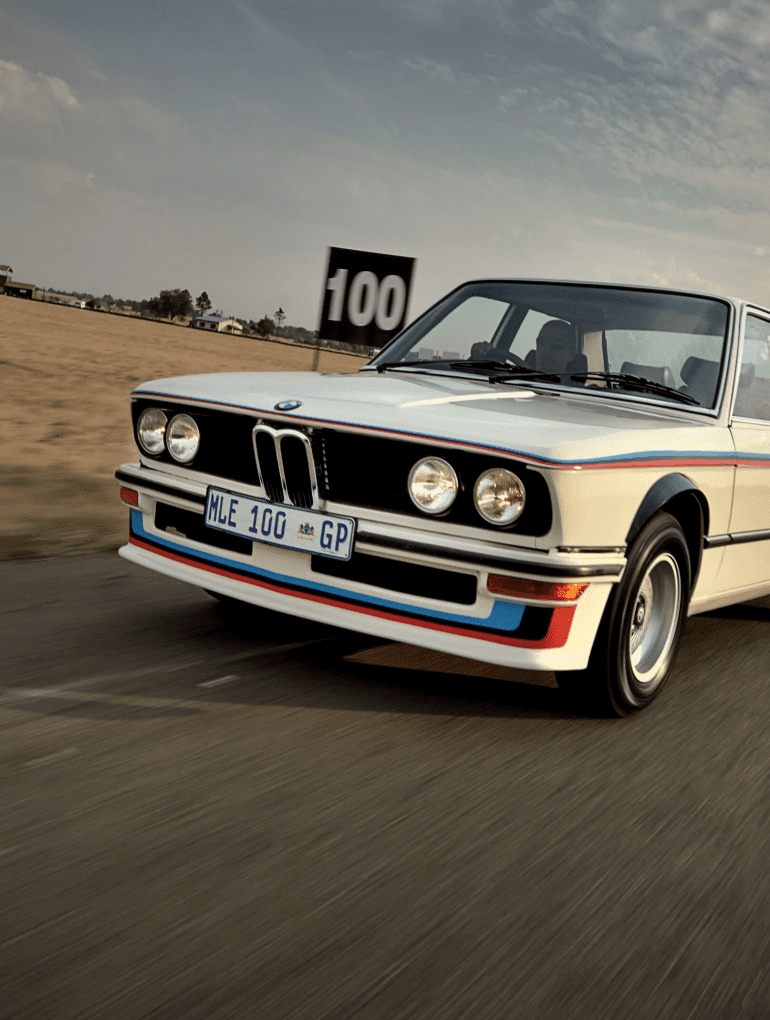

Johannesburg, 1976. BMW South Africa needed something special for the modified saloon racing series. The standard 530i was quick but outgunned by V8-powered Ford Capris and Chevrolet-engined specials. Local importer BMW Motorsport South Africa convinced Munich to homologate a lightweight version with a bigger engine and competition parts.
The result was the 530 MLE, standing for Motorsport Limited Edition. Just 110 were built in Germany during 1976, then shipped to South Africa for final assembly and sale. All wore Polaris silver metallic. All came with Recaro seats and a dogleg five-speed gearbox. These were the rarest E12s ever built.
Background and Origins
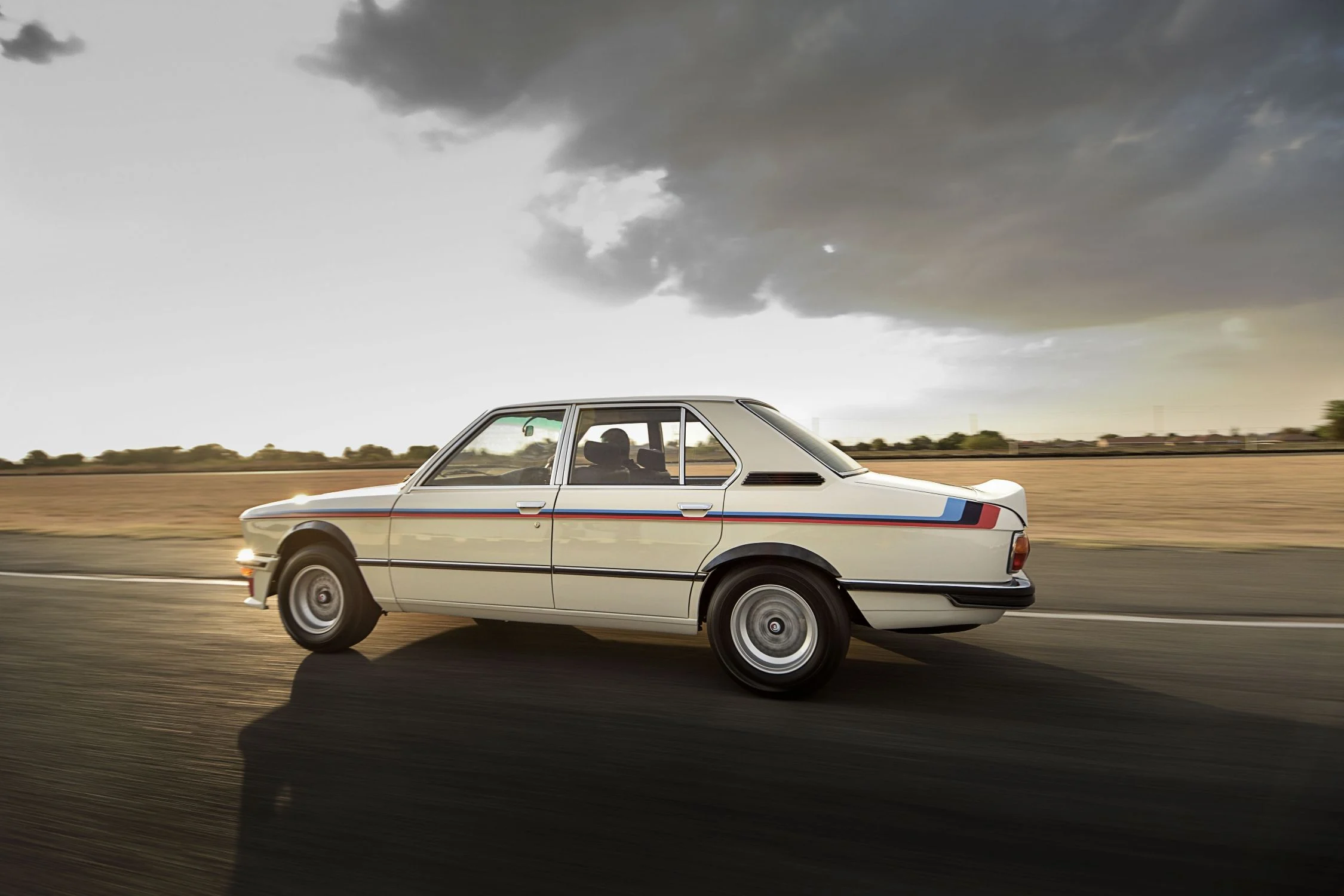
BMW’s E12 5 Series debuted in 1972 as the replacement for the aging Neue Klasse sedans. Penned by Paul Bracq, the clean-sheet design introduced shark-nose styling and established the template for modern BMW saloons. By 1974, the range included four-cylinder 518s and 520s alongside six-cylinder 525 and 528 models.
The 530i arrived in May 1975 with BMW’s largest inline six, the M30B30, producing 176 horsepower. It was quick, refined, and thoroughly capable, but South African racing regulations demanded more. The Modified Saloon Car Championship allowed significant engine tuning and weight reduction. Competitors were running destroked 5.0-liter Chevrolet V8s and turbocharged Capris making well over 300 horsepower.
BMW Motorsport South Africa approached Munich with a proposal. Homologate a lightweight 530i with the largest possible M30 engine, add proper competition suspension, delete unnecessary trim, and build just enough to satisfy Group 2 regulations. The result would be competitive on track and desirable on the street.
Munich agreed, assigning production to the main Dingolfing plant. The project was managed jointly by BMW Motorsport GmbH and BMW South Africa, with final assembly and compliance work handled in Rosslyn. The cars were designated E12 530 MLE and built exclusively for the South African market.
Design and Engineering
The MLE was based on the standard E12 monocoque but extensively lightened. BMW deleted the front bumper reinforcement bar, substituted aluminum for the hood and trunk lid, fitted thinner side glass, and removed sound deadening throughout. The rear seat backrest was a lightweight aluminum frame with fabric stretched across it. Total weight saving was approximately 100 kilograms compared to a standard 530i.
Suspension was uprated with stiffer springs, Bilstein gas-pressure shock absorbers, and a thicker front anti-roll bar. The steering box received a quicker ratio. Braking was by vented discs at the front measuring 282mm and solid discs at the rear measuring 272mm, with a vacuum servo assist.
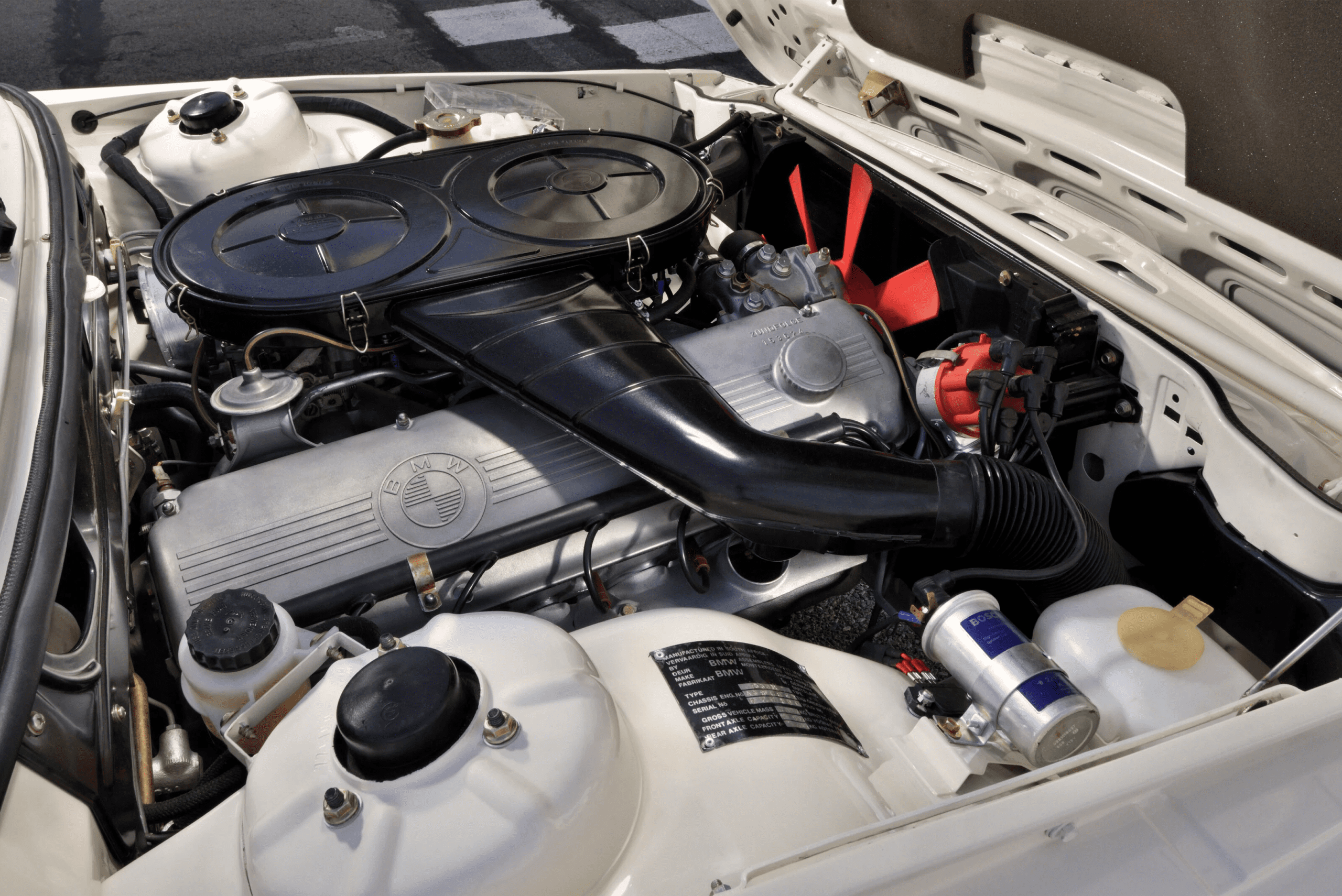
Under the hood sat BMW’s M30B32 inline six, a destroked version of the 3.3-liter engine used in the 633CSi and 733i. Displacing 3,210cc with an 89mm bore and 86mm stroke, it featured a 9.0:1 compression ratio, mechanical Bosch fuel injection, and a mild camshaft. Peak output was 197 horsepower at 5,500 rpm and 207 lb-ft at 4,300 rpm. This made the MLE the most powerful E12 until the M535i arrived in 1980.
Transmission was a Getrag 265 dogleg five-speed manual with first gear down and to the left, and the remaining four ratios in an H-pattern. Final drive was 3.45:1. The dogleg pattern suited competition use perfectly, allowing drivers to stay in the conventional H-pattern for second through fifth during racing.
Styling
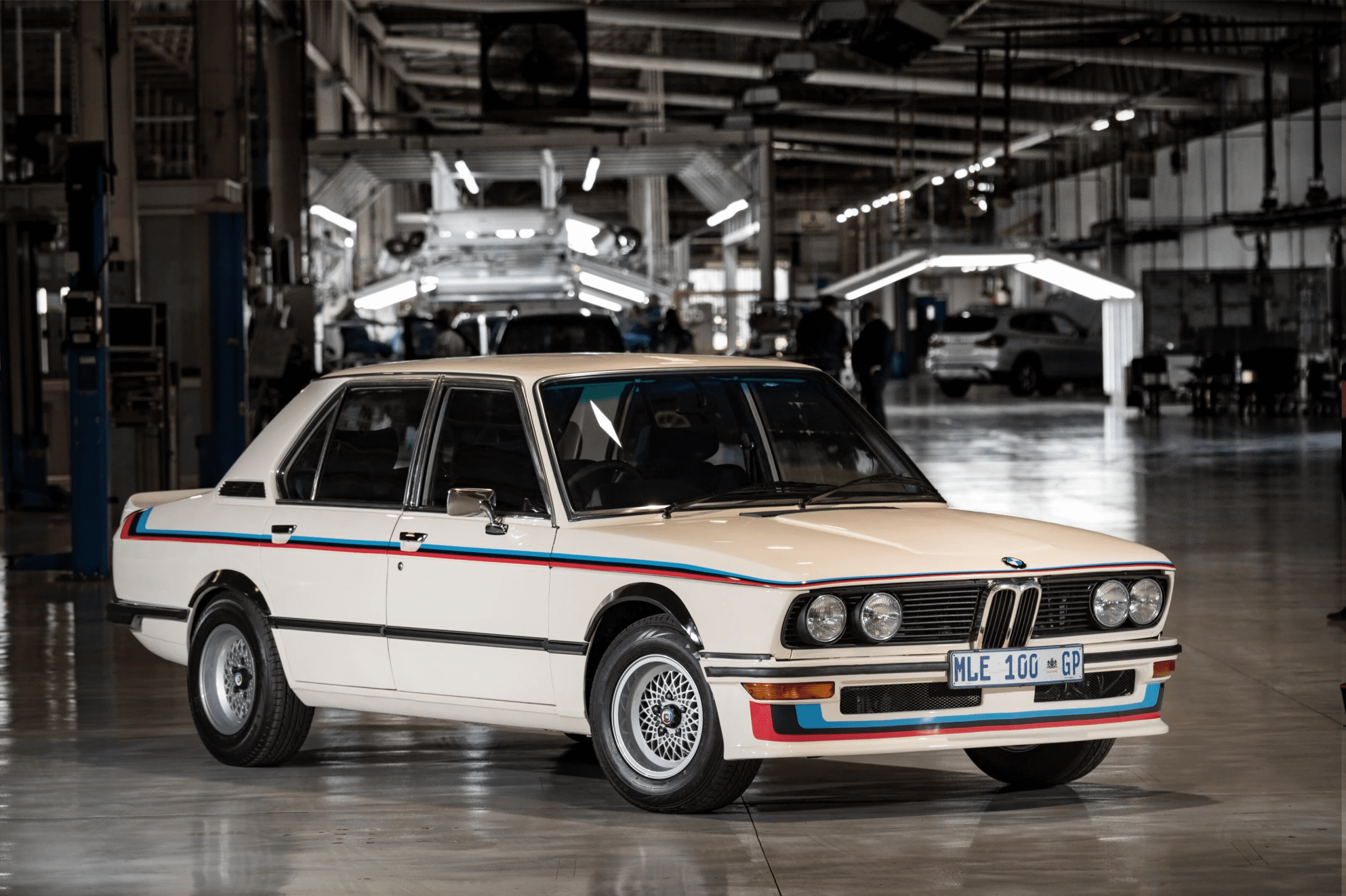
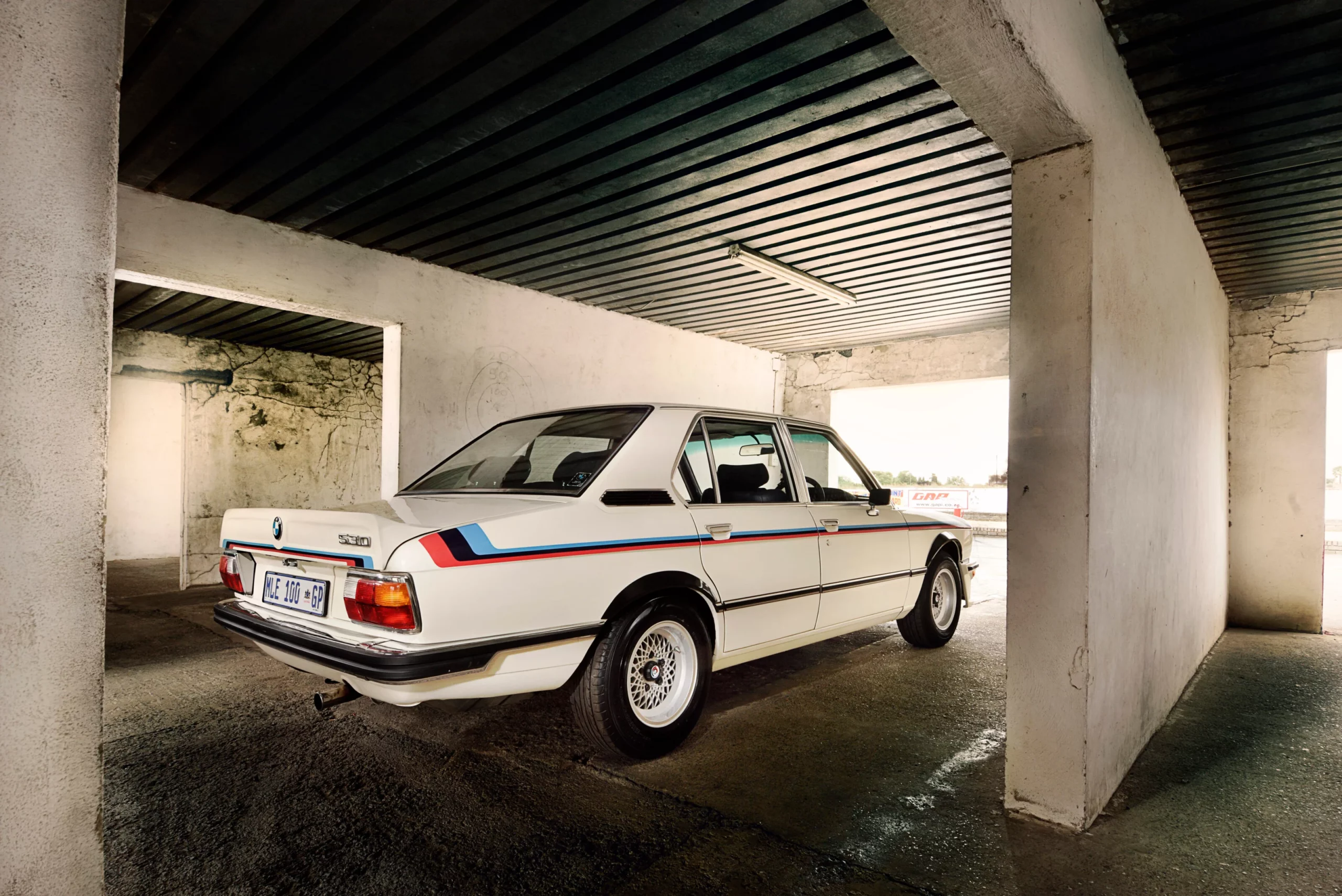
Externally, the MLE was subtle. Polaris silver metallic was the only color offered, combined with a matte black front spoiler, sill extensions, and a small trunk-mounted lip spoiler. The kidney grilles wore black slats. Chrome bumpers were standard E12 items, though many owners later removed them for racing. Brushed aluminum Motorsport-style mirrors replaced the standard chrome units.
The signature identifying feature was the unique wheel and tire package. BBS 7×14-inch alloy wheels wore 205/60 VR14 Michelin XWX tires, the widest factory fitment on any E12. MLE badging appeared on the trunk lid and C-pillars.
Interior
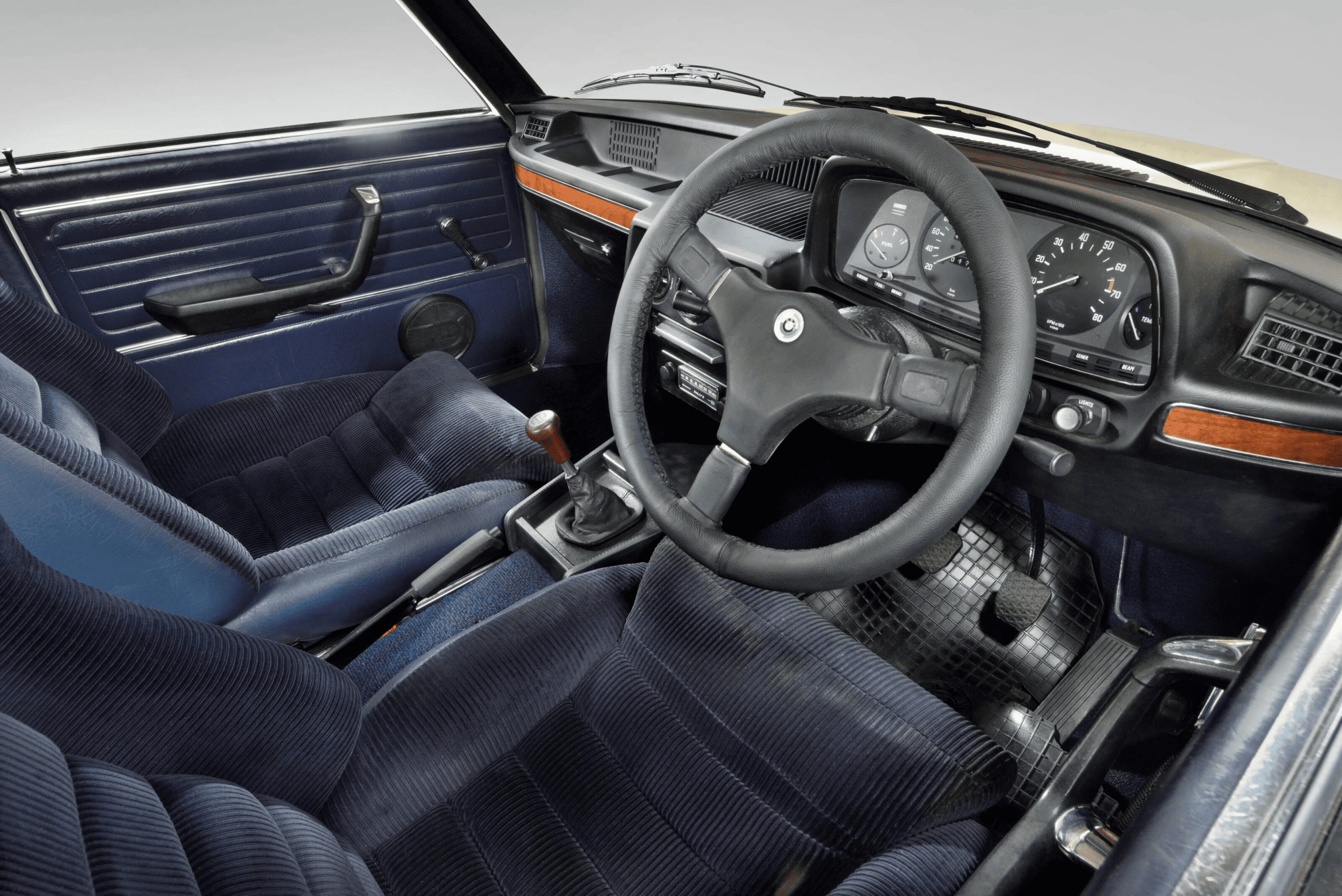
Inside, the MLE received Recaro Sport seats trimmed in charcoal cloth with silver-gray leather bolsters. The driver’s seat featured an adjustable lumbar support. Door panels were simplified with pull straps replacing conventional handles. The dashboard was standard E12 specification with full instrumentation including a 7,000 rpm tachometer, speedometer, fuel gauge, and auxiliary gauges for oil pressure and coolant temperature.
A leather-wrapped three-spoke sports steering wheel came standard, along with a short-throw gear knob. The lightweight rear seat was covered in matching charcoal cloth. BMW deleted the radio and air conditioning to save weight, though both could be reinstalled by dealers at customer request. Anthracite headlining and gray carpeting completed the purposeful interior.
Specifications
- Engine: M30B32 inline six, 3,210cc (89mm x 86mm), SOHC, two valves per cylinder, Bosch mechanical fuel injection
- Power: 197 bhp at 5,500 rpm
- Torque: 207 lb-ft at 4,300 rpm
- Transmission: Getrag 265 dogleg five-speed manual, 3.45:1 final drive
- Chassis: Steel monocoque, 2,636mm wheelbase
- Suspension: MacPherson struts (front), semi-trailing arms (rear), Bilstein dampers
- Brakes: Vented discs 282mm (front), solid discs 272mm (rear)
- Wheels: BBS 7×14-inch alloy, 205/60 VR14 tires
- Weight: 1,340 kg
- Performance: 134 mph top speed, 0-60 mph in 7.8 seconds
Competition History
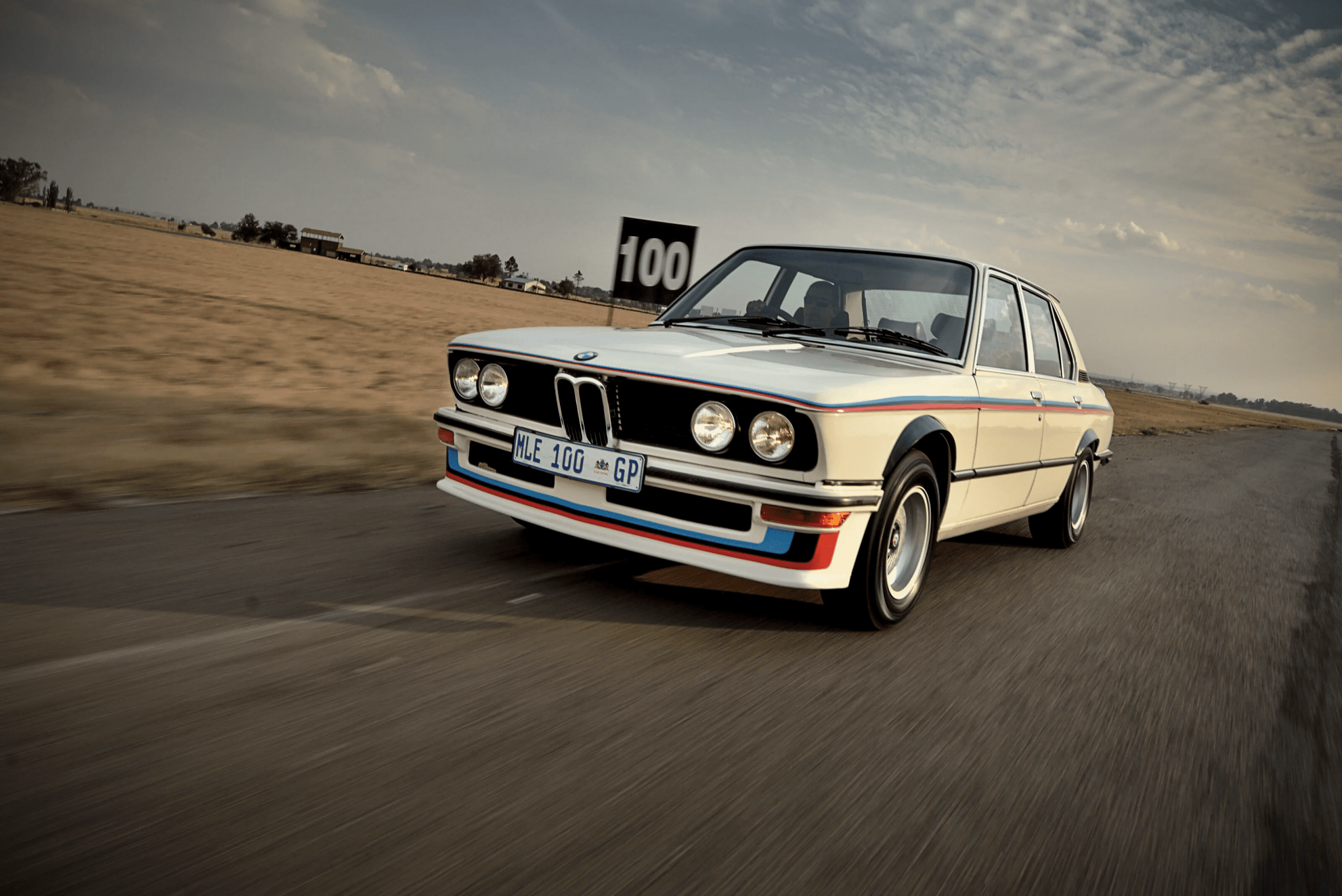
The 530 MLE was built specifically for South African Modified Saloon racing and achieved exactly what BMW intended. Toly Spillhaus campaigned the works-supported MLE throughout 1976 and 1977, winning multiple races at Kyalami, Roy Hesketh, and Welkom circuits. The combination of light weight, strong torque delivery, and excellent handling made the MLE competitive against more powerful V8-engined rivals on tighter circuits.
Private entries followed, with MLEs dominating their class in club racing throughout the late 1970s. Many were extensively modified with turbocharged engines, roll cages, and stripped interiors. Fewer than half the original 110 examples survive today, with perhaps 20 remaining in original specification.
Production and Legacy
BMW built precisely 110 examples of the 530 MLE at Dingolfing during 1976. Every car was shipped as a rolling chassis to the Rosslyn plant near Pretoria for final assembly, compliance work, and delivery to South African dealers. Production was intentionally limited to the minimum required for Group 2 homologation. None were officially exported, though a handful later left South Africa for Europe and the United States.
The MLE succeeded in its mission. It gave BMW a competitive platform in South African touring car racing and created one of the rarest and most desirable E12 variants. The combination of lightweight construction, motorsport-derived components, and the largest M30 engine available made it a spiritual predecessor to the M535i that followed in 1980.
Today, surviving MLEs are extraordinarily valuable. The combination of extreme rarity, homologation special status, and genuine competition success has made them among the most sought-after classic BMWs. Most were raced hard and modified extensively, making original-specification examples virtually impossible to find. The 530 MLE remains the ultimate expression of the E12 5 Series, a factory hot rod built for one specific purpose and executed with typical BMW precision.