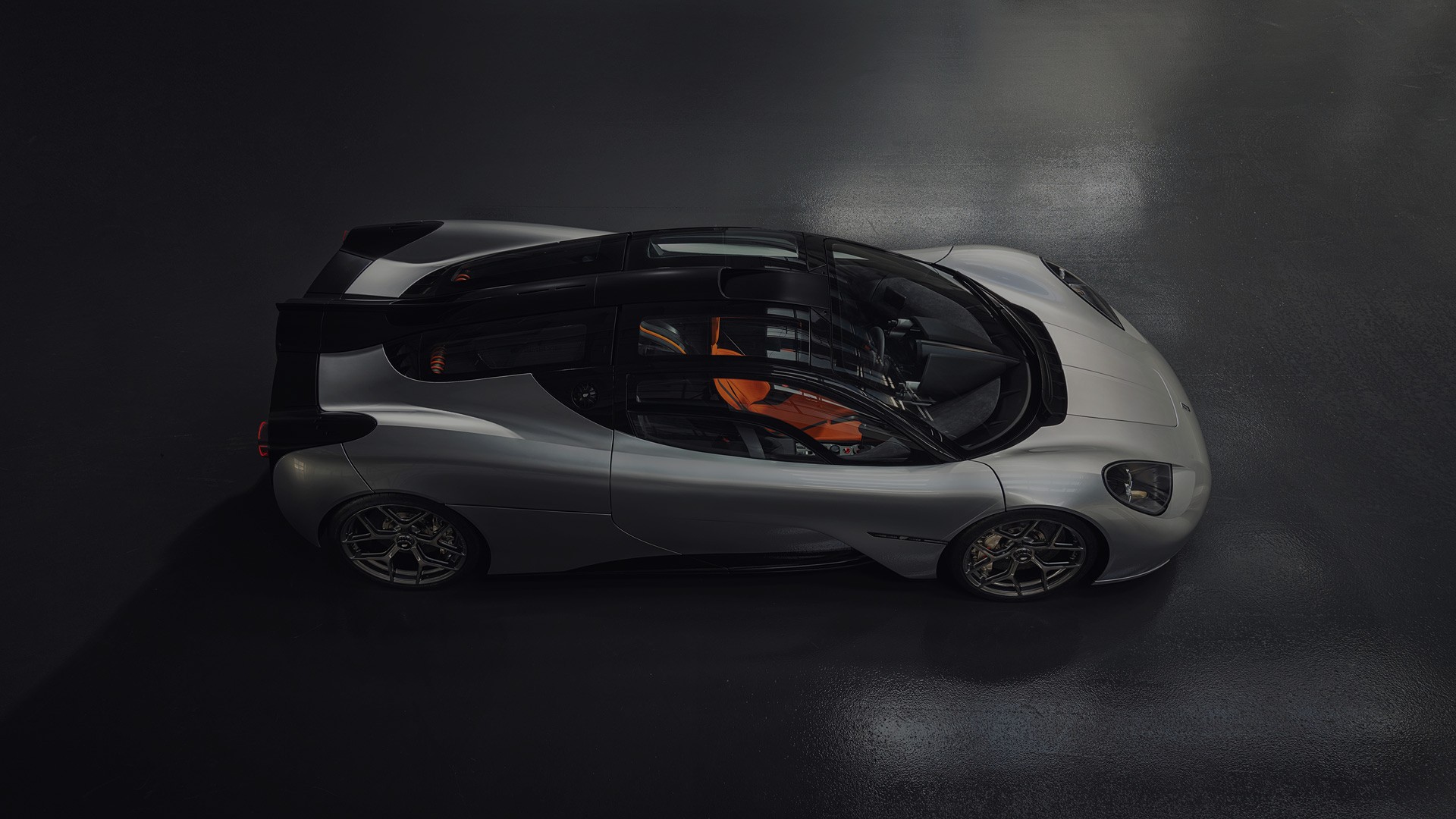

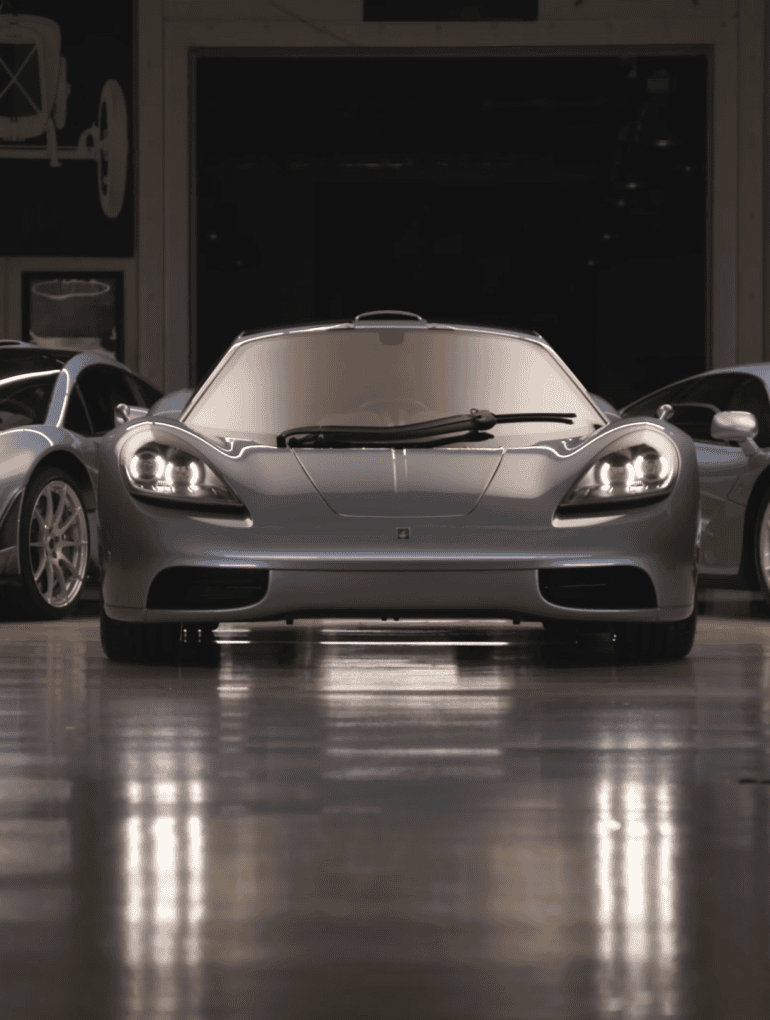
Jay Leno brings fellow supercar collector Dan Heard together for an exceptional examination of three cars linked by the engineering philosophy of legendary designer Gordon Murray: the 1995 McLaren F1, the McLaren P1, and the latest Gordon Murray Automotive T.50. Rather than simply comparing performance figures, the discussion explores how Murray’s uncompromising approach to lightweight construction, mechanical purity, aerodynamic efficiency, and driver involvement has influenced an entire generation of high-performance automobiles.
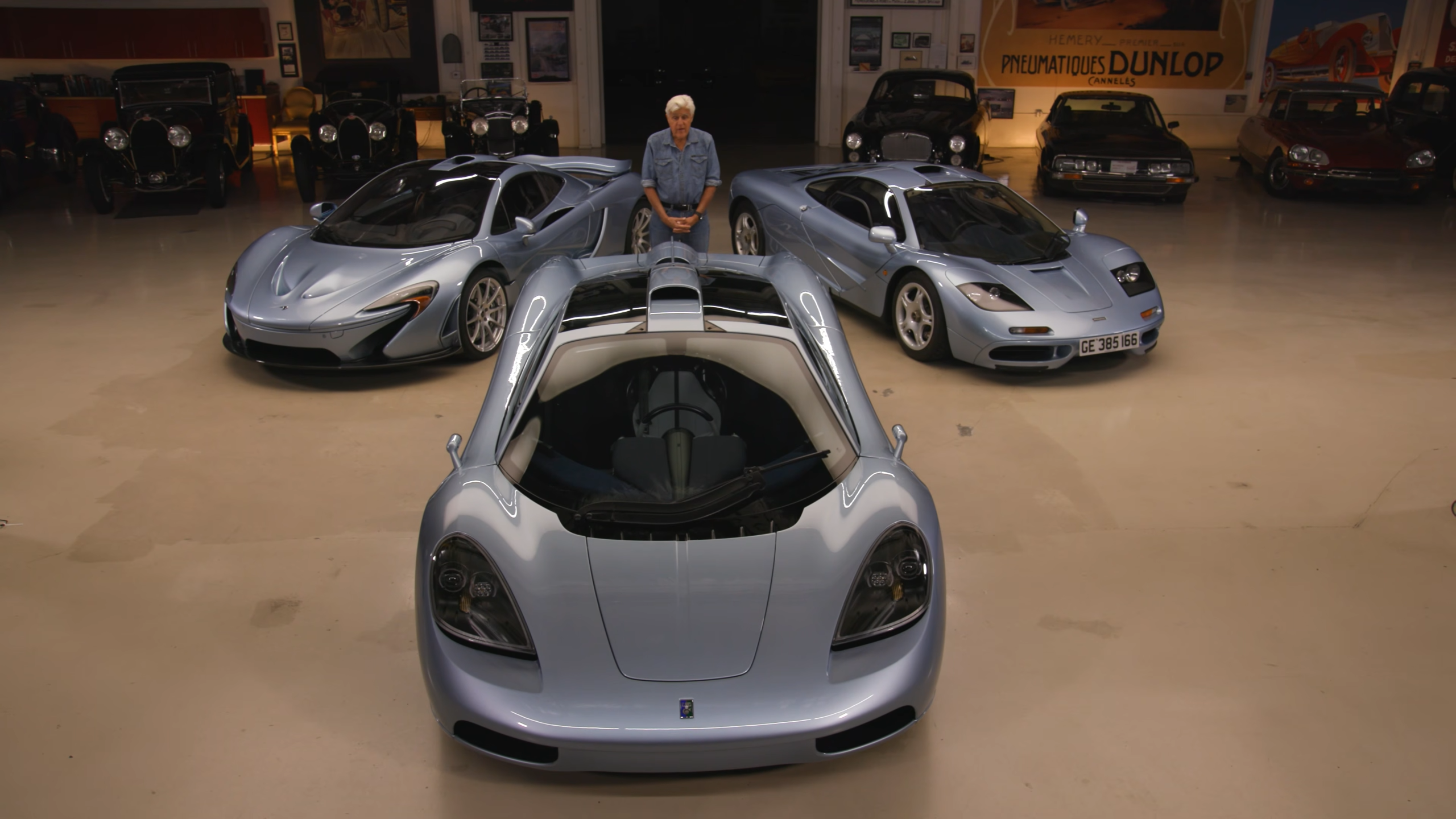
The McLaren F1 naturally forms the foundation of the conversation. Even decades after its debut, its proportions and minimalist design remain remarkably contemporary. Its roughly 2,500-pound weight reflects Murray’s obsessive pursuit of mass reduction, with even seemingly insignificant components engineered to save weight. The philosophy extended throughout the car, from its carbon-fiber construction to ingenious details intended to eliminate unnecessary bulk.
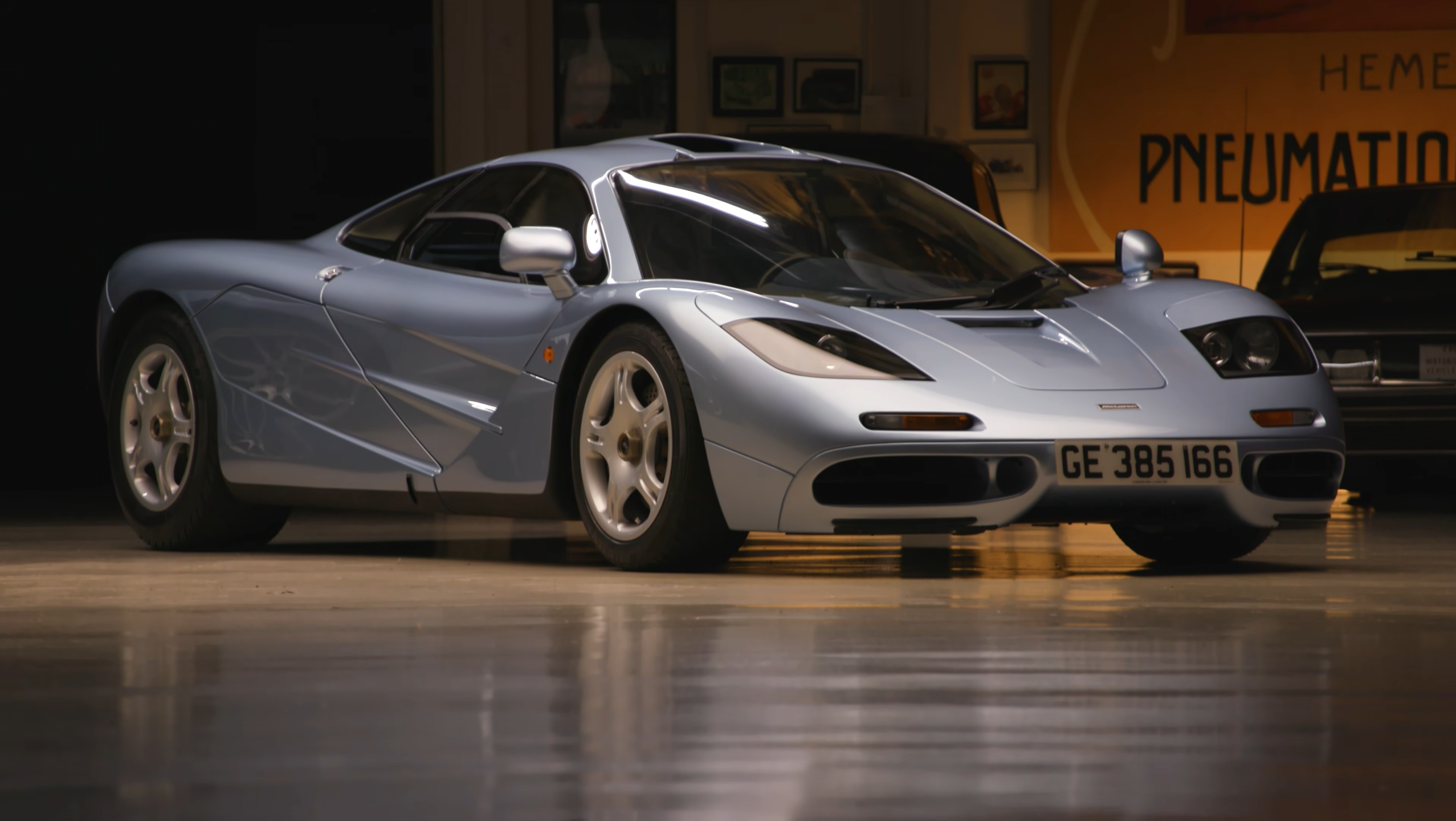
Its significance goes far beyond its road-car status. The F1 combined a naturally aspirated V12, a lightweight carbon-fiber structure, three-seat configuration, and an unusually direct driving experience at a time when electronic driver aids were far less prevalent. The discussion also revisits the car’s extraordinary racing achievement at Le Mans, where a road-derived F1 succeeded against purpose-built competition machines. That accomplishment reinforced the idea that Murray’s engineering priorities could produce a car capable of extraordinary performance without relying on conventional race-car compromises.
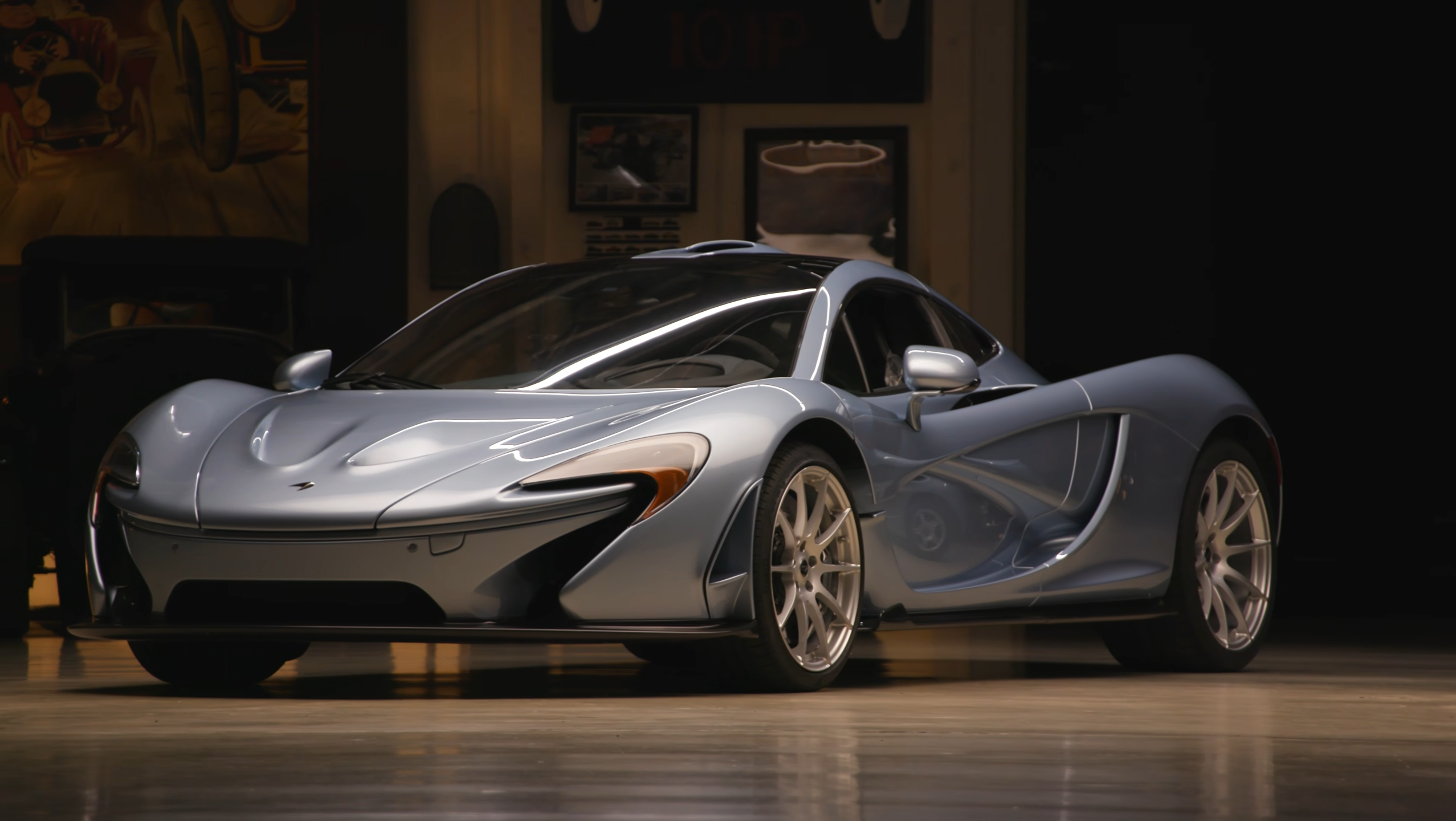
The McLaren P1 represents a different stage in the evolution. Although Murray was no longer directly involved with McLaren when it was created, Leno and Heard identify clear traces of his philosophy in its design. The P1 introduces sophisticated hybrid technology, electronic driver assistance, and substantially greater output while retaining McLaren’s emphasis on responsive handling and rear-wheel-drive dynamics. With output discussed at around 903 horsepower, it demonstrates how modern technology can amplify the fundamental principles established by the F1.
Finally, the T.50 brings Murray’s philosophy back into his own hands. Its naturally aspirated Cosworth-built 4.0-liter V12, 12,100-rpm redline, three-seat layout, exceptionally low mass, and distinctive rear-mounted aerodynamic fan demonstrate an almost obsessive commitment to functional engineering. The fan replaces a conventional rear wing and provides selectable aerodynamic strategies, including high-downforce, streamlined, and V-Max modes.
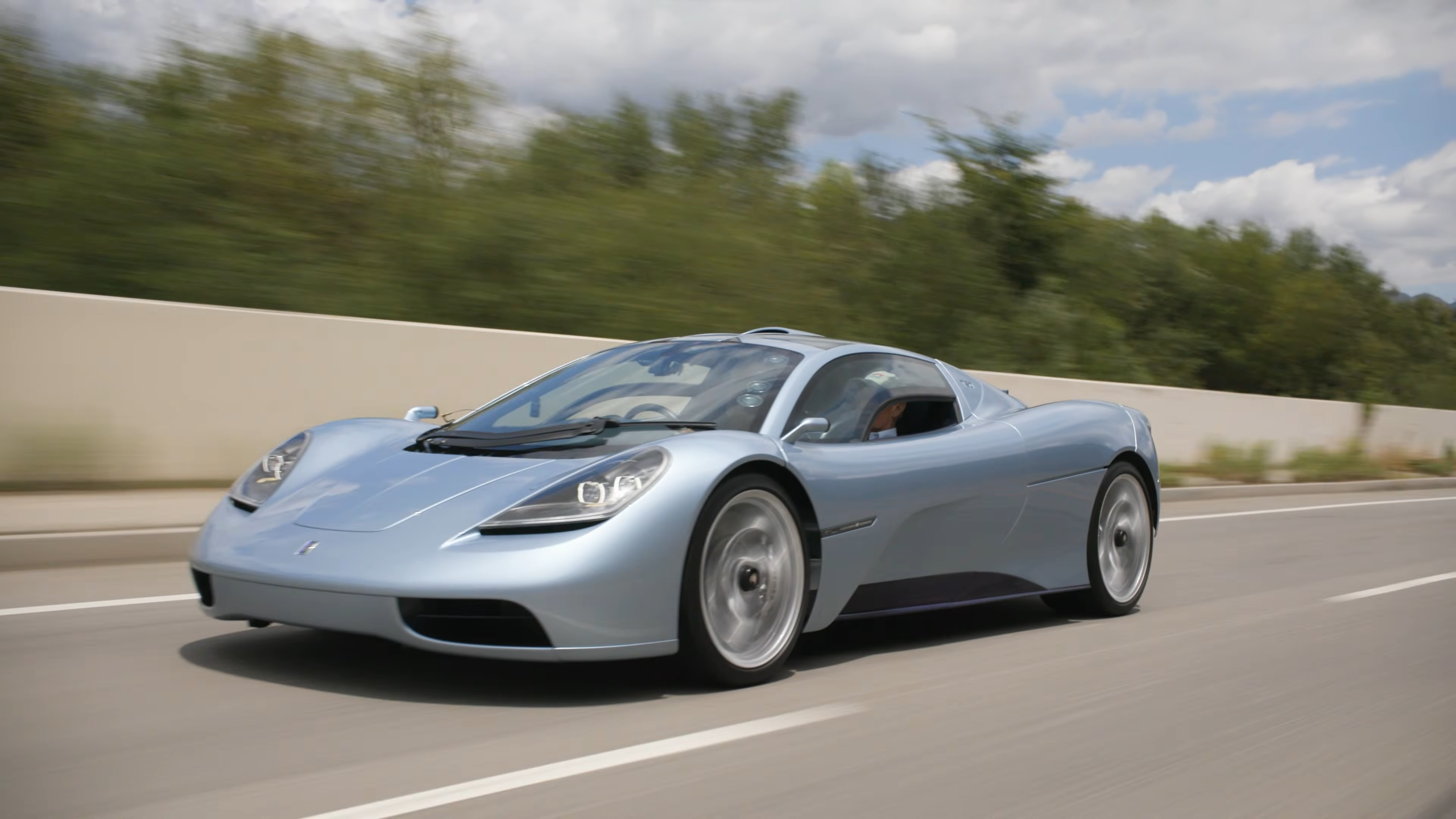
During the road drive, the T.50 reveals itself as an evolution rather than a rejection of the F1 concept. Its steering, braking, acceleration, and aerodynamic stability improve upon the older car while preserving its lightweight, agile character. Most importantly, Leno and Heard emphasize that the T.50 delivers its excitement at attainable road speeds, allowing the driver to experience its extraordinary engine and chassis without needing extreme velocities.
Source: Jay Leno’s Garage