

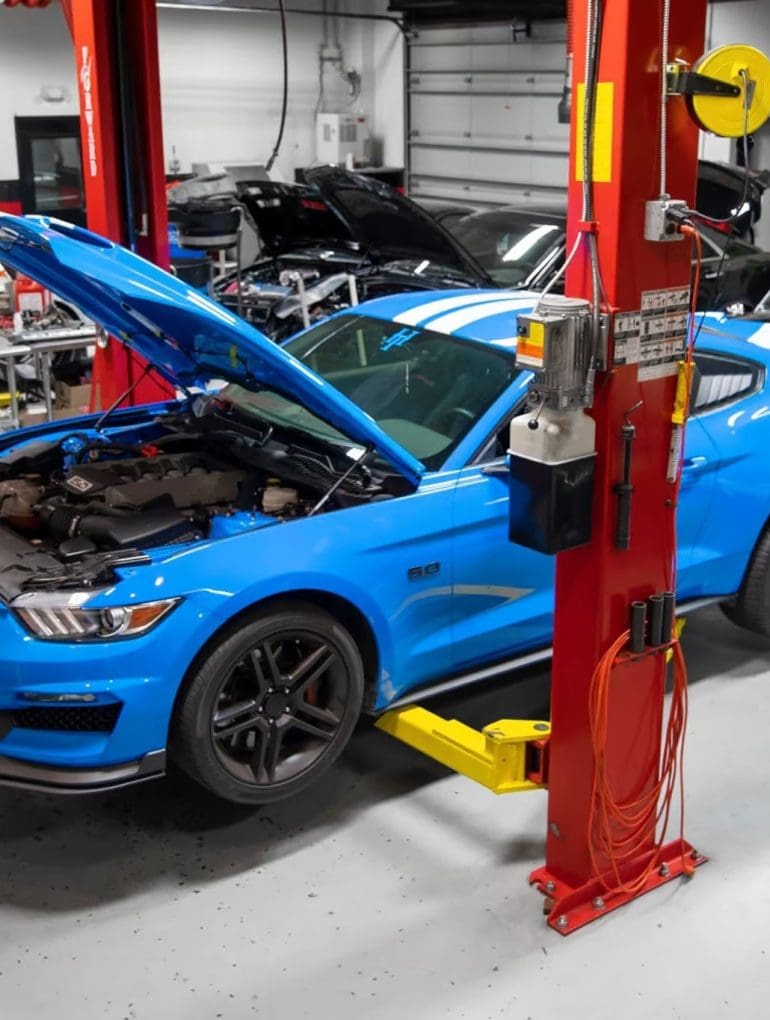

Ford introduced the Coyote 5.0-liter V8 in the 2011 Mustang GT that replaced the aging 4.6-liter modular engine, and the new dual-overhead-cam motor made 412 horsepower right out of the gate. More than 15 years and four generations later, the Coyote is still around, now rated at 480 horsepower and 415 lb-ft of torque in the S650 Mustang GT (486 horsepower and 418 lb-ft when the car is ordered with the active-valve exhaust). That’s the most standard power ever offered in a naturally aspirated Mustang GT, but as anyone who has spent time around Mustang owners knows, “enough” is a relative term. For most of them, the first step toward more power is a handful of bolt-on parts that don’t require opening up the engine.
Why the Coyote 5.0 Responds So Well to Bolt-Ons
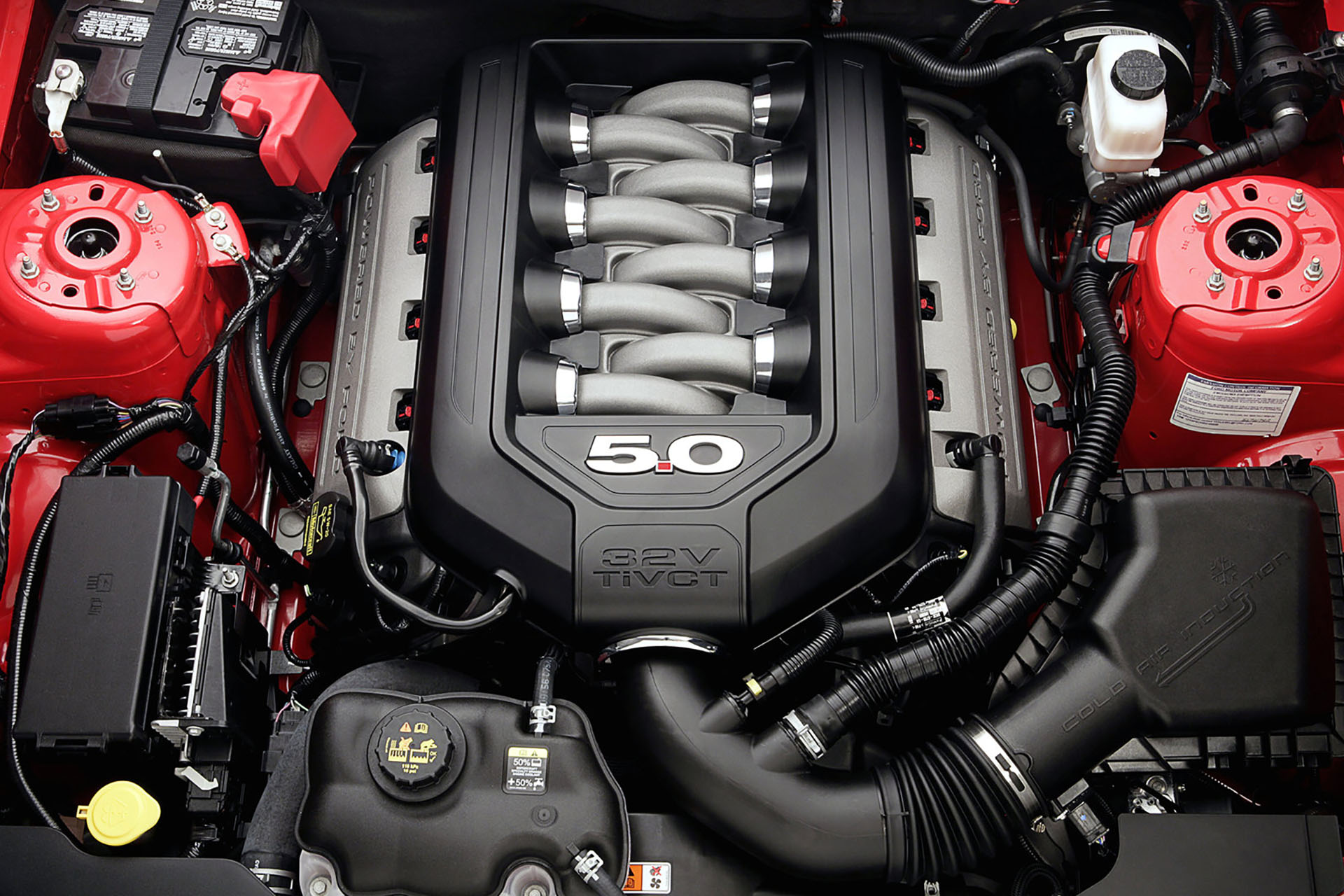
The Coyote is a 32-valve V8 that likes to rev, and Ford kept refining it with every update. The fourth-generation version in the current car added a dual air intake box and two throttle bodies, and when Middleton Motorsports strapped a nearly new 2024 GT convertible to its dyno, it made 408.75 horsepower at the rear wheels at 7,250 rpm (the run was done in fifth gear, and the shop figured the car could show closer to 420 in a 1:1 gear). AmericanMuscle ran a similar test with all four Coyote generations lined up next to each other, and while the cars weren’t necessarily tested under identical conditions, the numbers went up with every generation, from 364 wheel horsepower on the Gen 1 (2011-2014) to 388 on the Gen 2 (2015-2017), 402 on the Gen 3 (2018-2023), and 410 on the Gen 4.
Still, Ford had to build the engine to work for every buyer, in every climate, on whatever premium gas the local station happens to sell. The factory airbox was designed with noise in mind, the exhaust manifolds were drawn up around cost, packaging, and emissions, and the calibration leaves a healthy safety margin. Those compromises are exactly what bolt-on parts go after. The S550 generation (2015-2023) has the biggest selection of aftermarket parts, while the S650 is still catching up, mostly because tuning it took so long (more on that later).
The First Round: Intake, Tuner, and Exhaust
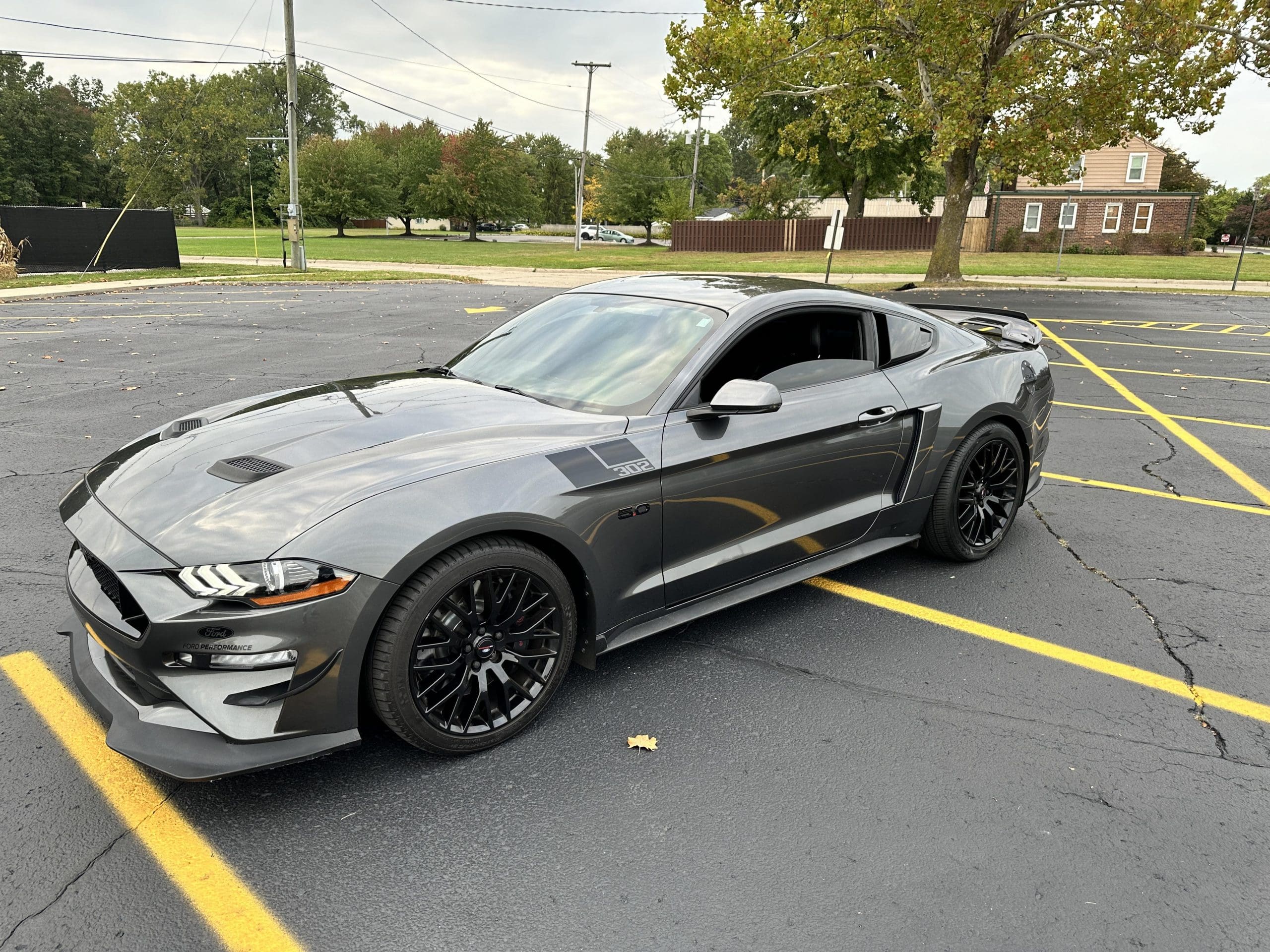
Most Coyote builds start with a cold air intake. The kit replaces the factory airbox with a high-flow filter and a tube designed to pull cooler air from outside the hot engine bay, and since cooler air is denser, the engine can get more oxygen with every intake stroke. AmericanMuscle puts the gain at 5 to 15 horsepower on a 5.0 GT, depending on the kit and calibration, for somewhere between $200 and $400, and installation usually takes less than an hour with basic hand tools.
The exhaust usually comes next. Owners have two options here, namely an axle-back system, which only replaces the mufflers and tips ($300 to $500) and a cat-back system, which replaces behind the catalytic converters ($500 to $800). The axle-back is mostly about sound, while the cat-back can add another 5 to 15 horsepower by AmericanMuscle’s estimate, depending on the design. With the S650’s optional active-valve exhaust already sounding pretty decent from the factory, though, the cat-back decision often comes down to how loud is loud enough.
Why the Tune Ties It All Together
None of those parts reach their full potential without a tune. The factory ECU was calibrated for the stock airbox and exhaust, and it can only adapt to new hardware within certain limits. A handheld tuner loaded with a “canned” file recalibrates fuel delivery, ignition timing, and shift points on automatic cars, adding 10 to 20 horsepower on a stock GT, according to AmericanMuscle. A custom dyno tune from shops like Lund Racing or Palm Beach Dyno goes further, typically 20 to 30 horsepower on a naturally aspirated car, though results vary with the engine generation, fuel, and mods.
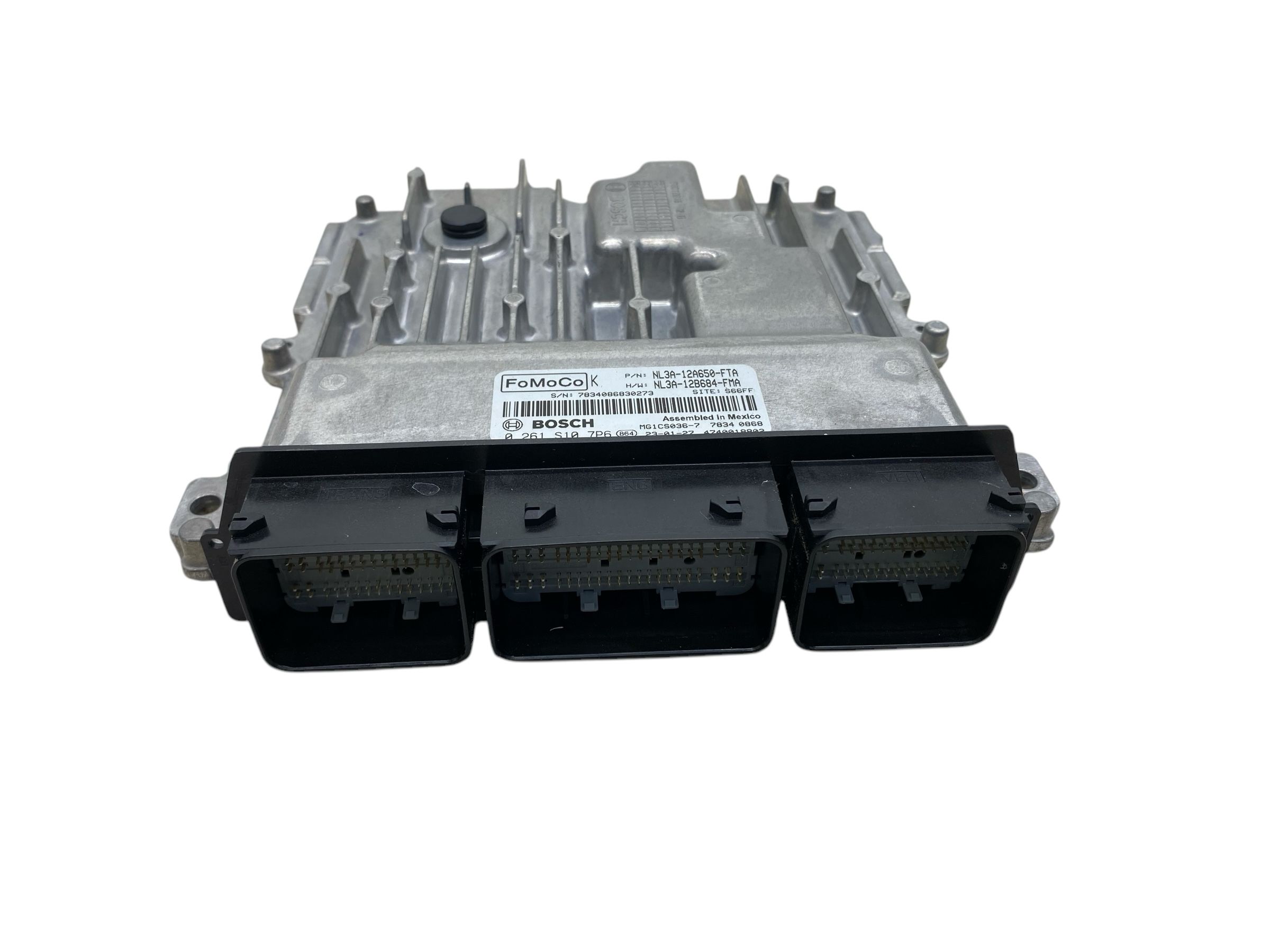
For S650 owners, that part of the story took a while to arrive. Ford made it clear from the start that the new car’s ECU would stay locked, and custom tuning was essentially off the table until July 2025, when HP Tuners cracked the MG1CS036 controller used in the 2024-2025 GT and Dark Horse. Support for the 2026 GT followed in December 2025. Owners still need HP Tuners credits to unlock the ECU before loading a custom tune for the first time (some tune packages include them), and Steeda, for example, claims a peak gain of up to 21 horsepower and 12 lb-ft on a stock GT running 93-octane fuel.
Long Tube Headers and the Full Bolt-On Package
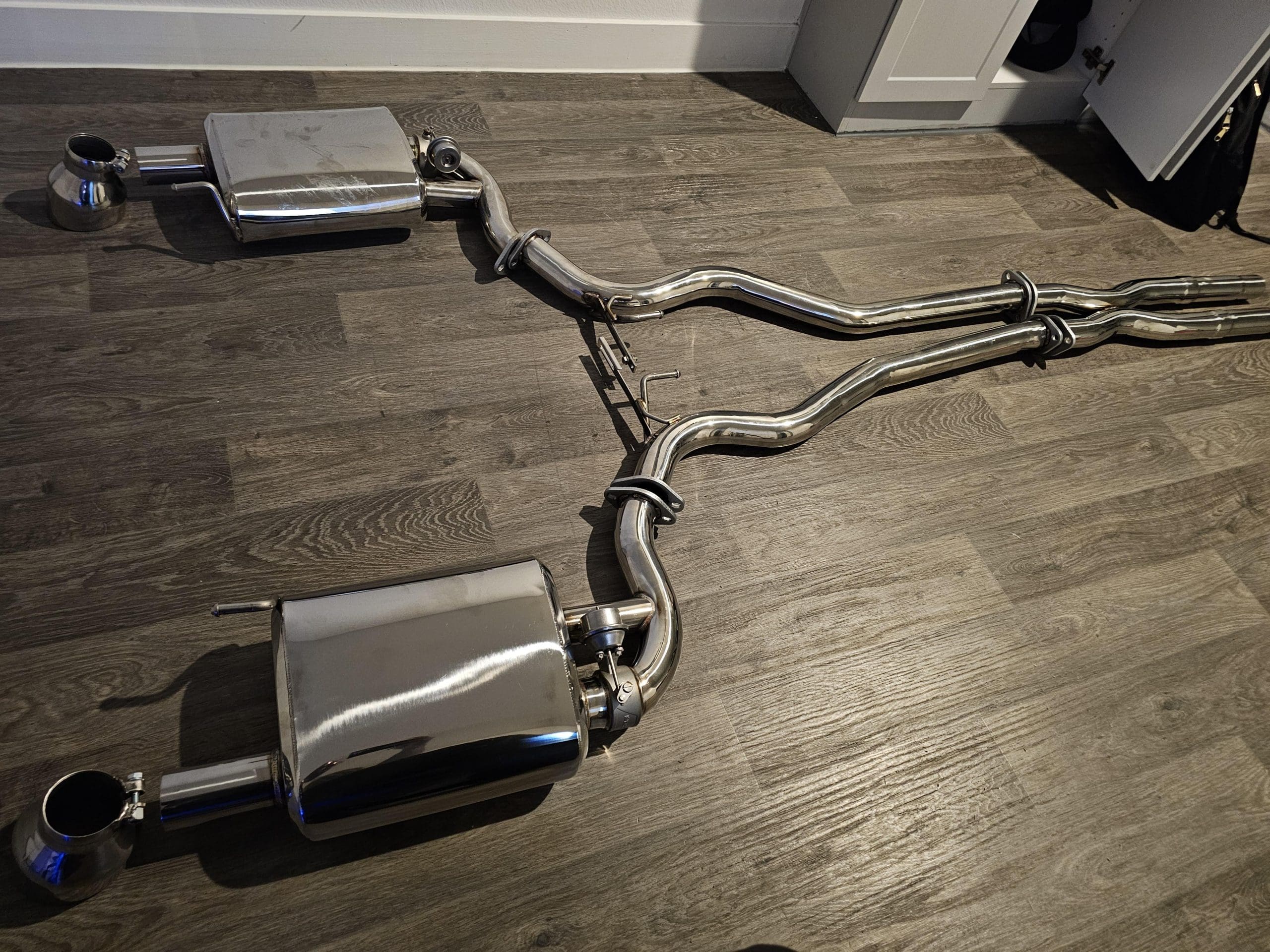
If there’s one bolt-on most Coyote owners agree on, it’s long tube headers. They replace the restrictive factory exhaust manifolds with individual, mandrel-bent tubes for each cylinder that merge into a collector, and with a matching mid-pipe and custom tune, they’re worth 20 to 40 horsepower, according to AmericanMuscle. A set costs between $800 and $1,500.
However, this is not a Saturday morning job. The install takes roughly 6 to 10 hours, and many Mustangs require dropping the steering shaft or the subframe to get the headers in, so a lift helps A LOT. Long tubes also typically need an off-road or high-flow mid-pipe to reach their full potential, which brings emissions laws into the picture. Catted versions exist, but whether a setup is street legal depends on local rules and the parts’ certification.
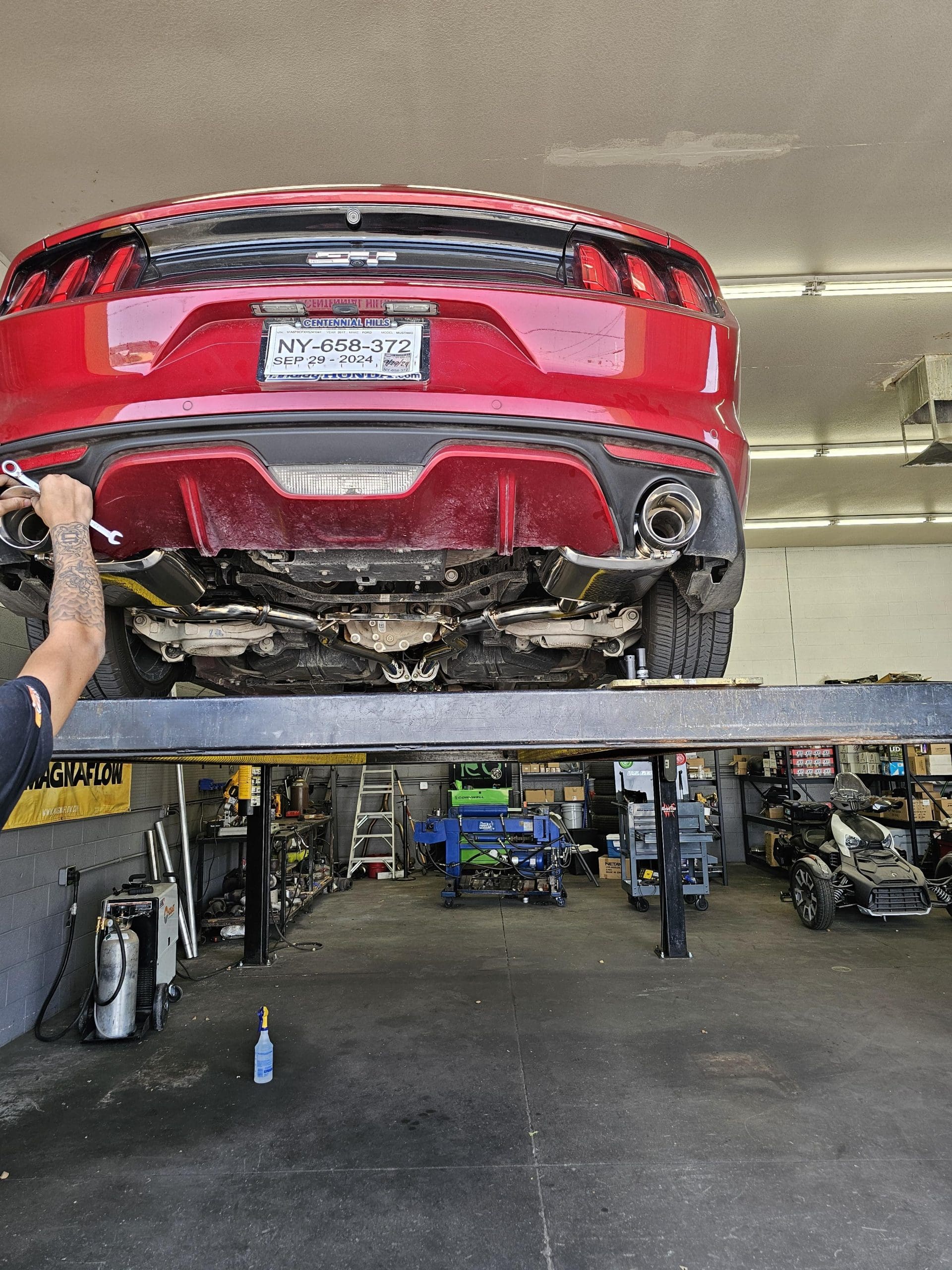
Put everything together, meaning the intake, tuner, cat-back, headers, and a custom tune, and AmericanMuscle estimates a 5.0 Coyote GT will make 50 to 70 horsepower more than stock, keeping in mind that the gains from each part overlap rather than simply adding up. The total bill lands at roughly $2,500 to $4,000 if the owner handles some of the work, and professional installation adds another $500 to $1,000. Some builds go much further on bolt-ons alone. Justin Burcham’s 2024 Mustang GT, nicknamed “Project 24,” was already running in the 10-second range before it received a Hellion twin-turbo system.
Build Order, Supporting Mods, and Where to Shop
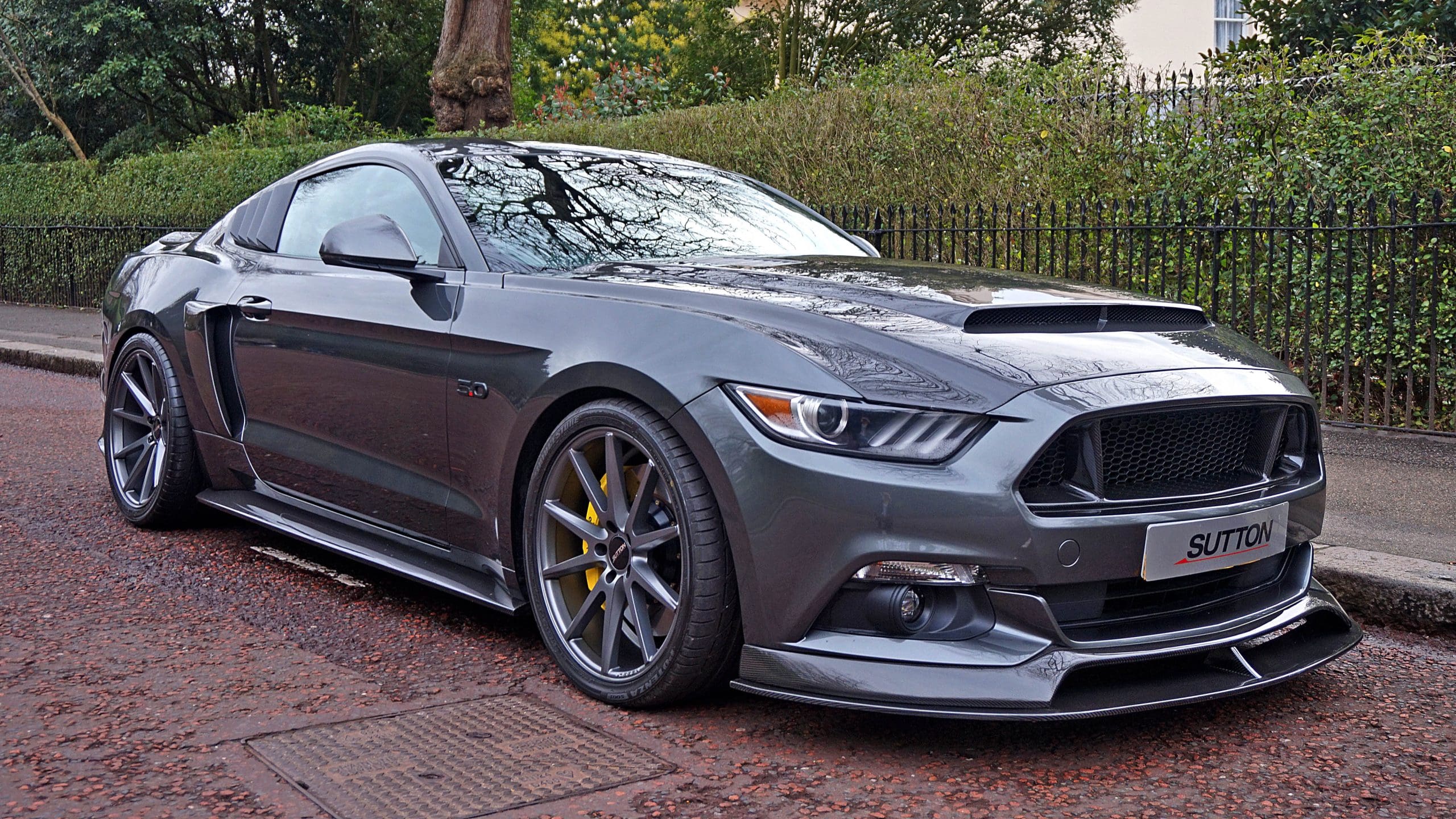
Order matters, too. The common approach is intake and tuner first, then exhaust, then headers with a custom tune, and only after all that, a supercharger or turbo kit. Installing headers before arranging a suitable calibration, for example, can leave some performance on the table, particularly when they’re paired with a different mid-pipe.
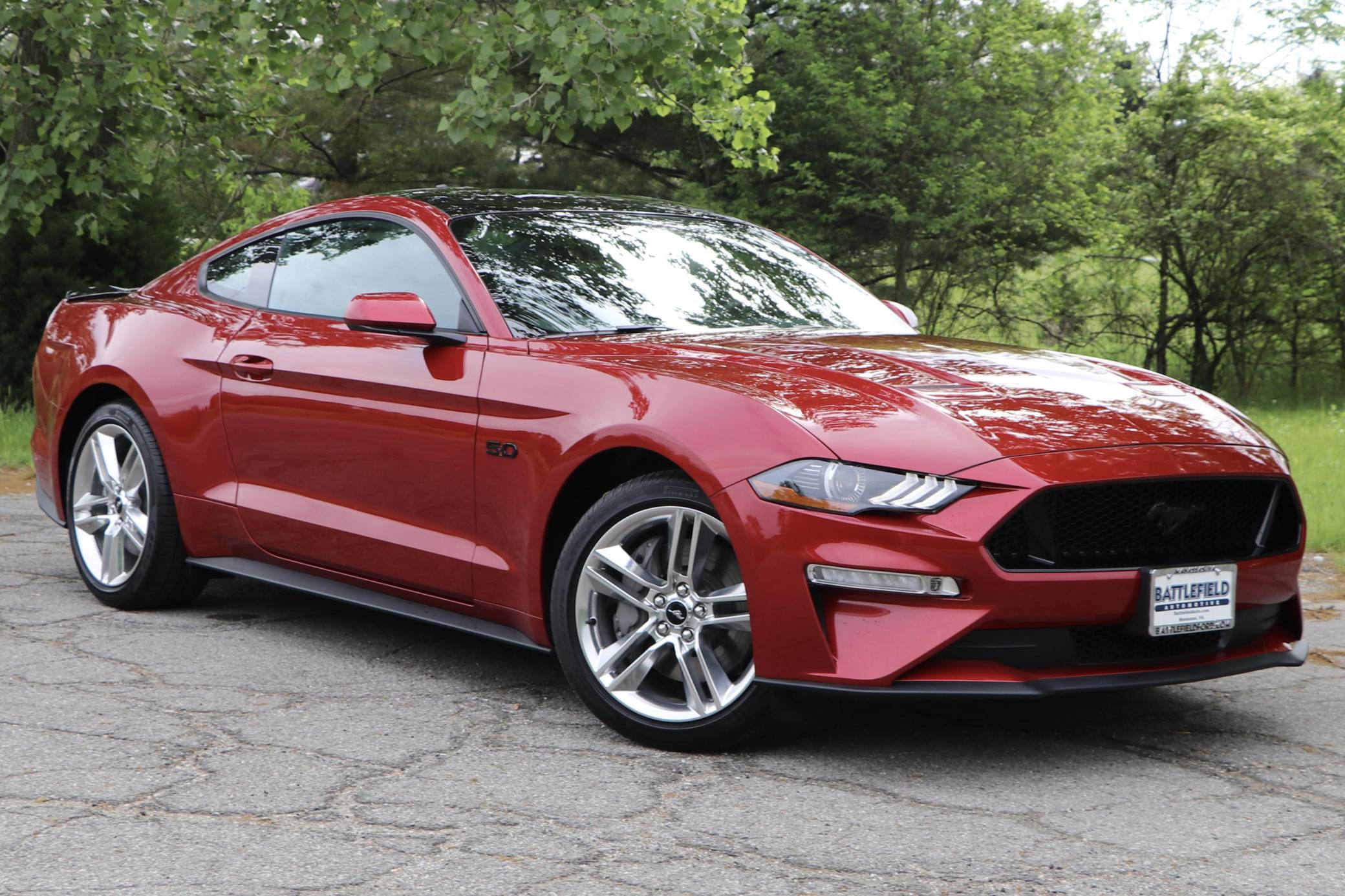
Brakes and suspension tend to get pushed down the list, but a GT with an extra 60 horsepower still needs to stop and turn. Performance pads and rotors are an easy place to start, while thicker sway bars ($200 to $400) and lowering springs ($200 to $500) help the car put the extra power down and corner flatter without ruining the ride. Fitment is the other thing that trips people up, because Mustang parts are generation-specific, and an S550 intake won’t bolt into an S650 engine bay (or vice versa).
AmericanMuscle has put together a Mustang performance mods guide that splits upgrades into budget tiers, from parts under $500 to full supercharger kits, with options sorted by generation. It covers the cost, expected gains, and install difficulty of each part in one place, which makes it a useful starting point for owners planning a build in stages. Most builds don’t happen all at once, either. Plenty of owners start with an intake and tuner, drive the car for a season, and add the exhaust or headers when the budget allows, and since nothing inside the engine gets touched, the car stays a daily driver the whole time.