

For a brand that won Le Mans five times in six years and built its reputation on rallying and quattro all-wheel drive, Audi went a surprisingly long time without a proper supercar. The RS2, RS 4, and RS 6 were plenty quick, and on the right road they could make life difficult for cars costing twice as much, but they were still fast sedans and wagons at heart. That finally changed with the R8, and for the better part of two decades Audi had a mid-engine car that could run with the Italians while still being, well, an Audi.
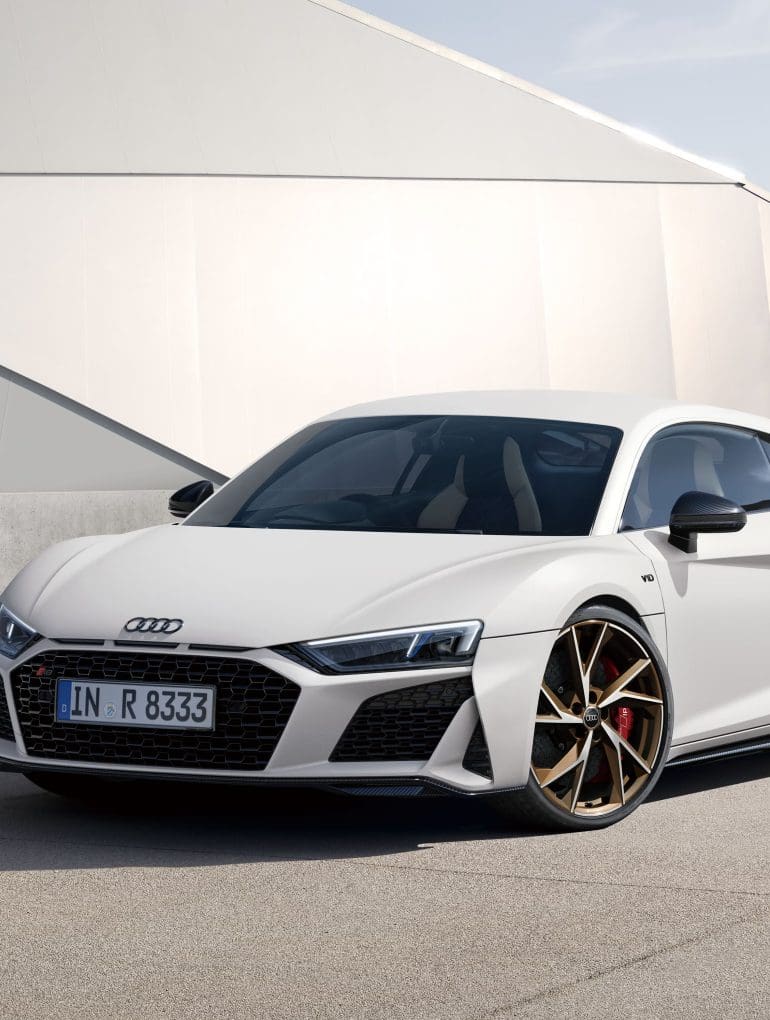
That run ended on March 22, 2024, when the last R8, a Vegas Yellow V10 Performance quattro coupe, rolled off the line at Audi’s Böllinger Höfe plant in Neckarsulm and went straight to the Audi Museum in Ingolstadt. Audi built 45,949 R8s across two generations, and as of this writing there’s still no direct replacement in sight. Seems like as good a time as any to look back at how Audi pulled it off.
From Race Car to Road Car
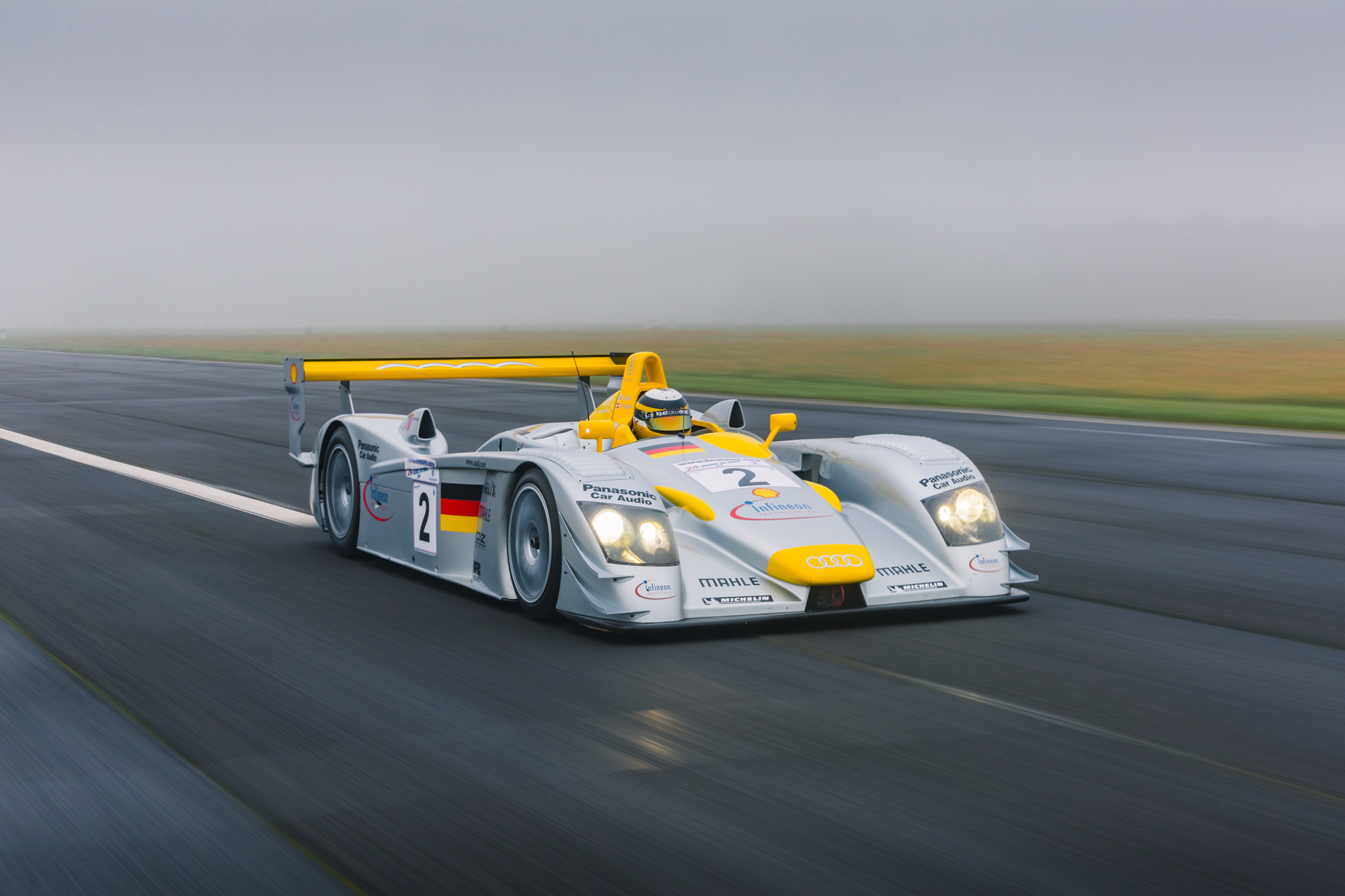
The R8 name was borrowed from Audi’s LMP900 prototype, which won the 24 Hours of Le Mans outright in 2000, 2001, 2002, 2004, and 2005 and took every 12 Hours of Sebring from 2000 through 2005. Around the same time, the Volkswagen Group had taken over Lamborghini, and with the Gallardo in development, Audi had an obvious chance to share the hardware. The first public hint came at the 2003 Frankfurt show with the Le Mans quattro concept, built on Gallardo underpinnings and powered by a twin-turbo 5.0-liter V-10 rated at 610 PS.
By the time the production R8 premiered at the 2006 Paris Motor Show (sales started the following year), the styling had barely changed from the concept, though the engine had. In place of the twin-turbo V-10, Audi fitted a dry-sump version of the 4.2-liter FSI V-8 from the RS 4, good for 420 PS (414 horsepower) and 317 lb-ft of torque, with power going to all four wheels through either a six-speed manual with a polished open gate or the R tronic automated manual. Zero to 60 mph came up in about 4.3 seconds. Not earth-shattering numbers even back then, but the early R8 was more about balance and usability than outright grunt.
The V-10 and the GT
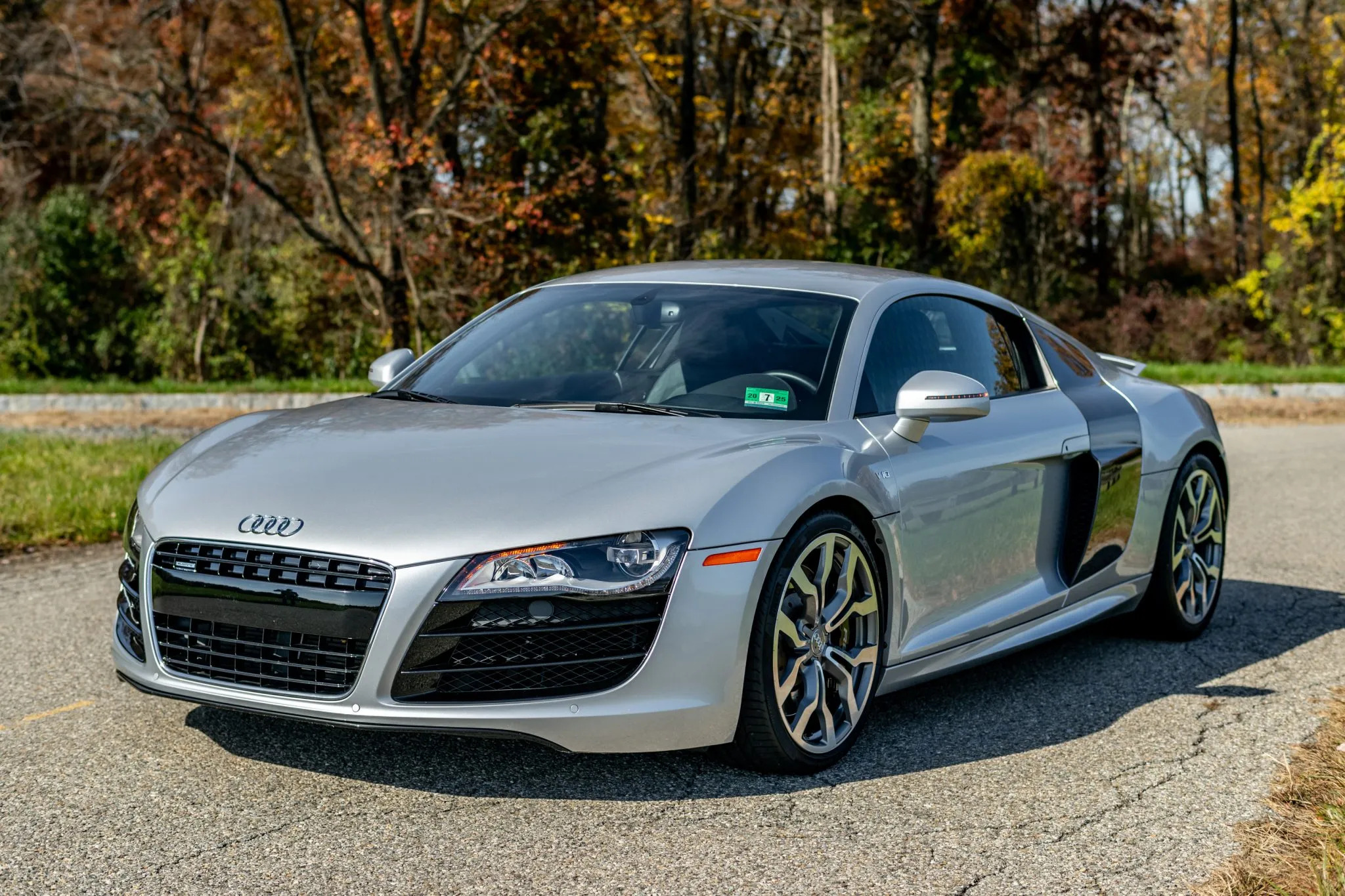
For 2009, Audi gave the R8 the engine it had arguably been missing all along, a 5.2-liter FSI V-10 closely related to the one in the Gallardo LP560-4. Output jumped to 518 horsepower and 391 lb-ft of torque, the run to 60 mph dropped below four seconds, and the car picked up a soundtrack to match its looks, a hard-edged, high-revving howl that still gets people to turn around in parking lots. The V-8 stayed on as the entry model, and Spyder versions of both followed.
Audi kept turning things up from there. The R8 GT arrived in 2011 with 560 PS and roughly 100 kg less weight than the standard V10, with production capped at 333 coupes and 333 Spyders, while the 2012 facelift brought revised styling and, more importantly, a seven-speed S tronic dual-clutch to replace the R tronic, which (to put it kindly) was never anyone’s favorite gearbox. There was also the 99-unit R8 LMX with laser high beams and 570 PS, the fastest production Audi at the time. And yes, an R8 showed up as Tony Stark’s ride in the first Iron Man film back in 2008, which probably sold more posters than cars but certainly didn’t hurt.
The Second-Generation R8
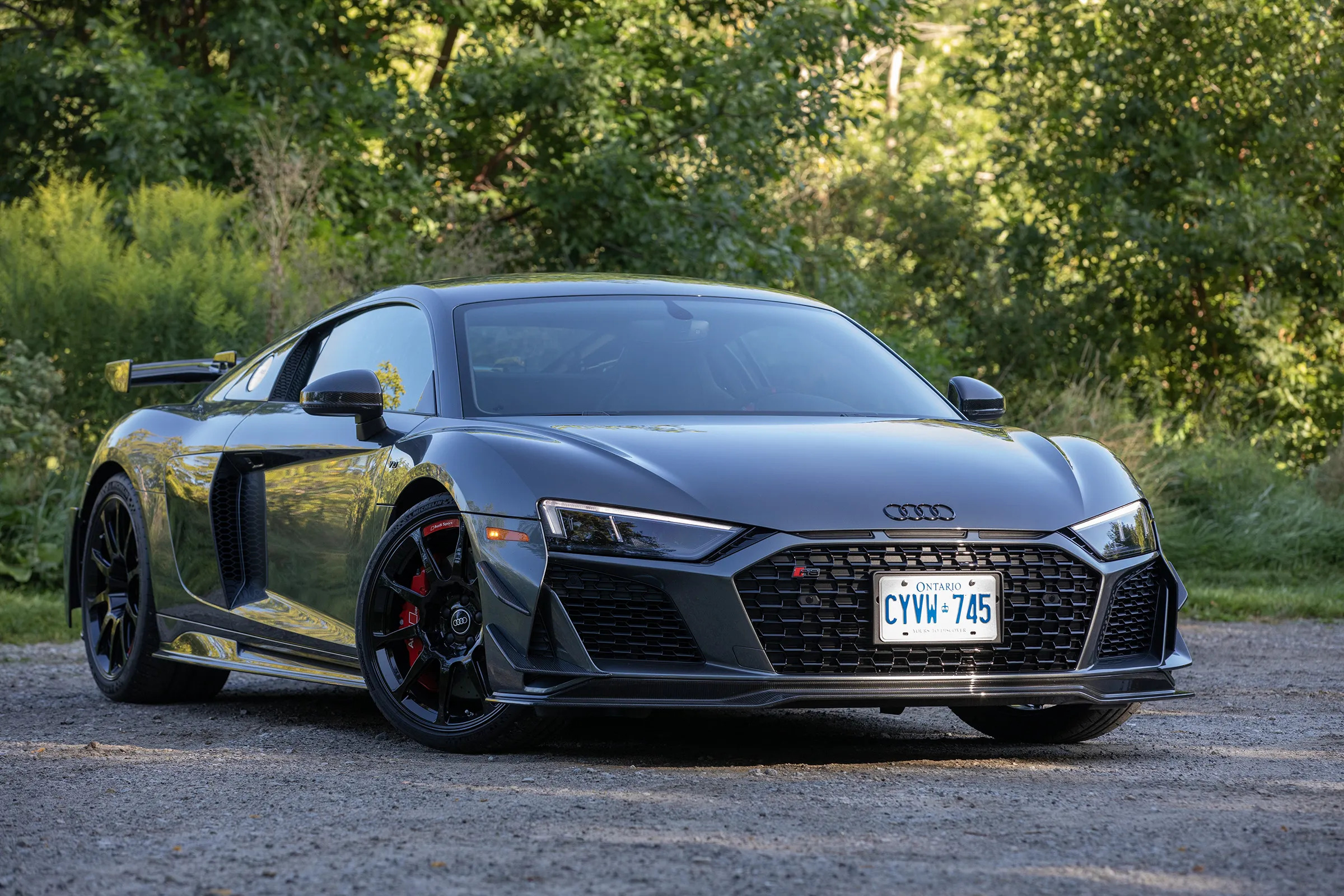
The second-gen Audi R8 debuted at the 2015 Geneva Motor Show, this time sharing its aluminum and carbon fiber structure with the Lamborghini Huracán, and the V-8 was dropped entirely. The 5.2-liter V-10 carried on in two states of tune, 540 PS (533 horsepower) in the regular car and 610 PS (602 horsepower) in the V10 Plus, and every example now came with the seven-speed dual-clutch, so the gated manual was gone for good. It was quicker and more refined than the original in pretty much every measurable way, though you’ll find plenty of enthusiasts who insist the first-gen car has the better face.
A rear-drive R8 arrived with the limited R8 V10 RWS in 2017, followed by a regular-production RWD model a couple of years later, and the 2019 refresh brought more aggressive styling and a power bump across the range, with the V10 Performance quattro at the top rated at 620 PS and good for zero to 60 mph in the low three-second range.
Saying Goodbye
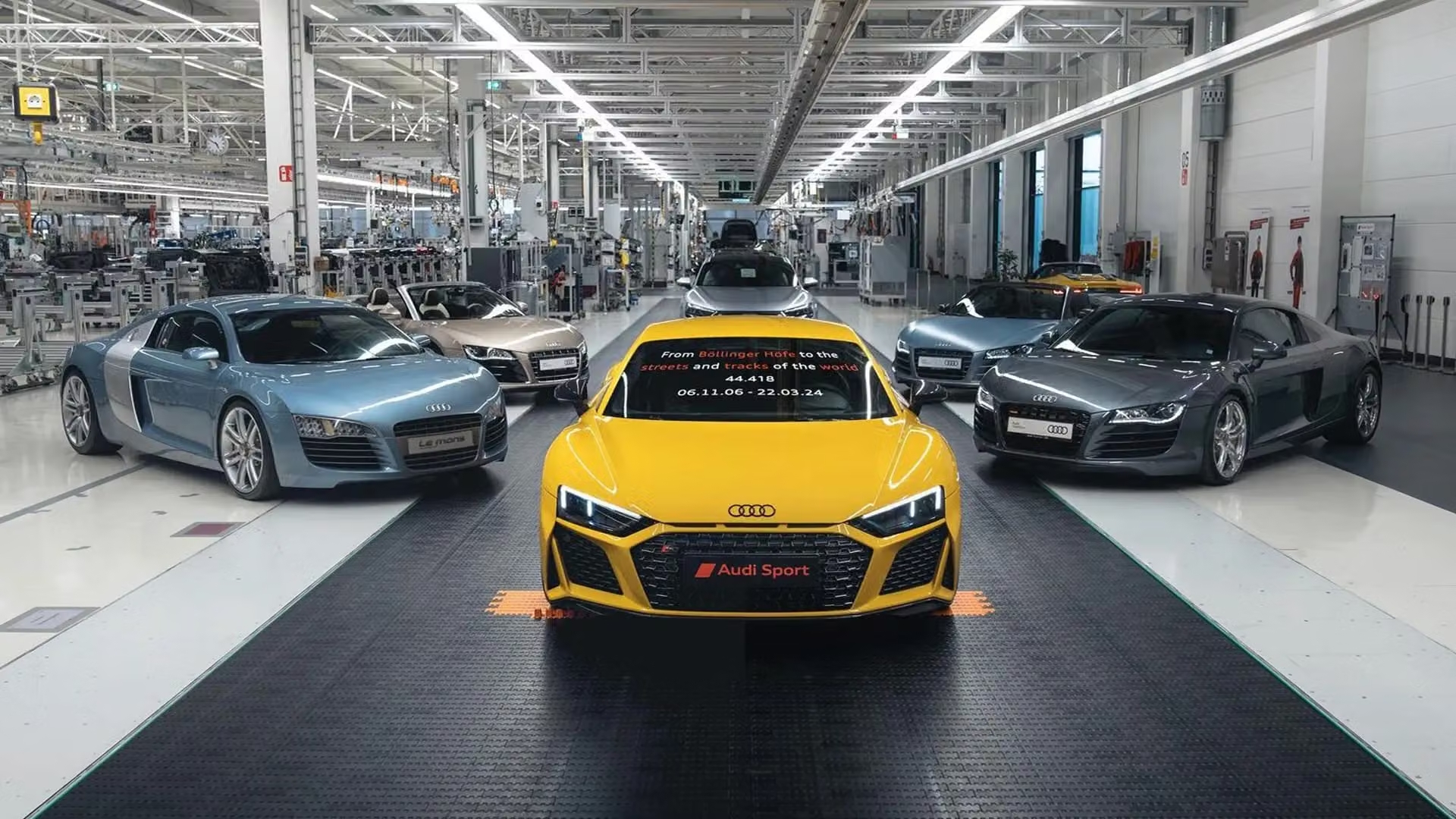
Audi had announced back in 2019 that the R8 would bow out at the end of 2023, though a late wave of orders kept the line running into the first quarter of 2024. The farewell model was the R8 V10 GT RWD, a 333-unit run rated at 620 PS that Audi bills as the most powerful rear-drive car it has ever built. Interest spiked as the end approached, too. In the U.S., R8 sales roughly doubled in the car’s last full year, from 314 in 2022 to 631 in 2023, so apparently plenty of people wanted one before the door closed for good.
Why the R8 Still Matters
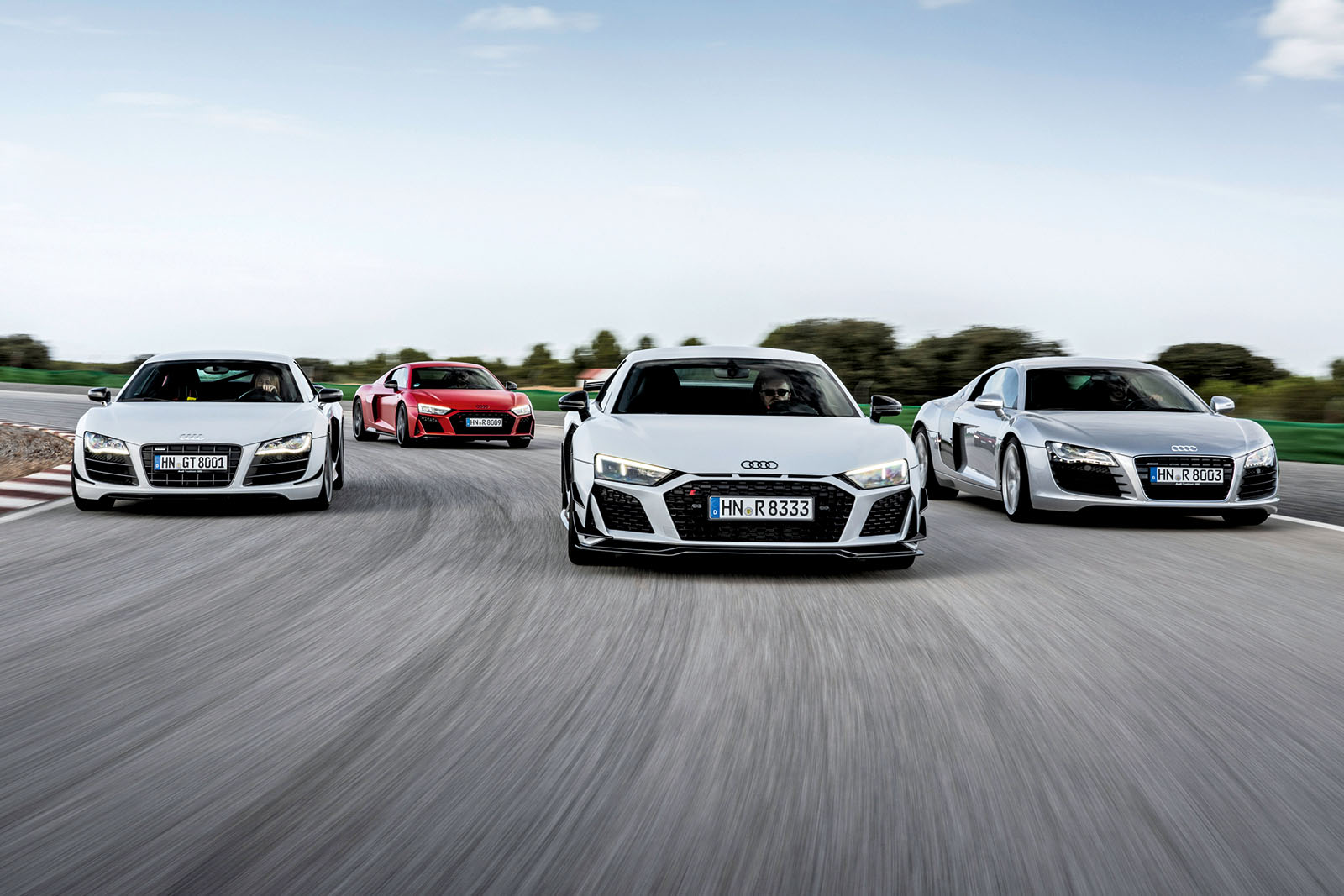
In our view, the R8’s real achievement had less to do with anything on the spec sheet and more to do with showing that a supercar could be easy to live with. Visibility was decent by mid-engine standards, the cabin was screwed together like any other Audi, and quattro meant you could actually use the performance in the rain, something you couldn’t really say about a Gallardo or a Ferrari F430 of the same vintage. It was a serious race car too. Audi Sport built 454 customer race cars across both generations, and customer teams used them to win the Nürburgring 24 Hours seven times, along with 11 other overall wins in international 24-hour races and three outright victories at the Bathurst 12 Hour.
Buying or Leasing an R8 Today
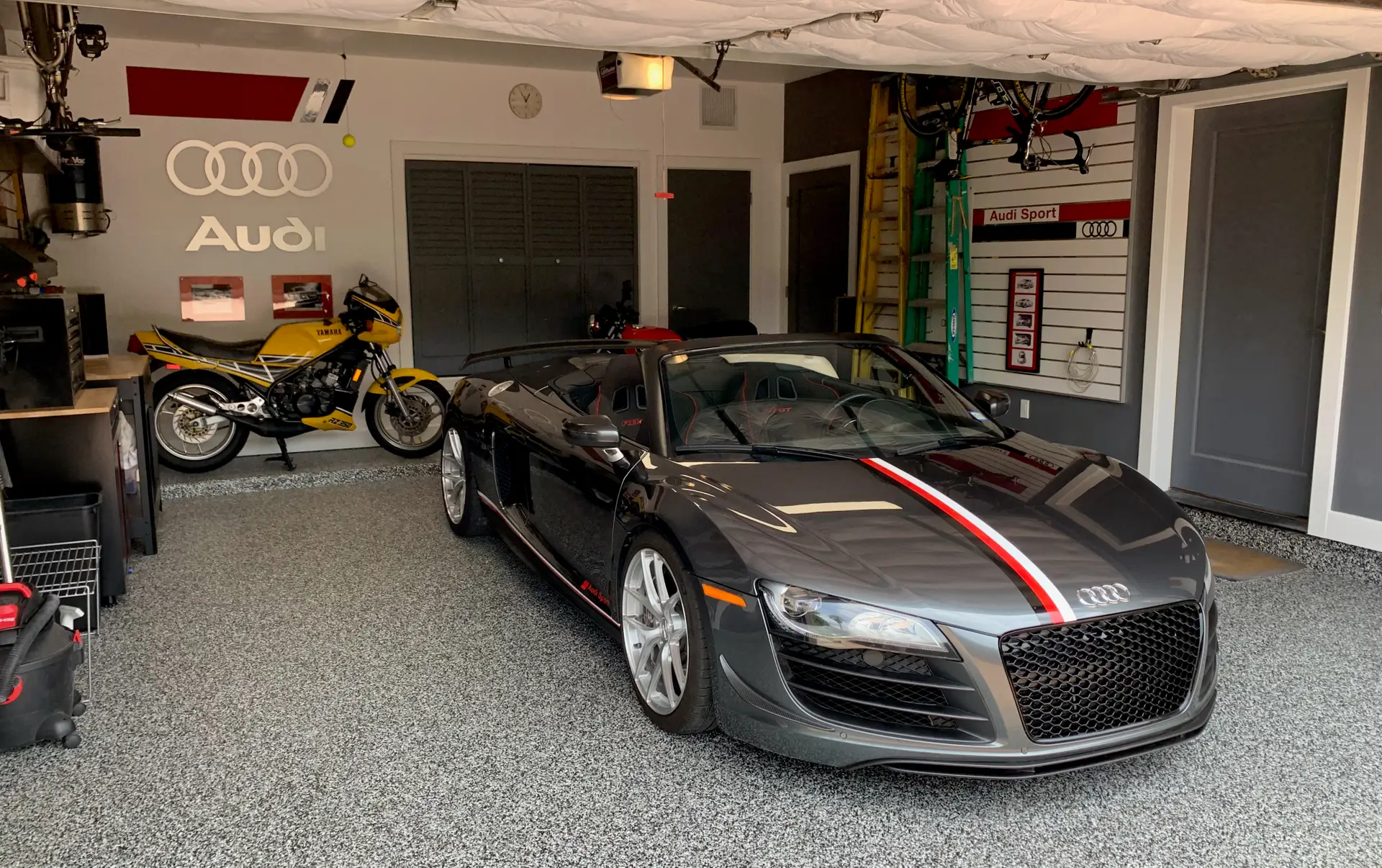
If you’re shopping for one now, first-generation cars offer the most for the money, with early V-8s being the cheapest way in. Values have been heading in the right direction for owners, though; Hagerty named the 2008 to 2015 R8 one of its Bull Market picks for 2023, citing a 37 percent rise in values since 2019, and gated-manual V10s are the ones collectors are chasing hardest. R tronic cars are best avoided unless the price is low enough to make you forget about the gearbox, and as with any used exotic, a full service history and a pre-purchase inspection from a specialist aren’t optional.
Second-generation cars are a different story, since they’re newer, quicker, and pricier, and not everyone wants to sink six figures into a car that’s only going to get older and more expensive to look after. Depending on where you live and what’s still out there, an Audi R8 lease on one of the remaining late-model cars can get you into a V10 for a fixed monthly payment, with no residual-value headaches when the contract runs out. Just don’t wait too long, since there aren’t any more R8s coming.