

The under 2-liter Grand Touring (GT) cars have always had a place to compete within the ever changing regulations of international motorsports; the World Sports Car Championship from 1953-1961, the Speedworld Challenge from 1962-1963, the International Championship of Makes from 1964-1971 and the World Championship of Makes from 1972-1981. This included racing in the great endurance races such as the Le Mans 24-Hours, Nürburgring, Spa and Monza 1000Km and the Targa Florio. Not to mention national races throughout Europe and SCCA races throughout the U.S.A. Alfa Romeo, Lotus, Porsche, Triumph all designed very lightweight successful competition cars. Abarth, an Italian specialty tuner, modified small bore GT cars from FIAT and SIMCA all with great success. These under 2-liter GT cars filled up the racing grids on both sides of the Atlantic and provided some exciting automobile racing.
Today under 2-liter GT cars qualify to race in many great historic events worldwide from the Monterey Historics to the Tour (de France) Auto because they are dual purpose race and street cars. Due to their technology, great designs, eligibility and low production numbers legitimate GT competition cars have steadily been increasing in value.
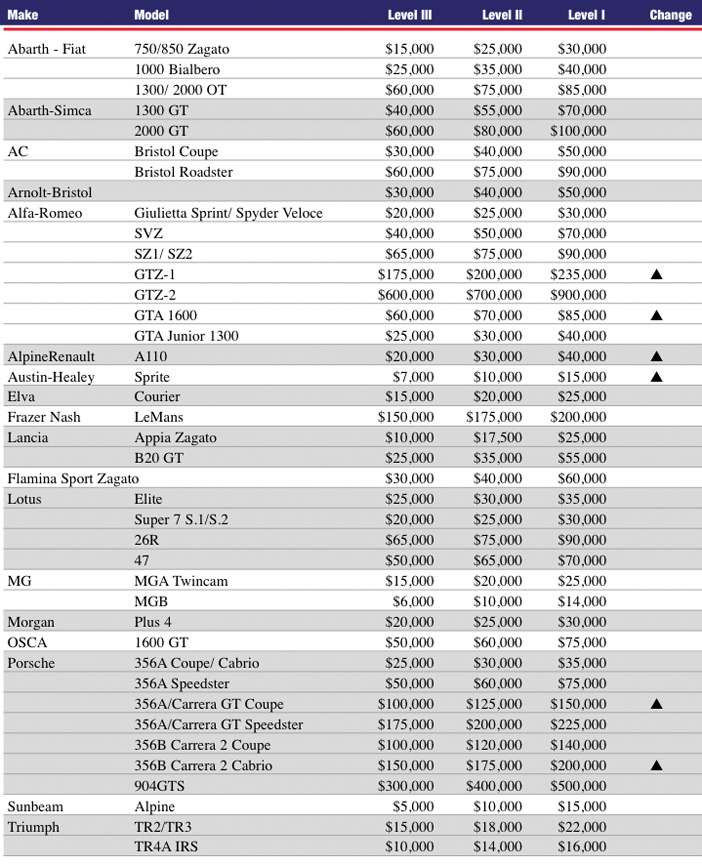
The value today on an under 2-liter GT car is determined by many factors; the car still having its unique competition features available on a race version which were not available on a production version, the quality of restoration and a good provenance.
1964 Porsche 904GTS
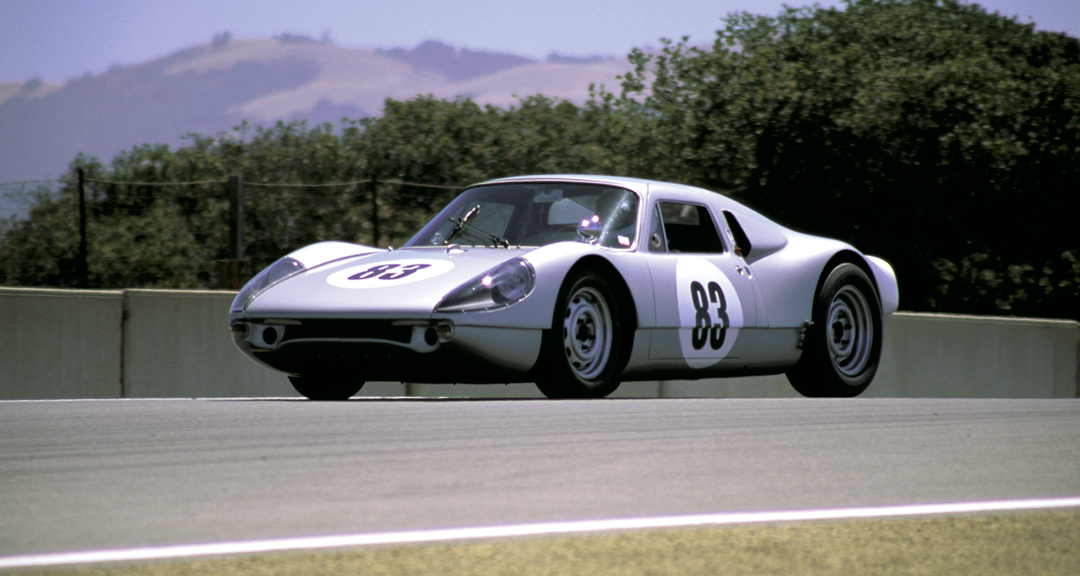 This was the start of many exciting new racing car designs from Porsche experimenting with lightweight fiberglass. The 904GTS had a pressed steel frame and a fiberglass body with a weight around 1500 lbs. Although most of the cars used the 2.0 liter four cam type 587 Carrera four cylinder engine, Porsche used the 904GTS as a test bed for the new 2.0 liter six cylinder engine. The 1964 factory cars ran four, six and eight cylinder engines and in 1965, five prototypes were built specifically for the six cylinder engine. The engine was mounted midsection with the new five-speed gearbox in its alloy casing extending over the rear axles. Just over 100 904GTS’ were produced. They had enormous racing success including 1st in class and 4th overall at the 1965 Le Mans 24 Hours, the Nürburgring 1000km and the Sebring 12-Hours. Plus, they were 1st overall in the 1964 Targa Florio and had class and handicap wins at the Tour de France and a 2nd overall in the Monte Carlo Rally.
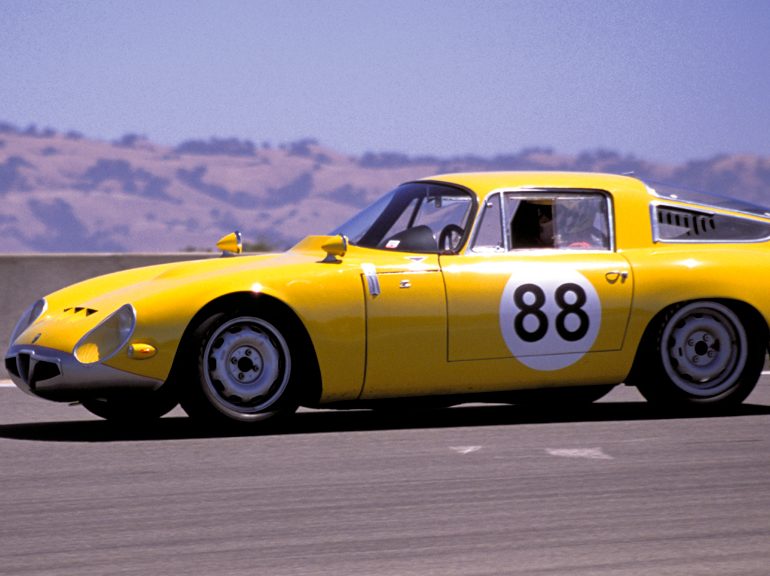
1964 Alfa Romeo GTZ1 1600
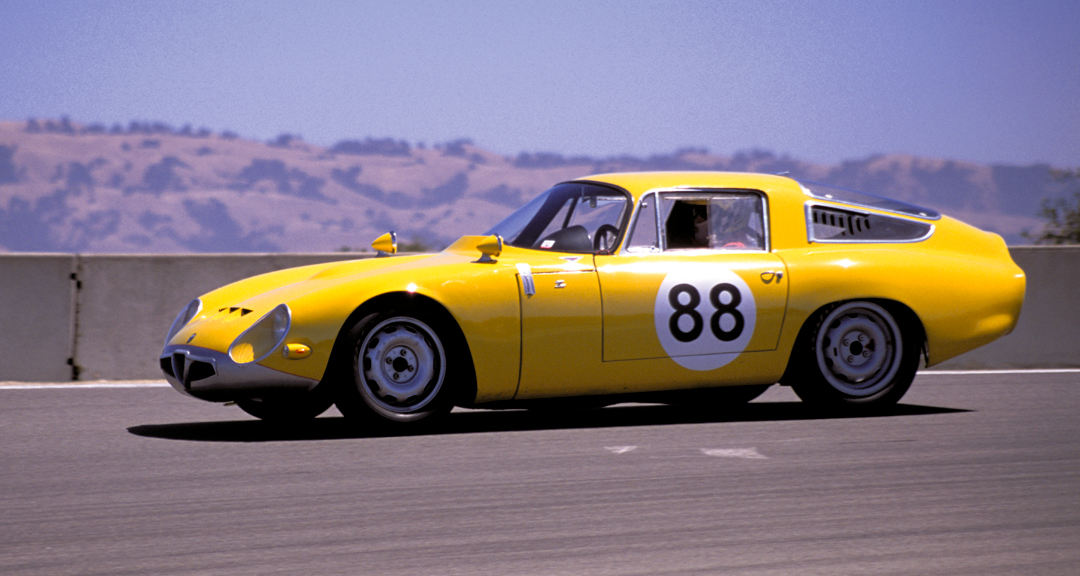 The Giulia Tubolare Zagato was an evolution of the Sprint Zagato Kamm Tail design but with a tubular frame and a new mechanical drive train. Zagato built a beautiful aluminum body with better aerodynamics. Alfa Romeo produced a drive train with lightweight metals used everywhere possible to keep the weight at around 1500 lbs. The engine had an alloy cylinder head and a magnesium deep finned oil pan. The bell housing, gearbox casing and differential housing were magnesium, as were the wheels. The engine produced 165 BHP and power got to the rear wheels with a limited slip differential and a close ratio gearbox with lightened gears and hollow shafts. Plexiglass was used on the windows, a special lightweight interior and even alloy hand fabricated door handles. Just over 100 GTZ1 were produced. They had enormous racing success including 1st in class and 13th overall at the 1964 Le Mans 24 Hours and 1st in class at the Sebring 12-Hours, Targa Florio, Nurburgring 1000km and the Tour de France.
Criteria Used For Assessing Valuations for this Guide:
- Degree of Originality
- Overall Condition, Restoration
- Technology, Design, Coachbuilder
- Production Numbers/Rarity
- Competition History
- Ownership History, Documentation
- Modern Event Eligibility
Regional Variances
The prices stated in this guide are based on U.S. values. The values of historic racing cars can vary as much as 25%-35% in other countries, depending on local market appeal, currency rates, import duties, and VAT. Most of the time, we are able to document known sales or closed escrows, as they say in real estate. When this is not possible, a logical estimate of the car’s value is given, based on its sales history and relationship to cars of its type.
The prices stated in this guide are based on U.S. values. The values of historic racing cars can vary as much as 25%-35% in other countries, depending on local market appeal, currency rates, import duties, and VAT.
LEVEL |
VALUATION CATEGORIES |
|---|---|
I |
The best combination of all criteria. |
II |
Satisfies mid-range of criteria. |
III |
In need of restoration. Meets only a few points of criteria |