
1914 Stutz Bearcat
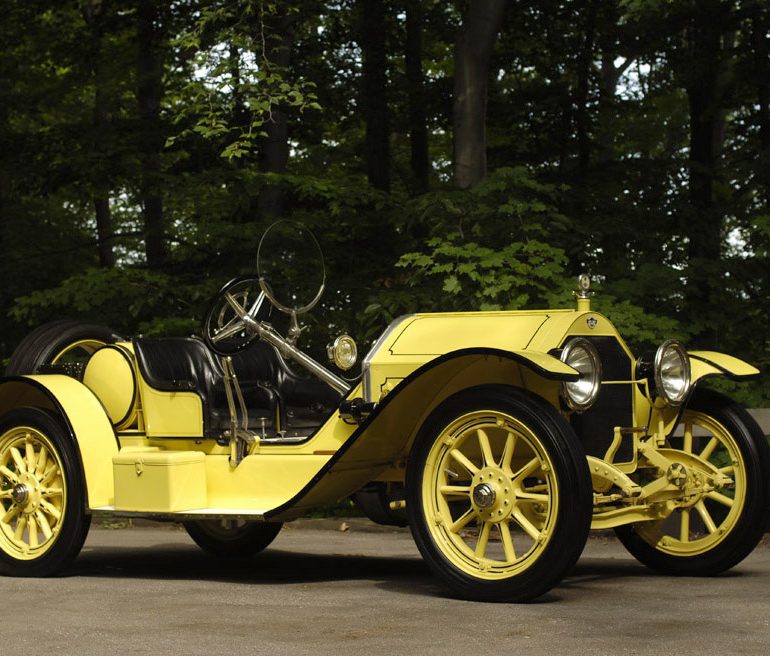
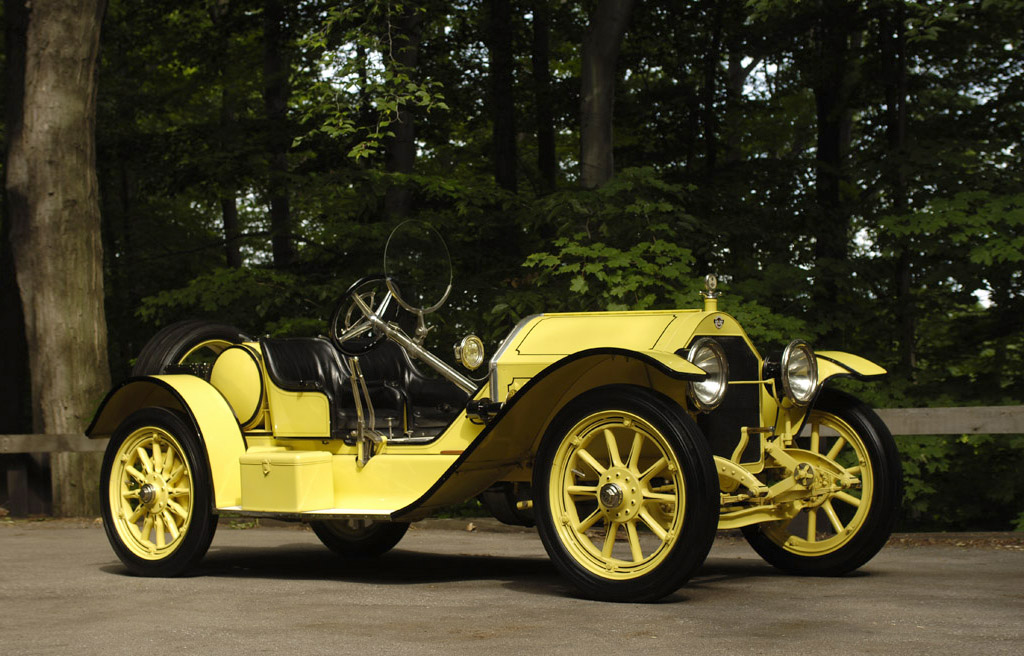
Henry C Stutz created the Bearcat which became one of the very first supercars and an early American icon. It was based on Stutz’s competitive 1911 Indy car and was a raced as well as disguised as a spartan passenger car.
The Bearcat used a six liter, inline-4 Wisconson engine. It cast cylinders in pairs and used a T-head design which put the intake and exhaust on opposite sides of the cylinders. This initially offered 50 hp, however a later version offered later 80 hp.
Like the Amercan Underslung Stutz engineered earlier, the Bearcat featured an underslung suspension which unusually attached the chassis below the axles. This lowered the entire car and offered a low center of gravity which helped the cars win many auto races from its inception.
The Bearcat featured sparse, attractive coachwork with Stutz drum lights, an S & M spot lamps and a motometer bearing the slogan ‘The car that made good in a day’. The open concept interior offered no doors and a tiny monocle windscreen was all that protected the driver from the elements.
With its motorsport pedigree and modern design, the Bearcat became a status symbol for the wealthy, and many were ordered from 1914 through 1917. For many, the Bearcat is the ultimate brass era sports car only rivaled by the Mercer Raceabout.
Chassis 2250 – Owned by a number of prominent collectors, this Bearcat is one of the few pre-1915 cars that remain. It has completed little miles since its comprehensive restoration and will be offered at the David Gooding Pebble Beach Auction on August 20th 2006 for $400 000 to $500 000 USD.
In Detail
| submitted by | Richard Owen |
| engine | Inline-4 |
| displacement | 5916 cc / 361 in³ |
| power | 59.7 kw / 80 bhp @ 2400 rpm |
| specific output | 13.52 bhp per litre |
| front brakes | None |
| f brake size | mm / in |
| rear brakes | Rear Drums |
| r brake size | mm / in |
| f suspension | Rigid Axle w/Hardford Shocks, Semi-Elliptic Springs |
| r suspension | Rigid Axle w/Hardford Shocks, Semi-Elliptic Springs |
| transmission | 3-Speed Manual |
| gear ratios | :1 |
Auction Sales History
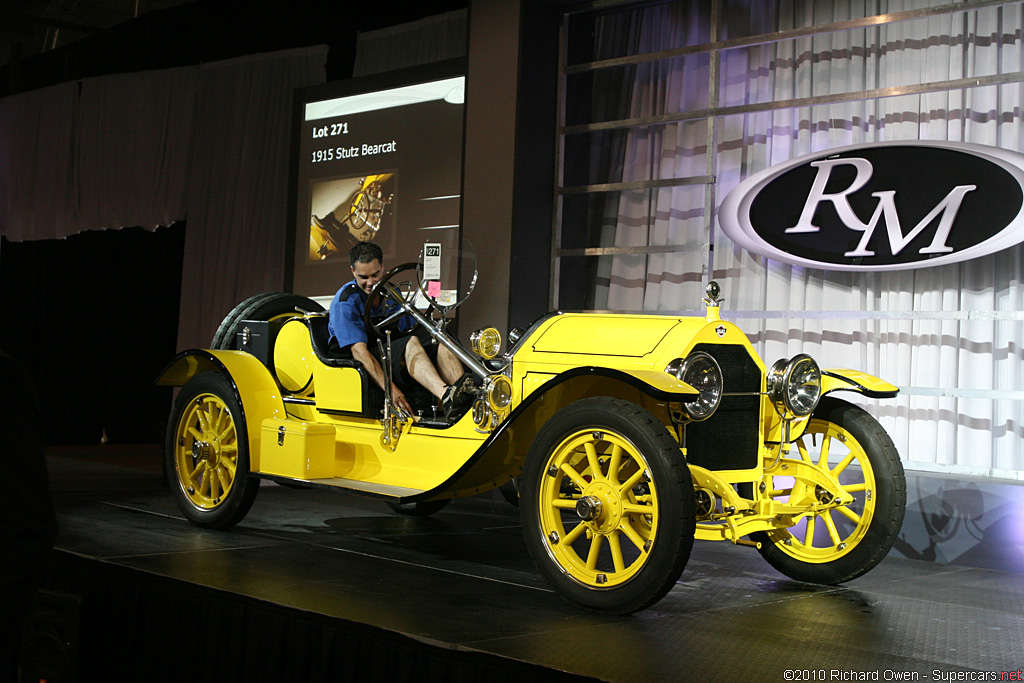
This example carries a fascinating history, having been discovered in a shipping container in England during the early 1980s. When found, the car sported several European accessories that may have been installed when the car was first shipped to England many years ago. A California-based collector imported the car to the United States, and shortly after its return, the car was restored and driven for several years in California before being sold to a new owner.
The Bearcat changed ownership several more times before the prior owner acquired the car in 2004. A thorough, ground-up, professional restoration was immediately begun, with the process meticulously documented in photographic records that accompany the sale of the vehicle. Master engine builder Charles Troutman, who authentically returned the Bearcat to like-new operating condition, performed a complete engine rebuild. Shortly after the restoration was completed, the Bearcat was shown at the Meadow Brook Hall Concours d’Elegance in 2005, where it competed in the featured “Magnificent Brass Cars” class. In 2006, the Bearcat was acquired by its next caretaker and joined a large and respected private collection.
As offered, the Bearcat remains virtually show-quality, with only minor cosmetic imperfections. This example is easily capable of performing comfortably at today’s highway speeds, making it an excellent choice not only for further concours competition but also for the growing numbers of tours and rallies in North America and overseas. Most importantly, this car is an authentic early Stutz Bearcat, and it is one of perhaps 10 remaining in existence that have not been converted from other body styles to the most-desirable Bearcat configuration.
While in some respects the Mercer Raceabout offers greater sophistication and some prefer its ride and handling qualities, there is no doubt that the Stutz Bearcat was the Mercer’s primary competitor, offering sporting performance and outstanding appearance at a much more attractive price point.
This Stutz Bearcat represents a dominating force, and it is undeniably an excellent value today, given its outstanding pedigree, provenance and restoration.
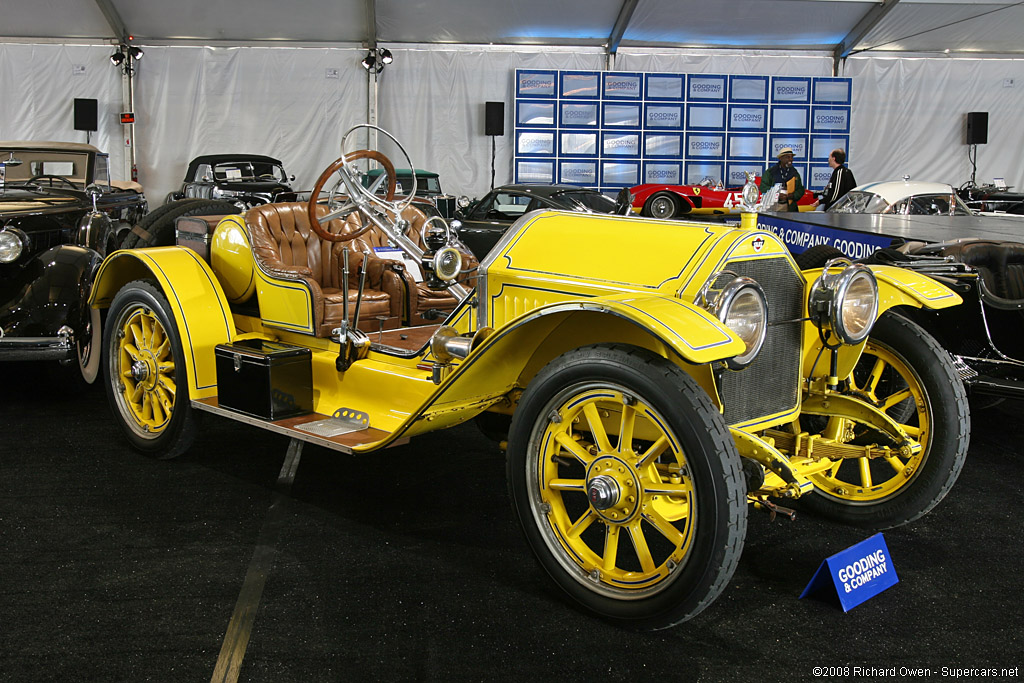
A Complete And Well-Documented History. Multiple Trophy And Award Winner. Owned By Two Families From New. Less Than 26,000 Miles From New. One Of The Finest Stutz Bearcats In Existence. www.1914stutzbearcat.com.