
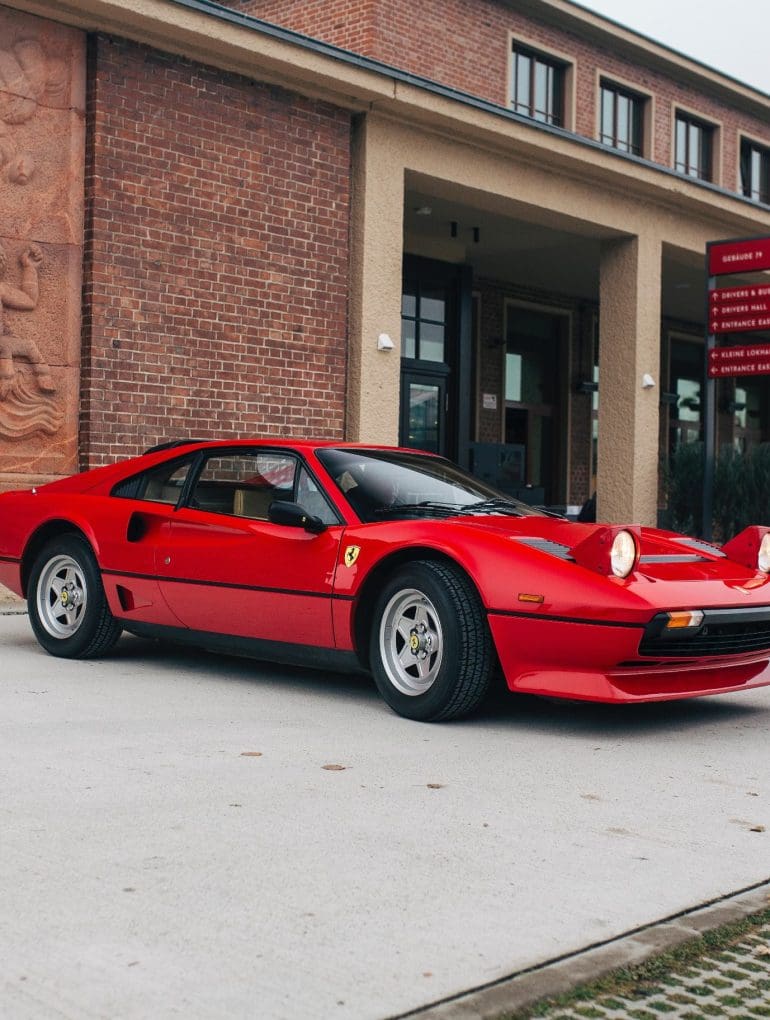

Geneva, March 1982. Ferrari unveiled the 208 GTB Turbo, an unlikely response to Italy’s punitive tax on engines exceeding two liters. The country’s tax structure made larger-displacement cars prohibitively expensive, forcing Ferrari to develop a smaller engine for its home market. The solution was radical: shrink the familiar Dino V8 to 1,991cc, then add a turbocharger to compensate for lost displacement. The result produced 220 horsepower, matching the naturally aspirated 308 GTB while avoiding crippling taxation. This was Ferrari’s first turbocharged road car, a technological exercise born from fiscal necessity rather than performance ambition. Production ran from 1982 to 1985, with just 437 examples built exclusively for the Italian market.
Background and Origins
Ferrari introduced the 308 GTB in 1975 as the successor to the Dino 246. The mid-engined two-seater featured a 3.0-liter V8 producing 255 horsepower in European specification. However, Italian taxation made the 308 extremely expensive for domestic buyers. Engines over two liters faced massive tax penalties, effectively pricing Ferrari out of its home market.
In 1980, Ferrari responded with the 208 GT4, a two-liter version of the Bertone-styled 2+2. The destroked V8 produced just 155 horsepower, creating a gutless Ferrari that embarrassed the company. Sales were predictably dismal.
Development of the 208 GTB Turbo began in 1981 under chief engineer Nicola Materazzi. Rather than accept the naturally aspirated two-liter’s feeble output, Materazzi proposed forced induction. A turbocharger could restore power to 308 GTB levels while satisfying Italy’s displacement restrictions.
The 208 GTB Turbo debuted at Geneva in March 1982, creating controversy among purists who viewed turbocharging as antithetical to Ferrari’s philosophy. Production began immediately at Maranello, with every example destined for the Italian market.
Design and Engineering
The 208 GTB Turbo was based on the 308 GTB’s tubular steel chassis with a 2,340mm wheelbase. The structure was unchanged from the naturally aspirated car, though additional bracing accommodated the turbocharger’s increased torque. Front suspension employed unequal-length double wishbones with coil springs and telescopic dampers. The rear used a similar arrangement with anti-squat geometry. Anti-roll bars front and rear controlled body roll.
Braking was by ventilated discs all around, measuring 280mm front and rear with dual-circuit hydraulics. Power assistance was standard. The steering was unassisted rack-and-pinion, requiring effort at parking speeds but providing excellent feedback.
The engine was Ferrari’s Tipo F106 A turbocharged V8, based on the Dino architecture but with reduced bore and stroke. Displacing 1,991cc with a 66.8mm bore and 71mm stroke, this all-aluminum engine featured dual overhead camshafts per bank, two valves per cylinder, and dry-sump lubrication. The 90-degree vee angle and flat-plane crankshaft created Ferrari’s distinctive exhaust note, though the turbocharger muffled the sound.
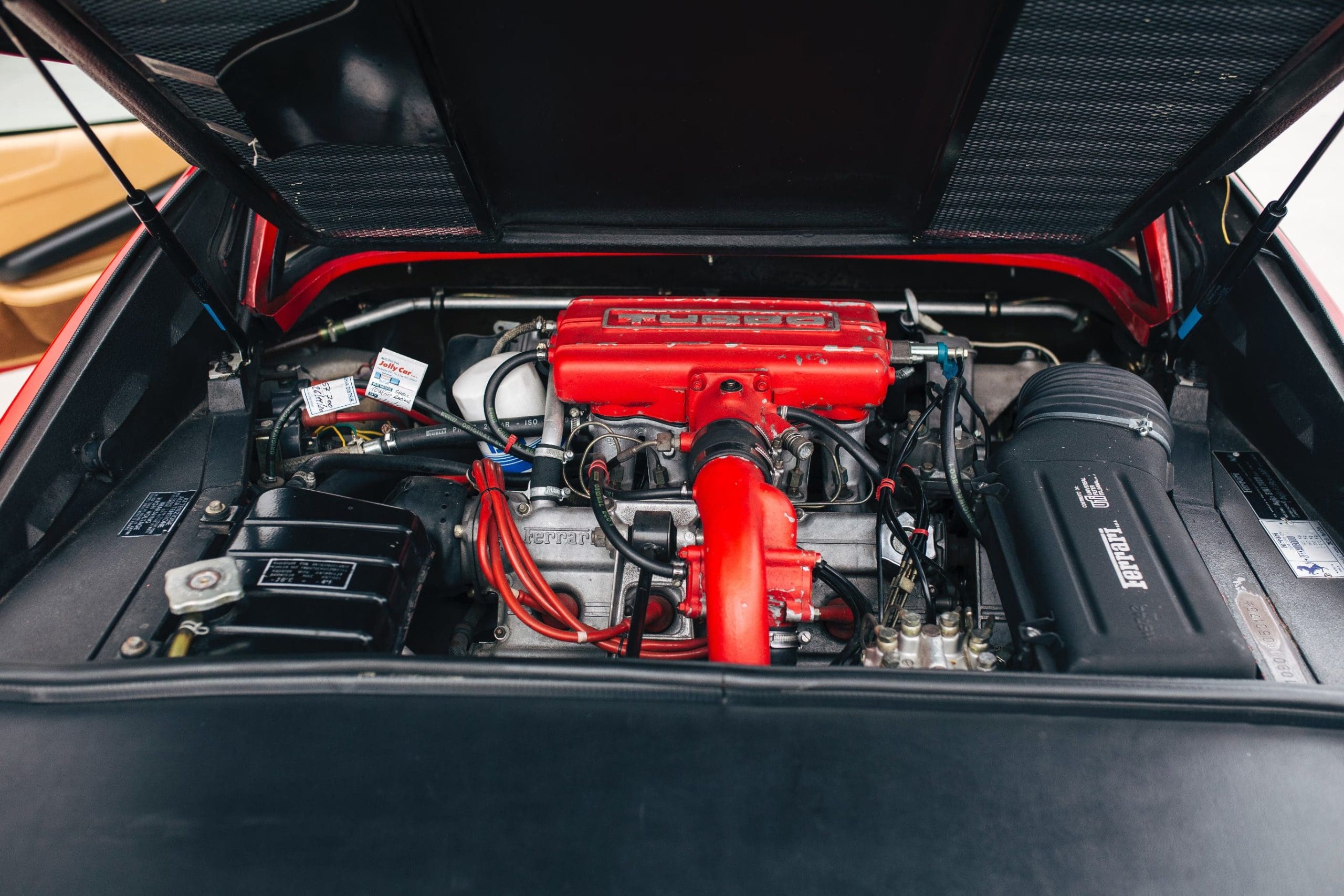
A single IHI turbocharger mounted low in the engine bay provided forced induction, feeding compressed air through an intercooler. Weber-Marelli Microplex electronic fuel injection replaced the 308’s mechanical system. Compression ratio was lowered to 7.0:1 to accommodate boost pressure.
Output was 220 horsepower at 7,000 rpm and 214 lb-ft at 4,000 rpm. The power matched the contemporary 308 GTB Quattrovalvole, though the delivery was dramatically different. Turbo lag was pronounced, with minimal response below 3,000 rpm followed by a sudden surge as boost built.
Transmission was a five-speed manual with traditional Ferrari open-gate shifter. Final drive was 4.06:1.
Styling
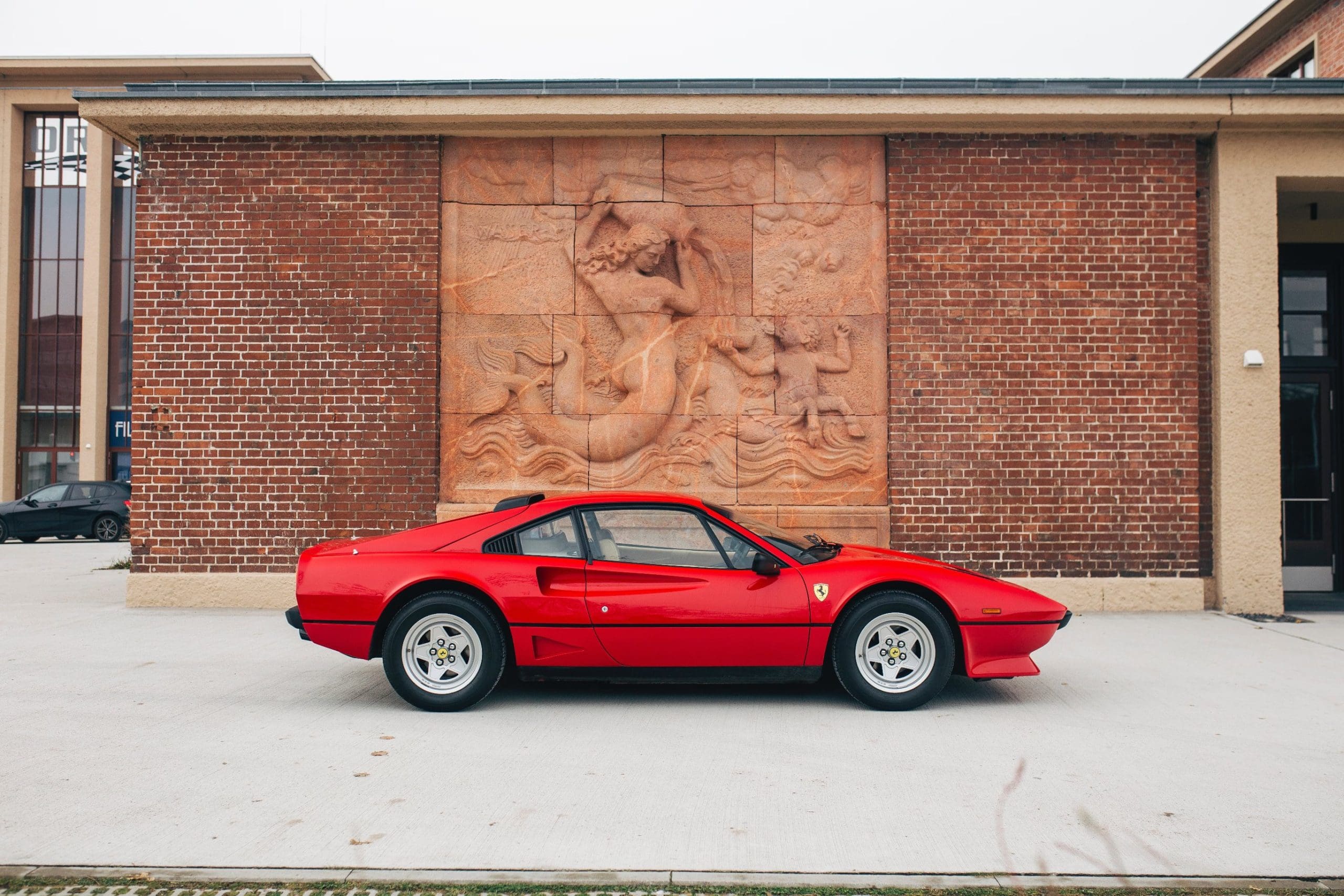
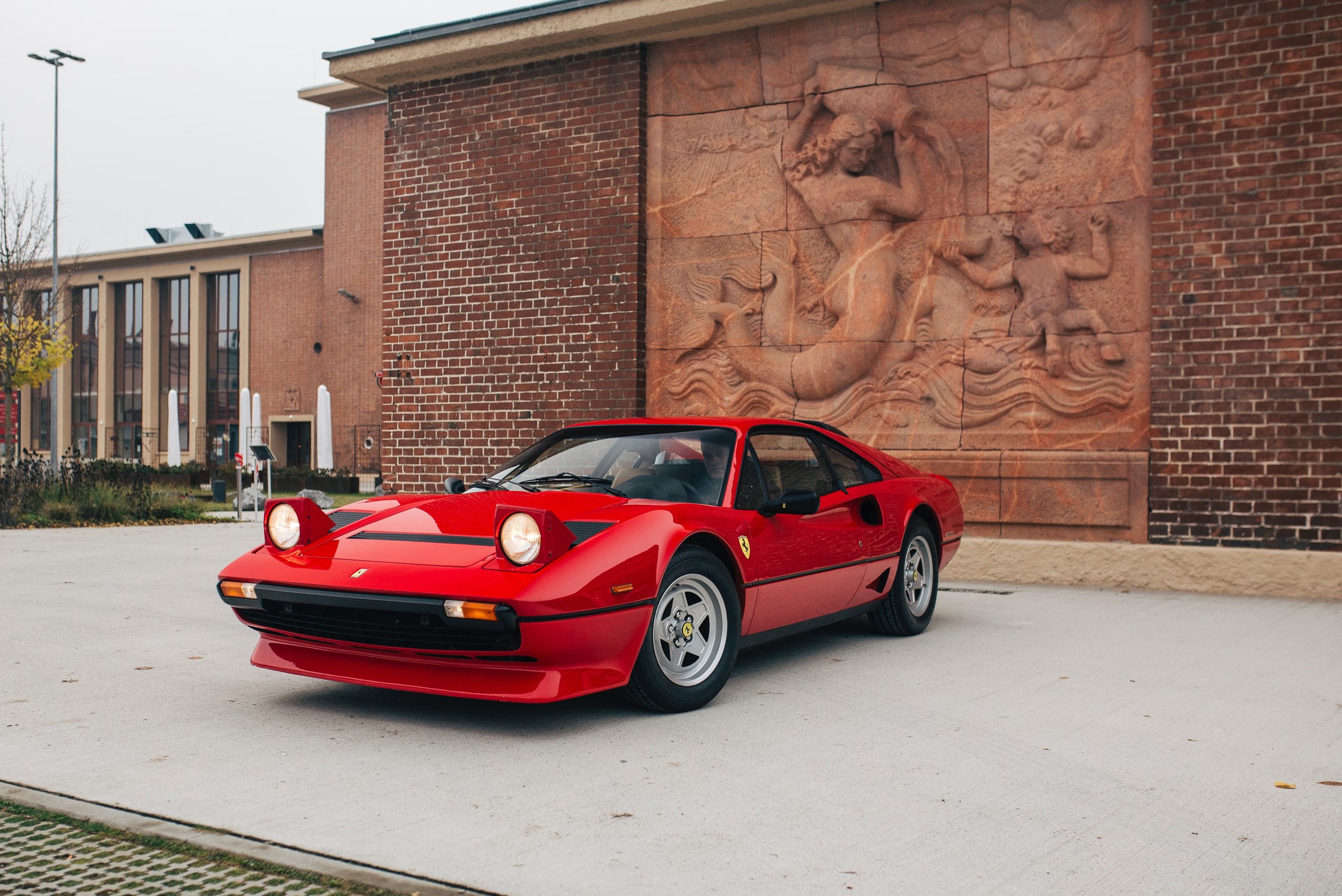
Externally, the 208 GTB Turbo was nearly identical to the 308 GTB. Pininfarina’s timeless design remained unchanged: wedge-shaped profile, retractable headlights, and clean surfaces broken only by functional air intakes. The signature feature distinguishing the 208 from naturally aspirated models was a NACA duct on the left rear quarter panel, feeding cool air to the intercooler.
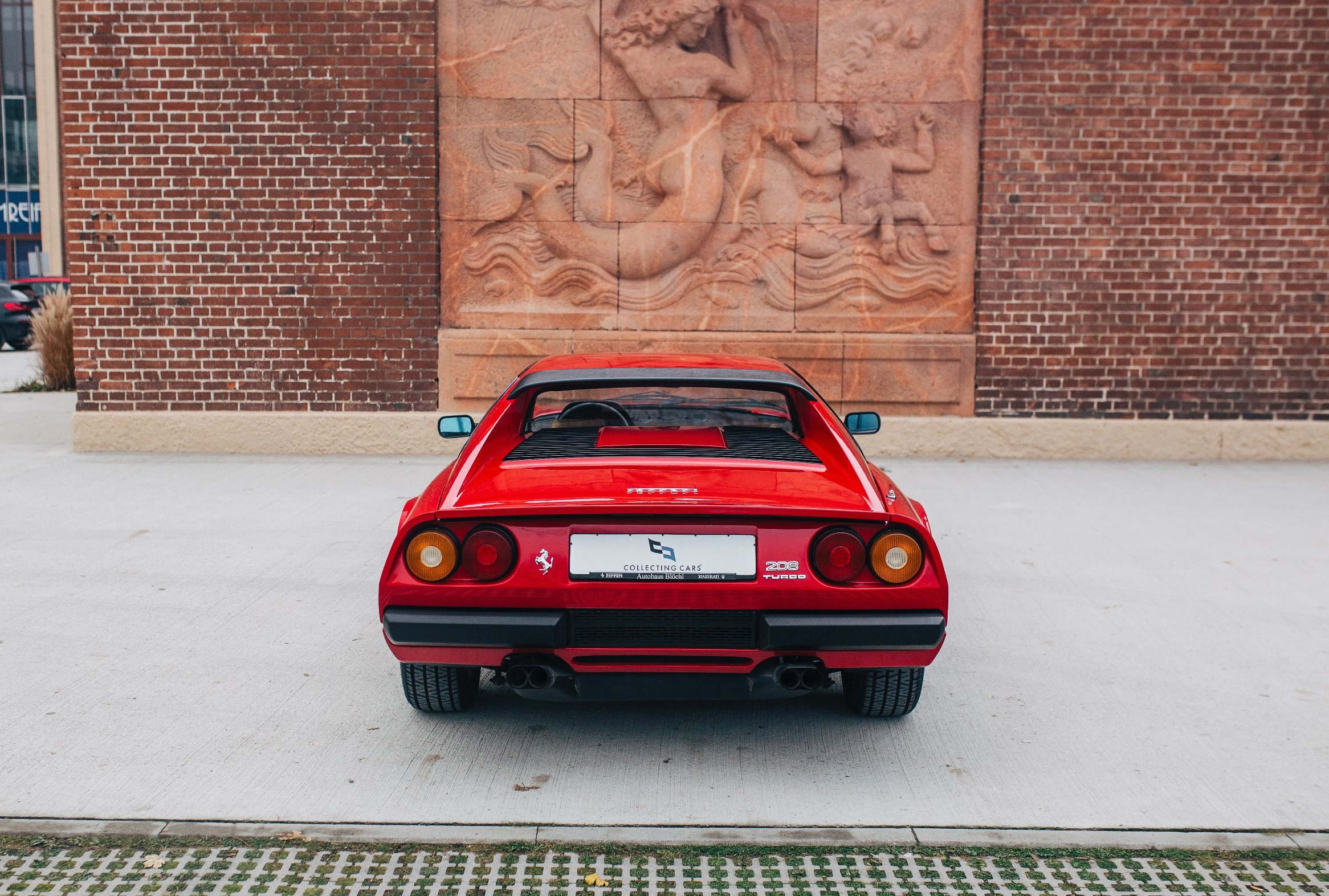
Small 208 GTB Turbo badges appeared on the rear panel, while the engine cover featured additional louvers for heat extraction. Otherwise, the car was visually indistinguishable from a 308 GTB. This subtlety was intentional, allowing Italian buyers to own a Ferrari without advertising the tax-driven compromise.
Body panels were steel on early examples, though some later cars received fiberglass bodywork. Standard wheels were 14-inch Cromodora alloy units measuring 7 inches wide front and rear, wearing Michelin XWX 205/70 VR14 tires. Color choices included traditional Ferrari reds, though many Italian buyers specified conservative dark colors.
Interior
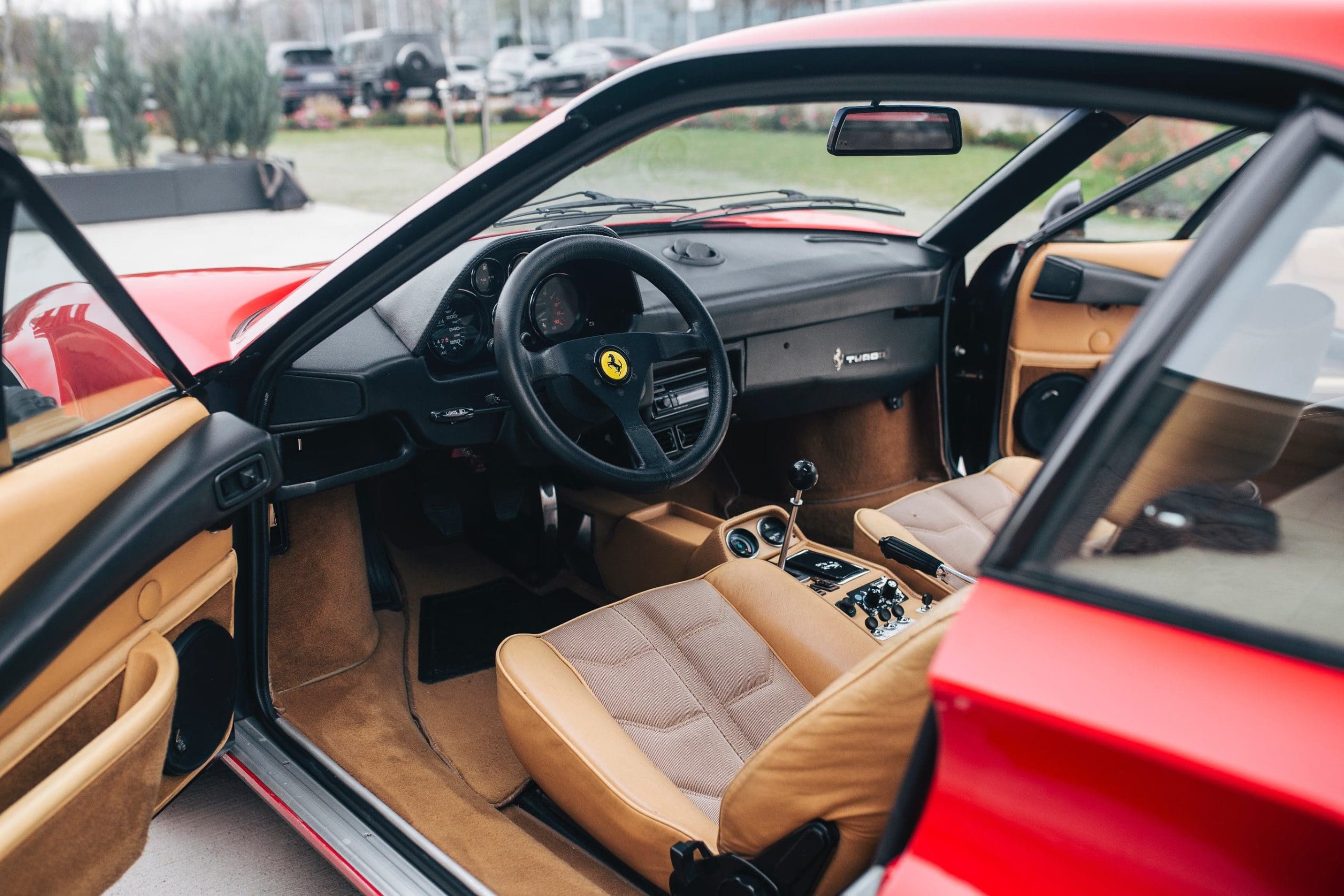
The cabin was trimmed in leather throughout with matching carpeting. Seats were manually adjustable buckets providing adequate support. The driving position was typical Ferrari: low-slung with the steering wheel angled toward the driver.
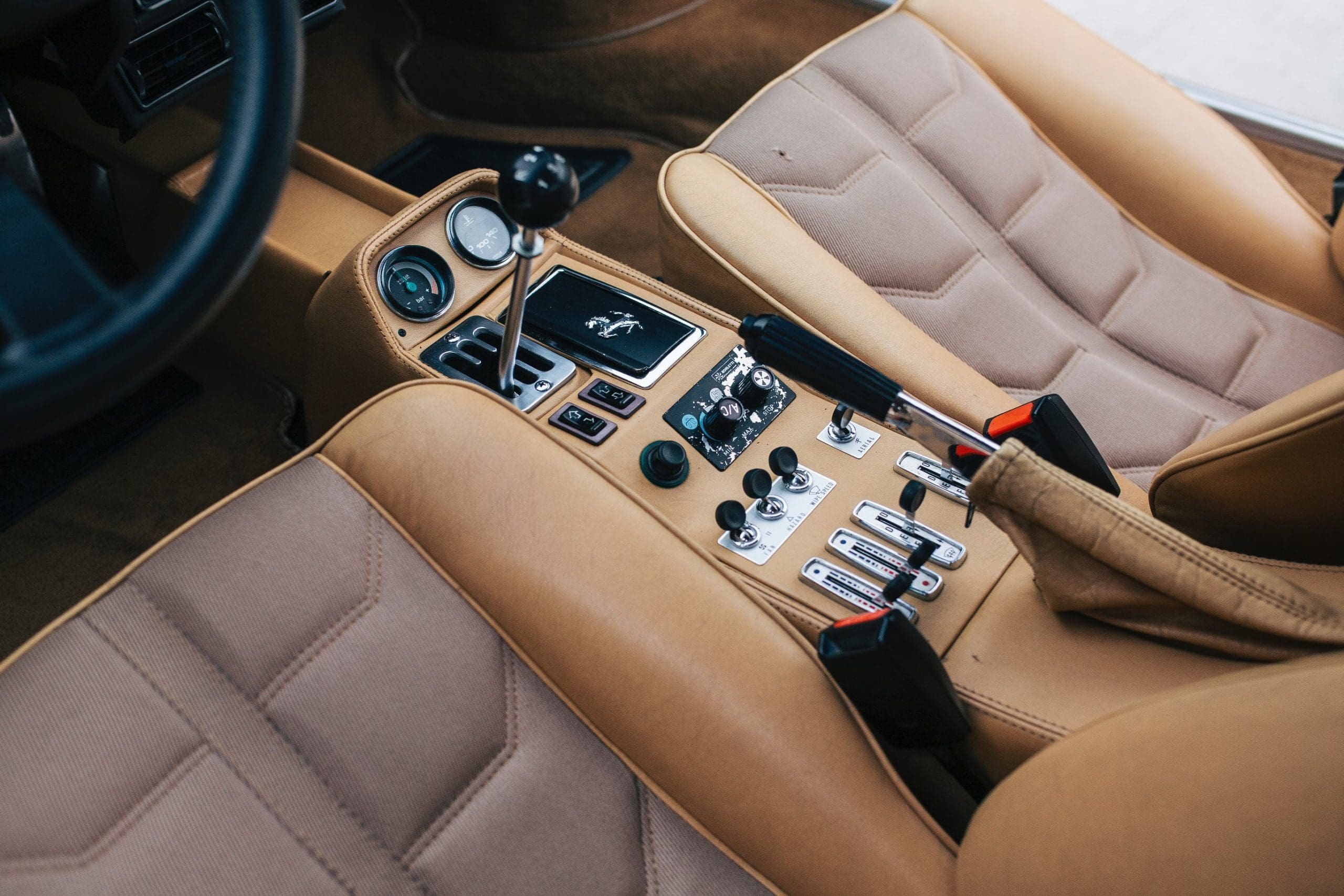
The dashboard featured comprehensive instrumentation with Veglia gauges including a tachometer, speedometer, oil pressure, water temperature, and fuel level. A boost gauge sat prominently in the center console, displaying turbo pressure. A gated shifter sprouted from the transmission tunnel, its chrome-plated mechanism a visual and mechanical delight.
Air conditioning was optional and rarely specified. Sound insulation was minimal, though the turbocharger muffled engine noise compared to naturally aspirated Ferraris.
Specifications
- Engine: Tipo F106 A turbocharged V8, 1,991cc (66.8mm x 71mm), DOHC per bank, two valves per cylinder, IHI turbocharger
- Power: 220 bhp at 7,000 rpm
- Torque: 214 lb-ft at 4,000 rpm
- Transmission: Five-speed manual, 4.06:1 final drive
- Chassis: Tubular steel, 2,340mm wheelbase
- Suspension: Double wishbones (front and rear)
- Brakes: Vented discs 280mm (front and rear)
- Wheels: Cromodora 7×14 alloy, Michelin XWX 205/70 VR14
- Weight: 1,150 kg
- Performance: 150 mph top speed, 0-60 mph in 6.3 seconds
Competition History
The 208 GTB Turbo was designed as a road car to circumvent Italian taxation and saw no official competition use. However, its turbocharged engine technology influenced Ferrari’s racing programs. Experience gained from the 208’s forced induction system informed development of the 288 GTO and later F40, both of which used twin-turbocharged V8 engines to devastating effect.
Production and Legacy
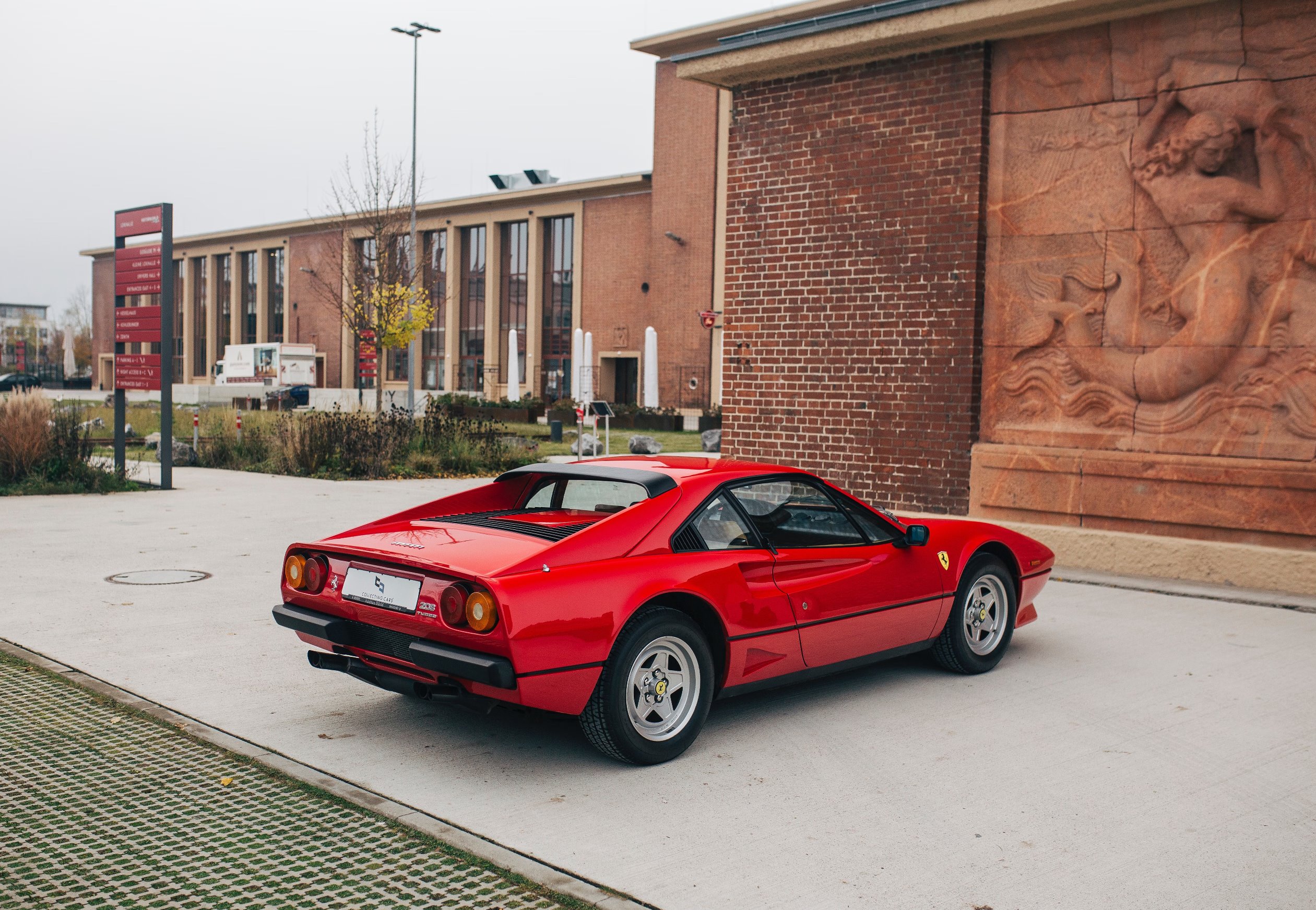
Ferrari built exactly 437 examples of the 208 GTB Turbo between 1982 and 1985 at Maranello. Every car was sold exclusively in Italy to buyers seeking to avoid displacement-based taxation. Export was prohibited, creating an Italy-only Ferrari that remains rare outside its home market.
The 208 GTB Turbo represented Ferrari’s pragmatic response to government taxation rather than a performance exercise. It proved that turbocharging could compensate for reduced displacement, maintaining performance while satisfying fiscal constraints. However, the car’s character was fundamentally different from naturally aspirated Ferraris. Turbo lag, muffled exhaust note, and compressed powerband created a driving experience that felt un-Ferrari to purists.
The technological lessons proved valuable. The 208’s turbocharger technology, intercooling system, and forced induction engine management informed Ferrari’s later turbocharged road cars. The 288 GTO that followed in 1984 used twin turbochargers to produce 400 horsepower from a 2.8-liter V8, demonstrating the performance potential of forced induction.
Today, the 208 GTB Turbo remains the rarest and least celebrated V8 Ferrari. Values lag significantly behind 308 GTBs despite lower production numbers. The combination of modest performance, compromised character, and taxation-driven genesis has relegated it to footnote status in Ferrari’s history.
Yet the 208 GTB Turbo deserves recognition as Ferrari’s first turbocharged road car, the technological stepping stone toward the F40 and every turbocharged Ferrari that followed. It proved Maranello could adapt to regulatory constraints while maintaining competitive performance, that fiscal necessity could drive technological innovation. The 208 GTB Turbo was an unlikely Ferrari, a two-liter turbocharged compromise that nevertheless advanced the company’s engineering capabilities and paved the way for future forced induction masterpieces.