
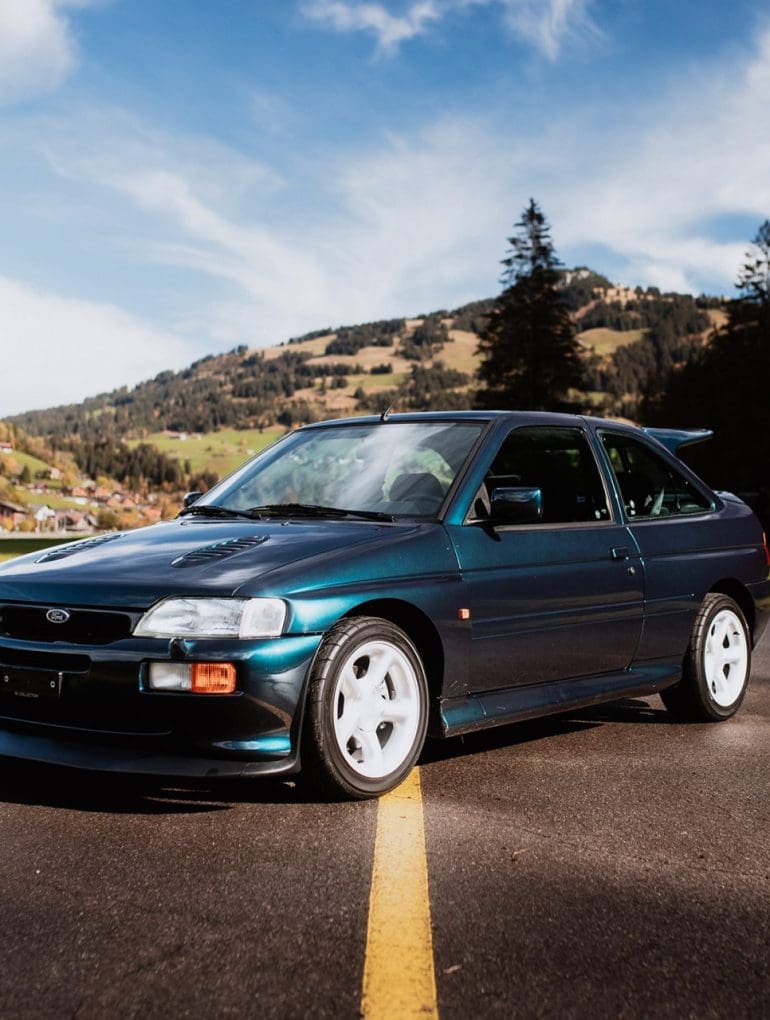
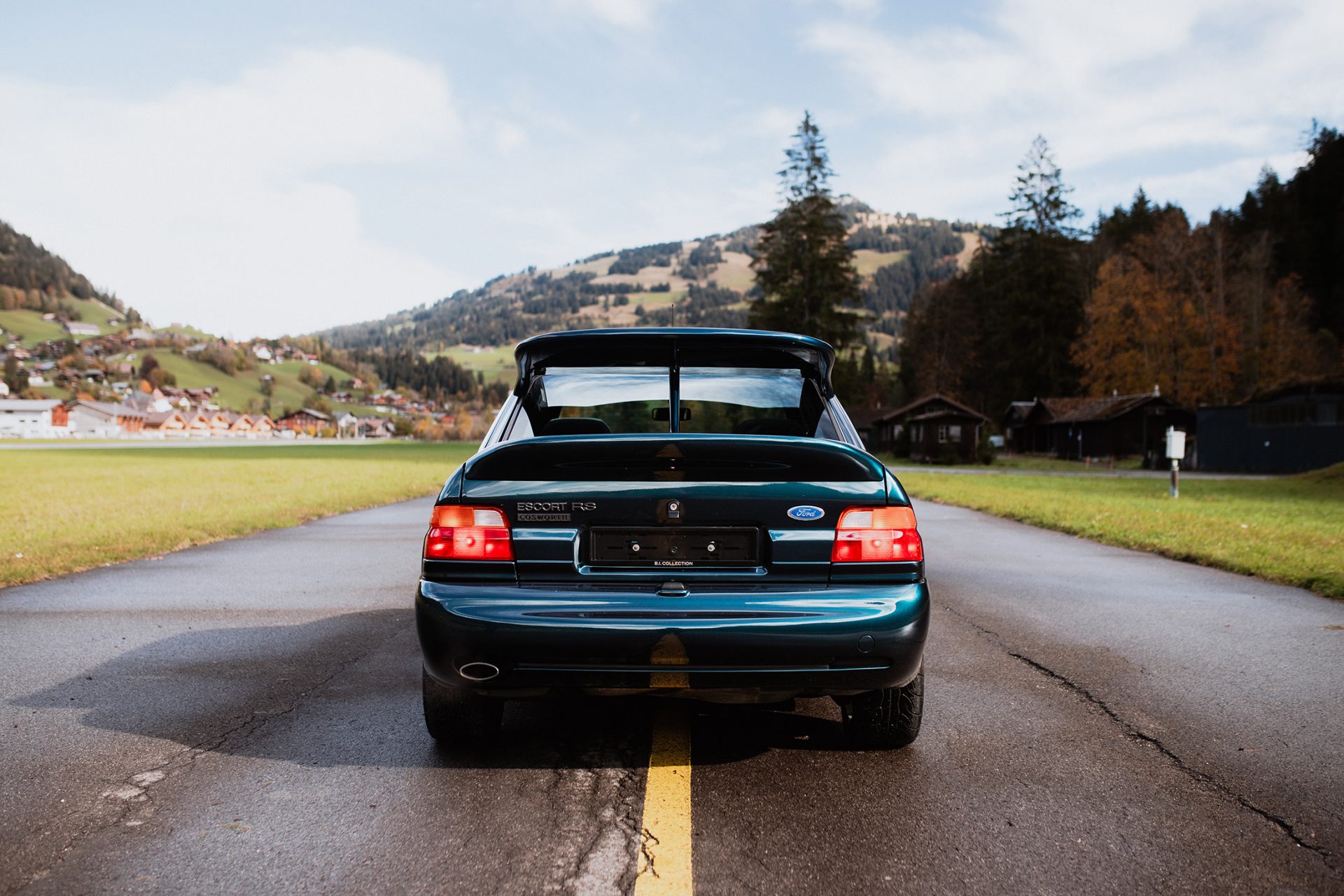
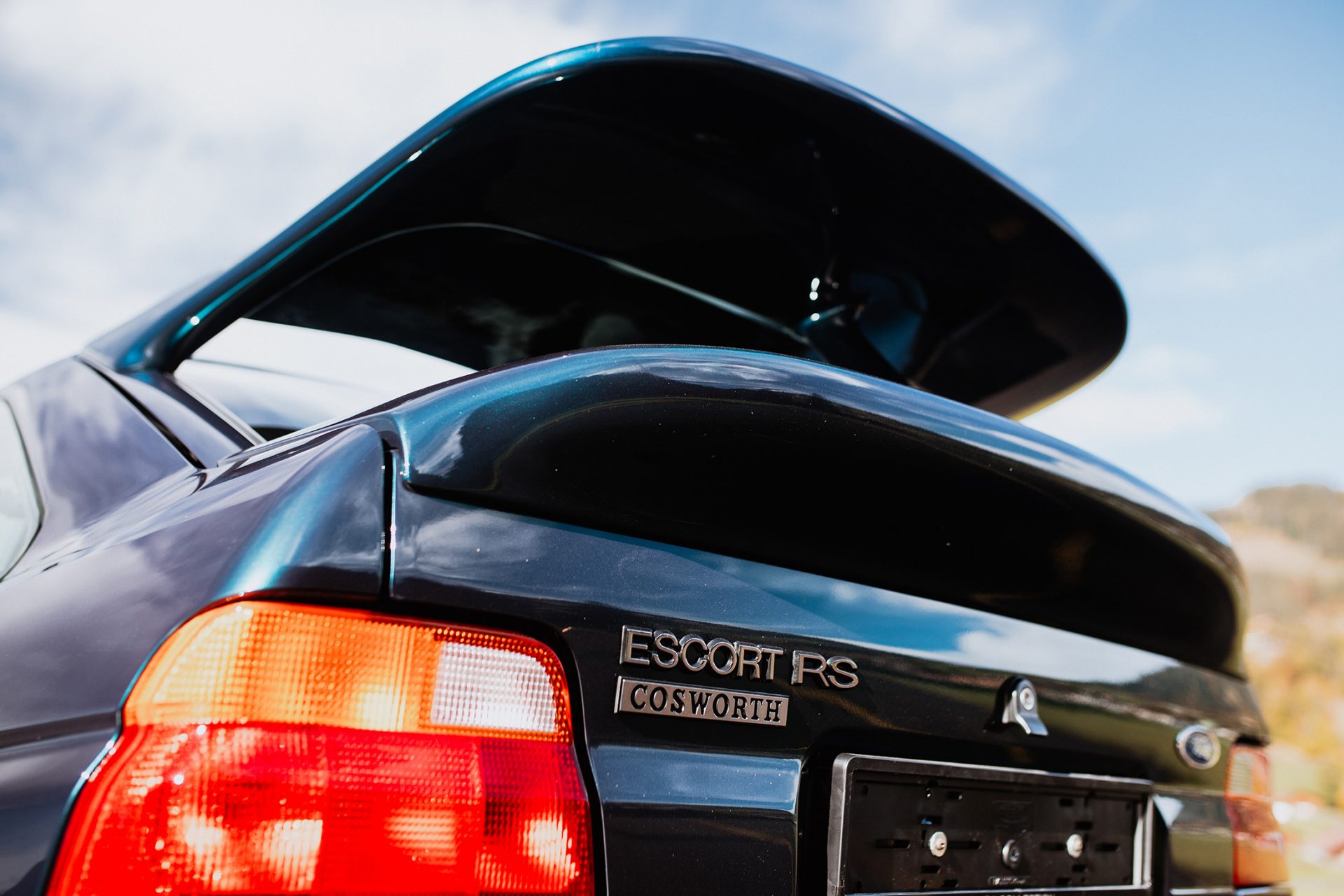
Geneva, March 1992. Ford unveiled the Escort RS Cosworth, a rally homologation special designed to reclaim the World Rally Championship from Lancia. The name was misleading: beneath the Escort badges sat a lengthened Sierra Cosworth 4×4 platform with minimal Escort componentry. The turbocharged 2.0-liter inline four produced 227 horsepower through a Garrett turbocharger and intercooler. Permanent four-wheel drive distributed power through a viscous coupling center differential. The signature feature was an enormous rear wing nicknamed “the whale tail,” providing genuine downforce at speed. Ford needed 2,500 examples for Group A homologation. They built 7,145 between 1992 and 1996.
Background and Origins
Ford dominated rallying in the 1970s with the Escort RS1600 and RS1800, but by the late 1980s, Lancia’s Delta Integrale had rendered Ford uncompetitive. The Sierra Cosworth proved successful in touring car racing but its large platform was unsuitable for modern rallying.
Development began in 1989 under Ford Motorsport’s Stuart Turner. The brief was straightforward: create a rally weapon using existing Ford components and build enough road cars to satisfy FIA regulations. The challenge: the contemporary front-wheel drive Escort shared nothing with the rear-drive Sierra Cosworth platform.
The solution was unconventional. Engineers took the Sierra Cosworth 4×4’s floorpan, shortened it slightly, and grafted on Escort front-end bodywork. Karmann in Germany would build the bodies, while final assembly took place at Ford’s Motorsport facility in Boreham, England. The prototype debuted at Geneva in March 1992, with production beginning immediately.
Design and Engineering
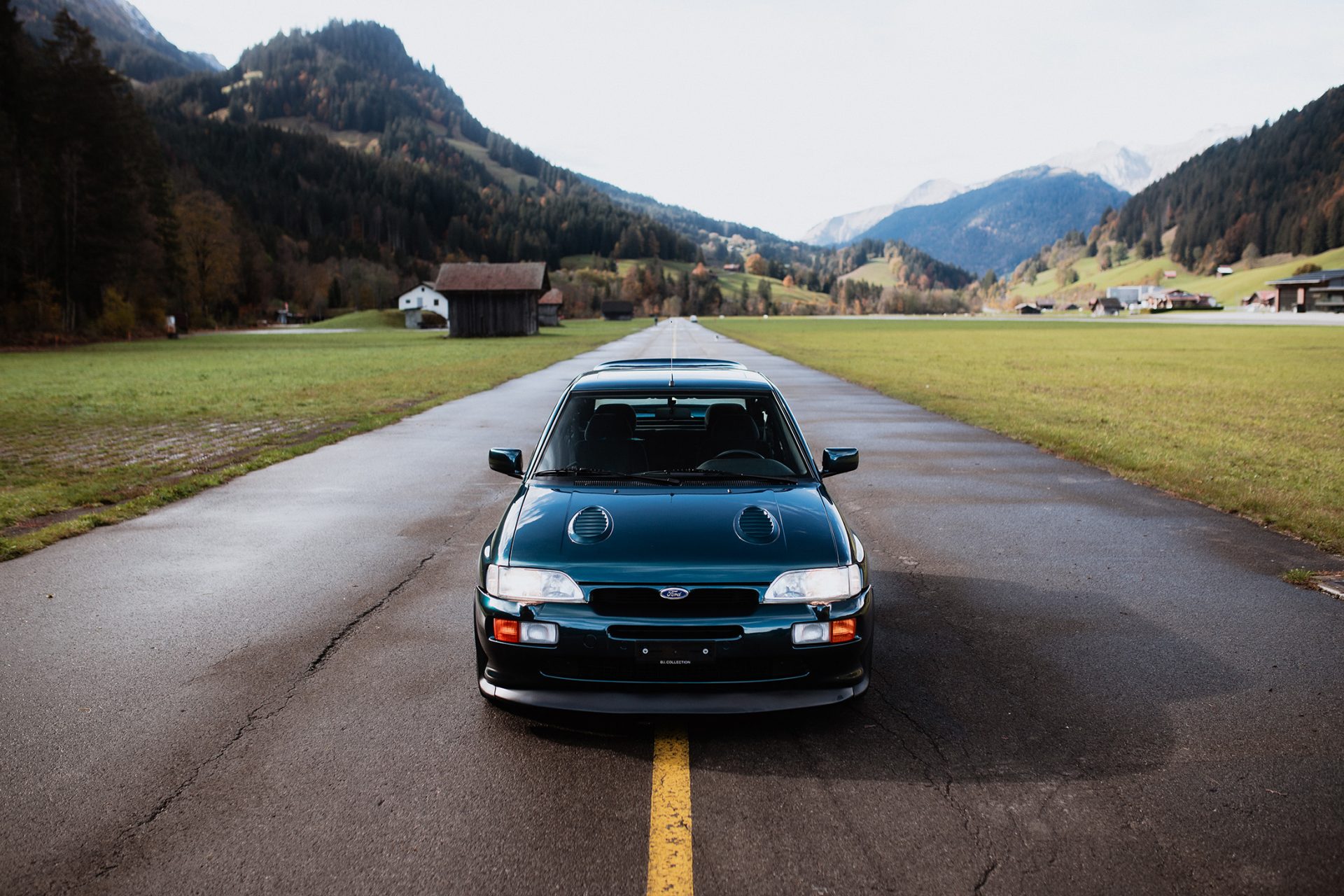
The Escort RS Cosworth’s structure was based on the Sierra Cosworth 4×4’s rear-wheel drive platform with a shortened 2,530mm wheelbase. Despite its name, the car shared minimal components with the contemporary front-wheel drive Escort, using mainly the front doors, bonnet, and front wings.
Front suspension used MacPherson struts with lower A-arms, coil springs, and gas-pressure dampers. The rear employed a fully independent multi-link arrangement superior to the front-drive Escort’s torsion beam axle. The suspension geometry was optimized for gravel rally stages.
Braking was by ventilated discs measuring 283mm front and 278mm rear with ATE four-piston calipers. ABS was absent, as rally regulations prohibited it. The steering was power-assisted rack-and-pinion with a quick 2.7-turn lock-to-lock ratio.
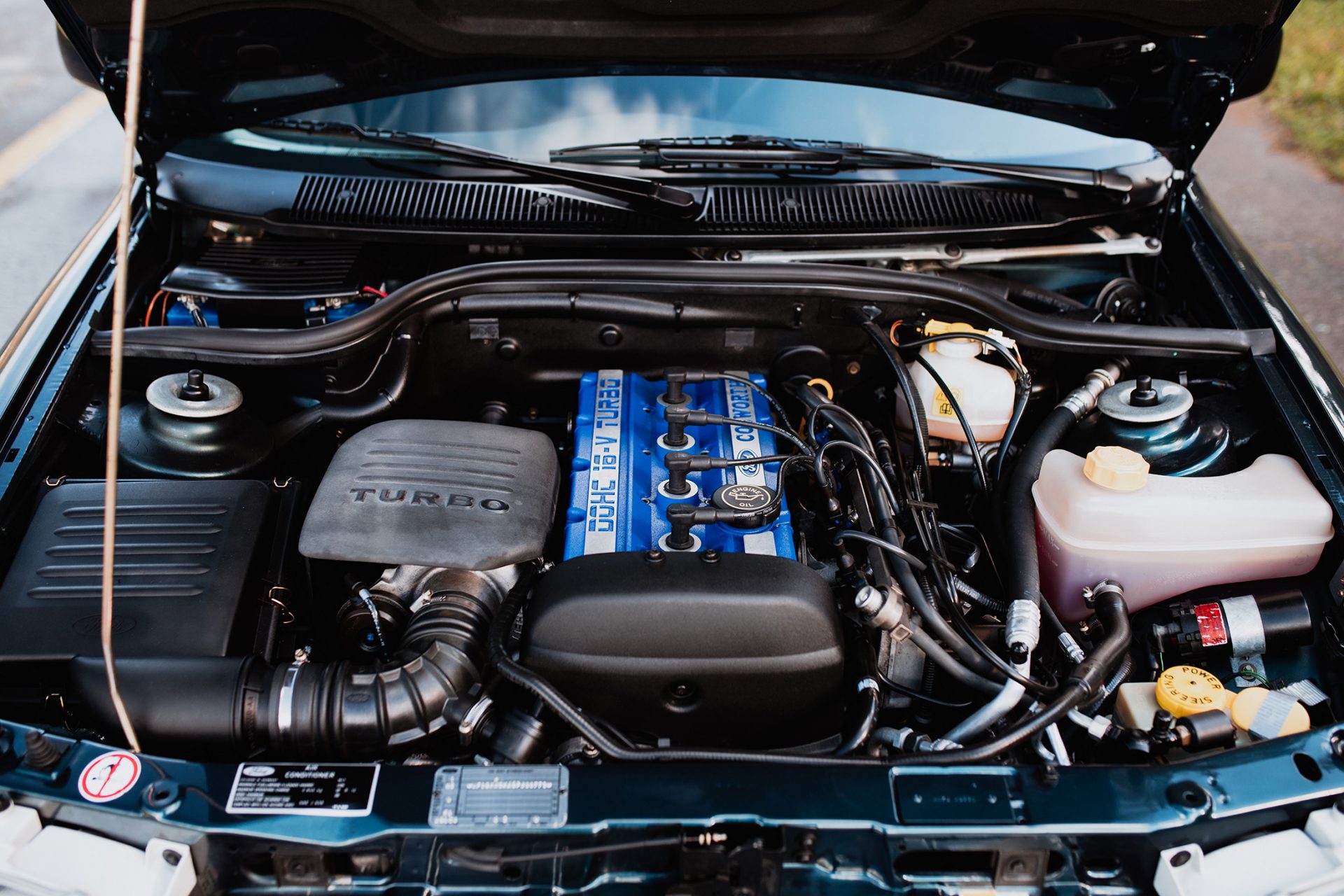
The engine was Ford’s legendary YBT turbocharged inline four. Displacing 1,993cc with a 90.8mm bore and 77mm stroke, it featured a cast-iron block, aluminum DOHC head, and four valves per cylinder. A Garrett T3/T04B turbocharger with air-to-air intercooler provided forced induction.
With an 8.0:1 compression ratio and Weber-Marelli engine management, output was 227 horsepower at 6,250 rpm and 224 lb-ft at 3,500 rpm. Competition versions produced over 300 horsepower with relatively minor modifications, while full Group A rally spec exceeded 400 horsepower.
Transmission was a five-speed manual driving all four wheels through a Ferguson viscous coupling center differential. The default torque split was 34 percent front, 66 percent rear. A limited-slip differential at the rear aided traction.
Styling
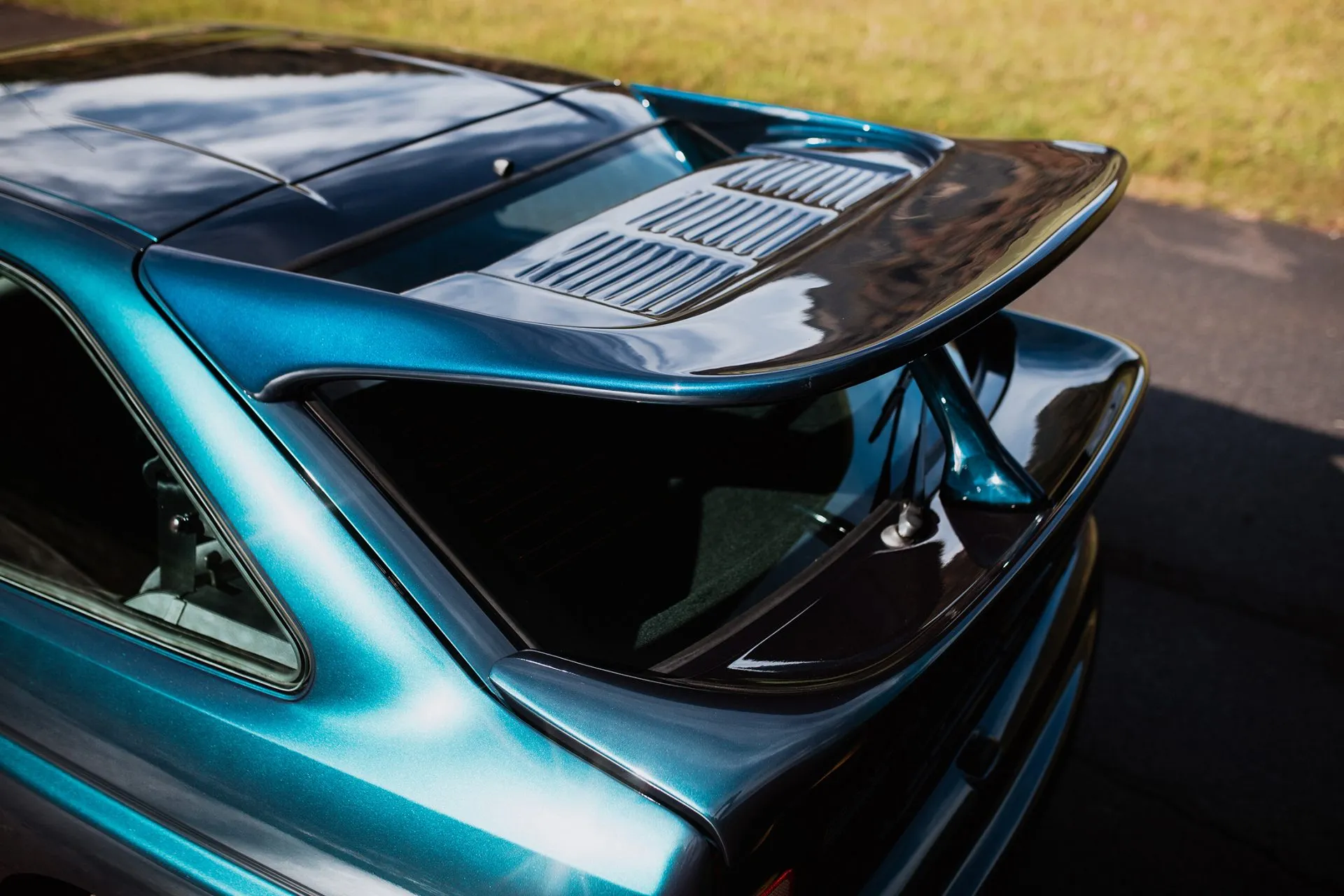
The Escort RS Cosworth’s appearance was dominated by that enormous rear wing. The “whale tail” spoiler sat high above the rear deck on aluminum supports, creating genuine downforce at speed. The wing became the car’s defining visual feature.
The front bumper incorporated a large air intake feeding the intercooler, while the bonnet featured a prominent bulge to clear the intake plenum. Massively flared wheel arches front and rear created an aggressive stance, bonded and riveted to the body structure with visible fasteners adding to the competition aesthetic.
Standard wheels were 8×15-inch cast aluminum units wearing 205/50 ZR15 Pirelli P Zero tires. Later models received 16-inch wheels. The most common color was Diamond White, creating instant visual association with Ford’s rally program, though Imperial Blue, Radiant Red, and Mallard Green were also available.
Interior
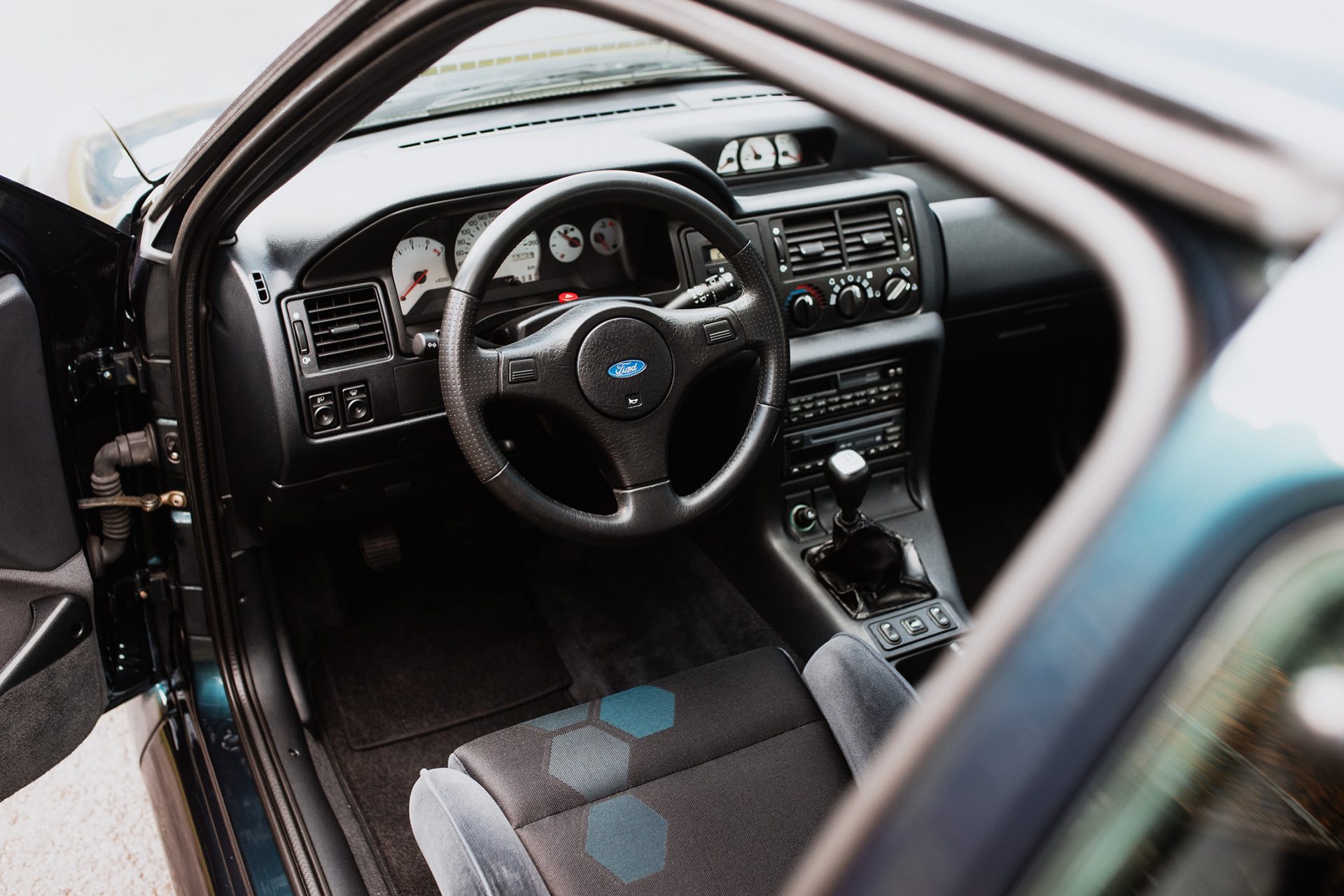
The cabin featured Recaro sport seats upholstered in grey cloth with RS Cosworth embroidery. Rear seats were vestigial, making the car effectively a two-seater. The dashboard featured unique RS Cosworth instruments with a large tachometer redlined at 6,750 rpm, flanked by speedometer and auxiliary gauges for boost pressure, oil pressure, water temperature, and fuel.
A leather-wrapped steering wheel faced the driver. Standard equipment included power windows, central locking, and an AM/FM cassette stereo. Air conditioning was optional. Sound insulation was minimal, allowing the turbo four’s distinctive soundtrack to dominate.
Specifications
- Engine: YBT turbocharged inline four, 1,993cc (90.8mm x 77mm), DOHC, four valves per cylinder, Garrett T3/T04B turbocharger
- Power: 227 bhp at 6,250 rpm
- Torque: 224 lb-ft at 3,500 rpm
- Transmission: Five-speed manual, Ferguson viscous coupling AWD (34/66 front/rear split)
- Chassis: Steel monocoque, 2,530mm wheelbase
- Suspension: MacPherson struts (front), multi-link (rear)
- Brakes: Vented discs 283mm (front), vented discs 278mm (rear)
- Wheels: 8×15-inch alloy, Pirelli P Zero 205/50 ZR15 (later 16-inch)
- Weight: 1,275 kg
- Performance: 137 mph top speed, 0-60 mph in 5.9 seconds
Competition History
The Escort RS Cosworth was built specifically for rallying. François Delecour drove one to victory at the 1993 Monte Carlo Rally, the car’s competition debut. The Escort RS Cosworth won multiple WRC events throughout the mid-1990s, though it never captured a manufacturer’s championship.
Carlos Sainz piloted works examples to numerous rally wins between 1993 and 1995. The car proved competitive on tarmac and gravel, though it struggled against Subaru’s Impreza and Mitsubishi’s Lancer Evolution on the fastest events. Numerous privateer entries campaigned Escort RS Cosworths in national championships worldwide, with many continuing in historic rally events today.
Production and Legacy
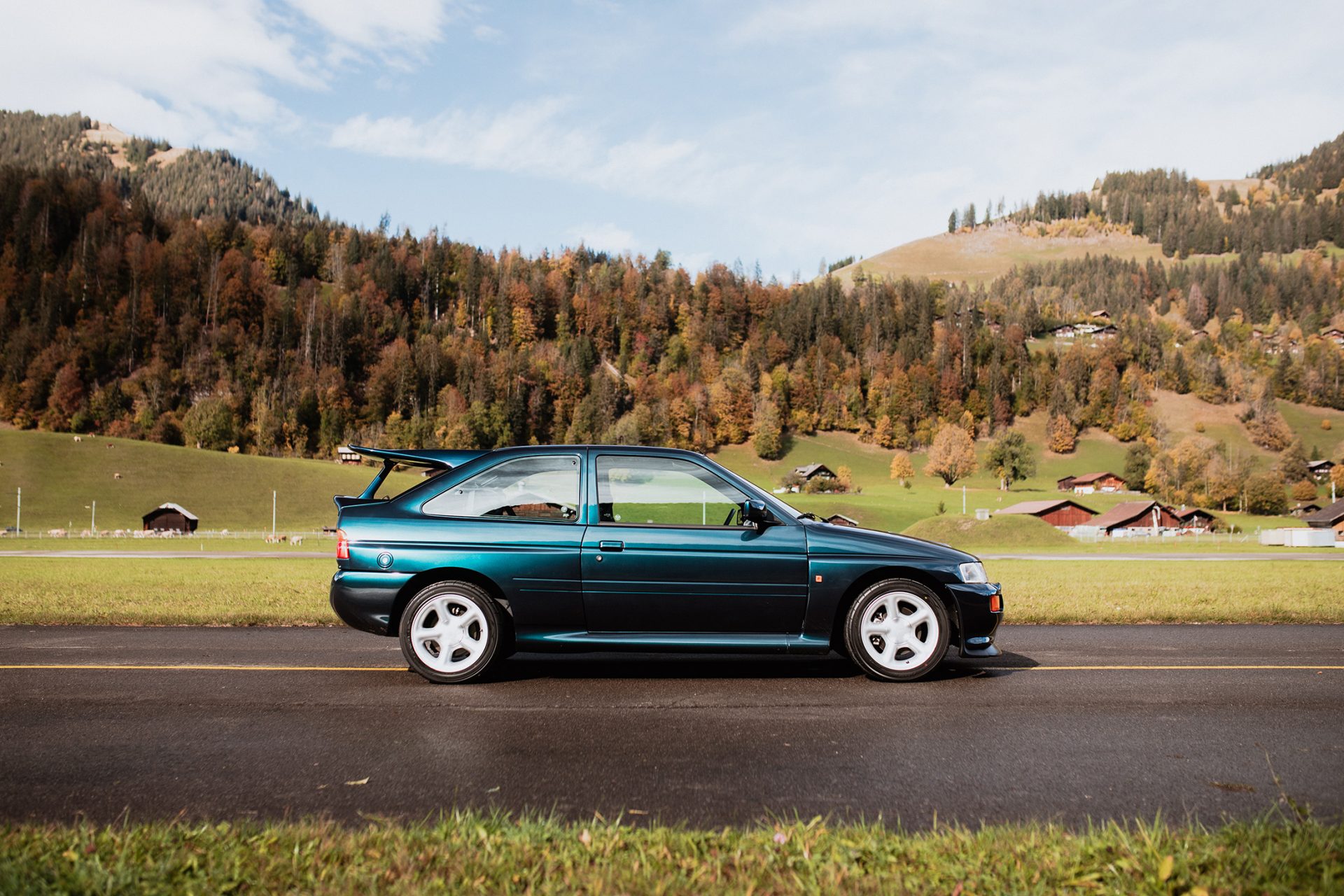
Ford built 7,145 Escort RS Cosworths between February 1992 and January 1996 at Boreham. Bodies arrived from Karmann in Germany as painted shells, with Boreham installing the drivetrain and final components. Production included several variants: the original 1992-1993 standard model, the 1994 Luxury model with air conditioning and leather seats, the Monte Carlo limited edition, and the final 1996 model with 16-inch wheels.
The Escort RS Cosworth achieved Ford’s objectives. It reclaimed credibility in the WRC, won numerous events, and created a road car that enthusiasts genuinely wanted. The massive production numbers ensured accessibility, making RS Cosworths attainable unlike ultra-limited Italian exotics.
Today, clean Escort RS Cosworths are increasingly collectible. The combination of rally heritage, turbocharged performance, and distinctive styling has created strong demand. Values have climbed significantly, with pristine examples commanding prices that would have seemed impossible a decade ago.
The Escort RS Cosworth represented the peak of 1990s rally homologation specials, when manufacturers still built genuinely extreme road cars to satisfy motorsport regulations. The massive rear wing, turbo four soundtrack, and four-wheel drive capability created an icon that defined an era. It was the last great Ford rally car, closing a chapter that began with the Escort RS1600 two decades earlier.