Last summer, I was getting ready for a race here in California. It was a typically hot, Southern California day and so I was, of course, hesitant to get suited up any sooner than I had to. Once the time finally came, I walked into a friend’s trailer and joined a mutual racing friend as we pulled on our Nomex. After putting on my turtleneck Nomex underwear and pulling on my two-layer suit, I looked over at my friend who was pulling up his suit over his t-shirt, while sitting on a stack of brand-new Nomex underwear…still in the bag. I asked him, “Aren’t you going to put on your underwear?” Without missing a beat he replied, “Naw, it’s too hot today. I only wear those in the winter.” It was at that moment, that I realized that historic racing has a safety education problem.
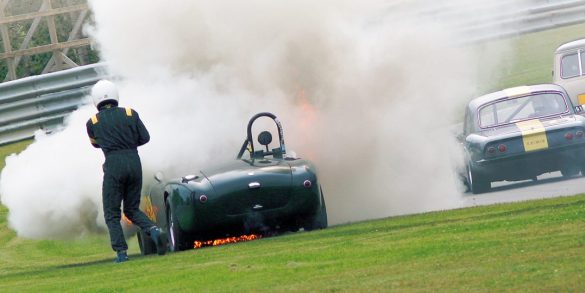
After that weekend, I decided that one of the best services that we could provide the hobby, as a whole, is to do some special articles on the facts that everyone needs to understand before choosing their personal safety gear. After seeing the carnage that took place at events like the BRIC and the Goodwood Revival this past summer, I knew we couldn’t afford to procrastinate on this idea any longer. So, in place of our usual feature article this month, you’ll find a series of smaller articles devoted to the underlying fundamentals and certification of several critical pieces of driver safety equipment. Unlike a lot of magazines that put together “safety issues” as a way of selling you specific products, we’ve taken a different approach. We’ve asked several experts in their respective fields to provide you with the knowledge necessary for you to make your own choice of what is best for your specific application. I hope you find this useful, and as always, would welcome your feedback.