
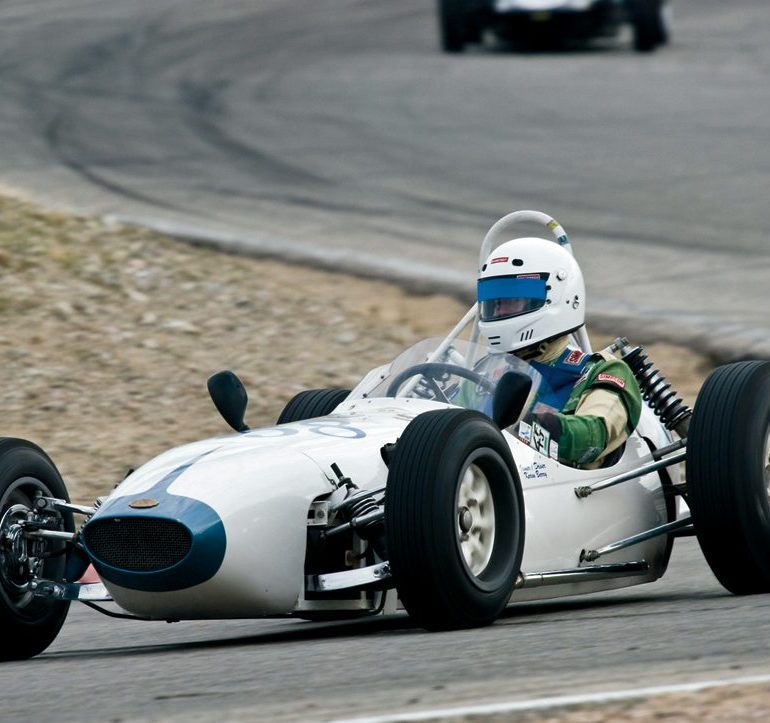

The Formula Junior category was introduced in Italy in 1958 by Count Giovanni Lurani, and in 1959 it became an International Formula. Shortly thereafter, in 1960, the British began to take a serious interest in the category, beginning the rivalry between British and Italian cars.
The original FIA Formula Junior regulations defined the cars as single-seater racing cars with their mechanical components coming from a touring car of which a minimum of 1,000 units had been produced in 12 months time. The chassis was built within certain dimensions and to a weight minimum. The engine, gearbox, brakes, etc., had to be derived from a production touring car. Therefore, the great variety of choices on different cars, such as engines from BMC, Fiat and Ford, and gearboxes from Citroen, Renault and VW.
Formula Junior was in effect Formula Two and Formula Three combined, with a maximum engine capacity of 1-liter or 1.1-liters, depending on the car weight. It was a single-seater training ground for young drivers from 1959 to 1963, and produced an endless list of future Formula One stars including Chris Amon, Richard Attwood, Peter Arundell, Jim Clark, Denis Hulme, Peter Revson, Jochen Rindt, Joe Siffert and John Surtees.
Lotus was the dominant force in Formula Junior, winning the British National Championship from 1960-63, but a dozen other small companies also produced cars including Bandini, Brabham, Cooper, Elva, Lola, Merlyn, Osca, Stanguellini and Taraschi.
These were, in effect, mini Grand Prix teams with first-class drivers, designers and mechanics. Ironically, Formula Junior, which was started as a cost-savings effort, was ultimately stopped because the Formula One technology of the day was being used in this lower formula. The monocoque design of the Lotus 27 was a prime example of this technology.
Today, the large number of premium venues, combined with very competitive grids has translated into a very strong market for Formula Juniors, especially in Europe. Having a legitimate Formula Junior allows one the opportunity to race at Goodwood, the Monaco Historic, and the Monterey Reunion, to name but a few events.
1962 Ausper Type 4
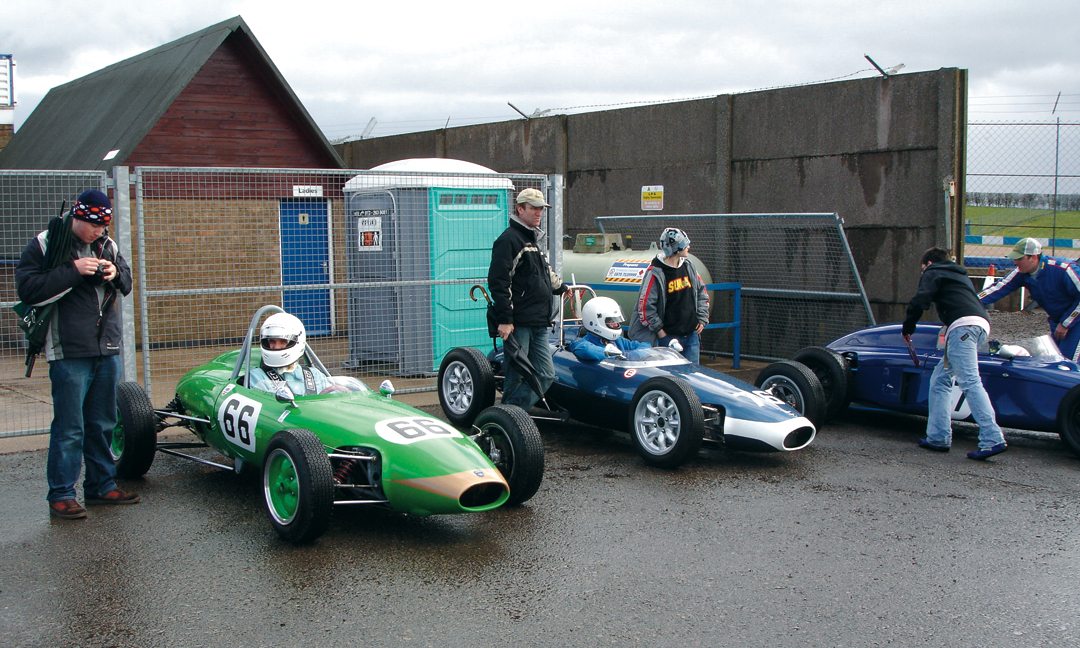 The Ausper was an Australian-designed Formula Junior, the brainchild of designer Tom Hawkes. The first car made its debut in October 1960 driven by Peter Jopp, and was called the Tomahawk. Tom Hawks was to form Competition Cars of Australia and produce further models of his rear-engine design. The Type 2 was built over the winter of 1960–61 and the Type 3 in the spring of 1961. The Type 3 finished in a credible 4th place at the Oulton Park Gold Cup race against strong competition. For the 1962 season, the Type 4 made its debut at Silverstone in May, driven by John Rhodes, and later that month, Rhodes took a win at Brands Hatch. It was extremely sleek with a low profile, had a tubular space frame utilizing the Ford 105E 1097-cc, 4-cylinder engine mated to a Renault 6-speed gearbox. The Type 4 was a clever design that was not only low and sleek but also incorporated unique features, like “mini” rubber suspension units on the wishbones and shock absorbers.
1960 BMC Mark 1
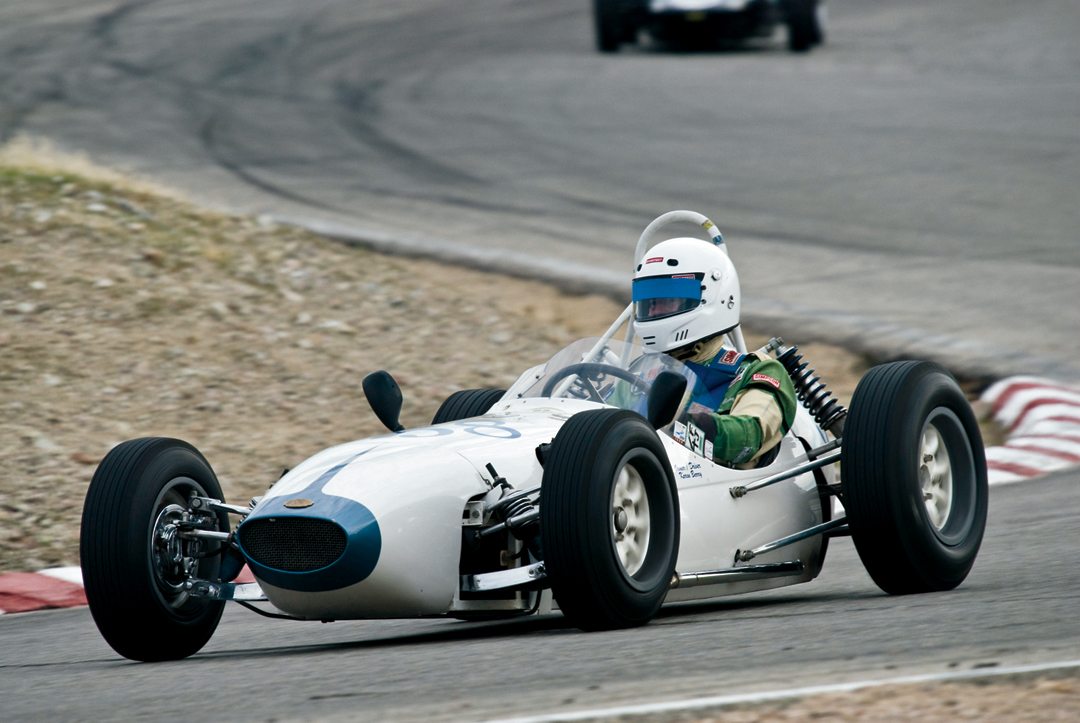
The BMC Formula Junior was also known as the Huffaker BMC. It was designed and built by Joe Huffaker, an experienced hot-rodder, racecar engineer and BMC distributor, whose company was British Motor Car Distributors Ltd., of San Francisco. It had a square tubular space frame, used a 998-cc, BMC 4-cylinder engine mounted in the front, mated to a 4-speed BMC gearbox. Brakes were four-wheel drums with 13-inch magnesium wheels. It had a very short wheelbase. The Mark 1 won its first time out driven by Jack Dalton, at Stockton, California, against strong opposition. Twenty cars were built. It was followed by the Mark 2, a rear-engine car. Huffaker would go on to build the successful Genie sports racing cars, as well as Indycars.
Criteria Used For Assessing Valuations for this Guide:
- Degree of Originality
- Overall Condition, Restoration
- Technology, Design, Coachbuilder
- Production Numbers/Rarity
- Competition History
- Ownership History, Documentation
- Modern Event Eligibility
Regional Variances
The prices stated in this guide are based on U.S. values. The values of historic racing cars can vary as much as 25%-35% in other countries, depending on local market appeal, currency rates, import duties, and VAT. Most of the time, we are able to document known sales or closed escrows, as they say in real estate. When this is not possible, a logical estimate of the car’s value is given, based on its sales history and relationship to cars of its type.
The prices stated in this guide are based on U.S. values. The values of historic racing cars can vary as much as 25%-35% in other countries, depending on local market appeal, currency rates, import duties, and VAT.
LEVEL |
VALUATION CATEGORIES |
|---|---|
I |
The best combination of all criteria. |
II |
Satisfies mid-range of criteria. |
III |
In need of restoration. Meets only a few points of criteria |