

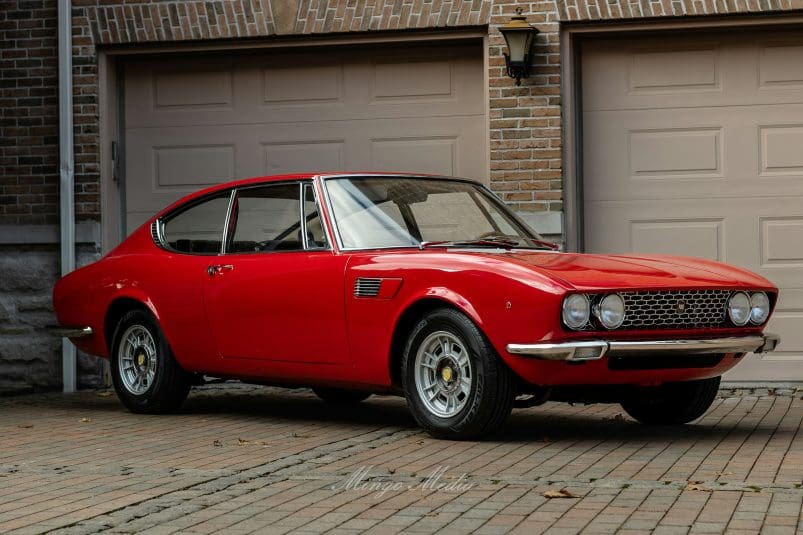
Geneva, March 1967. Fiat unveiled the Dino 2000 Coupé at the Geneva Motor Show, a Bertone-bodied 2+2 grand tourer powered by a Ferrari-designed V6. It arrived a few months after the Pininfarina-styled Dino Spider. Under the hood was a 2.0-liter, four-cam 65-degree V6 producing 158 hp at 7,200 rpm and about 123 lb-ft of torque, a version of the same engine used in Ferrari’s Dino 206 GT. The car existed because Enzo Ferrari needed 500 production engines to homologate his V6 for Formula 2, and only Fiat could build them in time. The Coupé rode on a wheelbase 270 millimeters longer than the Spider’s, which gave it two usable rear seats and a more grown-up, understated character. Fiat built 3,670 Dino 2000 Coupés between 1967 and 1969, all with left-hand drive, before the 2400 replaced it.
Background and Origins
The Dino story started with racing. In 1965 the FIA announced new Formula 2 rules for 1967, limiting engines to 1.6 liters and six cylinders and requiring them to be derived from a production engine fitted to at least 500 road cars built within 12 months. Ferrari wanted to race its Dino V6 in Formula 2, but in the mid-1960s it couldn’t build that many engines or cars on its own. In 1965, Ferrari and Fiat reached an agreement: Fiat would build the engines and fit them to a GT car of its own, while Ferrari would use them in a smaller mid-engined road car. The engine and the cars took the Dino name from Alfredo “Dino” Ferrari, Enzo’s son, who died young in 1956 and was closely associated with the original 1.5-liter V6, which was developed under Vittorio Jano.
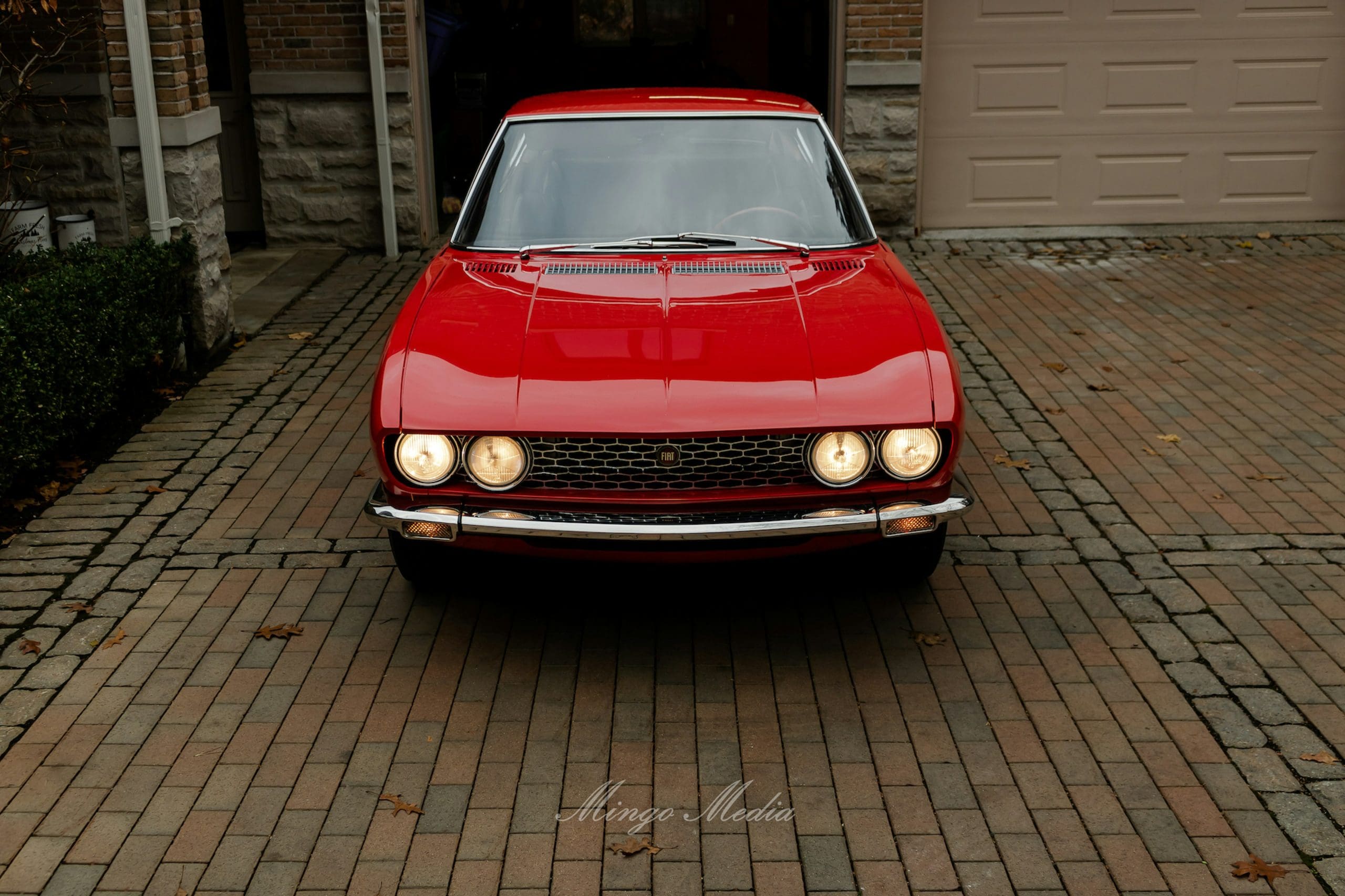
The deal suited both companies. Ferrari got the production numbers it needed for homologation, while Fiat gained an exotic V6 for its own flagship GT. The Dino was Fiat’s most ambitious performance car since the 8V of the early 1950s. The Pininfarina-designed Dino Spider debuted at the Turin Motor Show in late 1966, and Fiat followed it with a closed, four-seat version developed by Bertone. The Coupé made its public debut at the Geneva Motor Show in March 1967.
Design and Engineering
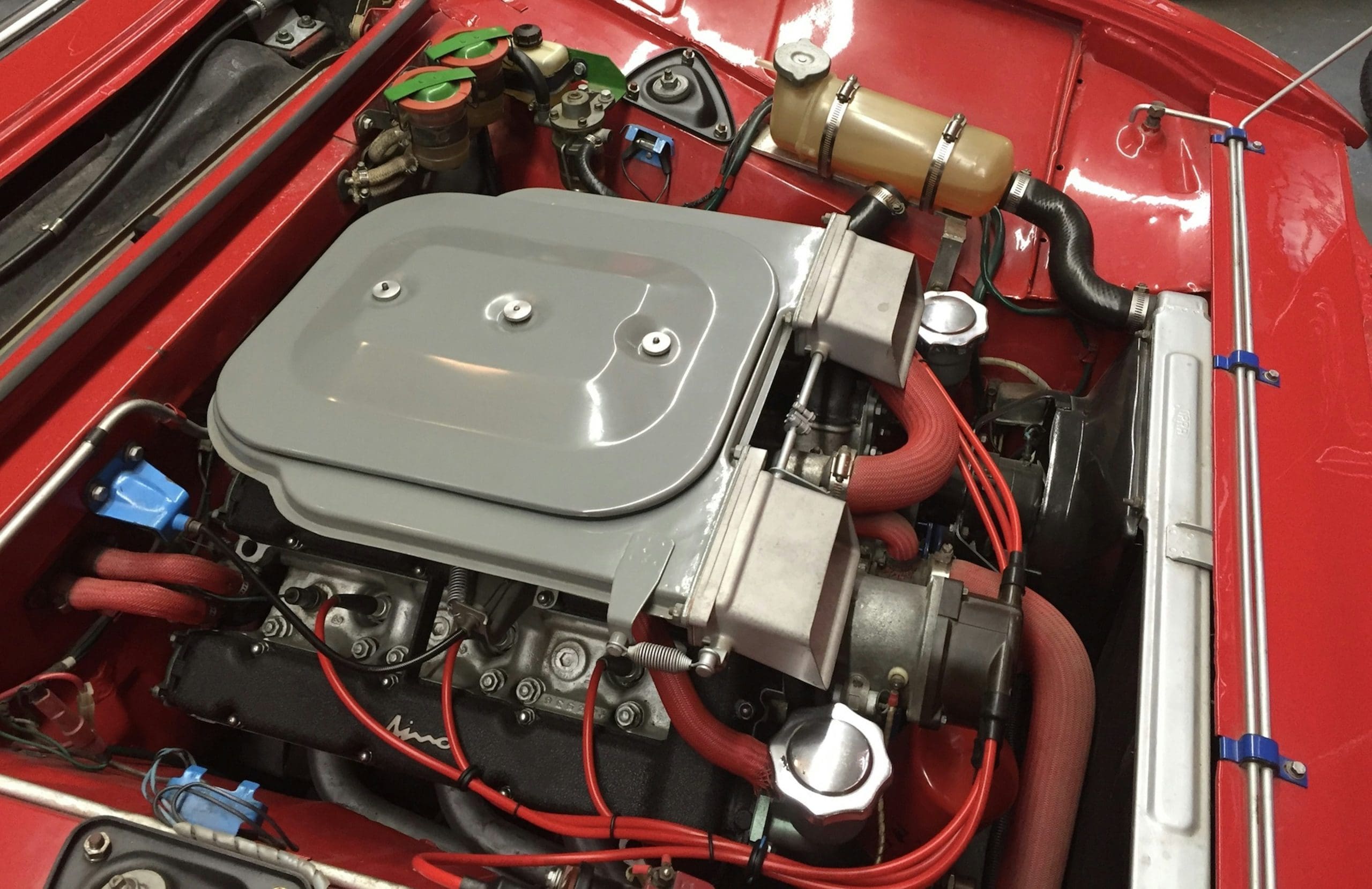
The Dino Coupé used an all-steel monocoque body with a 2,550-millimeter wheelbase, 270 millimeters longer than the Spider’s. The engine was the real attraction. It was a 1,987cc 65-degree V6 with an aluminum-alloy block and heads, 86 x 57 mm bore and stroke, two overhead camshafts per bank, a 9.0:1 compression ratio and three twin-choke Weber 40 DCN carburetors. Aurelio Lampredi oversaw the adaptation of Ferrari’s racing-engine design for road use. Fiat rated it at 160 PS (158 hp) at 7,200 rpm, with about 123 lb-ft at 5,700 rpm. The engines were built by Fiat in Turin, but Ferrari claimed 180 hp for the version fitted to its 206 GT. The Dino was the first Fiat with four overhead camshafts, and it came with a limited-slip differential as standard.
Power went to the rear wheels through a five-speed Fiat manual gearbox. The front suspension was independent, with double wishbones and coil springs. At the rear, the 2000 used a live axle with semi-elliptic leaf springs and four shock absorbers, derived from the Fiat 125. It was a fairly basic setup for a car of its price and ambitions, and it was the 2.0-liter car’s main dynamic weakness. Servo-assisted disc brakes on all four wheels used a dual-circuit system. In 1968, the 2.0-liter Dino received Magneti Marelli’s Dinoplex electronic capacitive-discharge ignition, an early production-car use of electronic ignition that helped reduce spark plug fouling at low speeds. The Coupé weighed about 1,280 kilograms, 40 kilograms more than the Spider. It could reach about 124 mph and sprint from 0 to 62 mph in around eight seconds.
Styling
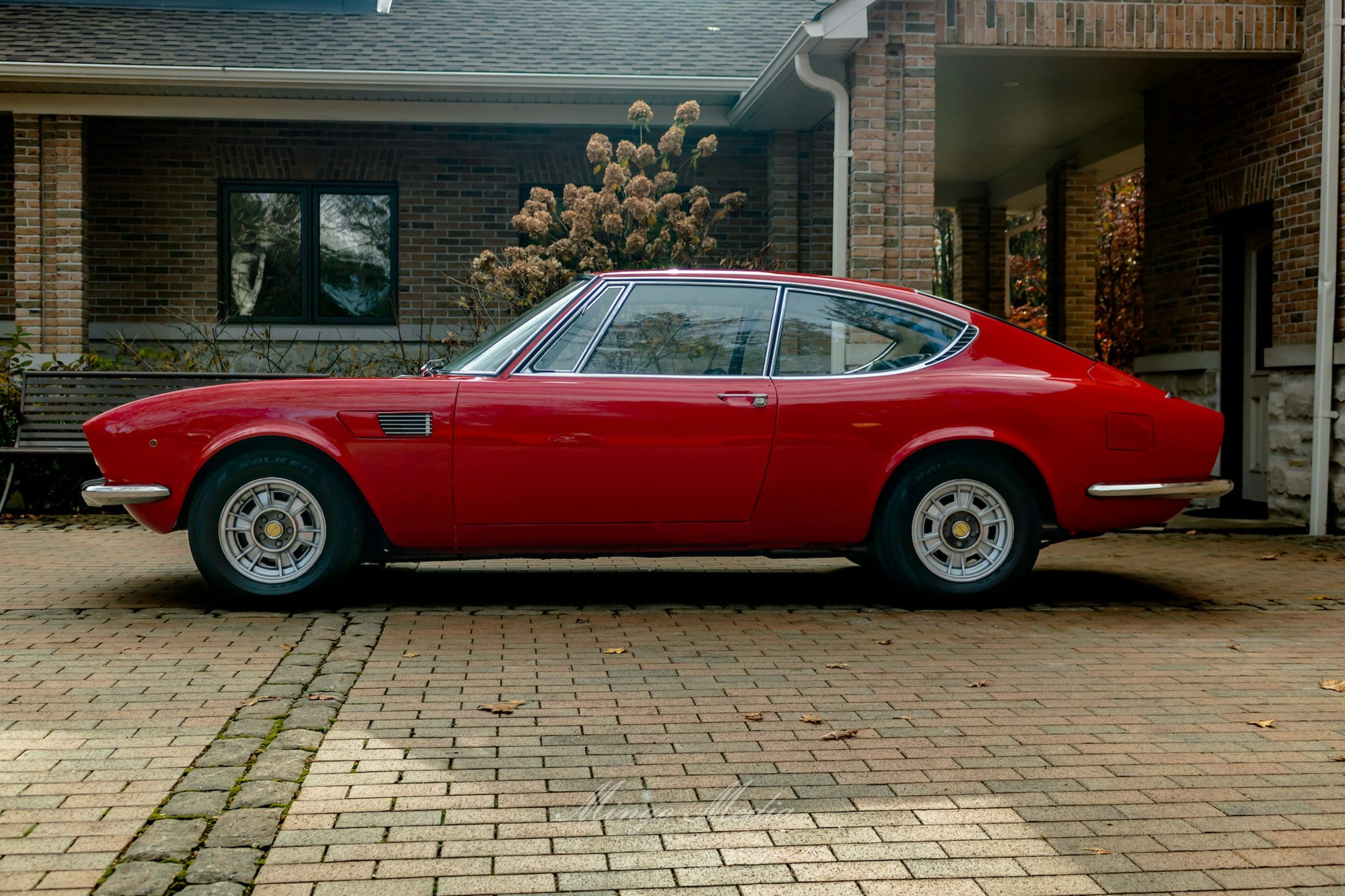
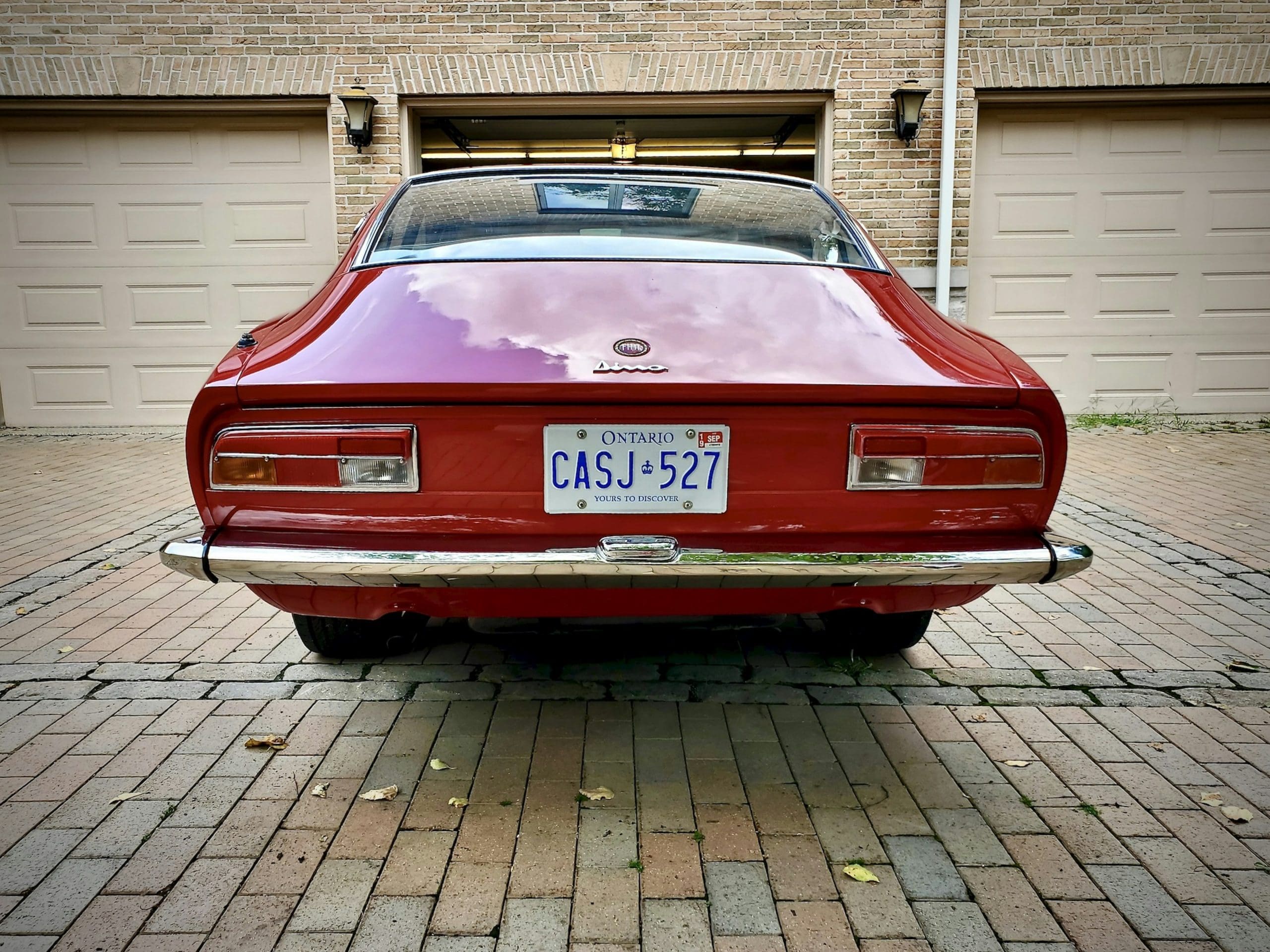
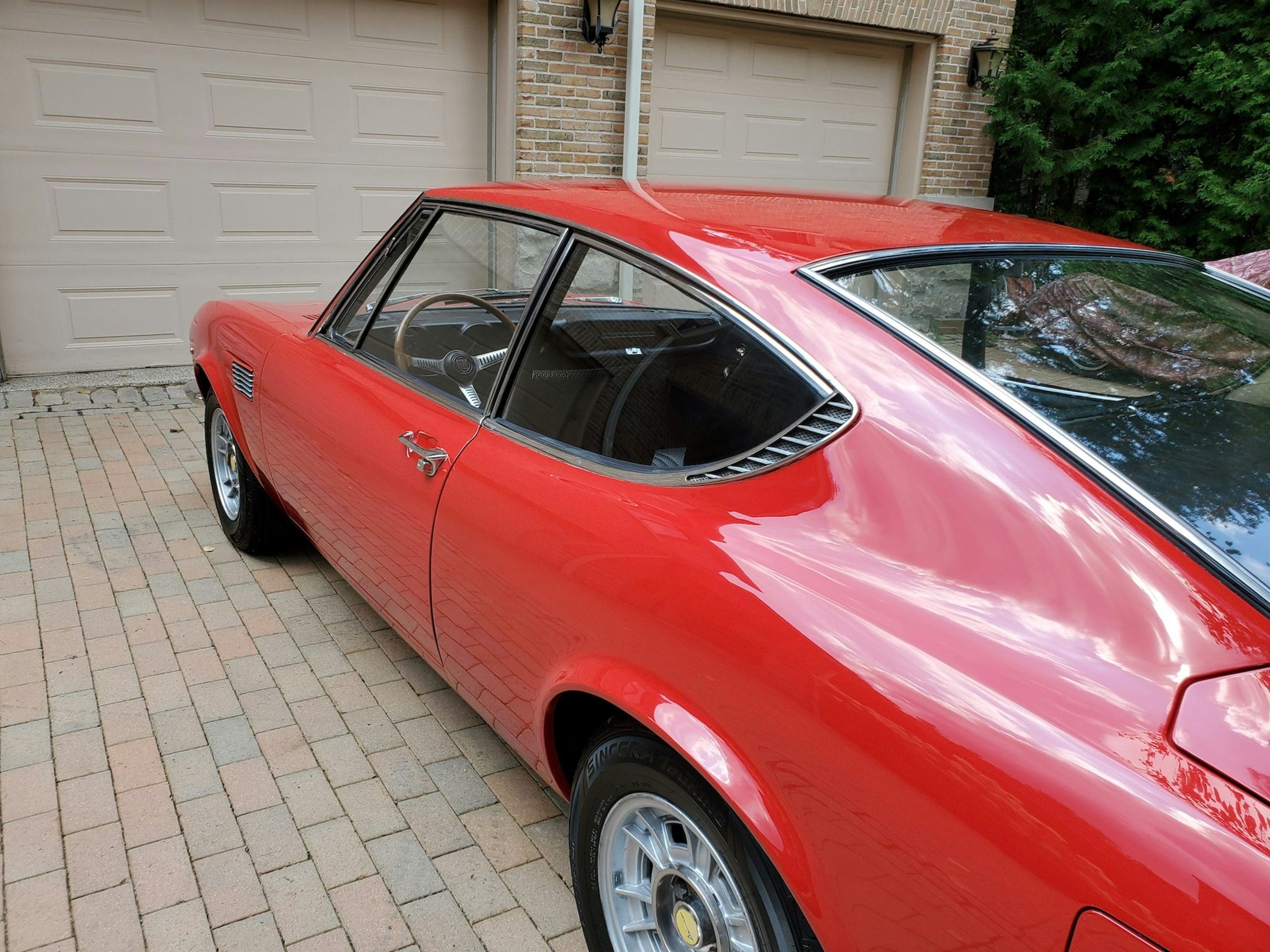
Bertone designed and built the Coupé’s body. Fiat commissioned the four-seat project in 1963, and Giorgetto Giugiaro drew the original design, with the first prototype completed in 1964. Giugiaro left Bertone in late 1965, and his successor, Marcello Gandini, carried out the final refinements, so the design is generally credited to both. Where the Pininfarina Spider and Ferrari’s Dino GT had show-car curves, Bertone took a more restrained approach that suited the Coupé’s role as a discreet grand tourer. It had a long hood, a clean fastback roofline with a large glass area, quad headlights set into a wide grille and a short, squared-off tail. The proportions were crisp and modern, and they hid the car’s extra length well.
Interior
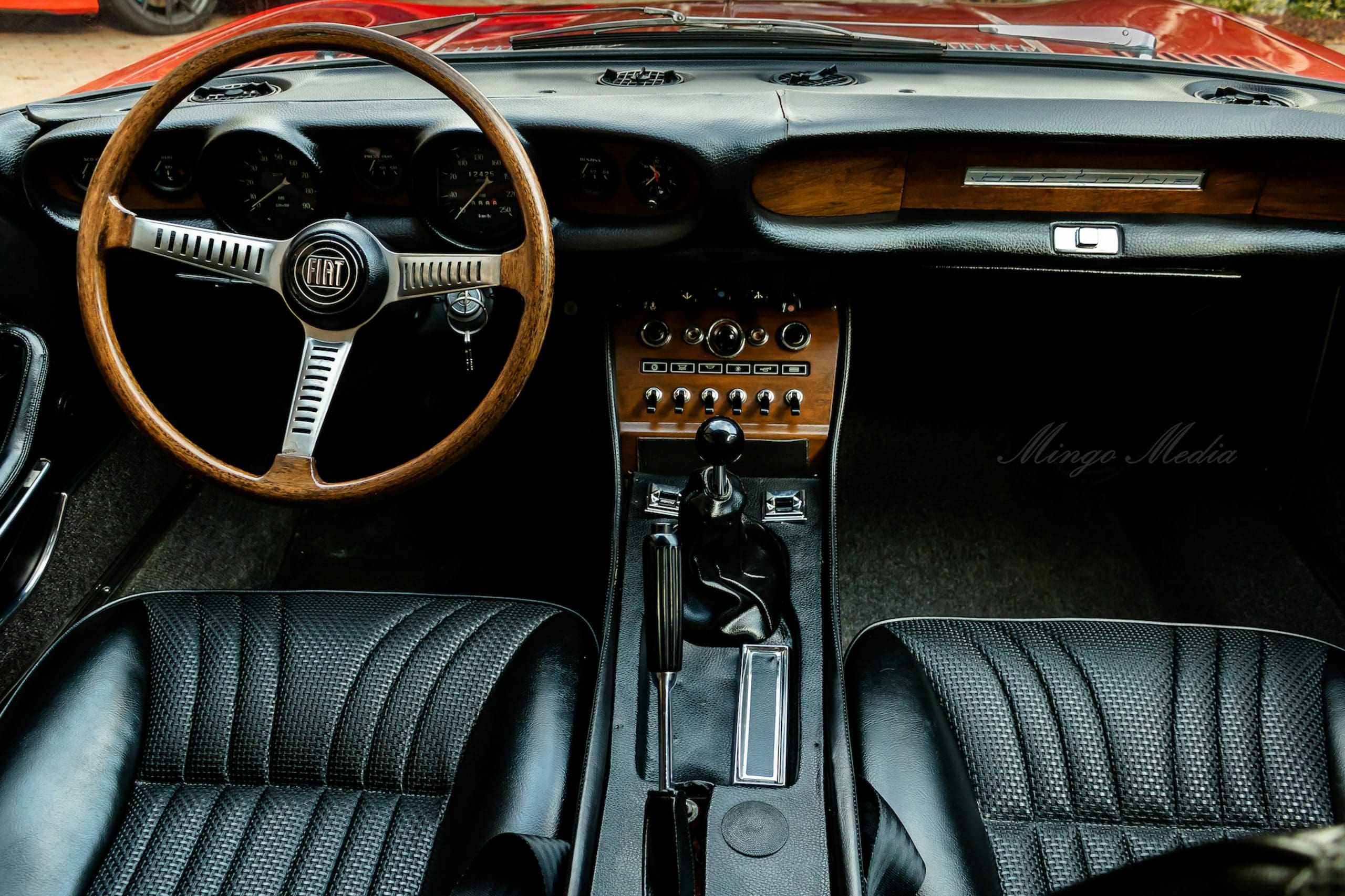
The Coupé was the more upmarket of the two Fiat Dinos, and its cabin showed it. The Spider made do with a vinyl-covered dashboard and switchgear from cheaper Fiats, while the Coupé got a better-trimmed interior with more supportive seats, standard headrests and optional leather upholstery. A full set of instruments faced the driver, and the longer wheelbase made room for two individual rear bucket seats that folded down for extra luggage space. It wasn’t as luxurious as a Ferrari 2+2, but the Coupé offered a genuine four-seat Italian GT experience with a Ferrari-designed engine at a far lower price.
Specifications
- Engine: Ferrari-designed 65-degree V6, 1,987cc, aluminum block and heads, DOHC per bank, three Weber 40 DCN carburetors
- Power: 158 hp (160 PS) at 7,200 rpm
- Torque: 123 lb-ft at 5,700 rpm
- Transmission: Five-speed Fiat manual, limited-slip differential, rear-wheel drive
- Chassis: All-steel monocoque
- Body: Steel, designed and built by Bertone
- Suspension: Front independent double wishbones, coil springs; rear live axle, semi-elliptic leaf springs
- Brakes: Servo-assisted dual-circuit discs front and rear
- Dimensions: 4,507 mm long, 1,709 mm wide, 1,315 mm high, 2,550 mm wheelbase
- Weight: 1,280 kg / 2,822 lbs
- Performance: 0-62 mph in about 8 seconds, top speed of about 124 mph
Production and Legacy
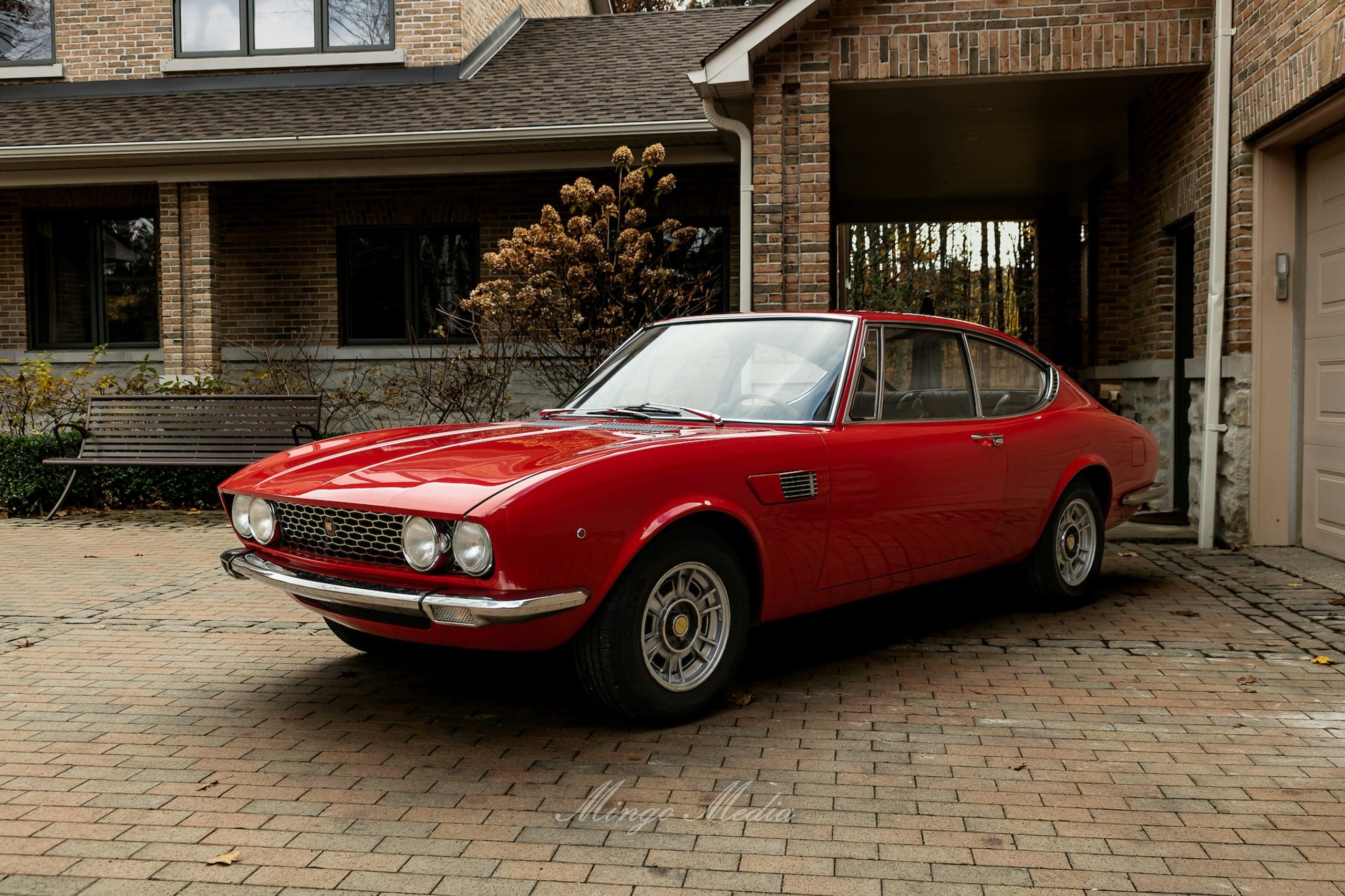
Fiat built the Dino 2000 Coupé at its Rivalta plant near Turin from 1967 to 1969, completing 3,670, all with left-hand drive. It was replaced by the Dino 2400, which debuted at the Turin Motor Show in October 1969. The 2400 had a larger 2,418cc V6 with a cast-iron block, producing 178 hp, along with a ZF five-speed gearbox and, more importantly, independent rear suspension derived from the Fiat 130. From December 1969, the Fiat Dino was assembled at Maranello on Ferrari’s production line, alongside the Dino 246 GT.
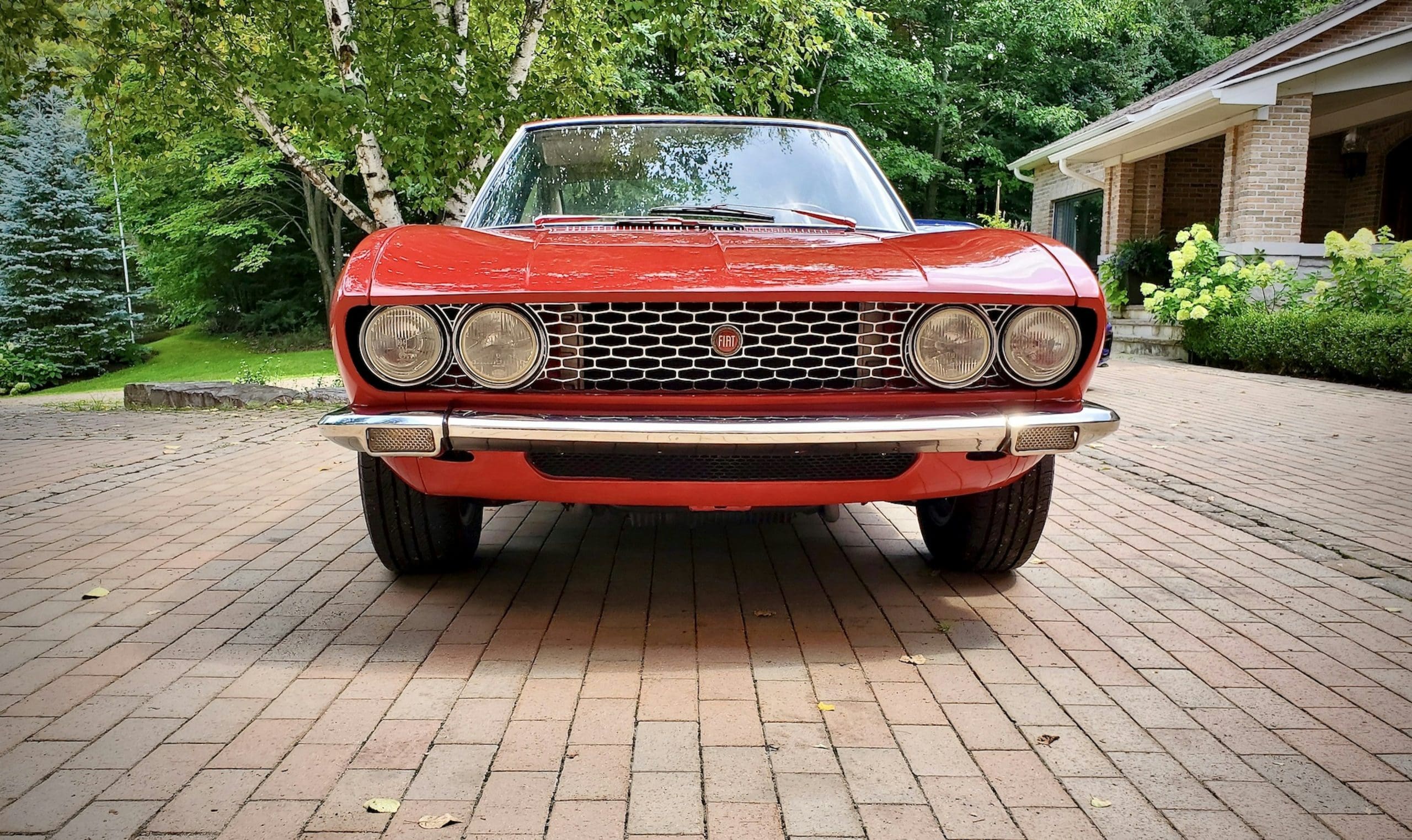
The Dino Coupé did its job. It helped Ferrari reach the production numbers it needed for Formula 2, and it gave Fiat a credible high-performance flagship. The Dino V6 went on to a long career, eventually powering the Lancia Stratos in its 2.4-liter form. For years, the Coupé was overshadowed by the more glamorous Spider and the Ferrari Dino GT, but its Bertone styling, practical cabin and Ferrari-designed engine have made it an increasingly appreciated way to own a piece of Dino history.