
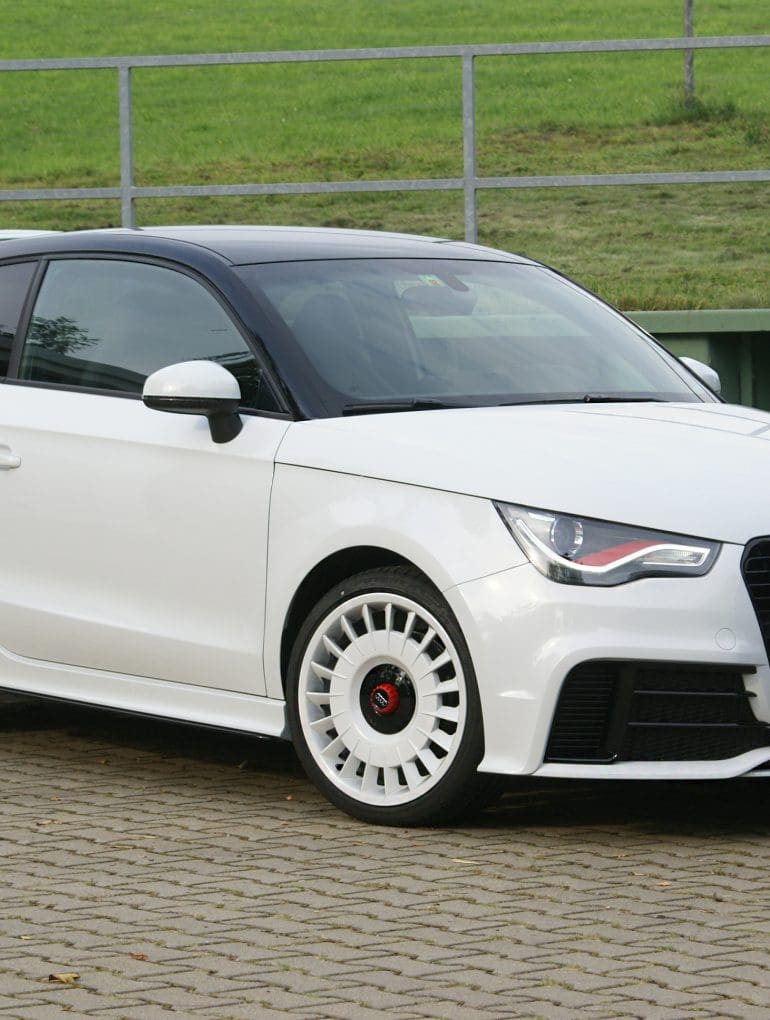

June 2011, Worthersee. Audi unleashed the A1 Clubsport Quattro, a 503-horsepower five-cylinder monster that sent the crowd into a frenzy. Behind the scenes, they’d already greenlit a production version twelve months earlier. Not quite as insane, but close. Just 333 examples, all left-hand drive, as a tribute to the legendary Sport Quattro. The result was the A1 Quattro, announced in December 2011 and shown at Geneva in March 2012. An in-house Audi project proving you didn’t need five cylinders or supercar money to channel rally heritage.
Background and Origins
By the mid-2000s, Audi’s transformation was complete. From near-bankruptcy in the early 1990s to the most desirable brand in the premium mainstream market, Ingolstadt had pulled off a remarkable turnaround. To push sales higher, they needed a compact supermini that would attract new customers. Rather than start fresh, they based the entry-level machine on the Volkswagen Audi Group’s PQ25 platform, already underpinning the VW Polo Mk5 and Seat Ibiza Mk4.
The production Audi A1 debuted at the Geneva Motor Show in March 2010, with sales beginning in August as a front-wheel-drive three-door hatchback. 2011 brought a 182-horsepower 1.4 TFSI, a five-door Sportback, and that show-stopping Clubsport Quattro at Worthersee. Customer reaction convinced Audi there was a market for something special.
The A1 Quattro was developed by Audi proper rather than Quattro GmbH, keeping costs manageable while allowing engineers to cherry-pick components from across the VAG parts bin. The production number was 333 units, a nod to the limited production rally specials that made Audi’s reputation.
Design and Engineering
Like every A1, the Quattro was based on a galvanized steel monocoque with a 2,469mm wheelbase. Audi modified the suspension pick-up points and wheel wells to accommodate larger uprights and bigger brakes. The biggest challenge was packaging the four-wheel drive system. The rear differential occupied the spare wheel well, forcing engineers to create an upside-down fuel tank that wrapped around the driveshaft. This stainless steel tank has a 45-liter capacity.
Suspension comprised MacPherson struts up front and a multi-link setup at the rear, adapted from the TT RS. The A1 Quattro’s vented front discs grew from 288mm to 312mm, while solid rear rotors jumped from 230mm to 272mm. Glacier White 8 x 18-inch turbine-style alloy wheels wore 225/35 R18 tires. The electro-hydraulic power steering received a more direct 14.8:1 ratio.
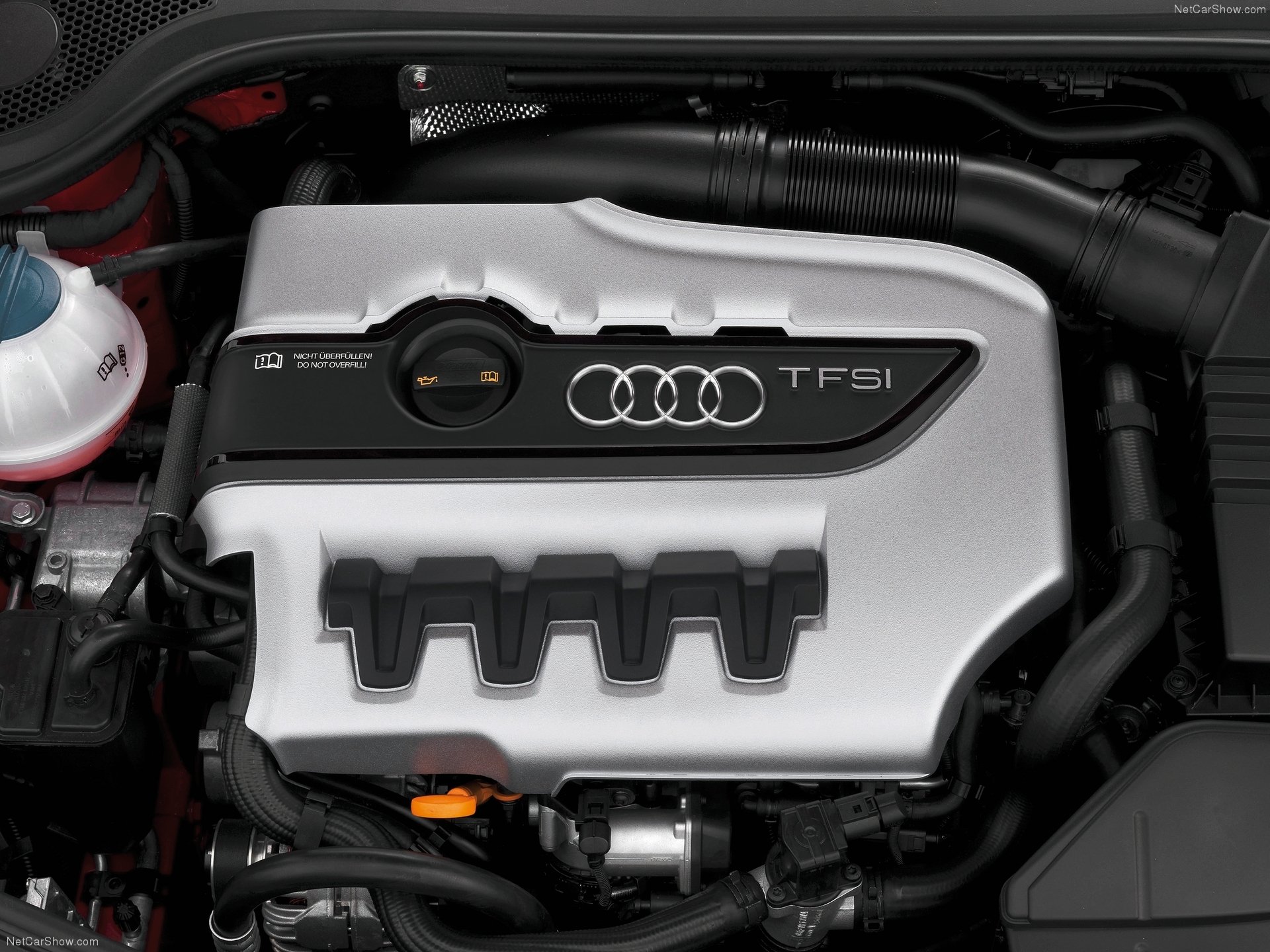
Under the hood sat a Type EA113 turbocharged inline four, largely identical to the Audi S3’s powerplant. The EA113 featured a reinforced cast-iron cylinder block, adjustable Variable Valve Timing, two balance shafts, a beefier crankshaft, custom pistons and connecting rods, new camshafts, and reinforced valve springs.
Displacing 1,984cc with a 9.8:1 compression ratio and KKK K04 turbo, peak output was 252 horsepower at 6,000 rpm and 258 lb-ft between 2,500 and 4,500 rpm. This made the A1 Quattro the most powerful car in the supermini class.
Transmission was a Type MQ350 six-speed manual with permanent all-wheel drive. At its heart was an electronically controlled, hydraulically-actuated multi-plate clutch mounted on the rear axle. During normal driving, most power went to the front wheels, but up to 100 percent could be diverted rearward if needed.
Styling
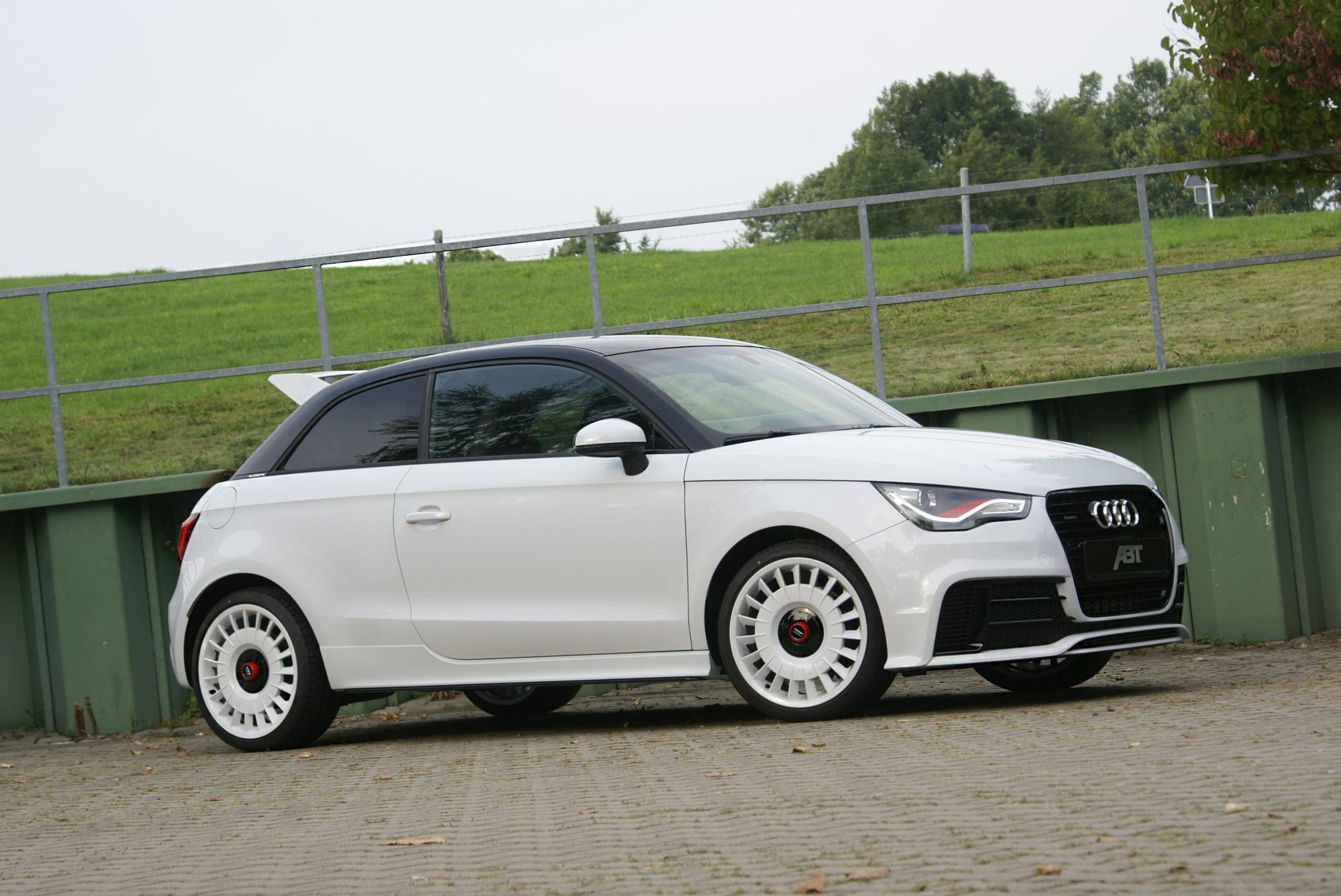
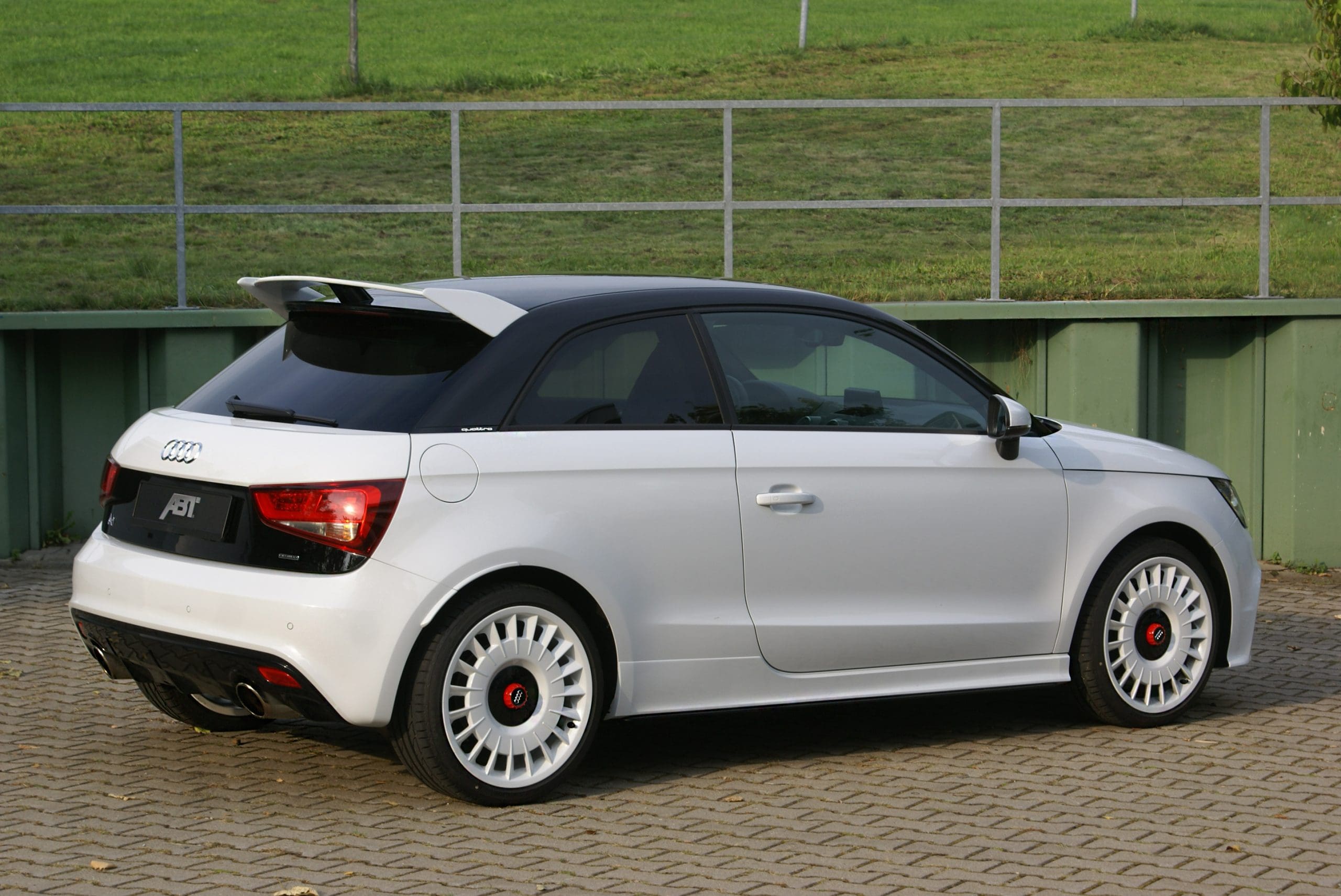
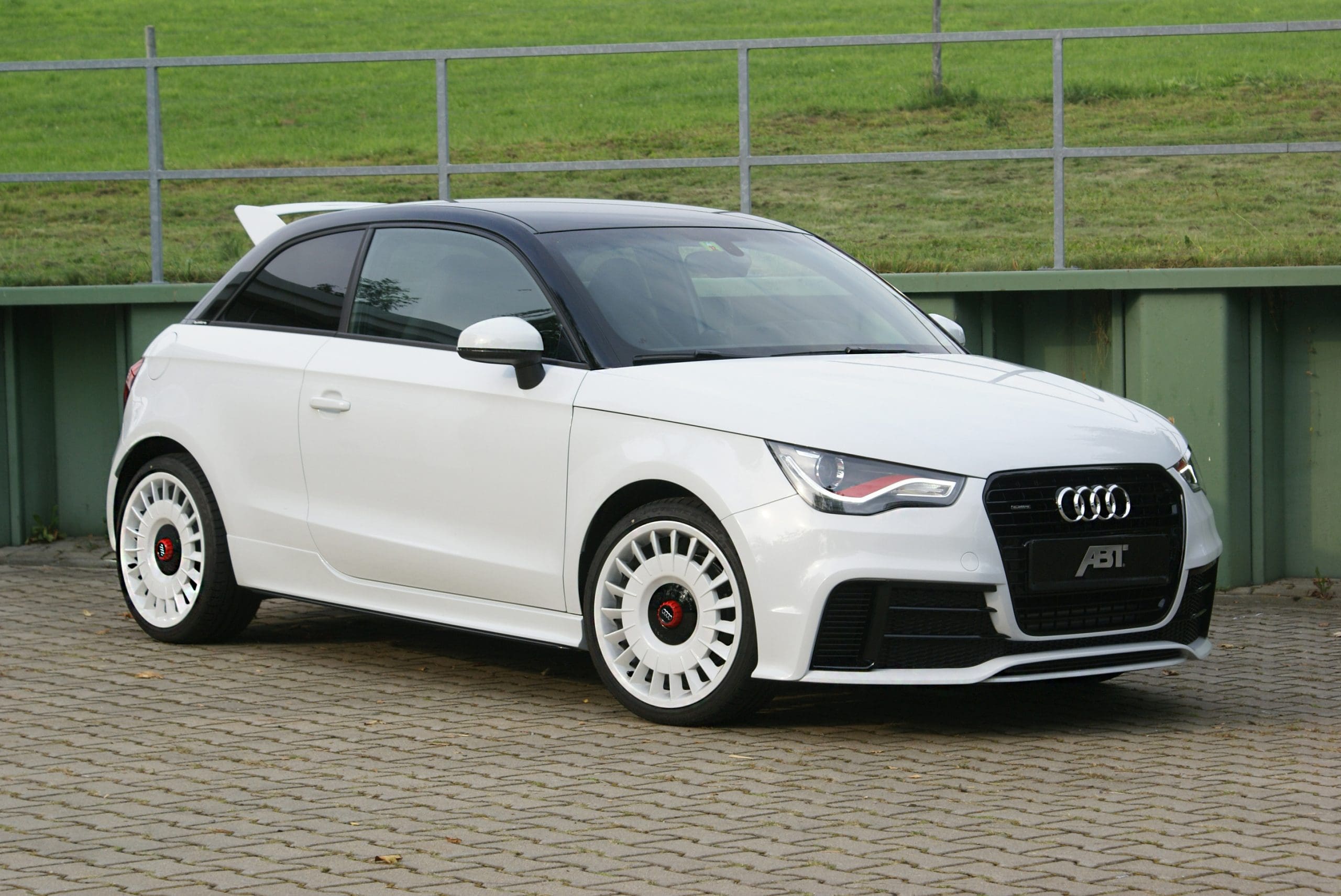
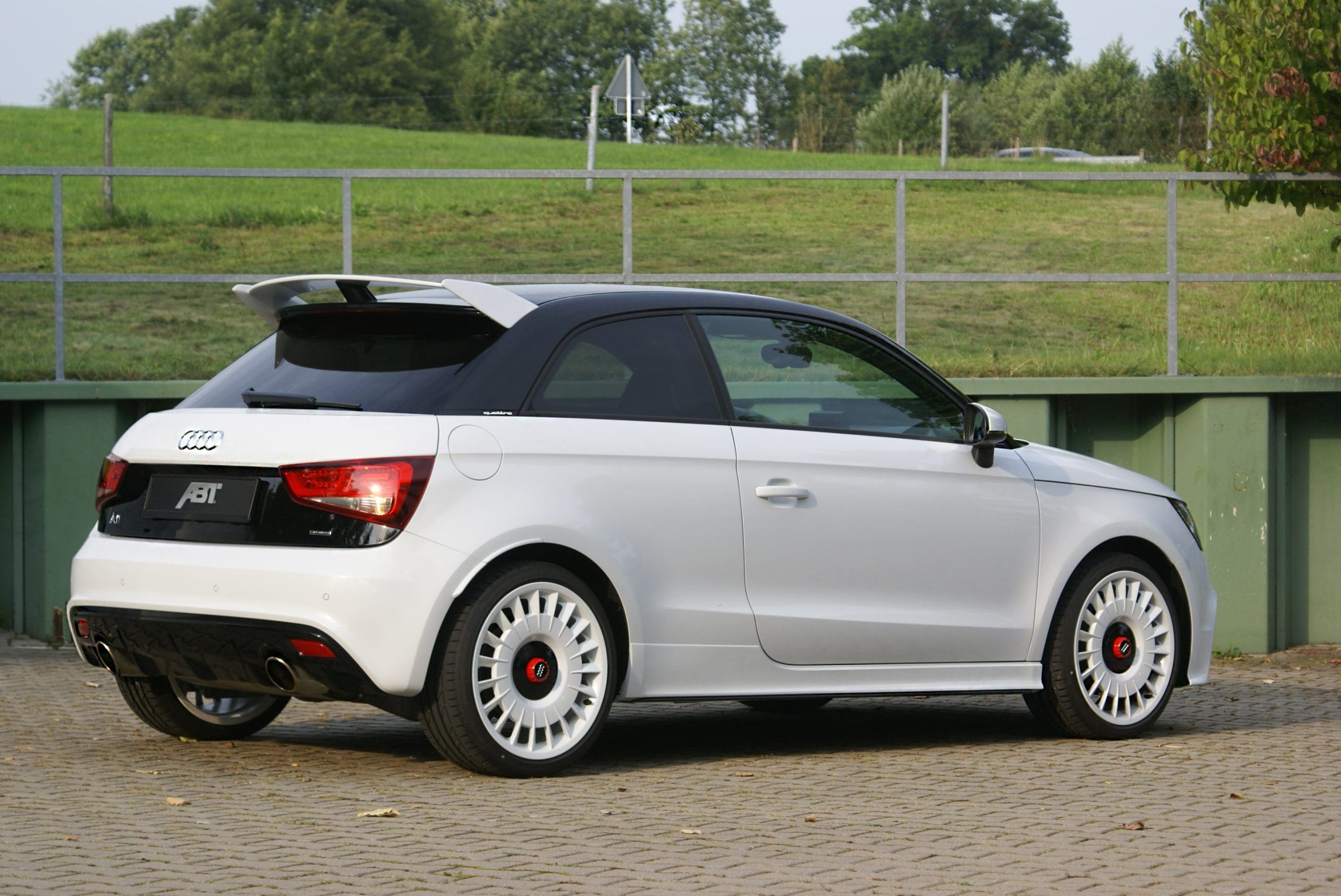
The Quattro was the most aggressive first-generation A1 ever built. The new front bumper featured massive brake and radiator intakes, plus a bigger chin spoiler. The primary grille wore high-gloss black, flanked by curved-bar headlights with unique red inlays. Custom sills with discrete black skirts ran down each flank. At the rear, a triple-pylon-mounted spoiler sat atop the roof, while a deep rear bumper housed a reprofiled venturi with 100mm tailpipes on either side.
Only one color scheme was offered: Glacier White metallic with a high-gloss black roof and matching tail fascia insert. Tinted rear windows came standard, along with Quattro badges on the grille, C-pillars, and tail.
Interior
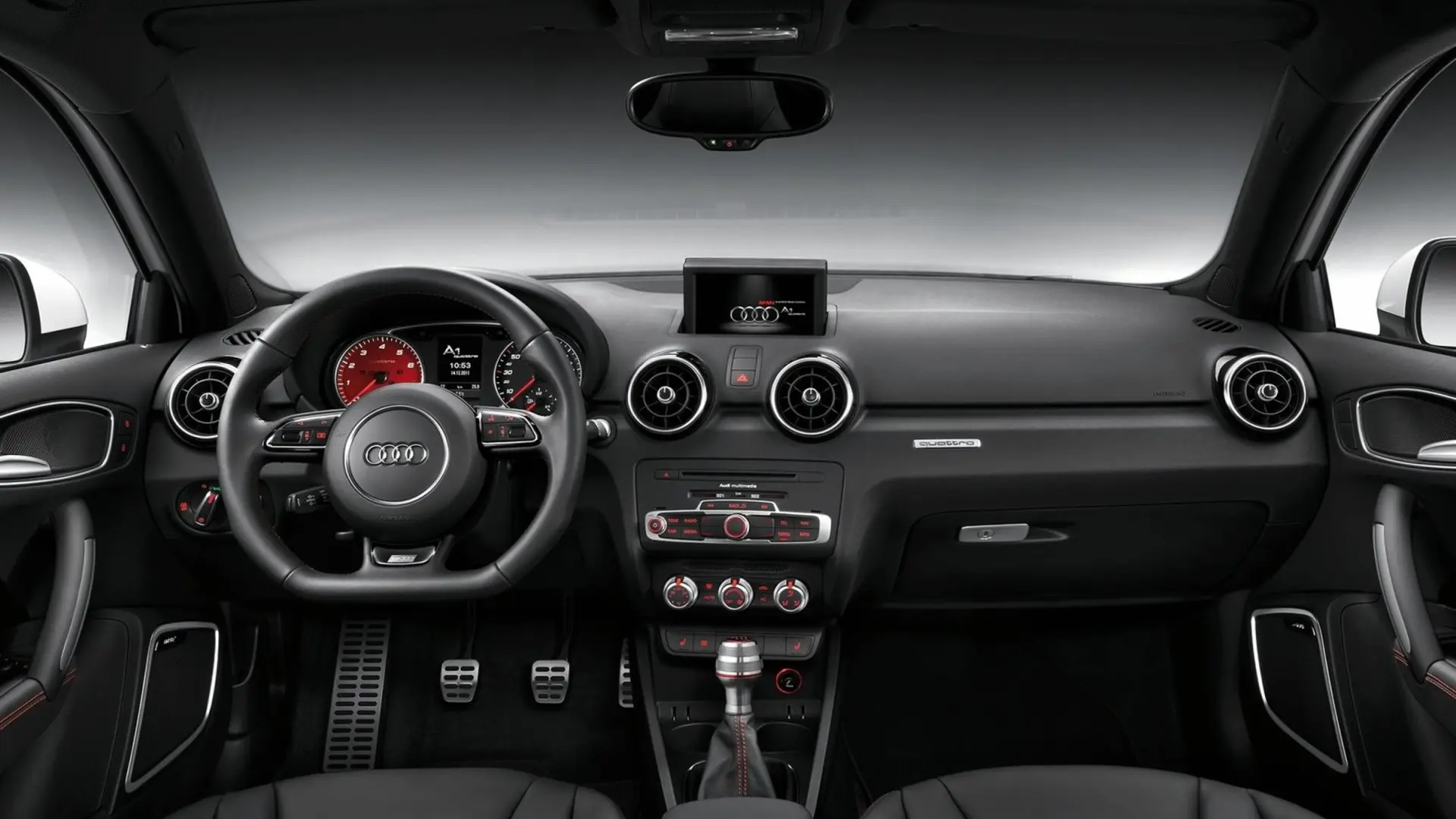
Black Silk Nappa leather upholstered the S-line seats, armrests, and steering wheel, all with red contrast stitching. Seat backrests wore Quattro insignias and high-gloss black paint. A flat-bottomed multi-function steering wheel featured a “1 of 333” plaque. The instrument binnacle housed a custom red-faced 8,000 rpm tachometer. White needles replaced the usual red, along with an aluminum gear shift knob and stainless steel pedals. Standard equipment included Xenon Plus headlights, LED interior lighting, automatic air conditioning, and cruise control.
Specifications
- Engine: Type EA113 turbocharged inline four, 1,984cc (82.5mm x 92.8mm), DOHC, four valves per cylinder, direct injection
- Power: 252 bhp at 6,000 rpm
- Torque: 258 lb-ft at 2,500-4,500 rpm
- Turbocharger: KKK K04
- Transmission: Type MQ350 six-speed manual, permanent quattro all-wheel drive
- Chassis: Galvanized steel monocoque, 2,469mm wheelbase
- Suspension: MacPherson struts (front), multi-link (rear, TT RS-derived)
- Brakes: Vented discs 312mm (front), solid discs 272mm (rear)
- Wheels: 8 x 18-inch turbine-style alloy, 225/35 R18 tires
- Weight: 1,465 kg
- Performance: 152 mph top speed, 0-62 mph in 5.7 seconds
Competition History
The A1 Quattro was never intended for competition, though its rally heritage was obvious. It served as a tribute to the quattro system that revolutionized motorsport in the 1980s. Some owners have campaigned their cars in track days and hillclimb events, where the combination of all-wheel drive, light weight, and punchy turbocharged power proves devastatingly effective.
Production and Legacy
Audi restricted production to exactly 333 units, all built during the second half of 2012 at the Forest factory in Brussels on the regular A1 production line. Every example was left-hand drive, with only 19 delivered to the UK. None were sold in the USA.
The A1 Quattro succeeded in proving that Audi could extract genuine excitement from its entry-level platform while maintaining exclusivity through severely limited production. It bridged the gap between accessible premium motoring and boutique performance, offering quattro all-wheel drive and S3-level power in a package small enough to dominate tight European streets.
Today, these 333 examples are increasingly sought after by collectors who appreciate their rarity and purity of mission. In an era when hot hatches have grown larger and more complex, the A1 Quattro stands as a reminder of when a sub-1,500-kilogram curb weight, a manual gearbox, and uncomplicated all-wheel drive were all you needed. It was Audi’s love letter to its rally heritage, packaged in the most unlikely wrapper imaginable.