
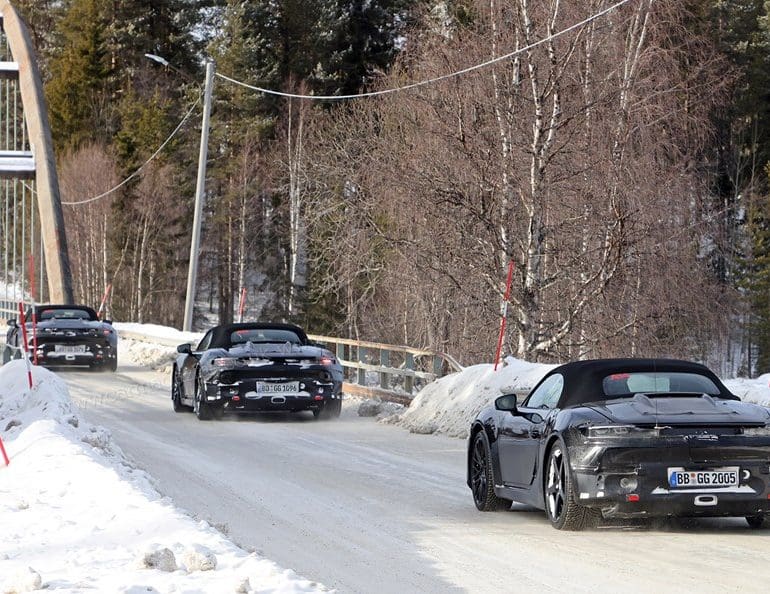

The German automaker is considering quite the reversal in relation to their original electrification vision. Multiple outlets reported in mid-February 2026, that Porsche gaffers were gathering to explicitly discuss the future of the upcoming 718 Cayman and Boxster EV. This is weeks after the company announced that gas-powered versions featuring alongside the planned EV release, would likely become the chosen pivot in strategy.
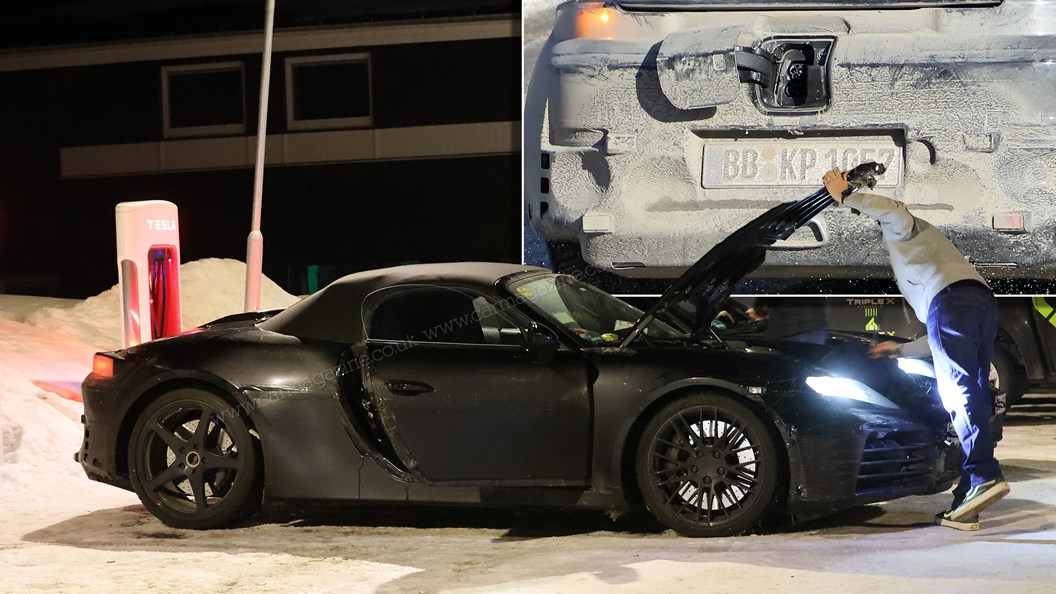
Now, it looks like the electric variants could very well be scrapped altogether. After multiple delays, the Cayman and Boxster EV release is purported to be in limbo that’s being amicably referred to by insiders as “development hell”. Needless to say, rising expenses and production quagmires related to the next-gen 718 platform are being assessed, with newly-appointed Porsche CEO Michael Leiters eager to make an immediate impact—getting the automaker’s recent financial form back on a purple patch, will no doubt be the first course of business. Neither stage of this news is particularly surprising, as Porsche’s EVs have fallen out of favor since their slightly rocky but incredibly promising debut, more than 7 years ago.
Business As Not So Usual
Be that as it may, there will still be a next-gen Cayman and Boxster platform coming sooner than later. Any of the possible decision matrices leading to the end of the EVs specifically, will neither mean a continuation of the outgoing 982-gen cars nor end the Cayman/Boxster bloodline completely. With that being said, some of the most noteworthy features seen in 982-gen variants—such as the use of a 4.0L naturally aspirated engine in the GTS, GT4/Spyder and GT4 RS/Spyder RS—will almost certainly become exclusive to that era.
As a headline, Porsche’s latest reversal-of-sorts is sure to get most Porsche enthusiasts—and purists in general—up out of their seats. However, when deep-diving the actual facts of what this all means, the rejoice might be short-lived for some. The return of ICE to the Cayman/Boxster range—exclusively, or alongside an EV variant—will likely involve the use of the 3.0L twin-turbocharged engine widely used in the current 992-gen Porsche 911 line-up. I personally expect this powerplant to become the foundation of the gas-powered-next-gen 718 and be widely utilized in various states of uptuning or downtuning, depending on the established performance hierarchy of each model.
Some may also suggest that Porsche could develop a specific ICE engine for the next-gen 718 platform, in the same vein as what they did with the 2.5L turbocharged 4-cylinder engine as seen in the 982-gen Cayman/Boxster. However, with the company already experiencing delays and budget constraints, it makes more sense to look at ready-made solutions than to come up with brand new ideas, and all the R&D that’s required to do so. Time is money.
Back To The Future
Perhaps the most interesting take on the incoming 718 is what flagship variants, like the GT4 and GT4 RS (and Spyder and Spyder RS), might look like going forward. While their return hasn’t been confirmed, it’s still widely expected, and if Porsche is looking to perform a “return to core values” ritual here, then those models will have to offer something extra special over all the other variants, up to and including the GTS. For that, Porsche has more proven technologies to adopt straight from the current 911 parts bin, so don’t be surprised to see the likes of the 3.6L T-Hybrid—most notable for employing an electrically-powered turbocharger and a 400-volt lightweight battery—becoming a fixture in the aforementioned cars. In the current 911 GTS, this unit produces 532 hp and 449 lb-ft. Figures which sound just about perfect for those next-gen 718 GT-level cars, if you were to ask me.
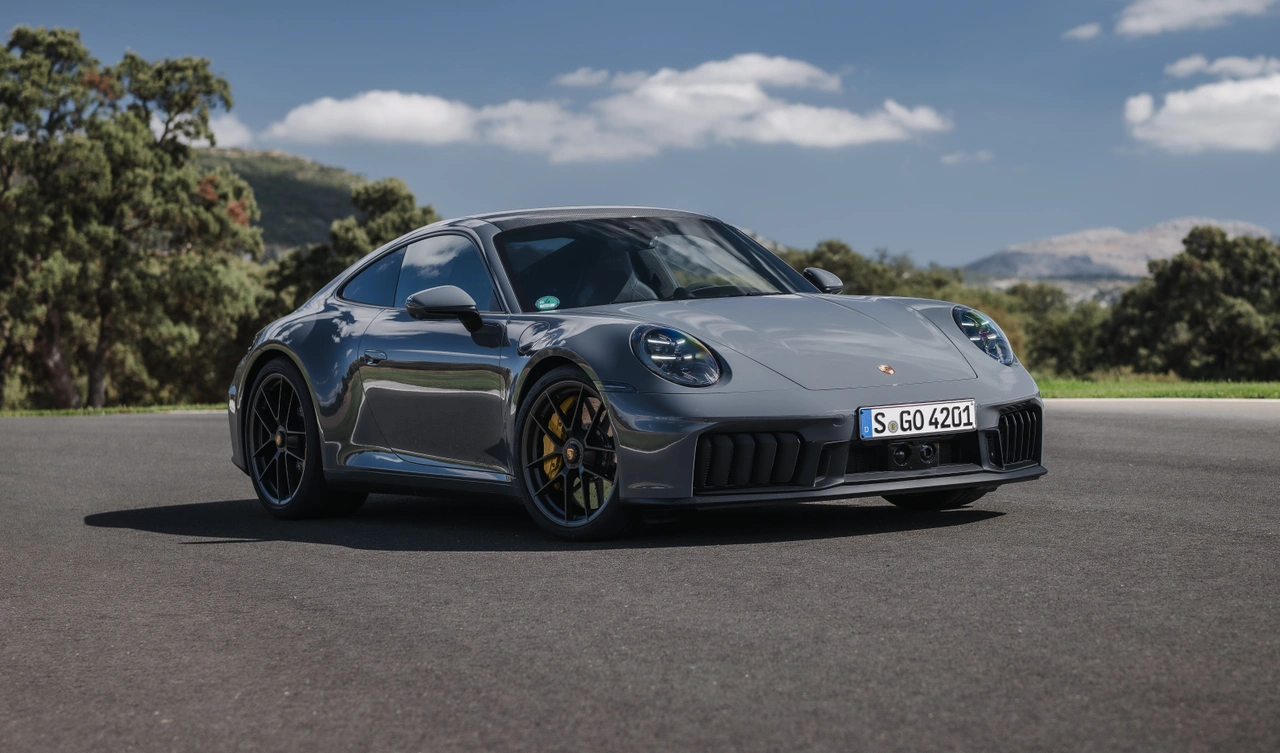
What I can say with a high degree of certainty, is that the lineage of Porsche’s quintessential 4.0 naturally-aspirated flat-6 will end with the 992.2 GT3. The writing is already on the wall, with the upcoming 992.2 GT3 RS already having been confirmed to come equipped with a turbocharged engine. Many had believed that we’d see the GT2 RS’ exclusivity as a turbocharged car go on for some time longer, but even Porsche could not hold back on this decision any longer. Competition from other marques and looming emissions regulations have forced their hand earlier than all of us would’ve expected. As an aside, the next GT2 RS is expected to feature a mild-hybrid setup in conjunction to being turbocharged, so it will keep some of its differentiation from the GT3 RS after all.
So, What’s Next?
In conclusion, none of the latest epiphanies suggest that Porsche is adopting a “carry on as we were” philosophy, but rather that they are continuing to push forward with drastic changes to their product lines, with or without the implementation of EVs. All still and very much, groundbreaking news.
Have some thoughts or opinions you’d like to share on this topic, or any other car-related content? Feel free to send me a message @tc3rs.