
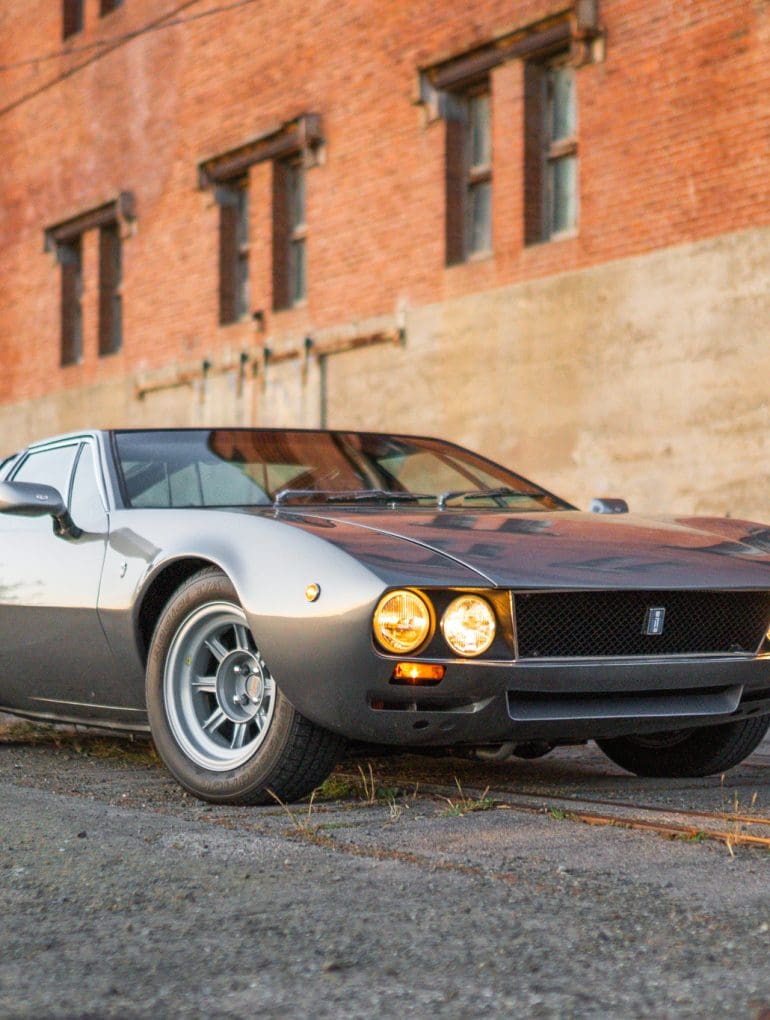

Turin, November 1966. The Ghia stand unveiled something extraordinary: a mid-engined wedge called the Mangusta, Italian for mongoose. The name was no accident. Alejandro de Tomaso wanted revenge against Carroll Shelby. The Cobra had humiliated his racing efforts throughout the early 1960s. Now he’d built something to kill it.
A 4.7-liter Ford V8 mounted behind the seats, Giorgetto Giugiaro’s dramatic styling, and gullwing engine covers that opened like cobra-devouring jaws. Production began in late 1967. By 1971, De Tomaso had built 401 examples and established his company as a legitimate exotic car manufacturer.
Background and Origins
Alejandro de Tomaso arrived in Italy in 1955 after fleeing Argentina’s Perón regime. A racing driver turned constructor, he built his first sports racing car in 1959 and competed throughout the early 1960s with modest success. His small Modena factory produced handfuls of racing specials, but financial stability proved elusive.
In 1965, De Tomaso acquired Ghia, the Turinese coachbuilder, giving him access to design talent and manufacturing capacity. He convinced Ford to supply engines for a new road car project. Ford was eager to establish performance credentials in Europe and saw De Tomaso as a potentially cheaper alternative to their troubled GT40 program.
The Mangusta was conceived as De Tomaso’s first serious production car, designed to compete against the Lamborghini Miura and Ferrari Dino while undercutting them on price. Giorgetto Giugiaro, then chief designer at Ghia, handled styling. Gian Paolo Dallara, fresh from Lamborghini, where he’d engineered the Miura, designed the chassis.
The prototype debuted at Turin in November 1966, with production beginning in late 1967. American importer Rowan Industries placed an initial order for 150 cars, giving De Tomaso the financial backing to tool up for series production.
Design and Engineering
Dallara’s chassis was a steel backbone structure with the engine mounted longitudinally behind the cabin. Two large-diameter tubes ran from the front suspension to the firewall, where they joined a substantial center section housing the fuel tanks. Behind the cabin, fabricated steel outriggers supported the rear suspension and engine/transmission assembly.
Front suspension used unequal-length A-arms with coil springs and telescopic dampers. The rear employed a similar arrangement with reversed lower A-arms. Rack-and-pinion steering provided quick response. Girling vented disc brakes measuring 280mm sat at all four corners, though early cars suffered from inadequate brake cooling.
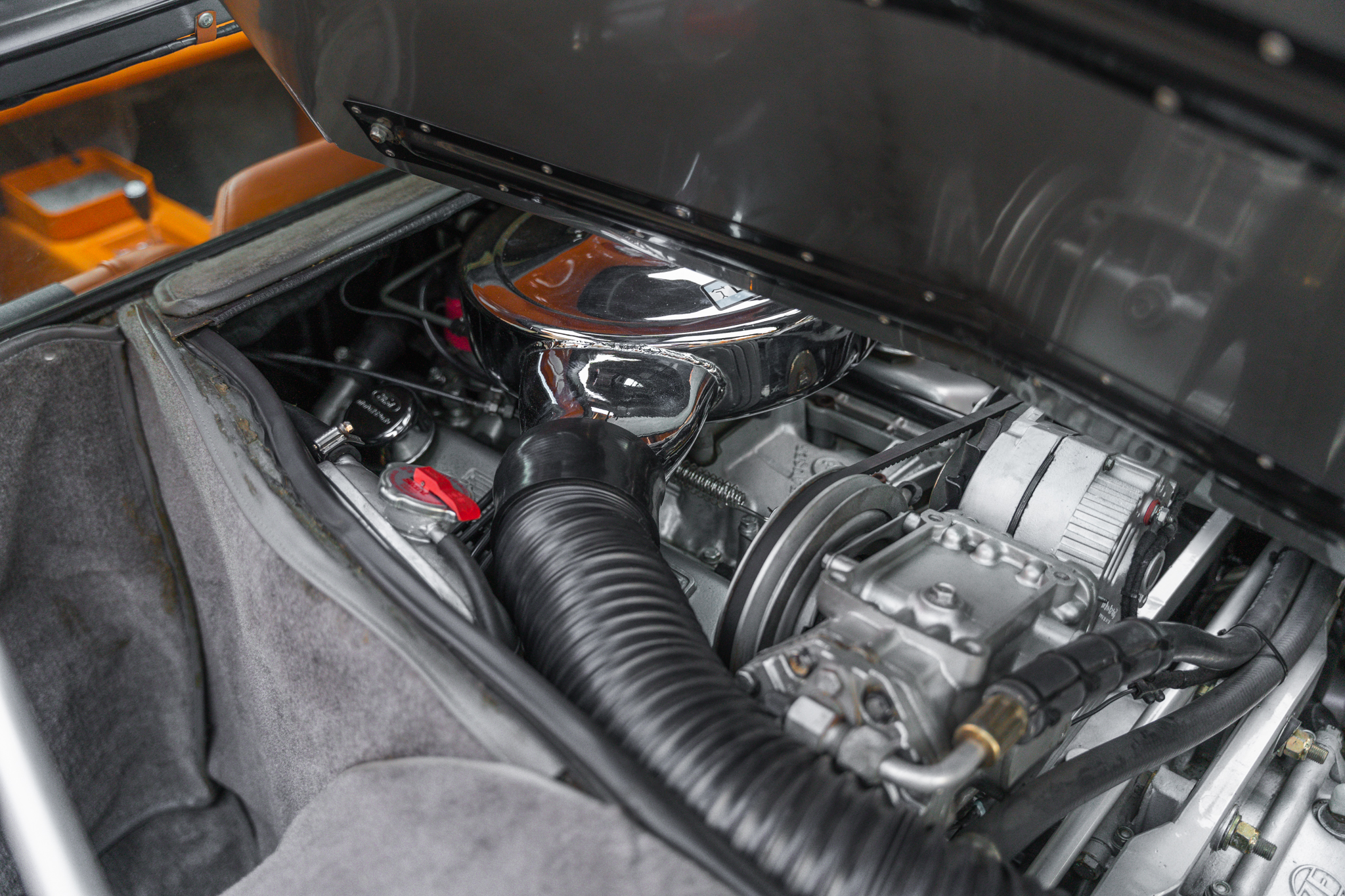
The engine was Ford’s high-performance 289 cubic inch V8, later replaced by the 302. Displacing 4,727cc or 4,949cc respectively, these overhead-valve V8s featured a single Holley four-barrel carburetor and hydraulic lifters. European-spec cars produced 230 horsepower at 4,800 rpm with the 289, or 250 horsepower with the 302.
The engine was mounted amidships but faced rearward, driving forward through a ZF five-speed transaxle positioned ahead of the rear axle line. This layout concentrated weight between the axles but created a significant polar moment of inertia. Weight distribution was approximately 32 percent front, 68 percent rear, making the Mangusta notoriously tail-happy.
Styling
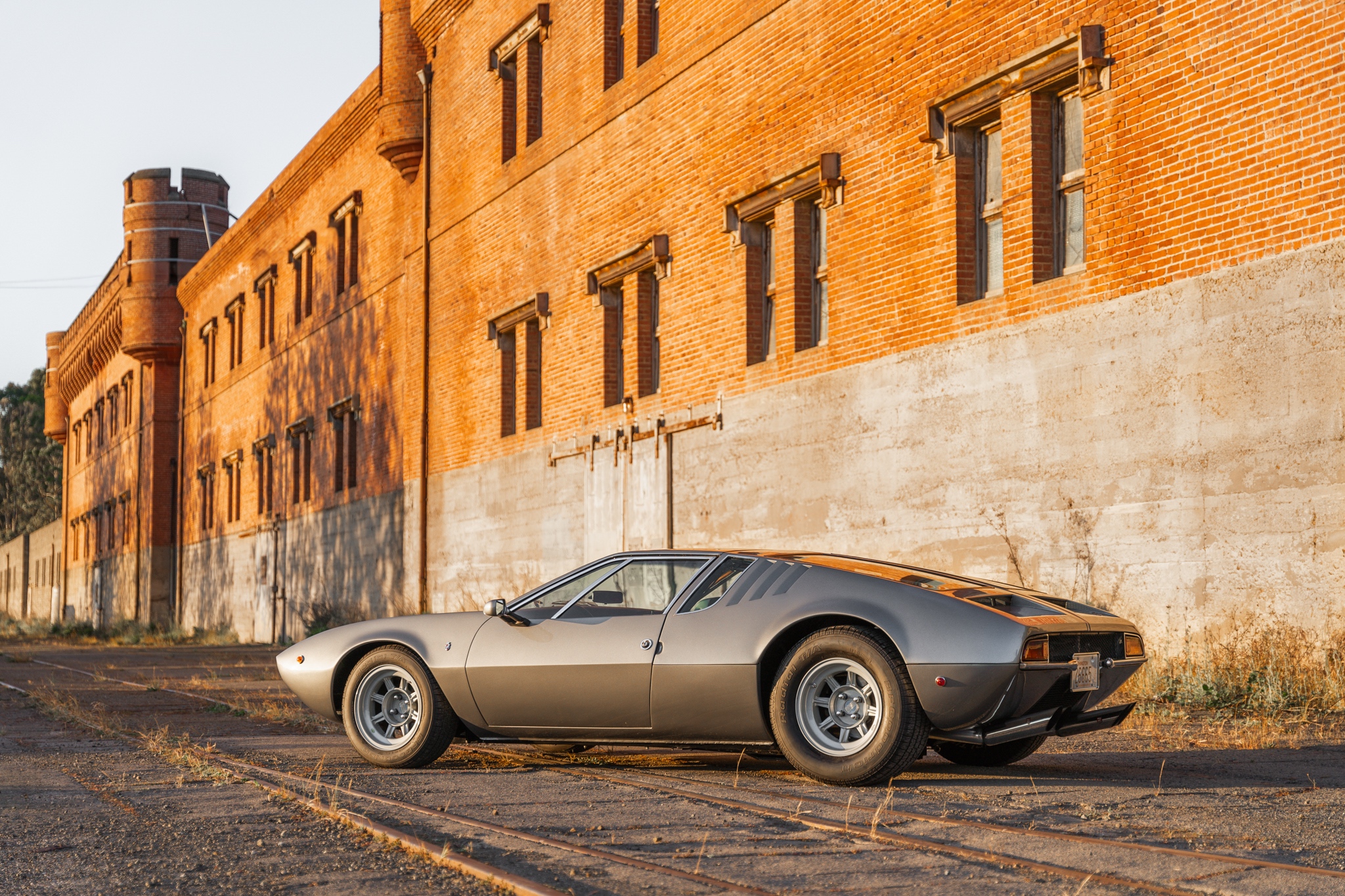
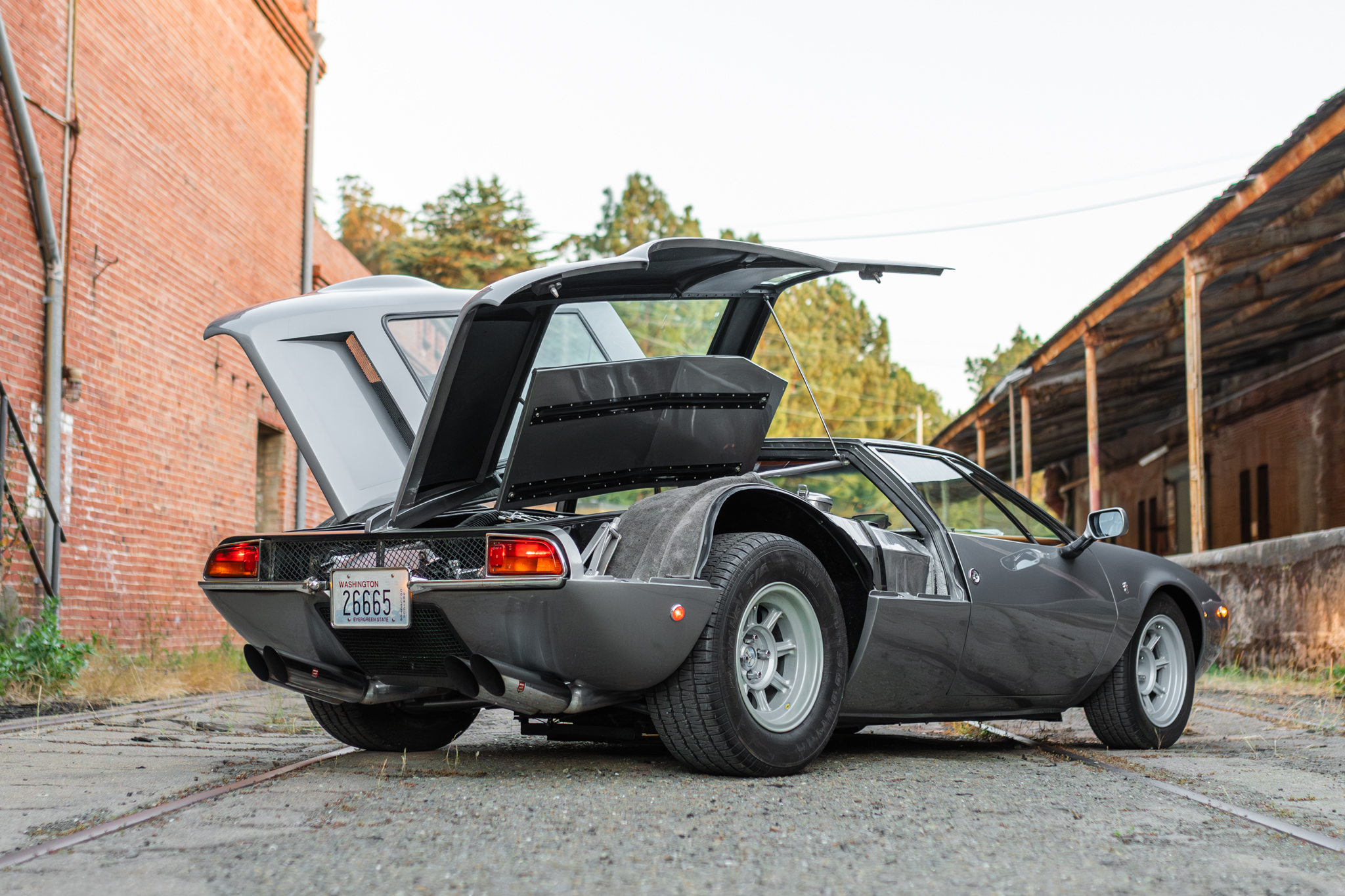
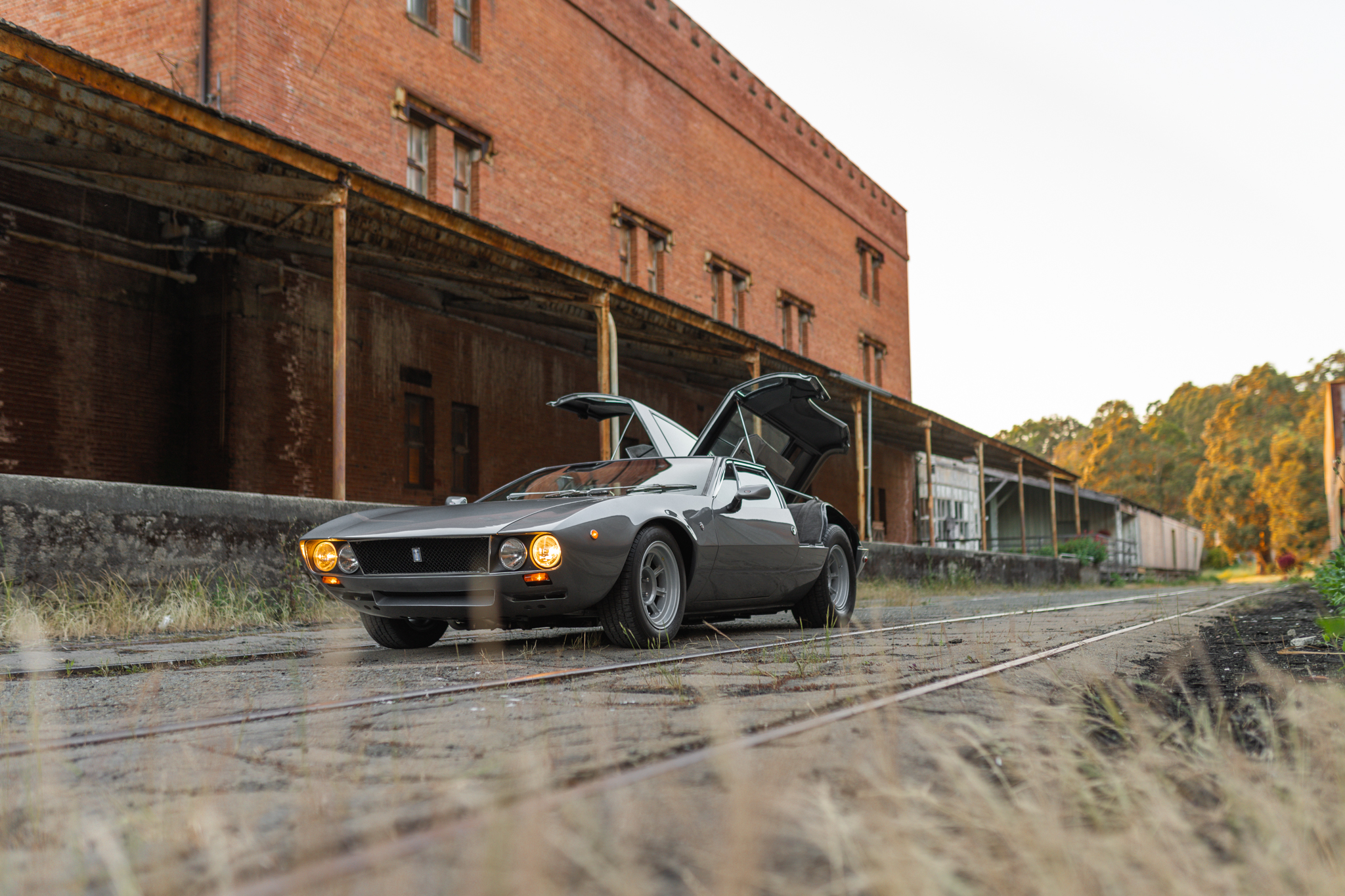
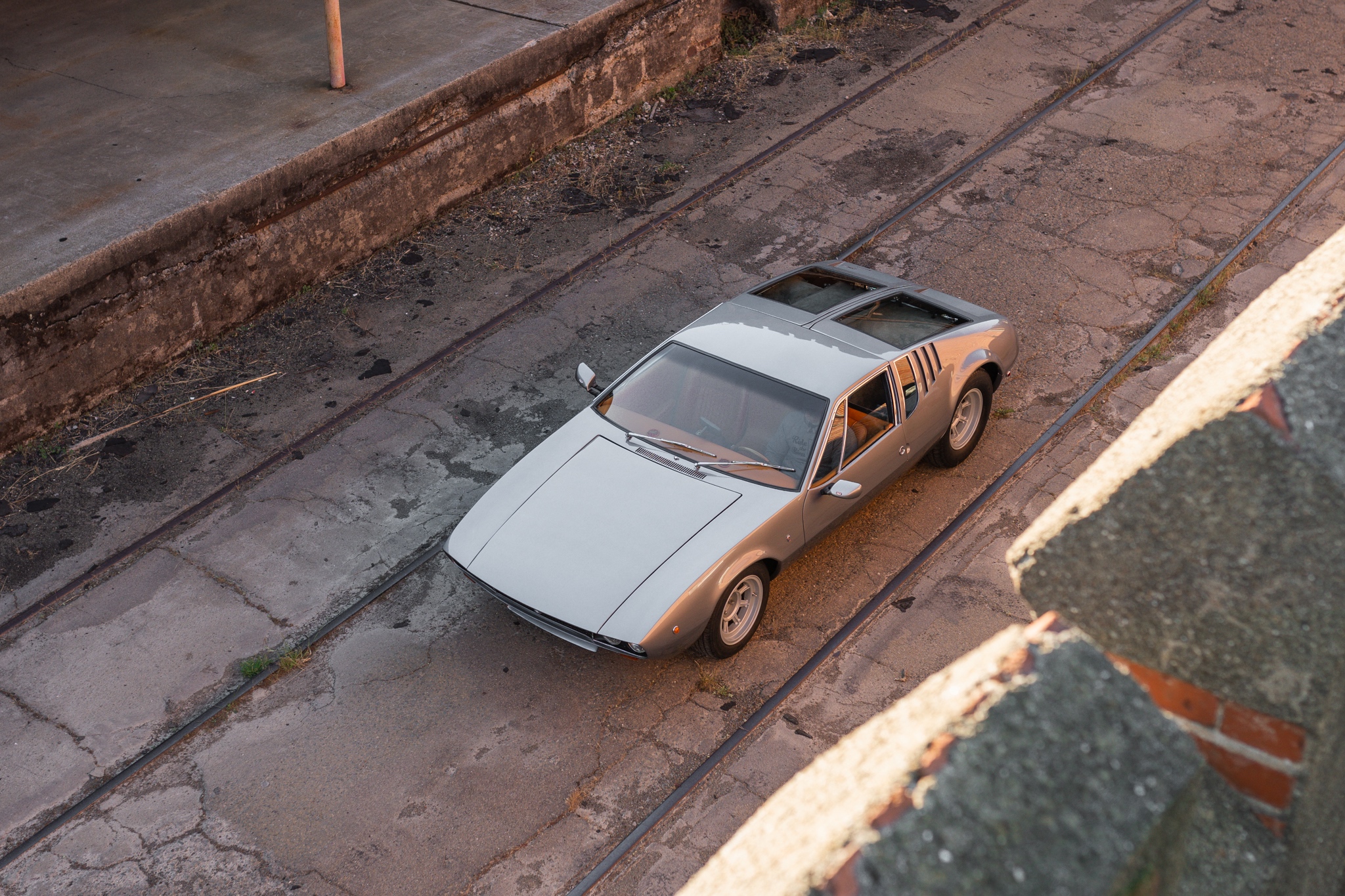
Giugiaro’s design was dramatically wedge-shaped with a low nose, high tail, and massive gullwing engine covers dominating the rear three-quarters. The front featured retractable headlights behind slatted grilles, with a shallow air intake feeding the radiator. Small quarter windows behind the doors provided the only rearward visibility when the engine covers were closed.
The signature feature was those enormous rear hatches, hinged along the centerline and opening upward like wings. With both covers raised, the entire drivetrain was accessible for service. The theatrical gesture became the Mangusta’s defining characteristic, even if it made parking in confined spaces nearly impossible.
Body panels were hand-formed aluminum over a tubular steel framework. Early cars featured exposed pop-rivets along panel seams; later examples were more refined with welded joints. Chrome bumperettes protected the nose and tail, while ventilation louvers perforated the rear buttresses. Five-spoke Campagnolo magnesium wheels were standard.
Interior
The Mangusta’s cabin was surprisingly spacious for a mid-engined exotic. Twin bucket seats wore leather or vinyl upholstery with cloth inserts. The dashboard was a simple aluminum panel painted body color, housing Veglia instruments including a 7,000 rpm tachometer, 180 mph speedometer, oil pressure, water temperature, fuel, and ammeter gauges.
A wood-rimmed Nardi steering wheel faced the driver, angled slightly inward. The ZF gear lever protruded from the transmission tunnel with satisfying mechanical precision. Climate control was rudimentary. Fresh air entered through dashboard vents, while heat radiated generously from the engine bay behind. Air conditioning was theoretically available but rarely fitted. The windscreen was steeply raked, creating an intimate, almost claustrophobic atmosphere. Luggage space was negligible, limited to a small compartment in the nose.
Specifications
- Engine: Ford V8, 4,727cc or 4,949cc (101.6mm x 72.9mm or 101.6mm x 76.2mm), overhead valves, two valves per cylinder
- Power: 230 bhp at 4,800 rpm (289), 250 bhp at 5,400 rpm (302)
- Torque: 310 lb-ft at 2,800 rpm (289), 315 lb-ft at 3,200 rpm (302)
- Carburation: Single Holley four-barrel carburetor
- Transmission: ZF five-speed transaxle
- Chassis: Steel backbone with tubular outriggers, 2,500mm wheelbase
- Suspension: Unequal-length A-arms with coil springs (front and rear)
- Brakes: Girling vented discs 280mm (front and rear)
- Wheels: Campagnolo 7×15-inch magnesium, 205/70 VR15 (front), 215/70 VR15 (rear)
- Weight: 1,360 kg
- Performance: 155 mph top speed, 0-60 mph in 6.3 seconds
Competition History
The Mangusta was conceived as a road car and saw limited competition use. A handful of privateer entries appeared in European GT races during 1968 and 1969, though the rear-heavy weight distribution and mediocre brakes proved problematic on the circuit. The car’s straight-line performance was impressive, but handling required skill and commitment. De Tomaso briefly considered developing a competition variant but abandoned the idea after Ford withdrew support. The Mangusta’s successor, the Pantera, would prove far more successful in racing trim.
Production and Legacy
De Tomaso built 401 Mangustas between 1967 and 1971, with the majority exported to the United States. Production was slow and inconsistent, with hand-assembly at the small Modena factory limiting output to roughly two cars per week. Approximately 250 examples received the larger 302 cubic inch engine from 1969 onward.
The Mangusta established De Tomaso as a credible exotic car manufacturer and proved that a small independent could compete against Ferrari and Lamborghini. It convinced Ford to continue their relationship, leading directly to the Pantera partnership that would sustain De Tomaso throughout the 1970s.
Contemporary road tests praised the performance and dramatic styling but criticized the tail-happy behavior and poor rear visibility. Owners learned to respect the Mangusta’s quirks or suffered the consequences. Those who mastered it discovered a thrilling, involving driving experience.
Today, the Mangusta is recognized as Giugiaro’s masterpiece and one of the most visually arresting cars of the 1960s. Values have climbed steadily, with pristine examples commanding six-figure prices. It remains the most purely Italian car De Tomaso ever built, created before American influence diluted the company’s character. The Mangusta was flawed, difficult, and occasionally dangerous, but it achieved exactly what De Tomaso intended. It made people forget about the Cobra.