
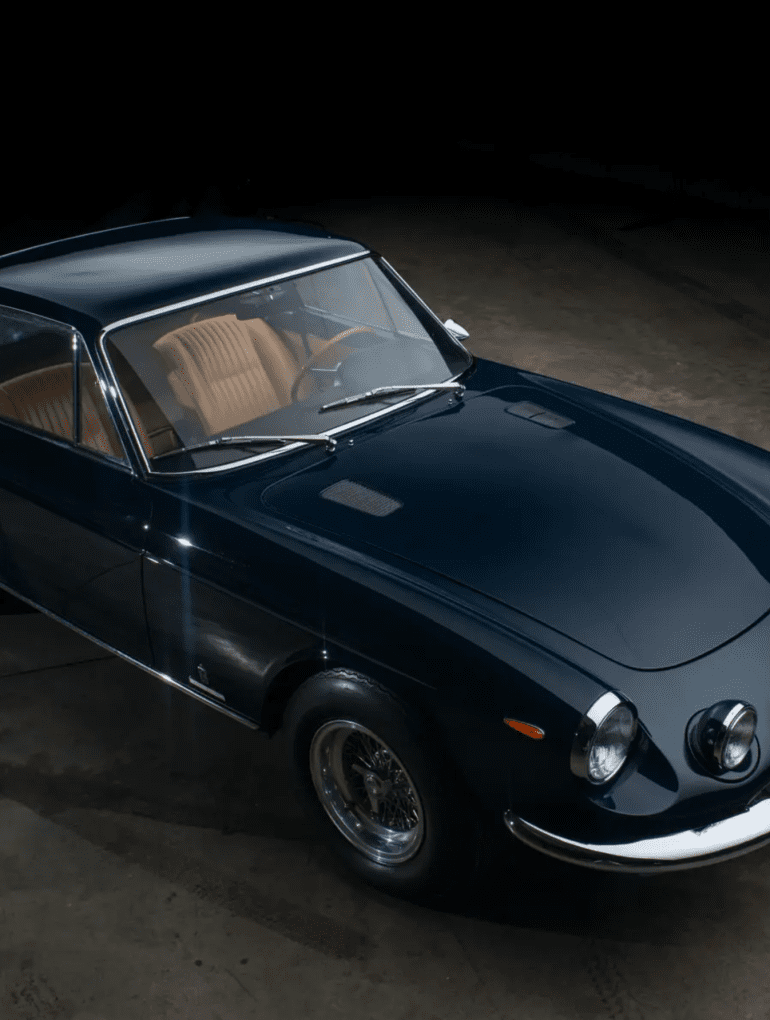

Geneva, March 1967. While Ferrari displayed the 275 GTB/4 and 330 GTS on their official stand, Pininfarina had something special tucked away nearby. A one-off 330 GTC commissioned by a wealthy American client who wanted the ultimate personalized Ferrari. Sergio Pininfarina’s team had taken the elegant 330 GTC chassis and clothed it in a dramatically different body, featuring a fastback roofline, unique proportions, and details that wouldn’t appear on production Ferraris for years.
The car was finished in metallic blue with a tan leather interior. It caused a sensation at Geneva, then disappeared into private ownership for decades. Today, it remains one of the most distinctive coachbuilt Ferraris ever created.
Background and Origins
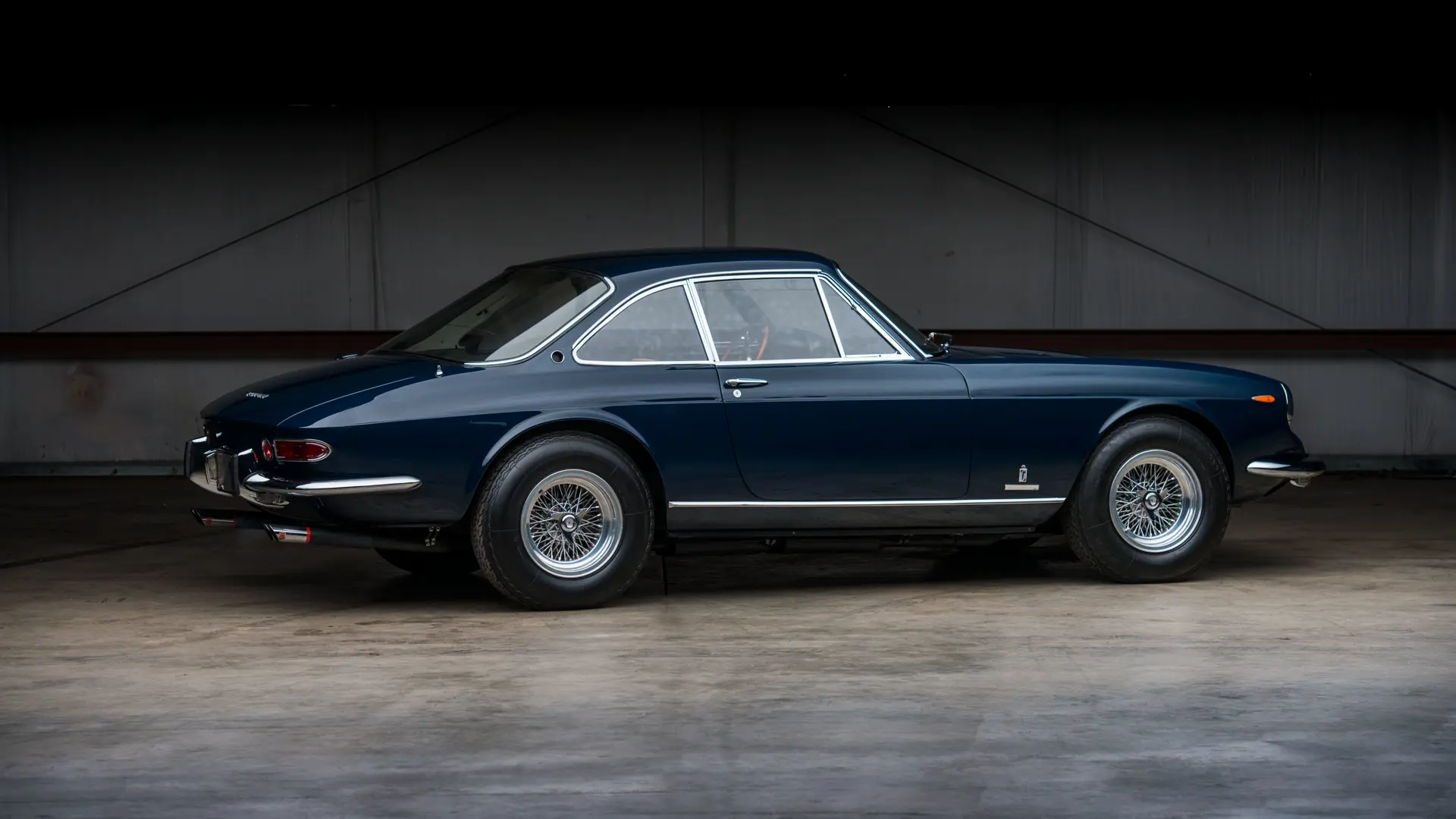
By 1966, Ferrari’s road car lineup had matured into a sophisticated range of front-engined V12 grand tourers. The 275 GTB and GTS provided the sporting edge, while the 330 GT 2+2 handled family duties. In between sat the 330 GTC, introduced at Geneva in March 1966 as a more refined alternative to the hardcore 275 GTB.
The 330 GTC combined the 275 GTS chassis with the larger 4.0-liter Colombo V12 from the 330 GT 2+2. Pininfarina’s styling was elegant and restrained, with covered headlights, a long hood, and graceful proportions. It was successful, selling 600 examples between 1966 and 1968.
An American client approached Pininfarina in late 1966 wanting something more dramatic. He owned several Ferraris but wanted a truly unique example, something that combined the 330 GTC’s mechanical refinement with more adventurous styling. Pininfarina agreed, assigning the project to their special projects division.
The timing was fortuitous. Pininfarina was experimenting with fastback designs and new proportions that would later influence the 365 GTB/4 Daytona. The 330 GTC Speciale became a rolling test bed for these ideas, allowing the design house to explore concepts that were too radical for immediate series production.
Design and Engineering
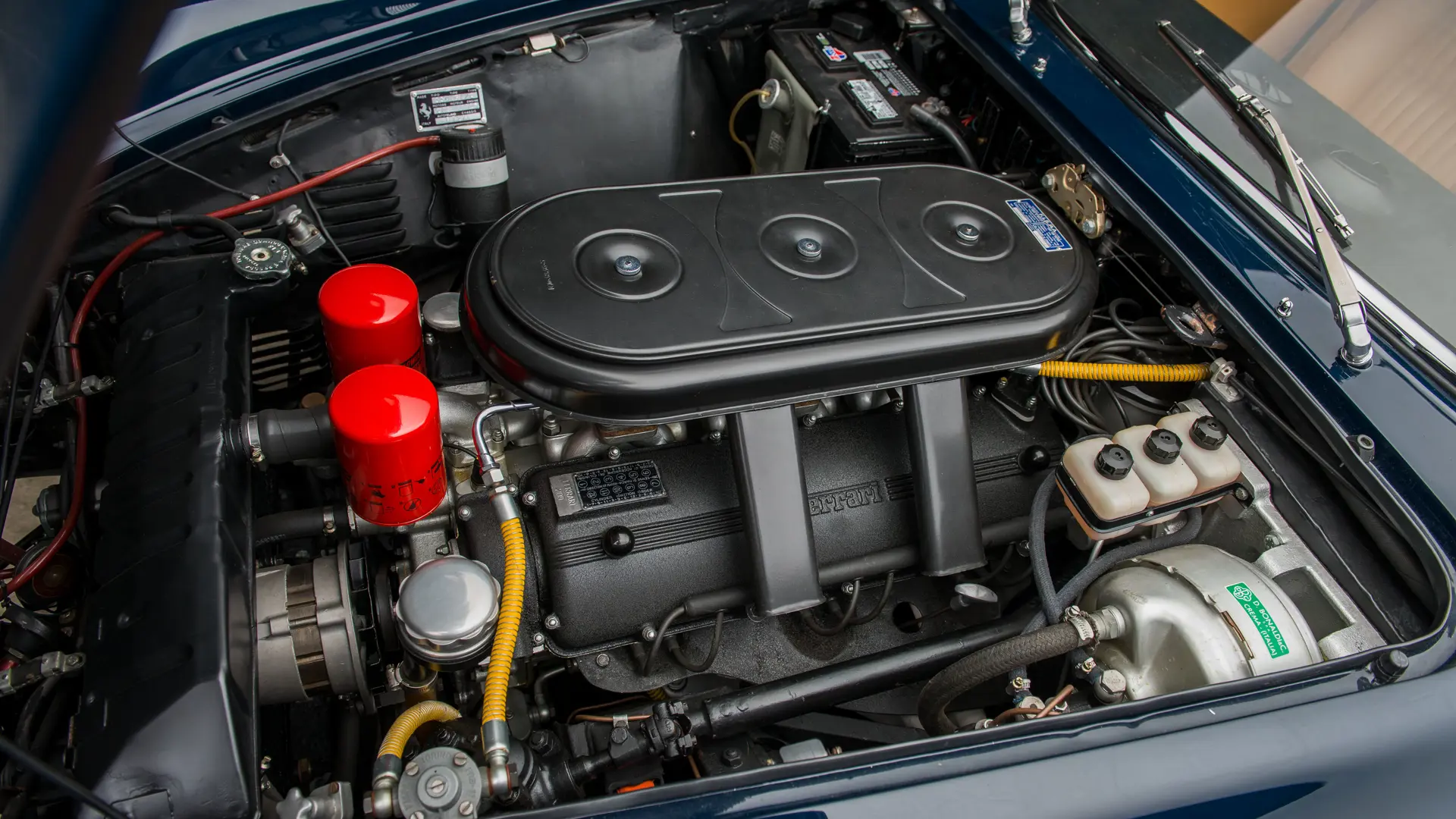
The Speciale was based on a standard 330 GTC chassis, numbered 9799. The 2,400mm wheelbase, tubular steel frame, and independent suspension were carried over unchanged. Front suspension used unequal-length A-arms with coil springs and telescopic dampers. The rear employed a similar arrangement with a live axle located by parallel trailing arms and a Watts linkage.
Girling disc brakes measuring 280mm sat at all four corners, providing adequate stopping power for the car’s 1,400-kilogram curb weight. Borrani wire wheels were standard 330 GTC specification, measuring 7×14 inches and wearing 205 VR14 tires.
The engine was Ferrari’s Type 209 Colombo V12, displacing 3,967cc with a 77mm bore and 71mm stroke. Three Weber 40 DCN twin-choke carburetors fed the single overhead camshaft per bank design. The compression ratio was 8.8:1. Output was 300 horsepower at 7,000 rpm and 240 lb-ft at 5,000 rpm, identical to the standard 330 GTC.
Transmission was a five-speed manual with synchromesh on all ratios, mounted in unit with the engine and driving the rear axle through an open driveshaft. The gear ratios were unchanged from the production car.
Styling
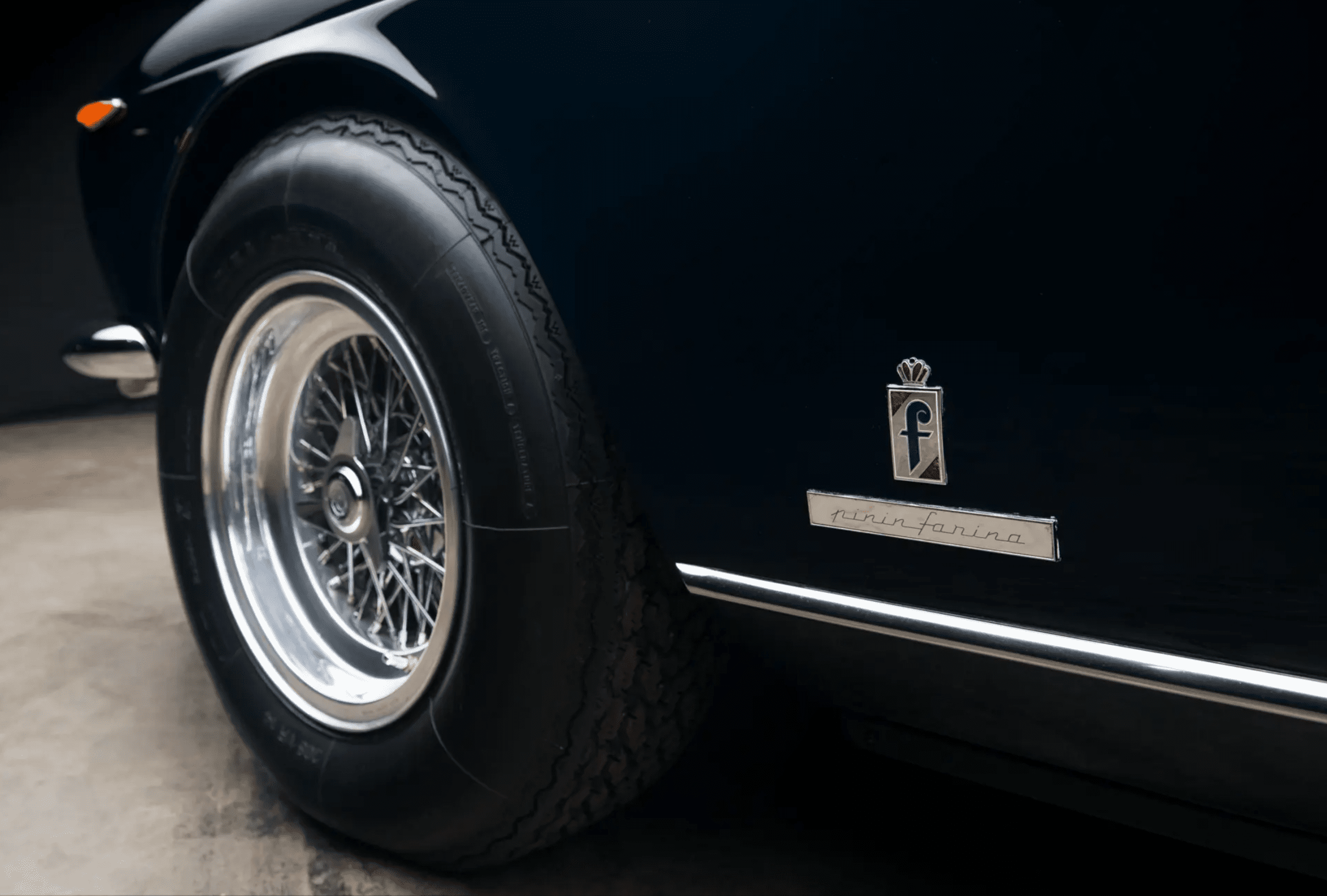
Pininfarina’s design departed dramatically from the standard 330 GTC while retaining its essential proportions. The most obvious change was the fastback roofline, which swept uninterrupted from the windscreen to the tail in a single graceful curve. This created a more muscular, purposeful silhouette compared to the notchback production car.
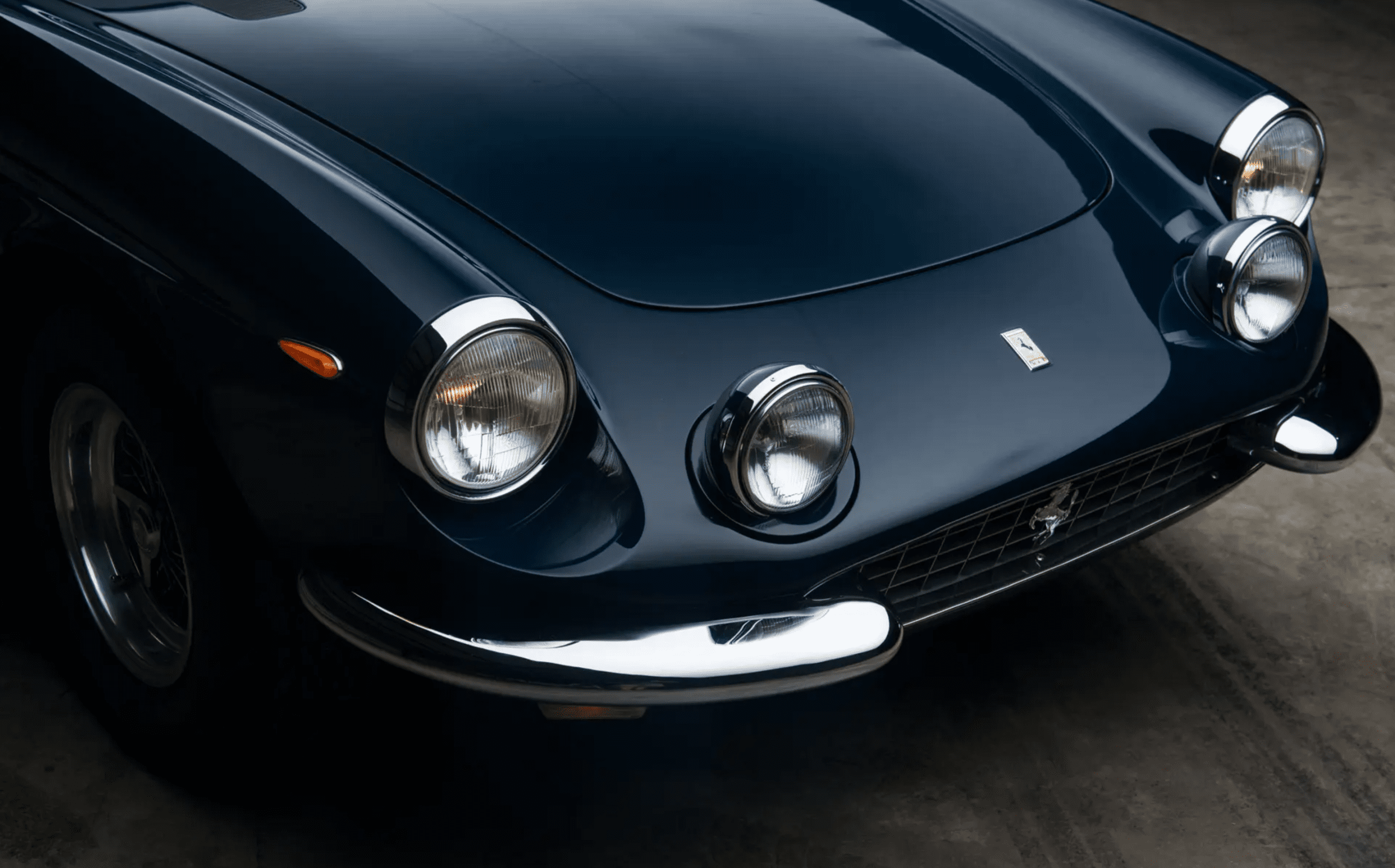
The front end featured exposed headlights behind plexiglass covers, a treatment Pininfarina would later use on the 365 GTB/4 Daytona. The grille was wider and lower than the standard car, with a more aggressive stance. Small air intakes sat ahead of the rear wheels, feeding the rear brakes.
At the rear, the fastback terminated in a Kamm tail with a near-vertical rear window and integrated spoiler. Rectangular taillights were set into a black panel, creating a distinctive nighttime signature. Chrome bumpers were delicate, almost token gestures toward practicality.
The body was hand-formed aluminum over the steel chassis structure. Panel gaps were tight, reflecting Pininfarina’s expertise in coachbuilding. The car was finished in metallic blue with a cream pinstripe running along the beltline. Borrani wire wheels with chrome knock-offs completed the period-perfect appearance.
Interior
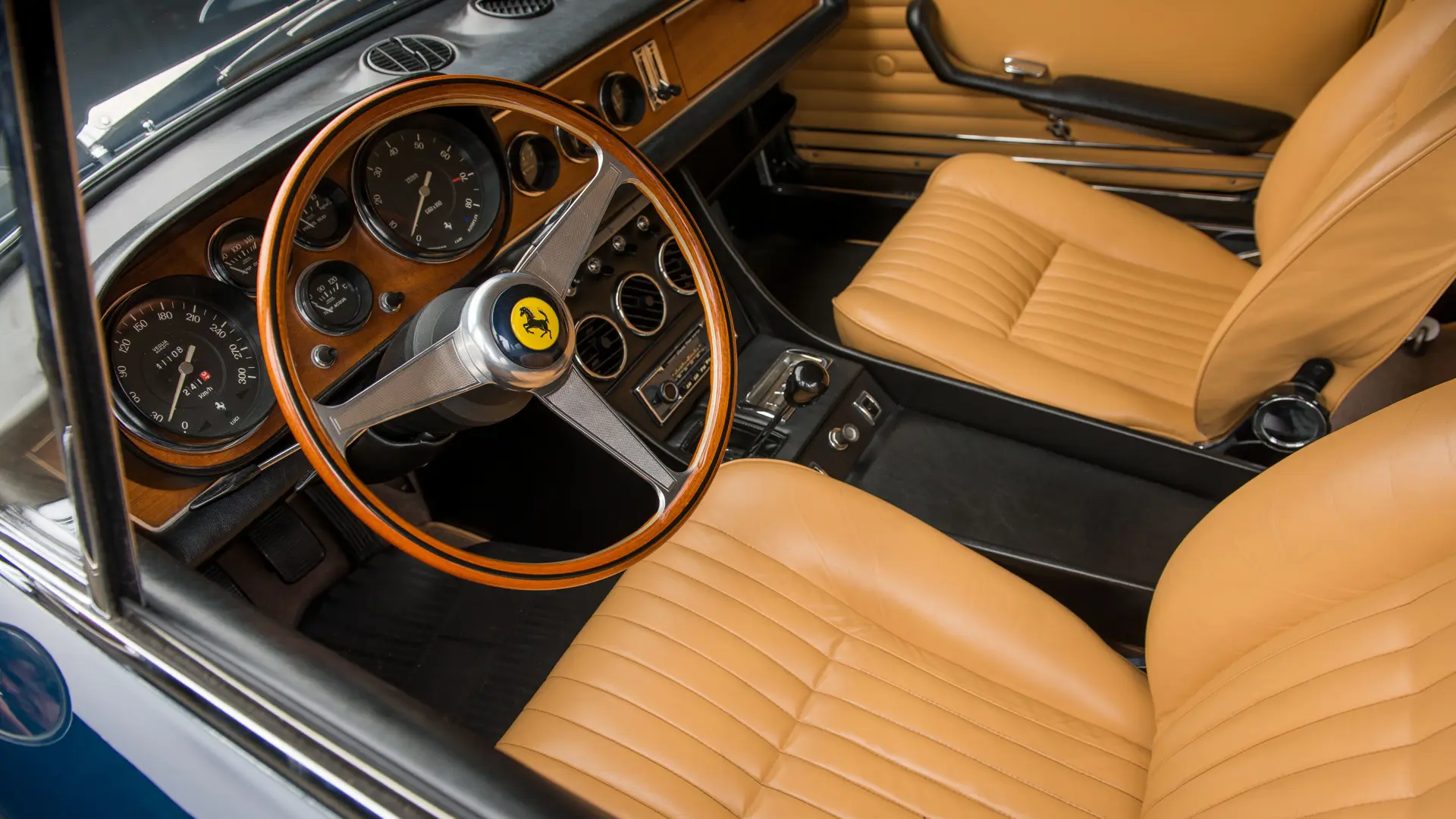
The cabin was trimmed in tan leather with matching carpeting. Seats were deeply bolstered buckets with vertical pleating, offering more support than the standard 330 GTC’s chairs. The dashboard retained the production car’s layout, with a large Veglia tachometer and speedometer directly ahead of the driver, flanked by auxiliary gauges for oil pressure, water temperature, and fuel level.
A wood-rimmed steering wheel faced the driver, with the familiar Ferrari prancing horse badge at its center. The gear lever sprouted from a chrome-ringed gate, the satisfying mechanical action a reminder of the direct connection to the drivetrain. Switchgear was a mix of period Italian components, controlling lights, wipers, and ventilation.
Climate control was rudimentary by modern standards but advanced for 1967. Fresh air vents fed the cabin, while a heater drew warmth from the engine bay. The rear bulkhead was trimmed in leather-covered padding, creating a luxurious cocoon despite minimal sound insulation.
Specifications
- Engine: Type 209 Colombo V12, 3,967cc (77mm x 71mm), SOHC per bank, two valves per cylinder
- Power: 300 bhp at 7,000 rpm
- Torque: 240 lb-ft at 5,000 rpm
- Carburation: Three Weber 40 DCN twin-choke carburetors
- Transmission: Five-speed manual
- Chassis: Tubular steel frame, 2,400mm wheelbase
- Suspension: Unequal-length A-arms with coil springs (front), live axle with trailing arms (rear)
- Brakes: Girling discs 280mm (front and rear)
- Wheels: Borrani 7×14-inch wire wheels, 205 VR14 tires
- Weight: 1,400 kg
- Performance: 152 mph top speed, 0-60 mph in 6.8 seconds
Competition History
The 330 GTC Speciale was built purely as a road car and never competed. Its fastback body and aerodynamic improvements suggested track potential, but the client wanted a luxurious grand tourer rather than a racing machine. The car remained in private hands throughout its life, used sparingly for touring rather than competition.
Production and Legacy
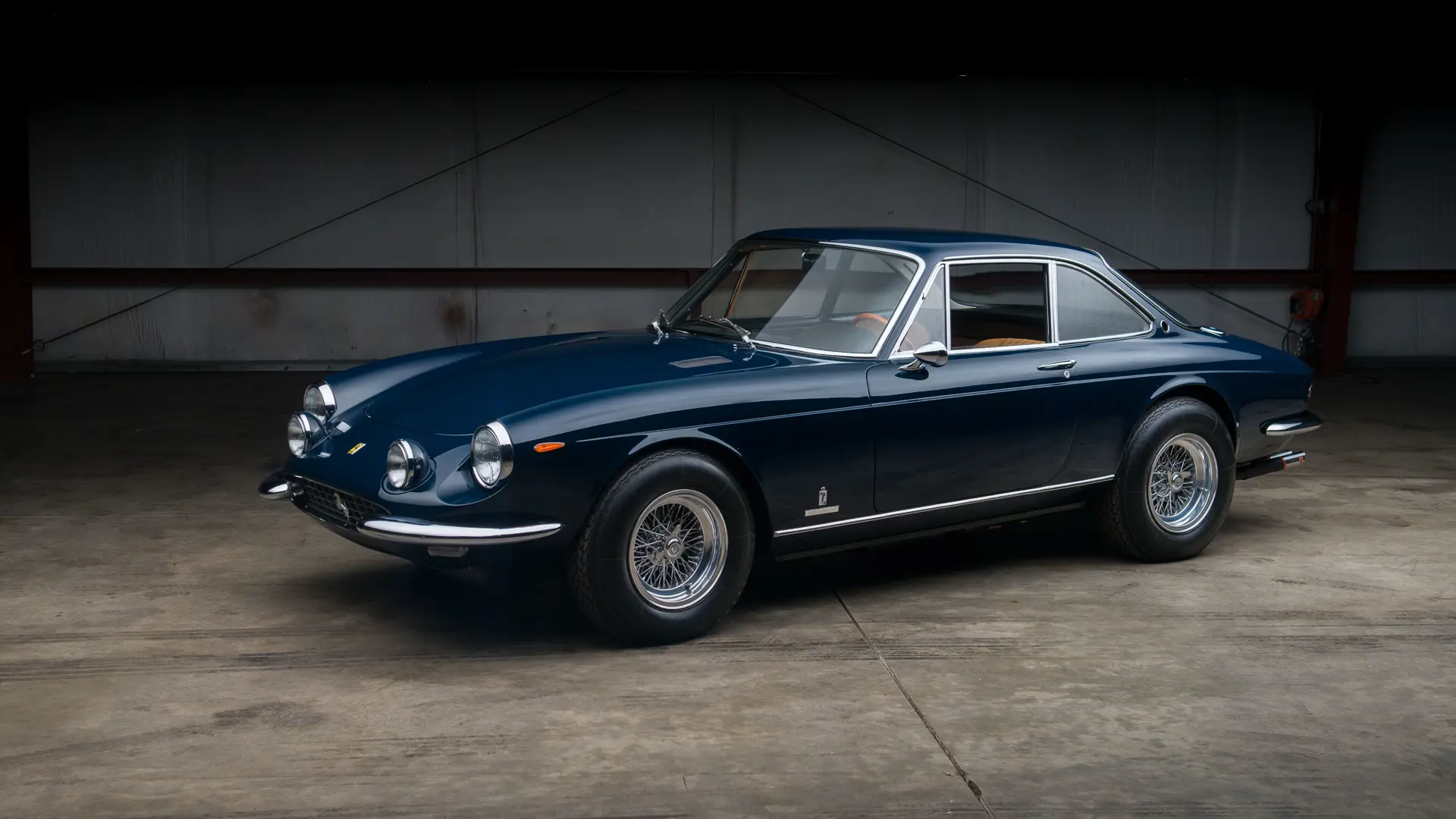
Only one 330 GTC Speciale was built, chassis 9799. After its Geneva debut in March 1967, the car was delivered to its American owner and disappeared from public view for decades. It changed hands several times over the years, with each owner recognizing its significance as a unique Pininfarina design study.
The Speciale’s influence on Ferrari’s future styling was profound. The fastback roofline, exposed headlights behind plexiglass, and Kamm tail all reappeared on the 365 GTB/4 Daytona, which debuted just eighteen months later. Many design historians consider the 330 GTC Speciale a direct precursor to that iconic model.
Today, the car is recognized as one of the most important one-off Ferraris ever built. It represents the peak of coachbuilt individualism, when wealthy clients could commission truly unique designs from the world’s greatest carrozzerie. The 330 GTC Speciale proves that sometimes the most influential cars are those that never entered series production.