
Audi Sport has just fired the starting gun on a new era. The all-new RS 5 is the brand’s first high-performance plug-in hybrid, and it’s not a gentle electrified evolution. It’s a 639-horsepower technological statement that introduces the world’s first electromechanical torque vectoring system in a production car.
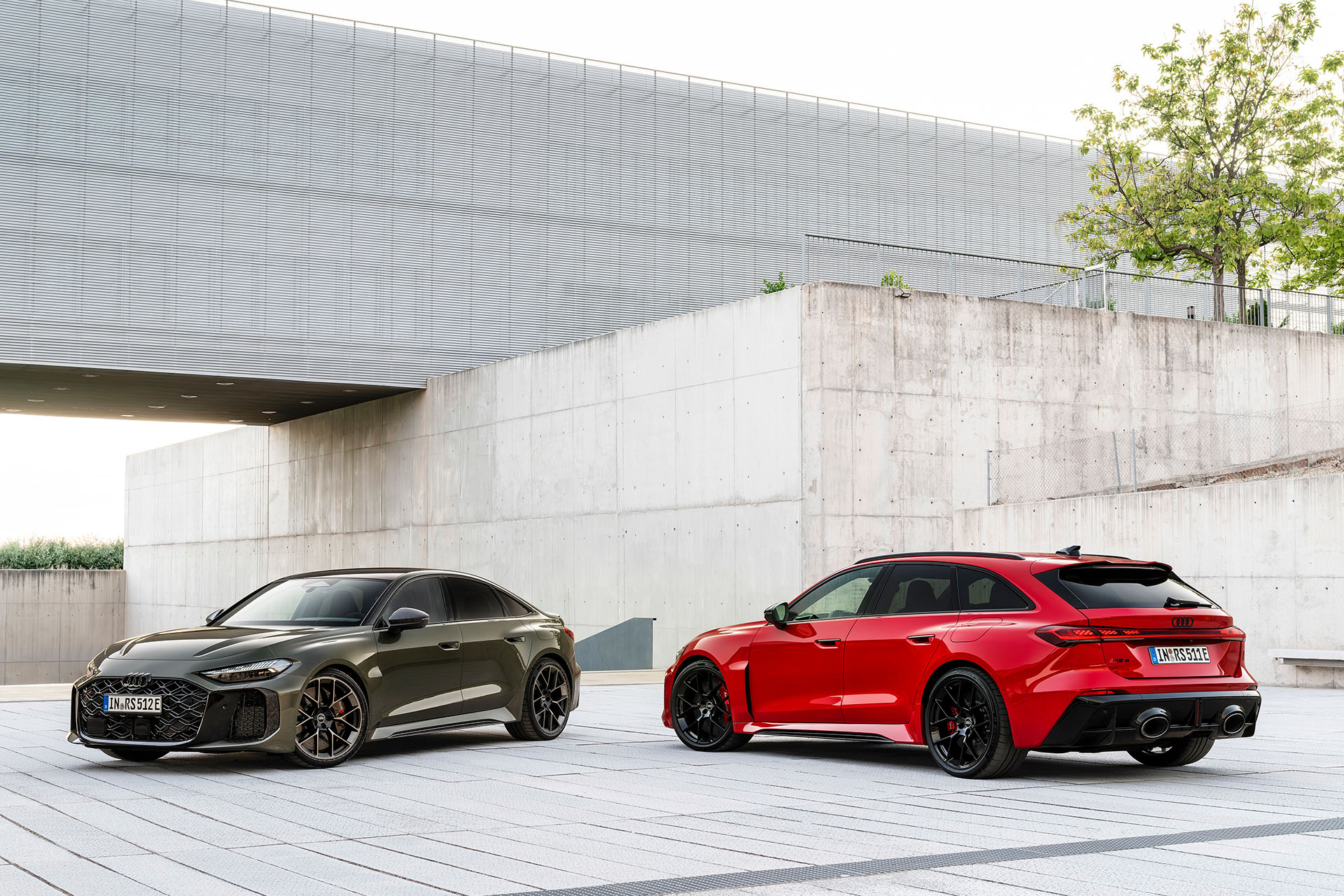
Built in Neckarsulm and arriving in Europe in summer 2026, this is not simply an RS 5 with a battery. It’s a fundamental rethinking of what an RS car can be.
At the heart of the new RS 5 sits an evolved 2.9-liter twin-turbo V6, now producing 375 kW (510 PS). It’s paired with a 130 kW electric motor integrated into an eight-speed tiptronic gearbox. Together, they deliver: 470 kW (639 PS), with a massive 825 Nm of torque, and an acceleration from 0 to 100 km/h in just 3.6 seconds, that’s supercar territory for sure.
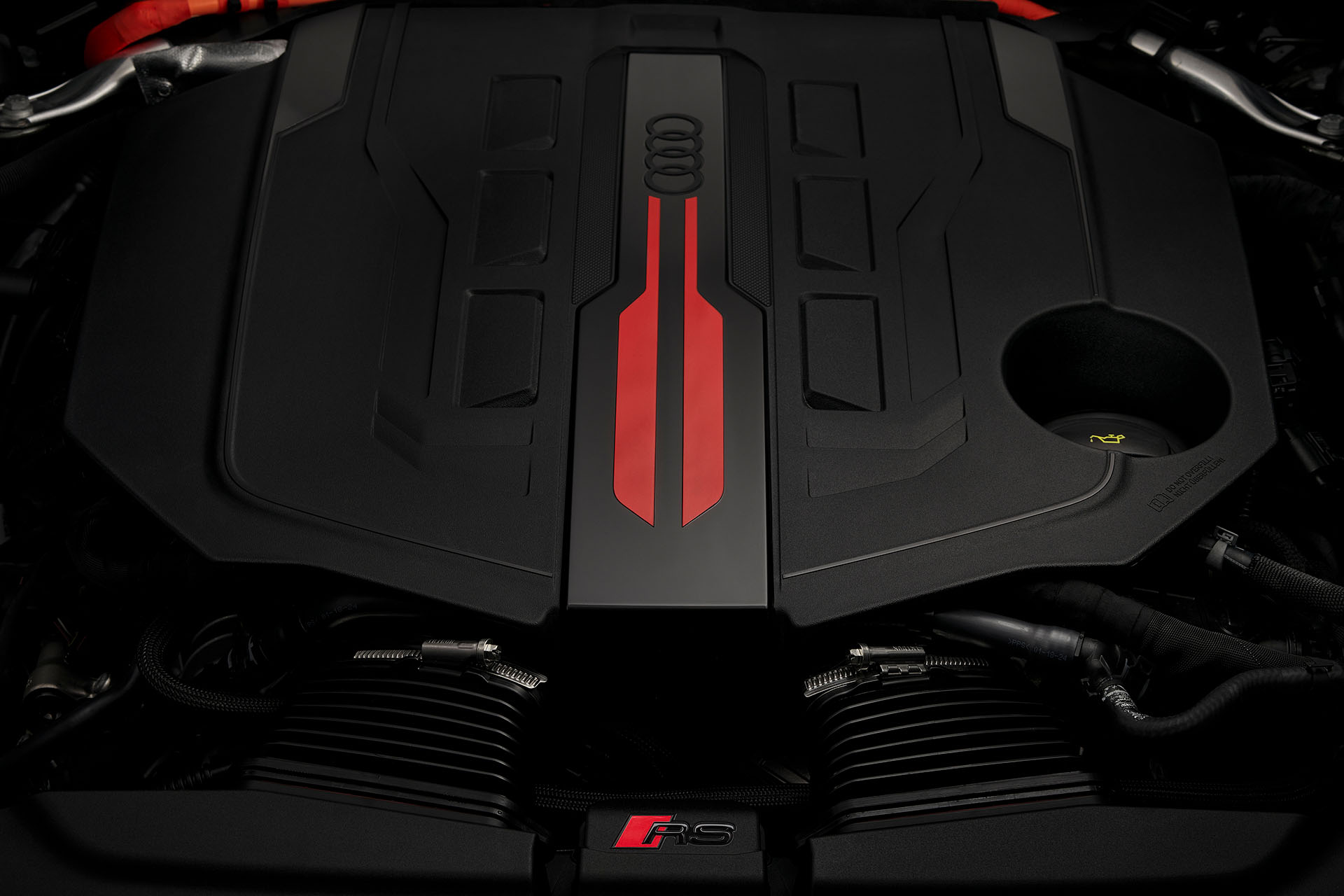
The electric motor alone produces 177 PS and a massive 460 Nm, providing instant response and eliminating turbo lag entirely. There’s no traditional starter motor, the electric unit handles that as well. Power comes from a 25.9 kWh battery (22 kWh net), good for up to 84 km of electric range (87 km in city conditions). Charging happens at up to 11 kW AC, refilling the pack in around 2.5 hours. For daily driving, it’s whisper-quiet. For maximum attack, it’s something else entirely.
The headline innovation is quattro with Dynamic Torque Control, a rear transaxle system that uses a high-voltage actuator to distribute torque between the rear wheels. This is not a mechanical clutch pack. It’s a fully electromechanical system recalculating torque distribution every 5 milliseconds (200 Hz) and capable of deploying up to 2,000 Nm torque difference side to side. Reaction time? Just 15 milliseconds.
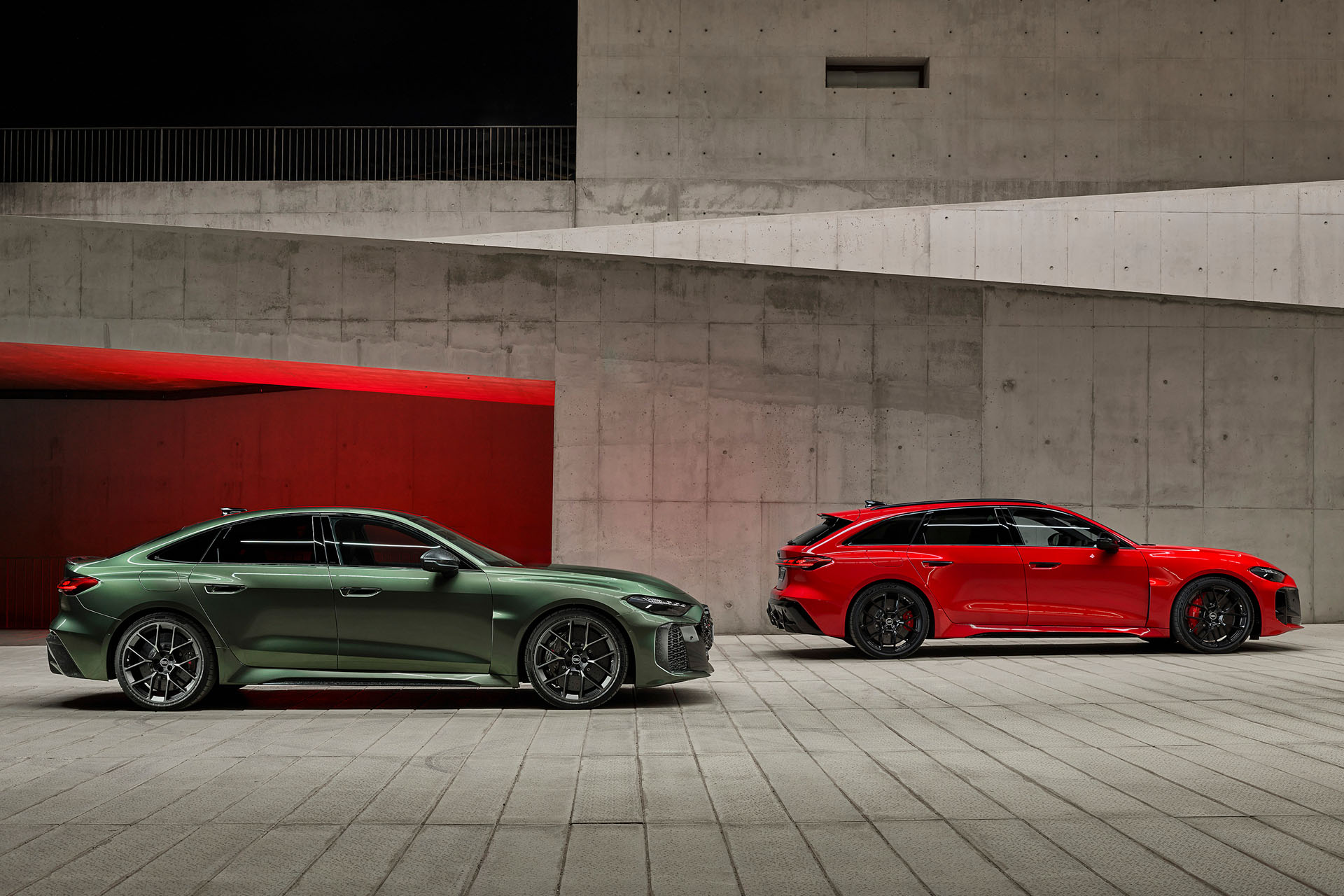
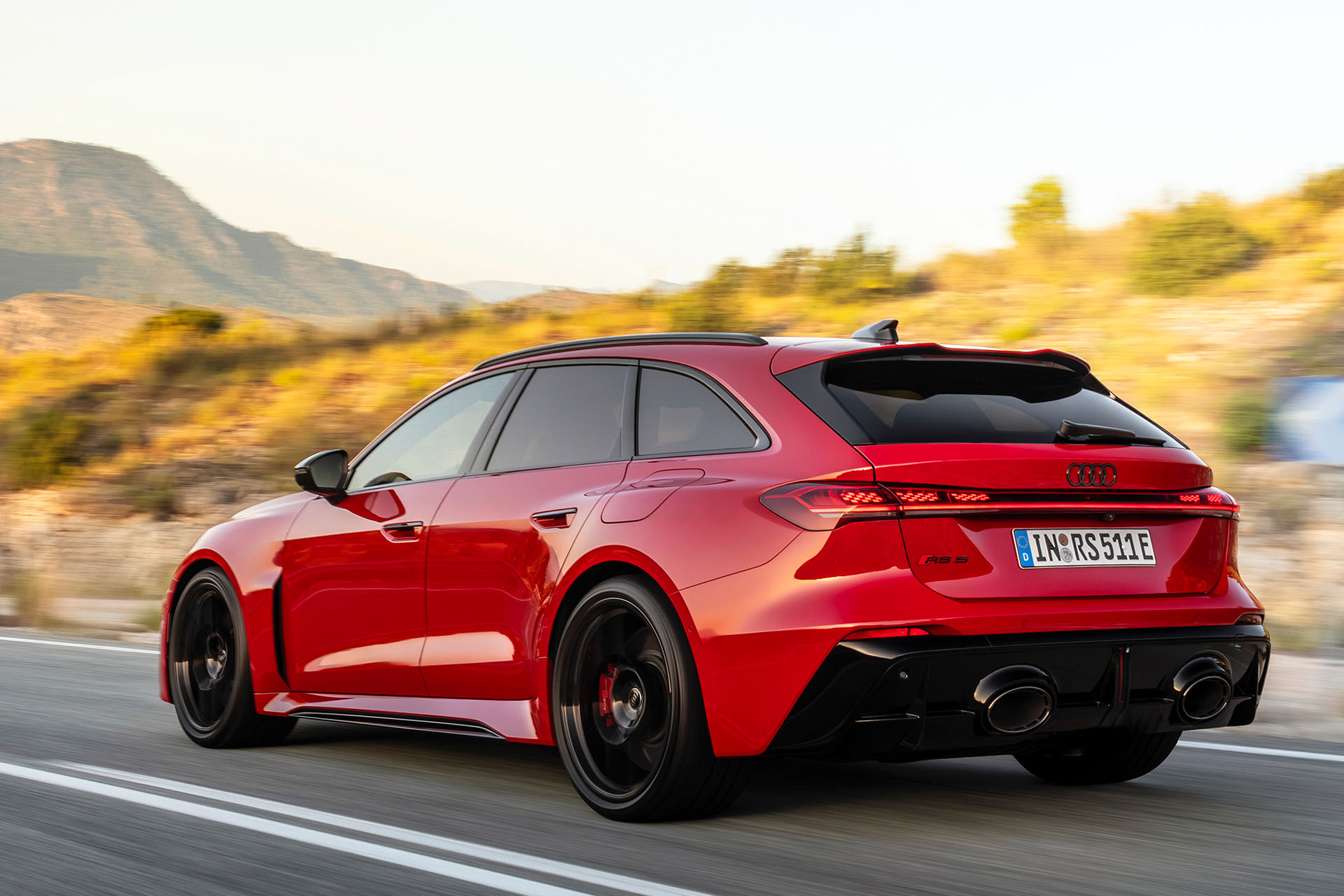
What that means in the real world: sharper turn-in, reduced understeer, massive traction on corner exit, and controlled drifts in RS Torque Rear mode … just imagine the fun you’ll be having behind the steering wheel of this performance Audi sedan, and it also comes as an Avant, or wagon.
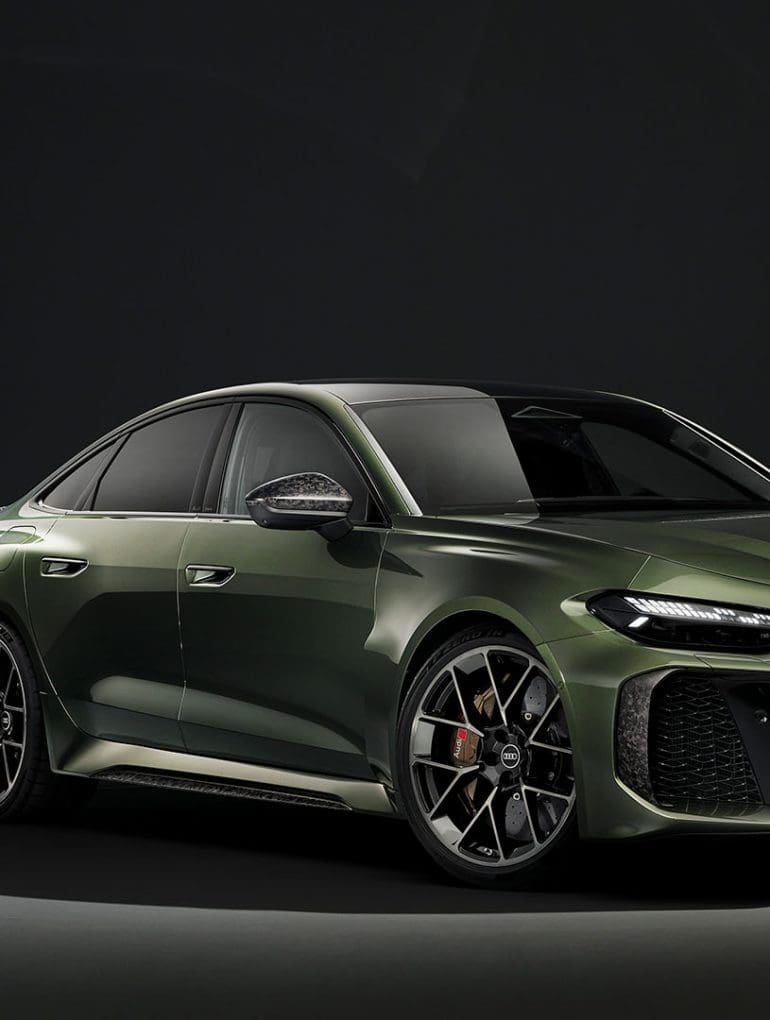
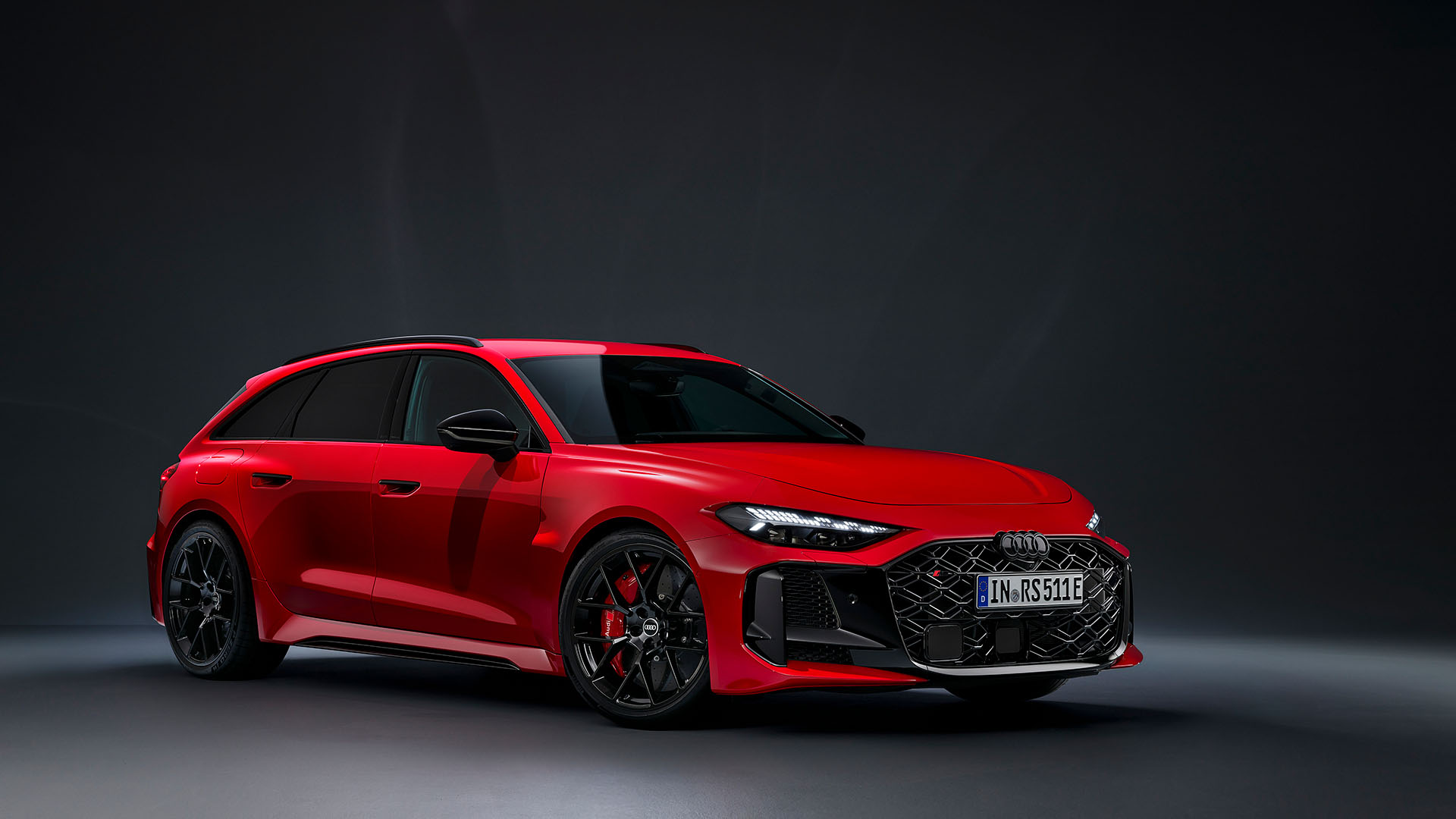
A newly developed preloaded center differential keeps the front and rear axles partially locked even off-throttle, improving stability and response during weight transfer. Audi isn’t just evolving quattro. It’s redefining it. Visually, the new RS 5 looks ready to fight. Compared to the standard A5, it’s nearly nine centimeters wider with aggressively flared fenders, a clear nod to the original Audi Quattro.
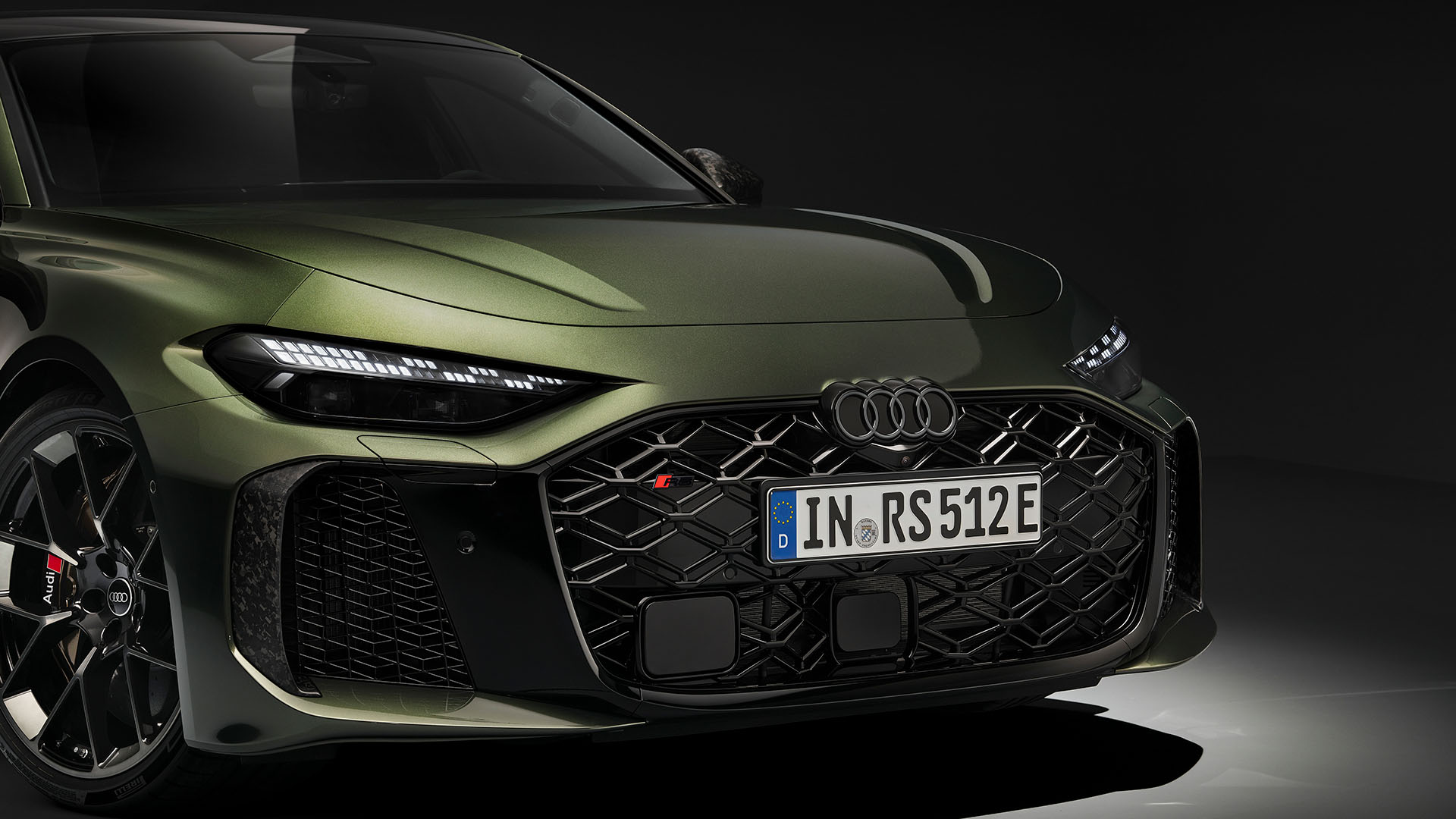
Underneath: a five-link suspension front and rear, newly developed rear axle, RS sport suspension with twin-valve dampers, a 10% stiffer body shell, and direct 13:1 steering ratio. The twin-valve dampers independently control compression and rebound, allowing genuine duality: compliant daily ride or razor-sharp track setup. Despite weighing 2,355 kg (Sedan) or 2,370 kg (Avant), Audi claims the car feels remarkably agile thanks to the intelligent torque distribution and rigid structure.
Braking options include: 20-inch steel brakes (420 mm front / 400 mm rear), Optional 21-inch ceramic brakes (440 mm front / 410 mm rear), ceramic discs are 30 kg lighter and bring the RS 5 to a halt from 100 km/h in just 30.6 meters. Drive Modes: From Silent to Sideways: The RS 5 now spans an unprecedented dynamic range. Drive Select modes include: Comfort, Balanced, Dynamic, RS Sport, RS Torque Rear, and RS Individual, if you really know what you are doing.
RS Torque Rear mode sends maximum torque rearward for controlled oversteer on closed circuits. Dynamic mode sharpens throttle and steering response with a rear bias for aggressive corner exits. There’s also a Boost button: press it and you get 10 seconds of maximum combined output, with instant gear selection and fully opened exhaust valves. It works in any mode, even during electric driving.
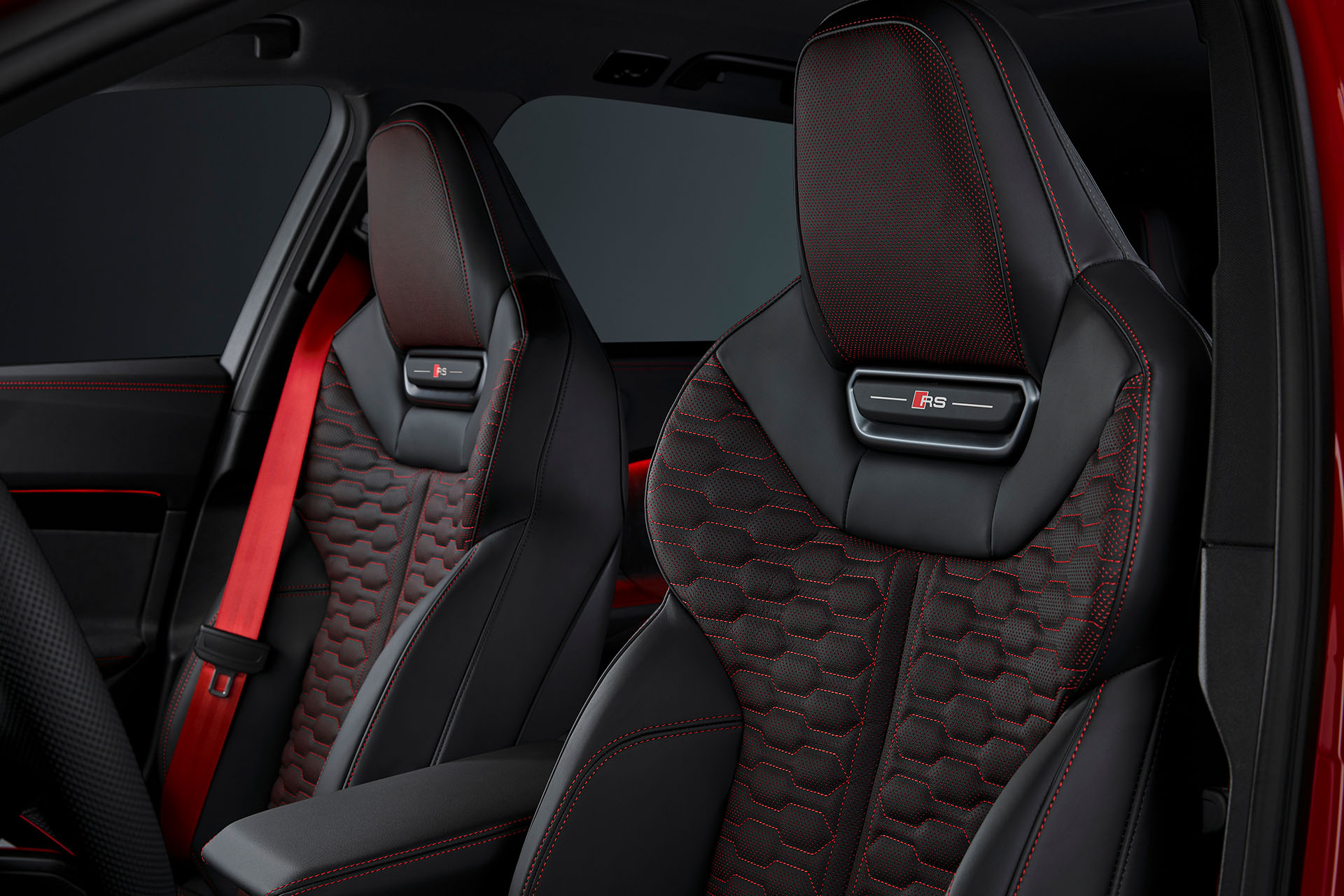
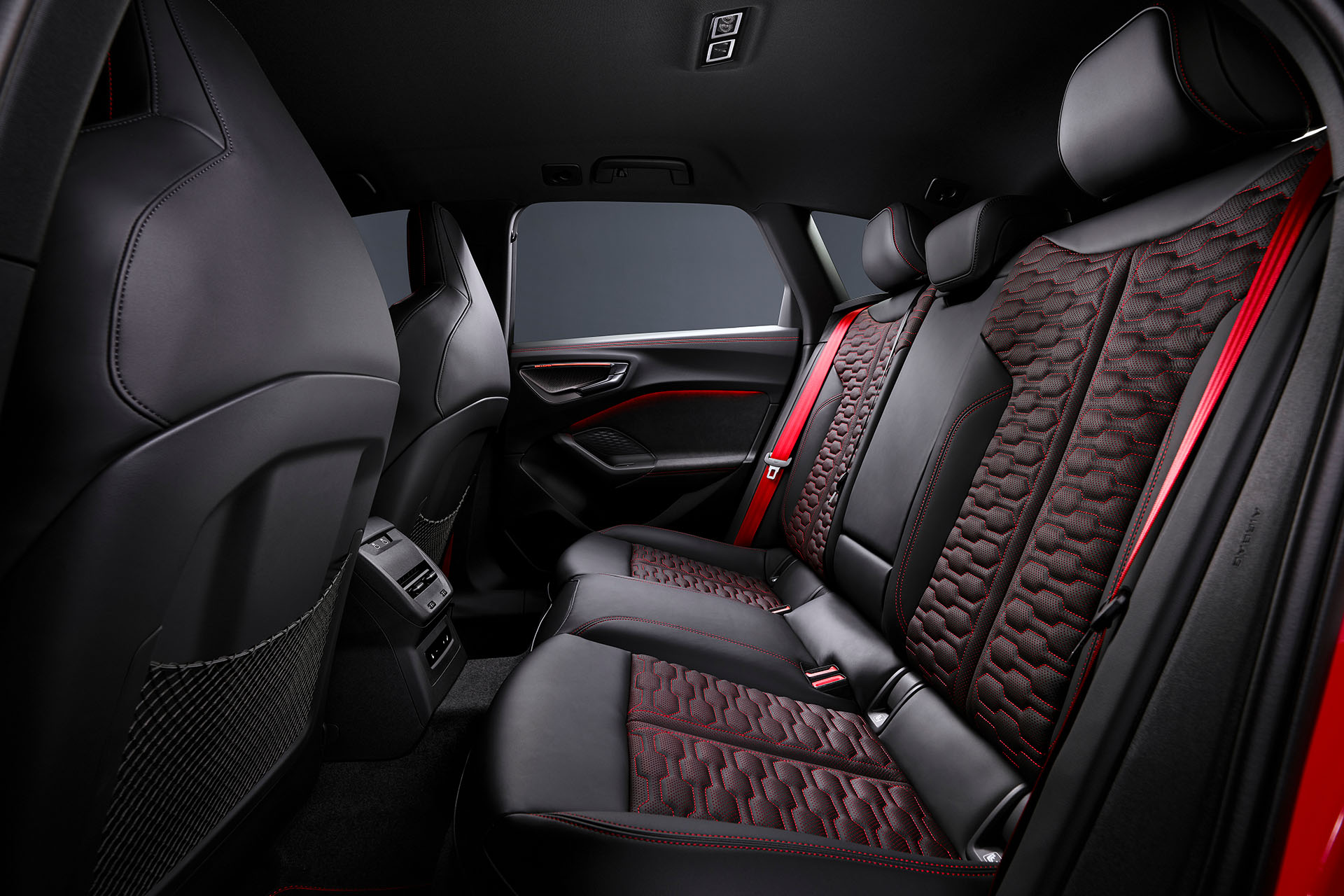
Inside, the RS 5 features: a 11.9-inch virtual cockpit, a 14.5-inch curved MMI touch display, an additional 10.9-inch passenger screen, and even an optional head-up display
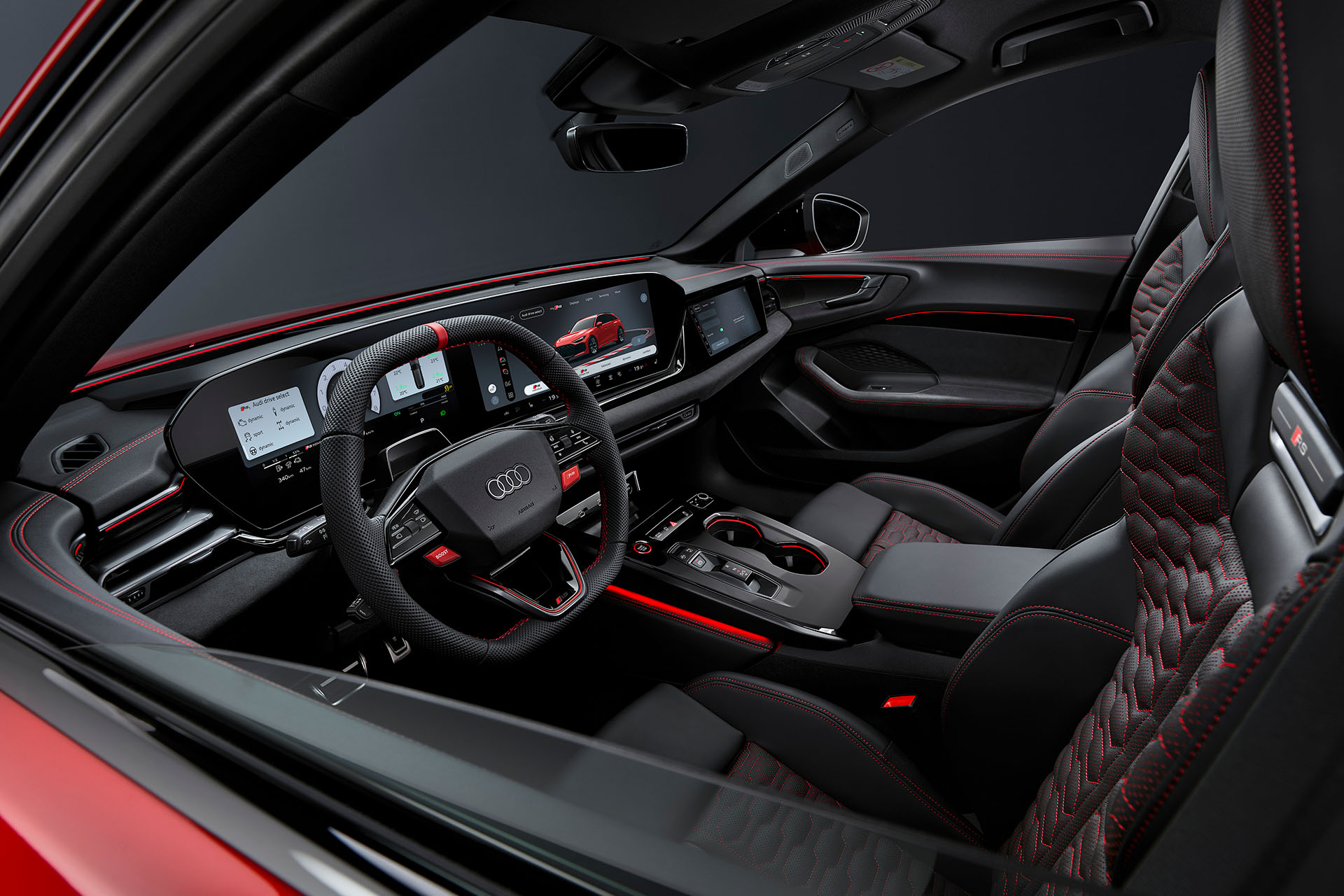
The Audi Driving Experience function turns the car into a rolling telemetry lab. It records: lap and sector times, G-forces, drift angles, oversteer/understeer datan and yes, you can even monitor tire and drivetrain temperatures, and get this, it can even generate new track layouts automatically and store them for comparison. This is RS ownership in the data age.
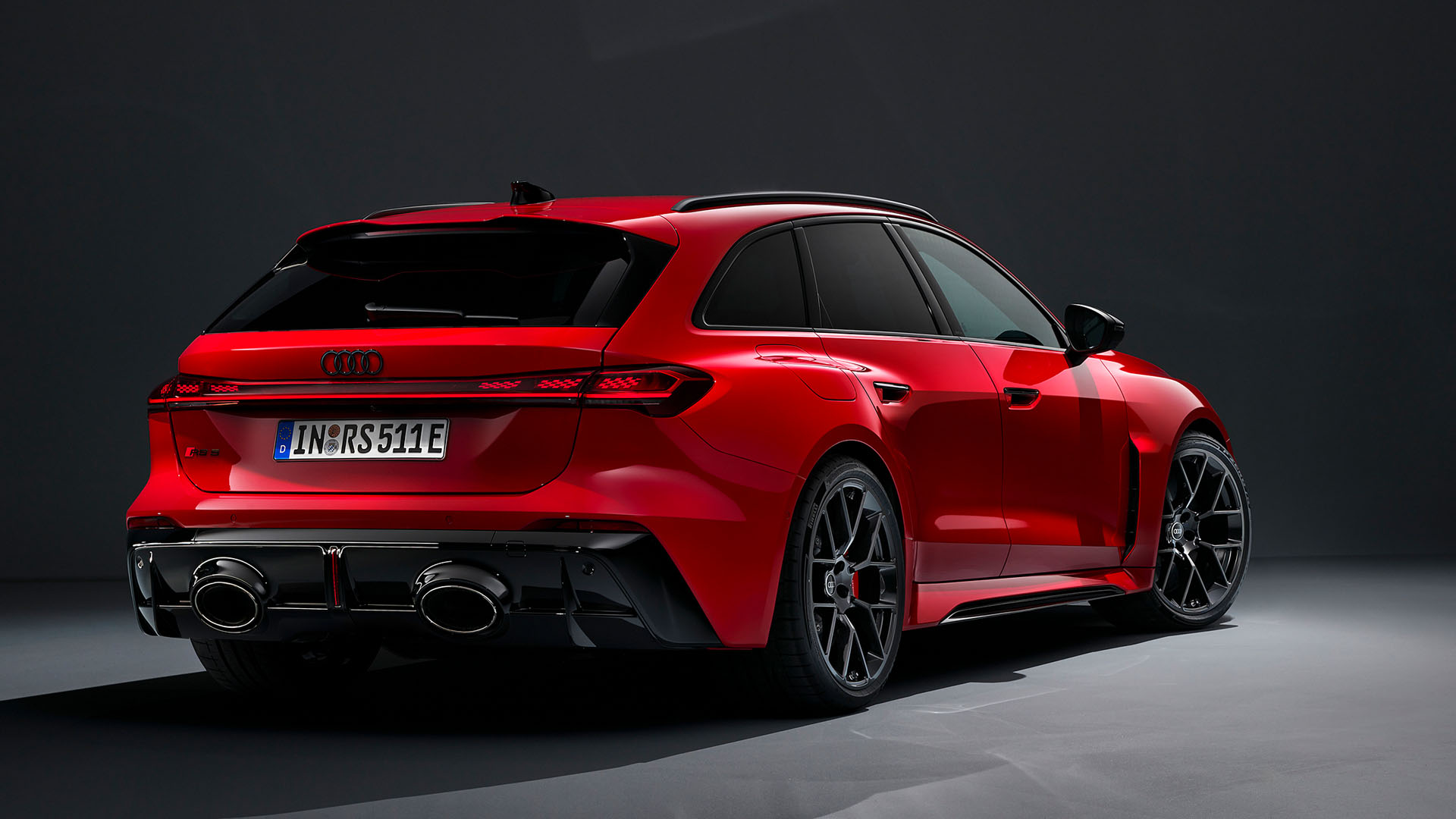
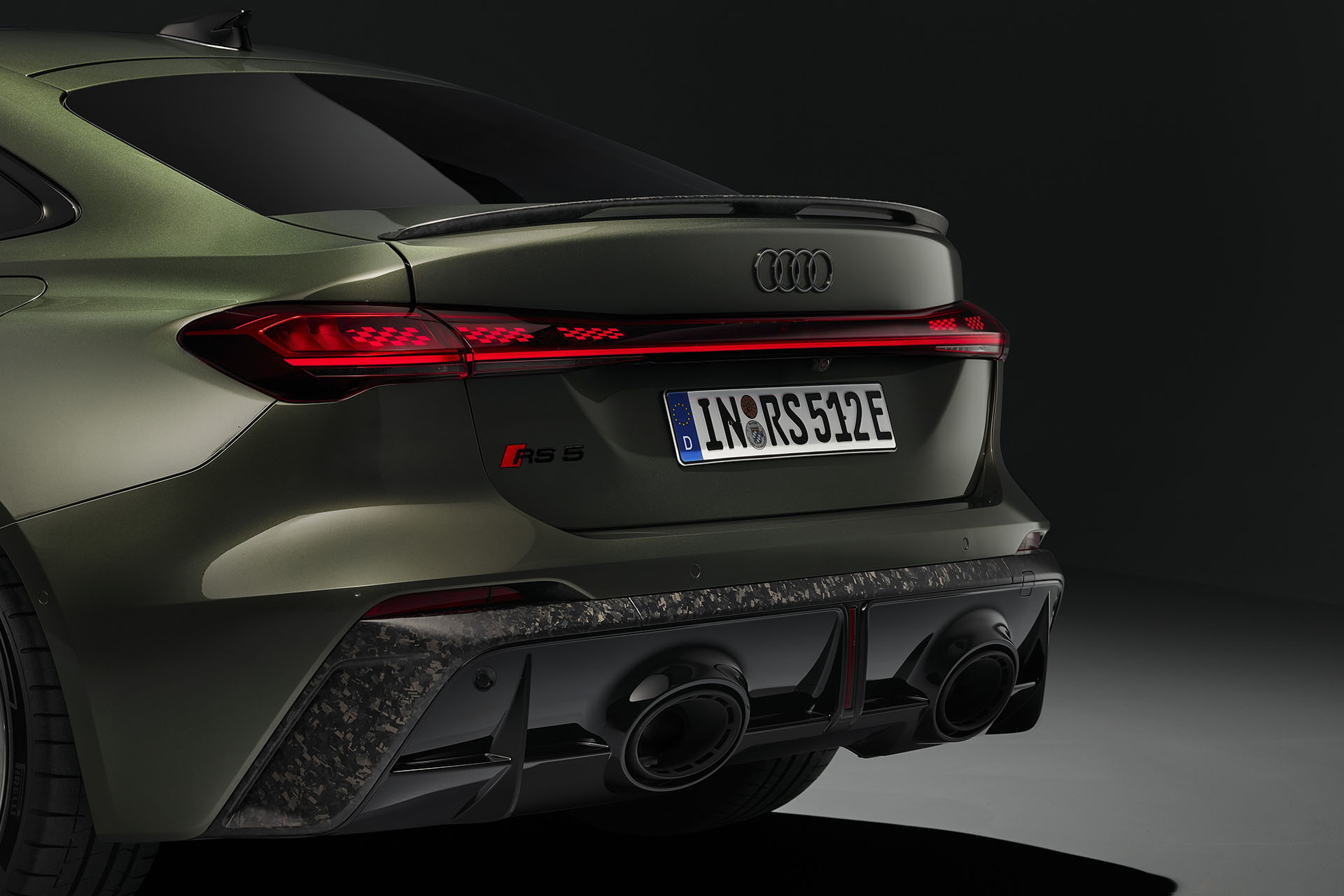
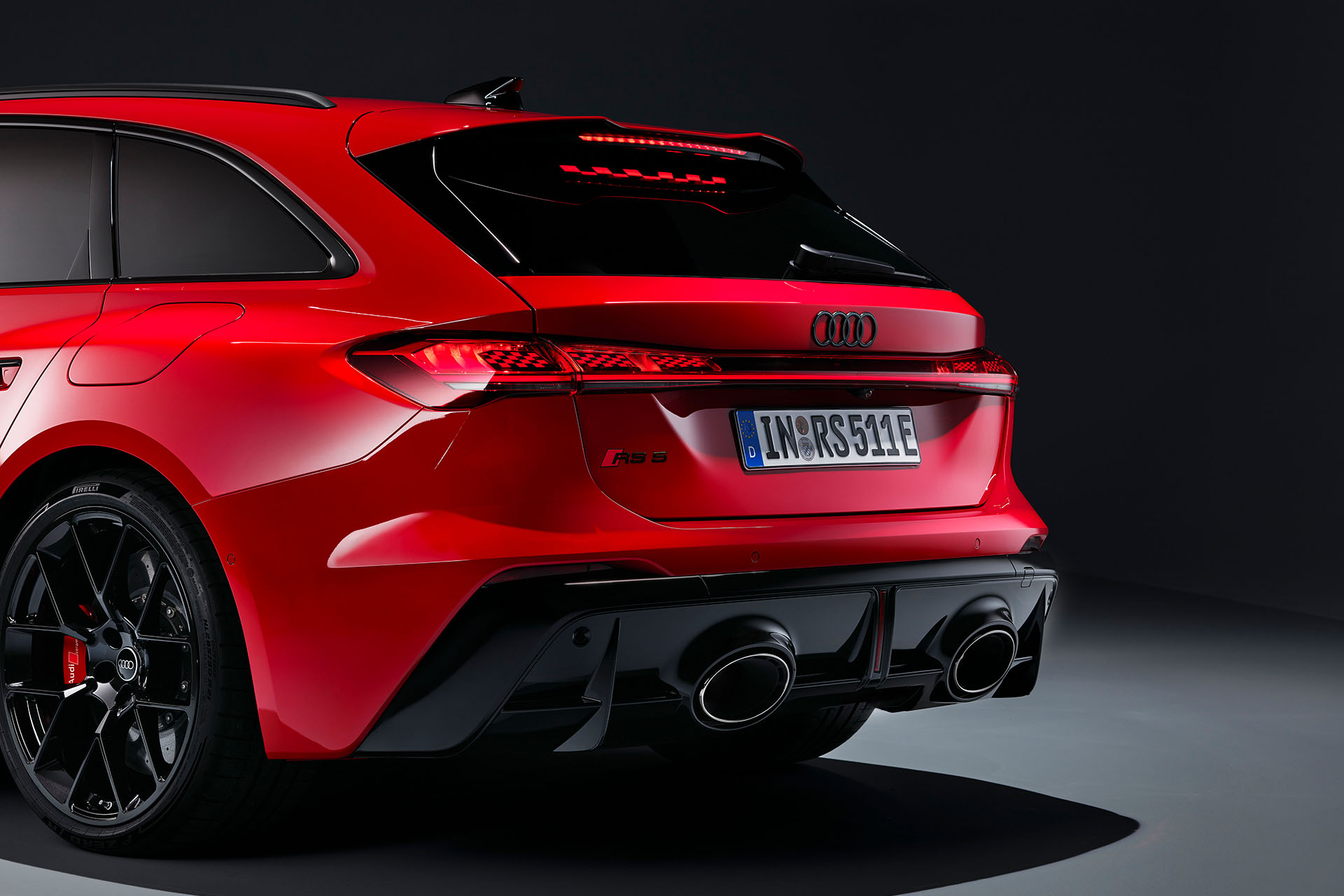
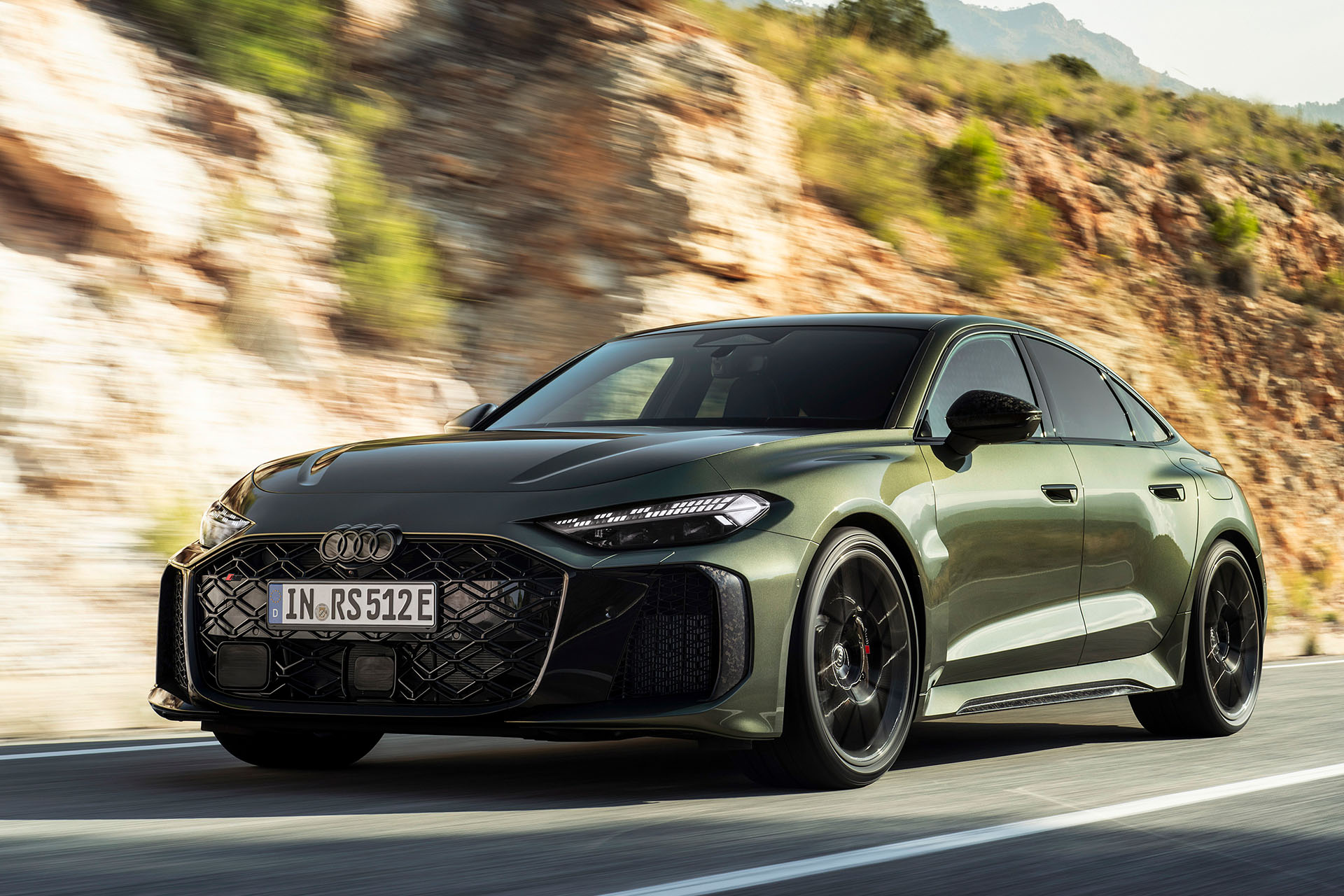
The exterior is unmistakably RS: a three-dimensional honeycomb grille, matrix LED headlights with checkered-flag DRL signature, digital OLED rear lights, a very aggressive rear diffuser, massive matte oval exhaust tips that can emit a thundering sound when you really hit that pedal under your right foot
Standard finishes include Ascari Blue, Mythos Black, and Progressive Red. Audi Exclusive adds bespoke effect paints, while the optional Audi Sport package raises the top speed to 285 km/h and adds carbon elements, bronze brake calipers, and Serpentine green interior detailing.
This isn’t just another fast Audi. It’s the beginning of Audi Sport’s electrified future, without sacrificing character. The new RS 5 proves that hybridization doesn’t have to mean dilution. Instead, it enhances precision, traction, and response. And crucially, it keeps the emotional core intact.
The RS era has officially gone electric. And if this is the benchmark, rivals should be paying very close attention.