
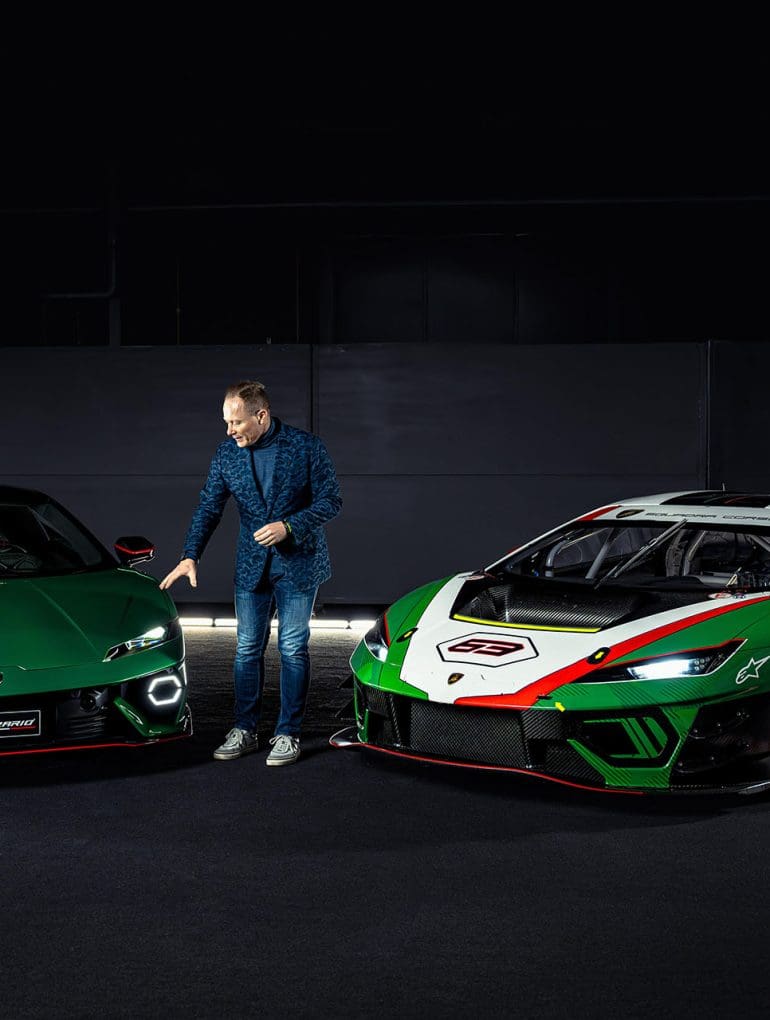
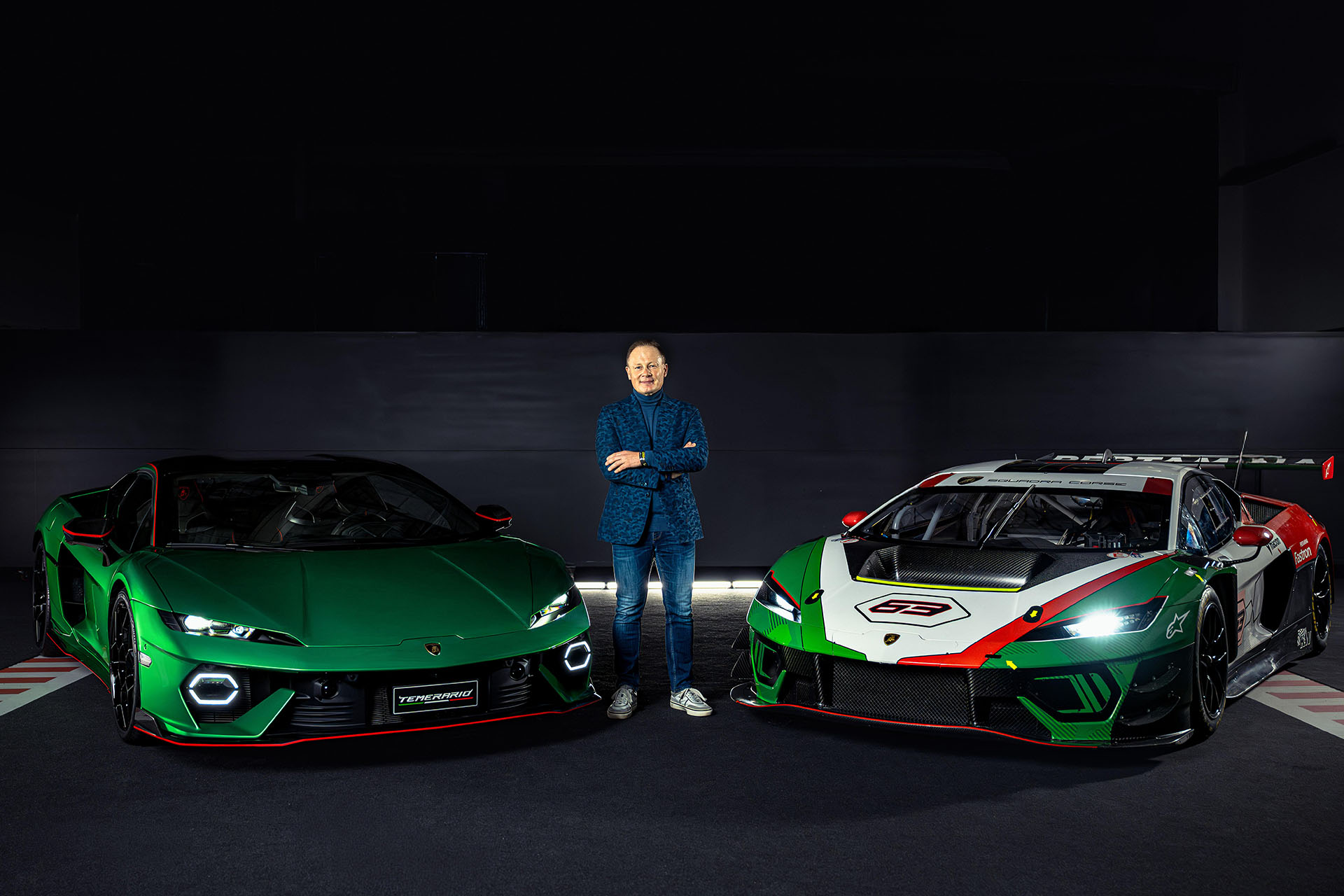
When Mitja Borkert talks about the new Lamborghini Temerario, he doesn’t just describe a car, he describes a philosophy. One that seamlessly bridges the gap between road-going innovation and motorsport brutality. And nowhere is that clearer than in its racing twin, the Lamborghini Temerario GT3.
From the very first sketch, the Temerario was conceived as pure visual adrenaline. Sharp, aggressive, unmistakably Lamborghini, it’s a machine that doesn’t just move fast, it looks fast standing still. But crucially, this wasn’t design for design’s sake. It was design with intent, intent that would later allow it to evolve into a full-fledged GT3 contender. At the heart of the road car lies a technological leap for Automobili Lamborghini. A twin-turbo V8 paired with three electric motors delivers a staggering 920 PS, channeled through an eight-speed dual-clutch gearbox. The result? A plug-in hybrid supercar capable of over 340 km/h, yet still dripping with the raw emotion Lamborghini drivers expect.

But step onto the track, and the story changes. Developed by Lamborghini Squadra Corse, the Temerario GT3 strips things back to meet the demands of endurance racing. Out goes the hybrid system, mandated by GT3 regulations, leaving the 4.0-litre twin-turbo V8 to carry the load alone. It’s not about outright power anymore, but balance, consistency, and surviving the relentless demands of competition under strict Balance of Performance rules.
Visually, the connection between the two cars is undeniable. The GT3 retains the Temerario’s striking silhouette and proportions, but every surface is re-engineered with purpose. Lightweight composite panels, quick-release bodywork, and modular components ensure the car can be serviced in seconds during race conditions, because in endurance racing, time lost in the pits is as costly as time lost on track.
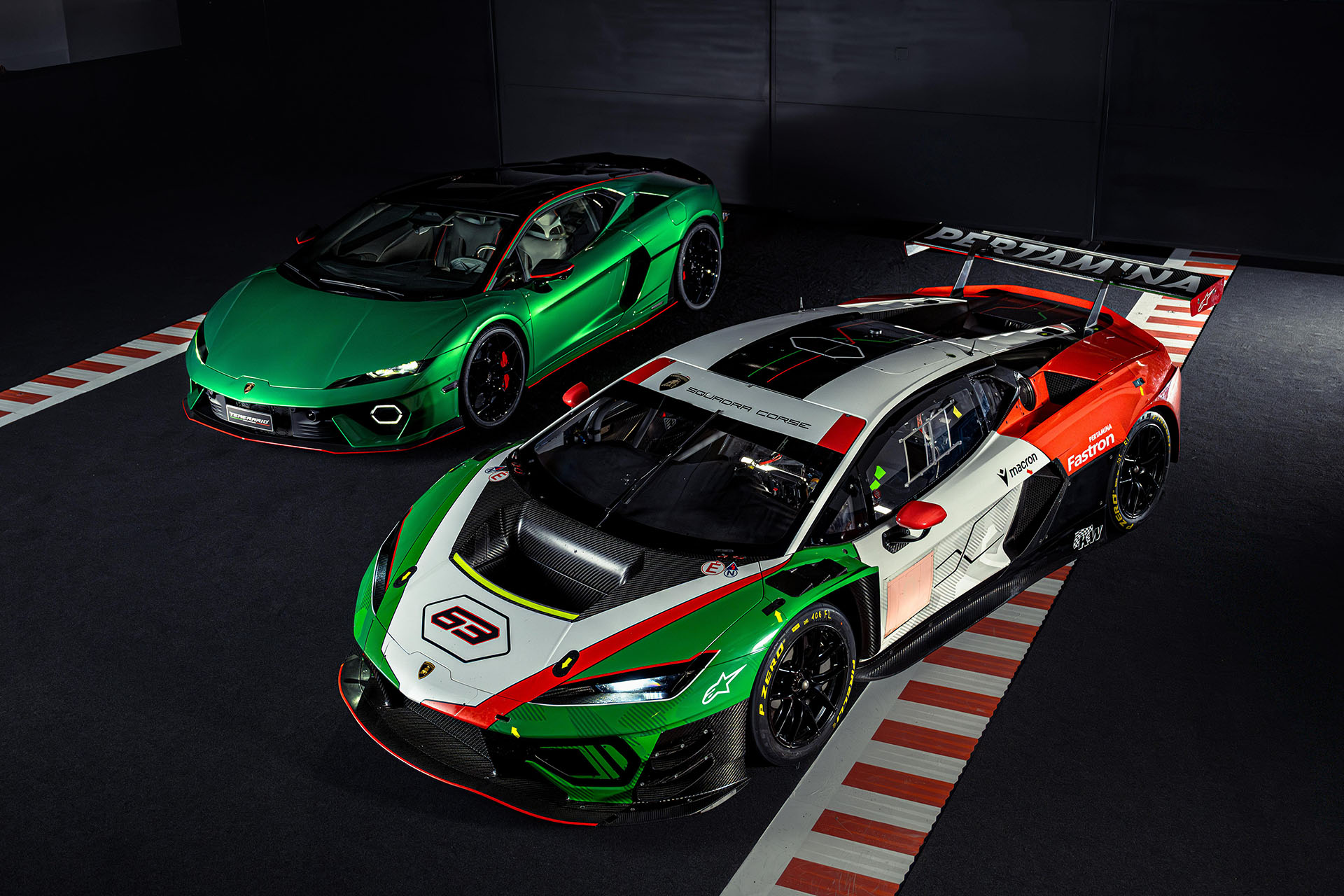
Inside, the divergence is even more dramatic. The road-going Temerario offers a cockpit that blends high-performance ergonomics with everyday usability. The GT3, by contrast, is all business, stripped, focused, and built around the driver. Every switch, every surface, every detail exists for one reason: performance under pressure. And yet, despite their differences, both machines remain true to the same core idea.
They are not separate creations, but two expressions of the same DNA, one engineered to dominate the road, the other to conquer the track. As Borkert puts it, the mission was never to simply convert a road car into a race car, but to give performance a tangible, emotional form in both worlds.

With the Temerario and its GT3 counterpart, Lamborghini isn’t just building cars, it’s building a unified vision of what modern performance can be.