

Geneva, March 1971. Lamborghini unveiled the LP500 concept, a wedge-shaped missile designed by Marcello Gandini at Bertone. The automotive world had never seen anything like it. Sharp angles, scissor doors, and a cab-forward design that looked more spaceship than automobile. Three years of development followed before production began in 1974 as the LP400, powered by a slightly smaller 3.9-liter V12. The signature feature was a roof-mounted periscope mirror providing rearward visibility, earning the early cars their “Periscopio” nickname. Just 157 examples were built between 1974 and 1978 before flared fenders and spoilers arrived with the LP400 S, forever changing the Countach’s pure wedge aesthetic. The Periscopio remains the most collectible Countach variant.
Background and Origins
The Miura established Lamborghini’s supercar credentials throughout the late 1960s, but by 1970, the company needed a successor. Chief engineer Paolo Stanzani led development of an entirely new platform that would push design and engineering boundaries even further. Rather than evolve the Miura’s transverse V12 layout, Stanzani positioned the engine longitudinally with the gearbox mounted ahead of it, between the seats. This arrangement centralized mass and improved weight distribution.
Marcello Gandini, working at Bertone, penned the bodywork. His brief was simple: create the most dramatic, forward-thinking supercar imaginable. Gandini’s response was the LP500 prototype, a wedge-shaped design with angles so sharp they seemed capable of cutting air. Scissor doors rotated upward rather than outward. The proportions were extreme: low nose, high tail, minimal overhangs. The design shocked Geneva Motor Show attendees in March 1971.
Development took three years as Lamborghini refined the concept for production. The prototype’s 5.0-liter V12 was replaced with the proven 3.9-liter unit from the Miura. The chassis was a complex tubular spaceframe clothed in aluminum, steel, and fiberglass panels. Production began in 1974 as the LP400, with “LP” denoting Longitudinale Posteriore and “400” referencing the approximate metric horsepower.
The early examples featured a distinctive roof channel housing a periscope-style mirror, improving rearward visibility while maintaining the low roofline. This feature gave the first-series cars their “Periscopio” nickname. Production continued until 1978, with approximately 157 Periscopio examples built before the LP400 S arrived with flared fenders and optional rear wing.
Design and Engineering
The LP400 was built around a complex tubular steel spaceframe designed by Paolo Stanzani. Large-diameter tubes created the central structure, with smaller sections supporting suspension pickup points and body panels. The 2,450mm wheelbase positioned the engine entirely behind the cabin, creating a genuine mid-engined layout.
Suspension used unequal-length double wishbones at all four corners with coil springs and telescopic dampers. Anti-roll bars front and rear controlled body roll. The geometry was optimized for high-speed stability rather than ultimate cornering grip, reflecting the Countach’s grand touring mission.
Braking was by Girling ventilated discs all around, measuring 289mm front and rear. The system lacked power assistance, requiring significant pedal pressure but providing excellent feel. Steering was unassisted rack-and-pinion with quick response and heavy low-speed effort.
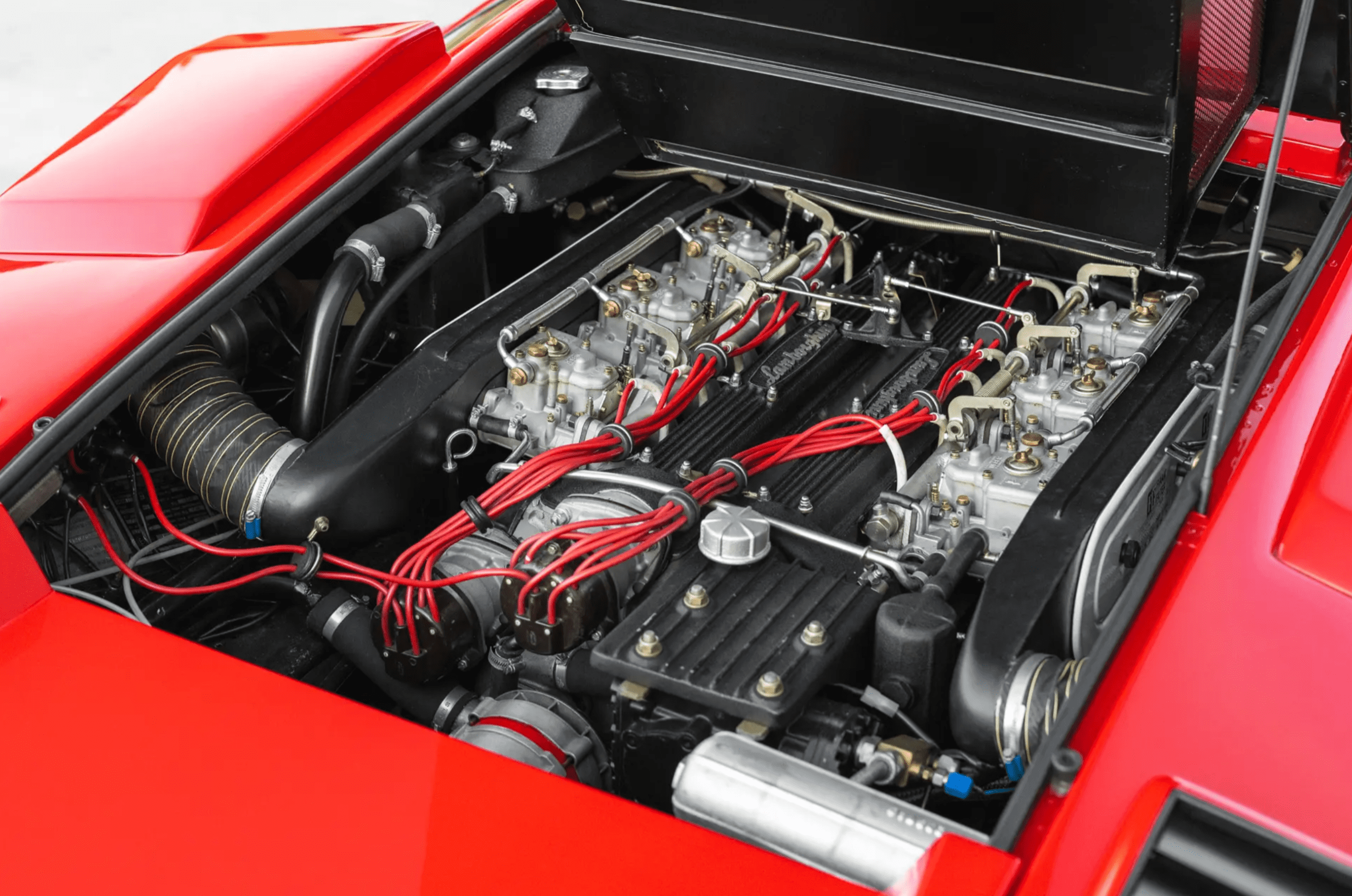
The engine was the Bizzarrini-designed V12 from the Miura, though mounted longitudinally rather than transversely. Displacing 3,929cc with an 82mm bore and 62mm stroke, this all-aluminum engine featured dual overhead camshafts per bank, two valves per cylinder, and dry-sump lubrication. Six Weber 40 DCOE twin-choke carburetors fed the induction system.
With a 10.5:1 compression ratio, output was 375 horsepower at 8,000 rpm and 269 lb-ft at 5,000 rpm. The redline sat at 8,000 rpm, though the engine would rev beyond if provoked. The V12’s soundtrack was intoxicating, a mechanical howl that intensified with engine speed.
Transmission was a five-speed manual mounted ahead of the engine, between the seats. This unconventional layout centralized mass and allowed the driver to reach behind to shift gears. The gear lever sprouted from the transmission tunnel with an exposed linkage, each shift a mechanical event. Final drive was 3.77:1.
Styling
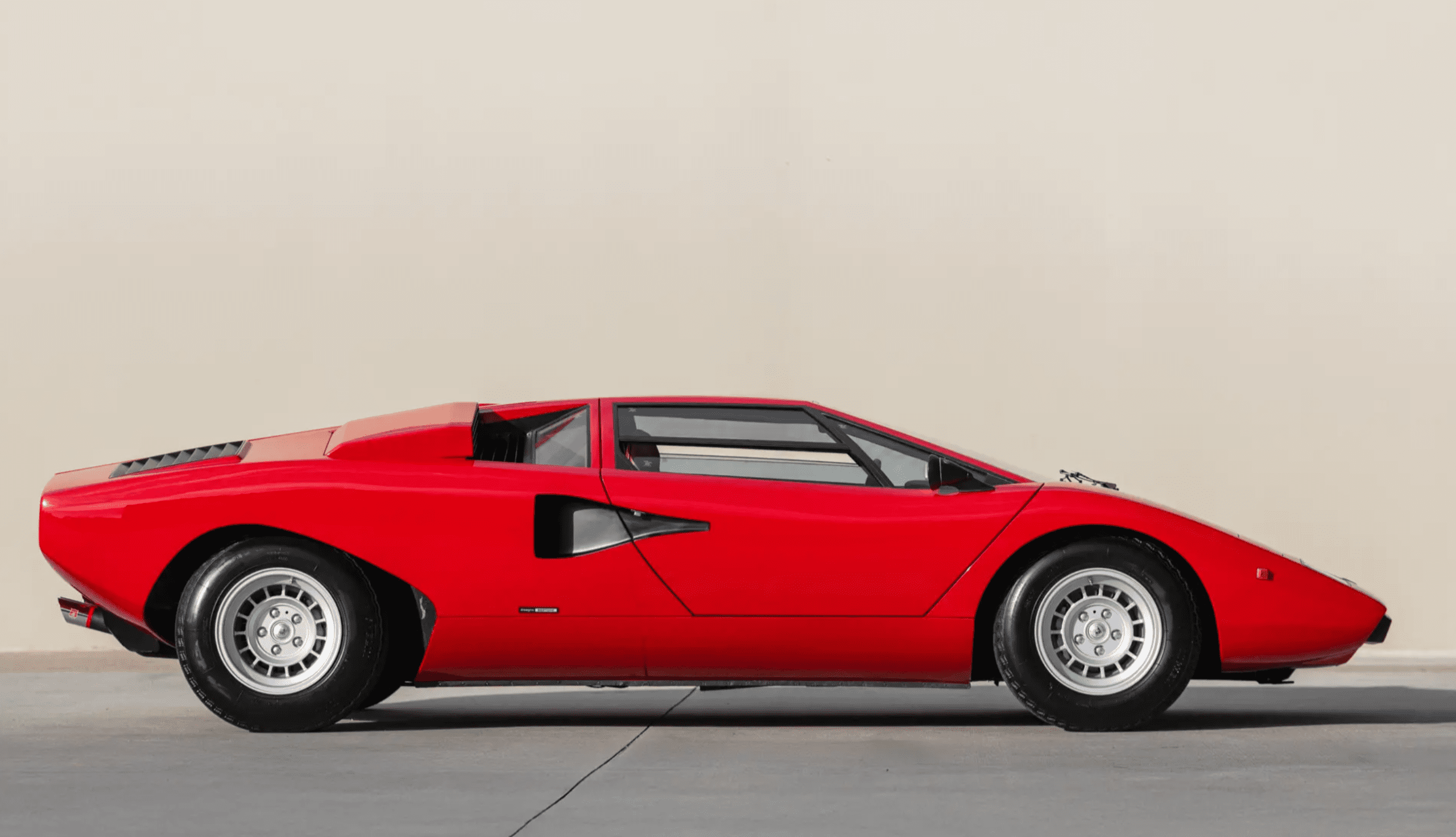
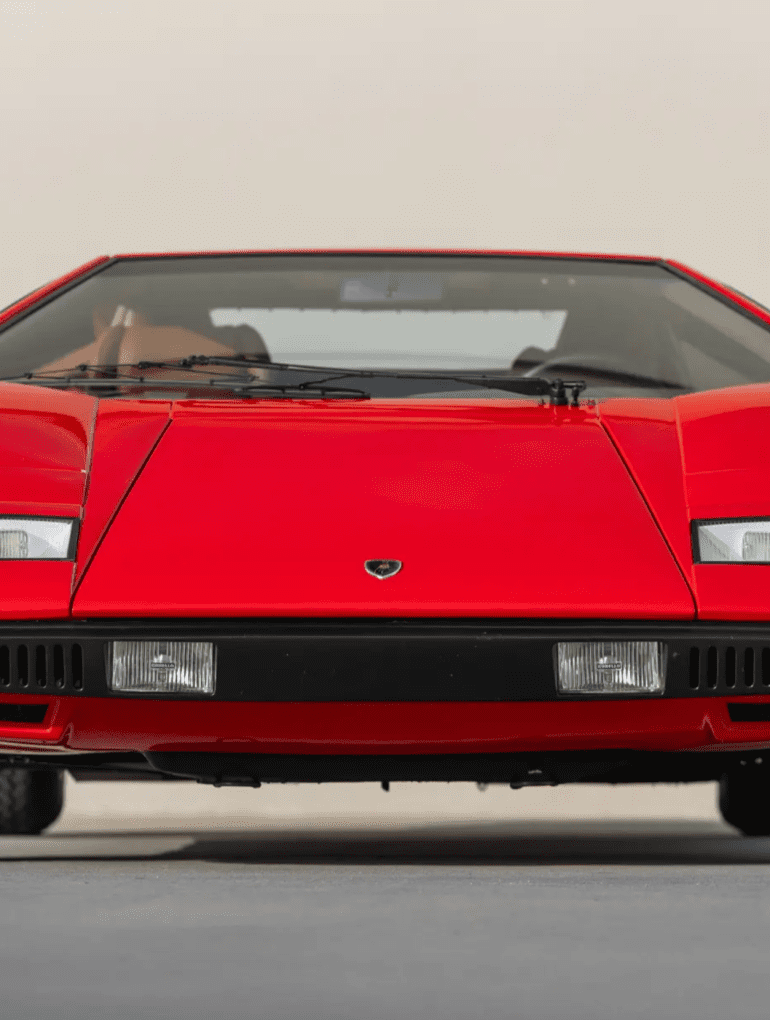
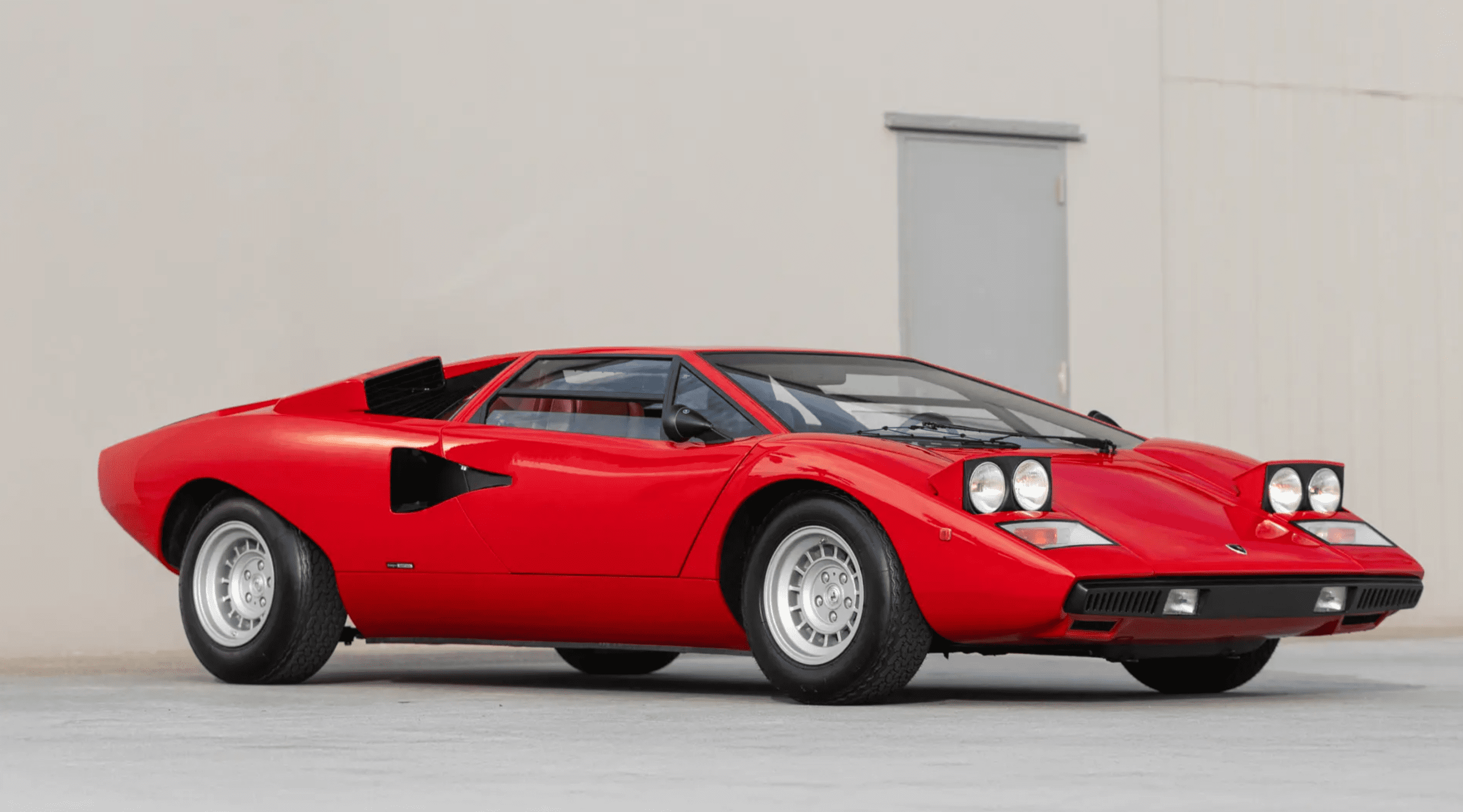
Gandini’s design was revolutionary. The Countach LP400’s wedge profile featured a low nose rising to a high tail, creating an aggressive stance. The cab-forward architecture positioned the windscreen well forward, with minimal front overhang. Retractable headlights kept the nose clean when not illuminated.
The side profile was dominated by sharp creases and flat surfaces. Scissor doors rotated upward on forward-mounted hinges, their theatrical operation becoming the Countach’s signature. Large NACA ducts behind the doors fed cool air to the rear brakes and radiators. The roofline featured a distinctive channel housing the periscope mirror, the defining feature of early Periscopio models.
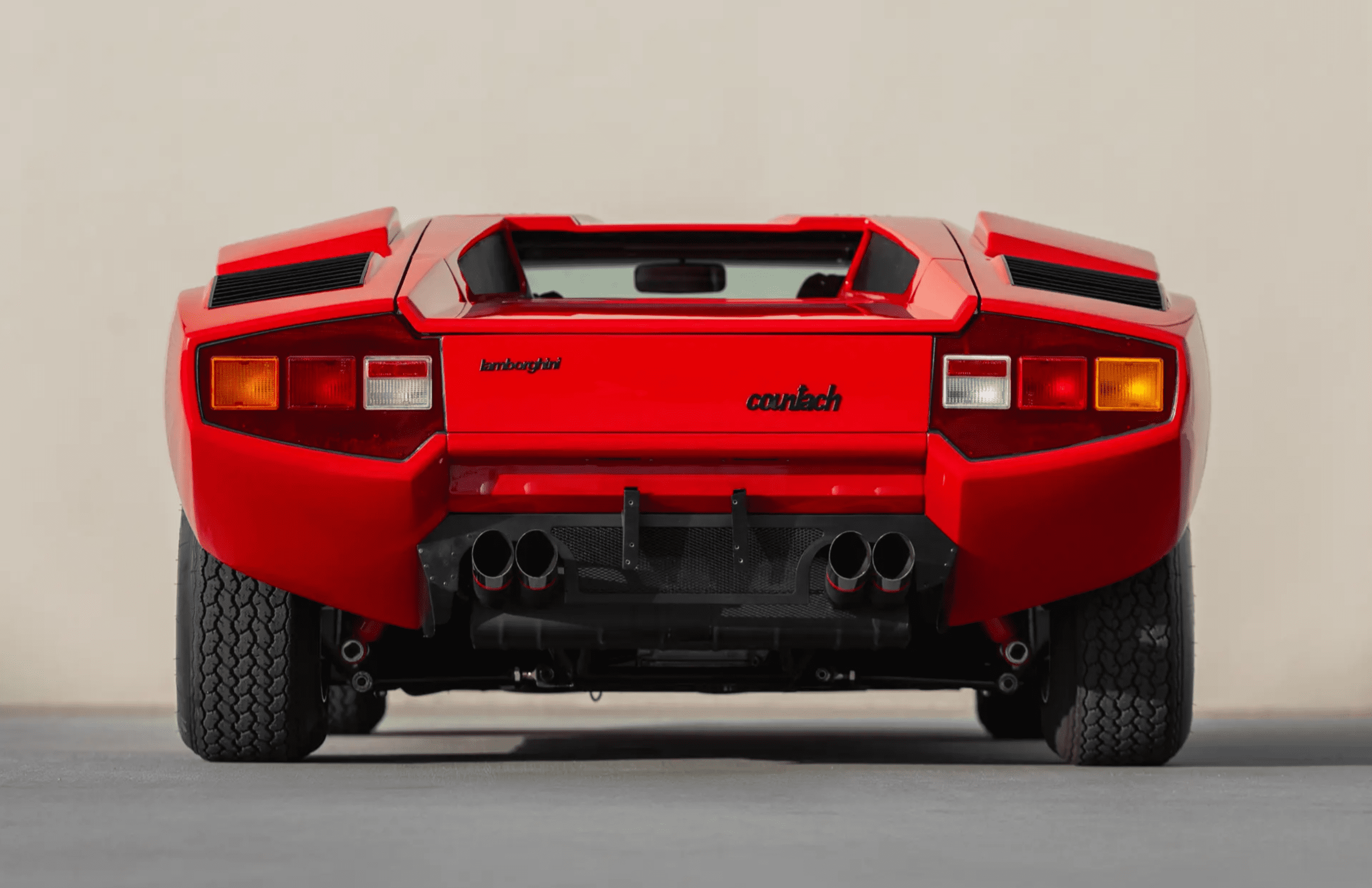
At the rear, a near-vertical rear window sat above a flat engine cover with louvers for heat extraction. The tail was abrupt, ending in a simple panel with rectangular taillights. No spoilers or wings disrupted the clean wedge shape on Periscopio models. Body panels were a mix of aluminum, steel, and fiberglass, hand-fitted over the tubular chassis.
Standard wheels were 15-inch Campagnolo magnesium units measuring 7.5 inches wide front and 9 inches rear, wearing Michelin XWX tires sized 205/70 VR15 front and 215/70 VR15 rear. The relatively narrow tires by modern standards matched the Periscopio’s clean, unfussy aesthetic.
Interior
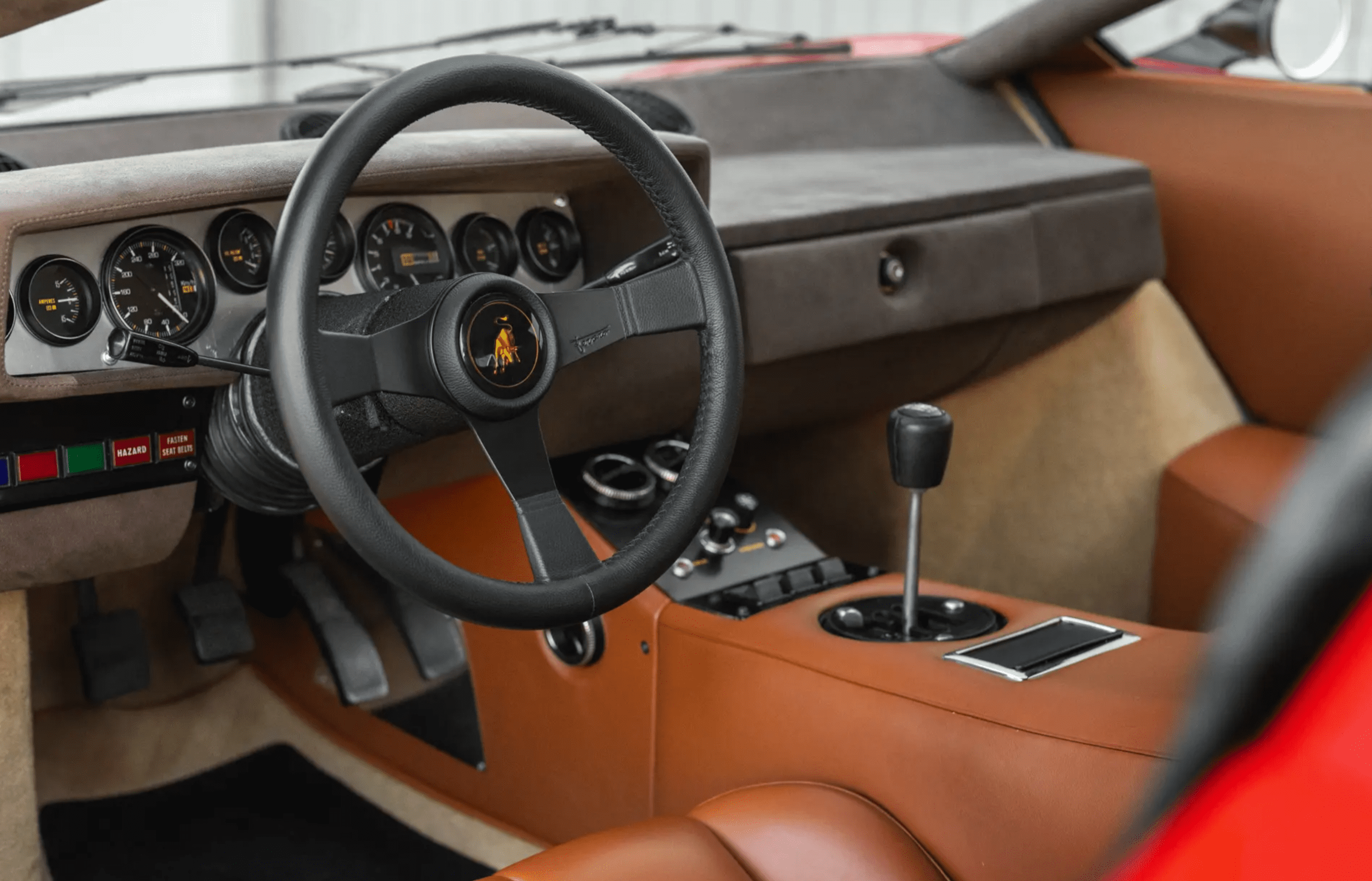
The cabin was cramped by modern standards. Low-mounted seats positioned occupants nearly horizontal. The driving position was offset to the left to accommodate the central transmission tunnel. Rearward visibility was minimal through the narrow rear window, hence the periscope mirror.
The dashboard featured comprehensive Veglia instrumentation with a large tachometer dominating the center, flanked by speedometer and auxiliary gauges for oil pressure, water temperature, and fuel. The instrument graphics were white on black, clearly legible despite the low seating position. A gear lever sprouted from the transmission tunnel between the seats, its exposed linkage and mechanical action a constant reminder of the drivetrain’s proximity.
Seats were trimmed in leather with minimal padding. Climate control was rudimentary, with heat radiating generously from the engine bay behind. Sound insulation was minimal, allowing the V12’s mechanical symphony to dominate the cabin. The overall atmosphere was purposeful and uncompromising, a race car with number plates.
Specifications
- Engine: Bizzarrini V12, 3,929cc (82mm x 62mm), DOHC per bank, two valves per cylinder, dry-sump
- Power: 375 bhp at 8,000 rpm
- Torque: 269 lb-ft at 5,000 rpm
- Carburation: Six Weber 40 DCOE twin-choke carburetors
- Transmission: Five-speed manual, 3.77:1 final drive
- Chassis: Tubular steel spaceframe, 2,450mm wheelbase
- Suspension: Double wishbones (front and rear)
- Brakes: Girling vented discs 289mm (front and rear)
- Wheels: Campagnolo 7.5×15 front, 9×15 rear, Michelin XWX 205/70 VR15 (front), 215/70 VR15 (rear)
- Weight: 1,065 kg
- Performance: 180 mph top speed, 0-60 mph in 5.6 seconds
Competition History
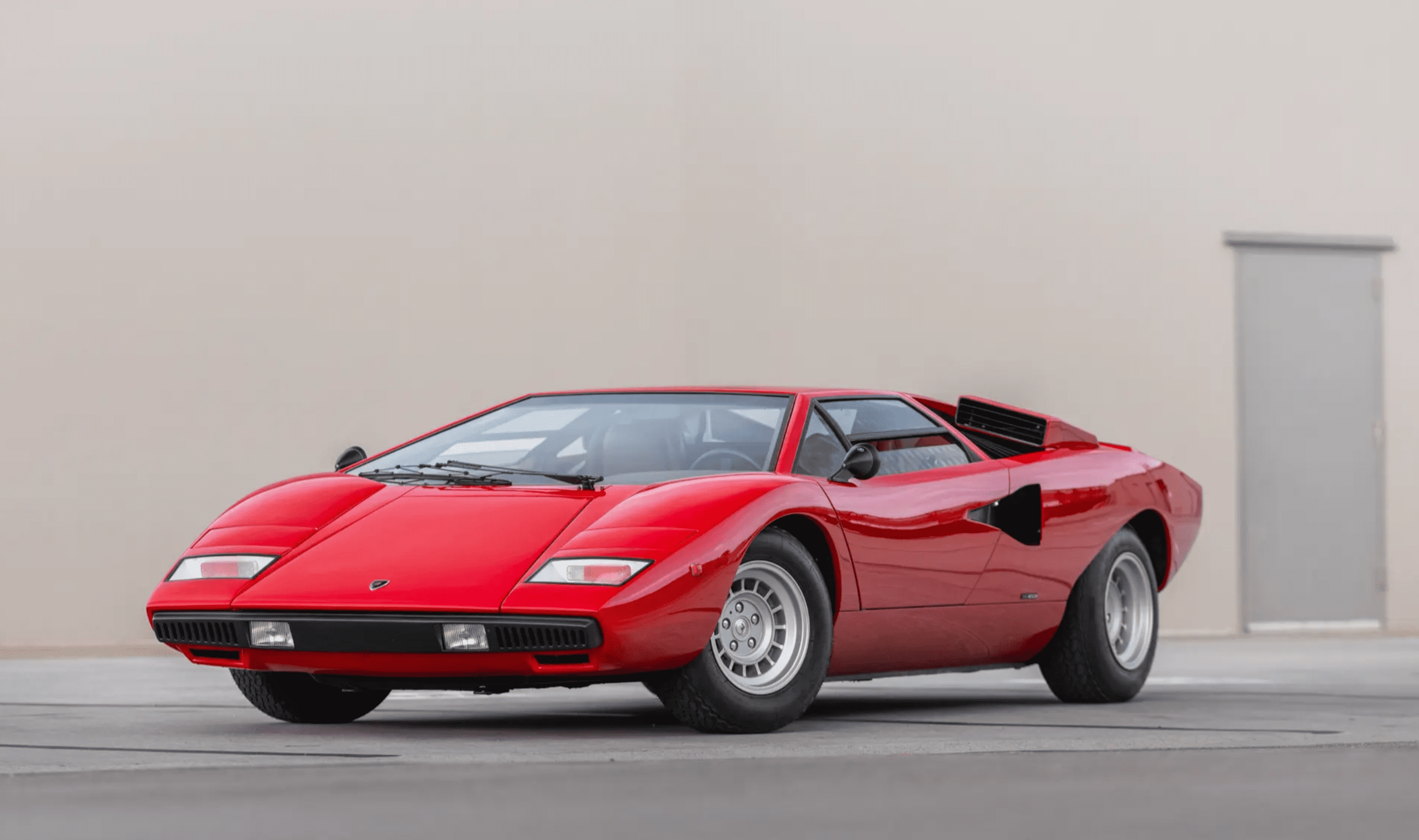
The LP400 was designed as a road car and saw minimal official competition use. However, its dramatic styling and performance made it a cultural icon throughout the 1970s. The Countach appeared on bedroom posters worldwide, in films, and music videos, becoming the definitive supercar of its era.
Production and Legacy
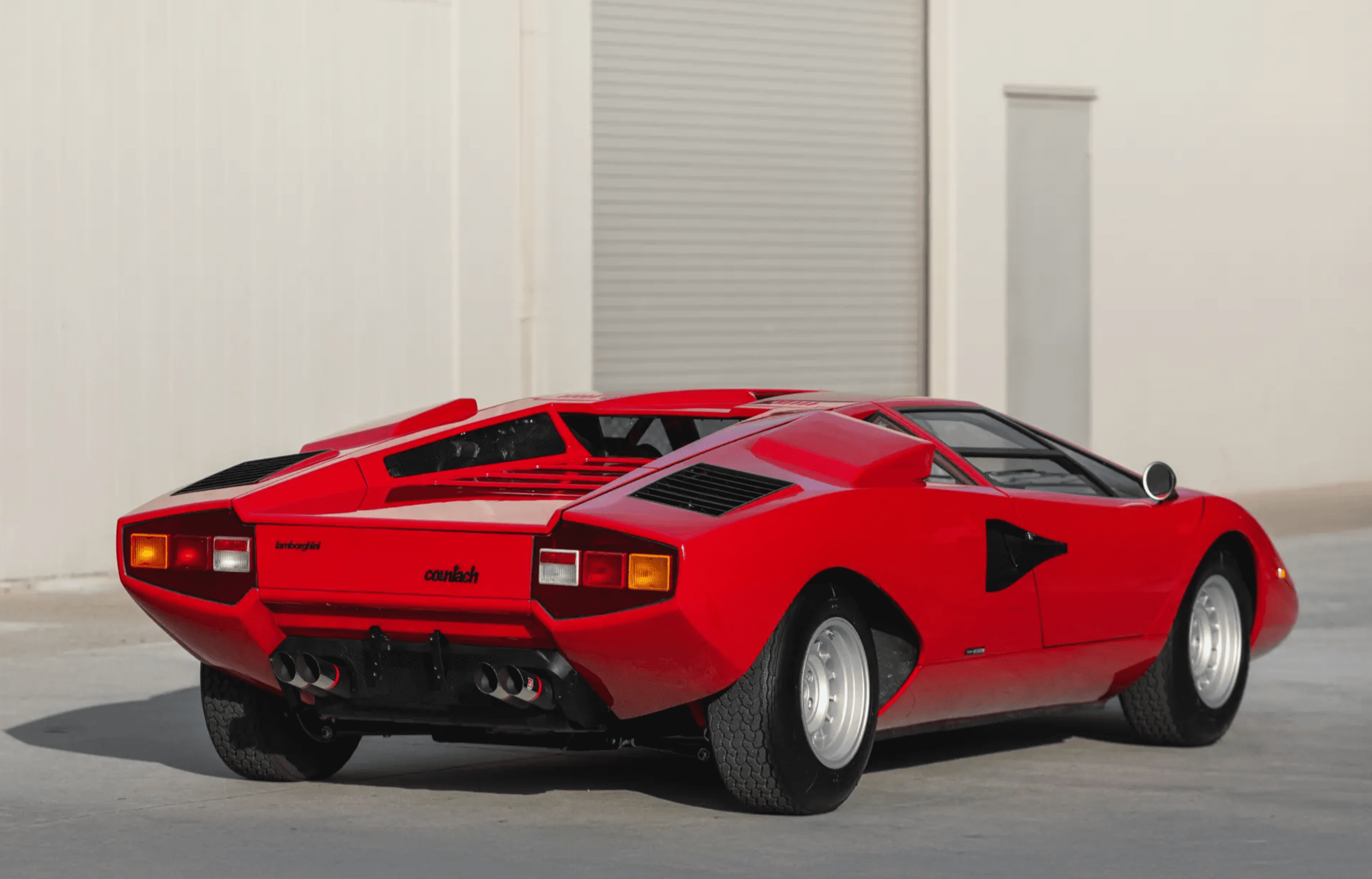
Lamborghini built approximately 157 LP400 Periscopio examples between 1974 and 1978 at Sant’Agata Bolognese. Each car was hand-assembled over several weeks, with body panels fitted individually and paint applied by hand. Production was slow and inconsistent, reflecting Lamborghini’s small-scale manufacturing capabilities.
The LP400 S arrived in 1978 with flared fenders to accommodate wider Pirelli P7 tires and an optional rear wing. These additions increased grip and high-speed stability but compromised Gandini’s pure wedge design. Later Countach variants became progressively more aggressive, culminating in the heavily modified Anniversary edition of 1988.
Today, the LP400 Periscopio is recognized as the purest, most collectable Countach variant. The clean lines, narrow body, and lack of aerodynamic addenda represent Gandini’s original vision before market demands forced compromise. Values reflect this status, with pristine Periscopio examples commanding significant premiums over later, more common variants.
The Countach LP400 Periscopio established the supercar template that persists today: mid-mounted engine, dramatic styling, uncompromising performance, and minimal concession to practicality. It proved that automotive design could be art, that function and form weren’t mutually exclusive. The Countach remains one of the most influential automotive designs ever created, the car that defined what a supercar should be.