
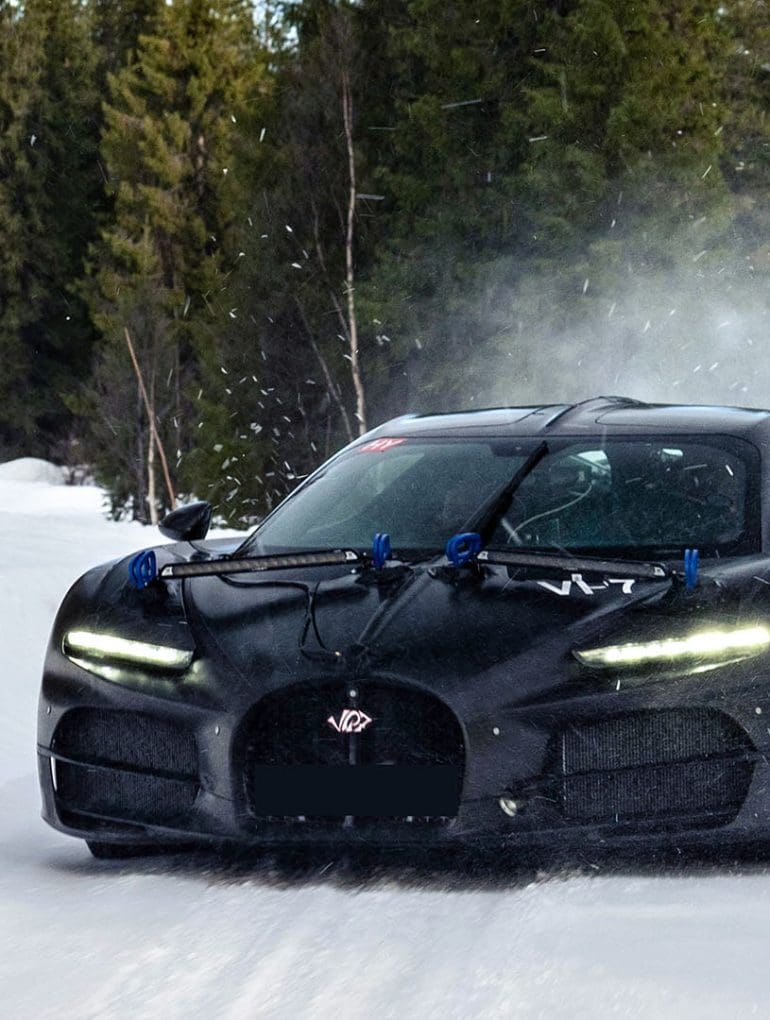
In the frozen wilderness of northern Sweden, where temperatures plunge to -30°C and traction is measured in millimeters, Bugatti is forging the future of the hypercar. Far from glamorous launch events and polished showrooms, the next chapter of the French marque is being tested on sheets of ice, deep snow, slush and frozen asphalt at the legendary Colmis Proving Ground in Arjeplog. This is where the all-new Bugatti Tourbillon is proving whether it truly deserves the Bugatti name.
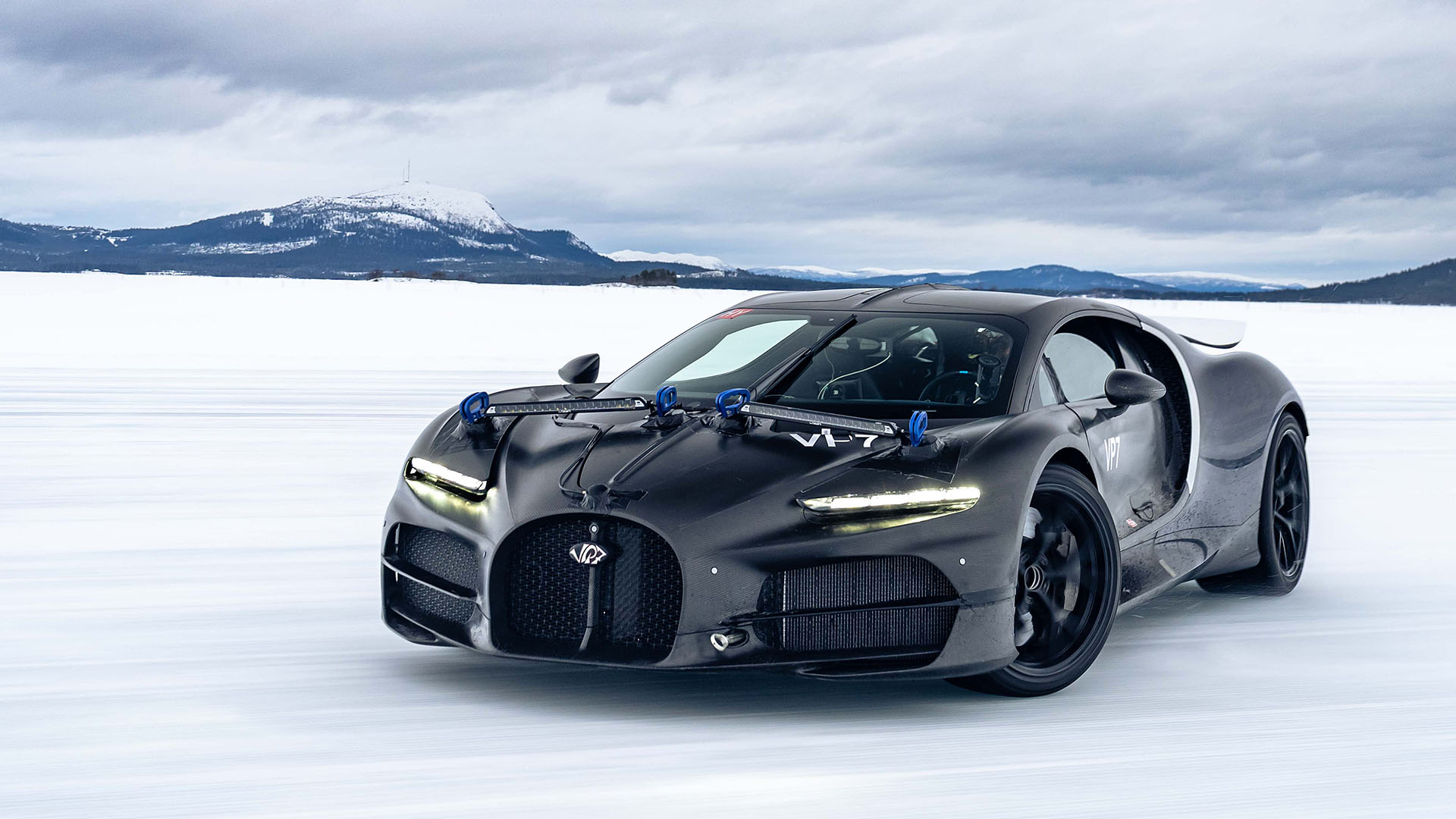
The latest episode of Bugatti’s “A New Era” docuseries pulls back the curtain on one of the most demanding phases of the Tourbillon’s development program. And while the car’s breathtaking design and naturally aspirated V16 engine have already captured the imagination of enthusiasts worldwide, the real story lies beneath the surface, in the relentless engineering effort required to make 1,800 horsepower feel usable in the harshest conditions imaginable.
The Tourbillon is far more than a successor to the Chiron. It represents a complete reinvention of Bugatti’s engineering philosophy. At its heart sits a brand-new naturally aspirated V16 engine paired with three electric motors, creating a hybrid powertrain that delivers a staggering combined output of 1,800 HP. Unlike the quad-turbocharged W16 monsters that defined the Veyron and Chiron generations, the Tourbillon embraces a new balance between electrification and emotional engagement.
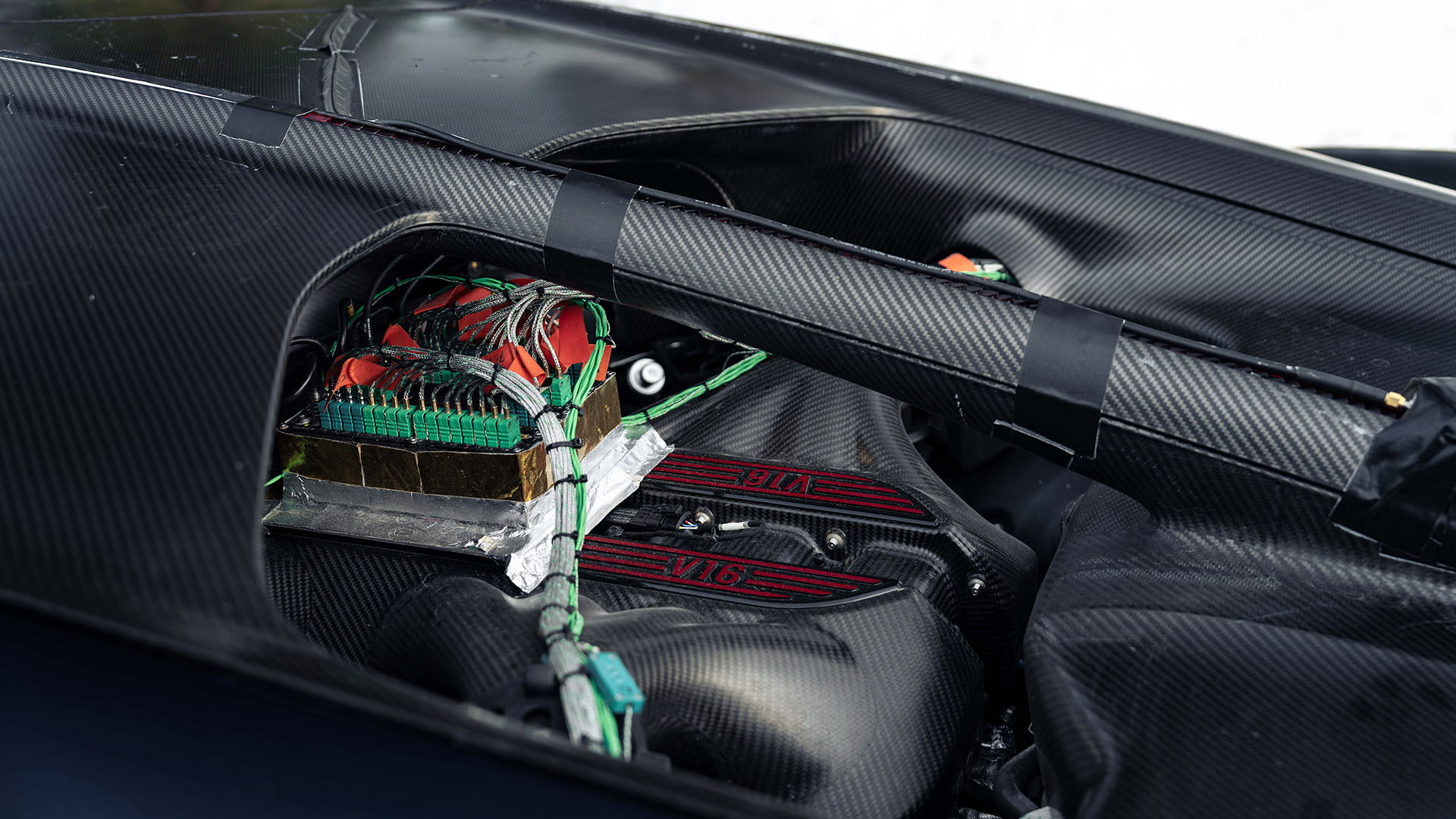
But producing enormous power is only part of the equation. For Bugatti, true excellence is measured by how seamlessly every system works together, steering, braking, stability control, torque distribution and driver feedback, regardless of the environment. And there may be no tougher environment than the Arctic Circle.
At first glance, testing a multi-million-euro hypercar in deep snow sounds almost absurd. Most Tourbillons will never encounter Scandinavian winter roads, let alone polished ice tracks. Yet Bugatti insists that extreme-weather validation is essential. According to Chief Development Driver Miroslav Zrnčević, the philosophy is simple: if the Tourbillon behaves like an ordinary car under pressure, then it is not worthy of the Bugatti badge.
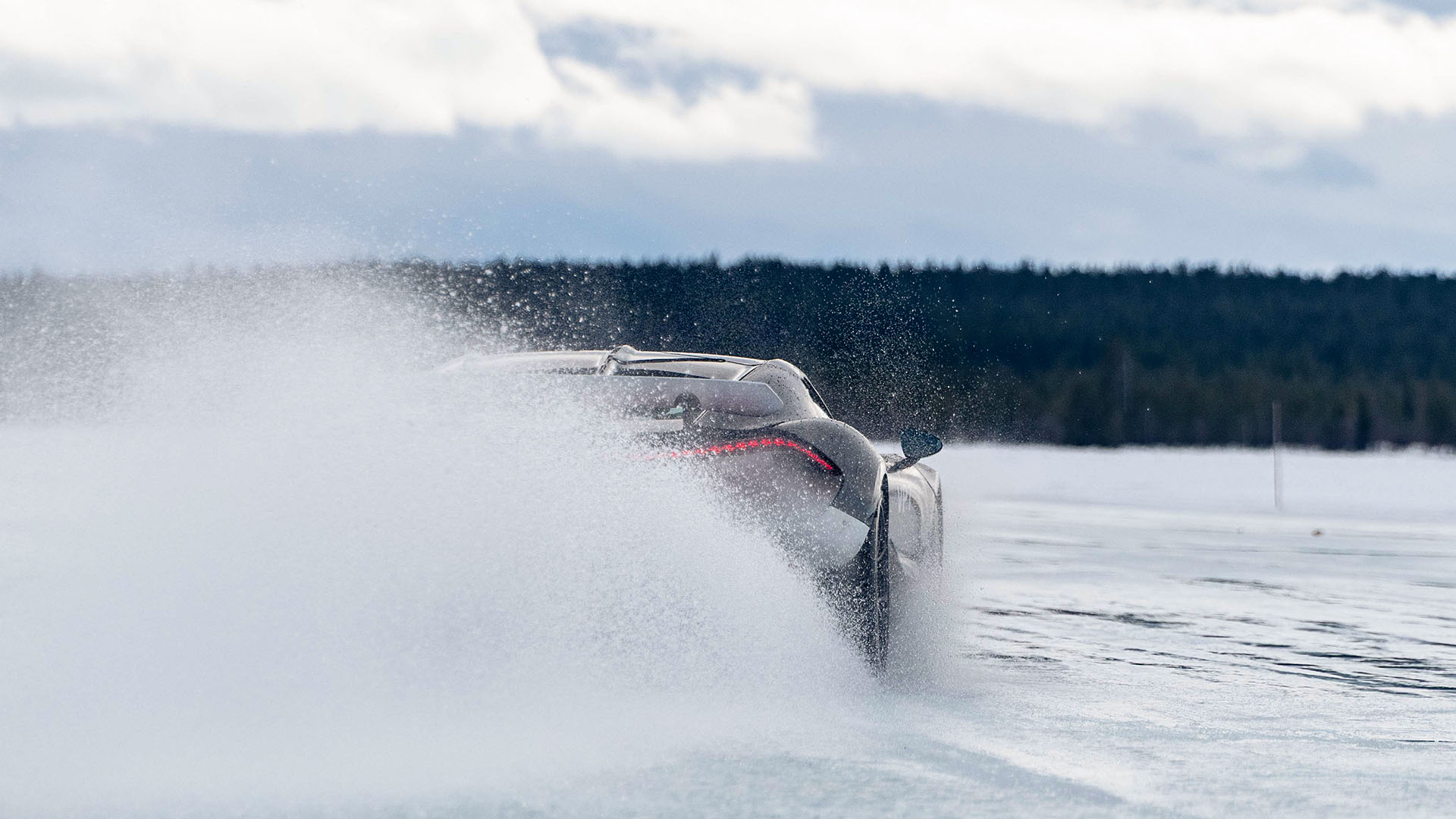
That philosophy drives the team to validate the car at the very edge of engineering possibility. The work in Arjeplog focuses heavily on “low-MU” conditions, environments where grip levels are dramatically reduced. Here, tiny differences in software calibration can completely transform how the car behaves. Every throttle input, steering correction and brake application becomes magnified. And with 1,800 horsepower instantly available from the hybrid drivetrain, maintaining composure on ice becomes an extraordinary technical challenge.
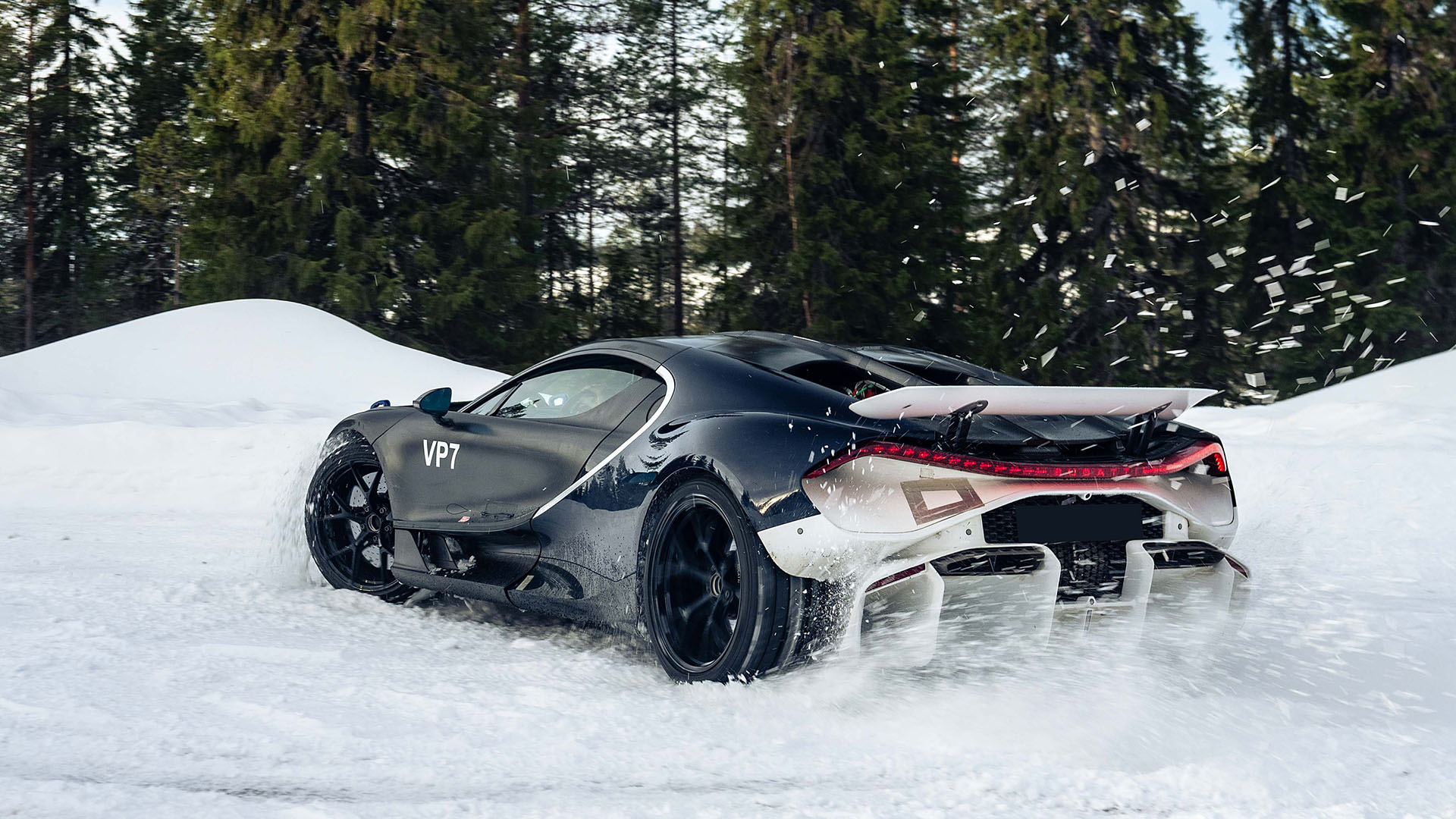
The Tourbillon’s advanced architecture is central to its winter capabilities. Two electric motors mounted on the front axle provide precise torque vectoring and all-wheel-drive control, while the naturally aspirated V16 and a third electric motor send power to the rear axle. The system continuously adjusts torque delivery depending on available traction. On polished ice, this level of precision becomes critical. Bugatti engineers are not simply testing whether the car can move forward in slippery conditions. They are calibrating how naturally and intuitively the Tourbillon responds to the driver.
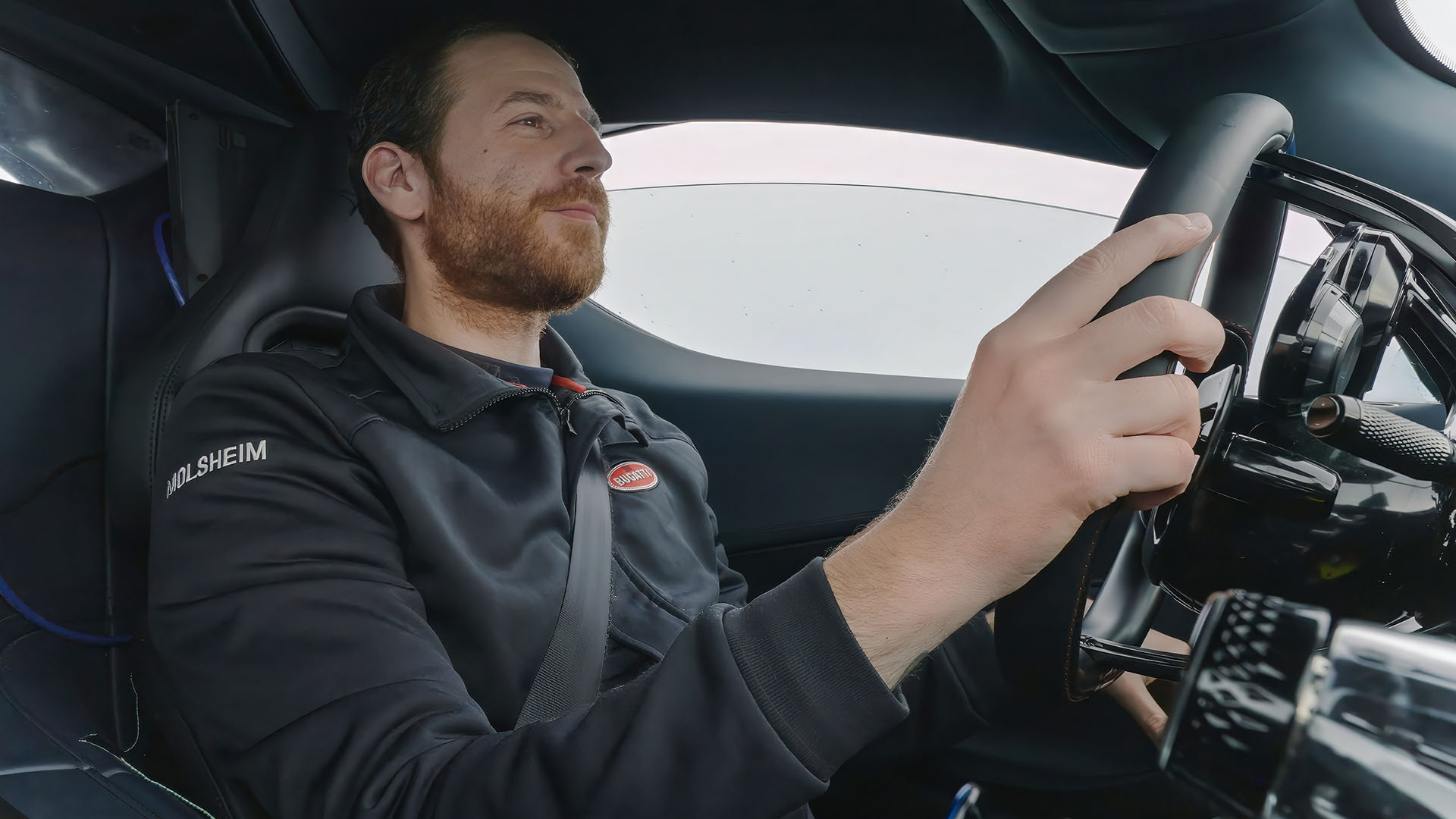
That means evaluating: ABS intervention on varying surfaces, Electronic Stability Control behavior, Traction control calibration, Brake-by-wire feel, Regenerative braking integration, Torque distribution between axles, Steering precision on low grip and cabin climate performance in sub-zero temperatures. The result is a hypercar designed not only to dominate at 400 km/h, but also to inspire confidence when conditions become unpredictable.
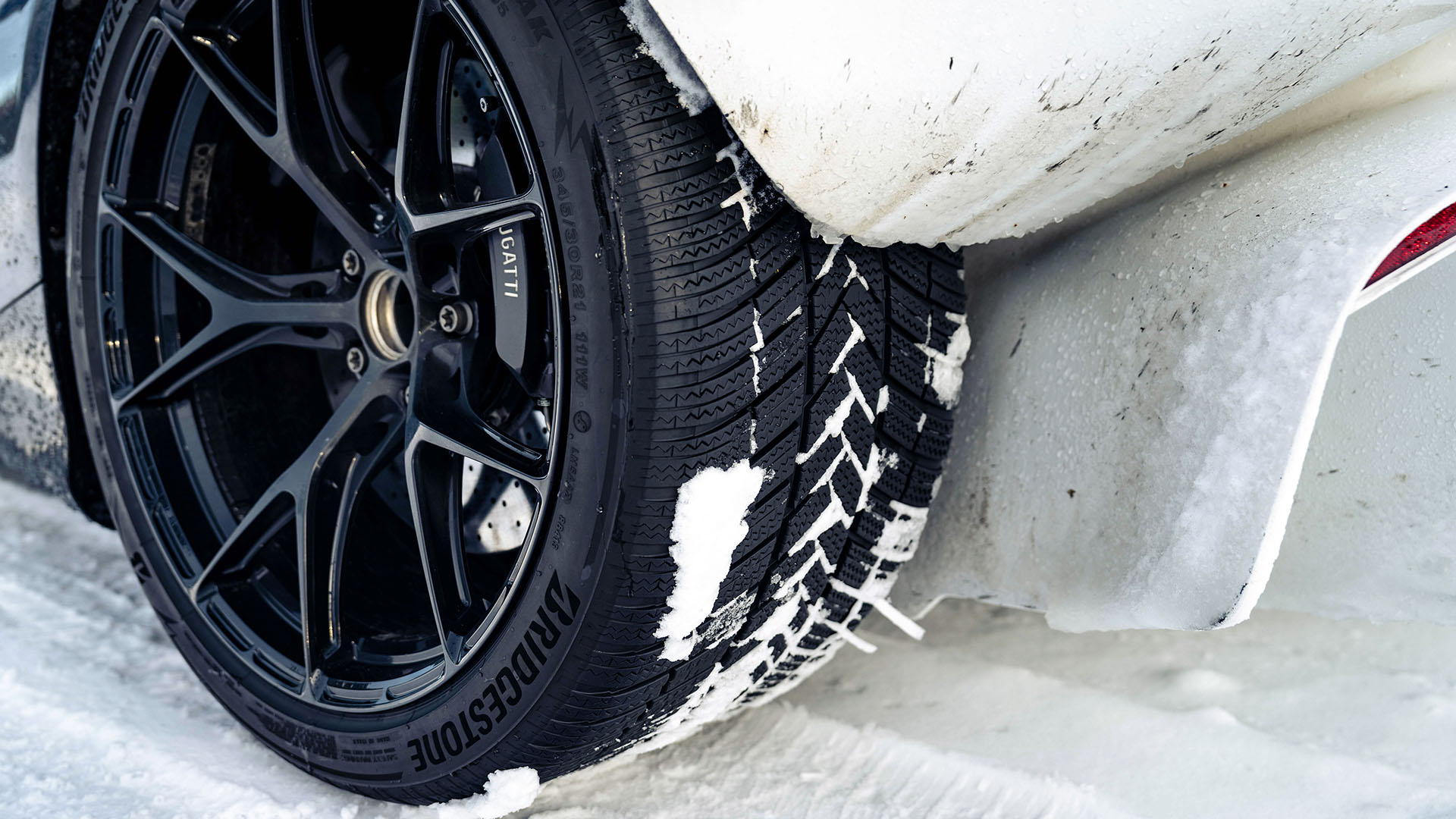
Among the most technically demanding tests are “MU-jumps”, moments where the car suddenly transitions from high grip to low grip surfaces during braking. Imagine braking aggressively on dry asphalt before instantly hitting polished ice. In these fractions of a second, the Tourbillon’s systems must detect changing grip levels, redistribute braking forces, manage regeneration and maintain stability without unsettling the car. This is where software sophistication becomes just as important as raw mechanical engineering.
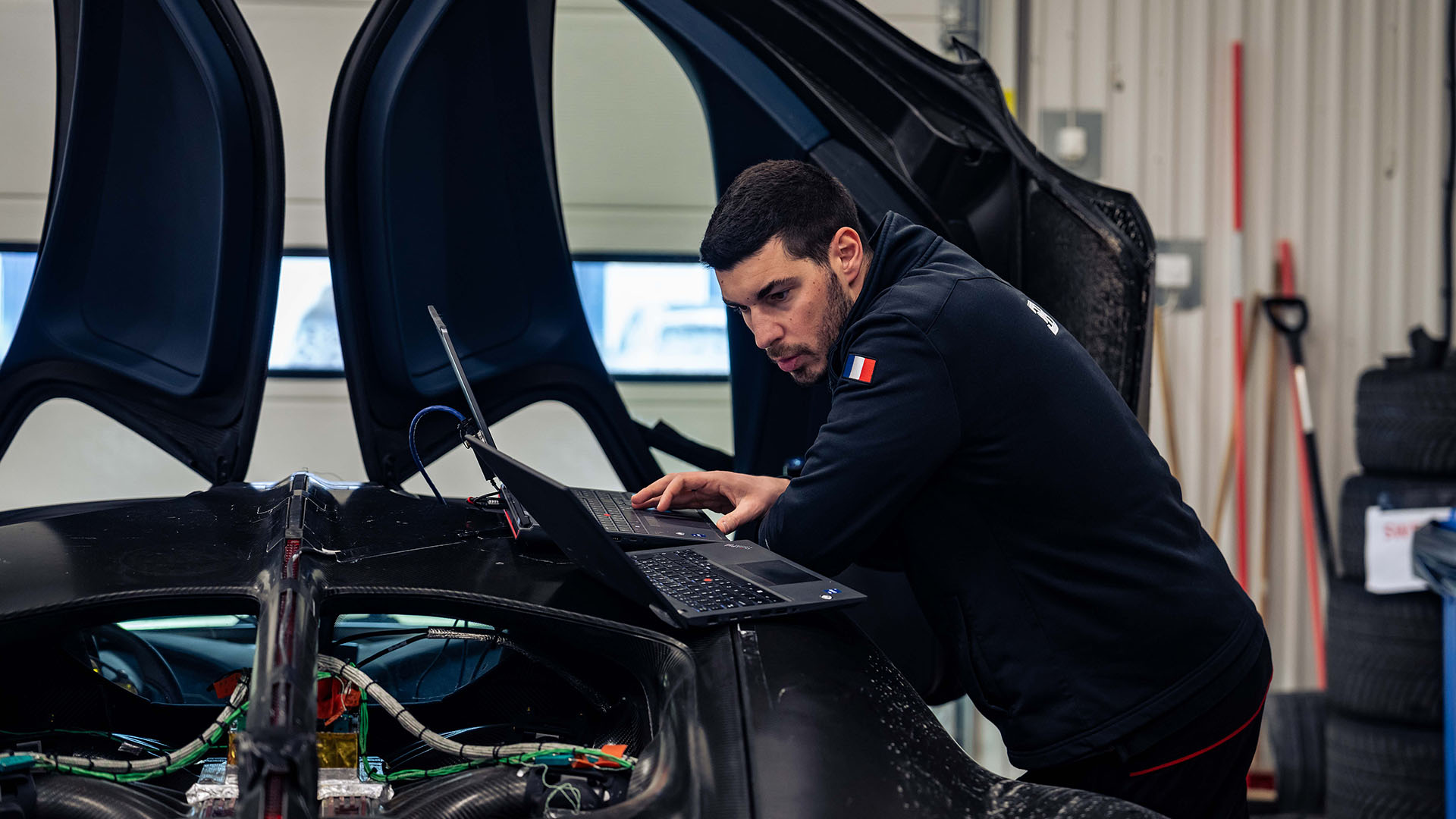
The seamless blending of regenerative braking from the electric motors with the hydraulic braking system is especially crucial. Bugatti’s engineers are obsessively tuning the brake-by-wire setup to ensure the pedal feels natural and predictable regardless of surface conditions. For the driver, the transition should feel invisible. Behind the scenes, however, the car is performing thousands of calculations every second.
The Arctic testing program also reveals how dramatically the Tourbillon changes character depending on its selected driving mode.
Comfort Mode
In Comfort, the car prioritizes reassurance and stability. The electronic safety systems maintain tight control, allowing drivers to confidently deploy substantial power even on snow and ice. The experience remains calm, composed and unmistakably luxurious.
Sport Mode
Switch to Sport, and the Tourbillon becomes more alive beneath the driver. The chassis balance grows more neutral, the V16 becomes more prominent and the car allows greater interaction with the road surface. Agility increases without sacrificing confidence.
Track Mode
Track mode unleashes the Tourbillon’s most aggressive personality. Torque distribution shifts rearward, electronic intervention relaxes and the car permits significantly greater slip angles. Yet even here, the all-wheel-drive system and stability controls continue working in harmony to preserve precision. The result is a machine capable of extraordinary freedom without descending into chaos, a balance that defines the very best hypercars.
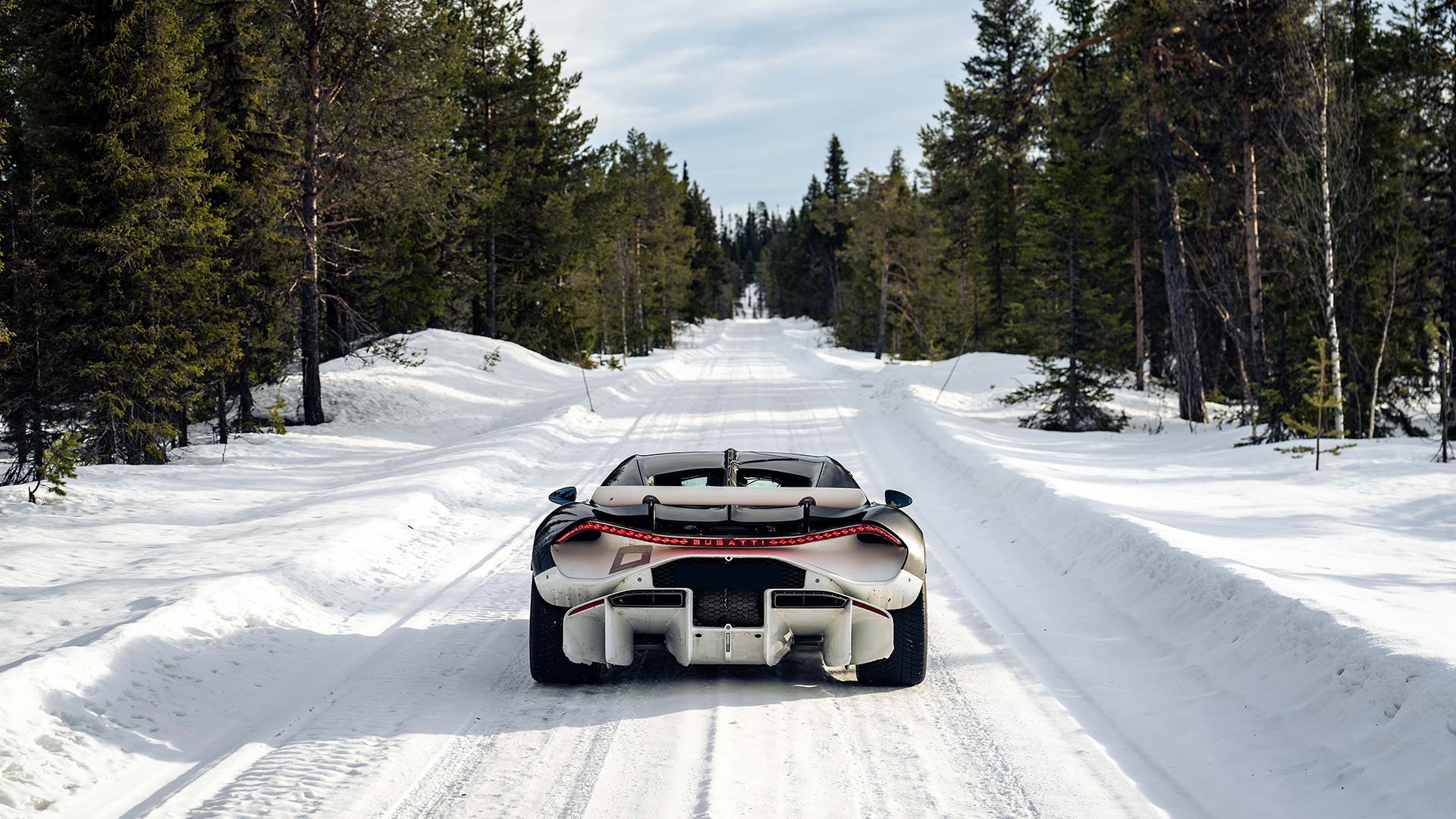
Winter testing in Sweden comes with another enemy: time. Bugatti’s engineering team has only a narrow seasonal window to complete validation work before temperatures rise and the ice deteriorates. During this phase, the team reportedly extended operations into overnight sessions, maximizing every available hour of usable conditions. The program involved around 20 personnel, with a core group of six engineers and test drivers working rotating shifts across weekends and rapidly changing weather conditions. It is physically demanding, technically exhausting work. But it is also deeply rewarding.
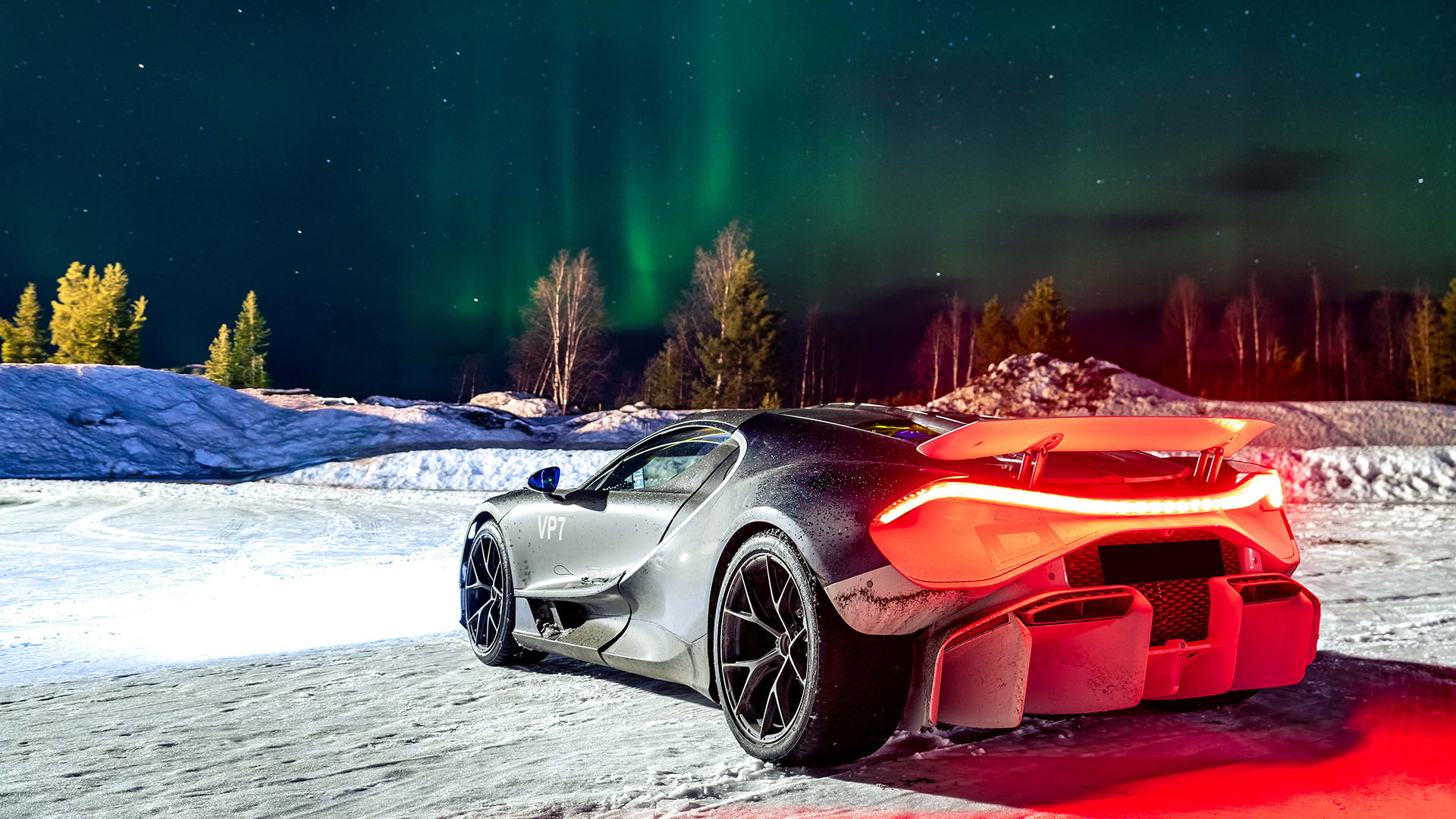
Beyond the engineering challenge, the team experienced moments of remarkable beauty, reindeer crossing near the test track, the glow of the aurora borealis overhead and the surreal image of the Tourbillon sliding across frozen landscapes beneath Arctic skies. In an era increasingly dominated by electric performance figures and acceleration statistics, Bugatti appears determined to preserve something emotional within the Tourbillon. The naturally aspirated V16 is symbolic of that ambition.
So too is the obsessive focus on steering feel, brake calibration and driver connection. The company understands that the world’s greatest hypercars are not remembered solely for speed, but for the sensations they create. The Arctic testing program demonstrates that the Tourbillon’s development is not merely about making a faster Bugatti. It is about creating a machine that feels extraordinary everywhere — on a racetrack, on a mountain road or even on a frozen lake deep inside the Arctic Circle.
And if Bugatti succeeds, the Tourbillon may not simply begin a new chapter for the brand. It may redefine what a hybrid hypercar can be: