
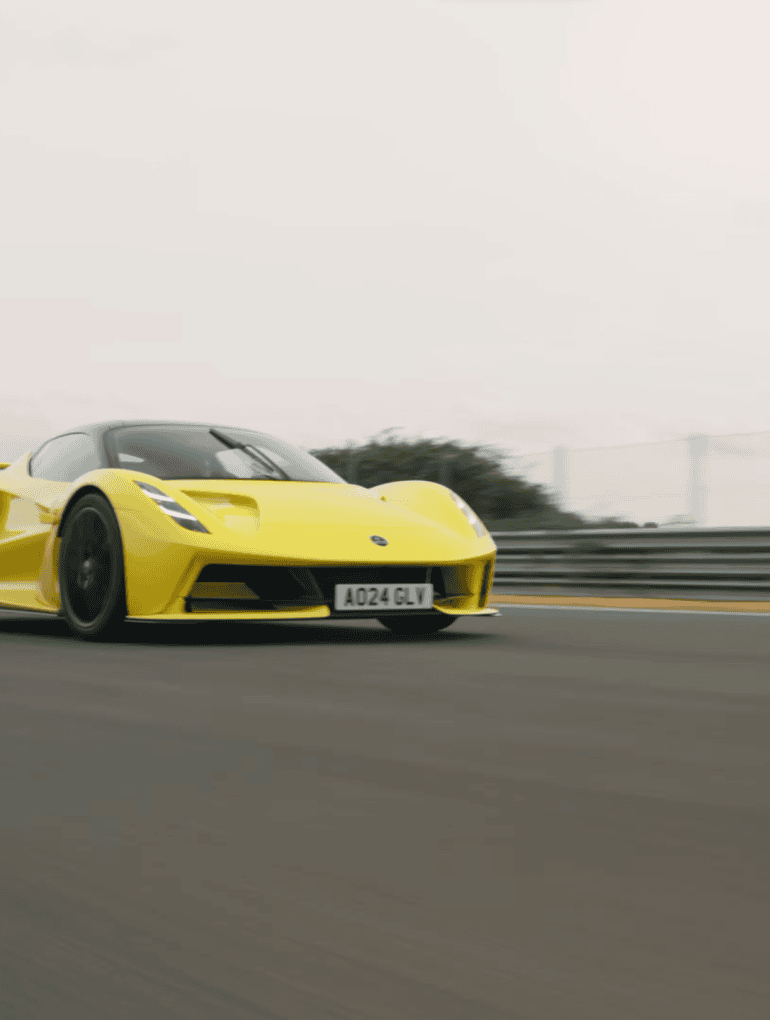
The Lotus Evija represents an ambitious interpretation of the electric hypercar, combining extreme power output with advanced aerodynamics and a driving experience designed to preserve the mechanical feedback traditionally associated with the British marque. In a track-focused exploration with Lotus engineering and motorsport director Gav Kershaw, Richard Hammond examines how the limited-production electric flagship attempts to reconcile unprecedented performance with the responsiveness and driver engagement that define Lotus engineering.
2,000 Horsepower and Relentless Acceleration
The Evija’s headline figures place it among the most extreme road-going electric cars ever conceived. Its four electric motors produce a combined output of approximately 2,000 horsepower, with each motor delivering around 500 horsepower. Independent torque control allows the system to distribute power precisely across all four wheels, supporting traction, cornering stability, and directional control under demanding conditions.
Lotus has also cited acceleration from zero to 300 km/h in less than 10 seconds, illustrating the car’s ability to sustain acceleration well beyond conventional supercar speeds. As Kershaw explains during the demonstration, the Evija’s performance becomes increasingly pronounced above 100 mph, when traction limitations at launch become less restrictive.
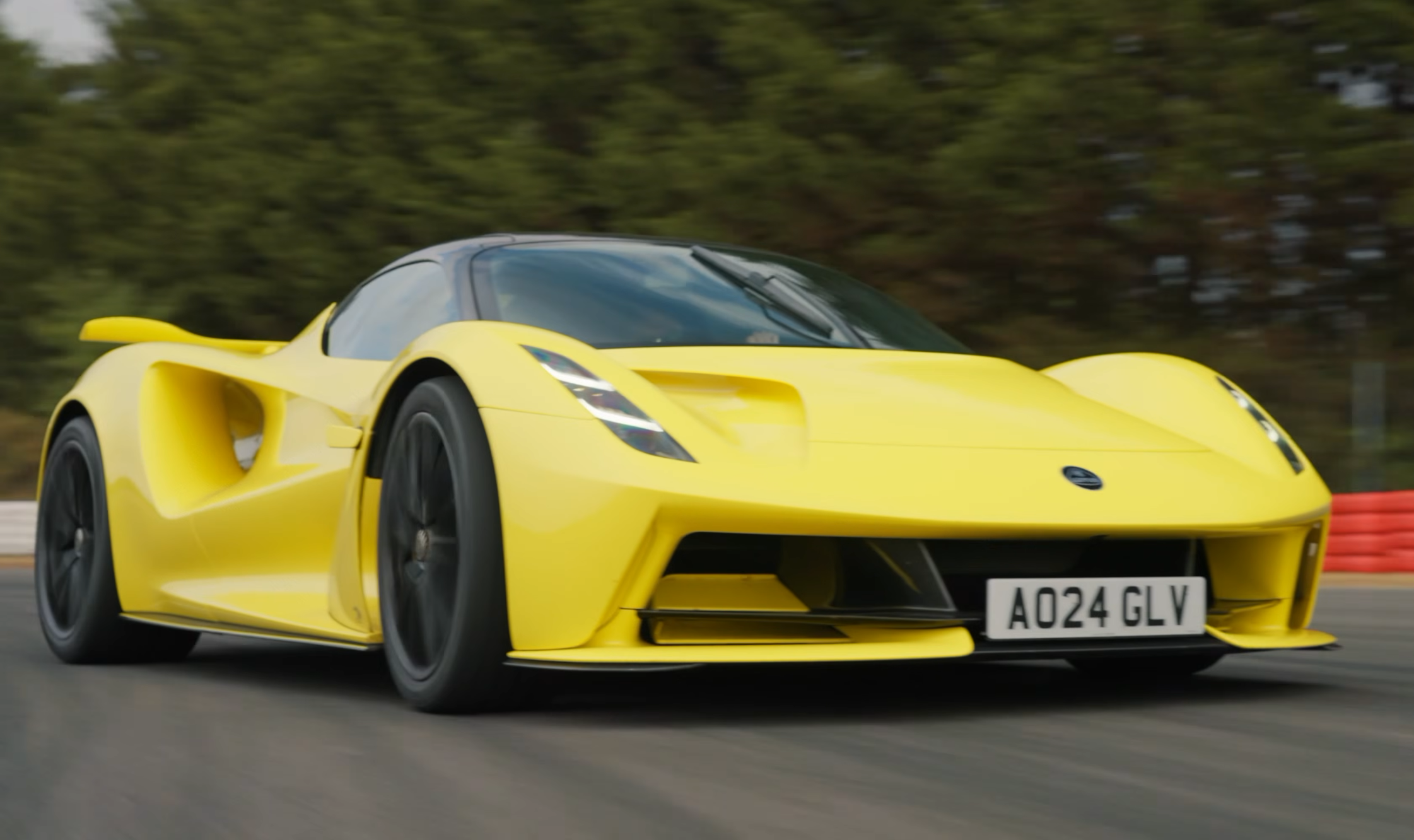
The single-speed drivetrain contributes to the relentless delivery of power, while the motors, inverters, and associated electrical systems generate an unexpectedly distinctive mechanical soundtrack. Rather than relying on an artificial engine note, the Evija produces its own high-frequency electrical and drivetrain sounds, giving the driver an audible indication of its increasing speed.
Aerodynamics and Chassis Engineering
Aerodynamic efficiency is central to the Evija’s design. Lotus has developed a body that channels air through and around the vehicle, using its distinctive venturi tunnels and carefully shaped surfaces to manage airflow and generate downforce. The manufacturer has quoted a maximum downforce figure of approximately 1,600 kilograms, providing the aerodynamic support required for high-speed circuit driving.
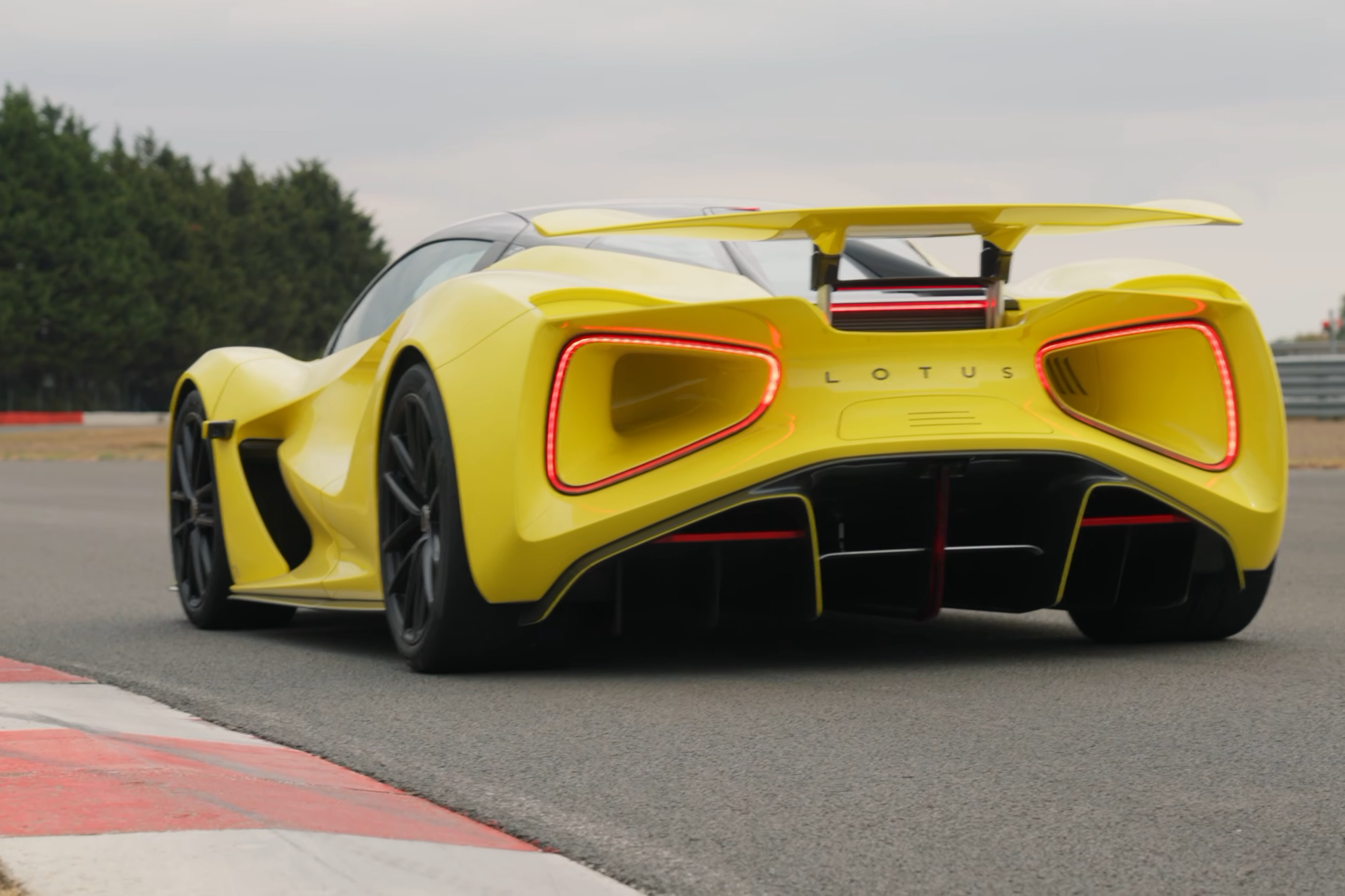
The chassis layout reflects a similarly deliberate approach to vehicle dynamics. Rather than adopting a conventional flat-floor battery arrangement, Lotus positioned the battery mass to support a lower and more centralized distribution of weight around the car’s yaw center. The objective is to improve agility and responsiveness while retaining the stable platform required to exploit the available aerodynamic load.
The suspension incorporates six dampers, including two dedicated heave dampers. This arrangement helps control vertical body movement under substantial aerodynamic pressure, preventing excessive compression as downforce increases. The result is a chassis engineered to remain composed at speed without sacrificing the precision expected of a Lotus.
Preserving an Analog Driving Experience
The most revealing aspect of Hammond’s drive is not the acceleration itself, but how the Evija communicates with its driver. Despite its electric propulsion, the car retains hydraulic power steering and a conventional brake-booster arrangement. It also avoids regenerative braking, allowing Lotus to prioritize a familiar and consistent brake-pedal response.
These decisions address a common challenge among high-performance electric vehicles: delivering enormous acceleration without isolating the driver from the mechanical processes taking place beneath the bodywork.
Hammond describes the Evija as unusually tactile and involving, noting how its speed builds progressively with driver confidence. Steering feedback, pedal response, and the suspension’s sense of solidity combine to create an experience closer to a mechanical racing car than a conventional electric performance vehicle.
Exclusivity Meets Usable Performance
With production capped at 130 cars worldwide, the Evija is intended to remain an exceptionally rare flagship. Lotus has also engineered it for more than brief circuit demonstrations. Kershaw describes driving the car between the United Kingdom and European circuits, including Spa-Francorchamps and the Nürburgring, demonstrating the company’s expectation that owners will use their cars beyond controlled track environments.
The 800-volt electrical architecture supports charging in approximately 15–16 minutes under suitable conditions, while the quoted real-world road range is around 200 miles.
Ultimately, the Lotus Evija is an attempt to make electric hypercar performance feel involving rather than merely overwhelming. Its combination of independent torque vectoring, sophisticated aerodynamic management, specialized suspension hardware, and traditional steering and braking systems reflects a clear engineering priority: preserving the connection between driver and machine, even as electrification transforms the limits of performance.
Source: DRIVETRIBE