
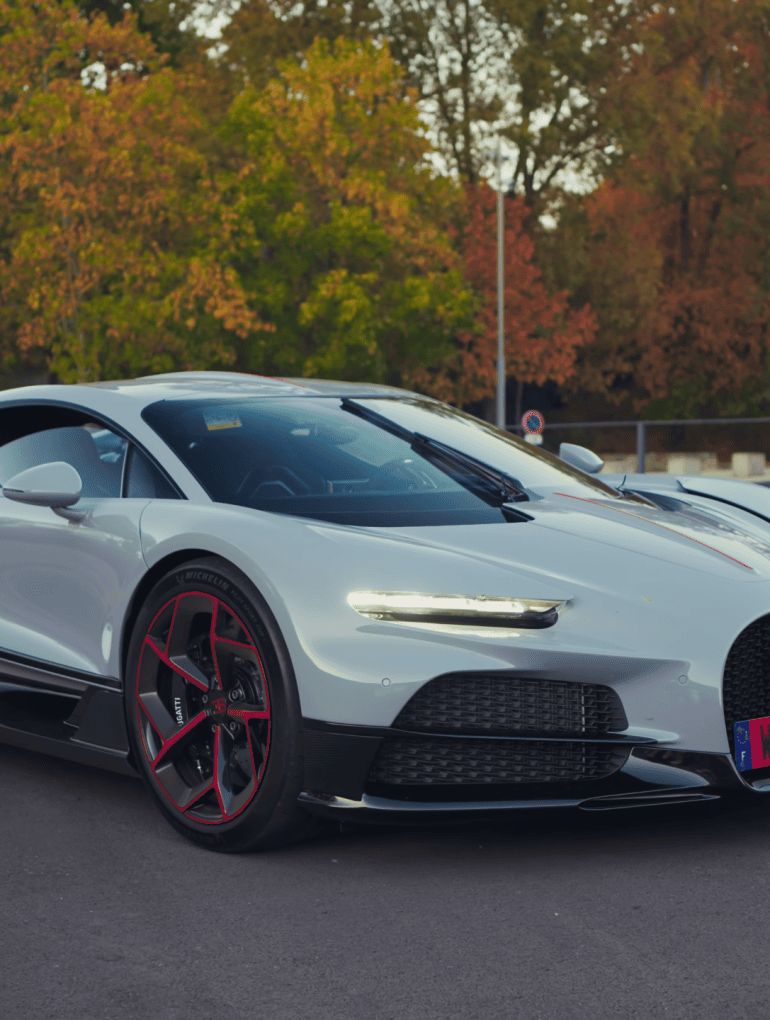
The Bugatti Tourbillon represents a fundamental shift in the French marque’s hypercar philosophy, combining a naturally aspirated V16 engine with an advanced hybrid system and an entirely new vehicle architecture. In a technical tour of Bugatti’s manufacturing facility, Top Gear journalist Ollie Marriage examines the engineering decisions behind the Chiron successor, revealing how lightweight construction, additive manufacturing, and meticulous component integration shape the next generation of Bugatti performance.
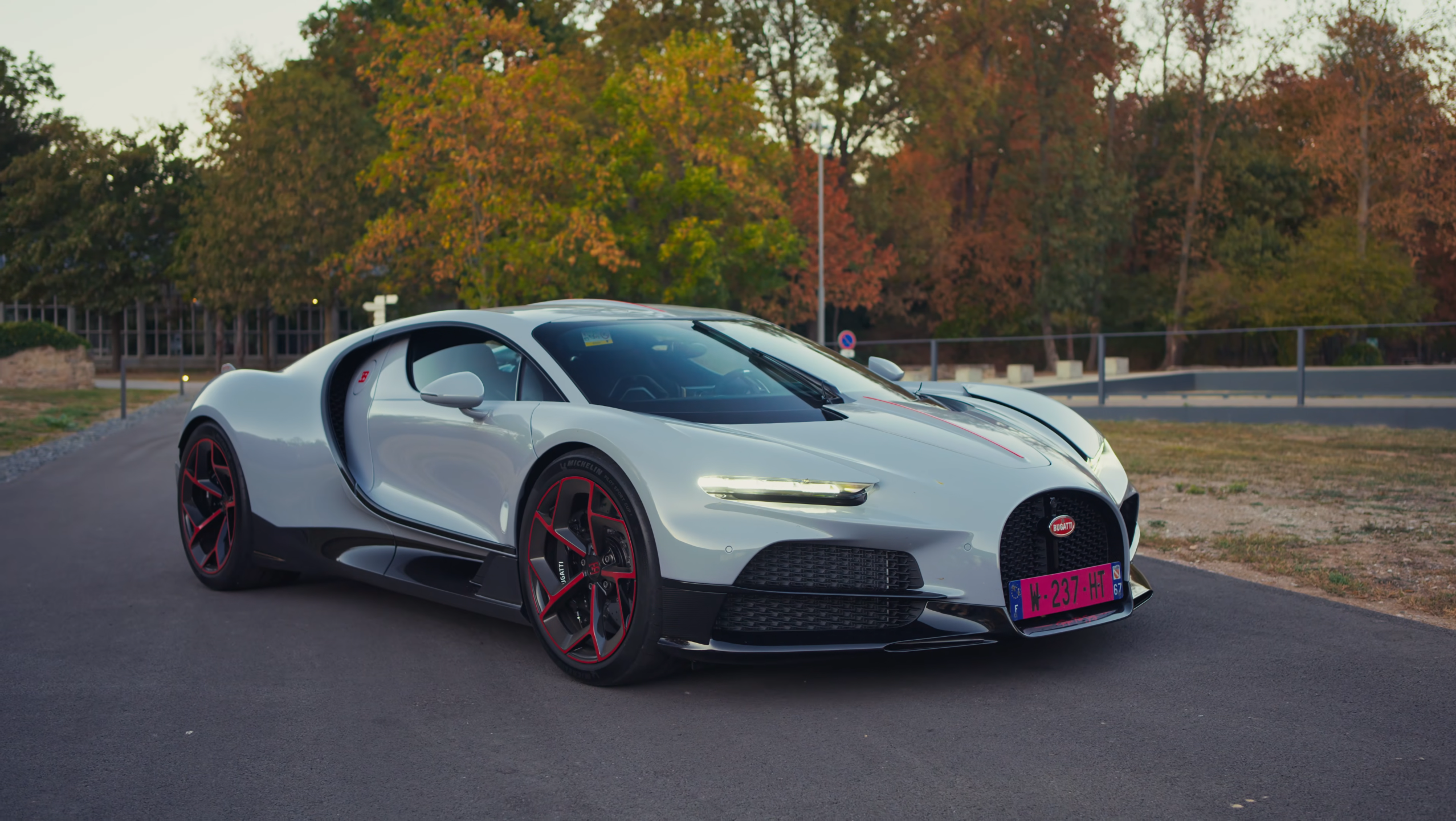
The visit begins at Bugatti’s historic Molsheim campus, where the original Atelier housed production of the Veyron and Chiron. As the brand expands, a new manufacturing building has been constructed to accommodate increased production capacity, with the objective of reducing customer waiting times without abandoning Bugatti’s low-volume manufacturing philosophy. The company is also expanding its operations in Zagreb, Croatia, where major components and body panels are designed, engineered, manufactured, and partially assembled before the vehicles return to France for final assembly and quality control.
A Naturally Aspirated V16 at the Center
At the heart of the Tourbillon is an 8.3-liter naturally aspirated V16 producing approximately 1,000 horsepower. Rather than relying on turbocharging, Bugatti uses three electric motors to supplement the combustion engine, bringing total system output to approximately 1,800 horsepower. The electric motors effectively provide the immediate response and additional performance that turbochargers might otherwise deliver, while preserving the character of a high-revving, naturally aspirated engine.
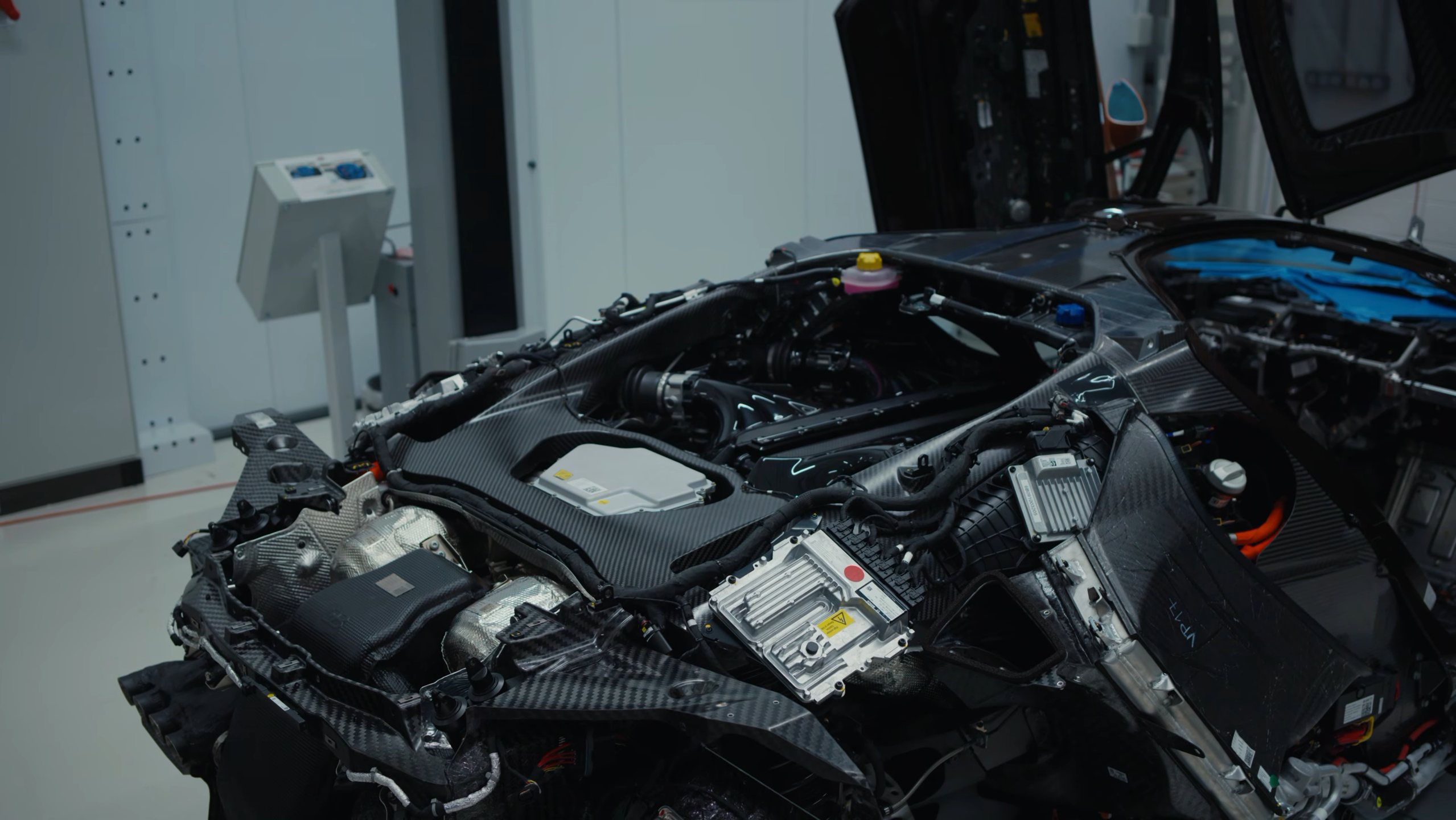
The hybrid architecture also enables several distinct operating modes. Drivers can select combustion-only rear-wheel drive, combined hybrid all-wheel drive, or fully electric operation. Bugatti’s approach prioritizes driver engagement, allowing the V16 to run continuously in combustion mode rather than repeatedly switching on and off as the system manages efficiency. The electric powertrain remains an integral performance tool without dominating the driving experience.
Bugatti quotes a 0–62 mph acceleration time of approximately two seconds and a limited top speed of 277 mph. The Tourbillon’s reported price is €3.8 million.
3D Printing and Lightweight Engineering
The Tourbillon’s engineering extends well beyond its powertrain. Bugatti has incorporated extensively 3D-printed structural components, including suspension wishbones, uprights, a front structural strut, and a specialized rear crash cone. These components use carefully optimized geometries and internal microstructures to achieve strength and rigidity while minimizing mass.
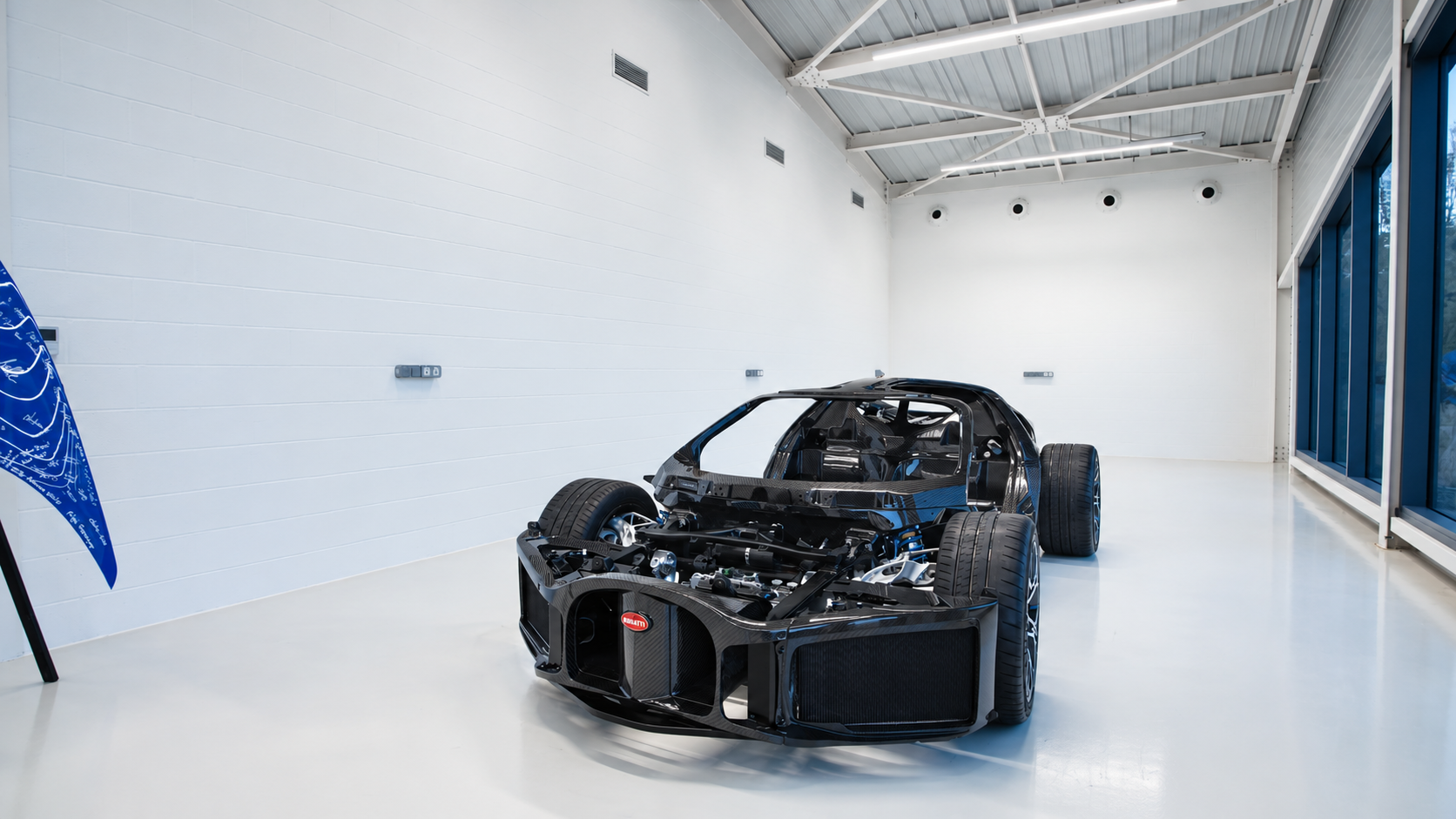
According to the factory tour, the suspension corner assembly is approximately 45 percent lighter than its Chiron counterpart. Topological optimization allows engineers to remove material from areas where it contributes little structural benefit while retaining it along critical load paths. The resulting parts incorporate intricate, sometimes porous internal structures inspired by the efficiency of natural bone.
The printed rear crash cone also serves a broader architectural purpose. Its integration with the rear diffuser helps accommodate the Tourbillon’s aerodynamic packaging, allowing airflow-management structures to work around the rear crash protection. This demonstrates how additive manufacturing can enable solutions that would be difficult to achieve with conventional production methods.
Managing Heat and Packaging Complexity
Integrating the gearbox, electric motor, and inverter into the tightly packaged rear section creates significant thermal-management challenges. With the inverter positioned close to the exhaust system, Bugatti has developed extensive heat shielding and liquid-cooling arrangements to protect sensitive electrical components.
The engine’s placement is equally deliberate. Its compact, narrow configuration and rear-mounted gearbox help preserve space for the diffuser and support the desired weight distribution. Even the unused space within the V16’s cylinder banks has been considered for potential future applications, including a possible water-injection system to address increasingly stringent emissions requirements.
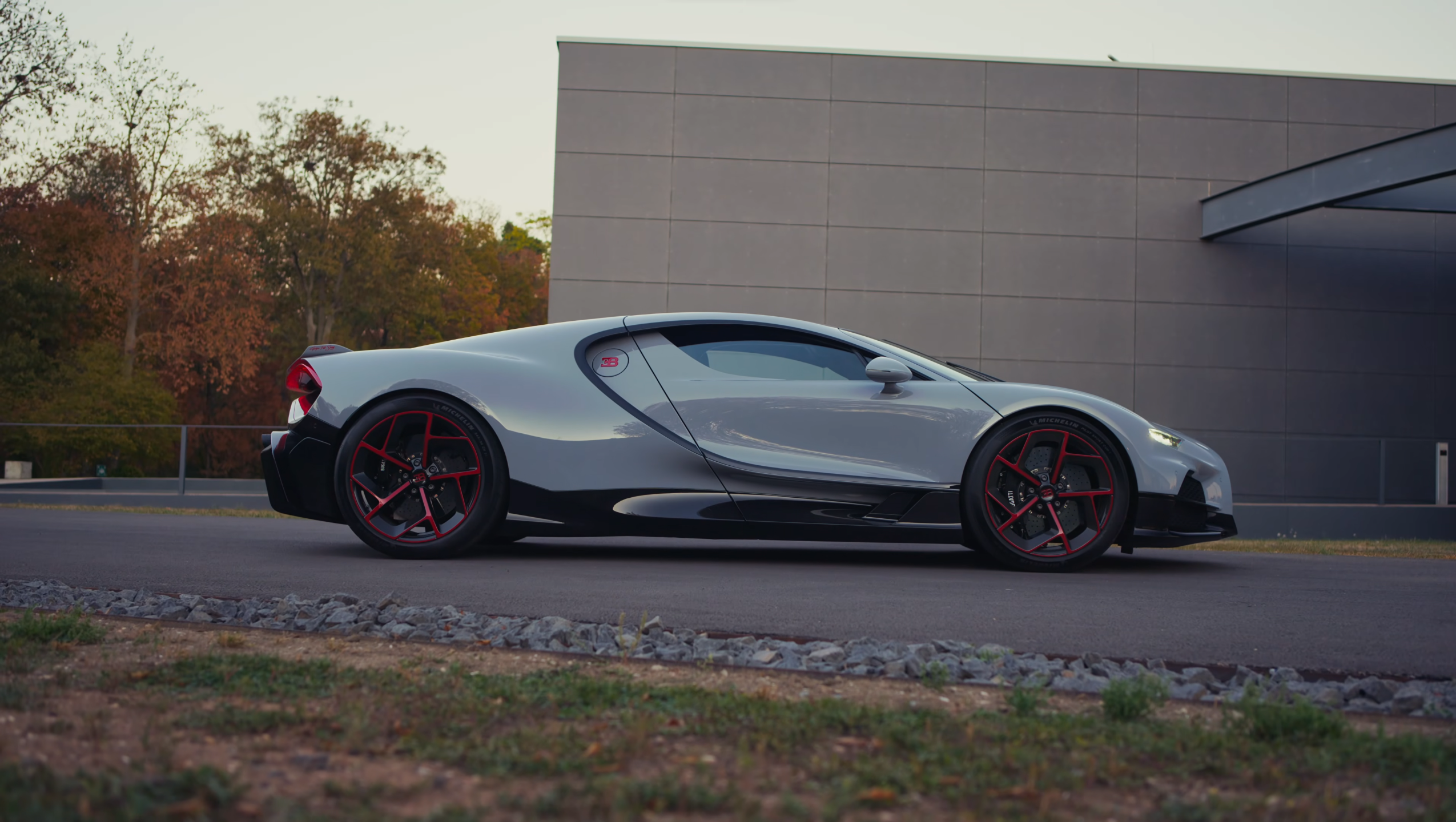
The Tourbillon ultimately reflects Bugatti’s attempt to combine extraordinary output with greater engineering sophistication. Its naturally aspirated V16, hybrid assistance, advanced structural manufacturing, and carefully integrated chassis demonstrate that the successor to the Chiron is not simply a more powerful hypercar. It is a comprehensive rethinking of how performance, craftsmanship, and driver engagement can coexist in a modern flagship.
Source: Top Gear