

 I remember that the Reader’s Digest used to have a series of articles titled some-thing like “The Most Unforgettable Character I’ve Ever Met.” High on my own list of such characters is my close friend, Andy Porterfield. Andy is amazing for a number of reasons. Among other accomplishments, Andy has won more than 400 SCCA races. (He says, “I don’t know the exact number; I didn’t keep track; I just wanted to race.”)
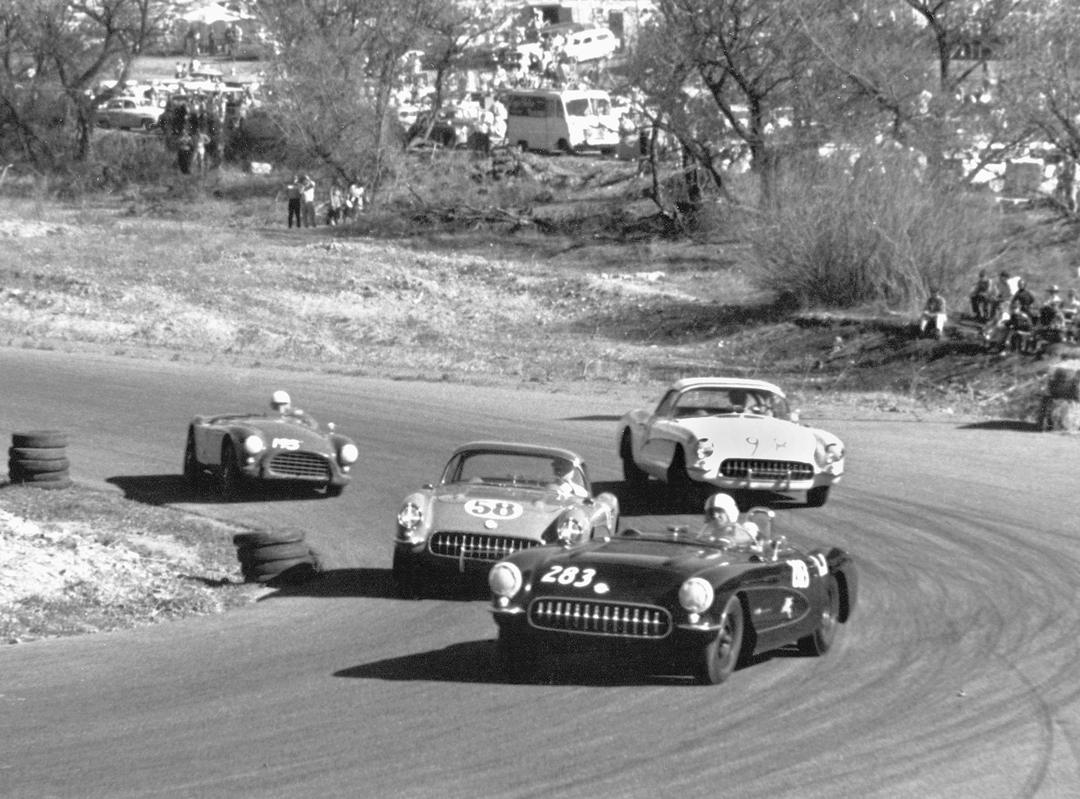
I met Andy in 1957 when we raced against each other at that long-abandoned course in Southern California’s Agoura Hills, Paramount Ranch. In those days, Andy was racing a 1957 Corvette and I was in my 1954 XK120 Jaguar. Most of us in the over-1500-cc production group knew one another or were at least acquainted. Andy and I struck up a friendship that has lasted our lifetimes. After all of these years, we still get together for lunch every month or so.
During the late fifties, Evans Industries was the distributor of Devin products including the SS. I started to race one at Southern California circuits, but soon realized I was more suited to the Jaguar. I decided to enter the 1959 Times Grand Prix at Riverside, but wanted a more talented driver than myself. Impressed with Andy at the wheel of his Corvette, I asked if he was interested, and he was. It was Andy’s first professional ride. Unfortunately, the car failed to finish the GP due to my inept preparation. (Nevertheless, my distaff driver, Ginny Sims, managed to set a ladies’ speed record of 163.3 mph in the Ladies’ Race.)
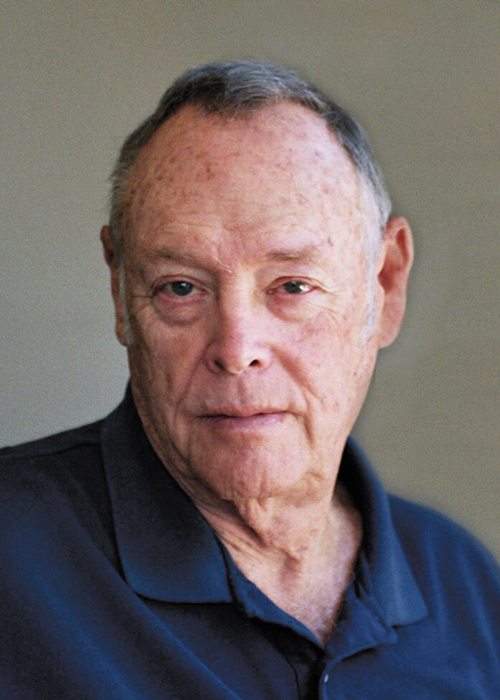
Andrew Tracy Porterfield was born on June 1, 1931. He lettered in track at Mark Keppel High School in Los Angeles and was awarded a degree in business administration at Chico State College. In addition to racing, he plays racquetball and water skis. Andy and his wife, Judy, live in Newport Beach. They have a son, Tracy, and a daughter, Pamela.
Until the mid-eighties, Andy was a partner in a company that built all sorts of parts for nuclear power plants. When those he calls “the tree-huggers” got politically powerful, he could, he says, see the writing on the wall and managed to sell his share of the company.
During his time racing Corvettes, Andy soon learned that stopping is as important as going. Initially, Corvettes were sadly lacking in the stopping department, so he fitted Ferodo brake linings. One day at Riverside Raceway in 1985, Andy was approached by a representative of the British Ferodo Company who asked Andy if he would take on a U.S. distributorship for their brake products. He accepted and has been in the brake business ever since.
Today, Porterfield Enterprises manufactures its own brake pads and rotors as well as distributing for other companies. The Porterfield pads are moulded in Mexico and Ohio, with the finishing work done at Andy’s plant in Costa Mesa, California. His pads and other brake parts are vital to the racing community. In addition, he makes high-performance street pads, and is the only U.S. government-approved supplier for Predators, the unmanned military planes.
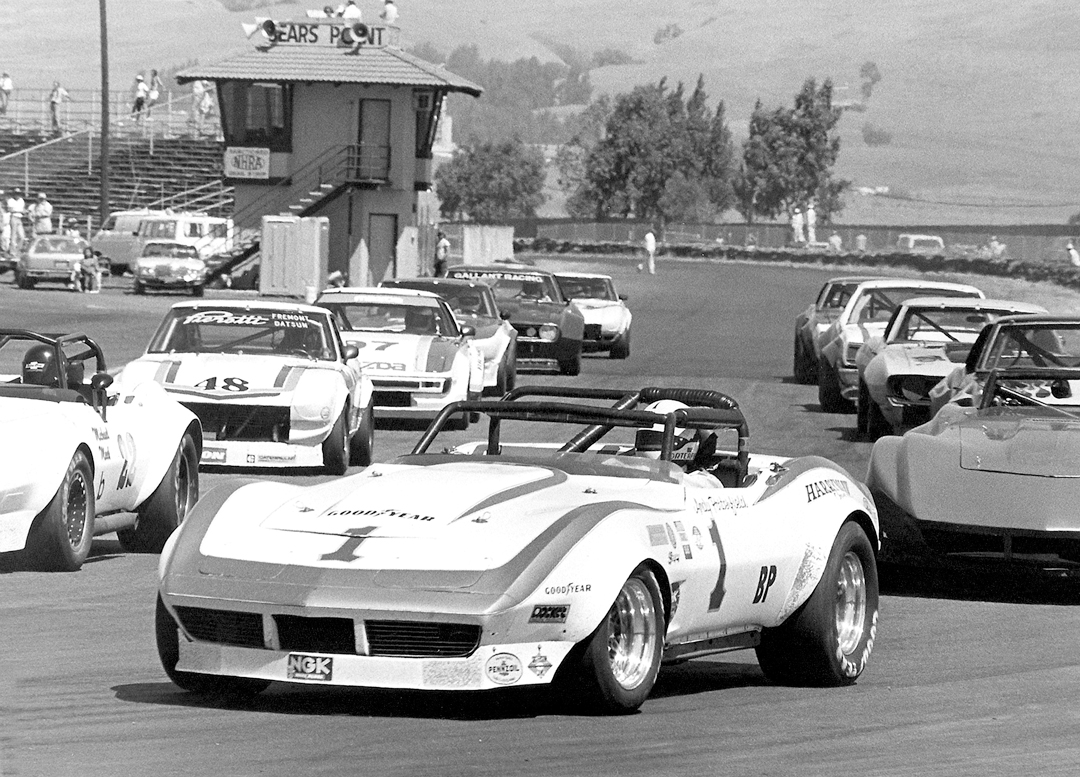
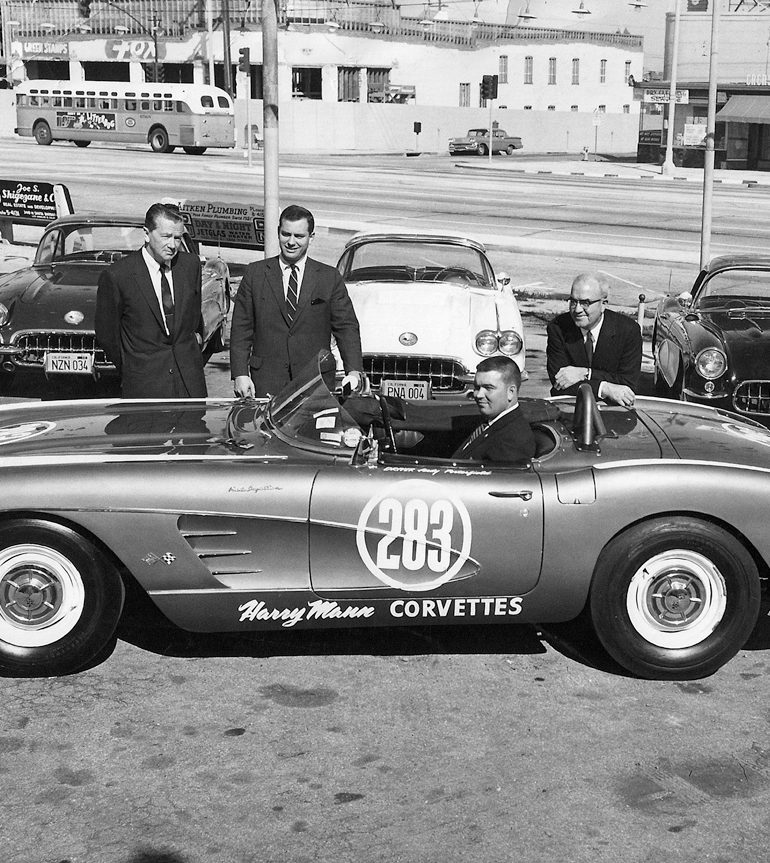
After initial successes in the ’57 Corvette, Andy obtained sponsorship from a Los Angeles dealer, Harry Mann Chevrolet. The ’57 was followed by a ’58 and then a ’59. In the early sixties, he went to a Camaro for a while, but then, in 1968, bought a new Corvette and raced it for quite a few years. In 1978, and again in 1979, he won the SCCA National Championship. He also raced a sprint car and a stock car a few times.
At the professional level, Andy competed in some 40 Trans-Am events and more than 20 IMSA races, where, in 1993, he won several GTO events. In the Trans-Am, he has finished in the top ten 13 times and was 3rd overall twice.
In 1981, he went back to a Camaro and has been racing one ever since. He has raced every year—including the current one—since 1957. Since 1985, he no longer competes in the SCCA Runoffs because the way they are presently constituted requires competitors to travel. “To be competitive at the nationals,” according to Andy, “you have to be there for three weeks. That’s a lot of time and I don’t want to do that any more.” Competing in the western half of the United States in nationals and regionals, Porterfield has won the Southern Pacific Division Championship an unprecedented 22 times. In 1978, he was voted the SCCA “Driver of the Year.”
During the seventies, Porterfield started to get active in club governance, serving on the California Sports Car Club Region Board for 16 years. He has been the Regional Executive (president) for 5 years. In 1985, he was elected to the SCCA National Board where he served for 12 years. (The elected SCCA board governs the organization; the president and other officers are hired help.)
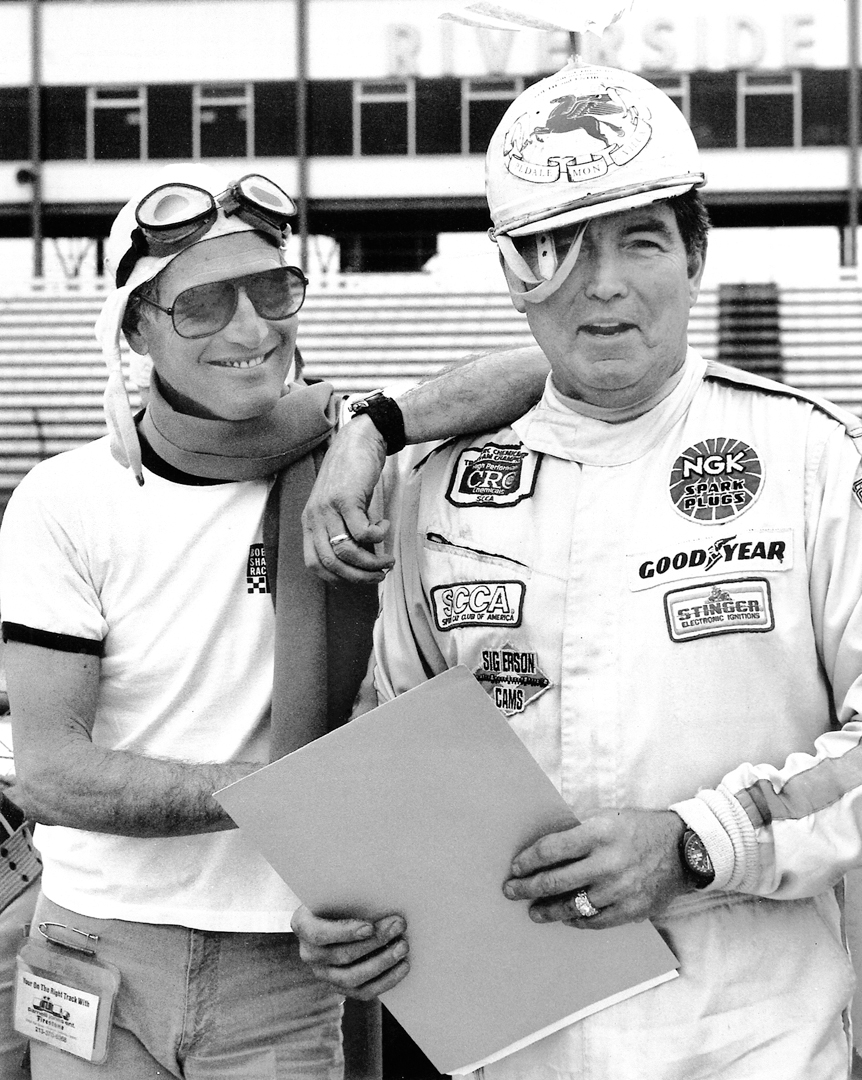
In 1985, SCCA started an ancillary business called SCCA Enterprises, of which Andy is the chairman of the board. Initially, Enterprises sold Sports Renaults, but then Chrysler wanted out of racing and discontinued making the car, so Enterprises continued the project. Later, the engines were changed to Fords and the name was changed to Spec Racer Ford. In addition, Enterprises imports Van Diemens from England and installs Mazda engines. These are known as Formula Enterprise cars. The Formula SCCA series runs what are now called Spec Racer Fords. The success of Enterprises is largely due to Porterfield’s stewardship.
When the Long Beach Grand Prix was established, course workers were supplied by the Cal Club. After some initial problems, Chris Pook asked Andy to take charge of the workers and he has ever since. He is also in charge of workers at the California Speedway for certain events. Amazingly, Andy performs all of his club-related activities—including SCCA Enterprises as well as management of the course workers—on a volunteer basis. His total income is derived from investments and his brake business.
Andy Porterfield has made some truly significant contributions to motor sports. His brake business furnishes products unavailable elsewhere, making those who use them safer. He has probably volunteered more time and effort than anyone else without any expectation of material reward. SCCA Enterprises was on its way to failure until Andy took over. The Long Beach Grand Prix and the California Speedway also benefit from his long-time guidance. To top it off, Andy has raced in and won more SCCA events than any other member.