
Jochen Rindt Biography
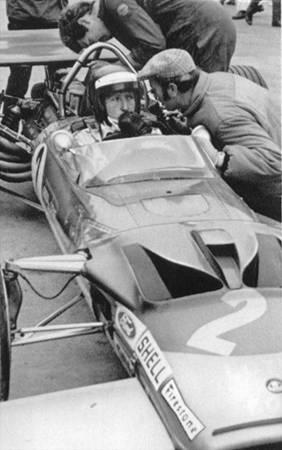
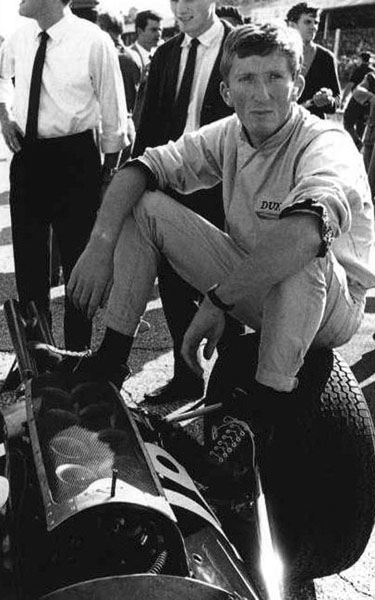
Rindt was born in Germany in 1942 of Austrian and German parentage. His parents died under Allied bombing in 1943 and he was taken to Graz in Austria where he was brought up by his grandparents. He took his place in the family spice importing business on leaving school, but his interest in motor sport led him to saloon racing in 1962. He raced an uncompetitive Formula Junior Cooper in 1963 and did surprisingly well, which brought him to the attention of Ford of Austria who backed his F2 Brabham-Cosworth in 1964. He made his mark in two F2 events in England, a 2nd at Mallory Park and win at Crystal Palace, London, against top-class opposition. Based on these results he was asked to join Bruce McLaren in the Fl Cooper team for 1965.
The Coopers were uncompetitive but Rindt manage 4th place in the German GP and 6th in the American. During this period drivers would supplement their income by continuing to drive in Formula 2. Rindt started a long association with Roy Winkelmann’s private Brabham team, winning at Rei and taking 3rds at Pau and Vallelunga. He was already something of a national hero in Austria, and won the Prix du Tyrol at Innsbruck in an Abarth 2000. The Rindt driving style was distinctive, apparently reckless but in fact consistent and very fast. He shared a works Porsche 8 with Bonnier in the Nurburgring 1,000 Kilometers to finish 3rd, and then won Le Mans, sharing a NART Ferrari 275LM with Masten Gregory, after the Fords and works Ferraris had broken down.
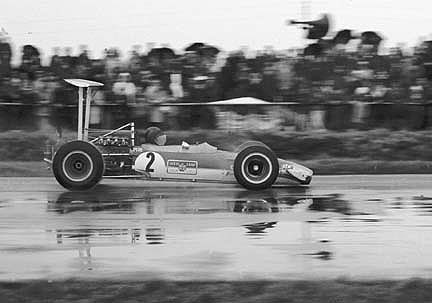
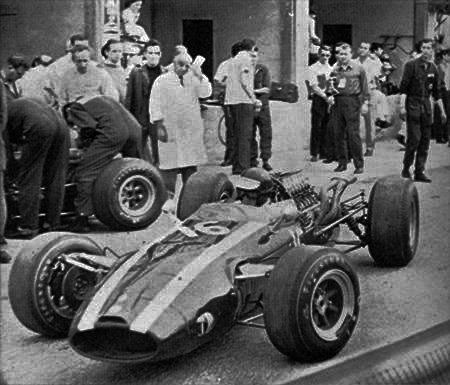
 McLaren left Cooper at the end of the season and Rindt became temporary number 1 until Surtees joined from Ferrari. After besting the qualifying times of McLaren, Rindt found Surtees another matter altogether. The Cooper-Maseratis were heavy but depend able, and Rindt was 2nd at Spa (after an excellent fighting drive in the wet); 2nd in the American GP; 3rd in the German; 4th in the French and Italian; and 5th in the British races. Brabham-Hondas dominated Formula 2 that season, but Rindt won the Eifelrennen and the last race of the I.5 -litre class at Brands Hatch, beating Brabham himself.
In 1967 the Coopers were outclassed and Jochen managed to score only two 4th places in the Belgian and Italian GPs. But meantime he established himself at the top of Formula 2, taking his Winkelmann Brabham to no less than nine victories. The Austrian’s reputation as a fearless driver grew after he crashed while trying to qualify an Eagle at Indianapolis He stepped out of the burning car as it came to rest and his heart-rate was perfectly normal in the compulsory medical examination which followed. In the 500 he was classified 24th after retiring, and frankly described Indianapolis as ‘a place for making money, no more…’
In 1968 Jochen became number two to Jack Brabham in the works Formula I team, but the Repco V-8 engine had reached the end of its competitive life. He respected the ability of Jack Brabham both as an engineer and as a driver but after 4 years in Formula 1 he had yet to win his first race. Some began to question if he would ever win. Amongst those was one Denis Jenkinson, the famous motor sport journalist who declared to one and all that if Rindt ever won a major Grand Prix, he would cut of his famous beard. Jenkinson would soon be made to pay.
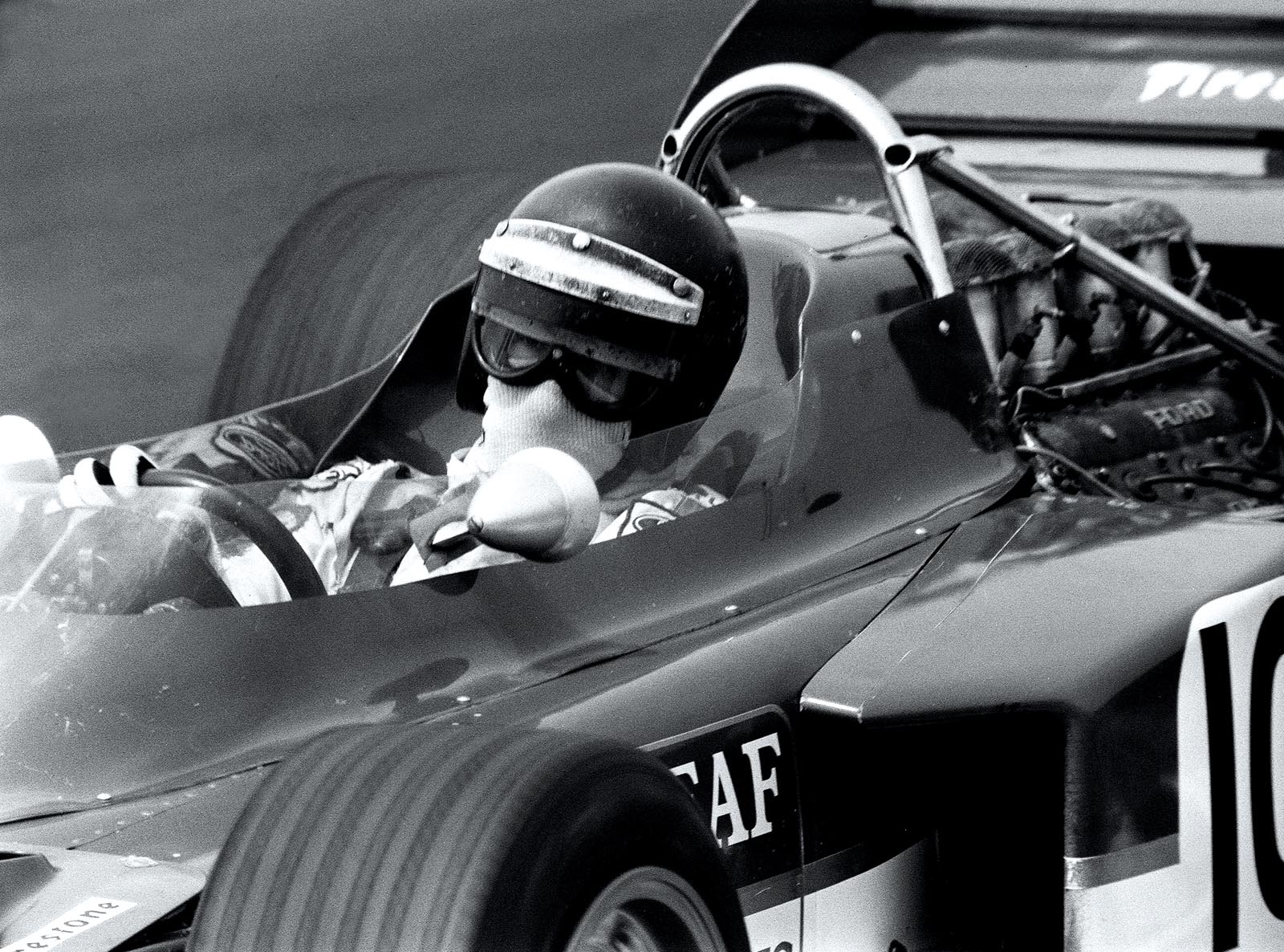
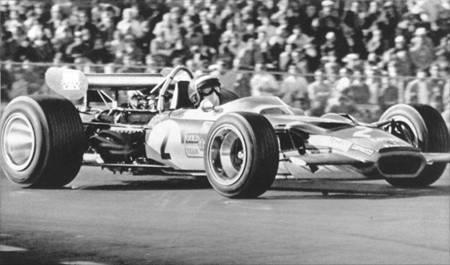
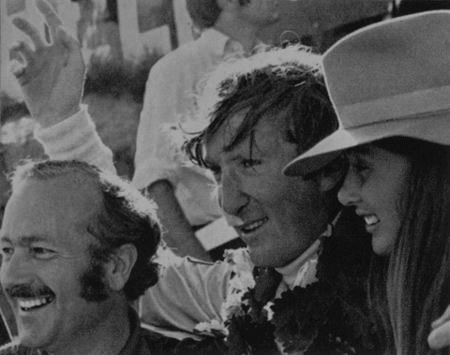
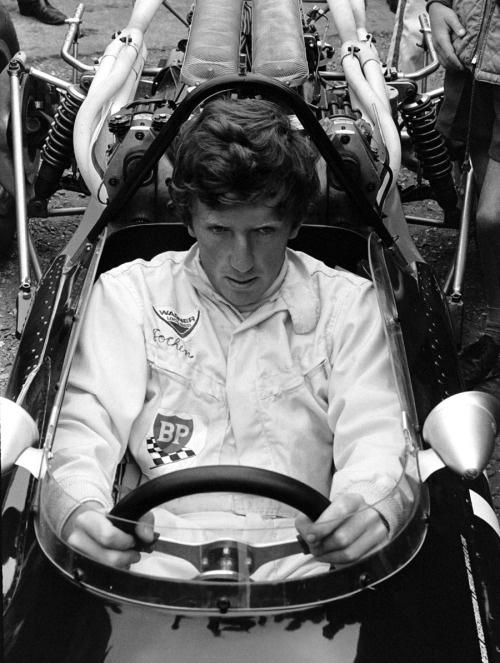
At the end of the year Rindt signed with Team Lotus as joint number one with Graham Hill. His first year at Lotus was marked by a scary accident during the Spanish Grand Prix where his aerofoil collapsed, resulting in a broken jaw and concussion. Luckily he was able to recover quickly, although he had some vision and balance problems for some time afterwards. While recovering from his accident he wrote an open letter to the press calling for a ban on aerofoils. He believed that aerofoils had nothing to do with motor cars besides being dangerous to drivers as well as spectators. In Watkins Glen Rindt scored his long-awaited first championship round victory and off came the Jenkinson beard. The race was marred by the horrific crash of his teammate Graham Hill who was tossed from his Lotus and suffered two broken legs.Following Graham Hill’s US GP accident, Jochen became team leader for Lotus in 1970.
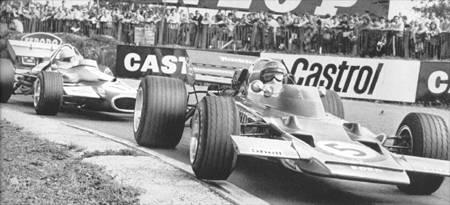
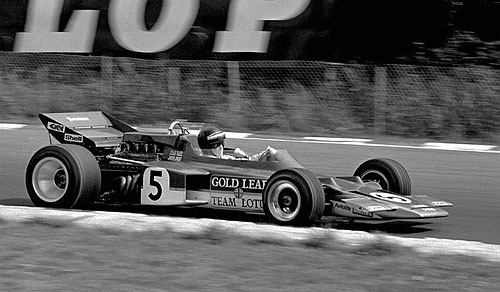
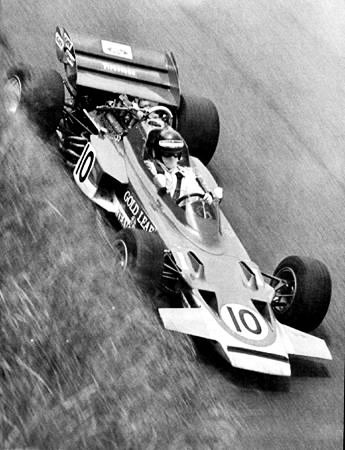
 Lotus was set to debut the new Lotus 72 but after initial testing of the Brands Hatch Race of the revolutionary new car Rindt wanted no part of it. For the Monaco GP the team fielded a pair of Gold Leaf liveried 49Cs. Rindt could be very fast but if the race seemed out of reach he was known to cruise. Monaco was such a race until retirements in front of him and a sticking throttle in the Brabham of race leader Jack Brabham gave him an opening. That was all it took for Rindt began to throw the old car around the Monte Carlo streets in pursuit of Jack Brabham. It was one of the greatest displays of a driver on the ragged edge that has ever been witnessed. In fact his lap times soon exceeded his qualifying time by one and later two seconds. Yet time was running out and Brabham only had to complete one more lap. Coming up behind the car of Piers Courage who himself was having mechanical problems, Brabham made an instant decision to dive past the de Tamaso before the final corner. But immediately after passing Courage Brabham realized that he had made a mistake. The corner was upon him but his speed was to great and helplessly he went straight into the barrier. Rindt barely was able to register that fact as he flashed by to win the race. Luck was starting to change for the Austrian. The much revised Lotus 72 minus the anti-dive was ready for the Dutch GP, Jochen took pole position on the grid, assumed the lead on lap 3 and held it to the finish. This victory was overshadowed by the death of Piers Courage, one of Rindt’s closest friends.
Rindt was deeply affected by the death of his friend and many were convinced that he would retire at the end of the year. Until that time he continued to drive the 72 with grim determination but the joy of driving had ended for him. Rindt went on to win the French, British and German GPs. In his home Grand Prix, at the Osterreichring, Rindt failed to finish and his main rival Jacky Ickx led a Ferrari 1-2. The pressure began to tell on Rindt and he went to Monza for the Italian GP ready to clinch the World Championship that had for so long alluded him. Rindt by that time had decided to quit racing at the end of the season and talked about setting up a sports clothing business.
Practice was held on Friday and Saturday, September 4-5, and half an hour into the Saturday session Rindt’s Lotus veered sharp left under heavy braking into the Parabolica, dived under the Armco crash barriers and bounced back onto the track, its front end torn away. Jochen Rindt was lifted clear by officials, but if he was not already dead there was no hope of his surviving terrible chest injuries. Officially he died in the ambulance on the way to a Milan hospital.
Jochen’s loss on the eve of what seemed a certain World Championship victory stunned the racing world. Jacky Ickx still had a chance to pass Rindt’s total points and there was some discussion on whether to award Rindt the title posthumously if his lead stood. When Emerson Fittipaldi’s Lotus 72 beat the Ferraris in the US GP Rindt’s points lead in the title was secured. Karl Jochen Rindt became motor racing’s first and hopefully last posthumous World Champion.
Victories
1969 USA, 1970 Monaco, 1970 Holland, 1970 France, 1970 Britain, 1970 Germany