
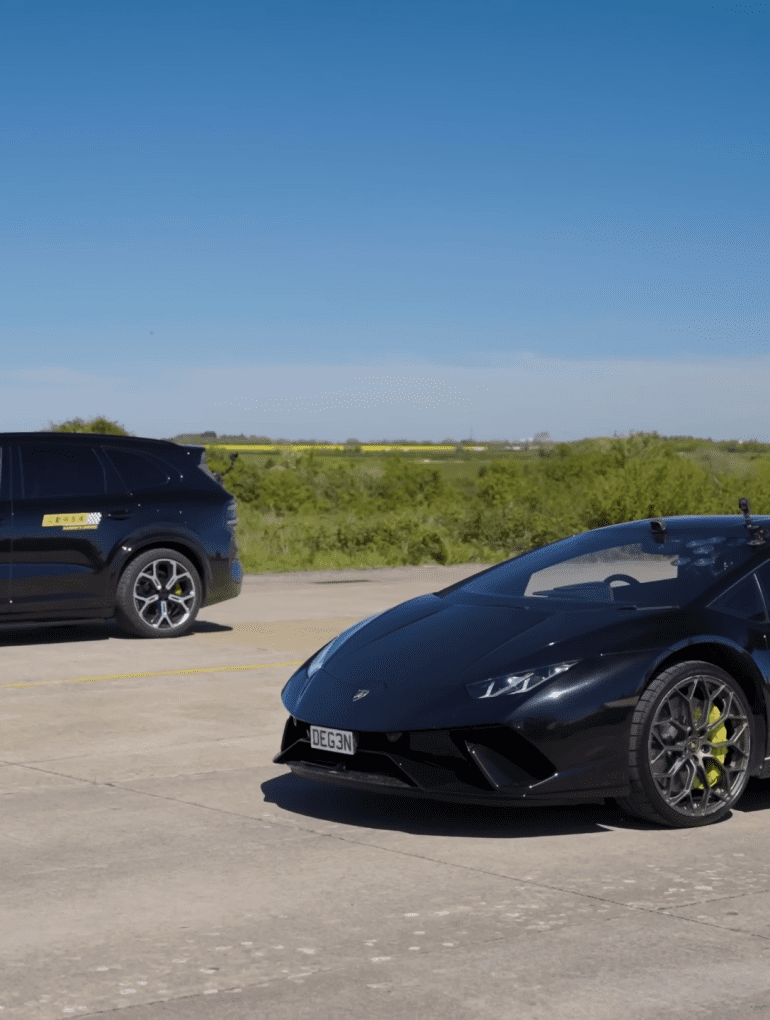
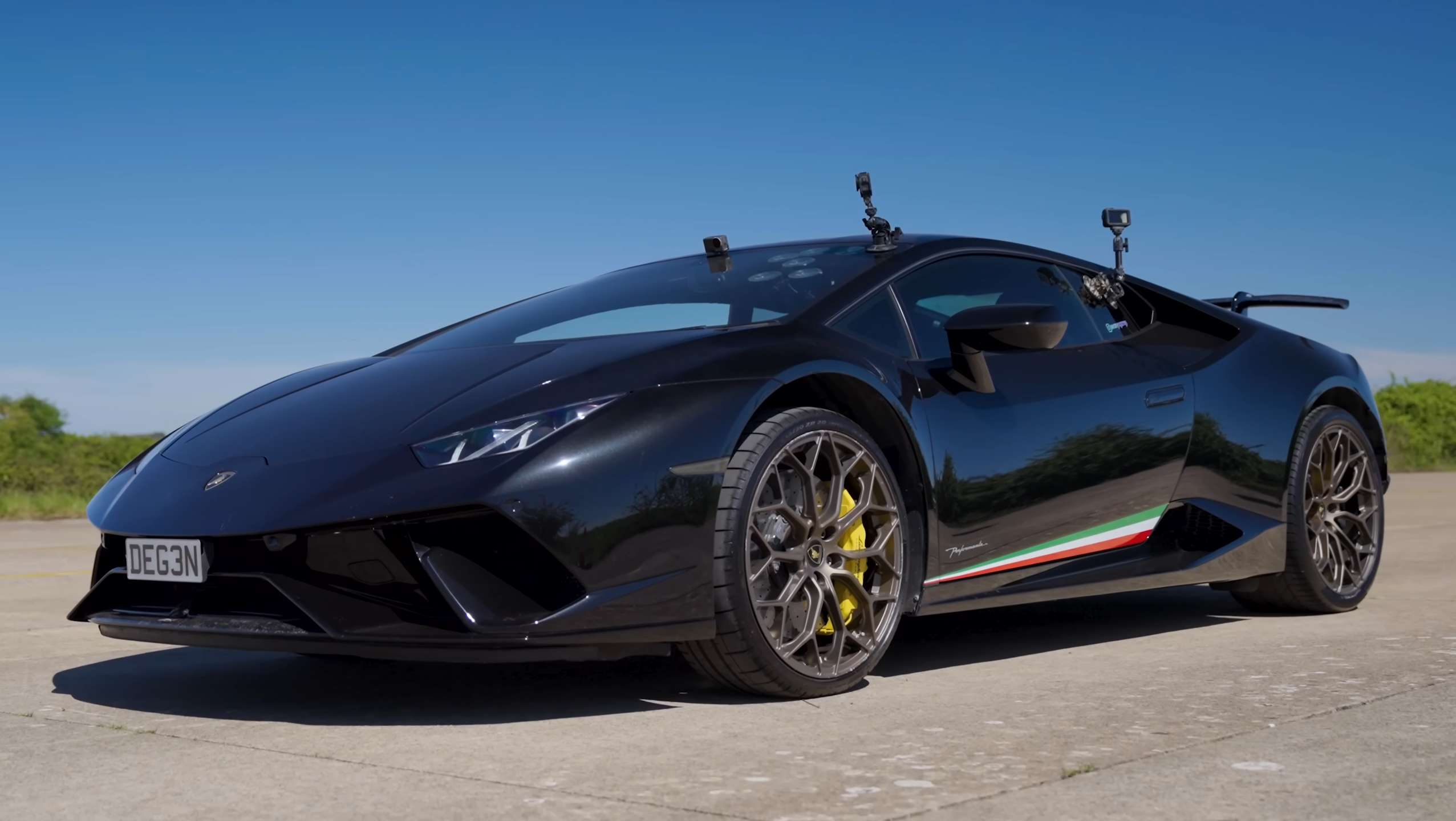
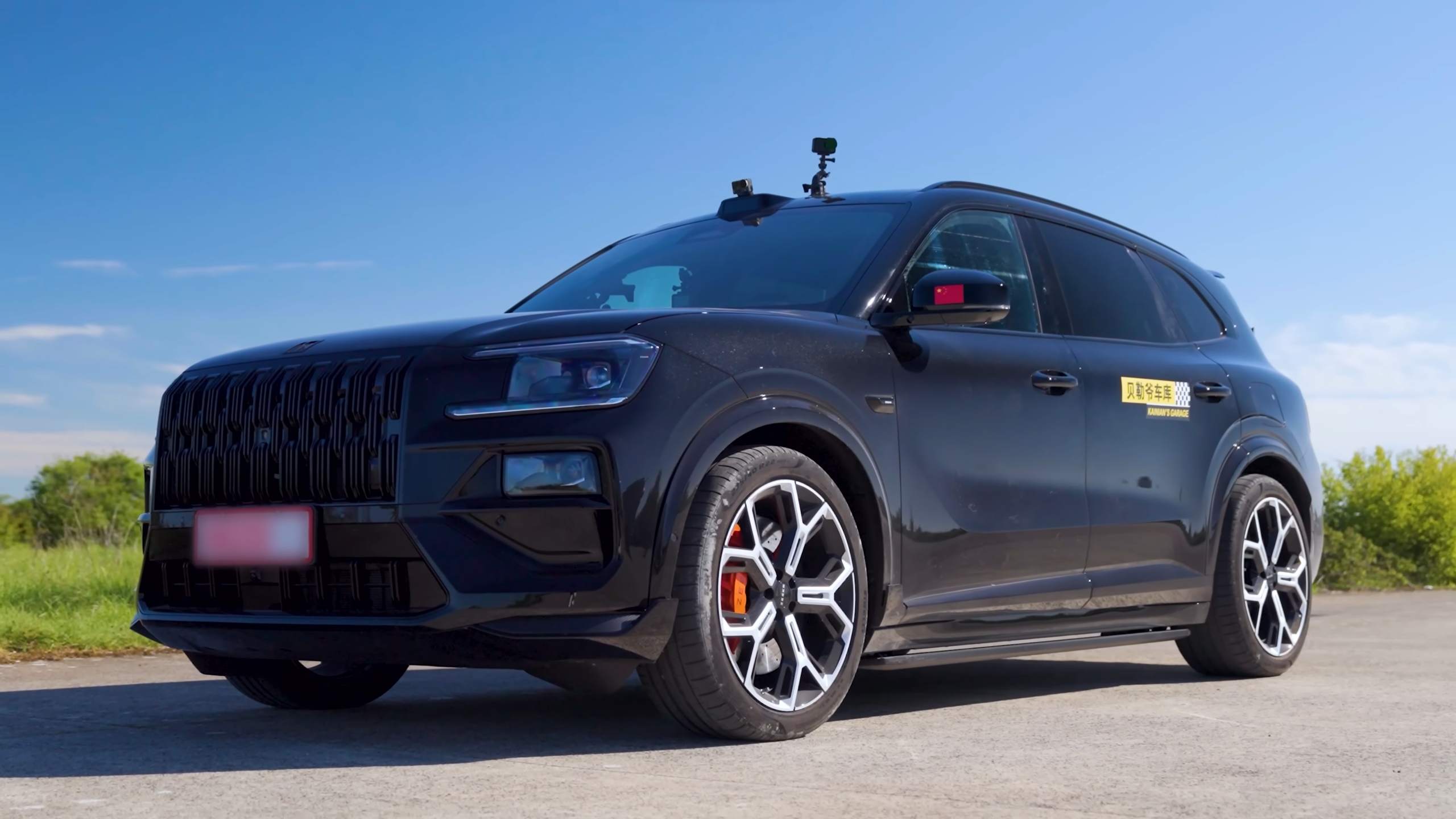
The world of performance cars is changing rapidly, and few comparisons illustrate that evolution better than a head-to-head battle between a naturally aspirated Italian supercar and a high-powered electrified SUV from China. In a recent drag racing challenge hosted by automotive journalist Mat Watson and the carwow team, the Lamborghini Huracán Performante squared off against the Zeekr 8X, an unconventional but immensely powerful range-extended electric SUV.
On paper, the matchup appears straightforward. The Huracán Performante is powered by a 5.2-liter naturally aspirated V10 producing 640 horsepower and 600 Nm of torque. Combined with all-wheel drive, a lightning-fast dual-clutch transmission, and a curb weight of roughly 1.5 tonnes, the Lamborghini has long been regarded as one of the quickest production supercars of its era.
The Zeekr 8X, however, brings an entirely different approach to performance. Its 2.0-liter turbocharged engine serves solely as a generator, supplying energy to three electric motors that collectively deliver a staggering 1,400 horsepower and 1,400 Nm of torque. Despite weighing approximately 2.8 tonnes—nearly double the Lamborghini’s mass—the Chinese SUV enters the contest with a colossal power advantage.
The opening standing quarter-mile race immediately highlighted the Lamborghini’s strengths. Thanks to a flawless launch and superior power-to-weight ratio, the Italian supercar edged ahead and maintained its advantage through the finish. Even so, the margin was narrower than anticipated, suggesting the Zeekr’s immense power could make it a serious threat.
Rolling races produced mixed outcomes. From a 50-mph start, the Lamborghini’s lightweight construction and high-revving V10 allowed it to pull decisively away. However, once the Zeekr’s more aggressive driving modes were engaged, the SUV transformed into a formidable opponent. In one half-mile run, the contest remained virtually neck-and-neck until the Chinese SUV encountered its electronically limited top speed, allowing the Lamborghini to sneak ahead.
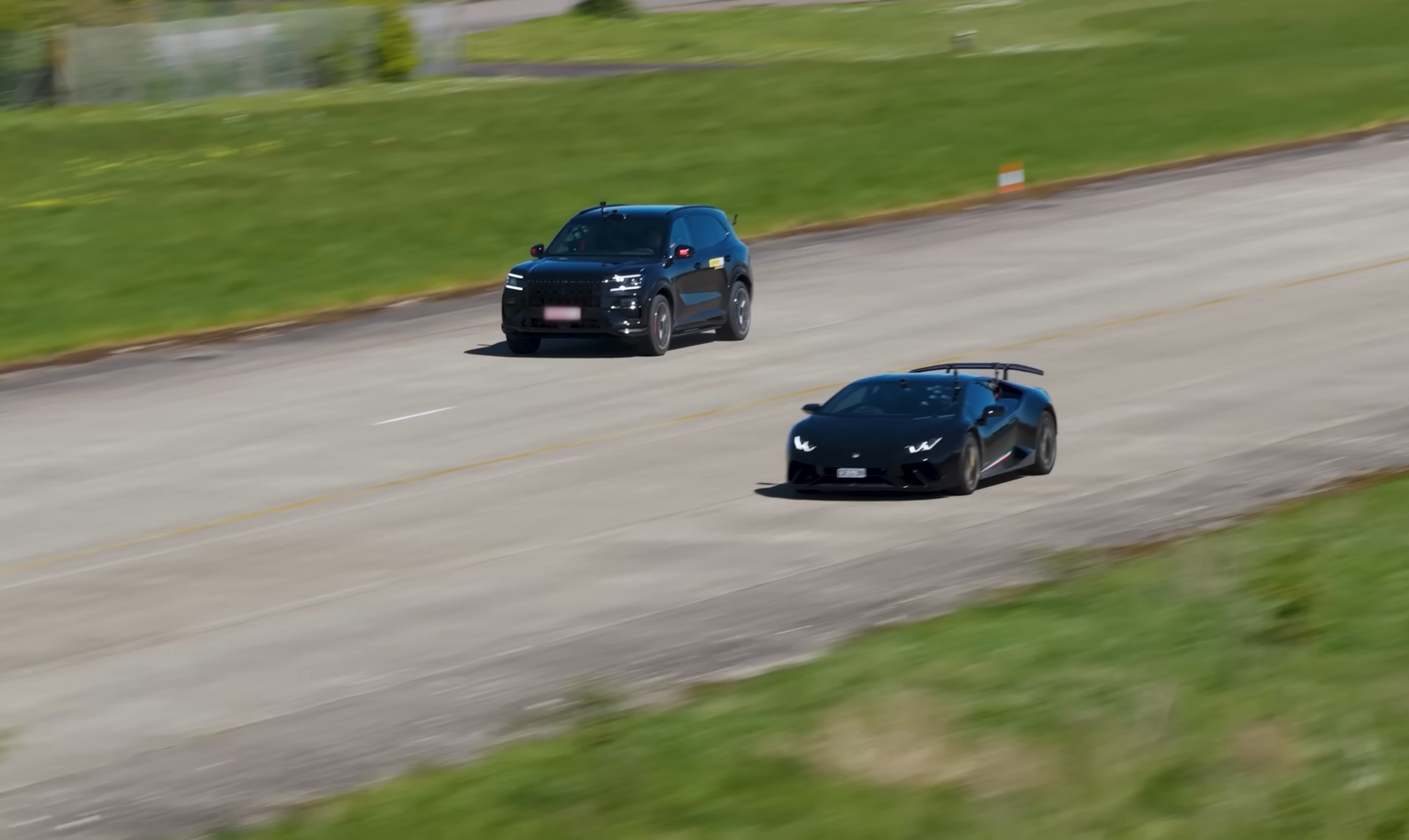
A lower-speed rolling race revealed the biggest advantage of electrification: instantaneous torque. The Zeekr surged ahead immediately, exploiting the immediate response of its three electric motors before the Lamborghini could fully capitalize on its naturally aspirated powerband. The braking test unsurprisingly favored the Huracán. Its lower mass, track-focused chassis, and supercar-grade braking hardware enabled it to stop more confidently from triple-digit speeds.
The drag racing finale became a best-of-five battle that showcased just how competitive the Zeekr truly was. With launch timing proving critical, the SUV claimed several victories once its boost function was activated. Ultimately, however, the Huracán Performante secured the overall win by the narrowest of margins.
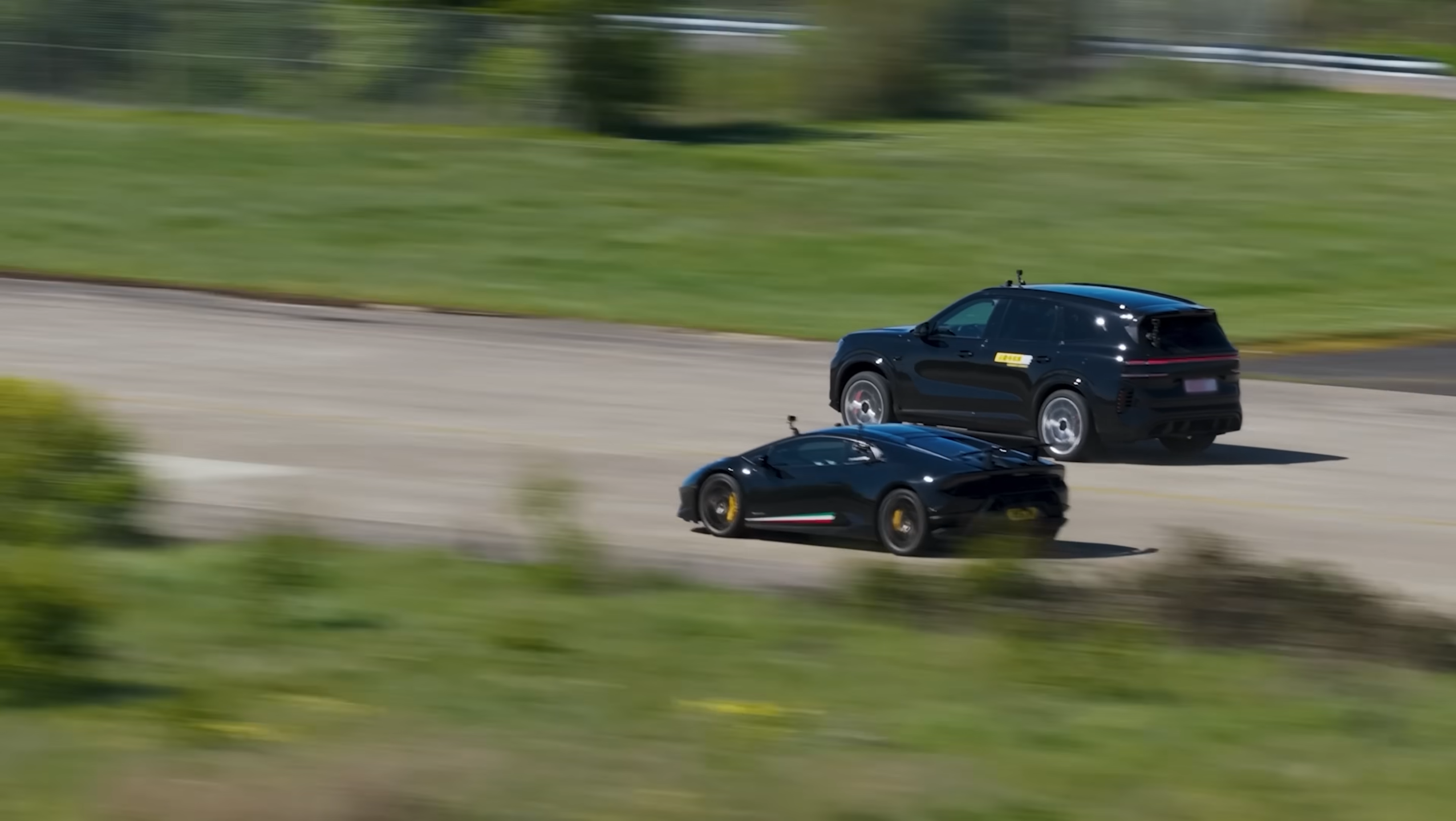
The final result was remarkable: both vehicles recorded identical 10.6-second quarter-mile times. Despite representing completely different philosophies of performance, the lightweight Italian supercar and heavyweight Chinese hybrid SUV delivered one of the closest and most unexpected drag race contests in recent memory.
Source: carwow