
Niki Lauda Biography
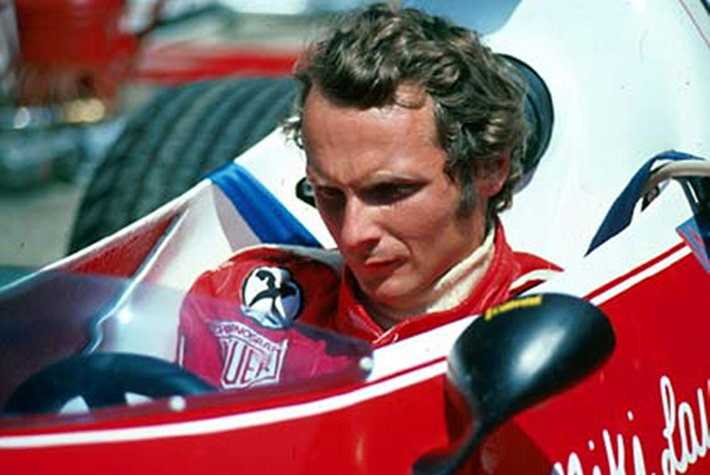
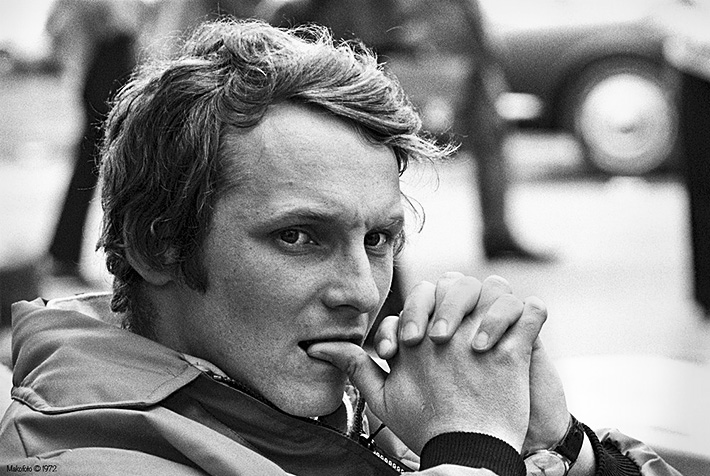
Andreas Nikolaus Lauda was born to a well-to-do Vienna family on February 22, 1949. His family’s social status proved both nuisance and good fortune. Although he was later to become successful in business on his own, it was obvious early on that he was not cut to fit the conventional Lauda mold, much to his family’s consternation. He did, however, find a mansion bet sign up offer and the family connections to be useful when it later became necessary for him to borrow to support his racing. Lauda became interested in motor racing not from attendance at events or boyhood idolization of racing heroes, but rather from an innate interest in automobiles dating to a young age. When he was twelve, visiting relatives were letting him park their cars. He got hold of, in his early teens, a 1949 Volkswagen Beetle convertible in which he would ride roughshod over a relative’s estate. He entered his first race, a hill climb, in a Cooper in 1968 taking second in class. Thereafter, despite his father’s insistence that he stay away from racing, he competed in hill climbs and later Formula Vee. He did his stint hauling a Formula 3 car on a trailer to races around Europe. In the course of this he scared himself into a certain amount of sanity, and, in 1971, abandoned the wildness of Formula 3 to take the plunge on his own in Formula 2.
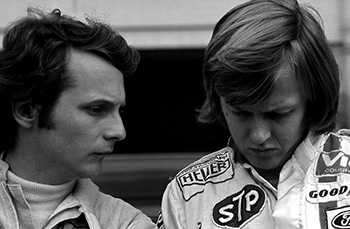 By virtue of his family’s business reputation he was able to secure loans that would not otherwise have been available. He used these to buy an F2 seat at March for ’71 partnering Ronnie Peterson (who was getting paid for his driving), and the next season an F1/F2 combination. When March fizzled he persuaded Louis Stanley at BRM to sell him a seat. In the course of all this he ran up debts that would have balked a small banana republic. Due dates on notes had an unfortunate tendency not to coincide with the availability of starting money from touring car races. But his abilities got him noticed. In true fairy tail fashion first Stanley began paying him, then the call from Ferrari’s Luca Montezemolo came before the financial house of cards collapsed (his devil-may-care approach didn’t seem to worry him at the time, although in his mature years he would say that it had been crazy).
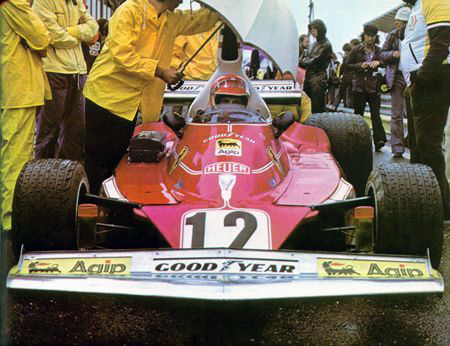
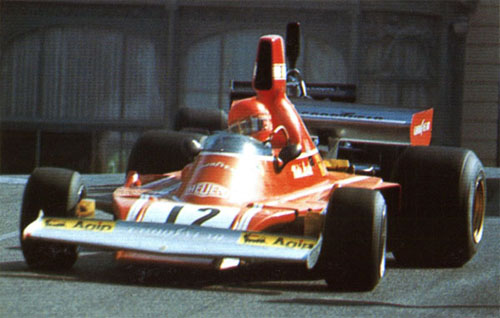
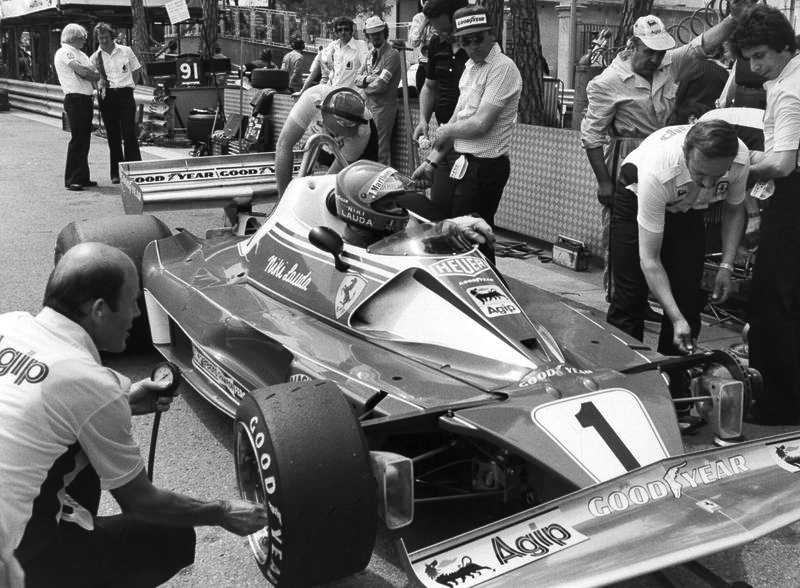
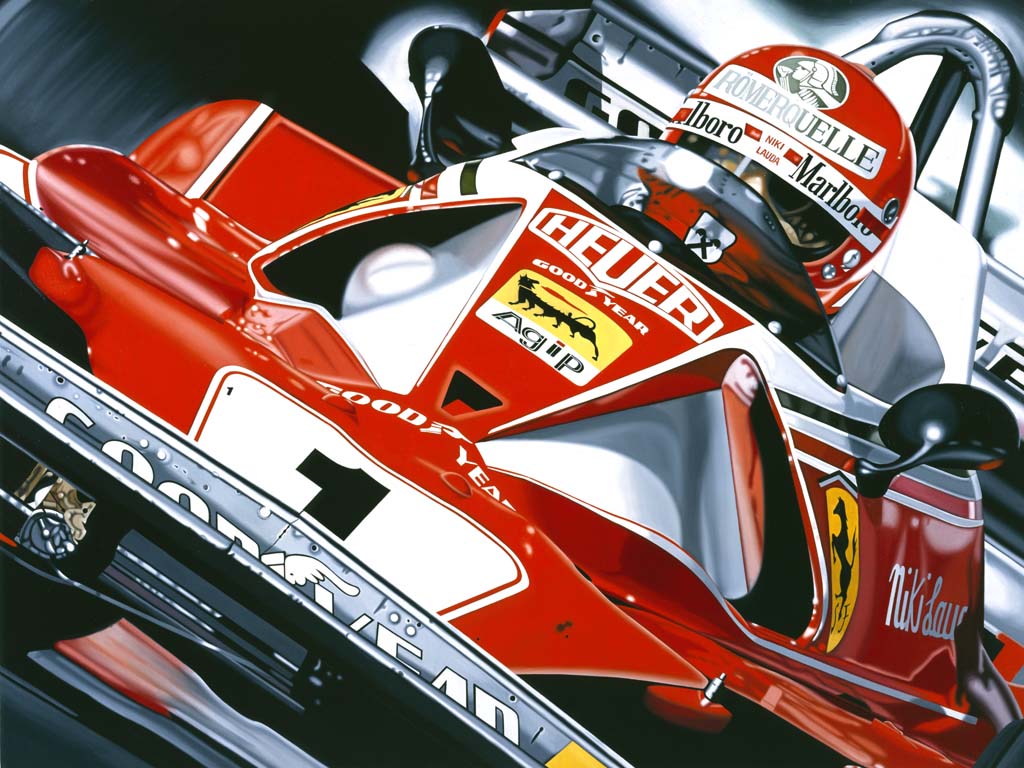
He squirmed out of his contract with Stanley, and was off on an often-rocky ride with Ferrari to two world championships. In 1974, his first year with Prancing Horse, Lauda scored the first of his 26 F1 victories. He, as well as teammate Clay Regazzoni, with good cars under them, challenged for the championship. Lauda took it in his second year with the team in a car that was technically far superior to any of the competition. He had 5 wins and a huge margin over second place. He called 1975 “the unbelievable year.”
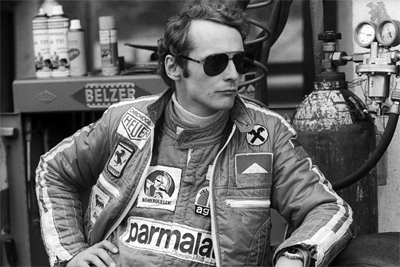 The championship that Lauda may wind up being most remembered for was one that he did not win. It is a curious fact about top level sporting endeavor that something needs to go wrong before there is a contest – before there is real competition. Baseball with nothing but ever-flawless hitting and perfect pitching would be boring not to mention impossible. Likewise soccer with constant errorless goal keeping or shots that never miss. Things must go wrong in motor races as well. But racing involves powerful machines carrying extraordinary levels of kinetic energy. So when something does go wrong, people can get badly hurt or killed. Niki Lauda suffered severe injuries in the 1976 German Grand Prix at the old Nurburgring, in the process setting up what may have been the most dramatic championship that F1 has yet seen. Lauda had taken a significant early lead in the points despite having cracked ribs as a result of rolling a tractor while mowing his Salzburg property. F1’s reigning playboy, James Hunt, had nonetheless adopted a never-say-die attitude, and kept his McLaren barely in touch even though he had a win at the British GP taken away over an alleged technical violation.
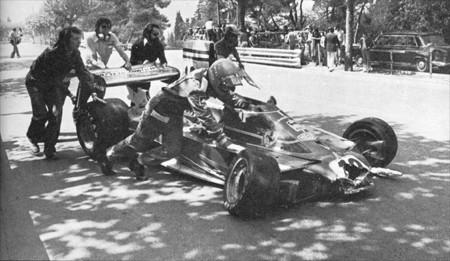
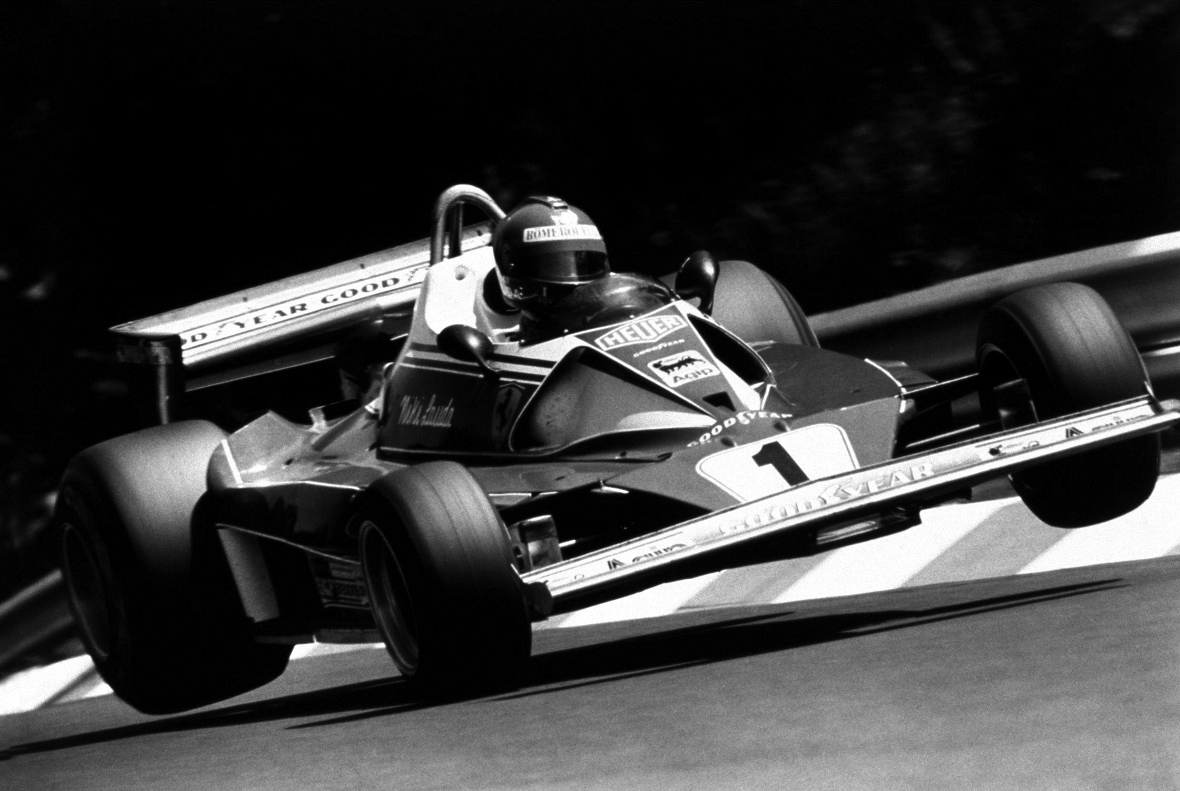 By the German Grand Prix he was more than 20 down to the Austrian. After an early stop to change from wets to slicks, just past Bergwerk, Lauda’s Ferrari unexplainably swerved off to the right, impacted an embankment, bounced back across the track, was collected by Brett Lunger and caught fire. Several drivers including Lunger, Guy Edwards and a fearless Arturo Merzario managed to extract Lauda from the burning wreck. Although he was able to stand after the accident, it soon became evident that his injuries were grave. Hot, toxic gases had damaged the inside of his lungs and his blood. His helmet had come partially adrift and he had suffered severe burns to his head. He lapsed into a coma. For a period of time his life was despaired of. However, he rallied and, in a show of courage that is difficult to overstate, was back in a Ferrari cockpit at speed six weeks after the accident (he later revealed that at the time he was virtually petrified with fear).
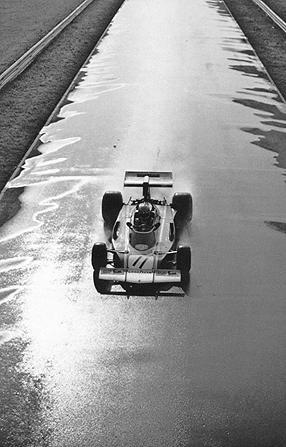
This six weeks covered 2 races and saw Hunt draw close. The Brands Hatch win was given back to him on appeal, and he won at Zandvoort. Lauda’s return to competition at Monza produced an amazing 4th place and 3 points. Hunt scored wins in both North American races, while Lauda had to settle for no points at Canada by virtue of suspension problems, and a third at Watkins Glen. This impressive run pulled Hunt to within 3 points of Lauda with only Fuji left on the calendar. The race started in a monumental downpour, and after 2 laps Lauda abandoned saying it was crazy to drive in such conditions. He was probably correct, but he was probably also still affected by his Nurburgring accident. In the event, the rain soon slacked, and Hunt finished third despite a late tire change, collecting 4 points to take the title.
 Hunt by no means backed into his championship. He won 8 races to Lauda’s 4 (in 1976 wins were worth 9 points; with wins now worth 10 points we may not see a championship season like 1976 again), and 6 of the last 9. When he suffered setbacks he always bounced back. When opportunity presented itself he rose, in true championship fashion, fully to the occasion. He would be have been the last to admit it (he seemed to be proud of his uninhibited life style), but he displayed the better qualities of the British competitive spirit – a consistent tenacity and persistence in the face of difficult odds. Lauda had placed himself in an awkward and stressful situation: still leading the championship while suffering the physical and mental effects of a very bad accident. He could easily have (and perhaps should have) sat out the balance of the season. But he faced up squarely to his handicaps in clinging to his lead, and displayed admirable sanity under enormous pressure at Fuji.
In 1977 Lauda cruised to his second championship despite winning only 3 races, then promptly dropped Ferrari at Canada. The parting was not amicable, although Lauda was later to recant much of his criticism of the team (and eventually serve it as a sort of minister without portfolio). He was apparently an example of that rare individual who was not over-awed by Enzo Ferrari. He claims to have regularly simply shown himself into The Drake’s inner sanctum when he wanted a word with him. And he was not cowed when those words became heated as tended to be the case following Fuji.
 For 1978 Lauda took up with Bernie Ecclestone and Gordon Murray at Brabham. It was not the success that might have been expected from the trio. The Alfa 12-cylinder was not up to the task. Ecclestone was busy running the money end of F1. The only real accomplishment of note during Lauda’s 2 seasons with Brabham was the infamous Fan Car. Lotus was starting to make great strides with ground effects, the aim of which was to reduce the air pressure under the car thereby increasing tire grip and cornering speed. In an exercise in loophole exploitation that probably made Colin Chapman green with envy, Brabham repositioned the radiators at the rear of the car and cooled them with a big fan instead of with rammed air as was normal with side-mounted radiators. Of course, they contrived to see to it that the fan just happened to also suck air out from under the car increasing its downforce. Lauda and John Watson employed all of the sandbagging skills they could muster in an effort to hide the fact that the car was unbeatable. It won once, in 1978 at Anderstorp with Lauda at the wheel. It never won again because it never competed again, having been promptly banned as being contrary to some rule or other. At Canada in 1979, exactly 2 years after kissing off Ferrari, Lauda suddenly decided in the middle of practice that he no longer wanted to race, and promptly retired then and there from F1. For 2 seasons he devoted himself to his airline business and to TV commentary.
“What struck me was how ‘clever’ his best performances were. He often kept himself back, in practice, and awaited the right moment, and then really went flat out. He always thought more deeply than the others, and he also gave himself endless trouble preparing the race.” Fritz Indra, Ferrari Technician
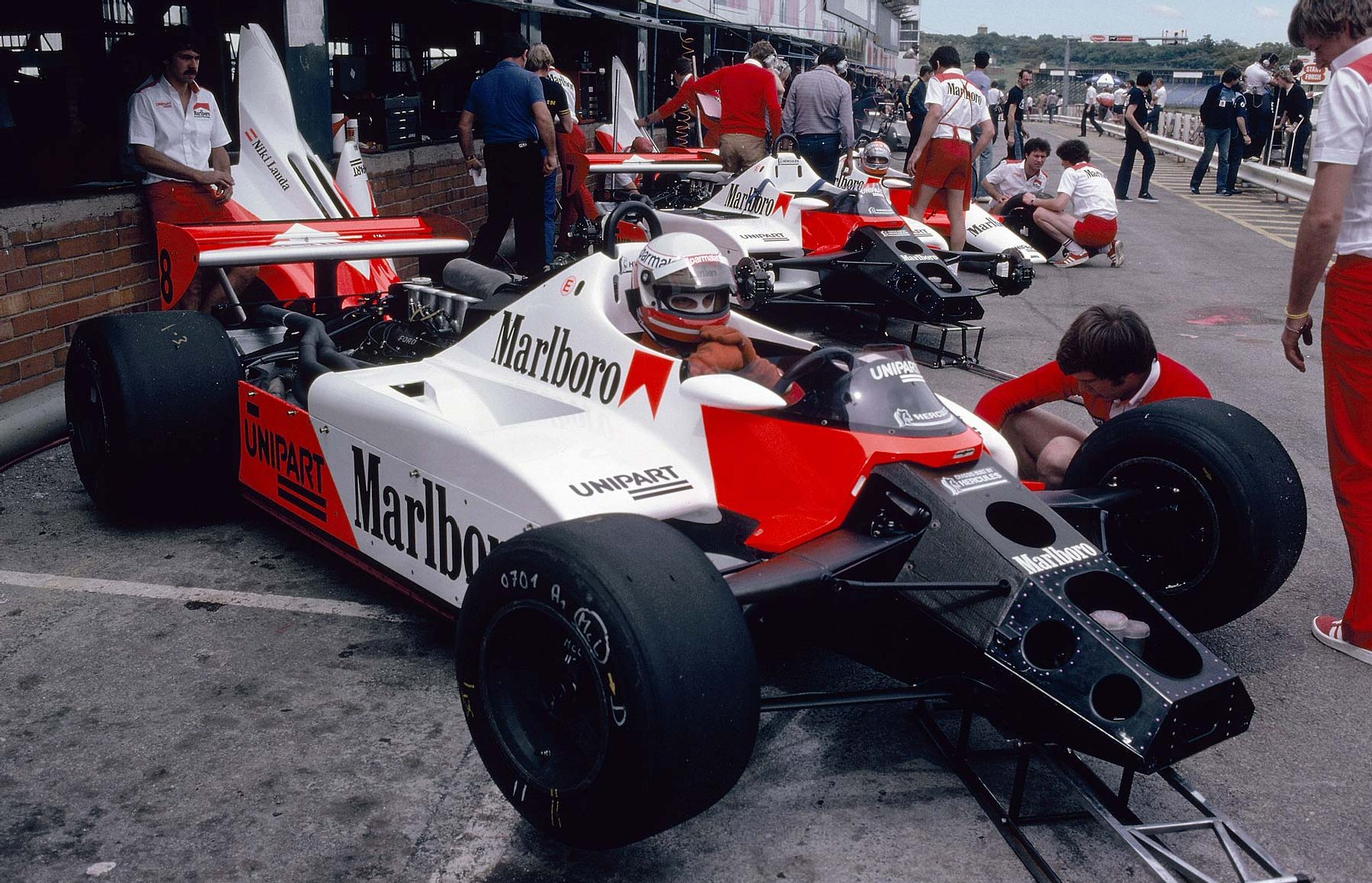
Lauda returned to F1 in 1982 for, by his own admission, financial reasons. The fledgling airline that he had started (he loved flying so why not an airline; to Niki Lauda it made perfect sense) had fallen on hard times. He signed up with Ron Dennis and McLaren to partner John Watson for plenty of money (albeit, on only a 4 race contract to start with) and the promise of a competitive ride. Lauda’s comeback got tangled up in the great FISA – FOCA war. One of the more prominent skirmishes in this ugly affair occurred at the 1982 South African GP. Lauda wound up in the middle of a labor fracas before he had even turned a Goodyear in anger. The so-called Super License for F1 drivers had been introduced by FISA in an effort to keep marginal talents out of the cockpit. Owner members of FOCA (with the apparent connivance of FISA), however, had taken advantage of the licensing process to try and bind drivers to their teams. Most drivers, including Lauda with his shrewd eye for all matters fiscal, saw through this ruse and refused to sign. At South Africa they were threatened by FISA with being banned from the race for lack of licenses. Lauda and Didier Pironi, head of the Grand Prix Drivers Association, organized a resistance movement, and got most of the drivers to lock themselves together in a hotel meeting room over night while Pironi negotiated with FISA major-domo Jean-Marie Balestre. Balestre made concessions prior to the weekend having to be completely written off, and Lauda went on to place 4th in his first race back.
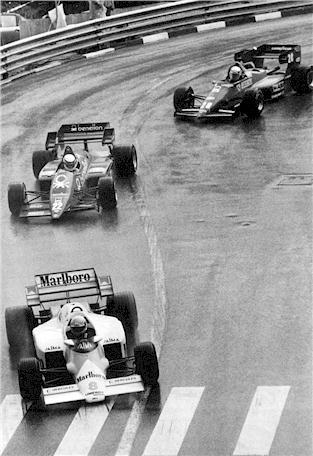
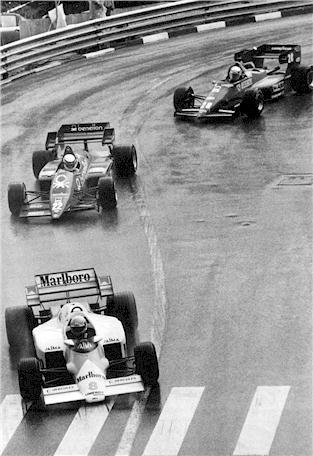
And it didn’t take long for him to reacquaint himself with winning. At Long Beach he won in only his third race since returning. He also won at Brands Hatch that season. ’83 was a no win year while the TAG Turbo was shaken down, but ’84 ended with Lauda back at the top of F1. Although he won the ’84 championship by a mere 1/2 pt., he seemed to have the measure of his usually faster rival and new teammate, Alain Prost, for most of the season. As quick as Prost was and as good a politician as he was, he met his match in the imposing personalities of Lauda and later Ayrton Senna. Lauda was seldom faster than the best of his rivals. He disliked risks that he considered unnecessary. He was not noted for redoubling his efforts when things weren’t going well. He was not one for making selfless sacrifices for the good of the team (though he would do so for the good of Lauda). He did often have good cars, but he also often had talented teammates who had the same cars – Regazzoni, Reutemann and Prost. One might wonder how it was that he was so successful. Lauda had the sort of self-confidence usually reserved for megalomaniacs, minus the psychosis. All three of his championships probably came about as much because he willed them into existence as for any other reason.
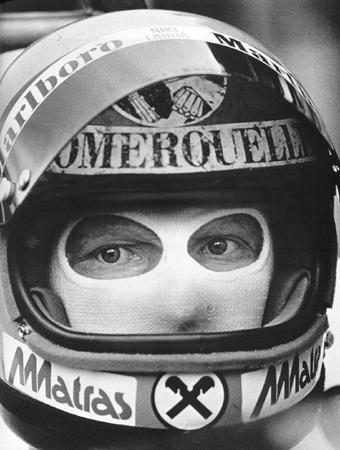 An important part of his successful mental approach to competition apparently was for him to be as unsparingly honest and straight with himself as he was with others. In the late ’70s a PR visit between the then World Champion driver and Muhammad Ali was arranged. Lauda came away from it scratching his head, not because of the hype the boxer surrounded himself with (which Lauda understood to sometimes be part of a super star’s marketing) but because Ali appeared to believe it. This was not a delusion under which Lauda would ever fall.
Another part was sheer smarts. Lauda, though a poor student as a youngster, is obviously possessed of superior intelligence in a branch of sport where that is saying a great deal indeed. This served him well off the track as well as on. He and collaborators have produced 4 very informative books on racing and his career (which, by the way, thoroughly dispel the notion that he was nothing but a cold-hearted machine). He mastered English quickly (and, per force, Italian while he was with Ferrari), and thus had a language other than German in which to deliver the patented Lauda interviews. These were dispensed with a combination of succinctness, authority and deadly aim that rivaled the Almighty handing down the Ten Commandments on Sinai.
“This year (1974) I wasn’t ready to become world champion. If I have a good season next year, I shall know the reason for it all: to make me tough and ready for great things”. Lauda
 A good example occurred after he had retired from racing for the second time. One of his Lauda Air 767s suffered an uncommanded thrust reverser deployment after departing Bangkok and plunged into the jungle snuffing out a couple of hundred or so lives. Lauda rushed from Austria to the crash site buried deep in the Thai rain forest. The story has it that, plowing around through aircraft pieces, bodies and undergrowth, he single-handedly discovered the mechanical evidence pointing to the faulty reversers. Whether this is actually true or not, he was certainly instrumental in turning up information useful in determining the cause of the accident. He went straight to England where he could test the theory in a 767 simulator, then immediately held a press conference at which, with typical Lauda clarity and economy of words, he stated (not “suggested” or “inferred”) that he knew the cause of the crash, and that it was not Lauda Air’s fault, but rather a problem with the Boeing aircraft type. The official investigation culminating a year or so later arrived at the same conclusion. This ruthless straightforwardness had served him well in innumerable interviews during his racing career. While Hakkinen shows that he brooks no stupid questions by hemming and hawing, looking at the floor and replaying answers over and over, Lauda showed the same thing by simply providing a (emphasis here) few quick, clever, perfect words.
Lauda did not hang around long after taking his third championship. His second and final departure from F1, at Adelaide in 1985, was typical of his whole approach to racing and to life – quick, with no frills and no glance over the shoulder. One moment he was flying his McLaren down the long straight. The next his front brakes had failed him and he was skittering into the runoff area and up against the wall. The next after that he was out of his car disappearing behind the barrier without a look back and with the next flight out on his mind.
 Many of Lauda’s actions may appear to have been somewhat precipitous. But he likely is not so much impulsive as pathologically decisive. His extreme dislike of wishy-washiness probably explains such things as his abrupt abandonment of Ferrari in ’77, his equally abrupt retirement from Brabham and F1 in ’79, and his thumbing his nose at monopolistic Austrian Airlines by founding his own airline. He is unsympathetic to lack of punctuality. By his own admission those around him, including his family, often had to arrange their lives to suit his needs.
He was vigilant and not the least bit sentimental when it came to making money from racing, to the point of insisting on handsome payment for autograph sessions. These and other personal traits chafed some egos along the way. In his Ferrari days Lauda, the very antithesis of the Italian persona, never captured the love of the tifosi the way that Gilles Villeneuve, or even Mansell did. Yet he became a bona fide legend in his own time. Certainly part of this was due to his Nurburgring accident. But primarily it was a result of the unique impact that his personality and skills had on the sport. There may have been a few better than him, but there have never been any like him.
People who worry about paying their car payment or Titlemax title loan on time may find Lauda’s actions hard to understand, especially if they think race car drivers are overpaid. Whatever his monetary motivations, there’s no denying his skill behind the wheel.
“My PR value alone is worth that much. You’ll be paying only one dollar for my driving ability, all the rest is for my personality.” Lauda, during negotiations with McLaren and Marlboro to return to F1