
By William Edgar | Photographs as Credited
It was July 19, 1974 that I really got to know John Young Stewart, even though I’d already met and worked with him several years before that British Grand Prix Friday practice day riding with him in a chauffeured Daimler out to Brands Hatch, a distance of some 25 miles from London’s Savile Row where we’d first made a stop at Jackie’s tailor. In the limousine with us were a cameraman and his sound recordist. Half turned to face Jackie in back, I sat up front with our driver. We were making a documentary for Trans World International, the film branch of International Management Group, better known as IMG, Stewart’s representative agents, then and still now. I was asking Jackie questions about his life in general, and more specifically of his years in racing and what he was presently doing in his then-recent retirement from Formula One, including this particular day of his providing color commentary for the BBC race weekend telecast. My recollection of that day and of how readily we were waved through traffic by Brands Hatch gate marshals, with Britain’s three-time World Champion aboard, remains vivid to the point of obsessing on the past.
Leap forward nearly 38 years to December 2011. Stewart—now Sir Jackie since knighted by Britain’s Prince Charles at Buckingham Palace in November 2001—is again riding in a chauffeured car outside of London, and I’m again about to ask him questions, not from the limo’s front seat this time but by telephone far across the Atlantic and the breadth of America. This is the way my conversation went, in this order, with the first Formula One superstar.
Guy Myram, Stewart’s personal secretary on the line in England, tells me, “I’ll patch you through. One second.” After nine British ring tones, Sir Jackie picks up.
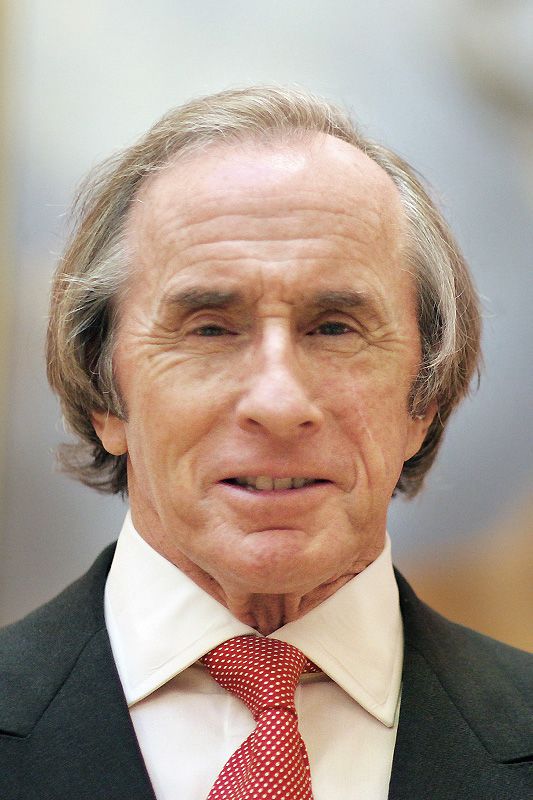
“Hi, Bill,” says Stewart, knowing me from back when I was still called Bill, not yet Will. “What side of America are you in, New York or LA?” he asks. I tell him northern California, and we exchange hearty greetings. “I’m in a car in London,” Stewart says. “I live about an hour and a half from London, by road. So I’m being driven there. If we get cut off, because I’m on a mobile phone, just call the office back and they’ll still map you through to me.”
My first question is to ask Stewart about his Formula One career and how he thinks about that today.
“I look back with somewhat sweet and sour,” he says through a clear connection to his mobile. His voice, as bright and full of keenness and Scottish brogue as I’ve always known it to be, flows faultlessly from one sentence to the next, and to the next, in a distinctively page-ready perfection that has forever defined him and what he has to say.
Stewart continues: “There are all those good memories of, let’s say, entering the world of Formula One as a rookie in 1965 and joining up almost immediately and playing with the big players. In other words, Jim Clark, Graham Hill, Jack Brabham, etcetera, and John Surtees, who at that time I remind you was the reigning world champion. And, suddenly, I was competitive right away with them, and in fact that year three times was on the podium finishing second to Jim Clark and winning the Italian Grand Prix at Monza toward the end of the season, then finishing third in the world championship. So it was a pretty remarkable entry, if you like, into Formula One. And the people, the camaraderie, was deeper in those days. We traveled a lot together. We stayed in the same hotels. In those days there was no elaborate motor homes, so there was much more socializing with each other. And, of course, like anything else in life, you got closer to some people than you would with others. So that was the sweet side.
“The sour side was obviously the fatalities that were to later come. But in 1965 we got away pretty clean. Those so-called ‘swinging sixties’ and early seventies were by far the most glamour period of Formula One, I think, and probably had the best collection of top-line drivers, just as good as there is actually today. I would say that if you look back through this last season there hasn’t been since the mid-to-late sixties so many top-line drivers. There’s about eight really top-line either world champions or damn near world champions today. The technology, of course, changed as we went along, but that has been the story of motorsport since we’ve had the horseless carriage. The motor industry technology has led to what is Formula One today.”
Widely known for his efforts toward improving safety in racing cars and race tracks, often to the point of his being criticized for it, I ask him when and how that focus began.
“I wasn’t focused in safety in 1965,” Stewart says of his first year in Formula One. “I was just a new boy and it wasn’t for me to get into heavy discussions about that. As of that time I didn’t really know or appreciate how dangerous the whole damn thing was.
“My accident at Spa-Francorchamps in 1966 [Stewart spun his BRM P261 in heavy rain and hit a telephone pole, and was trapped in leaking fuel.—Ed.] was a wake-up call. There were no marshals to help us. There was no medical facility to help us. It was really ridiculous. There was nobody to assist Graham Hill and Bob Bondurant taking me out of the car. And God knows how long we had to wait for an ambulance. When we finally got to the so-called ‘medical center’ of the circuit I was laid on the floor in a canvas stretcher with a whole lot of cigarette ends. At that time, I was coming in and out of consciousness. Then, during the motorcycle escort taking the ambulance to Liège Hospital, because they thought I had a back injury, they lost the ambulance and the ambulance driver did not know how to get to Liège. It was a comedy of errors. So that taught me a lesson.”
The lesson at Spa lead Stewart to look deeply into safety issues in motor racing for years to come, bringing about, among other safety improvements, the extended use of full-face helmets and seat belts, and helping develop the Grand Prix medical unit that began traveling with the Formula One series. The need for better safety was a message often personally heard from Stewart, as he became more and more visible through his presence as a race commentator on television while still driving races in the sport’s most dangerous era. The mod ‘Wee Scot’ with his long hair and attractive wife, Helen, alongside was very soon a world-recognized celebrity couple.
Sir Jackie Stewart – Speaking Out of The Box Continued
Sir Jackie Stewart – Speaking Out of The Box – Page Two
After his mobile phone connection drops, and Stewart’s UK office re-connects to the car, Sir Jackie again picks up the thought train: “Clearly one of the most important things I did as a then-current racing driver was to sign a contract with Roone Arledge at ABC Sports in 1971. Roone was a genius, and it was because he was such a genius that he later became president of ABC News as well. It’s not surprising that he had one of the best line-ups of top sports commentating talent. Jim McKay was a master of the English language, and for me to have been with him in more races and more telecasts than any other commentator that I worked with was a gift. Keith Jackson was great to work with as well. All of these people were masters at what they did, and somebody like myself, who had previously not had much experience of doing television, to understudy with Jim McKay, for example, and keep in mind a great many of those races in those days were live TV, whether it was NASCAR or Indycar, not so much the Formula One things, but to be able to learn how to do it in one take and have the best producers and best directors, I mean ABC’s Chuck Howard and Chet Forte, and Don Ohlmeyer and Doug Wilson, and people like that—that was it.
“Whether it was doing the Cresta Run or the bobsleigh run commentary, or whether it was doing the winter Olympics or even the summer Olympics, which I did once, or doing the Highland Gatherings at Braemar next to Balmoral—you had to be versatile, but above all you had to be able to get the job done in a very professional way, and nothing other than the best was allowed. Roone pulled the crew together in that respect. So I had a fantastic opportunity, and it was a great thing for me to have done. I mean, Bill, I would never have won the American Sports Person of the Year for Sports Illustrated or for ABC Television in ’73 had it not been for my appearance on television as well as winning world championships at the same time. But it took a lot out of me. You know, I was doing NASCAR races on a Sunday, flying back home across the Atlantic Ocean on a Sunday night, then flying back on a Wednesday to New York on the Concorde to do a voice-over of the program so that it went out on the air Saturday.
“I did eighty-six crossings in 1971, and that’s not counting all the other travels that I was doing—475,000 miles a year by air. There was Australia, South Africa, Asia Pacific and Japan, and never mind anywhere else, and I was going around the world with Goodyear and Ford by then, to India, Thailand and Indonesia, Hong Kong, just everywhere.”
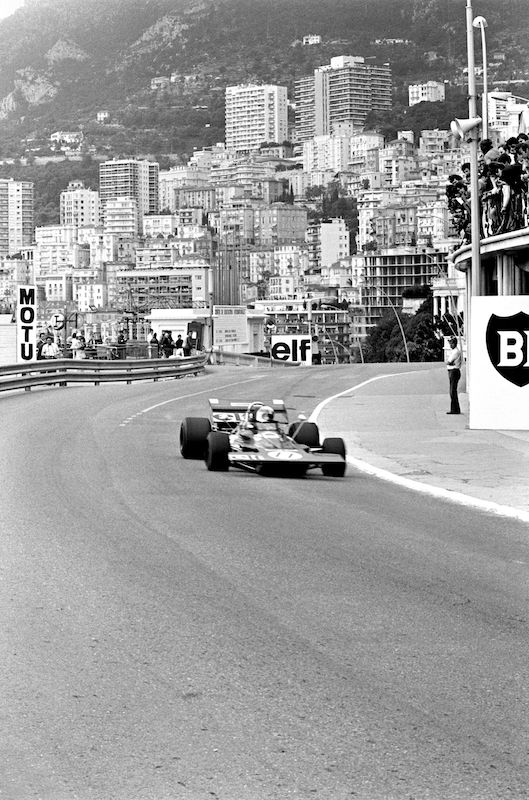
The pace he kept was staggering. From the period I was making films for TWI and IMG, I recall following Stewart’s schedule and hearing stories from my executive producer, Jay Michaels, who was also Jackie’s road manager, about the almost ceaseless intertwining of travel and racing. Now, as his car takes Stewart further north from London toward his home in Buckinghamshire County, I ask him what it was that kept him so heavily engaged, both in and out of racing.
“I guess ambition,” Stewart tells me. “On the basis that I saw how powerful television was, because I was suddenly doing a lot of television commercials for Ford, Goodyear, for Wheel Horse tractors, for Simoniz, for Getty Oil, a serious number of them in America, so my television appearances were making me a personality to the American public while I was still winning Grand Prixs and winning world championships. It happened to be a very potent cocktail, if you like. I thoroughly enjoyed it, and I was being paid for it, and in those days racing drivers didn’t make the kind of contract money that we make today. Therefore, I was doing Indianapolis and Formula One, and by 1971 I was doing the Can-Am series—the whole damn series as well as Formula One. That year I got mononucleosis, the blood disorder, and I won the world championship in ’71 with mononucleosis. Then, in ’72, I was doing the same kind of travel and I got an ulcer that hemorrhaged because of the stress, the strain, the diet, the flights, the long hours, the time changes. It was a tough life, and at that time in motor racing, by then, the danger element was so big that our batting average was very poor. If you raced for five years, there was a two out of three chance you would die. That wasn’t good, but on the other hand the rest of it was all very stimulating, whether I was doing something about Atlanta, Georgia with Richard Petty and driving his stock car, or whether I was doing IROC races and driving Camaros with Paul Newman, or if I was doing something else with Mario Andretti, or whether I was doing something else at the Monaco Grand Prix. It was all good stuff, Bill. It was very stimulating and it also was very important in the formation of my future life, which was to have some of the skills clearly that I would otherwise not have been able to develop.”
Rivetingly set to print with the help of author/professor Peter Manso in a 239-page Farrar, Straus and Giroux hardcover titled ‘Faster! A Racer’s Diary’, Stewart recounted 1970’s bittersweet day-to-day events of his life in racing that include the deaths of close Formula One driver friends Piers Courage at Zandvoort and Jochen Rindt at Monza. The writing, vividly true and personal, makes for one of the very best books ever written on racing at the top of a world champion’s profession.
“Peter Manso was challenging to work with,” Stewart tells me from his car on the M1 motorway,” but he did travel with me all of the time for a season. It was a good combination of two people, sometimes in conflict, which always makes it even more interesting. But Alan Henry was good to work with, and I later did one of the Jackie Stewart’s Performance Driving books with him. And there is the more recent one, ‘Winning is Not Enough’. That’s quite a good book. It was much more about life than it was of hardcore racing. About writing the books, I wrote my first book [‘World Champion’] with a journalist called Eric Dymock, and that was when I won my first world championship in 1969. It was sort of obligatory for every racing driver to do. You won the world championship, then you did a book.”
Sir Jackie Stewart – Speaking Out of The Box Continued
Sir Jackie Stewart – Speaking Out of The Box – Page Three
I made two television documentary films involving Stewart in Can-Am racing during 1971, the first in July at Road Atlanta, another in October at Laguna Seca. Peter Revson won both in Team McLaren’s M8F.
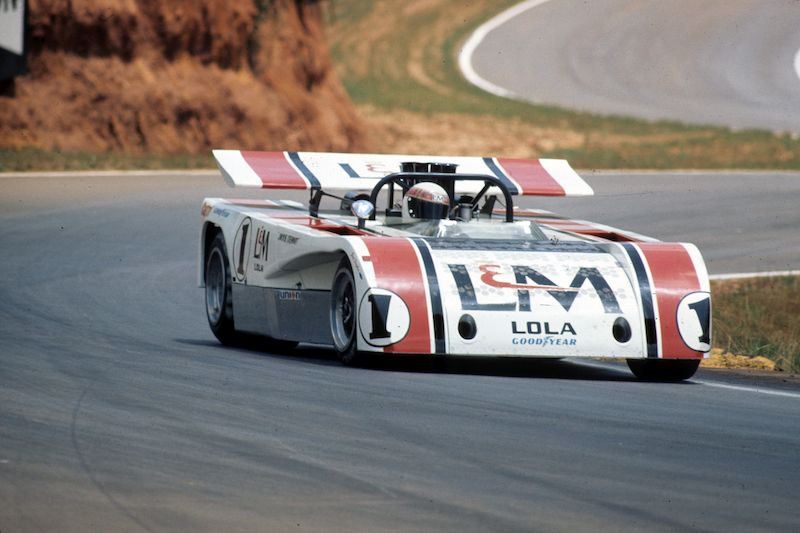
“Doing Can-Am with Carl Haas was good,” Stewart tells me as our conversation continues about cars he raced other than Formula One. “Eric Broadley made the Can-Am car, which was not a good car. It was called the T260 Lola and it was not an easy car to drive. It was short wheel base, very twitchy, very demanding. I won a couple of Can-Am races. But, at the same time, again, it was using up a lot of time in a plane.
“Revvy was a good racing driver. I think he was also good for racing. He was a very good-looking guy, he had the Revson name and the Revlon identity, he was very cultured, and, well, he ‘did a lot of damage with the girls.’ It was a great contrast between him and Denny Hulme for example. Denny was the very basic New Zealander, a great guy of course, and a very good driver. So Peter got a very good ride there to be with McLaren, and he drove well. The top Can-Am drivers after Bruce died were Denny, and Revvy I suppose, and myself.
“I didn’t do Le Mans with Steve McQueen [The plan was for Stewart and McQueen to co-drive a Porsche 917 for the 24-Hour race in 1970.—Ed.] There was a point where I might have been doing it, but then I chose not to do it. I only did Le Mans once, and that was in ’65 with the gas turbine, Rover-DRM, where we finished the race as the highest placed British car, in tenth or eleventh, I can’t remember. My co-driver was Graham Hill.
“I drove the Ferrari P4 with Chris Amon at Brands Hatch for the BOAC Six-Hour in 1967. Chris took ill and was only able to do a small amount of the driving. I mean he was really ill, so I had to do most of that, and that was a fantastic car, a beautiful car to drive, and probably the most attractive racing car I’ve ever driven, in addition to which Mauro Forghieri was engineering it. I had never been able to get a car to go around Brand Hatch comfortably—it was always too bumpy and just wasn’t a track that I could get a car set up on. And Mauro got that one set-up for me perfectly. That was a 4-liter V12 works car, and we were a second place finish to the Chaparral [Phil Hill in this race, his last professional competition, co-drove the 7-liter V8 Jim Hall Chaparral 2F with Mike Spence for the win.—Ed.] We could never have matched it, but we finished ahead of all the Porsches and we secured the World Championship for Sports Cars for Ferrari. I was given ‘Grazie Stewart!’ on the front page picture of Autosprint. And certainly it was the only time I ever drove for Ferrari. I met Enzo many times. He was a very unusual man, but nevertheless dynamic, and nobody better known in the world.
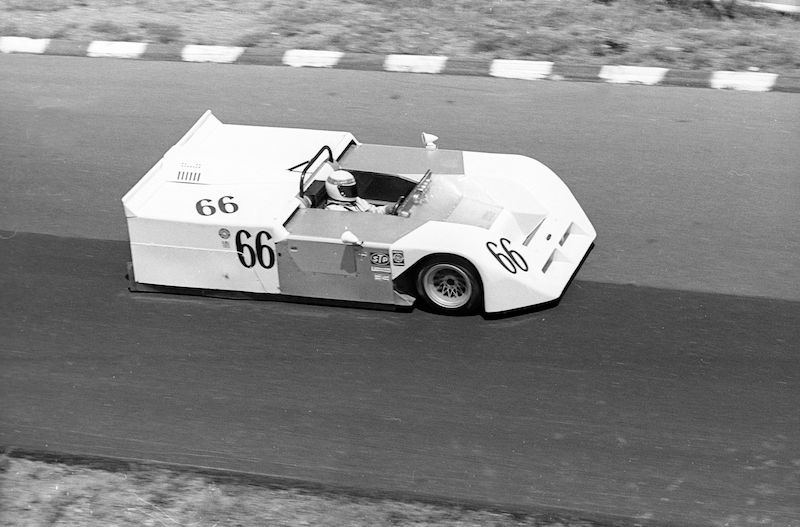
“I later drove a Chaparral, the ‘vacuum cleaner’ as they called it. I drove it at Watkins Glen in a Can-Am race. I liked Phil Hill. He was a wonderful man—perfect manners, and a great deal of culture in him, a great ambassador for the United States of America. You couldn’t’ have done better than Phil Hill and Dan Gurney. They were really both true Americans with a love for Europe, and Europe loved them. I had good times with them both. I drove against Phil, but not very much. I did drive quite a lot against Dan Gurney, and he was the perfect gentleman on the race track. There was Jim Clark and Dan Gurney, and Denny Hulme was very good. Jochen Rindt was very good with impeccable manners on the track, just good to race with.
“I drove a Porsche Super-90 in my first ever competition of any kind. It was a sprint in Scotland, and that was my first competition as a driver but after that I never drove a Porsche at all.”
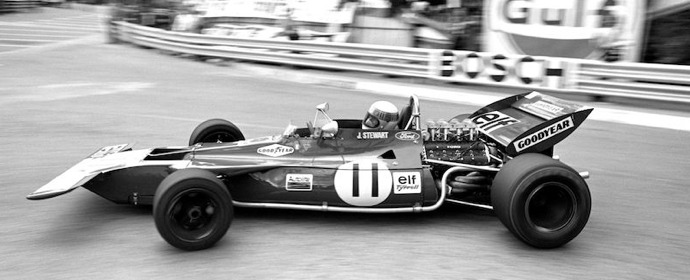
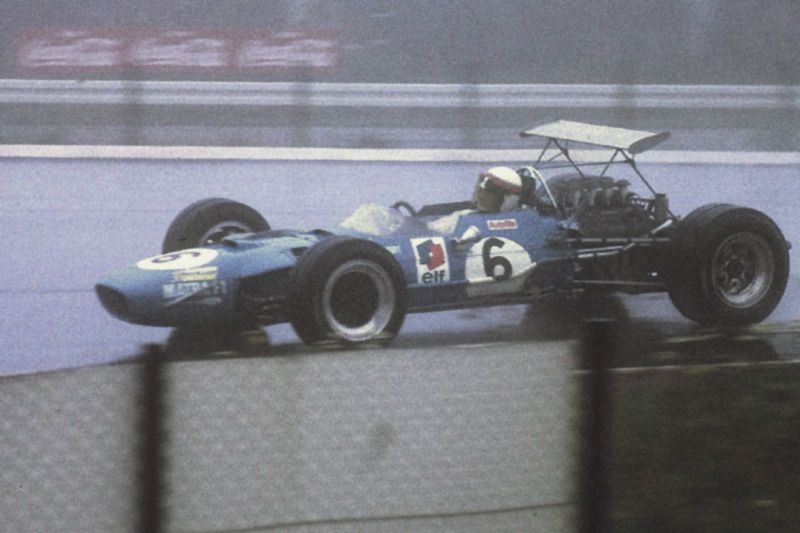
In Formula One, between 1965 and when he retired in 1973, Jackie Stewart won 27 Grands Prix in 99 starts. Many agree that perhaps his most notable Formula One win was at the full-course 14-mile 14-lap Nürburgring on August 4, 1968. With a broken wrist and in the worst of foggy and wet weather, Stewart brought his Matra-Ford first to the finish 4 minutes and 3 seconds ahead of the second place Lotus-Ford of his former teammate Graham Hill, followed 6 seconds later by Jochen Rindt’s Brabham-Repco. Sir Jackie’s thoughts, from the comfort of the rear seat of a saloon northbound on the British highway, are in essence being there with Stewart at the ‘Ring 43 years ago.
“Most people’s perception is the Nürburgring in 1968 might be my best race because of the over four minutes ahead of second place in conditions that, today, we would never have raced in, and it was ridiculous. But it was just one of those days, everything went well, we didn’t go off the road, we didn’t spin. The Nürburgring, of course, was the greatest challenge, I think, that motorsport has ever seen in respect to learning the track and being able to do sub-lap-record laps all of the time almost in order to win. I liked the ‘Ring. I mean I liked it, and I hated it. Being in front of a fire at home with the snow outside, I loved it. When I left home to go to it, I hated it. I wondered whether I would ever come home from it. I never did one extra lap there at the Nürburgring than I had to, because if you were driving a Formula One car around the ‘Ring at full tilt it was an experience you wouldn’t want to go through very often. I say, ‘Anybody who really likes the Nürburgring, either they have not gone around there fast enough or they’re telling a fib.’
“I named it ‘The Green Hell’ because the track has fir trees and greenery all around it. There are no run-off areas, there is no space for anything and, in those days, we got it changed for the 1971 race and we got it changed again for the ’73 race. But finally it was stopped after the Niki Lauda accident there in ’76. It’s no place for a single-seater Formula One car to be driving. You took off thirteen times per lap, and racing cars can take-off quite well, though they were never good at landing. Actually, it was nonsensical to drive a Formula One car around there, so my appreciation of it is very deep and I’m glad I did it, and I’m glad that I won four times there, and that I’m a Ringmeister, and that I was given the golden ring and all that sort of stuff, but I won the Formula Two championship race around there and three Grand Prixs, which is more than enough for me, thank you very much.
“I learned the ‘Ring in a Volkswagen rental car,” says Stewart, then adds, “I did drive a P1 Ferrari there, and we did quite well—we out-qualified the works team. I was driving for Maranello Concessionaires. I drove a European Championship Ford Capri around there, too. I did quite a lot in the rain. Even in a Capri the Nürburgring was a nightmare.”
Sir Jackie Stewart – Speaking Out of The Box Continued
Sir Jackie Stewart – Speaking Out of The Box – Page Four
Stewart’s ninth season in Formula One would be his final rounds of Grand Prix racing. He tells about that time 39 years ago in this telephone interview from South East England.
“1973 brought the World Championship to me for the last time. I had made up my mind in April ’73 that I wasn’t going to do any more than one last season. I didn’t tell anybody other than Ken Tyrrell and Walter Hayes, who was the vice president of Ford Public Affairs, and I had a good season that year. I did win the World Championship. But I would have retired in any case whether I had won the championship or not.
“My Monza race that year, in ’73, was a good one, because of having the early puncture, and wheel changing was not what it is today. I mean, I don’t know how many times I broke the lap record that day but I think more than anybody ever has. We never really had any hope of finishing fourth when I started off very much last at the very beginning of the race almost, so it was for me, although I didn’t win it, one of my best races ever.”
Stewart’s Formula One driving career would have counted 100 Grand Prix races, if he had finished 1973 as planned. But that would not happen. While qualifying for the United States Grand Prix at Watkins Glen in New York on the morning of October 6th, Jackie Stewart’s 29-year old protégé and teammate, Francois Cevert, was killed instantly when his Tyrrell-Ford spun and struck a guardrail at 150 mph. Stewart, in his driving suit, later stood with his fellow racers during a minute of silence in tribute to Cevert. Then, as the other drivers walked to their cars to resume qualifying in Saturday afternoon’s session, Jackie Stewart, aged 34, stepped from the ranks and retired to the Team Tyrrell motor coach. Stewart’s professional driving ended that resolute moment with a record 27 Grand Prix wins.
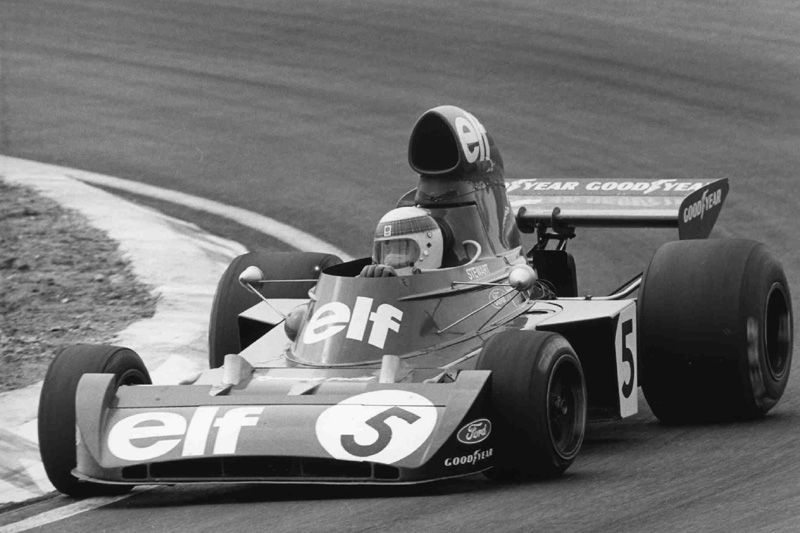
“The people I raced with, Bill, were the best,” Stewart tells me from his car. “I’m on record for saying many times ‘the engineers and the mechanics I had were better at what they did than I ever was at what I did.’ Roger Hill and Roy Topp and Roland Law and Keith Boshier and Neil Davis, that group of people were just fantastic. And Ken Tyrrell, I couldn’t have asked for a better man—first of all to break me into single-seater racing and then to take me to where I turned out to be. Without him I probably wouldn’t be here today, because I’d probably been dead, and secondly you wouldn’t be doing an interview because maybe I wouldn’t have been successful, so Ken was a pretty important man in my life. In those days, Edsel Ford came around to the races, and Edsel is still one of my best friends. He was with me on my last ever race that I was supposed to have run at Watkins Glen when Francois was killed, so with Edsel we’ve shared a lot of things together.”
For as long as I’ve known him, Stewart has been represented by IMG, and even today remains one of this 130-office worldwide company’s most distinguished clients among the hundreds of elite athletes who have called IMG their agents and financial advisors. My own documentary film career for 20 years was tied strongly to Mark McCormack’s IMG and its then-media arm, Trans World International. When I ask Sir Jackie to reflect on his years with IMG, it’s something like talking again of old school chums and times gone by.
“Mark McCormack,” he tells me on his mobile, “signed me up himself and I had a great relationship with Mark. He was the best. He was the most powerfully involved man in sport of any kind. I had the highest regard for him, and I am still with IMG today. Jay Michaels and Jay Lafave were the other guys. Jay Lafave was the sort of administrator. And Barry Frank was TWI, Trans World International. All of these people were good. They were amazing years. But on the other hand, between sweet and sour, when you think of all the people who died from Jimmy Clark to Piers Courage to Jochen Rindt to Francois Cevert to Roger Williams to Lorenzo Bandini to Ludovico Scarfiotti to Jo Schlesser to Mike Spence—so many people died. I mean, Helen and I, and you have probably read this in the book, counted up fifty-seven people who we knew well enough, if not a deep friend then certainly acquaintances and people we mixed with a lot, who were, you know, taken out. So the experiences were very varied in those days. I mean, to do Can-Am and Formula One, to do sports cars and GT racing, touring car racing, and Indianapolis by the way, which I really enjoyed doing in the two years I raced there was ’66 and ’67, and I could have won it. Two laps in the lead! And then, to be able to go back as a commentator was very enjoyable. I liked Indianapolis and the people that were there.”
By now, we’re getting around to what Sir Jackie has been doing in more resent years and up through 2011, and at this time looking to the 2012 Formula One racing season that kicks off the third week in March at the Albert Park Circuit in Melbourne, Australia. I ask him what it has been for him to witness change with these new-era Grand Prix venues and the impact they have on Formula One today.
“Obviously the new races are going to both the Middle East and the Far East, in the sense that it all started off really in Malaysia, the first one, and I was there,” says Stewart of the current trend. “Then Bahrain came in, and China came in, Singapore, then Korea came in after Abu Dhabi. India is the very newest one. It’s going to be quite difficult for a while because there isn’t a motorsporting culture in most of these countries. And, of course, the world is becoming more motorized, and that’s why Formula One has been able to become the largest television sport in the world on an annual basis. The Olympics are bigger and so is the Soccer World Cup, but they only happen every four years. But with an aggregate of four years, Formula One is still ahead. And there are more road users than ever before, more people, men and women, driving cars. So, with these new venue countries, it will take a while before they fill the bleachers, or the grandstands.
“It’s nice to go to these new countries,” Stewart continues. “I’ve been in these countries when I was doing my world tour with Ford and Goodyear, so all of them, including India and Korea and China—I never went to China before, actually—but Singapore I used to go to, and some in the Middle East, and that region has become very important. So, it will take a while before we get drivers from all of those countries. It might be really ten to twenty years before we see really competent drivers coming from that neck of the woods because there are no local race tracks. You know, you build a big Grand Prix track, but there’s got to be kart tracks in every city in each country in order to bring young talent along. So you’ve got to start them off at eight, nine and ten years of age, really. There’s not a single Grand Prix driver today that’s not been a karting champion, so that has to happen. But it’s a healthy spreading of the world of Formula One.”
Sir Jackie Stewart – Speaking Out of The Box Continued
Sir Jackie Stewart – Speaking Out of The Box – Page Five
And, what does Sir Jackie Stewart do at the current Grand Prix races, where his presence always sparks an on-camera television interview, however brief, from arguably the most recognized name in all of motor racing? I ask just that.
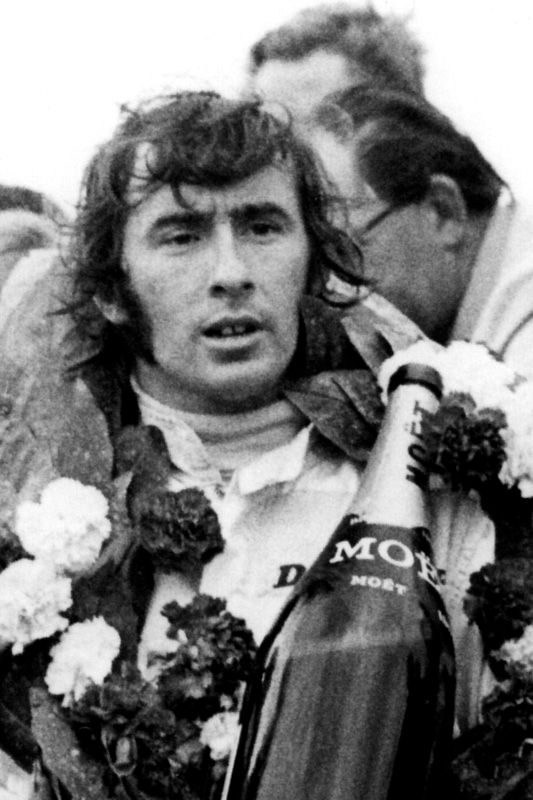
“I have corporate relationships,” replies Stewart, and I’m hoping at this point that his ride into Buckinghamshire will still allow enough time for us to talk on, and it seems it will. “Obviously,” he says, “I was forty years with Ford. I have been spraying Champagne since ’69, so I’ve been forty-two years of being under contract with Moët et Chandon. I’m still with Rolex, and I’m going to the Daytona Twenty-Four Hour race in January with them. But I am also with a company called Genii Capital, you know, it’s like you polish the lantern and the genie comes out! It’s a Luxemburg-based company. They specialize in investing in high technology start-up, and they brought me in because they own what is called the Lotus Renault Team, and in 2012 it will be simply Lotus F1—two young men, one thirty-nine, one forty-three, very successful businessmen, and they are using Formula One as a marketing tool because they are really global players and are bringing clients and partners from every corner of the world, whether it’s Latin America, Asia-Pacific, Europe, North America, etcetera. So I’m doing what I was doing whether it was with HSBC or whether it was the Royal Bank of Scotland, or whether it was the Ford Motor Company. I’m involved in their strategy, and partially responsible for using motorsport in this way to create incremental business. And then, they’ve got corporate hospitality, sometimes at the very highest level—obviously chairmen, presidents, CEOs and sometimes senior politicians at the same level, prime ministers, or presidents of countries. And much more as well. So, I’m deeply involved in the sport still. I do between eight and ten Grand Prixs a year, and I’m right in the middle of it, really. I love the life. I still work as hard today as I’ve ever worked, but I enjoy it.”
I wonder, does Sir Jackie Stewart ever think about giving it up? Doing something else?
“No. No, I’m just in the middle of negotiating a new contract even today. No, I enjoy it. I enjoy it very much.”
And, if we have time, and we apparently do—what about the Formula One drivers today? What about Kimi Räikkönen and his return to Formula One in 2012?
“Kimi, I think, will come back well,” responds Stewart. “I mean, we’ll only know that after the second or third race, maybe, but I think he’s the type of driver who will plug back into F1. He’s just a racer. I think he will plug in quite well. I think many people will be quite surprised, and I certainly hope so.”
And what about Sebastian Vettel? How is he?
“Terrific,” enthuses Stewart. “He’s the most mature twenty-four year old I have ever seen in auto racing. So well balanced, and he’s a proper thinker, and goes about his business correctly.”
Jenson Button?
“Very smooth. Good mind management. Never over-drives. Really gets the job done.”
Lewis Hamilton?
“Lewis is probably the fastest driver out there, but sometimes doesn’t have the mind management, and clearly in 2011 was an example of that. Too many incidents. Not just with Massa, but with other people, and putting himself in a position where other people could negatively effect him—even if it wasn’t his fault, it was his fault for being there. Another driver with a little more vision would not have been where he was when the incident occurred. I don’t know whether it’s his lifestyle, or if it’s his focus, or his commitment. He’s made a lot of money. He’s become a real personality in his own right, so sometimes these things can be distracting. He’s got the skills. If he can just keep his head together he’ll be successful again.”
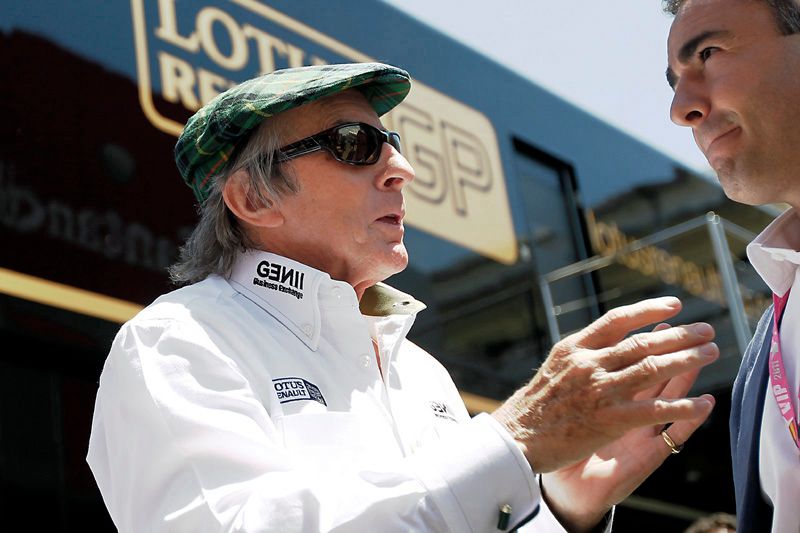
I say to Stewart that it must be so gratifying for him to continue in this Formula One picture and to keep that vital part of it going.
“I’m really lucky and feel very fortunate,” he answers, “and I have wonderful commercial relationships and I still love the sport, and I’ve got a lot of friends in there.”
I’ll always remember Stewart flashing by during a Grand Prix in his Tyrrell and him, at the wheel, noticing that IMG’s Jay Michaels was talking to someone on the sidelines, and Stewart being conscious of this and also curious, and to have the facility to do that while driving past Jay at full tilt, 160 or so miles an hour!
“I remember it,” says Stewart, and he pauses to bring to mind an observation so perfectly his: “The consumption of a top racing driver is fantastic, the consumption of information you get. You see people, just as you describe, you see photographers, you see someone opening an umbrella in a grandstand with ten thousand people in it. You pick it out, because it’s important. Your peripheral visions are very good and the consumption of information is fast and you can decipher it quickly. That’s one of the things I wouldn’t be able to do at this age. The eye consumption of information, the processing of it, and it spitting itself back out for you to clearly identify what you had seen and what you are going to do about it. I mean, that’s when you are at the height of your profession.”
It seems that’s it, he’s said it all, it’s time to stop—until I mention again that my interview with him will be on Sports Car Digest’s website. And he reminds me of what I already know from having worked with him in the past.
“I have dyslexia,” Stewart says. “I don’t use websites, and I’m not computer literate. I can’t even do emails. You know, I can’t find my name on a keyboard. I don’t know the alphabet or the words of my national anthem. Being dyslexic is very serious, but what it does do, you think out of the box a lot. You learn to do things that other people never thought about doing. In that respect it’s actually sometimes quite productive.”
Closing this interview comes spontaneously, saying to my friend: “And so many of the things that you do are done no better than by Sir Jackie Stewart.”
He laughs. “Well, I don’t know about that. But listen, Bill,” he says, “I’m going to slip away if you don’t mind. I’ve got to catch up on one more call while I’m in the car.”
That “one more call” is so typical of this man driven by his passion to involve, to think so far beyond words he can barely read. In doing media, never show him a cue card or a teleprompter, but engage him in a conversation and he will absolutely astound with his knowledge and perceptions no matter what the subject. He’s an amazement.
Harking back to 1974 and Practice Day at Brand Hatch on page 1 here, I need to say this: Everywhere the Wee Scot and I went that Friday of the British Grand Prix was as if I was walking next to a giant. The three-times World Champion was the target for every autograph seeker, every opportune handshake, every prospect for a smile and comment—and it’s still that way with Sir Jackie, everywhere he goes.
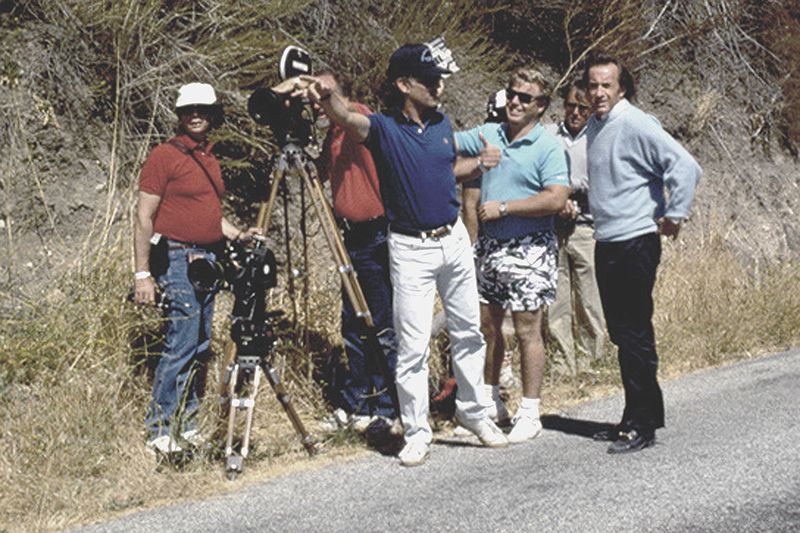
We got the film work with him done that day at Brands Hatch for the half-hour documentary I was doing for IMG called The Days of the Champions—visiting up-close with three top IMG clients: Jackie Stewart, Arnold Palmer and Jean-Claude Killy. And there was more, meaning welcome leisure time in the race paddock with Lord Hesketh’s team and his race driver James Hunt. And there was Stewart’s wife, Helen, and the young Stewart boys—Paul at age 11, and 6-year old Mark. And fresh lobster on the grill, a Hesketh touch while others cooked chicken. And the drivers drove the cars out onto the course in their mid-‘70s garb and livery and it was all like a dream that can be brought back whenever I wish.
Thank you, Jackie. And thanks, readers, for being here.
[Source: William Edgar; photos: William Edgar, Sir Jackie Stewart Collection and Autosports Marketing Associates]