

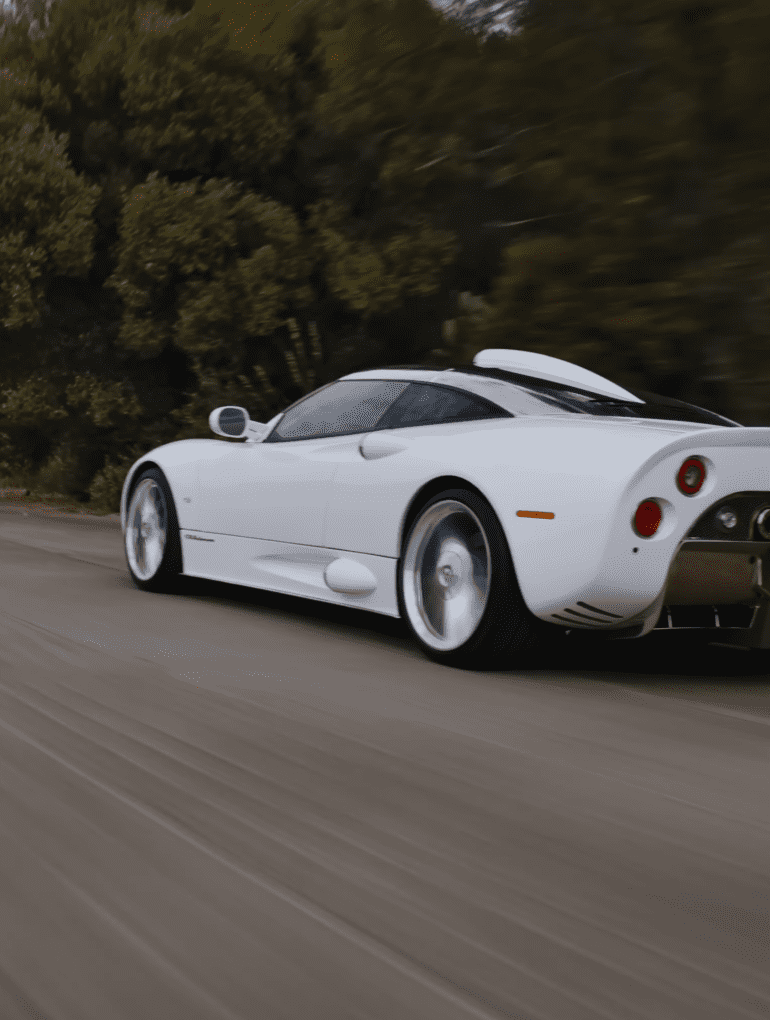

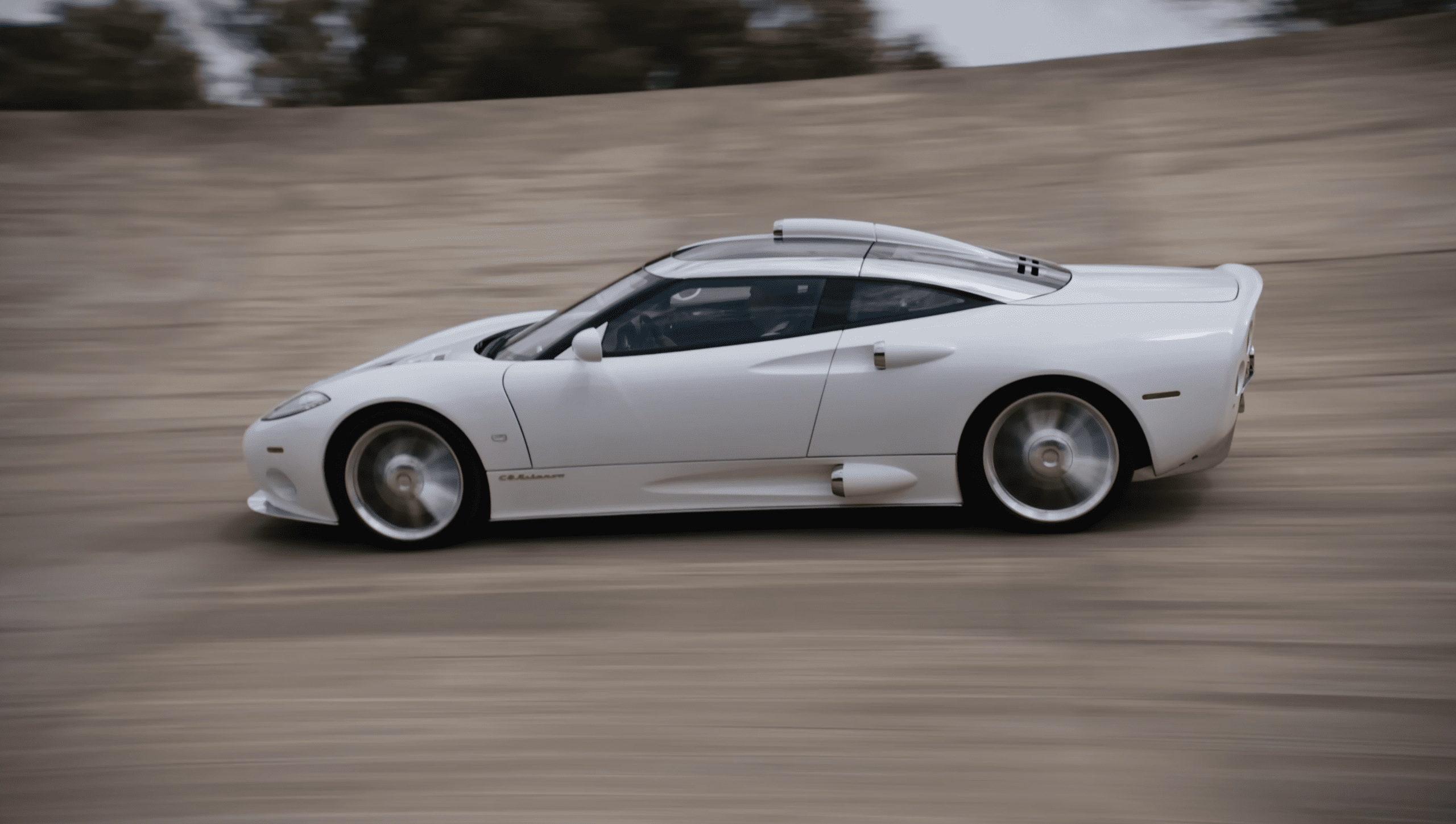
An hour or so south of Barcelona, past the beach town of Sitges, a concrete bowl sits out in vineyard country. It opened in 1923 as the Autòdrom de Sitges-Terramar and was dead within a couple of years, then spent the next century slowly coming apart while racing forgot about it. Locals call it the ghost of motorsport. Dramatic, sure, but stand on the banking and the name fits. This year the ghost got company. A white Spyker C8 Aileron, the only white one ever made, came down to run laps for the first English-language film from WBT Garage.
A Wall Built in 1923
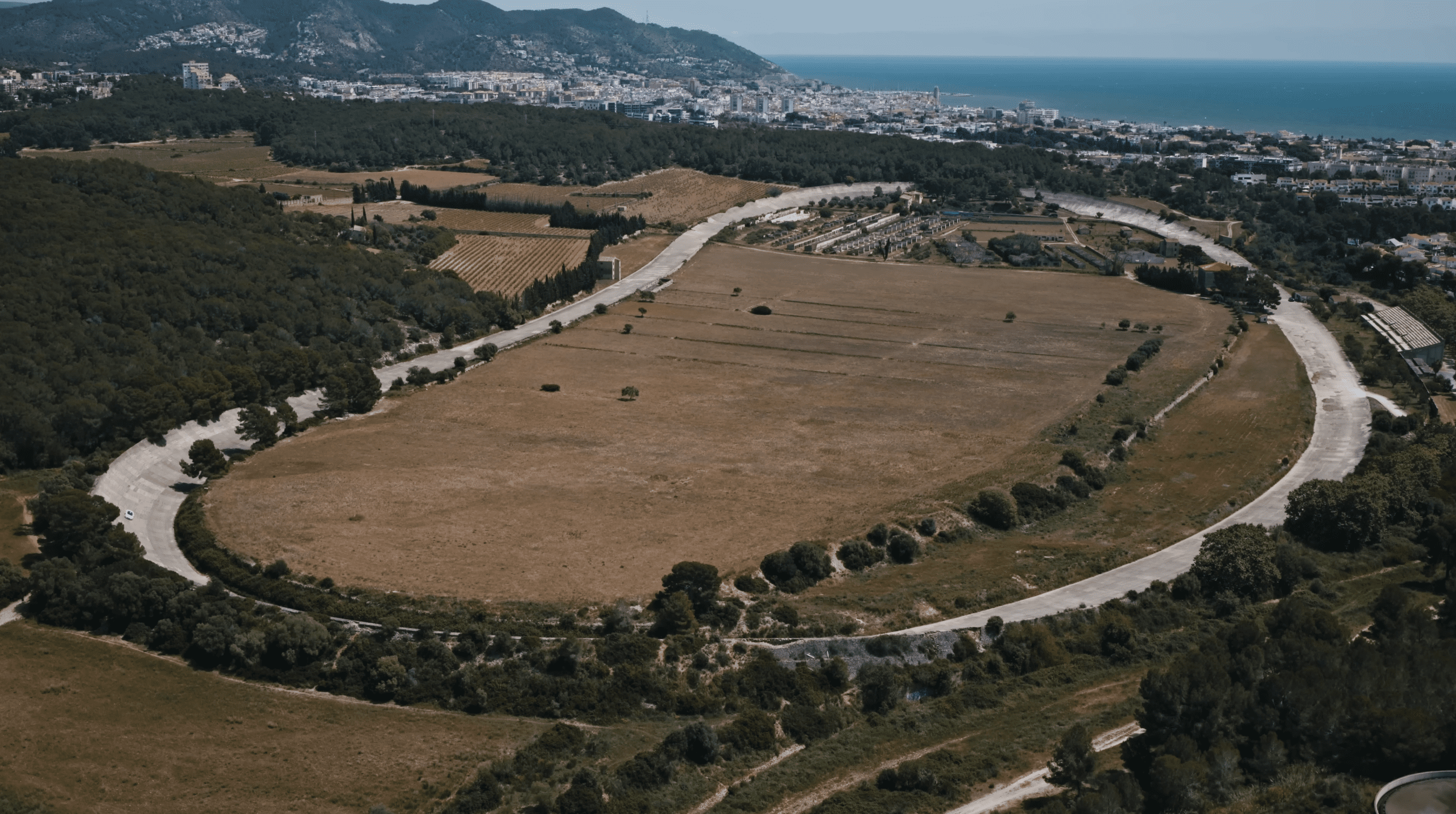
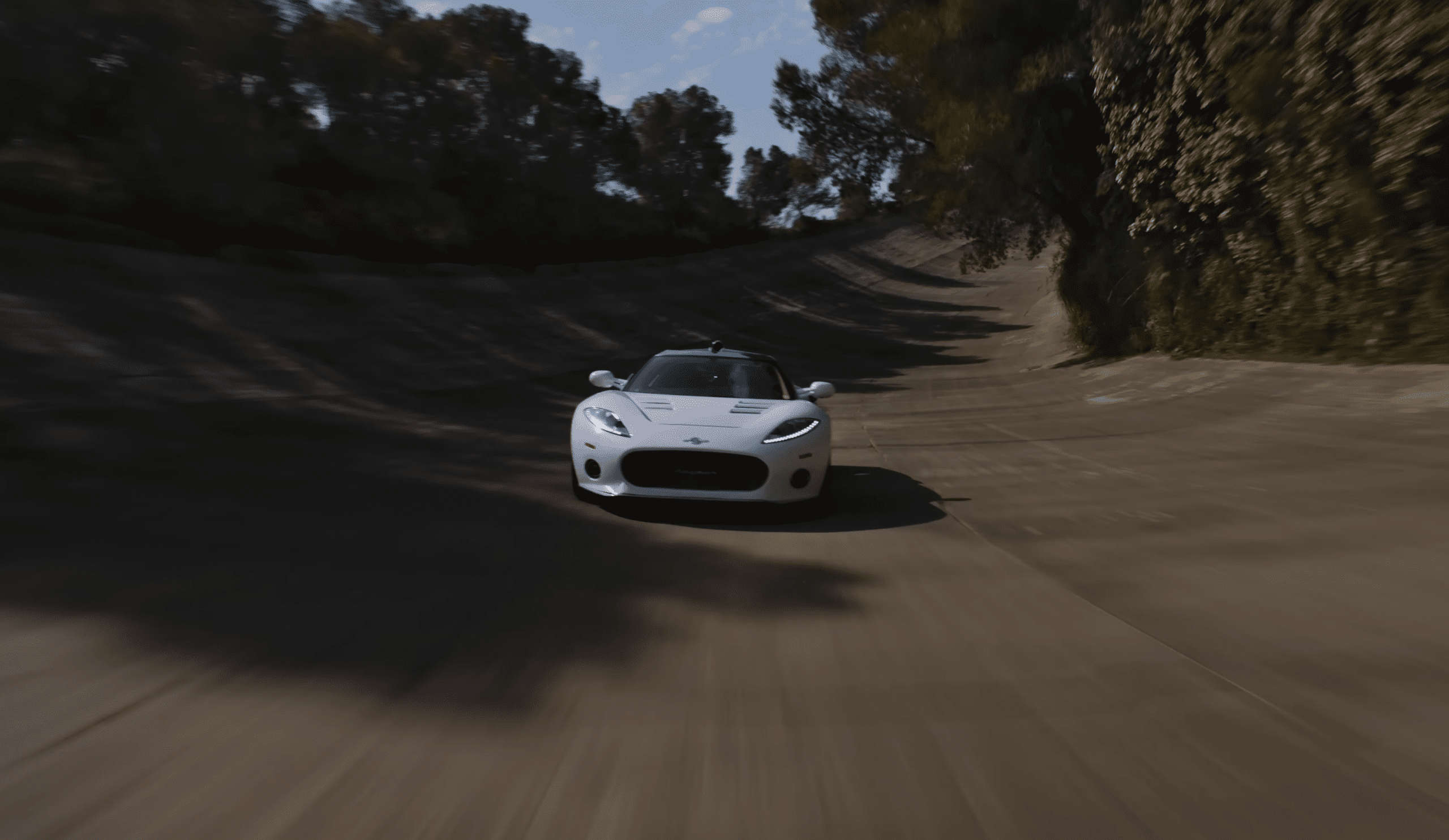
The numbers on this track are outstanding. In October 1923 Europe had two other purpose-built circuits, Brooklands and Monza. Terramar’s corners bank to 66 degrees. Daytona sits around 31 and NASCAR drivers consider that serious banking. Drivers back then said it was like running a car along a wall. Rock face on the inside of the banking, a drop on the outside.
Unfortunately it never had a chance, financially. The organizers stiffed the winners at the very first event, the 1923 Spanish Grand Prix, and that was basically the end of international racing at Terramar. So the film WBT Garage shot here isn’t a review since there are no lap times in it, nobody hands down a verdict at the end. It’s about two survivors, one day, with the same broken concrete.
A Carmaker That Refused to Die
People assume Spyker is a 2000s brand, but that’s far from the truth. The Spyker brothers, Jacobus and Hendrik-Jan, were building horse-drawn carriages in the Netherlands in the 1880s, and the gold-leafed Golden Coach they delivered in 1898 carried Dutch monarchs for over a hundred years. Cars came before Ford Motor Company existed.
Then World War I killed the luxury car market and the company switched to aircraft. The planes didn’t save the business, by the late 1920s it was over, but they marked the brand for good. Everything Spyker built afterward kept pointing back at aviation.
Afterward it took seventy years to arrive. Victor Muller and engineer Maarten de Bruijn brought the name back in the late 1990s with a plan that should not have worked: build a tiny number of aluminum sports cars by hand, fill them with cockpit references, and sell them to people who wanted a guarantee Ferrari couldn’t print, that you will never pull up next to another one. The revived company raced Le Mans, ran a real Formula 1 team in 2006 and 2007, then bought Saab. The Saab deal buried them, so they closed again around 2015.
The Aileron, Spyker at Its Peak
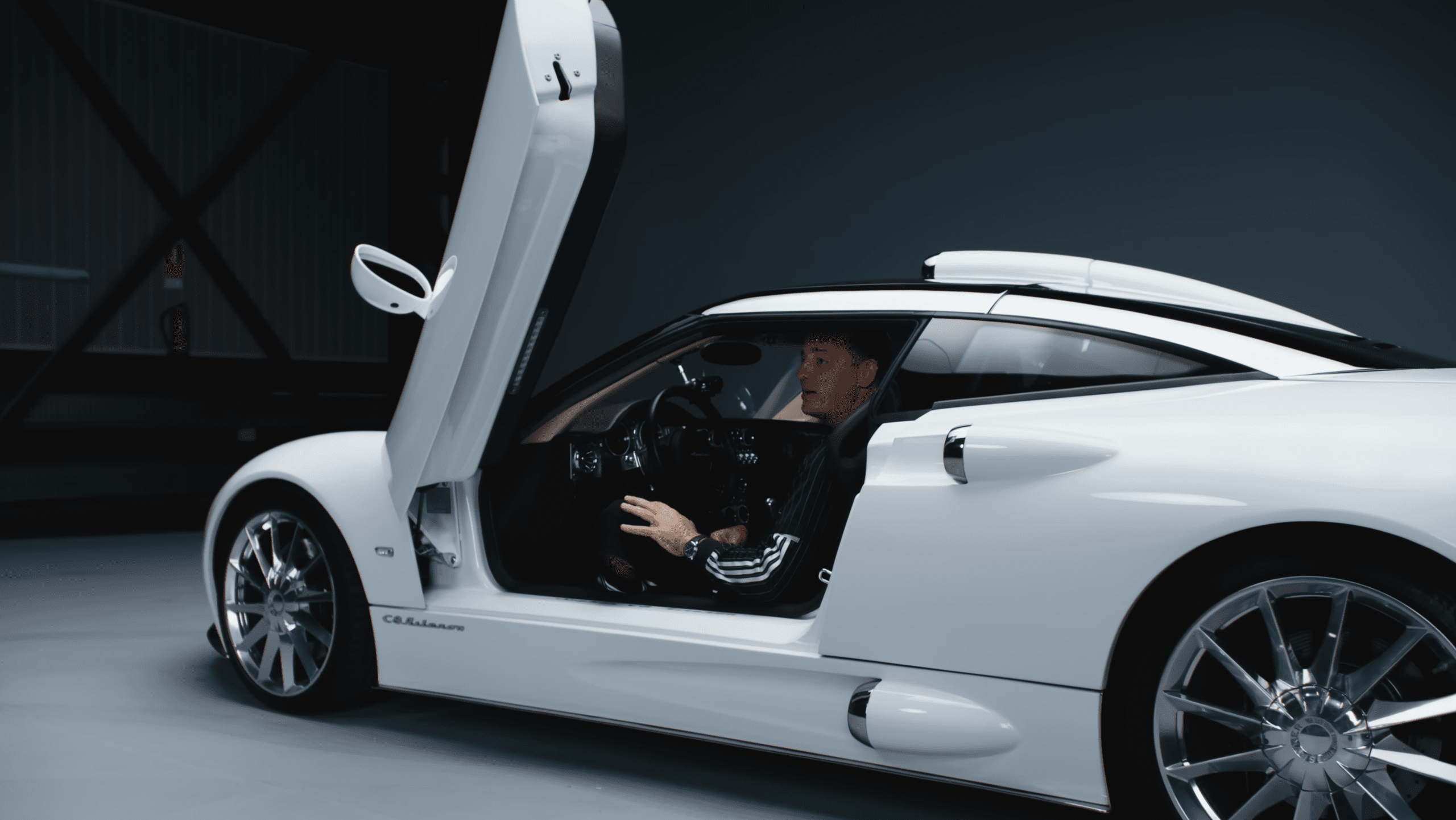
The 2009 C8 Aileron is the high point of the whole revival, and the logic of the car was weirdly sensible for something this exotic. Underneath you’ll find Audi’s 4.2-liter V8, a gearbox that wouldn’t grenade, and platforms the engineers knew cold. All the insanity went where you could see it instead. Hand-formed aluminum outside, and toggle switches, a red flip cover over the starter button, and paddle shifters machined into little propellers inside. It’s basically more 1940s aircraft than car. You could say the propellers aren’t decoration so much as a reflection about where the company’s heart stayed.
Louis Vuitton belongs in this story too. The trunk maker and the carriage builder did business on and off for more than a century, and even the modern Spykers got their own fitted luggage. Two old houses still nodding at each other across a hundred years
One Owner, One White Car
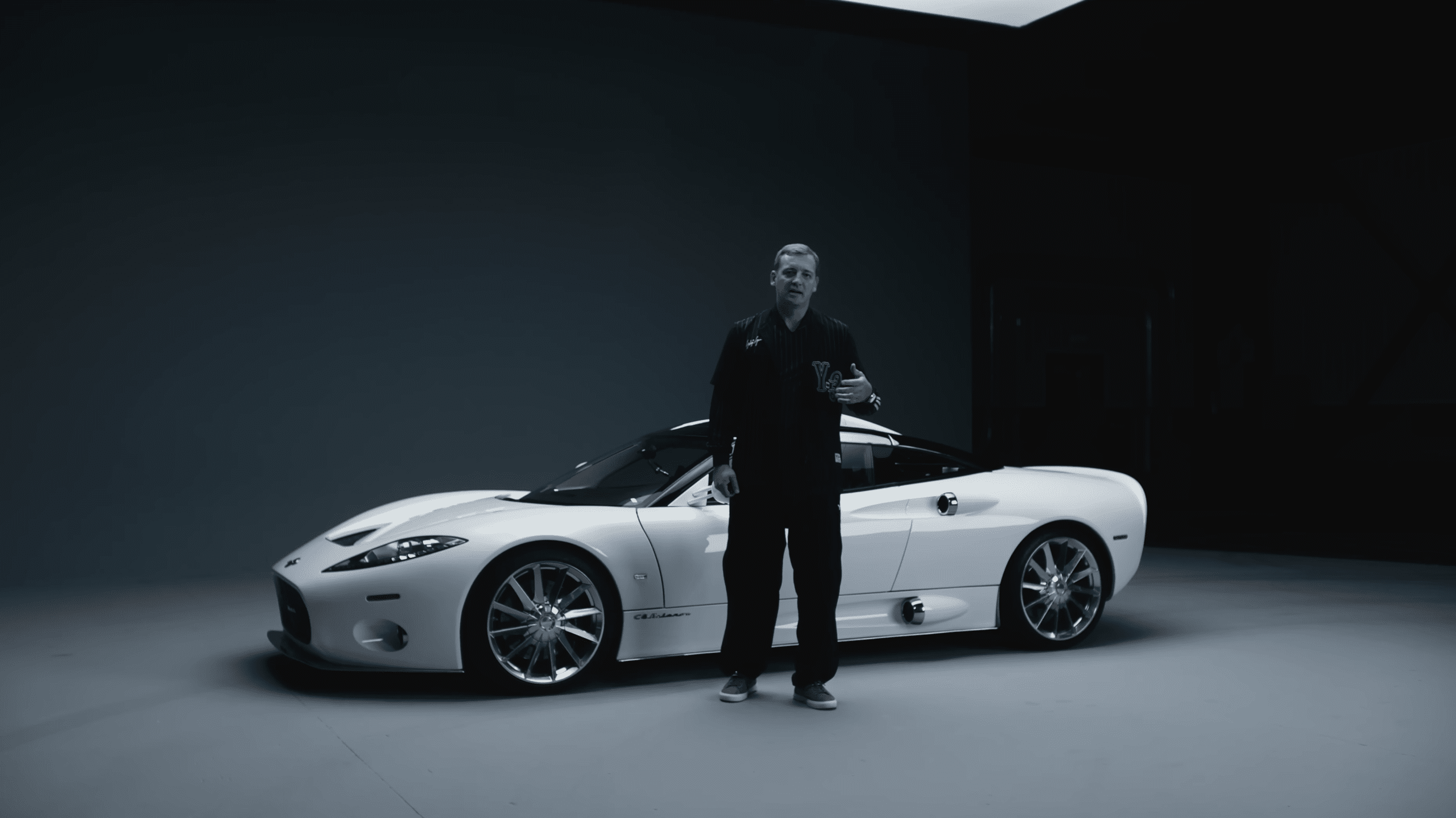
Here’s the detail that changes the film: the host owns the car. He mentions at one point that the cabin still smells like new leather, 16 years on, and from an owner that’s not a press-kit line, it’s just something he’s noticed at home. Years before buying it he had a 1:18 model of an Aileron sitting on a shelf. Collectors will know exactly what that shelf means. You live with the idea of the car long before the car shows up.
On Terramar’s surface, which is genuinely rough, the Spyker apparently holds together beautifully. No carbon-ceramic brakes, no adaptive suspension and hardly any electronics standing between driver and pavement. He says it’s precise enough for the banking and comfortable enough that he’d drive it to get groceries. So you get a one-of-one, hand-built supercar climbing a 66-degree wall that was poured during the Coolidge administration. The car was built to be driven and the film takes that seriously, rarity be damned.
Cinematic Storytelling Over Spec Sheets
The project is the international expansion of a Ukrainian automotive channel with millions of views behind it, founded by entrepreneur and collector Volodymyr Nosov, now pushing into English-language content for American audiences. Rare vehicles, private collections, analog engineering. The access comes from inside the collector world rather than from a press fleet, which is a different thing than it sounds like; press cars come with minders and talking points, other collectors’ garages don’t.
Starting with a Spyker was a choice considering hypercars update themselves overnight now, like phones. A machine this mechanical, this committed to a purer driving experience reads like a “subversive” way of thinking about sports cars in the era of software-driven automobiles.
Spyker’s Third Act
Spyker is currently attempting comeback number three. A new C8 Preliator is scheduled to appear at The Quail during Monterey Car Week in August, twin-turbo V8, roughly 800 horsepower, and no electrification whatsoever. Nobody can say if it’ll stick this time but the brand has been declared dead twice and both times the obituary turned out to be premature. I think Terramar would understand. A hundred years of silence, then something loud and white on the wall again. Neither one looked much like a ghost on film.