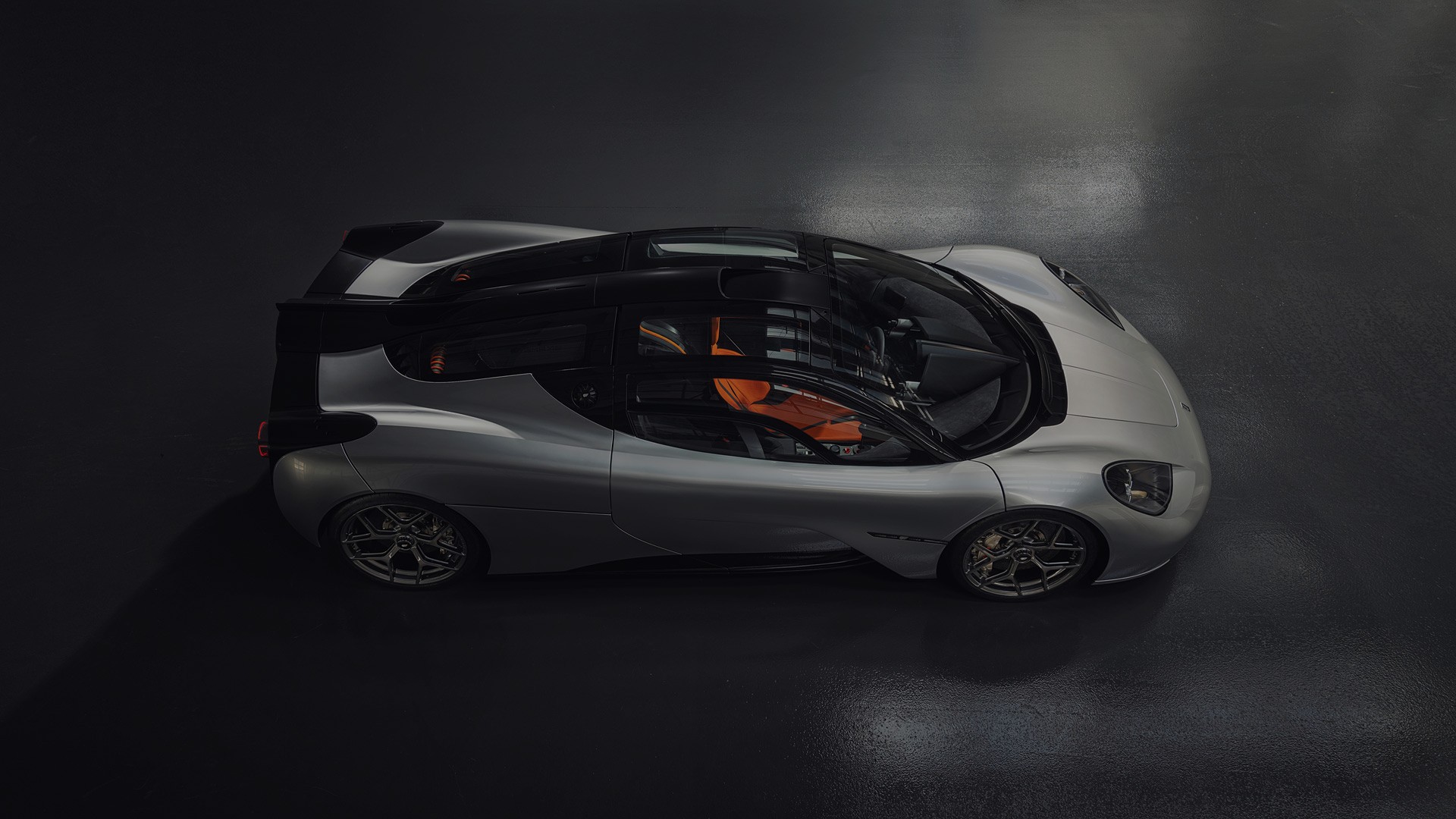

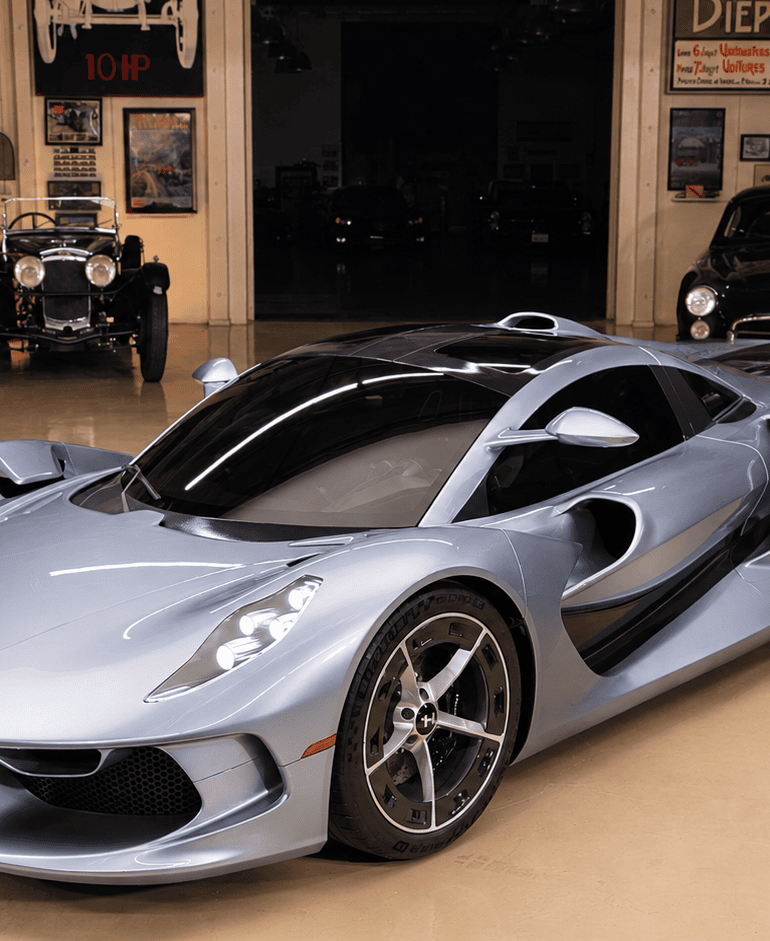
Hennessey Performance is taking a different approach to the modern hypercar with the Blackbird, a limited-production model that prioritizes driver engagement and mechanical simplicity over outright horsepower. Previewed by Jay Leno on Jay Leno’s Garage, the Blackbird represents a departure from the company’s Venom F5, which produces more than 2,000 horsepower.
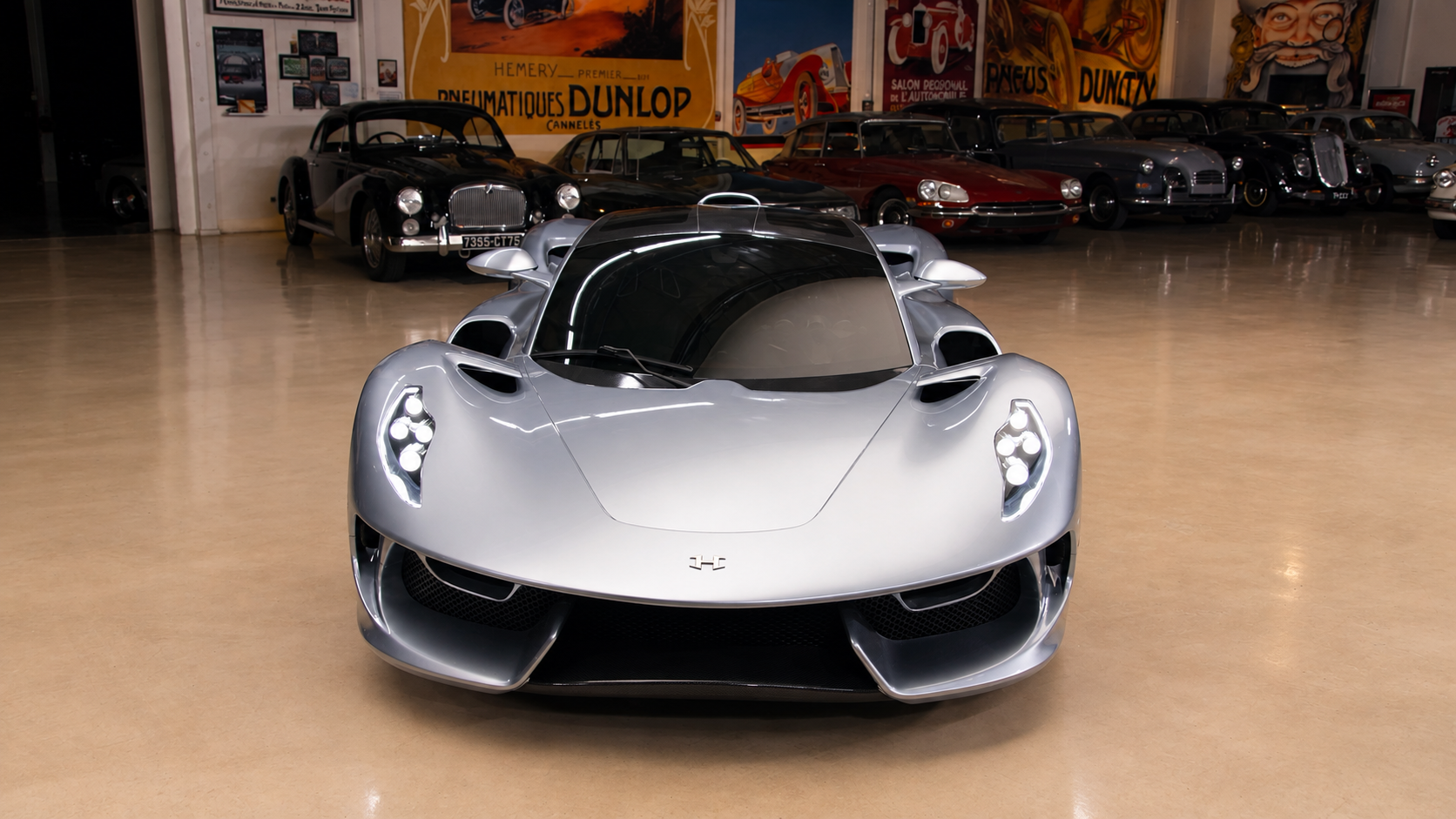
John Hennessey began modifying performance cars in 1993, building a reputation for extracting greater performance from vehicles such as the Dodge Viper. More than three decades later, his company is developing a hypercar that returns to a traditional formula: naturally aspirated power, rear-wheel drive, and a manual transmission. Production will be limited to 71 examples, reflecting the aircraft that inspired its name.
Naturally Aspirated V8 and Manual Transmission
The Blackbird features a newly developed 6.2-liter, dual-overhead-camshaft V8 engineered in collaboration with Ilmor. Target output is approximately 800 to 850 horsepower, with the engine designed to rev beyond 9,000 rpm. Hennessey claims it will be the most powerful naturally aspirated V8 ever installed in a production road car.
Power reaches the rear wheels through a six-speed manual transmission with a gated shifter. There are no turbochargers, superchargers, or hybrid systems. Instead, the combination emphasizes throttle response, engine sound, and direct driver involvement, offering a contrasting philosophy to the electrified, high-output powertrains increasingly common among modern hypercars.
Aviation-Inspired Design
Designed under the direction of Hennessey head of design Nathan Malinick, the Blackbird draws heavily from the Lockheed SR-71 reconnaissance aircraft. Its distinctive side-pod inlets and sharp body crease reference the aircraft’s chine line, while the diamond-shaped headlights take inspiration from the exhaust configuration of Chuck Yeager’s Bell X-1.
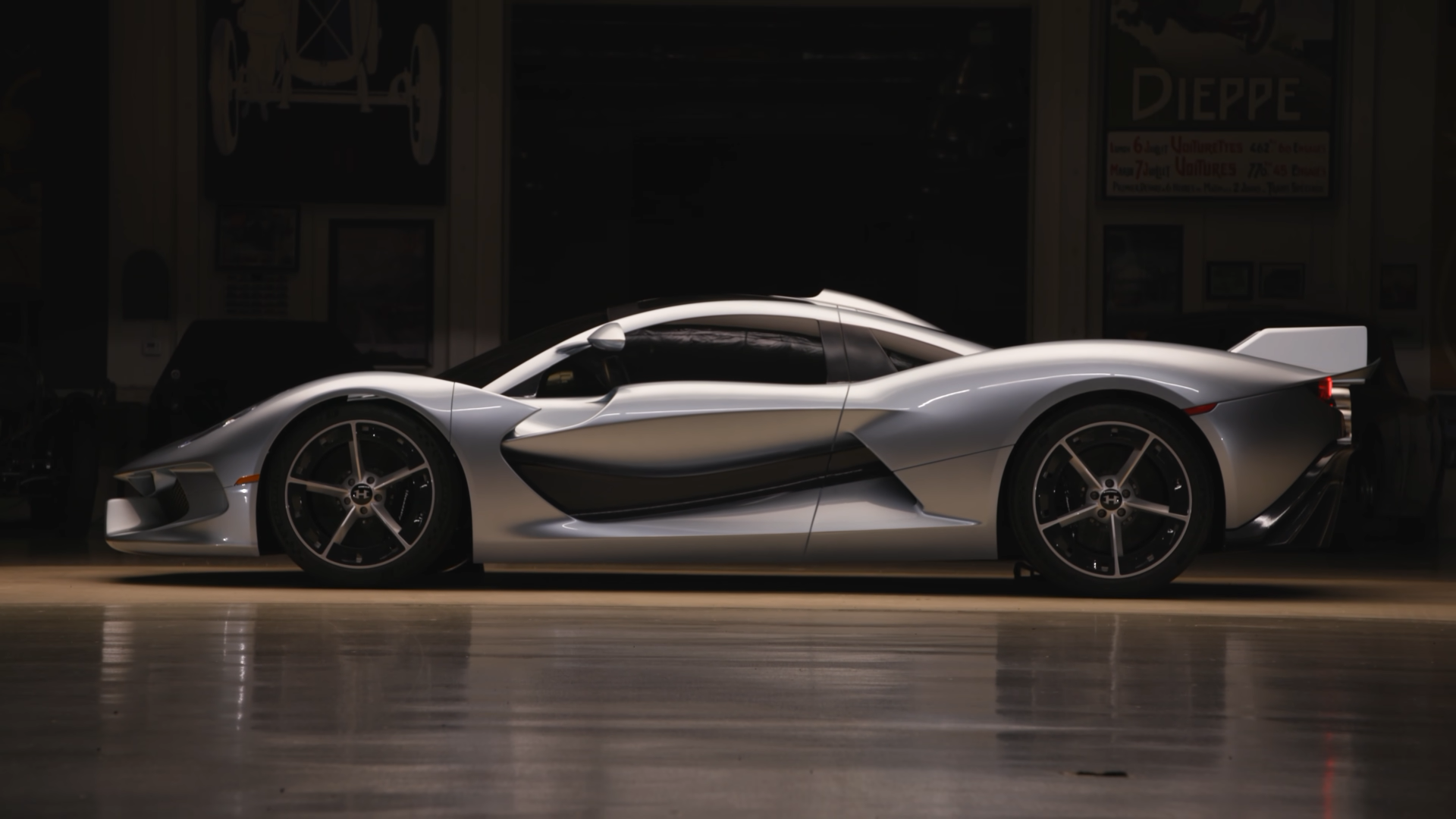
At the rear, the taillights evoke the SR-71’s afterburners, while active vertical stabilizers rise from the split-tail assembly. These elements contribute to the car’s distinctive profile while serving aerodynamic and heat-management functions. A substantial rear diffuser also generates downforce, and the forward-positioned side inlets are designed to capture relatively undisturbed airflow.
Carbon-Fiber Construction and Practicality
The Blackbird is being developed around an all-new carbon-fiber monocoque, complemented by Brembo carbon-ceramic brakes with six-piston front and four-piston rear calipers. Its 20-inch front and 21-inch rear wheels are fitted with Michelin Pilot Sport Cup 2 tires.
Despite its performance focus, the cabin rejects conventional infotainment screens in favor of a more traditional layout. An analog oil-pressure gauge and a whiskey compass occupy the center stack, while the required reversing camera is concealed within the rearview mirror.
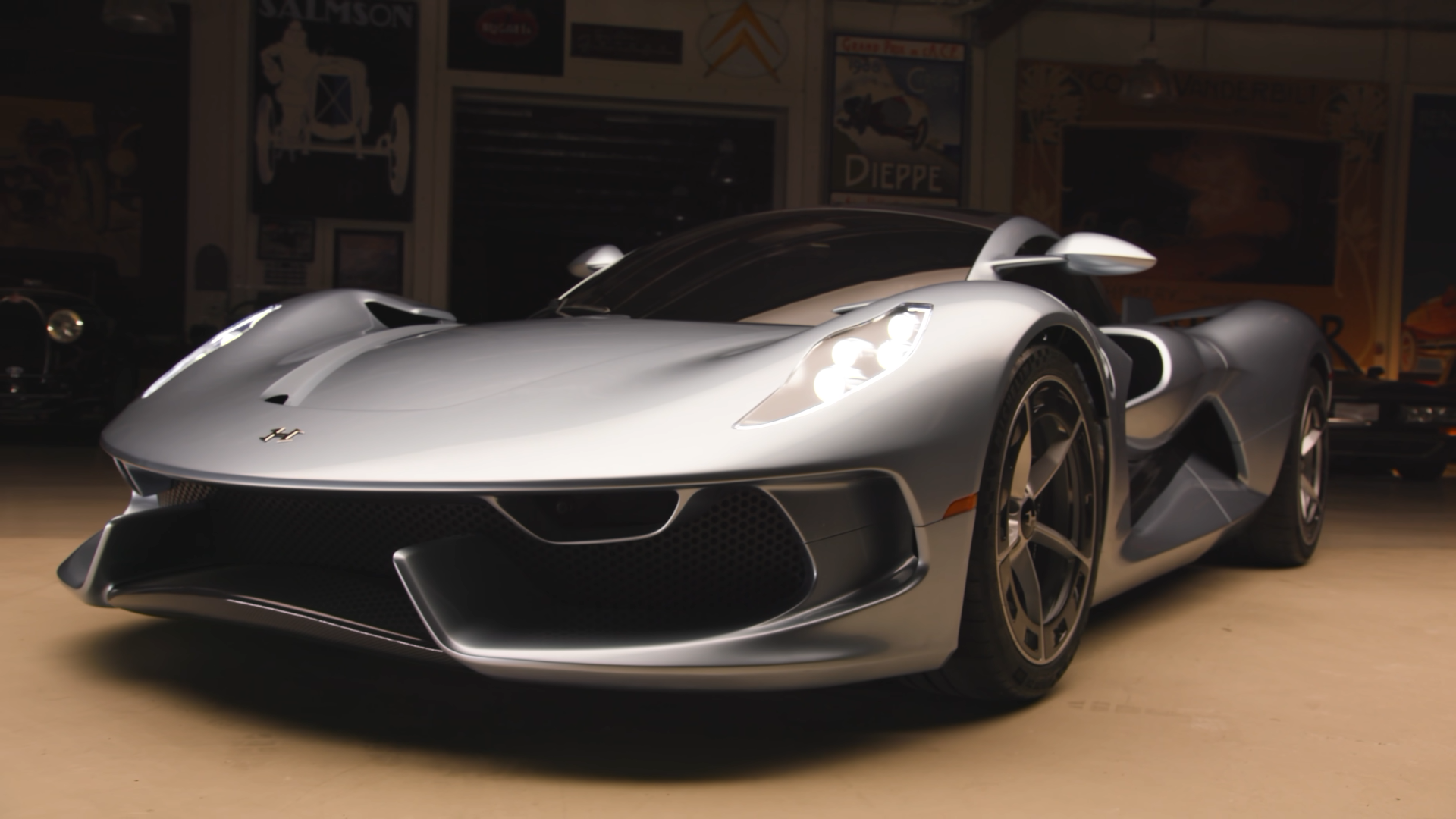
Practicality also influenced the design. The front luggage compartment accommodates two full-size carry-on bags, with additional storage behind the seats and inside the rear quarter panels. Production models are expected to feature gullwing doors.
The vehicle shown to Leno remains a proof of concept, with experimental prototypes planned ahead of further development. Final specifications and performance figures have yet to be confirmed. With its high-revving V8, gated manual transmission, and aviation-inspired engineering, the Hennessey Blackbird offers a distinctive alternative to the increasingly electrified hypercar segment.
Source: Jay Leno’s Garage