
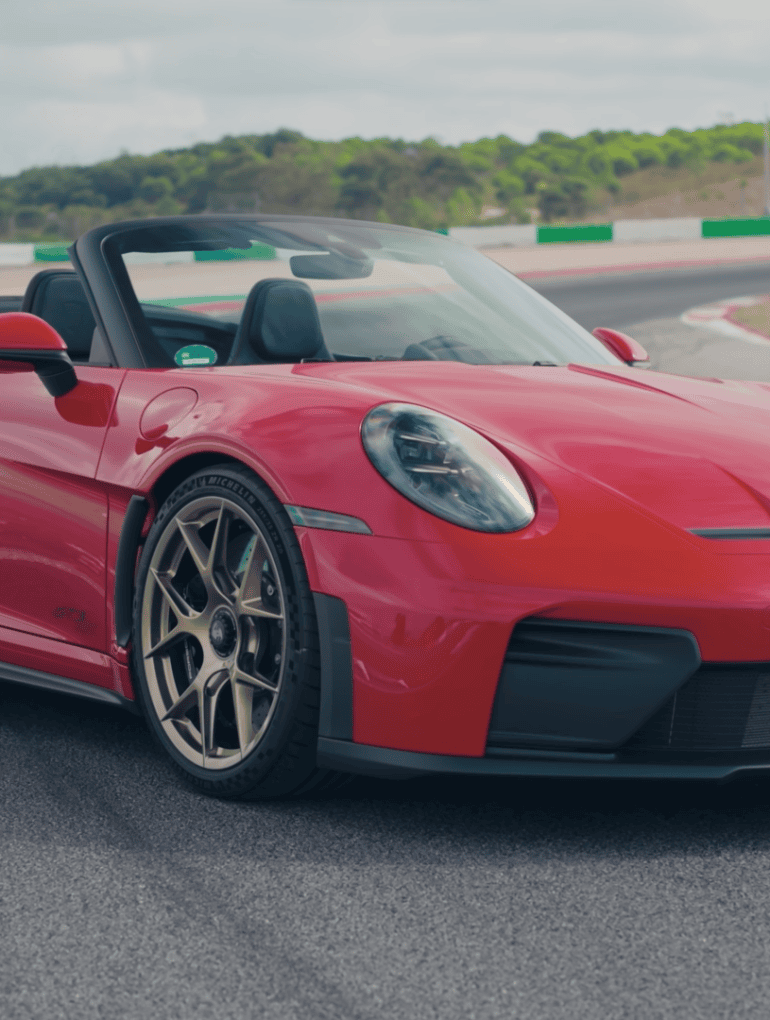
Porsche’s 911 GT3 has traditionally represented an uncompromising approach to performance, combining motorsport-derived chassis engineering with a naturally aspirated engine, precise aerodynamics, and an obsessive focus on driver involvement. The new 911 GT3 S/C challenges that formula by transplanting the GT3’s mechanical package into an open-top Cabriolet body.
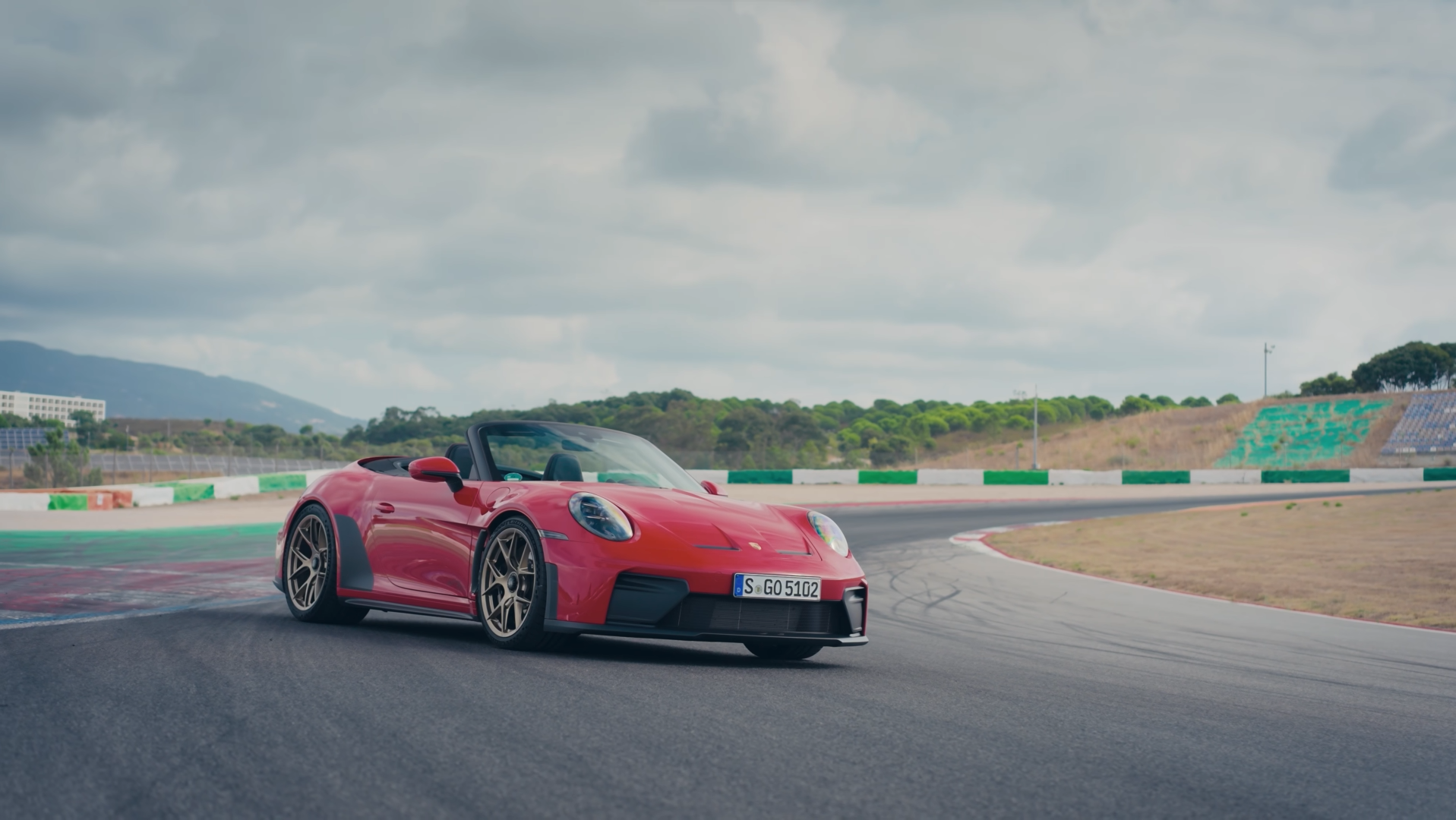
At its core, the S/C retains the defining ingredients of the GT3. Power comes from Porsche’s naturally aspirated 4.0-liter flat-six, producing 503 horsepower and revving to an extraordinary 9,000 rpm. A six-speed manual transmission sends power exclusively to the rear wheels, while flat-shift capability allows rapid upshifts without lifting off the throttle. The result remains unmistakably GT3 in character: immediate responses, a broad usable performance envelope, and an engine that rewards drivers who explore its upper rev range.
Porsche has also gone to considerable lengths to offset the compromises inherent in removing the fixed roof. Carbon fiber is used extensively, including the hood and front fenders, while the doors and lightweight door panels borrow components from the 911 S/T. Magnesium wheels further reduce unsprung mass, and carbon-ceramic brakes are standard. The rear anti-roll bars, drop links, and structural shear panel are also constructed from carbon fiber.
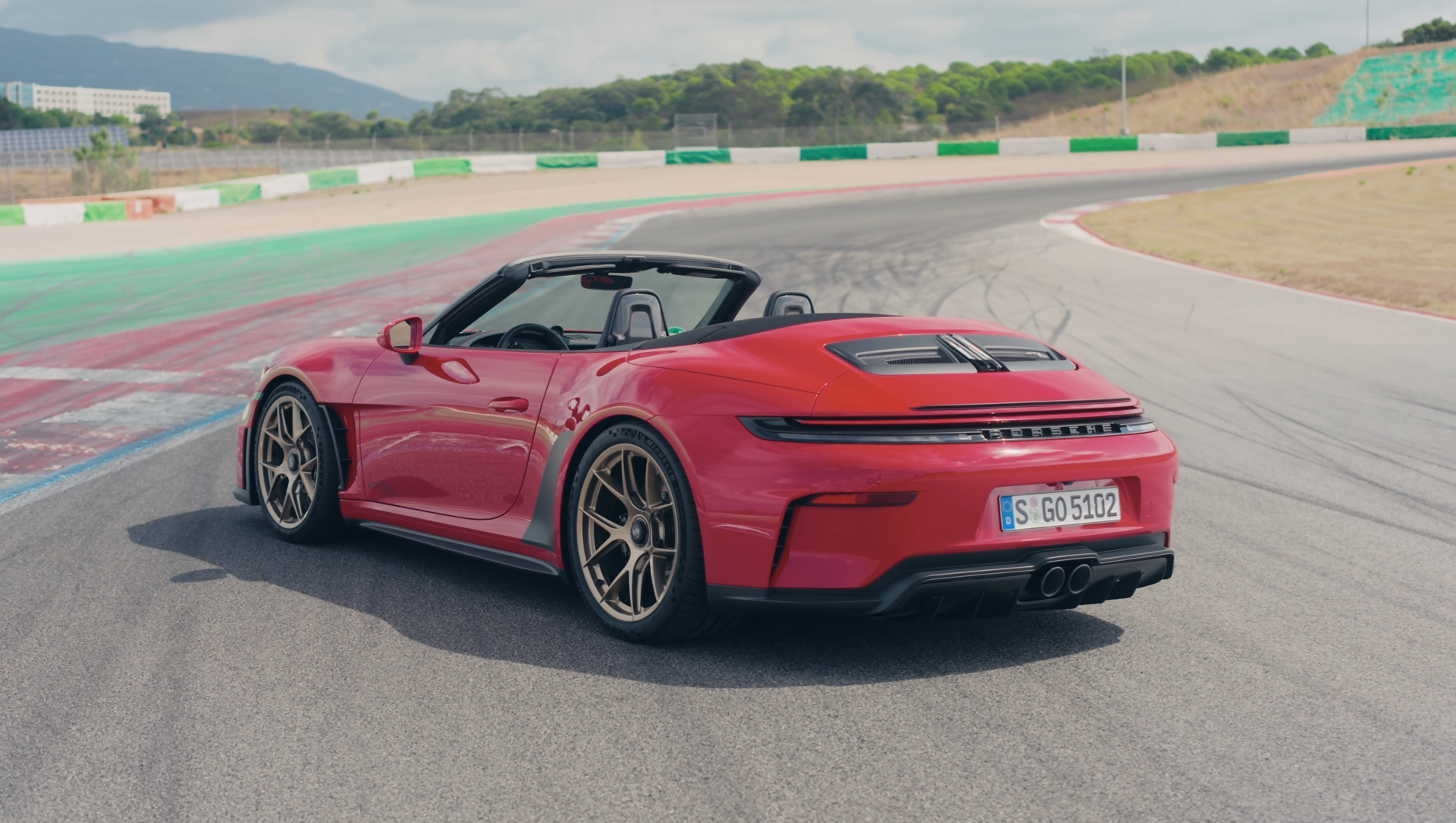
Nevertheless, the S/C weighs approximately 1,497 kilograms, around 70 kilograms more than the equivalent GT3 coupe. Its fully electric fabric roof adds mass while the open structure inevitably reduces torsional rigidity. Porsche has consequently calibrated the chassis to accommodate these changes, producing a car that feels subtly less immediate than the coupe under hard track driving.
At Portimão, the distinction becomes apparent. The steering remains exceptionally precise and the chassis retains the GT3’s remarkable balance, composure, and ability to absorb curbs. Yet there is a slight increase in latency and body movement, particularly when compared with the exceptionally sharp 992.2 GT3 coupe. The additional weight is noticeable, especially at the rear, while the softer structural character prevents the instantaneous responses associated with the fixed-roof car.
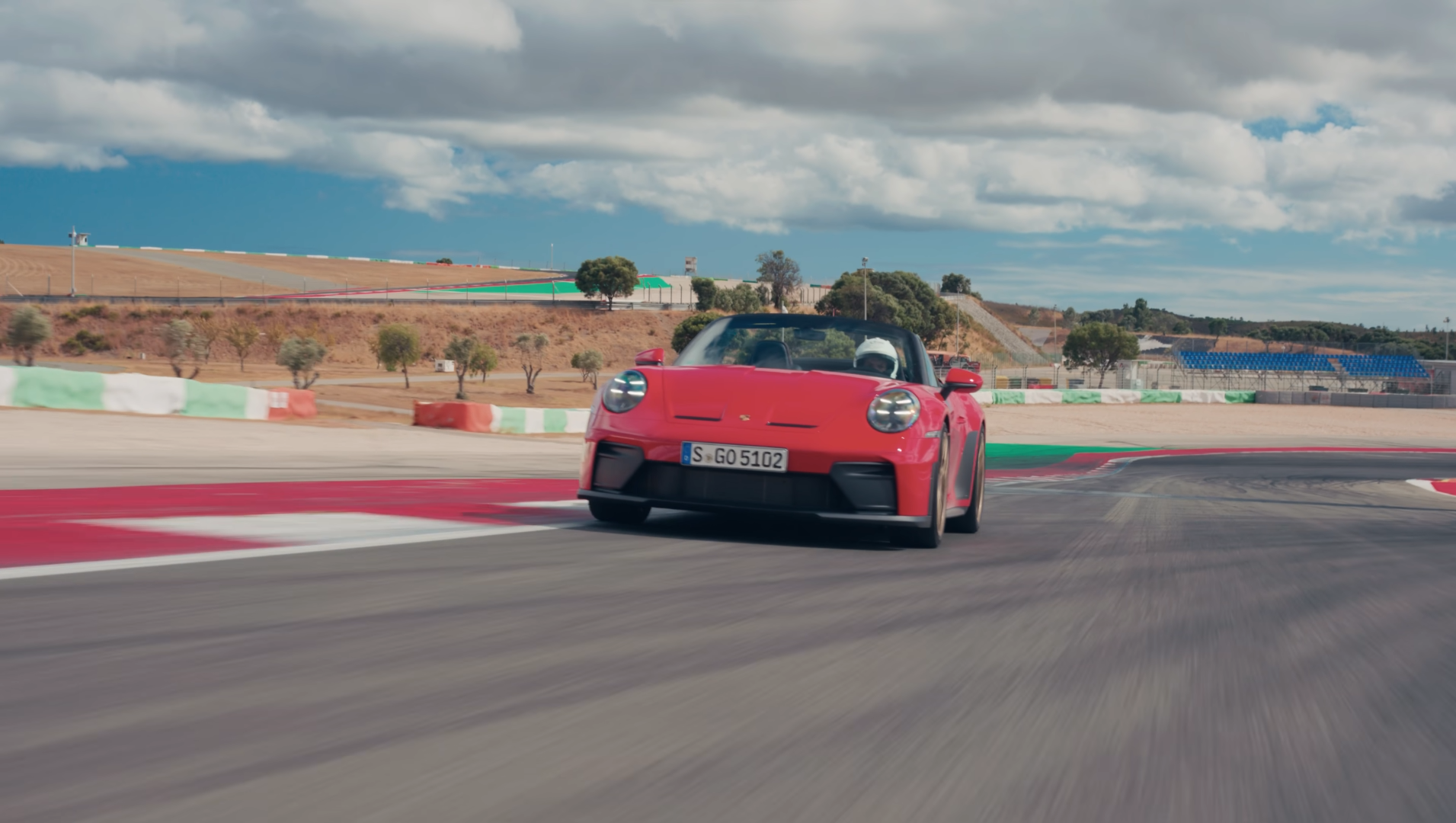
That does not make the S/C unsuccessful. Instead, Porsche has repositioned the GT3 concept toward open-air road driving rather than uncompromised circuit performance. With its roof lowered, naturally aspirated engine screaming toward 9,000 rpm, and manual transmission providing a direct mechanical connection, the S/C offers an unusually immersive way to experience the GT3 formula.
It may not be the definitive GT3 for track enthusiasts, but that was never really its purpose. The 911 GT3 S/C sacrifices some of the coupe’s precision to deliver something fundamentally different: a road-focused, open-top interpretation of one of Porsche’s most driver-centric sports cars.
Source: Top Gear