


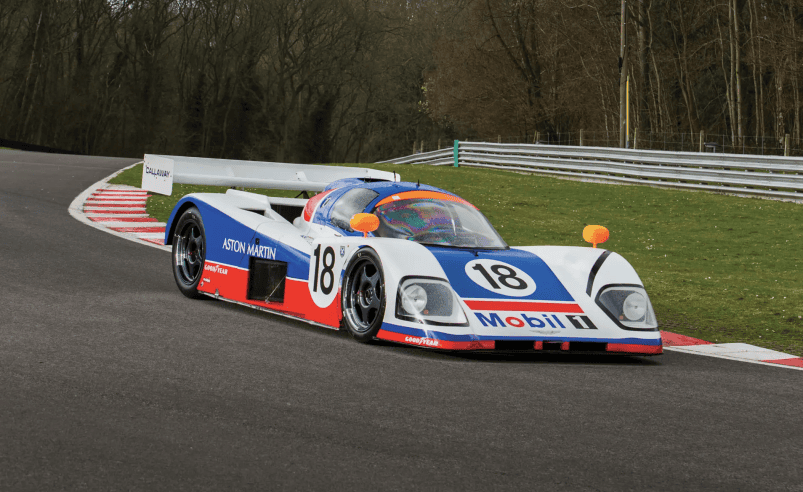
Dijon, May 1989. The Aston Martin AMR1 made its racing debut in the World Sports-Prototype Championship, marking Aston Martin’s return to factory-backed prototype racing for the first time since the early 1960s. Developed by Proteus Technology, a company formed by Aston Martin’s leadership with Scottish team Ecurie Ecosse, the AMR1 was a Group C prototype built around a carbon-Kevlar monocoque and an Aston Martin V8 enlarged to 6.0 liters by Callaway. It produced roughly 650 to 700 hp depending on specification. The AMR1 faced the turbocharged might of Sauber-Mercedes, Jaguar and Porsche in one of the most competitive eras in endurance racing, and although it never won a race, it finished 11th at Le Mans, took a memorable fourth place at Brands Hatch and helped Aston Martin finish sixth in the 1989 championship before the program ended in early 1990.
Background and Origins
Aston Martin’s connection with Group C began with the Nimrod, a Lola-based prototype powered by Aston Martin’s V8 and backed by chairman Victor Gauntlett and major shareholder Peter Livanos. Between 1982 and 1984, the Nimrod program achieved a seventh-place finish at Le Mans in 1982, with Ray Mallock, Simon Phillips and Mike Salmon driving the privately entered Downe car, and Mallock was closely involved in its development and engineering. Aston Martin later supplied engines to the EMKA team, but Gauntlett and Livanos wanted to go further and build a complete Aston Martin Le Mans contender in-house.
In late 1987, they formed Proteus Technology, known as Protech, with Ecurie Ecosse owner Hugh McCaig, whose team had won the C2 category of the 1986 World Sports-Prototype Championship. Richard Williams became managing director and team manager, Ray Mallock was engineering director, and Max Boxstrom, who had worked at McLaren and Brabham and helped develop Ecurie Ecosse’s championship-winning C2 prototype, was appointed lead designer. Livanos pledged £26 million to a five-year World Championship program. That same year, Ford acquired a 75 percent stake in Aston Martin, but according to Motor Sport’s contemporary reporting, Ford did not contribute financially to the racing program. Gauntlett made the team’s priority clear, saying he would rather win Le Mans and lose the championship than the other way around.
Design and Engineering
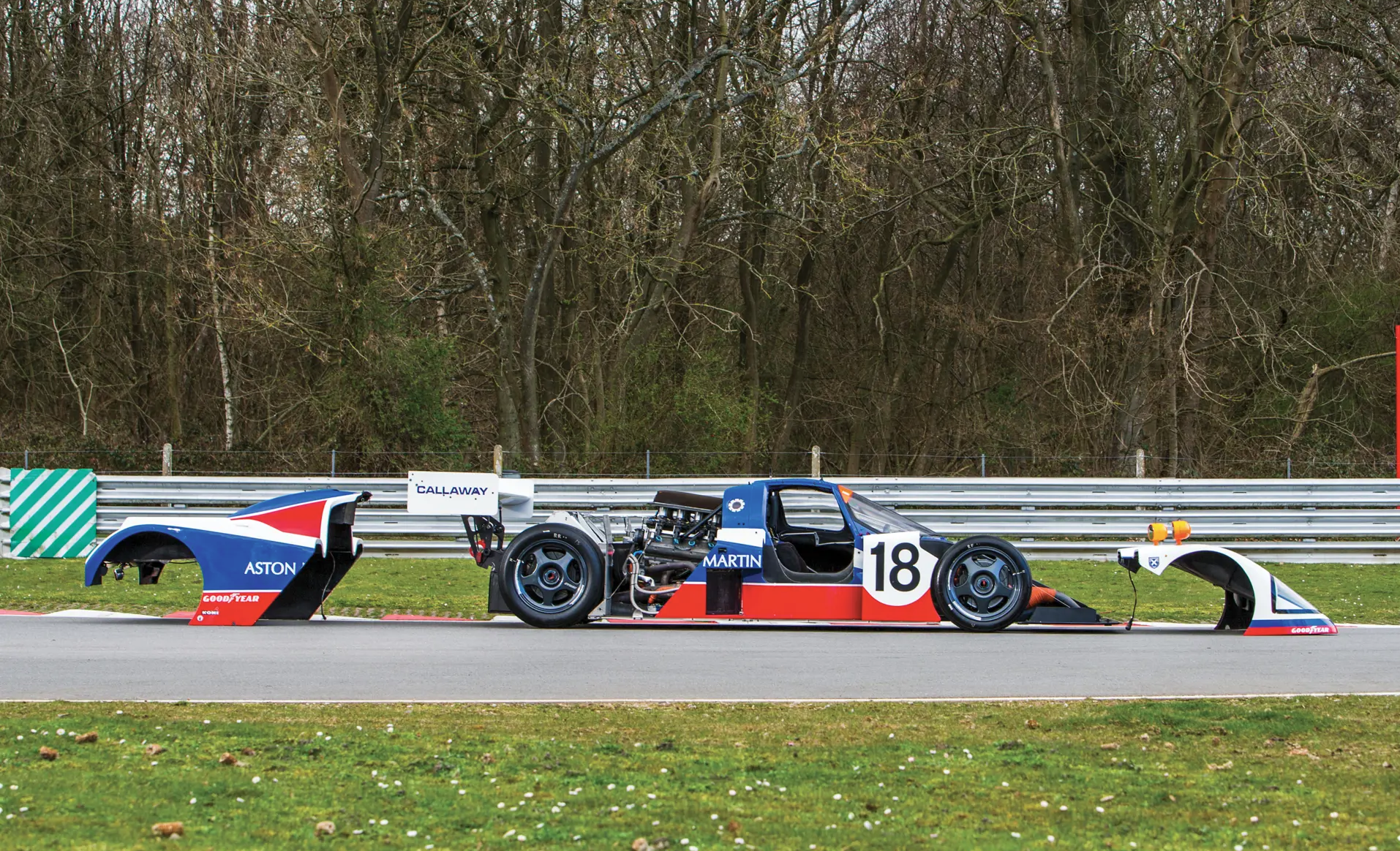
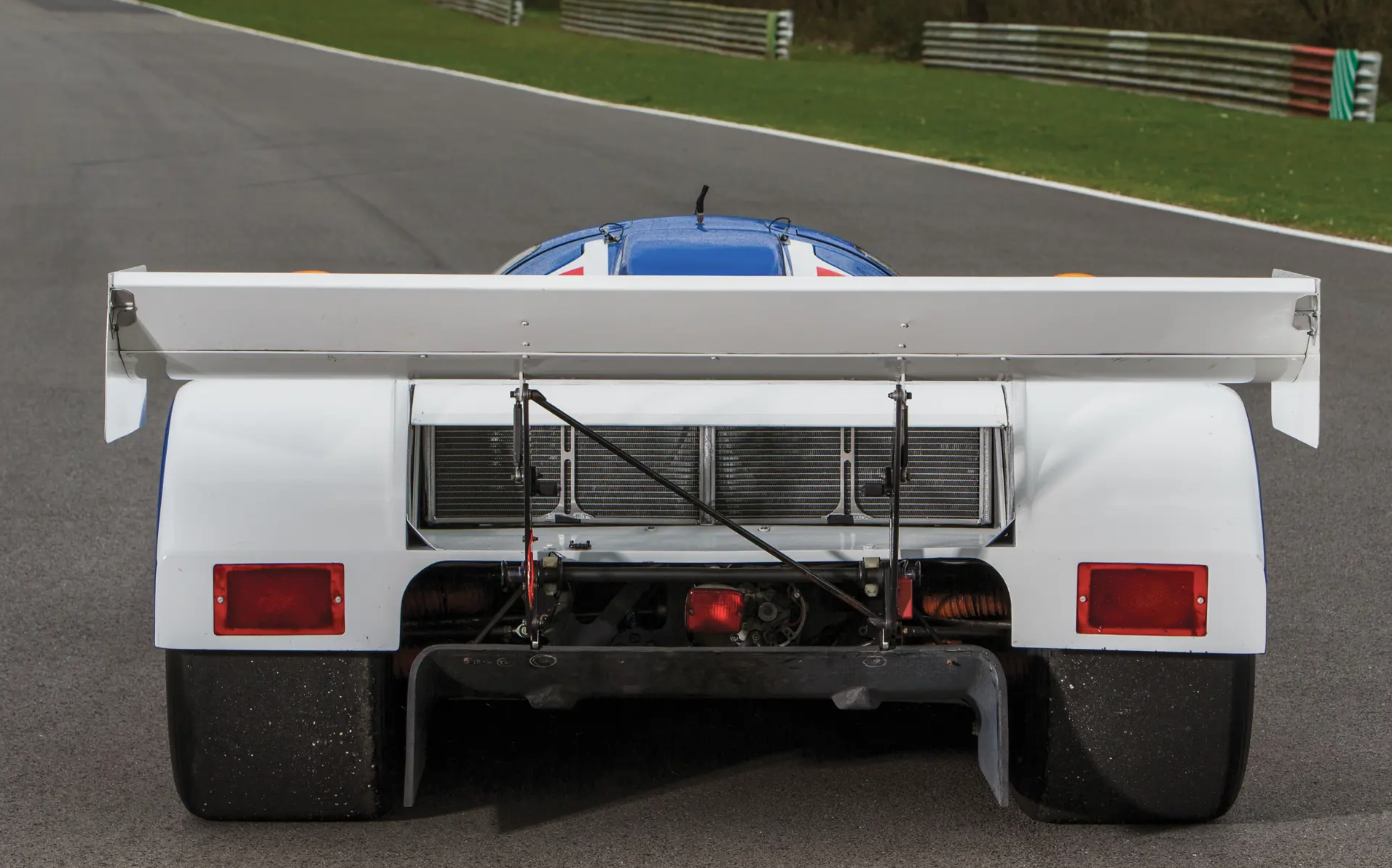
The AMR1 was an entirely new car. Its central tub was a carbon-fiber and Kevlar monocoque built by British firm Courtaulds to Boxstrom’s design. The aerodynamic package relied on underbody tunnels designed to generate ground effect, complemented by a large adjustable rear wing, and the engine was mounted at a slight angle to make room for the underbody aerodynamics. In its initial setup, the car produced considerable downforce but also excessive drag, which compromised its top speed at Le Mans. Suspension used double wishbones at all four corners, braking was handled by ventilated discs, and the transmission used a special casing built around Hewland VGC internals.
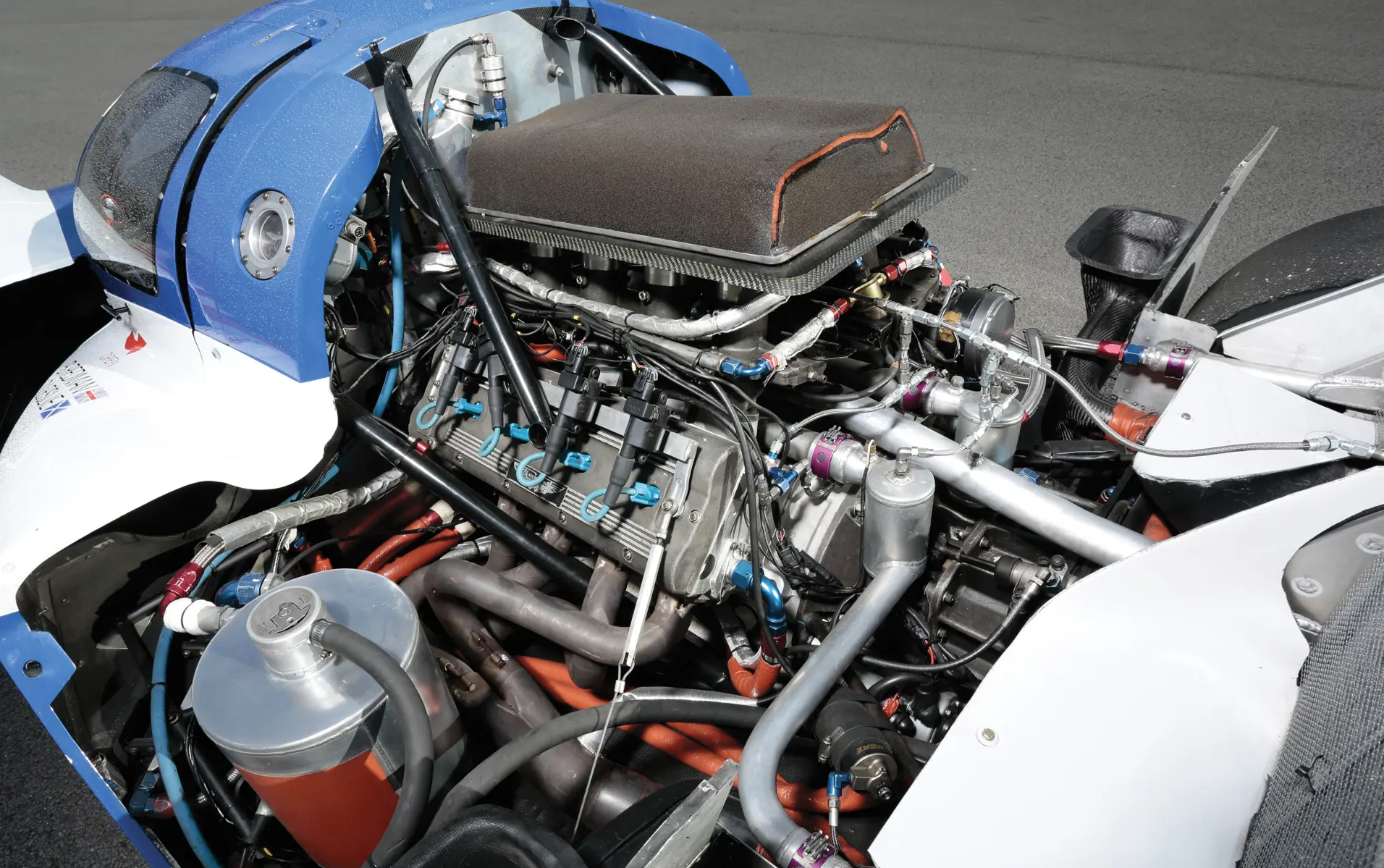
The engine was the RDP87, developed by Reeves Callaway’s Callaway Engineering in Connecticut. Callaway started with Aston Martin’s 5.3-liter V8, which was about to appear in the new Virage road car, and developed a chain-driven four-cam layout with 32 valves. Several capacities were tested, but the team settled on a 6.0-liter configuration. Unlike the turbocharged engines used by its main rivals, the Aston V8 was naturally aspirated. Output figures vary by source: the Aston Martin Heritage Trust gives 600 bhp for the original engine, Motor Sport reported more than 650 bhp, and other accounts put it closer to 700 hp. A later Version II engine, enlarged to 6.3 liters and reported to produce about 740 hp, was developed toward the end of the 1989 season.
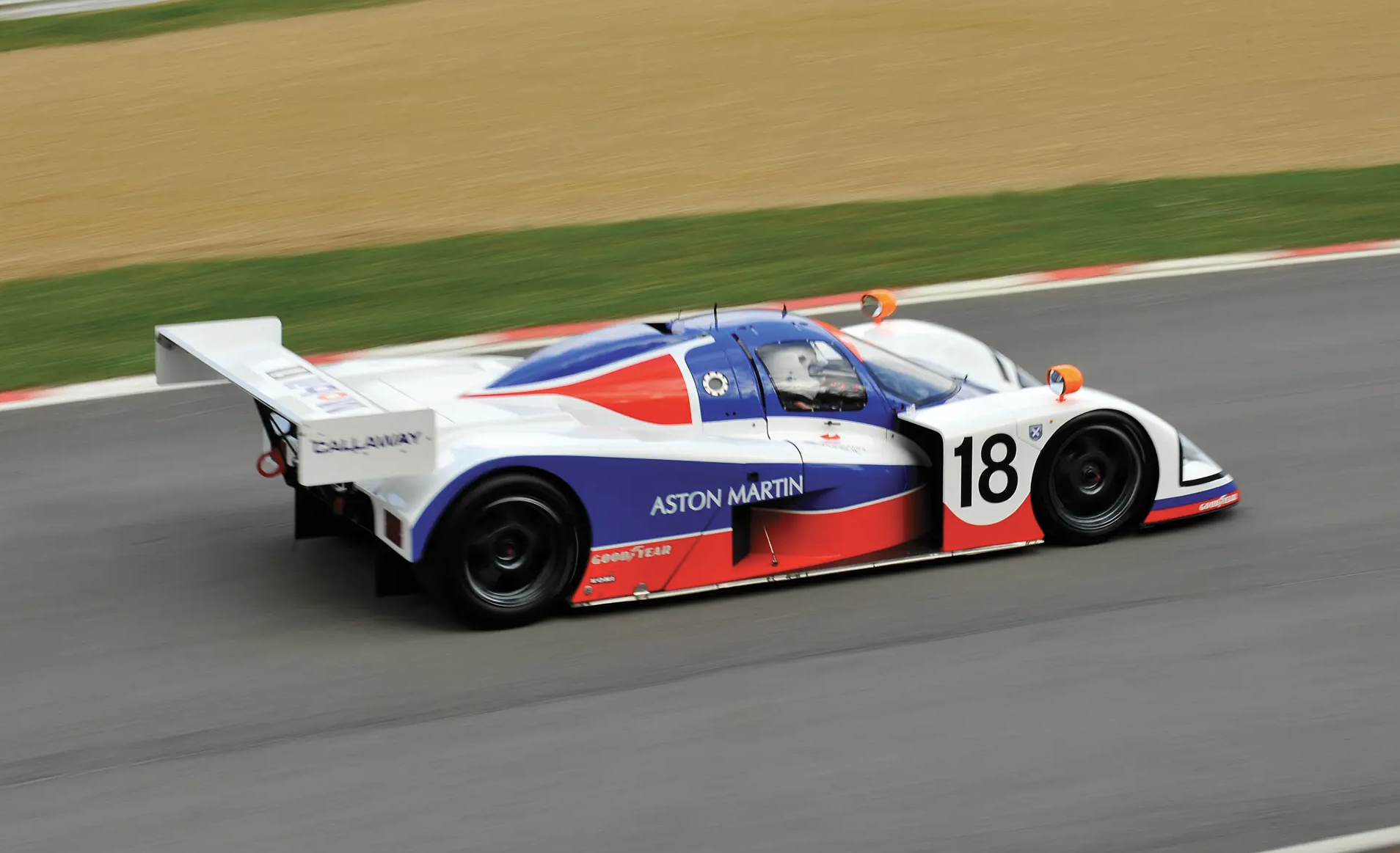
The early car was overweight and had limited suspension travel, which hurt its road holding. After the car’s debut at Dijon, Boxstrom left the team. The official reason was that his commitments to Dymag, the wheel company he ran, prevented him from devoting enough time to the program. Mallock then concentrated on reducing weight and improving the suspension, and lighter chassis were built later in 1989. The original Aston Martin brochure quotes a weight of about 900 kilograms, while chassis AMR1/04 is recorded at about 920 kilograms.
Styling
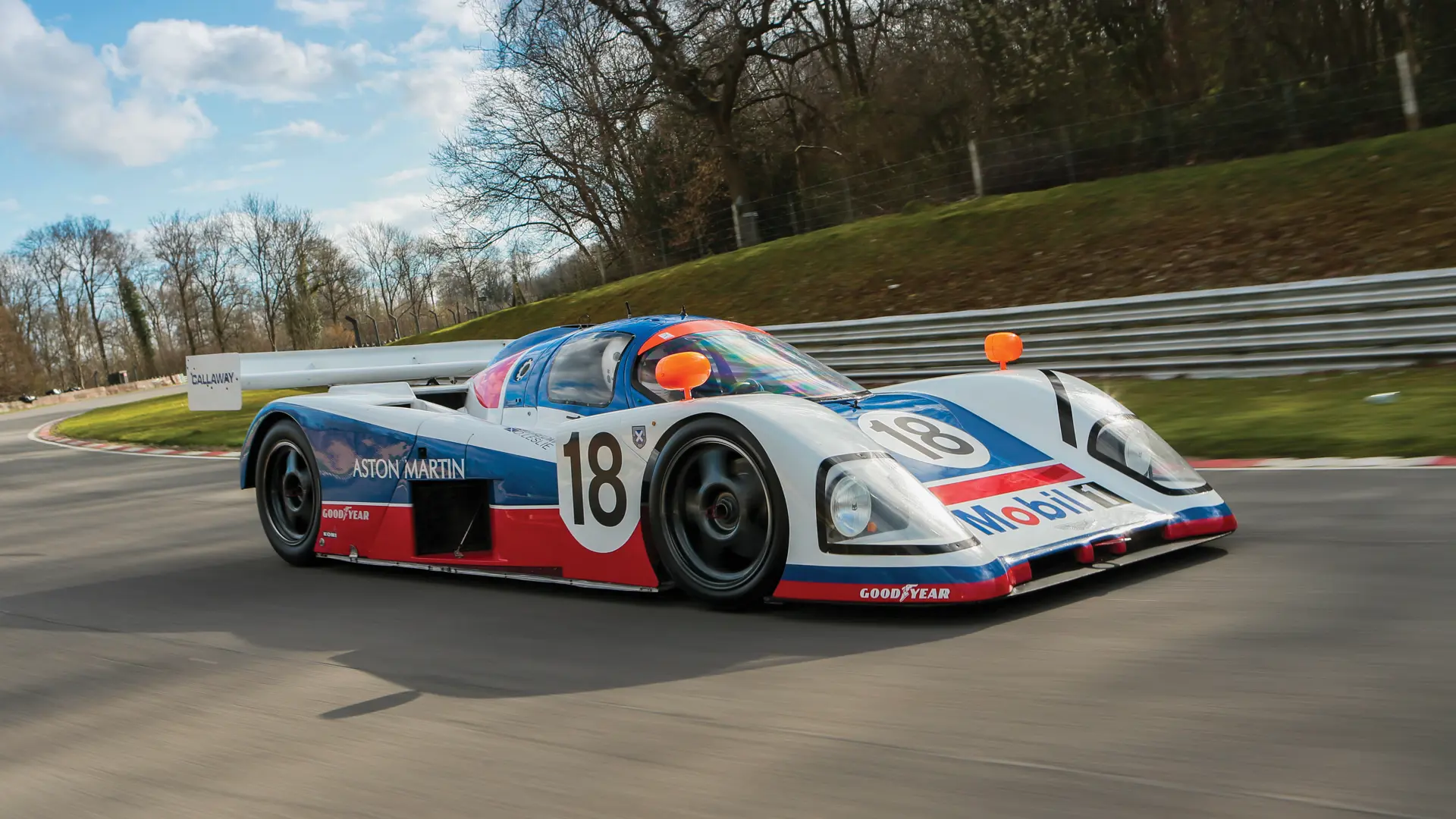
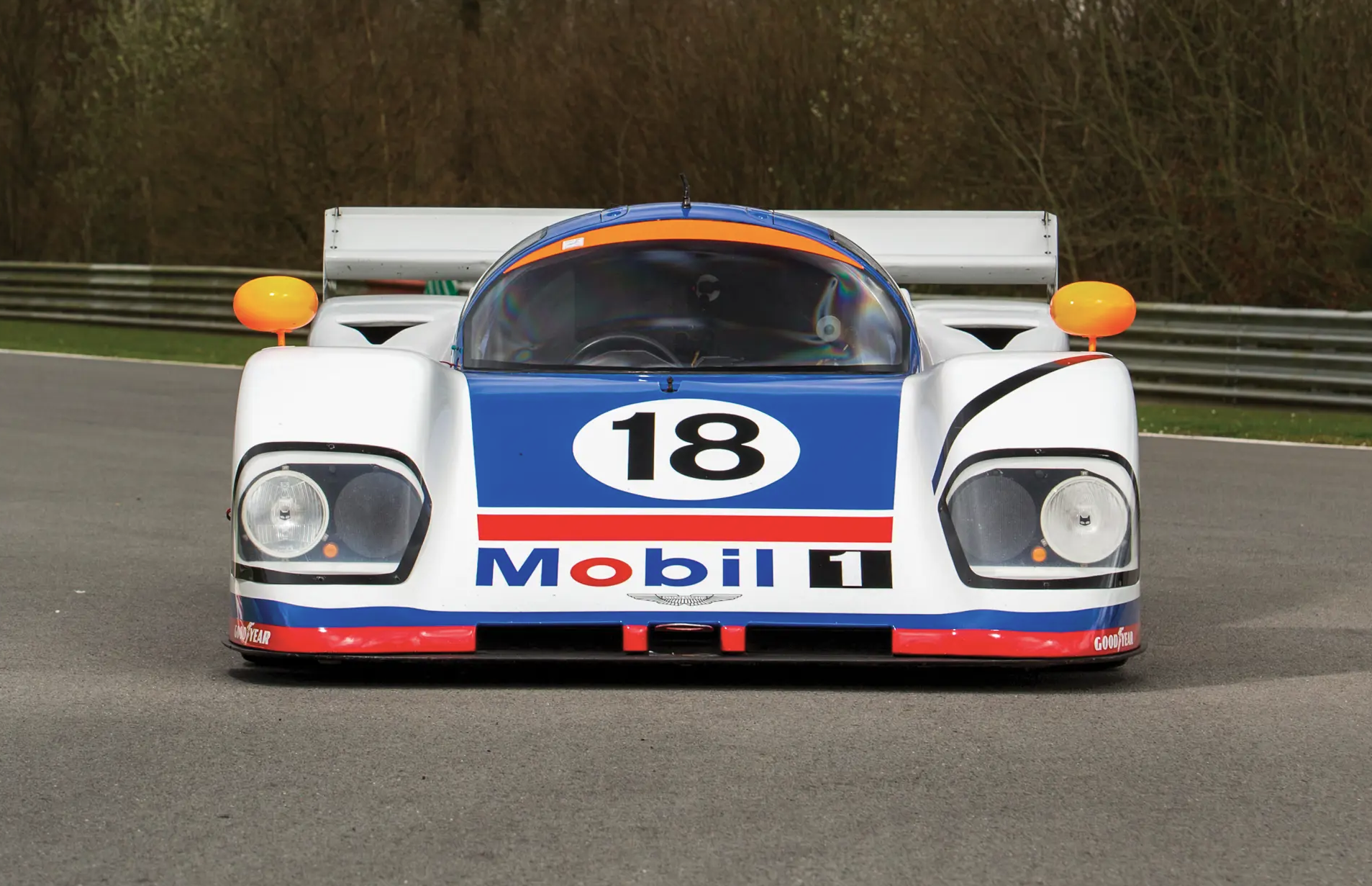
The AMR1’s bodywork was shaped for low drag and downforce on the long straights of Le Mans. It had a smooth, enclosed shape with integrated bodywork around the wheels, a large rear wing and a narrowing midsection often compared to a Coke bottle. The works cars were painted white with blue and red sections and carried sponsorship from Mobil 1 and Goodyear. Compared with the more extreme Sauber-Mercedes C9 and Jaguar XJR-9, the AMR1 looked relatively restrained, but its clean lines and Aston Martin wings made it instantly recognizable.
Cockpit
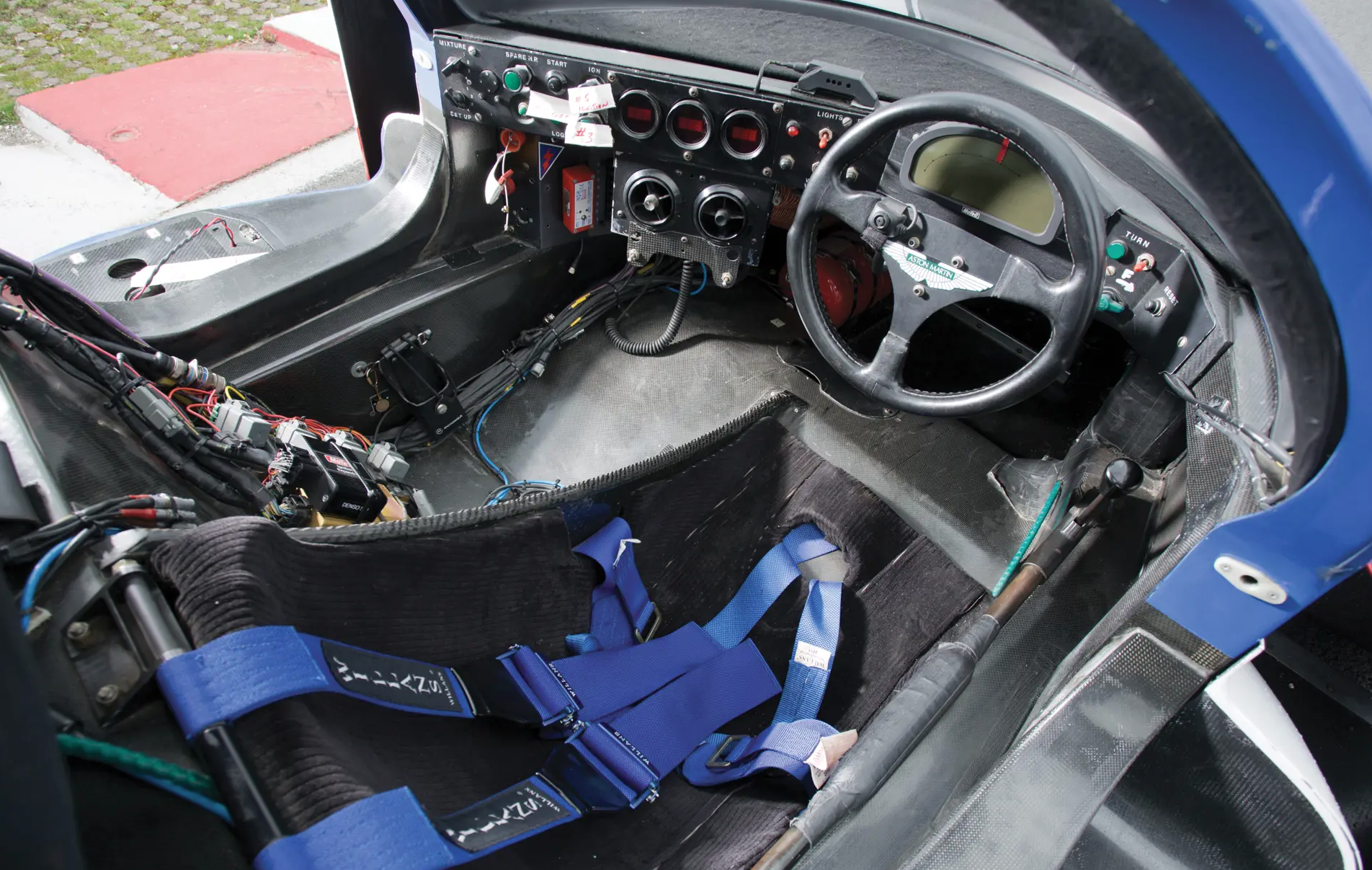
The AMR1 had a compact cockpit built into its carbon-Kevlar monocoque, with a low driving position and controls arranged for endurance racing. Its small cabin and limited visibility reflected the priorities of a Group C prototype, where aerodynamic efficiency and driver protection took precedence over comfort.
Racing History
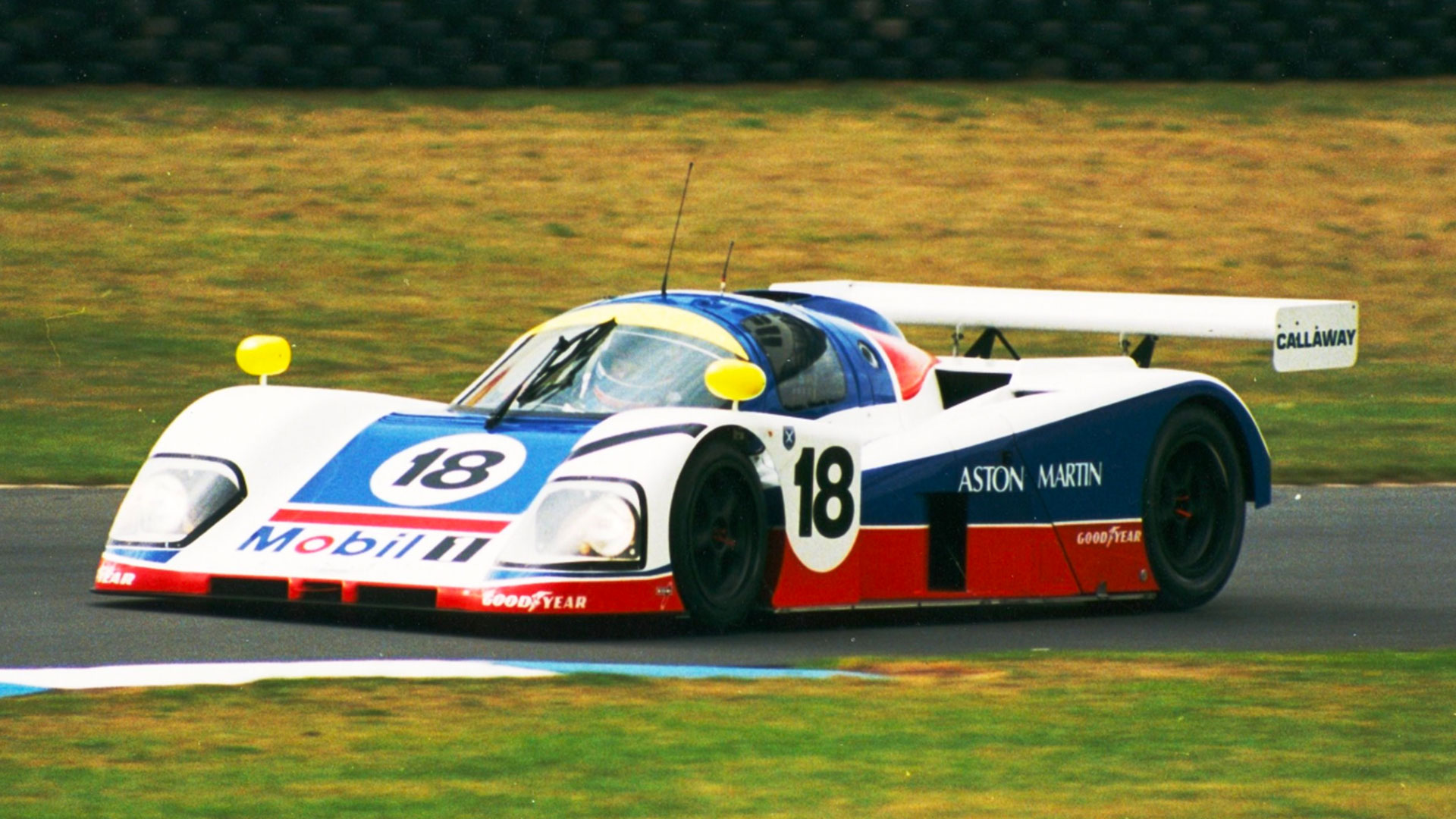
The AMR1 made its debut at the Dijon 480 km in May 1989, where Brian Redman and David Leslie qualified 24th and finished 17th, only three weeks before Le Mans. At the 24 Hours of Le Mans, which did not count toward the championship that year, Aston Martin entered two cars. The No. 18 car, driven by Redman, Michael Roe and Costas Los, finished 11th overall. The Aston Martin Heritage Trust identifies this car as the prototype, AMR1/01, although some race databases use a different chassis number. The No. 19 car, driven by Leslie, Mallock and David Sears, retired.
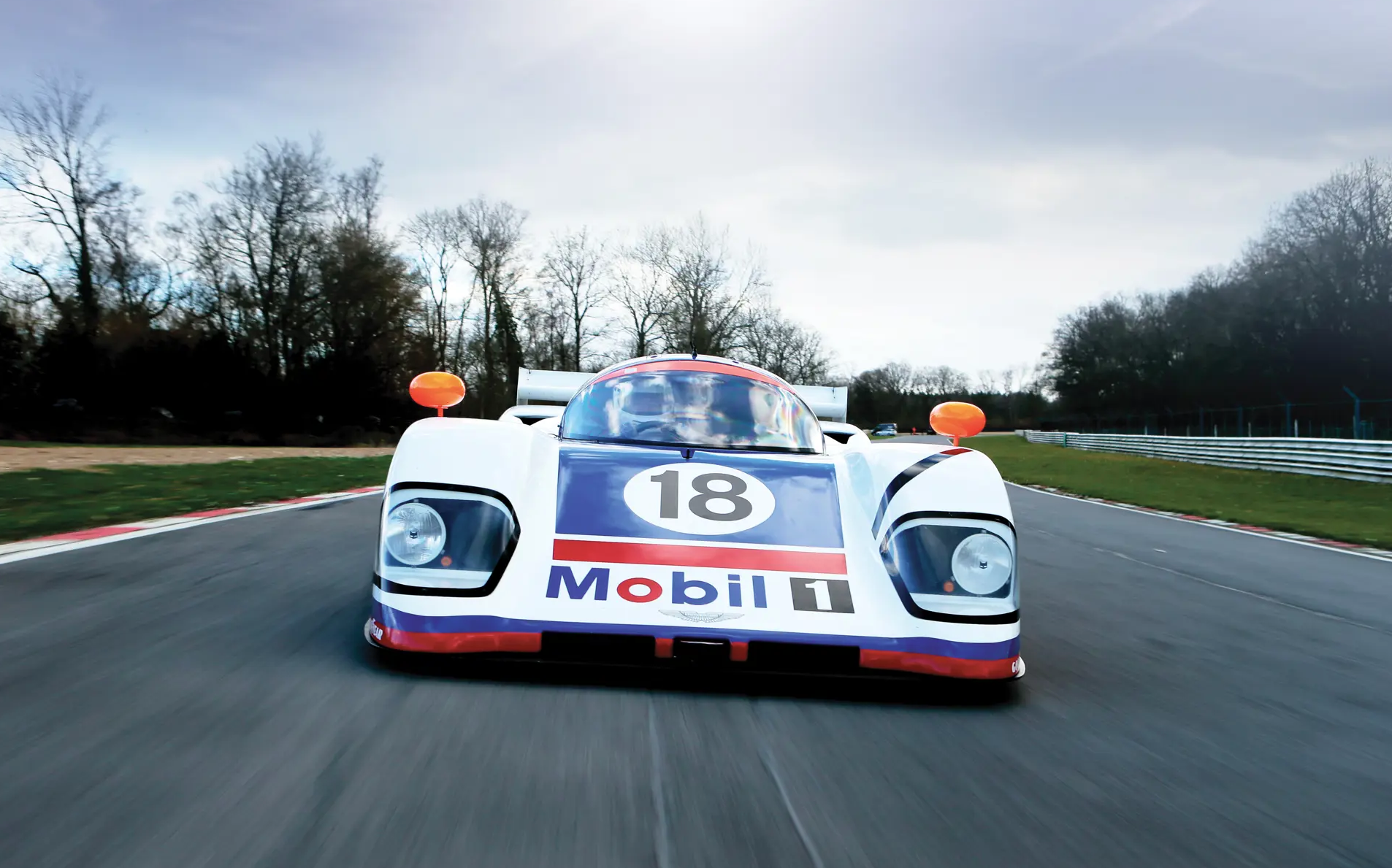
The team chose not to enter the next championship round at Jarama, concentrating on development instead. The changes paid off at Brands Hatch on July 23, 1989, when Redman and Leslie drove the new lightweight chassis AMR1/04 to fourth overall in front of a home crowd, only the car’s second championship race. Richard Williams later said that result changed the team’s morale overnight. The AMR1 went on to finish eighth at the Nürburgring and sixth and seventh at Donington. At Spa, one car finished seventh while the other retired. The season ended at Mexico City on October 29, where Leslie and Redman took eighth place. Aston Martin finished sixth in the 1989 World Sports-Prototype Championship, a respectable result for a new team competing against established manufacturers.
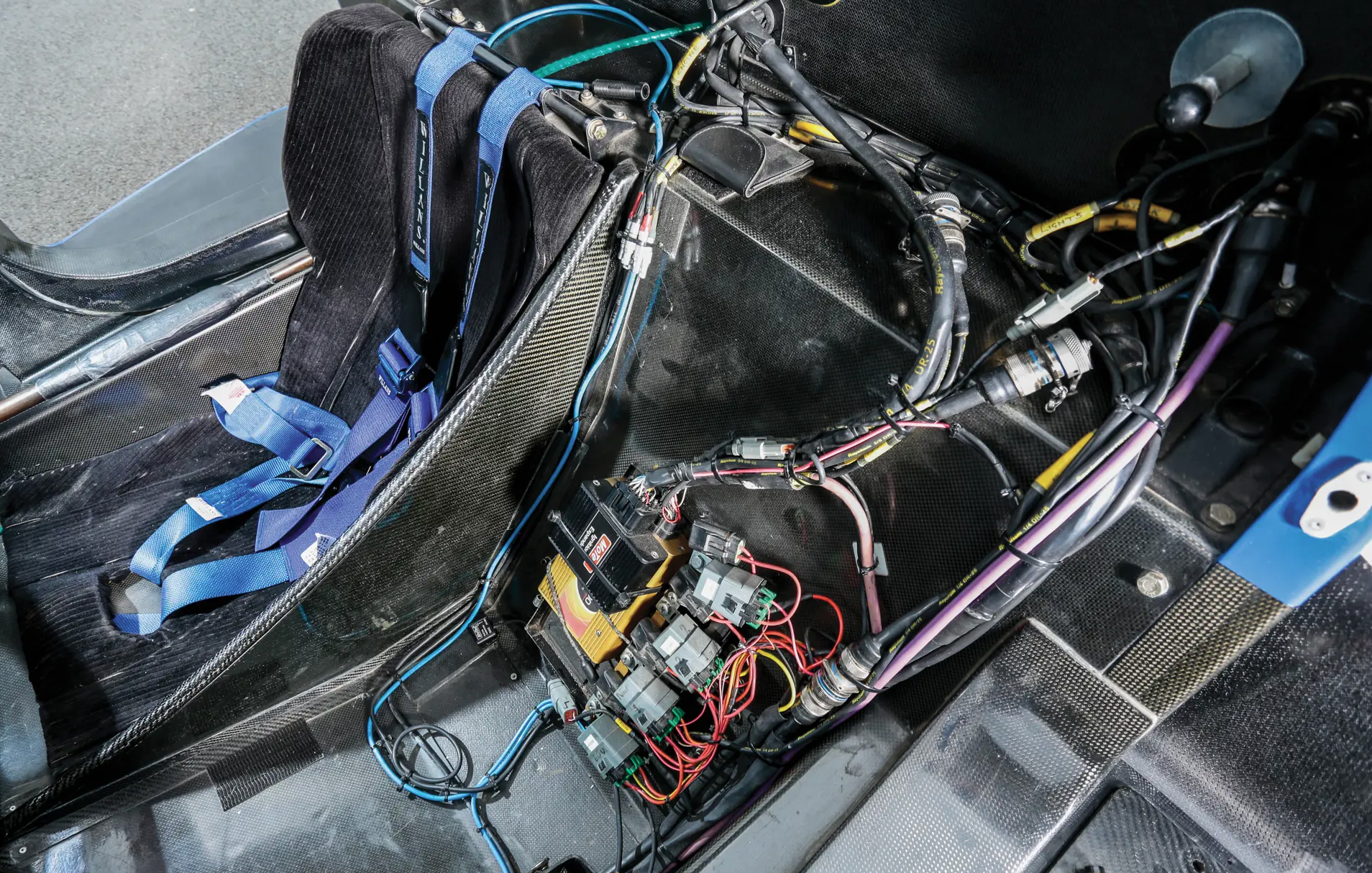
For 1990, Protech planned the AMR2 as the next stage of the program, but it never reached competition. The FIA had announced that, from 1991, Group C cars would have to use 3.5-liter naturally aspirated engines, and Aston Martin did not have the budget to develop an entirely new engine. With uncertainty also surrounding the 1990 Le Mans race, the program was terminated in February 1990, Protech was closed, and Aston Martin withdrew from Group C.
Specifications
- Category: Group C sports prototype
- Constructor: Aston Martin (Proteus Technology)
- Engine: Aston Martin RDP87 V8, developed by Callaway, 6.0 liters, DOHC per bank, 32 valves, naturally aspirated
- Power: About 600 to 700 hp depending on specification and source (Version II 6.3-liter engine: about 740 hp)
- Transmission: Manual, Hewland VGC internals in a special casing, rear-wheel drive
- Chassis: Carbon-fiber and Kevlar monocoque built by Courtaulds
- Suspension: Double wishbones front and rear
- Brakes: Ventilated discs front and rear
- Tires: Goodyear
- Weight: About 900 kilograms (1,984 lbs); chassis AMR1/04 about 920 kilograms (2,028 lbs)
- Dimensions: Length 4,775 mm, width 1,987 mm, height 1,016 mm, wheelbase 2,896 mm
- Performance (manufacturer figures): 0-100 mph in 4.9 seconds, top speed of about 220 mph
Production and Legacy
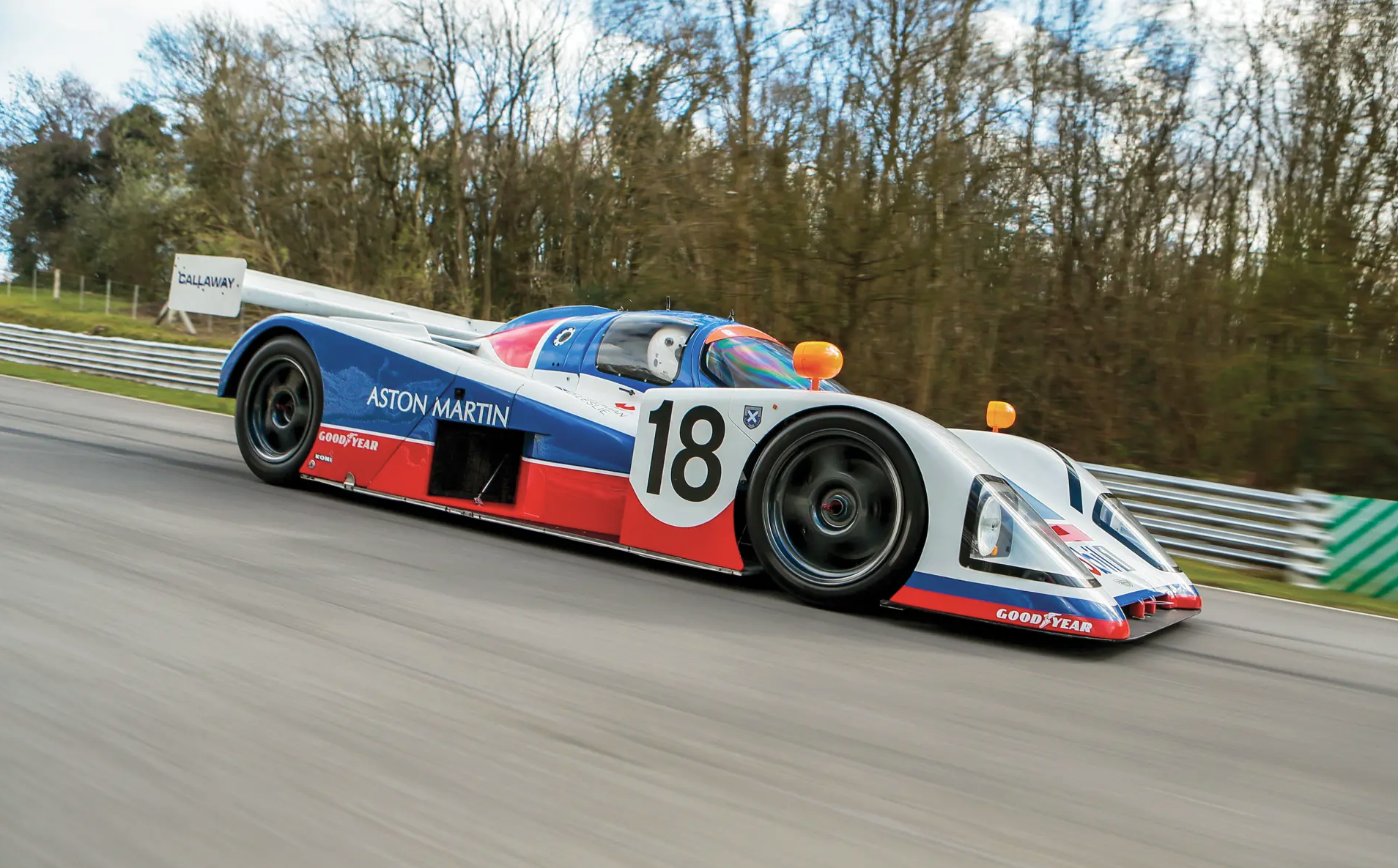
According to Endurance Info, five AMR1 chassis were constructed in 1989, while AstonMartins.com says four complete cars were built. The prototype, AMR1/01, was donated by Peter Livanos to the Aston Martin Heritage Trust in 1999 and is now part of its collection. Other cars have passed through major auctions and private collections, and some have been prepared for historic Group C racing.
The AMR1 occupies an unusual place in Aston Martin’s history. It was the company’s most ambitious racing program in decades and its first Group C car built entirely in-house, but its career lasted only one season. It ran against some of the most powerful and best-funded sports prototypes ever built, and by the end of 1989 it was beginning to show genuine promise. Changes to the regulations and the cost of developing a new engine meant that potential was never realized. Aston Martin eventually returned to top-level prototype racing with the Prodrive-backed Lola-Aston Martin LMP1 program in 2009, followed by the purpose-built AMR-One in 2011.